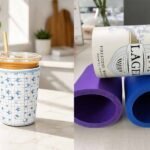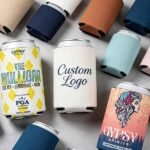
A neoprene beverage accessory may look uncomplicated when it is shown flat in a supplier’s catalog, but its real performance begins only after it is stretched around a cold container, exposed to condensation, carried through an event, folded into a pocket, and used again weeks later. Beverage brands are not merely choosing promotional merchandise. They are choosing a product that can influence how consumers hold, carry, photograph, remember, and reuse the drink associated with the brand.
The best neoprene products for beverage brands include precisely fitted can coolers, bottle sleeves, reusable iced coffee sleeves, wine carriers, and compact beverage bags. The right product depends on container dimensions, consumer setting, required insulation, printing area, desired lifespan, distribution method, and order scale. A practical product that fits correctly and remains useful after the campaign normally creates stronger long-term brand exposure.
Consider a beverage company preparing thousands of full-color sleeves for a summer product launch. The artwork is attractive, the campaign date is fixed, and every carton arrives on schedule. However, the brand recently changed from a standard can to a slim format, causing the sleeves to wrinkle, rotate, and hide part of the logo. The problem did not begin in printing or sewing. It began when the project treated container fit as a minor detail rather than the foundation of the product.
What Neoprene Products Work Best for Beverage Brands?
The most effective neoprene products are those that match the exact beverage container, provide a useful level of insulation or condensation control, display the brand clearly, and remain convenient during real use. Can coolers are ideal for high-volume promotions, bottle sleeves improve portability, cup sleeves support daily beverage routines, wine carriers add gifting value, and compact cooler bags serve larger retail or campaign programs.
Can Coolers
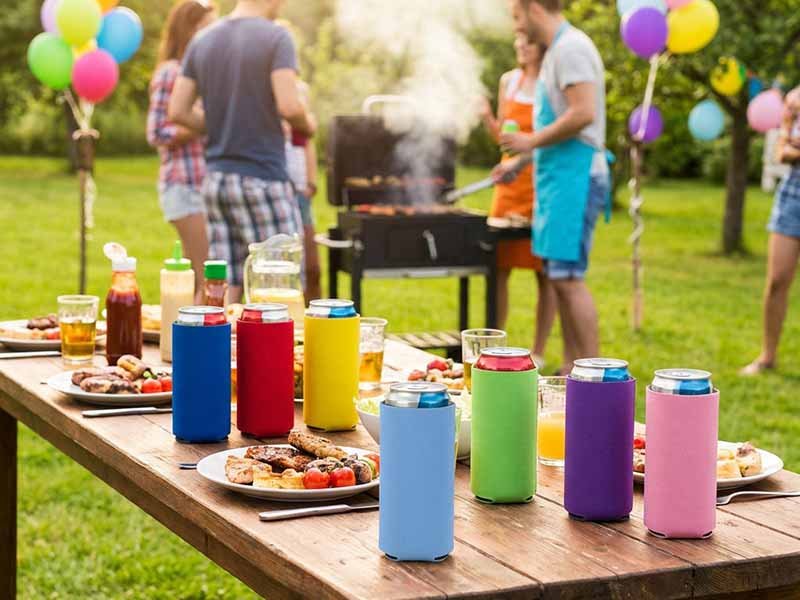
Neoprene can coolers remain one of the most practical choices for beer, soda, hard seltzer, sparkling water, canned coffee, and energy drink campaigns. They are lightweight, easy to distribute, familiar to consumers, and capable of presenting artwork across a relatively large portion of the product. Flat-fold versions are particularly efficient for high-volume event programs because they require little storage space and can be packed densely inside master cartons.
A can cooler should never be treated as a universal product size. Standard cans, slim cans, tall cans, and specialty beverage containers require different patterns. A standard sleeve placed around a narrow hard-seltzer can may wrinkle or rotate, while a slim sleeve forced around a wider soda can can stretch the seams, distort the artwork, and become difficult to remove. Even when two cans contain the same volume, their body dimensions may differ enough to affect fit.
Flat can coolers are usually suitable for mass giveaways, tastings, festivals, and sports promotions. Bottomed cylindrical versions provide a more structured appearance and are often better suited to retail merchandise, premium collaborations, or gift sets. The added base changes sewing time, material consumption, packing volume, and quality-control requirements, so the choice should reflect the actual campaign rather than appearance alone.
For many standard beverage programs, neoprene around 2–3 mm thick provides a useful balance of flexibility, hand feel, printability, and packed volume. Thicker material can feel more substantial, but it may also create bulkier seams and make the product harder to fold. The strongest product is therefore the one that fits the actual can correctly and supports the consumer experience, rather than the one with the highest thickness specification.
Bottle Sleeves
Bottle sleeves serve a wider range of functions because beverage bottles vary greatly in diameter, height, shoulder shape, cap design, surface texture, and filled weight. A simple sleeve may be sufficient for table use, while outdoor, sports, and travel programs often benefit from a wrist loop, short handle, zipper, belt attachment, or adjustable shoulder strap. These additions can turn a promotional cover into a functional accessory.
Water and sports drink brands frequently gain more value from portability than from insulation alone. A consumer walking through a festival, visiting a gym, hiking, or attending a sports event may appreciate the ability to carry the bottle hands-free. When the product remains useful with a reusable bottle after the original beverage has been consumed, the brand receives additional exposure without distributing another promotional item.
Handle construction deserves careful attention because a filled bottle places significantly more stress on the sleeve than an empty sample suggests. A narrow loop sewn only to a small area of laminated neoprene may begin to pull away after repeated lifting. Stronger designs spread the load through reinforced panels, longer webbing sections, folded seam areas, or structural stitching that transfers force across a wider part of the product.
Every bottle holder should be tested with the actual bottle filled to its normal weight. This reveals whether the base stretches, the sleeve rotates, the strap remains comfortable, or the opening becomes difficult to use. Glass bottles, large stainless-steel bottles, and reusable sports containers need particularly careful load testing because their weight can expose weaknesses that are invisible during visual sample review.
Cup Sleeves
Reusable neoprene cup sleeves work well for iced coffee, cold brew, bubble tea, juice, smoothies, milk tea, and other takeaway beverages. Their primary consumer benefit is not long-duration refrigeration. They improve grip, reduce direct contact with condensation, and make a cold cup more comfortable to hold during commuting, shopping, work, or outdoor activities. These everyday functions help the product feel useful rather than purely promotional.
The cup’s taper is the most important pattern consideration. Many takeaway cups are wider at the top and narrower near the base. A straight rectangular sleeve may slide downward, form wrinkles, or sit unevenly around this shape. A correctly developed sleeve uses both the upper and lower cup circumferences to create a secure fit without requiring excessive material stretch.
Sleeve height should also be tested carefully. A product positioned too high may cover order labels, printed drink information, measurement marks, or the cup manufacturer’s required warnings. A sleeve positioned too low may fail to cover the area where consumers naturally grip the cup. Testing with the exact cup, lid, straw, and label system helps prevent these small but frustrating problems.
Cup sleeves provide strong opportunities for seasonal graphics, café illustrations, character collaborations, loyalty messages, city-specific artwork, and limited-edition collections. Because consumers can reuse the product with future drinks, material odor, print durability, seam comfort, edge finishing, and cleaning instructions matter more than they would for an item designed to be used only once.
Wine Carriers
Neoprene wine sleeves and beverage carriers are suitable for wineries, spirits brands, hotels, wine clubs, corporate gifts, tasting events, and premium retail bundles. They offer a higher perceived value than basic can coolers, but they require more careful planning around bottle shape, handle strength, base construction, and packaging. A wine carrier must look refined while safely supporting a relatively heavy glass container.
Bottle geometry varies significantly across Bordeaux, Burgundy, champagne, sparkling wine, and spirits packaging. A sleeve developed around one bottle may become loose around another, stop too far below the shoulder, or place the handle in an unbalanced position. Sending the exact bottle or a reliable dimensional drawing is much safer than requesting a general sleeve for a “standard wine bottle.”
Single-bottle sleeves can use a simple close-fitting construction, while two-bottle and multi-bottle carriers normally require reinforcement and internal separation. Without a divider, glass bottles may strike each other during normal carrying. A reinforced base can also reduce sagging and help the carrier maintain a cleaner silhouette when the bottles are inserted.
Brands should distinguish between a flexible neoprene sleeve and a fully engineered insulated beverage bag. Neoprene provides cushioning, condensation control, and short-term thermal resistance, but longer cooling periods may require additional insulation, reflective lining, zipper control, and a more structured body. Performance claims should always reflect the complete construction rather than the presence of neoprene alone.
| Beverage format | Recommended product | Common thickness | Primary development concern | Typical use |
|---|---|---|---|---|
| Standard beer or soda can | Flat or bottomed can cooler | 2–3 mm | Exact circumference and logo position | Festivals, tastings, sports events |
| Slim seltzer or energy can | Dedicated slim can sleeve | 2–3 mm | Preventing wrinkles and print distortion | Launches and retail promotions |
| Plastic water bottle | Bottle sleeve with loop | 3–4 mm | Taper, grip, and attachment strength | Fitness and outdoor campaigns |
| Reusable metal bottle | Zippered or strapped holder | 3–5 mm | Filled weight and lid clearance | Sports, hiking, and travel |
| Iced coffee or tea cup | Tapered reusable cup sleeve | 2–3 mm | Upper and lower cup diameter | Cafés and loyalty programs |
| Wine or spirits bottle | Close-fitting sleeve or carrier | 3–5 mm | Bottle profile and base reinforcement | Gifting and hospitality |
| Multiple beverages | Compact carrier or cooler bag | Structure-dependent | Load, handle strength, and insulation | Retail sets and corporate gifts |
Which Product Fits Each Beverage Format?
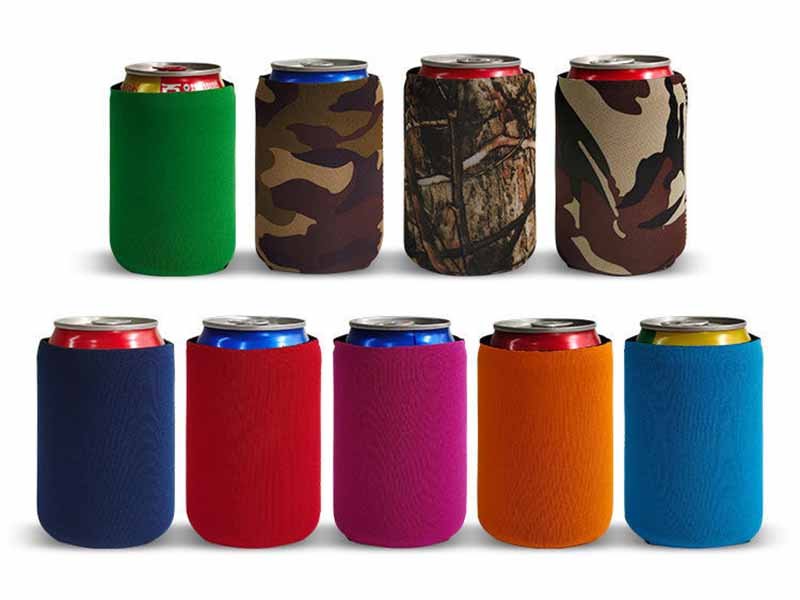
The right neoprene product should be developed around the actual container rather than a general beverage category. Diameter, height, taper, shoulder shape, lid design, surface texture, filled weight, and drinking method can all affect pattern construction. Even containers with the same stated volume may require different sleeve dimensions, making physical fitting and repeat-use testing more reliable than selecting a generic catalog size.
Can Dimensions
Standard, slim, and tall cans should normally be treated as separate product formats. A common standard beverage can has a wider body than most slim hard-seltzer and energy-drink cans. Tall cans may have a similar diameter to standard cans but require greater sleeve height. Specialty beverages can also use shorter, wider, or unusually shaped cans that fall outside the most common templates.
A sleeve that is too loose may rotate, slip, or form visible wrinkles. A sleeve that is too tight can make insertion difficult, place excessive tension on seams, and distort the printed design. Distortion becomes particularly noticeable when artwork contains circles, faces, text blocks, straight lines, or elements that must align across the front and side of the finished product.
The upper edge should sit far enough below the rim to avoid interfering with drinking. At the same time, it should remain high enough to cover the main gripping area and present the artwork properly. For bottomed can coolers, the base diameter and seam allowance also affect how the can sits and whether the product remains upright on a flat surface.
Beverage companies using multiple container formats often benefit from creating a coordinated family of products. A standard, slim, and tall version can share the same colors, visual hierarchy, logo position, labels, and packaging style while using separate patterns. This approach protects fit quality without sacrificing the consistency of the overall campaign.
Bottle Geometry
Bottles introduce more variables than cans because their bodies may taper, compress, curve, or include pronounced shoulders. Plastic water bottles can change shape when squeezed, while glass and stainless-steel bottles remain rigid and may be significantly heavier. Caps, lids, handles, and drinking spouts can also affect how the product is inserted or removed.
For a cylindrical bottle, maximum body diameter and usable sleeve height are the main measurements. A tapered bottle requires additional dimensions at several points. When a bottle has broad shoulders or an oversized cap, the opening must be large enough for insertion while still allowing the main body of the sleeve to grip securely.
Neoprene patterns often use a small amount of negative ease, meaning the finished sleeve is slightly smaller than the container circumference. This allows the material to stretch and hold the bottle. Excessive negative ease can strain seams and make insertion difficult, while insufficient tension can allow the sleeve to slide or rotate when condensation develops.
A proper fit review should include insertion, removal, grip, seam placement, base support, drinking comfort, and appearance after the container has remained inside the sleeve for several hours. Products with straps should also be carried while walking, because movement can reveal twisting or imbalance that is not visible when the bottle remains stationary.
Cup Geometry
Takeaway cups usually require tapered patterns rather than simple rectangular wraps. Upper diameter, lower diameter, desired sleeve height, lid clearance, straw location, and label position should all be confirmed. Two cups with the same nominal volume may have different taper angles, wall textures, or rim structures, which can change how a reusable sleeve fits.
The sleeve should provide enough tension to stay in position without crushing a lightweight disposable cup. If the fit is too tight, the cup may deform when the consumer inserts it. If it is too loose, condensation can reduce friction and cause the sleeve to slide downward. The material’s stretch direction and inner surface also influence this behavior.
Brands using multiple cup sizes can develop either separate patterns or one carefully tested size that fits a limited range. A single universal sleeve may sound attractive, but a broad size range usually creates compromises. It may fit the middle cup well while remaining loose on the smallest size and excessively stretched around the largest.
Cup sleeves should be tested with the real cup supplier’s products whenever possible. The complete test should include the cup, lid, straw, printed label, and a filled cold beverage. This allows the development team to evaluate the same condensation, grip, weight, and service conditions the consumer will experience.
Campaign Use
Event giveaways usually favor products that are light, compact, immediately understandable, and quick to distribute. Flat can coolers, slim-can sleeves, basic bottle covers, and reusable cup sleeves perform well at festivals, sampling events, sports programs, trade shows, bar promotions, and new-product launches because staff can distribute them without assembly or detailed instructions.
The distribution method should influence packaging and structure. A sleeve placed over a beverage before it reaches the consumer needs fast and consistent insertion. A product included in a gift bag may require a paper band or individual package. A sleeve attached to a retail multipack may need a hangtag, clip, or outer-carton arrangement that does not interfere with shelf presentation.
Campaign duration also affects construction decisions. A one-day sampling program may prioritize packed volume and full-color visibility. A season-long sponsorship may justify stronger seams, thicker material, upgraded labels, and more durable packaging. The same basic product can therefore require different specifications depending on how long and how often it will be used.
Even high-volume promotional products should not feel carelessly made. Clean edges, accurate artwork, comfortable seams, controlled odor, and reliable fit determine whether consumers keep the item. When a sleeve remains in a kitchen drawer, car, office, backpack, or gym bag, it can continue creating useful brand exposure beyond the original event.
| Container format | Common volume range | Measurements to confirm | Typical fit risk | Recommended sample test |
|---|---|---|---|---|
| Standard can | About 330–355 ml | Body diameter, height, rim clearance | Rotation or loose sidewalls | Use a filled production can |
| Slim can | About 250–355 ml | Narrow body diameter and total height | Excessive artwork stretch | Approve a dedicated pattern |
| Tall can | About 440–500 ml | Diameter, height, and drinking position | Sleeve sitting too low | Test drinking clearance |
| Water bottle | About 500–1,000 ml | Maximum diameter, taper, and shoulder | Sliding or twisting | Walk with the filled bottle |
| Iced drink cup | About 350–700 ml | Upper diameter, lower diameter, sleeve height | Downward movement | Test with actual cold beverage |
| Wine bottle | Commonly 750 ml | Body, shoulder, height, and filled weight | Loose shoulder or weak base | Test exact bottle shape |
| Metal bottle | About 500–1,200 ml | Diameter, cap width, height, and weight | Difficult insertion or strap overload | Carry under realistic load |
How Do You Choose Neoprene Material and Thickness?
Neoprene should be selected according to the product’s intended fit, structure, printing method, expected lifespan, desired hand feel, and realistic insulation requirement. Two-millimeter material works for lightweight sleeves, 3 mm offers a balanced solution for many beverage products, and 4–5 mm can add cushioning or body. Thickness alone does not define quality, because density, recovery, lamination, odor, and consistency also affect performance.
Thickness Choice
Two-millimeter neoprene is lightweight, flexible, and economical in packed volume. It is commonly suitable for simple promotional can sleeves, lightweight cup covers, and products where branding and condensation control are more important than substantial cushioning. Its lower bulk makes it easy to fold, carton-pack, store, and distribute during large events.
Three-millimeter neoprene is often a practical general-purpose option because it provides a fuller hand feel without creating excessive seam bulk. It can hold its shape more effectively than thinner material while remaining flexible enough for can coolers, bottle sleeves, and reusable cup covers. When paired with an accurate pattern, it usually provides a good balance between insertion, grip, print surface, durability, and cost.
Four- and five-millimeter materials are more appropriate when added cushioning, structural body, or protection serves a clear purpose. Bottle holders with straps, protective glass-bottle sleeves, premium carriers, and specialty sports products may benefit from these thicknesses. However, added material increases sewing difficulty, packed volume, unit weight, and the visual bulk of the seams.
A thicker product is not automatically a better product. If the sleeve becomes difficult to fold, slow to insert, uncomfortable to grip, or excessively large around a narrow container, the extra material can reduce usability. Comparing multiple thickness samples on the real container provides a more reliable decision than choosing thickness from a specification sheet alone.
Density and Recovery
Neoprene materials with the same stated thickness can still differ noticeably in density, softness, elasticity, compression, and recovery. A softer sheet may stretch easily across a wider range of container sizes but lose its original shape more quickly. A denser sheet may offer a firmer and more premium feel, although it usually requires more precise pattern development.
Recovery describes how effectively the material returns toward its original dimensions after being stretched. Weak recovery can cause a bottle sleeve or can cooler to remain enlarged after extended use. Openings may become loose, seams can rotate, and the product may no longer fit the intended container as securely as the approved sample.
Stretch is not always equal in every direction. The foam and laminated textile layers can create greater elasticity across one axis than another. Pattern orientation should therefore be coordinated with the required direction of expansion, particularly for tapered cup sleeves, tight can coolers, and products containing artwork that must remain aligned.
A useful material evaluation includes repeated insertion, several hours of stretch around the container, recovery after removal, visual examination of seams, and comparison with an approved reference sample. Material softness alone cannot predict long-term performance, especially when the product must remain consistent through repeat orders.
Surface Fabrics
The laminated surface fabric influences appearance, texture, abrasion resistance, printing, stretch, and ease of use. Smooth polyester-faced neoprene is commonly chosen for sublimation because it can reproduce full-color graphics, photographs, gradients, illustrations, and repeating patterns. It is particularly suitable when the beverage sleeve must visually coordinate with complex can or bottle artwork.
Nylon-faced neoprene offers a different hand feel and may provide different stretch characteristics. It can be useful for selected product styles, although its compatibility with printing and branding methods should be tested. The same artwork can appear noticeably different when applied to two fabrics with different surface texture, whiteness, or light reflection.
The inner surface also matters. A smooth inner textile can make it easier to insert the can, cup, or bottle. A higher-friction surface may create stronger grip but can slow insertion, particularly when the pattern is tight. Condensation can change the interaction between the container and inner fabric, making real cold-container tests important.
Lamination quality should remain stable through cutting, printing, stretching, sewing, folding, and normal use. Bubbling, edge separation, local delamination, or uneven bonding can become more visible after the product is repeatedly stretched. Material approval should therefore examine both flat samples and finished sewn products.
Odor and Color
Neoprene odor should be reviewed before production approval, especially when the product will be used close to beverages, faces, desks, cars, gift boxes, or enclosed retail packaging. Fresh material may carry a noticeable smell, but the odor should not be unusually strong, irritating, inconsistent, or persistent after appropriate airing.
Packaging can influence the consumer’s first impression. A product sealed immediately inside an individual plastic bag may develop a more concentrated smell than the same product stored in a ventilated carton. Production schedules may therefore need to allow suitable airing before final packing, particularly for premium gift programs or products distributed in enclosed environments.
Color control should cover the laminated material, printed artwork, thread, webbing, binding, zipper, labels, and packaging. Pantone references are useful, but the same color can appear different on fabric, paper, rubber, metal, and digital screens. Brands should identify the most important signature colors and establish which approved physical sample will serve as the main reference.
Printed strike-offs can be reviewed before complete sewn samples are produced. These panels help the team evaluate color, gradients, fine text, image resolution, and contrast on the actual fabric. Keeping approved strike-offs and finished samples creates a practical reference for mass production and future repeat orders.
| Material option | Typical application | Main benefit | Main limitation |
|---|---|---|---|
| 2 mm neoprene | Event sleeves and lightweight cup covers | Flexible and compact for shipping | Lower structure and cushioning |
| 3 mm neoprene | Can coolers, cup sleeves, and bottle sleeves | Balanced feel, fit, and printability | Slightly greater carton volume |
| 4 mm neoprene | Premium bottle holders and structured sleeves | Improved cushioning and body | More seam bulk and material cost |
| 5 mm neoprene | Specialty carriers and protective products | Strong protective impression | Often excessive for simple promotions |
| Polyester-faced neoprene | Full-color sublimation products | Detailed graphics and broad color range | Requires controlled heat and artwork setup |
| Nylon-faced neoprene | Specialty holders and tactile products | Distinctive touch and flexibility | Printing compatibility must be tested |
| Double-laminated neoprene | Reusable sleeves and finished carriers | Clean textile surface on both sides | Higher material consumption |
| Single-laminated neoprene | Selected basic structures | Lower material requirement | Exposed side may require extra finishing |
How Can Beverage Brands Customize Each Product?
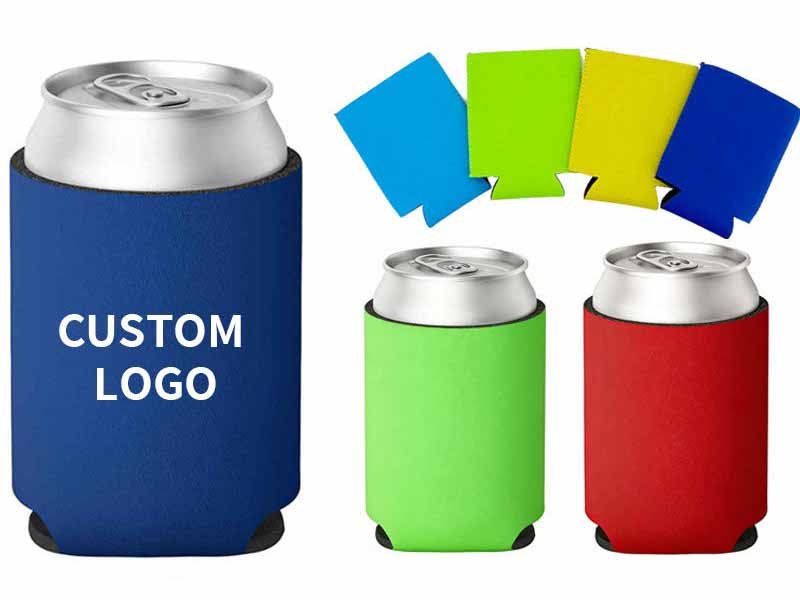
Beverage brands can customize neoprene products through printing, color, thickness, shape, stitching, edge treatment, straps, handles, zippers, labels, packaging, and coordinated collections. Effective customization should improve recognition and usability at the same time. The strongest product is not the one with the greatest number of features, but the one that presents the brand clearly while remaining comfortable, manufacturable, and consistent across the full order.
Printing Methods
Sublimation printing is often the strongest option for full-color graphics, gradients, photographs, illustrations, and large-area designs on compatible polyester-faced neoprene. It allows the sleeve to reflect the visual character of the beverage package rather than limiting the project to a small logo. Complex artwork should still be reviewed for seam placement, stretching, and color behavior.
Screen printing is practical for bold marks, simple messages, and limited-color artwork. It can create strong visual impact, but the number of colors, registration accuracy, ink flexibility, and total coverage area influence price and production control. Large solid areas should be sampled because stretching can change their appearance around curved containers.
Heat transfer can support detailed artwork and flexible project quantities, although buyers should examine transfer edges, surface feel, adhesion, and resistance to folding or stretching. Embroidery, woven labels, rubber patches, silicone badges, branded webbing, and custom zipper pullers can add texture and perceived value, but they may not suit every small or highly flexible sleeve.
The branding process should always be tested on the actual material, at the intended size, and in the final product position. Artwork that appears balanced on a computer screen may sit too close to a seam, become partly hidden by the container, or distort when the neoprene is stretched.
Color Control
Accurate brand color begins with reliable source files. Vector artwork, embedded color profiles, Pantone references, and physical beverage packaging provide better production guidance than screenshots, compressed website images, or photographs of screens. When the brand uses a distinctive signature color, a physical reference is especially valuable.
Not every color in a complex beverage design needs the same level of control. A label may contain ten or more shades, while one recognizable red, blue, green, or orange carries most of the brand identity. Identifying priority colors helps the sampling team focus its attention on the details consumers are most likely to notice.
Color should be approved on the final fabric under stable lighting. Polyester texture, surface brightness, heat settings, ink behavior, and material whiteness can all change visual appearance. A color printed on neoprene will not look exactly the same as the same reference on coated paper, aluminum, rubber, or a digital screen.
For long-term product programs, approved printed panels and finished samples should be retained. These references are more useful than digital files alone because they show the combined result of fabric, ink, heat, stretch, texture, and construction. They also make future repeat-order comparisons more consistent.
Functional Details
Useful structural options include wrist loops, handles, adjustable straps, zippers, reinforced bases, internal dividers, edge binding, covered seams, and fold-flat construction. Each feature should solve a practical problem. Decorative complexity without a clear function can increase cost, sample revisions, and quality-control difficulty without improving the consumer experience.
A bottle holder intended for exercise benefits from a stable strap and broad reinforcement. A wine carrier needs a base capable of supporting the full bottle weight. A reusable cup sleeve should remain light and easy to insert. A can cooler should avoid placing a thick seam directly under the area where consumers naturally grip the drink.
Edge treatment influences durability and appearance. Binding can create a cleaner retail finish, but it introduces additional material, stitching, color matching, and seam bulk. Tight curves and narrow openings may require several sample revisions before the binding remains smooth and does not interfere with fit.
Small adjustments often create more value than adding new components. Moving a handle attachment by approximately 10 mm, lowering a logo, changing sleeve height, widening the opening, or extending reinforcement can noticeably improve usability. These refinements are best identified through physical samples rather than digital drawings alone.
Shapes and Packaging
Custom-shaped sleeves can increase recognition when their outline references a bottle, fruit, ingredient, mascot, logo, or campaign character. A distinctive silhouette may encourage consumers to photograph, share, and keep the product, giving the campaign additional visibility beyond paid distribution.
Complex shapes must still remain practical to cut, print, stitch, pack, and inspect. Narrow extensions, sharp internal corners, tiny decorative parts, and heavily layered features can twist, tear, or become inconsistent in mass production. The strongest shapes usually focus on one recognizable element rather than trying to reproduce every detail of a character or package.
A white structural prototype is useful before full artwork is applied. It allows the brand to evaluate fit, insertion, stability, grip, balance, and packaging without being distracted by graphics. Once the structure works properly, the final artwork can be placed with greater accuracy.
Packaging should match the distribution environment. Bulk packing is practical when event staff will place sleeves directly over beverages. Individual bags protect printed surfaces and simplify counting. Paper bands, hangtags, insert cards, and retail boxes are more useful when the product needs care instructions, size information, a barcode, a brand story, or premium gift presentation.
Carton design also affects cost and product condition. Excessive compression can create folds or distort structured products, while loose packing wastes freight space. The final carton quantity should be confirmed using actual production samples rather than estimates based only on material dimensions.
How Do You Evaluate a Neoprene Manufacturer?
A reliable neoprene manufacturer should be evaluated through material knowledge, container-fit development, sample accuracy, printing control, sewing capability, quality inspection, packaging coordination, and delivery planning. The strongest supplier identifies risks before production, documents the approved specification, and explains how material, artwork, construction, and packaging will remain consistent from the first development sample through mass production and repeat orders.
Sample Development
A useful sample request should include the product type, exact beverage container, dimensions, filled weight, neoprene thickness, laminated fabric, artwork, printing method, structural details, accessories, packaging, quantity, target market, and required delivery date. A logo and a general request for a bottle sleeve are not enough to produce an accurate sample or quotation.
Physical containers provide the most reliable fit reference. When sending them is impractical, buyers should provide dimensioned drawings and clear photographs showing the side, top, base, shoulders, cap, and any unusual structural details. Retail product links may help identify the item, but they often omit the measurements needed for pattern development.
The intended use should be explained clearly. A sleeve for a one-day tasting event has different priorities from a reusable product sold in retail stores. The factory needs to know whether the main objective is visual impact, insulation, portability, compact packing, premium hand feel, target cost, or long-term durability.
Samples should be tested as working products rather than displayed only on a table. The container should be inserted and removed several times, held with wet hands, carried using the strap, placed on different surfaces, and left inside the sleeve for several hours. These actions expose fit, stretch, balance, comfort, and recovery issues that may not appear during a quick visual review.
Sample comments should be measurable whenever possible. Instructions such as moving the logo down 8 mm, increasing the opening circumference, shortening the sleeve height, or extending handle reinforcement provide a clearer revision path than general comments such as making the sample look better.
Bulk Consistency
Differences between an approved sample and mass production often result from incomplete specifications, material substitutions, artwork changes, print variation, pattern adjustments, and inconsistent sewing methods. A finished sample should therefore be supported by clear production information rather than treated as the only reference.
The production specification should identify material thickness, surface fabric, color, stretch direction, printing file, artwork scale, seam type, logo placement, reinforcement, accessories, packaging, and inspection requirements. These details reduce the possibility that separate production teams interpret the product differently.
Material substitutions should require approval. Two neoprene sheets that appear similar can behave differently when stretched, printed, folded, or sewn. Differences in density, odor, recovery, lamination, and fabric texture can change both performance and appearance, even when the nominal thickness is the same.
A pre-production sample or first finished pieces from the production line provide a final opportunity to confirm that the bulk order follows the approved material, pattern, artwork, stitching, and packaging. Correcting a problem at this stage is far less disruptive than discovering it after thousands of pieces have been completed.
Repeat orders also require control. The supplier should compare new material and production samples against retained references rather than relying only on memory or digital specifications. This is particularly important for signature colors, precise container fit, and coordinated product collections.
Quality Checks
Quality control should begin with incoming material inspection. Neoprene sheets can be checked for thickness, color, surface condition, lamination quality, odor, visible defects, and stretch behavior. Printed panels should be reviewed before sewing for contamination, missing areas, color variation, blurred details, and alignment problems.
During cutting and sewing, inspectors can check pattern dimensions, stretch direction, panel orientation, seam position, stitch consistency, edge finishing, zipper installation, handle reinforcement, logo location, and general shape. Detecting a repeating problem early prevents the same issue from appearing across the entire production run.
Final inspection should review dimensions, fit, printing, seams, accessories, cleanliness, packaging, assortment, quantity, and carton marks. Functional samples should be tested with the exact can, bottle, or cup. Products with handles or shoulder straps should be examined under realistic filled-container loads.
Defects should be classified according to their effect on use and brand presentation. A minor internal thread end is not equivalent to a loose handle, incorrectly sized sleeve, distorted logo, strong odor, broken zipper, or unstable base. Clear inspection standards help the buyer and factory make more consistent decisions.
Third-party inspection may be appropriate for large programs, new suppliers, strict retail launches, or projects shipping directly to multiple markets. The inspection scope should be agreed before production so the factory understands the measurements, functional tests, sample size, packaging checks, and documentation that will be reviewed.
Supplier Review
An accurate quotation requires complete information. The supplier needs to calculate neoprene consumption, printing setup, cutting, sewing, reinforcement, accessories, packaging, inspection, and shipment preparation. Product photographs are useful references, but they cannot replace container dimensions, quantities, artwork coverage, and structural requirements.
Buyers should also evaluate how the supplier communicates. A capable manufacturer should explain how the pattern will be developed, which material is suitable, how printing will be approved, what may create fit risk, and how the production line will compare mass production with the approved sample.
Production capacity should be reviewed in relation to complexity rather than as a single impressive number. A factory may produce large quantities of basic flat sleeves but require additional time for custom silhouettes, multiple artworks, zippered bottle holders, reinforced wine carriers, mixed packaging, or multi-destination programs.
A trustworthy supplier should also communicate limitations. Statements about insulation, waterproofing, recycled content, chemical compliance, or food-related use should be supported by relevant material documents, test reports, or clearly defined construction. Responsible technical explanations are more valuable than broad promises that cannot be verified.
| RFQ item | Information required | Why it affects development and price |
|---|---|---|
| Product type | Can cooler, cup sleeve, bottle holder, wine carrier, or cooler bag | Determines pattern, labor, and production process |
| Container | Dimensions, shape, capacity, and filled weight | Controls fit, base design, and reinforcement |
| Material | Thickness, surface fabric, color, and required hand feel | Affects stretch, printing, structure, and cost |
| Artwork | Vector file, colors, print size, and coverage | Determines printing process and setup |
| Construction | Bottom, seams, binding, zipper, handle, strap, or divider | Changes sewing time and component use |
| Quantity | Total volume and quantity per design or size | Influences material planning and production setup |
| Packaging | Bulk, individual bag, paper band, hangtag, or retail box | Affects presentation, labor, and carton volume |
| Quality requirements | Fit tolerance, color limits, load tests, or inspection method | Defines the production control plan |
| Destination | Country, warehouse type, carton marks, and label requirements | Influences packing and export preparation |
| Timeline | Sample deadline, launch date, and required arrival date | Determines production and shipping feasibility |
Build the Right Neoprene Product for Your Beverage Brand
The best neoprene beverage accessory is not necessarily the thickest, most complex, or most expensive design. It is the product that fits the real container, performs naturally in the intended environment, presents the artwork clearly, survives repeated handling, and can be reproduced consistently across the complete order.
A festival can cooler, sports bottle holder, reusable café sleeve, wine carrier, and retail beverage bag may all use neoprene, but they should not be developed through the same assumptions. Each product requires its own balance of fit, thickness, density, printing, seam construction, reinforcement, packaging, quality control, and delivery planning.
Szoneier is a Shenzhen-based custom bags and soft goods OEM/ODM manufacturer with more than 18 years of experience in material sourcing, pattern development, sample production, sewing, printing coordination, quality inspection, packaging, and international delivery. Its neoprene capabilities include custom can coolers, bottle holders, cup sleeves, wine carriers, lunch bags, beverage bags, protective covers, and other branded soft products.
To begin a custom beverage project, send the actual container or detailed dimensions, product reference, logo artwork, target quantity, preferred packaging, destination market, and required delivery date. The project team can review fit, material thickness, surface fabric, decoration method, construction, sampling requirements, production risks, and quotation before the design moves into mass production.