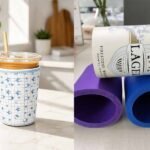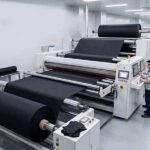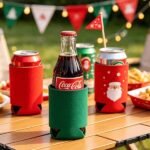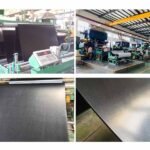
A can cooler may appear to be one of the simplest branded products a company can order. In reality, the choice between neoprene and foam affects far more than the way the finished sleeve feels in the hand. It changes how closely the product fits the can, how well it recovers after folding, how accurately complex artwork can be reproduced, how much space it occupies during shipping, and whether customers treat it as reusable merchandise or a disposable event giveaway.
Neoprene is generally the better option for brands that need durability, close container fit, smooth full-color printing, repeated use, and a more premium product experience. Foam is often the more practical choice for high-volume campaigns where low unit cost, light shipping weight, and fast distribution matter more than long product life. The final decision should reflect the campaign, customer, artwork, quantity, and target cost.
The material name alone is never enough to guarantee performance. Two products described as 3 mm neoprene can differ in density, lamination quality, stretch recovery, surface fabric, odor, and seam construction. Foam products vary even more because the term can describe several polymer types and density levels. A beverage company distributing 20,000 event sleeves and a lifestyle brand selling 2,000 retail-ready coolers are buying the same product category, but they should not automatically choose the same material.
The most expensive mistake is not choosing foam instead of neoprene. It is approving an incomplete specification and discovering after production that the cooler does not fit the intended can, the print cracks when stretched, or the material remains permanently creased after shipping. A sound decision begins with understanding how each material behaves as a complete finished product.
What Are Neoprene and Foam Can Coolers?
Neoprene can coolers normally use flexible polychloroprene-based foam laminated with printable fabric, while foam coolers may use polyurethane, polyethylene, EVA, or another promotional foam. Both create a barrier between the beverage and the surrounding environment, but they differ in elasticity, recovery, surface feel, durability, printing behavior, packing efficiency, and cost. Buyers should compare complete specifications instead of relying on material names alone.
What Is a Neoprene Can Cooler?
A neoprene can cooler is typically made from a closed-cell polychloroprene foam core laminated with polyester fabric on one or both sides. The foam core provides flexibility, cushioning, insulation, and shape recovery, while the laminated fabric protects the material and creates a suitable surface for printing, sewing, and repeated handling.
The feature most users notice is elasticity. A correctly sized neoprene sleeve stretches around the can, follows the container shape, and returns close to its original dimensions after removal. This controlled stretch creates a smoother silhouette and reduces loose areas that can make printed artwork look wrinkled or distorted.
Neoprene is commonly used for beverage merchandise, brewery accessories, outdoor promotions, subscription-box products, corporate gifts, and retail can cooler collections. It is particularly suitable when the product needs to be packed flat during shipping but still recover its shape when placed around a container.
Common thickness options include 2 mm, 3 mm, 4 mm, and 5 mm. A 3 mm construction is often a practical starting point for a standard collapsible can cooler because it balances hand feel, flexibility, insulation, print appearance, packing volume, and material cost. Thicker material can create a more substantial product, but it may also increase seam bulk, carton size, and unit price without delivering a meaningful improvement for every use case.
What Is a Foam Can Cooler?
A foam can cooler is a broader product category rather than one precisely defined material. Depending on the manufacturer, it may use polyurethane foam, polyethylene foam, EVA-based foam, fabric-faced promotional foam, or a supplier-specific construction marketed as scuba foam. Products that appear similar in online photographs may therefore behave very differently in actual use.
Foam coolers are widely used because they can be economical, lightweight, easy to stack, and practical for large promotional campaigns. They work well when thousands of units must be transported to an event, distributed quickly, or shipped to multiple locations under a strict marketing budget.
A properly specified foam cooler can still provide comfortable grip, useful insulation, and attractive branding. The main sourcing challenge is that the word “foam” does not communicate density, chemistry, surface finish, heat resistance, or compression recovery. One grade may return to shape after being folded, while another may remain visibly creased after several days in a carton.
Buyers comparing foam quotations should ask for the foam type, finished thickness, fabric lamination details, density or hardness information when available, and a completed sample. The sample should be folded, compressed, stretched over the intended can, and stored in its proposed packaging before bulk production is approved.
Are Neoprene and Foam the Same Material?
Neoprene is technically a type of foam when it is manufactured as an expanded cellular sheet. This is why sourcing terminology can become confusing. In everyday promotional product language, however, “neoprene” normally means polychloroprene rubber foam, while “foam” usually refers to a lower-cost non-neoprene polymer construction.
This difference matters because quotations based on different base materials are not directly comparable. One supplier may quote polyurethane foam, another may quote polyethylene foam, and another may offer fabric-laminated neoprene. Each product may be listed as a custom can cooler, but elasticity, shape recovery, odor, thermal behavior, printing compatibility, and service life may vary.
The material name should therefore be treated as only the first line of the specification. A professional purchase order should also identify the thickness, surface fabric, lamination, finished dimensions, seam construction, printing method, color reference, packaging, inspection standard, and approved sample number.
| Specification | Neoprene Can Cooler | General Foam Can Cooler | Why It Matters |
|---|---|---|---|
| Base material | Polychloroprene-based foam | PU, PE, EVA, or supplier-defined foam | Influences elasticity, recovery, odor, and cost |
| Common thickness | Commonly 2–5 mm | Varies by construction and supplier | Affects insulation, sewing, feel, and packing |
| Surface | Usually polyester-laminated | Bare or fabric-laminated | Determines print compatibility and appearance |
| Shape recovery | Usually strong when correctly specified | Highly dependent on density and chemistry | Affects creasing after storage and shipping |
| Fit | Elastic and close-fitting | Can be structured, soft, or relaxed | Influences grip, artwork appearance, and moisture control |
| Typical use | Retail, premium gifts, repeated use | High-volume giveaways and short campaigns | Helps align material with the project goal |
| Main sample test | Stretch and recovery | Compression and crease recovery | Reveals how the product performs after packing |
Which Specifications Matter?
The most useful specifications are measurable or physically approvable. Marketing descriptions such as premium neoprene, high-quality foam, durable printing, and strong insulation may sound reassuring, but they do not create a reliable production standard.
The first specification should be the container. A standard 12-ounce can, slim can, tall can, stubby can, glass bottle, and insulated tumbler have different heights, diameters, and circumferences. A sleeve developed around one format may wrinkle, slip, or become difficult to install on another.
The specification should include the finished flat width, finished height, nominal thickness, internal circumference, side seam, bottom construction, printing area, and dimensional tolerance. For flexible products, both the flat measurement and the fit on the actual container should be approved.
Surface fabric is equally important. Full-color sublimation normally requires a suitable polyester face, often in white or another light base color. Screen printing and heat transfer depend on fabric texture, coating, stretch, and resistance to heat and pressure.
Odor should also be evaluated. Neoprene and other foam products can carry a noticeable smell after production, particularly when they are packed immediately into sealed bags. Material quality, lamination adhesive, printing, curing time, and ventilation before packing can all influence the result.
The final approval should always be based on a fully printed and sewn sample rather than a loose material swatch. A material that looks suitable before production may behave differently after it has been printed, heated, folded, sewn, and compressed.
Which Material Performs Better?
Neoprene usually provides the stronger combination of elasticity, close fit, shape recovery, repeated-use durability, and refined hand feel. Foam can still offer effective insulation and comfortable handling for short-term promotions, especially when the correct density and thickness are selected. Real performance depends on the finished cooler, so brands should test temperature change, condensation, fit, seam strength, and recovery under realistic conditions.
Which Keeps Drinks Colder Longer?
A well-fitted neoprene cooler often performs better than a lightweight promotional foam cooler because its flexible closed-cell construction remains close to the can and creates a more continuous insulating layer. However, it would be misleading to claim that every neoprene cooler keeps beverages cold for a fixed number of additional minutes.
Thermal performance depends on material thickness, foam density, cell structure, finished fit, surface coverage, beverage starting temperature, outdoor temperature, humidity, direct sunlight, wind, frequency of hand contact, and how often the sleeve is removed.
A thick, dense foam product can outperform a very thin neoprene sleeve. A close-fitting 3 mm cooler may also perform better than a thicker sleeve that leaves large air gaps. Container shape matters as well because slim cans, standard cans, and bottles have different surface areas and proportions.
The most useful approach is a controlled side-by-side test using actual production samples. Identical cans should be chilled in the same refrigerator, fitted with each cooler at the same time, and placed in the same environment. Liquid temperatures should then be recorded at consistent intervals.
| Test Item | Practical Method | Suggested Data Point | Purpose |
|---|---|---|---|
| Starting condition | Use identical unopened cans from the same refrigerated batch | Record initial liquid temperature | Creates a fair comparison |
| Measurement interval | Check every sample without changing its location | Every 10–15 minutes | Shows the rate of temperature increase |
| Test duration | Continue through a realistic drinking period | 45–90 minutes | Reflects normal consumer use |
| Repetition | Repeat with new cans and samples | At least 3 test cycles | Reduces one-off variation |
| Environment | Record testing conditions | Temperature, humidity, wind, sunlight | Explains changes between results |
| Fit review | Photograph each installed cooler | Gaps, wrinkles, slipping, distortion | Connects thermal results with construction |
| Condensation review | Check inside and outside moisture | Visual rating or measured moisture | Assesses hand comfort and moisture control |
Brands should be cautious with claims such as “keeps drinks cold three times longer” unless the supplier provides a clearly defined test method. A credible report should identify the container, starting temperature, ambient conditions, material thickness, sample construction, and measurement intervals.
Which Is More Durable?
Neoprene is generally more durable under repeated stretching, folding, moisture exposure, and everyday handling. Its rubber-like structure allows it to deform and recover, while the laminated textile protects the foam core and carries the printed design.
Most durability failures do not begin in the center of the material. The side seam, bottom seam, cut edge, lamination bond, and printed area are more likely to show problems first. A premium foam sheet cannot compensate for weak stitching, insufficient seam allowance, or poor heat-transfer adhesion.
For repeated-use products, buyers should inspect seam straightness, stitch density, thread tension, skipped stitches, loose thread ends, edge delamination, print cracking, permanent compression marks, and recovery after stretching.
A practical internal test can involve installing and removing the cooler from the intended can 50 to 100 times. Although this is not a formal universal standard, it provides a useful comparison between samples and can reveal seam movement, opening stretch, print cracking, and loss of fit.
Folding should also be tested because collapsible can coolers are normally stored and shipped flat. Samples can be folded in the proposed packing configuration, compressed for 24 to 72 hours, and then released. The recovery time and any permanent creases should be recorded.
Foam may still provide sufficient durability for a one-day event or short promotional campaign. The important commercial question is not simply whether neoprene lasts longer, but whether the additional product life creates value for the brand and the recipient.
Which Controls Condensation Better?
Both neoprene and foam can reduce the discomfort of holding a wet, cold can. The sleeve creates a barrier between the user’s hand and the metal surface, while also limiting the amount of warm, humid air that directly reaches the container.
Neoprene often controls condensation effectively because it stretches around the can and reduces open air gaps. A loose foam sleeve may allow more air circulation, although a properly sized foam construction can still perform well in normal event conditions.
Condensation behavior depends on more than whether the core is described as closed-cell. Moisture may enter through fabric, seams, unfinished edges, and the top opening. A cooler can resist liquid water while still holding condensation between the sleeve and the can.
Testing should reflect the real environment. A corporate conference inside an air-conditioned hotel is very different from a humid summer event near the coast. High humidity creates condensation more quickly, while sunlight and repeated hand contact increase heat transfer.
During sample review, the cooler should be inspected after 20, 40, and 60 minutes. Buyers can check for visible exterior moisture, water trapped inside, darkening of the fabric, edge swelling, dye transfer, drying time, and odor after repeated wetting.
Reusable products should also be tested after being sealed in packaging while slightly damp. This can reveal potential odor development, color transfer, and slow drying that may not appear during the first use.
Which Fits Cans More Securely?
Neoprene normally creates a more secure fit because it stretches around the container and applies light, even pressure. This reduces slipping and gives the printed surface a smooth appearance, which can be important for product photography, retail presentation, and influencer campaigns.
Tighter does not always mean better. If the finished dimensions are too small, users may struggle to insert the can, the seam may be overstressed, and the printed artwork may become distorted. If the cooler is too large, it can slide down, wrinkle, or rotate around the container.
The manufacturer should receive exact container dimensions or, preferably, a physical sample. Can dimensions vary between countries, beverage categories, and brands, so the phrase “standard can” is not sufficiently precise for custom development.
Important measurements include overall container height, maximum body diameter, circumference, top profile, bottom profile, desired coverage height, finished sleeve width, and required exposed area around the opening.
For a product intended to support several can formats, every format should be tested. A universal sleeve usually involves some compromise. It may fit a standard can well, appear loose on a slim can, and feel too tight around a wider beverage container.
Several ordinary users should install and remove the sample during approval. Their feedback can reveal whether the product feels difficult to use, loose in the hand, uncomfortable to grip, or likely to slide during drinking.
How Do Printing Options Compare?
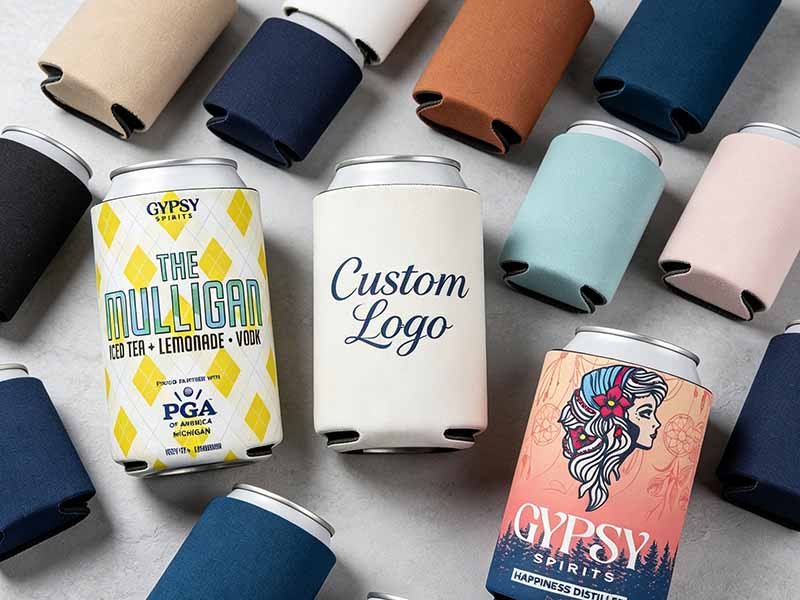
Both neoprene and foam can coolers can carry professional branding, but print performance depends mainly on the laminated surface and chosen decoration process. Sublimation is usually best for full-color or all-over designs on compatible polyester-faced material. Screen printing works well for bold spot-color graphics, while heat transfer suits detailed logos. Stretch, heat, seam allowance, color control, and artwork placement should all be tested on a finished sample.
Which Material Is Better for Full-Color Printing?
Polyester-faced neoprene is commonly selected for full-color sublimation because it provides a smooth printable surface while retaining enough flexibility for the finished cooler to stretch without carrying a thick layer of ink on top.
Sublimation transfers dye into a compatible polyester surface, allowing gradients, illustrations, photographs, and repeating patterns to appear smooth and detailed. The process is particularly useful for artwork that covers most or all of the exterior surface.
The final quality depends on the polyester content, fabric whiteness, surface weave, heat stability, lamination adhesive, pressing temperature, pressing time, artwork resolution, color profile, cutting accuracy, and seam position.
Sublimation normally performs best on a white or light printable surface because it does not create an opaque white ink layer. When a dark finished appearance is required, the dark color is usually printed as part of the artwork onto a white polyester face.
Color approval should be handled carefully. Pantone references can guide production, but sublimation results are influenced by the material, equipment, ink, temperature, and lighting conditions. The same digital color may look different on a monitor, paper proof, printed fabric, and finished sleeve.
For important brand colors, buyers should approve both a printed fabric strike-off and a completed sewn sample. The sample should be reviewed under daylight, cool office lighting, and warmer retail lighting, both flat and stretched over the intended container.
Do Screen Printing and Heat Transfer Work on Both?
Screen printing and heat transfer can work on both neoprene and general foam coolers when the exterior textile is compatible. In most laminated constructions, the decoration is applied to the fabric face rather than directly to the foam core.
Screen printing is effective for bold logos, brewery marks, event names, school graphics, simple illustrations, and promotional messages. It is normally economical when the artwork uses a limited number of spot colors and the same design is repeated across a medium or large order.
Heat transfer is suitable for detailed logos, multicolor artwork, small text, variable names, and graphics that do not justify multiple printing screens. It also allows flexible placement on limited areas of the sleeve.
| Printing Method | Suitable Artwork | Practical Color Range | Main Advantage | Main Risk |
|---|---|---|---|---|
| Sublimation | Photographs, gradients, full-wrap patterns | Full-color CMYK artwork | Broad coverage without a thick surface film | Color shift, shrinkage, or seam mismatch |
| Screen printing | Bold logos and simple graphics | Commonly 1–3 spot colors | Economical and strong for repeated designs | Ink thickness, registration variation, or cracking |
| Heat transfer | Detailed logos, names, and small areas | Full-color or layered artwork | Clean edges and flexible positioning | Film lifting, heat marks, or reduced stretch |
| Woven label or patch | Small premium brand details | Thread or molded colors | Adds texture and perceived value | Additional cost, seam bulk, and attachment risk |
Heat is a major control point. Excessive temperature or pressure can flatten the foam, leave glossy marks, shrink the textile, or weaken the lamination adhesive. A graphic that appears correct on a flat sample may crack or lift when the cooler is stretched.
The approval test should include fitting the printed sample around the intended container and leaving it installed for several hours. After removal, the graphic should be inspected for edge lifting, cracking, permanent distortion, and press marks. Dry and damp rub testing can also reveal color transfer.
How Do Seams Affect the Artwork?
The seam is one of the most common reasons that approved digital artwork looks different on the finished product. A can cooler begins as a flat printed panel, but part of the design may disappear into the seam allowance or become interrupted by stitching.
Faces, QR codes, small text, circular borders, and thin geometric lines should not be positioned directly across a side seam unless the design can tolerate slight registration movement. Even controlled cutting and sewing involve practical tolerances because the material is flexible and stretchable.
A full-wrap design should include enough bleed and use a background that can tolerate small shifts. Gradients, textures, clouds, waves, camouflage, and abstract patterns are easier to align than a narrow line that must meet perfectly around the entire sleeve.
Artwork preparation should identify the visible front area, visible back area, side seam position, bottom seam allowance, safe area for text, top and bottom trim, required bleed, and likely stretch distortion.
The completed sewn sample should be treated as the final artwork approval. A flat printed panel can verify color and image resolution, but it cannot show how much artwork disappears into the seam or how the design changes when installed.
When exact alignment is commercially important, the buyer and manufacturer should agree on acceptable variation before production. Requiring mathematically perfect matching on a flexible mass-produced item may increase rejection rates and cost without creating a noticeable improvement for the end user.
Which Material Looks More Premium?
Neoprene usually creates a more premium impression because it offers a denser hand, smoother surface, stronger recovery, and closer fit. Customers often associate these physical characteristics with higher-quality construction even when they do not know the technical material name.
The difference becomes clearer when the product is handled. A sleeve that springs back after folding, sits smoothly around the can, and carries saturated artwork is more likely to be treated as reusable merchandise rather than a temporary giveaway.
Material alone does not create a premium product. Uneven stitching, visible thread ends, strong chemical odor, inaccurate colors, poorly placed artwork, rough edges, and weak packaging can quickly reduce perceived value.
Premium presentation depends on material thickness, surface smoothness, print saturation, image sharpness, container fit, seam straightness, bottom alignment, product cleanliness, packaging design, and consistency between units.
Foam can still look professional when it matches the purpose of the project. A lightweight foam sleeve with a clear one-color logo may be exactly right for a large outdoor campaign. Attempting to make it imitate a luxury product may add cost without improving the campaign result.
The required quality level should be linked to the sales channel. A festival giveaway, corporate gift, brewery taproom accessory, subscription-box product, and retail item all require different levels of material, printing, finishing, and packaging.
Which Option Offers Better Brand Value?
Foam often offers better value when a campaign prioritizes maximum distribution, low unit cost, lightweight logistics, and short-term use. Neoprene often offers better value when the product is expected to be retained, reused, photographed, gifted, or sold. The stronger option is the one that delivers the required customer experience at the lowest realistic landed cost per useful interaction, not simply the lowest factory quotation.
Is Foam More Cost-Effective for Bulk Orders?
Foam is often the more economical option for large promotional quantities because the base material can cost less and the finished product may weigh less. This is important when an event requires thousands of units and even a small difference in unit price affects the total campaign budget.
The factory price is only one part of the calculation. A professional cost comparison should include printing setup, individual packaging, cartons, shipping volume, freight, import charges, domestic distribution, replacement allowance, and leftover inventory risk.
A foam cooler may have a lower production price but pack less efficiently if it uses a bulky construction that cannot be compressed. A flexible neoprene sleeve may cost more per unit but fit more neatly into cartons. Buyers should therefore request estimated carton dimensions, carton quantity, and gross weight during quotation.
Foam is most attractive when the campaign is short, the artwork is simple, the audience is large, and the product is distributed free of charge. It becomes less attractive when the brand expects customers to keep the product for months or pay a retail price for it.
Timing should also be considered. A low-cost construction that requires a special material order, extended printing setup, or more difficult sewing may not be the best choice when the event date cannot move.
Is Neoprene Worth the Higher Cost?
Neoprene is worth the higher cost when the improvement in durability, fit, printing, and perceived value supports a clear commercial objective. That objective may include better customer retention, stronger retail positioning, higher-quality photography, fewer complaints, longer product use, or a more consistent premium brand image.
Consider two different campaigns. One company needs 20,000 sleeves for a one-day beverage sampling event. Another needs 2,000 sleeves for a paid subscription box. The first company may obtain better value from foam, while the second may benefit more from neoprene because customers are paying for the experience and are more likely to inspect and reuse the product.
A useful comparison is cost per expected use. The calculation divides the landed unit cost by the estimated number of times the product will be used. The estimate will not be exact, but it encourages a more meaningful decision than simply comparing factory prices.
A low-cost cooler discarded after a single event may have a higher cost per use than a more expensive neoprene product retained for dozens of occasions. Neoprene is therefore easier to justify for retail merchandise, corporate gift programs, brewery memberships, outdoor brands, influencer kits, limited-edition artwork, and long-term beverage promotions.
The higher cost should never be paid automatically. It should produce an improvement that the customer can see, feel, photograph, or use.
Which Is Better for Giveaways or Retail?
Foam is generally better suited to high-volume giveaways, while neoprene is usually better suited to retail products and premium gifting. The difference comes from what the recipient expects from the product.
A person receiving a free cooler at a crowded event may mainly care that it is useful, comfortable, and clearly branded. A customer paying for the product expects better fit, clean printing, durable seams, low odor, attractive packaging, and reasonable long-term performance.
A large festival may use lightweight foam with simple spot-color branding. A brewery taproom may choose 3 mm neoprene with full-color artwork. A corporate gift set may require neoprene, controlled Pantone colors, and custom packaging, while a one-day sports activation may benefit from economical foam and bulk packing.
Some companies use both materials in the same program. Foam can be distributed to a general audience, while neoprene is reserved for retail customers, VIP guests, influencers, or loyalty-program members.
This two-level approach allows the brand to control total spending while still providing a more valuable product to selected audiences. It also creates a logical relationship between product quality, customer importance, and campaign objectives.
Does Reusability Improve Marketing Value?
Reusability can improve marketing value because every additional use creates another interaction with the brand. A cooler stored in a kitchen drawer, boat, camping box, office, golf bag, or picnic kit may continue displaying the logo long after the original campaign has ended.
Durability alone does not guarantee reuse. Customers keep products they find useful, visually attractive, comfortable, relevant, and easy to clean. A technically durable sleeve with an unattractive design may never be used again.
Retention is influenced by artwork, material feel, fit on commonly used containers, drying time, odor, portability, seasonal relevance, and emotional connection with the design.
Large event dates can reduce long-term usefulness because the product quickly appears outdated. Placing the date more discreetly and emphasizing an illustration, local reference, phrase, brand icon, or artist collaboration can extend the usable life.
Limited-edition graphics, regional collections, and coordinated merchandise can make the cooler feel collectible. Neoprene often supports this strategy more effectively because it is likely to survive repeated use and maintain its shape.
Brands should remain cautious with broad sustainability claims. A reusable product only creates a practical environmental benefit when customers actually reuse it. Material selection, expected product life, packaging, shipping volume, and user behavior should all be considered before environmental statements are published.
How Should Your Brand Choose?
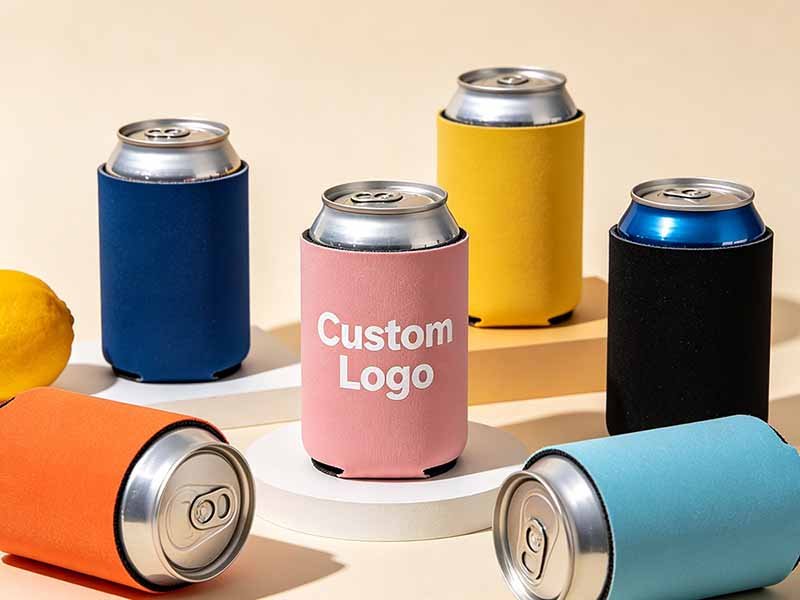
Choose foam when high-volume distribution, low unit cost, lightweight shipping, and short campaign life are the main priorities. Choose neoprene when secure fit, recovery, durability, full-color artwork, repeated use, or premium positioning creates more value. Before production, confirm the container, material chemistry, thickness, surface fabric, finished dimensions, print method, seam construction, packaging, approved sample, and inspection requirements.
Which Material Fits Your Use Case?
The most reliable way to choose is to begin with the commercial purpose rather than the material preference. Determine who will receive the cooler, how it will be distributed, whether it is free or sold, how long it should last, and what impression it should create.
| Use Case | Recommended Starting Point | Main Reason | Key Specification |
|---|---|---|---|
| Large festival giveaway | Foam | Low cost and fast distribution | Simple print and compact packing |
| Brewery retail merchandise | 3 mm neoprene | Repeated use and strong presentation | Sublimation or controlled spot-color print |
| Corporate gift program | Neoprene | Higher perceived value | Refined logo and custom packaging |
| One-day sports activation | Foam | Maximum reach within budget | Lightweight construction and bulk packing |
| Influencer launch kit | Neoprene | Better photography and hand feel | Strong color control and low odor |
| Wedding favor | Foam or neoprene | Depends on budget and keepsake goal | Appropriate date placement and packaging |
| Outdoor brand accessory | 3–4 mm neoprene | Stronger recovery and durability | Secure fit and reinforced seams |
| Full-color art collection | Sublimated neoprene | Supports complex artwork | White polyester face and seam-aware design |
| Short price-led promotion | Foam | Controls total landed cost | Simple construction and reliable bulk output |
| Long-term beverage program | Neoprene | Better retention and repeated use | Standardized material and repeatable color |
A brand does not need to use the same material for every project. A beverage company may choose foam for public events and neoprene for retail merchandise. A corporate buyer may distribute foam products to general attendees while using neoprene in executive gift sets.
The reason for the material decision should be recorded in the product brief. This helps future teams understand whether a change in quantity, target customer, artwork, campaign duration, or sales channel also requires a change in material.
Which Thickness Should You Specify?
Thickness affects far more than insulation. It changes flexibility, hand feel, grip, seam bulk, finished appearance, packing quantity, shipping volume, material cost, and the force required to install the cooler around the can.
Common neoprene options include 2 mm, 3 mm, 4 mm, and 5 mm. A 2 mm construction is light, flexible, and compact, making it suitable where minimum bulk matters. A 3 mm construction provides a practical balance for many standard branded can coolers.
A 4 mm product offers additional structure and cushioning but increases packing volume. A 5 mm construction can feel substantial, although it is normally more appropriate for specialized sleeves or protective products than for basic promotional can coolers.
Three millimeters is a useful starting point rather than a universal rule. A premium outdoor brand may prefer 4 mm, while a high-volume event may choose 2 mm neoprene or a more economical foam construction.
Buyers should confirm whether the quoted thickness refers to the foam core before lamination or to the completed laminated sheet. Measuring pressure should also be controlled because soft foam compresses under a gauge.
The sample should be reviewed together with the proposed packaging. A thicker cooler may reduce the number of units per carton and increase freight cost. It may also require changes to needle selection, seam allowance, and bottom construction.
Thickness should always be approved together with density and hand feel. A thinner, denser material can sometimes feel more substantial than a thicker, low-density sheet.
What Information Should You Send a Manufacturer?
A complete RFQ allows the manufacturer to prepare an accurate quotation and prevents suppliers from pricing different products under the same general description. Sending only a logo and quantity forces the factory to guess the material, container size, construction, printing, packaging, and quality standard.
The RFQ should identify the container format, exact height and circumference, preferred material, thickness, quantity per design, number of colors, artwork format, Pantone references, printing method, print coverage, seam construction, packaging, target market, testing requirements, destination, delivery date, and expected reorder plan.
A physical container sample is extremely useful when the product is not based on a widely recognized can format. Artwork should normally be supplied in AI, EPS, editable PDF, or another production-ready vector format, together with high-resolution reference images when needed.
For custom neoprene can cooler projects, a practical manufacturing reference is an MOQ beginning around 500 pieces, sample development of approximately 5–7 days, and bulk production of approximately 15–30 days. Actual quantities and timelines depend on material availability, printing method, artwork, packaging, and production schedule.
The RFQ should also explain how the product will be used. A manufacturer can recommend a more appropriate specification when it knows whether the cooler is a festival giveaway, retail item, corporate gift, subscription-box accessory, or long-term promotional product.
Do You Need a Sample Before Bulk Production?
A physical sample is essential because a digital artwork proof cannot confirm material feel, elasticity, odor, fit, seam bulk, print adhesion, shape recovery, or behavior after folding.
The completed sample should become the physical reference standard for bulk production. The approval record should include the material name, supplier reference, finished thickness, surface fabric, flat dimensions, container fit, print colors, artwork position, seam type, bottom construction, weight, packaging, revision number, and approval date.
The sample should be installed on the actual can and left in position for several hours. After removal, the buyer should check whether it returns to shape. It should also be folded using the proposed packing method and left under compression overnight.
The printed area can be rubbed with both dry and slightly damp white cloth to check color transfer. Important colors should be reviewed under daylight, office lighting, and warm retail lighting.
Bulk inspection should follow the approved sample and cover incoming material, cutting, printing, sewing, dimensions, fit, cleanliness, packaging, quantity, carton information, and shipment condition.
A structured quality process normally includes material inspection, pre-production sample confirmation, cutting checks, printing checks, sewing-process inspection, semi-finished inspection, final inspection, and packaging inspection before shipment.
A well-controlled sample gives the buyer, factory, printing team, sewing team, and quality inspector the same physical target. This shared reference is one of the most effective ways to maintain consistency from the first bulk order through later reorders.
Final Verdict: Neoprene or Foam?
Neoprene is the stronger all-around choice for brands that need secure fit, shape recovery, repeated use, detailed full-color printing, and a product that feels suitable for retail or premium gifting. Foam remains a commercially sensible option for high-volume campaigns where reach, lightweight logistics, controlled unit cost, and short-term use matter more than extended product life.
The final decision should not be based on a generic statement that neoprene is better or foam is cheaper. It should reflect the intended container, target customer, artwork, campaign duration, order volume, landed cost, packaging, expected number of uses, and required brand experience.
A controlled comparison of actual samples is more valuable than a long list of supplier claims. The samples should be evaluated for fit, thickness, recovery, print quality, seam construction, odor, condensation behavior, packing, and cost before bulk production is approved.
Szoneier is a Shenzhen-based custom bags and soft goods OEM/ODM manufacturer with more than 18 years of experience in material sourcing, sample development, sewing production, quality inspection, packaging, and export delivery. Its custom neoprene capabilities include can coolers, bottle holders, sleeves, lunch bags, covers, protective products, and other sewn neoprene goods.
Brands can provide a product image, physical container, artwork, quantity, preferred thickness, packaging requirement, target market, and requested delivery date. The team can then review the project, compare appropriate material constructions, prepare a sample, and develop a production plan based on the actual use case.