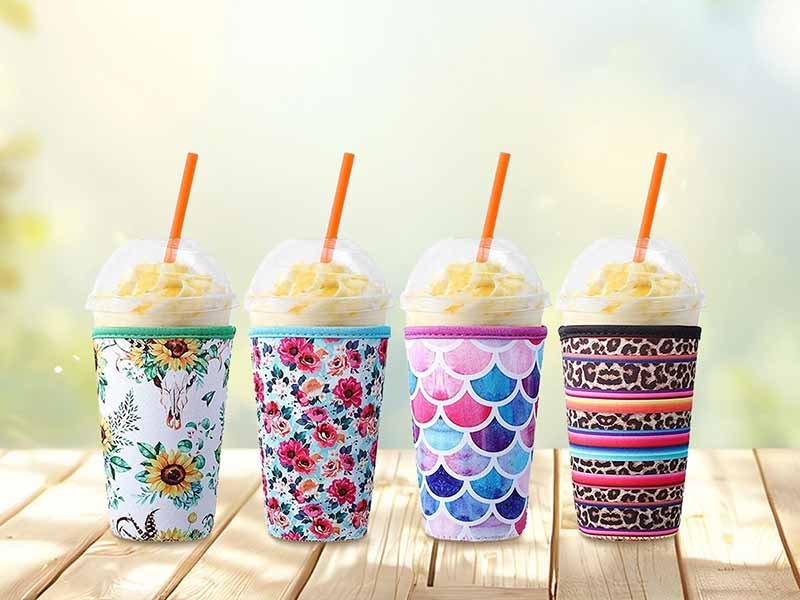
A neoprene koozie appears to be one of the simplest promotional products a company can purchase. It is compact, lightweight, easy to distribute, and built from only a few visible components. That apparent simplicity is also why many bulk orders fail. A slightly incorrect circumference can make a sleeve difficult to install, while an unstable foam sheet may feel acceptable during sampling but lose its shape after repeated use. A print can look accurate on a flat panel yet stretch, shift, or become visually unbalanced when fitted around a cold can.
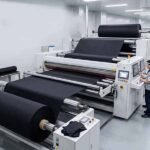
Neoprene koozies are manufactured by laminating fabric onto a neoprene or rubber-foam sheet, printing the approved artwork, cutting the panels, sewing or bonding the structure, inspecting the dimensions and decoration, and packing the finished products. Bulk buyers should control material composition, thickness, container fit, print method, seam construction, tolerances, packaging, and the approved production sample before mass manufacturing begins.
The most expensive koozie problem is rarely the quoted unit price. It is receiving thousands of sleeves that technically follow a vague purchase order but do not fit the intended beverage container, reproduce the approved brand colors, or deliver the user experience expected by the customer. One event buyer discovered this only days before a national promotion: the sleeves had been manufactured for standard cans, while the beverage sponsor used slim cans. The products were not damaged, and the sewing was acceptable. The original specification was simply incomplete. This guide explains how buyers can prevent that kind of costly mistake before materials are ordered, artwork is printed, or bulk production starts.
What Is a Neoprene Koozie?
A neoprene koozie is a flexible insulated sleeve designed to fit around a beverage can, bottle, or cup. It slows heat transfer, reduces the direct contact between condensation and the user’s hand, improves grip, and provides a reusable surface for branding. Its actual performance depends on the foam composition, thickness, surface fabric, finished dimensions, seam construction, and compatibility with the intended container.
What Does a Neoprene Koozie Do?
A neoprene koozie does not actively refrigerate a beverage. Instead, the closed-cell foam forms a flexible barrier between the container, the user’s warm hand, and the surrounding environment. This barrier slows the rate at which external heat reaches the cold beverage and reduces the direct warming effect created when a person holds an unprotected can for an extended period.
The sleeve also helps manage surface condensation. Moisture can still form on the beverage container, especially in humid outdoor conditions, but the fabric-laminated foam separates much of that moisture from the hand. This makes the drink more comfortable to hold and can reduce wet rings on tables, counters, outdoor furniture, and event surfaces.
For bulk purchasers, insulation is only one part of the commercial value. A koozie can function as event merchandise, beverage packaging, corporate gifting, sports promotion, hospitality equipment, brewery merchandise, festival distribution, or a reusable retail accessory. Unlike a disposable leaflet, a useful drink sleeve can remain visible throughout the consumption of the beverage and may be reused after the original event.
Performance claims should remain realistic. A 3 mm neoprene sleeve can slow warming, but it will not perform like a vacuum-insulated stainless-steel holder. A stitched sleeve may resist splashes and light surface moisture, but needle holes and seams generally prevent it from being completely waterproof. Reliable specifications and measured claims create more trust than exaggerated descriptions.
Which Drink Sizes Need Different Fits?
Container capacity does not provide enough information to determine the correct koozie pattern. Two containers may both hold 12 ounces of liquid while having substantially different heights, diameters, sidewall shapes, and base profiles. Standard cans, slim cans, tall cans, glass bottles, aluminum bottles, and tapered cups therefore require different sleeve dimensions.
A loose koozie may rotate, slide downward, create wrinkles, or leave the logo facing away from the user. A sleeve that is too tight may be difficult to install, distort the printed artwork, place excessive tension on the side seams, or prevent the container from sitting evenly on a flat surface. Because neoprene stretches, even a difference of several millimeters can noticeably change the finished performance.
The following dimensions are practical early-development references rather than universal packaging standards. Beverage-container dimensions may vary between brands, filling plants, regional markets, and packaging suppliers, so the production pattern should always be validated against the actual container used by the buyer.
| Container Type | Typical Diameter | Typical Height | Common Fit Risk |
| Standard 12 oz can | 65–66 mm | 120–123 mm | Sleeve becomes loose or excessively tight |
| Slim 12 oz can | 57–58 mm | 155–157 mm | Standard sleeve appears too wide and short |
| Tall 16 oz can | About 66 mm | 157–160 mm | Standard sleeve provides insufficient height |
| Glass bottle | 60–66 mm body | 230–240 mm | Neck, zipper, base, or shoulder mismatch |
| Tapered reusable cup | Project-specific | Project-specific | Top and bottom widths require different shaping |
For a large promotional or retail program, the safest process is to send the manufacturer an empty container, a dimensioned drawing, or the official packaging specification from the beverage supplier. The sample should then be fitted to that exact container before the cutting pattern, artwork position, and finished dimensions are approved.
Which Koozie Styles Are Available?
Flat-fold koozies are the most common option for high-volume promotional distribution because they collapse easily, pack efficiently, and require relatively little carton space. They normally use two side seams and an open, partially closed, or lightly structured bottom. After the can is inserted, the flexible foam expands and the sleeve takes shape around the container.
Round-bottom and fully structured koozies create a more defined three-dimensional appearance. They may stand more evenly when empty and often feel more substantial in the hand, but they require additional cutting, sewing, and inspection. Their larger packed volume can also increase carton size and international freight costs.
Bottle koozies frequently include zippers, neck openings, carrying handles, reinforced bases, or adjustable closures. Retail-oriented products may also incorporate binding, woven labels, silicone patches, rubber badges, printed care labels, or branded packaging. These details can improve presentation, but each component adds material cost, assembly time, inspection points, and potential supply-chain dependencies.
Custom-shaped koozies are often developed around licensed characters, mascots, sports jerseys, fruit shapes, beverage silhouettes, surfboards, animals, or campaign graphics. The visual design must still function around a cylindrical container. Thin extensions may curl, sharp corners may become difficult to stitch, and important artwork can distort when the product stretches.
The best structure is determined by the actual program. A large festival may prioritize compact packing and fast distribution, while a brewery gift set may require a fuller hand feel and retail-ready presentation. A sports organization may prefer a recognizable custom silhouette. Additional features are valuable only when they improve the user experience or commercial positioning.
Which Neoprene Should Buyers Choose?
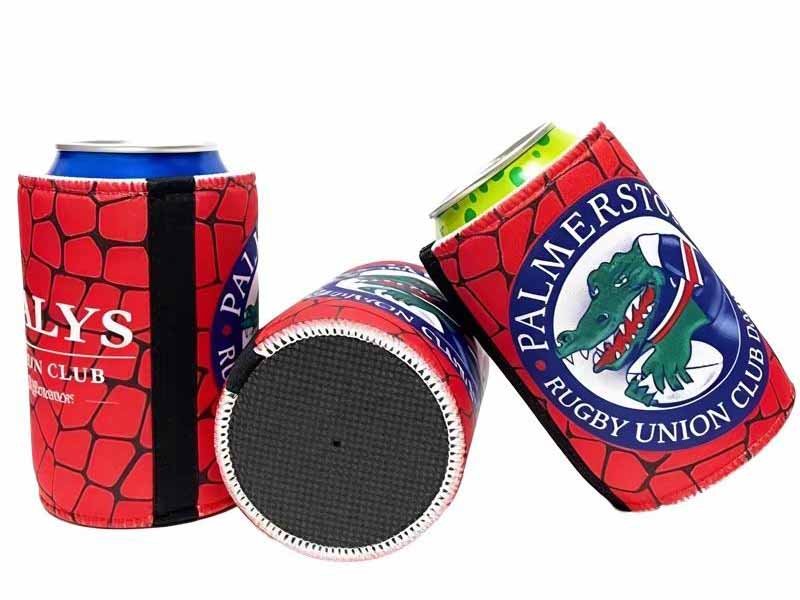
Most standard promotional koozies perform well with approximately 3 mm laminated neoprene or a suitable SBR-based foam. Lightweight giveaways may use 2 mm material, while premium or more structured products may use 4–5 mm sheets. Buyers should compare composition, thickness, density, recovery, surface fabric, odor, and lamination quality rather than approving the material based only on the word “neoprene.”
What Are CR, SBR, and Blended Neoprene?
CR refers to chloroprene rubber, the material traditionally associated with the neoprene name. It is valued for flexibility, weather resistance, durability, and relatively stable physical performance. SBR, or styrene-butadiene rubber, is widely used in laminated foam products because it can offer suitable cushioning, insulation, elasticity, and print compatibility at a more economical cost.
Blended materials combine CR and SBR in different proportions. The actual formulation varies between material suppliers, so two sheets both described as “neoprene” may have noticeably different firmness, odor, stretch, compression recovery, surface appearance, and long-term durability. One material may quickly return to its original shape, while another may retain creases or feel noticeably softer.
For many promotional drink sleeves, a well-manufactured SBR-based or blended foam is commercially suitable. Pure CR is not automatically necessary for every giveaway, festival, corporate event, or short-term campaign. The correct decision depends on expected service life, brand positioning, retail price, odor requirements, tactile quality, environmental conditions, and frequency of use.
Problems usually begin when quotations contain vague descriptions. A line stating only “3 mm neoprene” does not identify the foam formulation, total composite thickness, surface textile, firmness, lamination method, or recovery performance. Buyers may therefore compare several quotations that appear similar but are based on different materials.
Physical swatches provide a more reliable approval method than marketing terminology. The procurement or product-development team should stretch the sheet, compress it, inspect the edge, evaluate recovery, check the odor after unpacking, compare surface smoothness, and retain a signed material reference for mass production.
Is 2 mm, 3 mm, 4 mm, or 5 mm Better?
Thickness affects the sleeve’s flexibility, structure, perceived quality, insulation, weight, sewing difficulty, packed volume, and cost. A thicker product may feel more substantial, but it is not automatically better for a flat-fold promotional design that needs to be mailed, distributed, or packed in high quantities.
| Thickness | General Feel | Typical Application | Main Trade-Off |
| 2 mm | Lightweight and highly flexible | Large giveaways and compact mailers | Less cushioning and structural feel |
| 3 mm | Balanced flexibility and body | Standard bulk can coolers | Practical all-purpose specification |
| 4 mm | Fuller and more structured | Premium promotions and retail programs | Higher material use and carton volume |
| 5 mm | Thick and protective | Specialty, bottle, or heavy-duty designs | Harder to fold, sew, and compress safely |
Three-millimeter laminated material is often a practical starting point for standard can sleeves. It usually provides enough body to feel substantial without making the product too stiff, heavy, or bulky. It is also compatible with common sublimation, screen-printing, cutting, and sewing processes.
Two-millimeter material can be suitable where packed volume, mailing weight, and unit cost are important. However, the finished sleeve may feel less structured and may show creases more easily. Four- or five-millimeter foam can support premium positioning, specialty shapes, bottle holders, or products requiring additional protection, but it can create bulkier seams and require more careful pattern engineering.
The stated thickness should be clarified before material approval. Some suppliers refer only to the foam core, while others refer to the total laminated composite. Surface fabric and adhesive layers can slightly affect the final measured result. Soft foam should also be measured with consistent pressure because excessive gauge force compresses the material and produces an inaccurate reading.
How Does Fabric Lamination Affect Performance?
Most printed koozies use neoprene or rubber foam laminated with polyester or nylon fabric. The textile surface protects the foam, improves appearance, supports printing, and determines much of the finished hand feel. Double-sided lamination provides a fabric surface on both the inside and outside, while single-sided constructions may leave the foam exposed or use a different backing material internally.
Polyester is widely used for sublimation because it accepts transferred dye effectively. A smooth white polyester surface normally produces brighter colors, cleaner details, and more predictable full-coverage printing than a dark or heavily textured fabric. Nylon can provide a different tactile character and abrasion profile, but the decoration process must be selected carefully.
Lamination quality is critical because a koozie stretches whenever a container is inserted or removed. Weak bonding can create bubbles, wrinkles, edge lifting, or fabric-to-foam separation. Some defects appear only after repeated stretching, so a quick inspection of a flat, unused sample does not provide enough information.
A practical material review should include repeated stretching, compression, folding, edge bending, and recovery. The laminated surface should remain smooth, the fabric should stay bonded to the foam, and the sheet should return close to its original form without obvious delamination or permanent rippling.
Color consistency also begins with the laminated textile. White surface fabrics from different production batches may have slightly different undertones, which can affect sublimated artwork. Repeat-order programs should retain approved material and print references so later production can be checked against the original standard.
Which Material Density Should Buyers Specify?
Density influences firmness, compression resistance, recovery, insulation, and perceived quality, but density figures are not always reported consistently in commercial quotations. A higher number does not automatically create a better drink sleeve because the product still needs to stretch comfortably around the container.
A very soft foam can feel pleasant and fold easily, but it may crease permanently, lose its shape, or feel less substantial. A very firm sheet can appear more structured, yet it may become difficult to install and can place additional tension on seams, printed surfaces, and laminated edges.
Instead of relying on density alone, buyers can approve a physical firmness and recovery standard. The production material should behave like the approved swatch when it is compressed, folded, stretched around the intended container, and released. This approach is especially useful when suppliers use different material-grade terminology.
Incoming material inspection should also review thickness variation, visible pinholes, irregular foam cells, odor, textile adhesion, stains, surface marks, roll creases, and batch-to-batch color. Low-cost substitutions often change these less visible characteristics before they create obvious appearance defects.
Material approval must occur before full printing begins. Once artwork has been transferred across hundreds of sheets, replacing unsuitable foam becomes expensive and can seriously affect the delivery schedule. For repeat orders, the original reference swatch should remain part of the quality-control file.
How Are Custom Koozies Made?
Custom neoprene koozies are generally produced by confirming the container, material, dimensions, structure, and artwork; preparing the laminated foam sheets; printing the design; cutting the panels; sewing or assembling the structure; trimming and cleaning the product; inspecting fit and decoration; and packing the finished order. Printing may occur before or after cutting, depending on coverage, registration, and production equipment.
How Is Neoprene Prepared and Cut?
Production should start only after the product specification has been confirmed. The manufacturer needs the container dimensions, finished sleeve measurements, material composition, thickness, surface fabric, structure, artwork, logo position, colors, quantity, packaging method, and inspection requirements.
Laminated sheets are checked before printing and cutting. Common inspection points include thickness, surface color, fabric adhesion, wrinkles, stains, odor, foam-cell defects, roll pressure marks, and batch consistency. Material that has been tightly rolled or compressed should be allowed to relax before accurate cutting and measurement.
The cutting pattern must account for stretch and seam allowance. A panel cannot simply be drawn to the exact circumference of the can because the final fit also depends on foam elasticity, fabric direction, seam type, stitch tension, and the desired gripping force around the container.
Standard panels are often cut with steel dies and press equipment. Digital cutting may be used for development samples, low-volume prototypes, or complex silhouettes. Once a custom pattern is approved, a dedicated cutting die may improve consistency and production speed.
Full-surface artwork requires additional planning. The print file should include bleed beyond the cutting line, while important text, faces, QR codes, and logos should remain inside a safe area. A flat printed sheet may look correct before sewing but become visually unbalanced after the seam consumes part of the design.
For products with critical registration, buyers can request a printed-panel review or a completed pre-production sample. The final evaluation should always be made with the koozie fitted around the intended container rather than viewed only as a flat component.
Which Printing Method Works Best?
The best decoration method depends on artwork complexity, order quantity, color count, surface fabric, coverage area, expected durability, and target cost. No single process is ideal for every neoprene koozie program.
| Printing Method | Best Use | Main Strength | Main Limitation |
| Sublimation | Full-color and edge-to-edge artwork | Soft hand, gradients, and broad coverage | Requires a suitable polyester surface |
| Screen printing | Simple logos and spot colors | Economical at higher volume | Separate setup is needed for each color |
| Heat transfer | Detailed local graphics | Flexible placement and clear detail | Transfer layer may remain noticeable |
| Digital transfer | Complex multi-color designs | Lower setup for varied graphics | Durability and cost depend on the system |
| Embroidery | Small premium marks | Tactile and dimensional appearance | Can stiffen or distort thin foam |
| Woven or rubber patch | Retail-style branding | Strong identity and added texture | Additional material, labor, and weight |
Sublimation is commonly selected for photographic imagery, gradients, repeated patterns, and all-over designs. The dye penetrates the polyester surface instead of forming a thick layer on top, allowing the printed area to remain relatively flexible when the sleeve stretches.
Screen printing is effective for one-color or limited-color promotional logos. It can be cost-efficient for larger quantities and provides strong solid-color coverage. The ink deposit should still be tested during stretching because certain formulations may crack or become visually distorted.
Heat transfer and digital-transfer systems can reproduce detailed artwork without separate screens for every color. Their performance depends on film quality, adhesive, temperature, pressure, pressing time, and surface-fabric compatibility. Poorly controlled transfers may peel, crack, wrinkle, or leave an unwanted glossy area.
Print approval should review more than color accuracy. The buyer should check artwork scale, seam interruption, edge coverage, registration, direction, stretch distortion, readability, and appearance around the actual container. Digital renderings are useful for planning, but the physical production sample should remain the final visual reference.
How Are Seams Sewn and Finished?
Neoprene requires stretch-compatible sewing because the material expands during installation and use. Common constructions include flat seams, overlock-style seams, zigzag stitching, bound edges, reinforced bottom seams, and combinations of these methods. The correct construction depends on thickness, shape, intended appearance, and required durability.
Needle size, thread selection, stitch density, seam allowance, and machine tension must be balanced carefully. An overly aggressive needle or dense stitch can weaken the foam near the edge, while loose tension may allow the seam to open. Excessive tension can cause puckering, twisting, or visible compression along the seam.
Side seams should remain straight when the sleeve is fitted around the container. If one panel is stretched more than the other during sewing, the finished product may lean or rotate. Bottom seams require additional accuracy because an uneven base can prevent the can from standing securely.
Finishing includes trimming loose threads, cleaning surface marks, checking exposed foam, removing adhesive residue, confirming edge alignment, and reviewing the top and bottom openings. Binding and decorative trim can improve appearance, but they also add thickness and may reduce stretch.
Inspection should include gently pulling the seam while the product is installed on the intended container. A seam that looks acceptable when the sleeve lies flat may reveal skipped stitches, weak tension, torn foam, or uneven alignment only after it is expanded.
How Are Custom Shapes Developed?
Custom-shaped koozies begin with the same functional requirement as standard sleeves: they must fit the intended container securely. The decorative outline is developed around that functional pattern rather than replacing it.
The process normally starts with accurate container measurements and a basic fitted sleeve. Designers can then add ears, handles, fins, mascot features, jersey shoulders, fruit leaves, character outlines, or branded extensions. These decorative areas must remain stable after cutting, sewing, packing, and repeated use.
Very narrow projections may curl, while sharp internal corners can tear or become difficult to stitch cleanly. Large extensions increase material consumption and carton volume. Artwork placed near decorative edges may also shift or become distorted when the main body stretches around the drink.
A reliable development process uses a physical sample before final tooling is approved. The sample should be tested for installation force, grip, removal, recovery, seam tension, edge stability, artwork position, and overall appearance. Retail programs should also review how the product looks when displayed empty.
A custom shape succeeds only when it remains recognizable and practical on the actual beverage container. An attractive flat illustration is not enough. Pattern engineering, seam position, material elasticity, printable area, and packing behavior must work together.
How Is Bulk Quality Controlled?
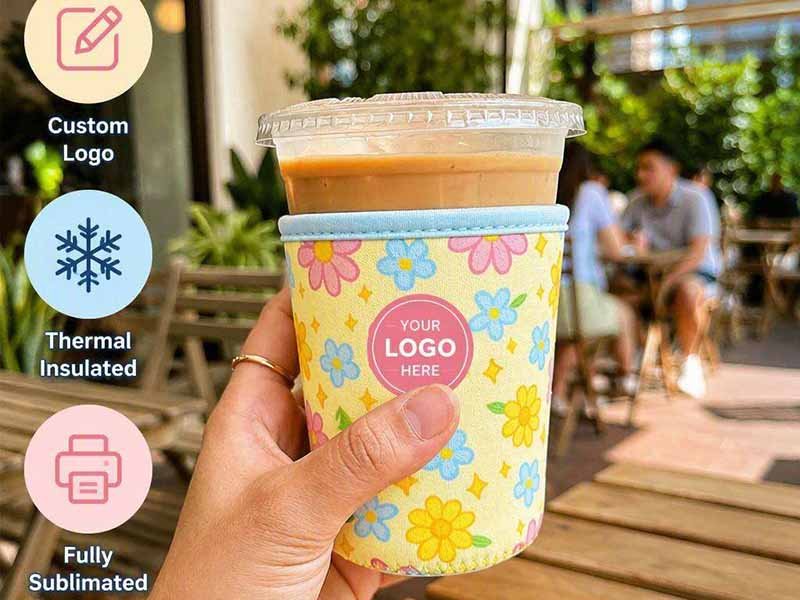
Bulk quality is controlled by converting the approved sample into measurable standards for material, dimensions, container fit, printing, sewing, workmanship, packaging, and quantity. Inspection should occur during material preparation, printing, cutting, sewing, finishing, and final packing. A retained approved sample provides the factory and buyer with a clear physical reference throughout production.
Which Specs Belong in the Tech Pack?
A koozie tech pack can be more concise than the technical package for a complex backpack, but it still needs to eliminate assumptions. It should clearly show what is being produced, which materials are approved, how measurements are taken, where the artwork is positioned, and how the finished products are packed.
Finished dimensions should be separated from cutting dimensions. Measurement points must be shown on the drawing because the word “width” can refer to the flat external width, internal opening, individual panel width, or full circumference. Without a defined method, different people can record different values for the same sleeve.
A practical specification normally includes the intended container, measured diameter and height, finished sleeve size, material composition, nominal thickness, surface fabric, seam type, thread color, artwork file, decoration method, color references, packaging, carton requirements, and quality tolerances.
Artwork should include a version number, final dimensions, orientation, safe areas, and exact logo location. Important details should be measured from a fixed edge or centerline rather than positioned only by visual estimation on a rendering.
Packaging instructions should identify the pieces per bag, pieces per carton, folding method, barcode location, warning labels, retail cards, master-carton markings, and any limits on compression. The destination and required arrival date should also be included because they influence packaging strength and shipping planning.
The final approved sample should be labeled with a date or version. Comments spread across emails, messaging applications, marked photographs, and separate documents should be consolidated into one controlled production file before manufacturing begins.
How Are Fit and Dimensions Tested?
Fit testing should use the intended physical container whenever possible. Flat measurements are necessary, but they do not fully explain how the sleeve behaves after the material stretches around the can or bottle.
| Inspection Point | Practical Reference | Common Problem |
| Finished height | Approved value, often controlled within about ±2 mm | Uneven top or insufficient coverage |
| Flat width | Approved value, often controlled within about ±2 mm | Loose or excessively tight fit |
| Logo position | Compared with the approved sample | Artwork moves toward the side seam |
| Seam alignment | Straight while fitted | Sleeve twists around the container |
| Top opening | Easy installation without excessive force | Foam or print becomes overstretched |
| Bottom position | Container stands evenly | Base becomes uneven or distorted |
| Surface condition | Clean, smooth, and consistent | Stains, wrinkles, bubbles, or marks |
| Recovery | Returns close to its original form | Permanent stretching or deep creases |
These tolerances are practical examples rather than universal industry standards. A simple promotional sleeve may accept different limits from a tightly fitted retail product with borders, centered logos, or repeated patterns. The buyer and manufacturer should agree on project-specific limits before production.
Inspectors should insert and remove the container several times. They should check whether the sleeve rotates, slides, bunches, exposes too much of the can, distorts the artwork, or creates excessive installation force. The product should recover after removal without obvious permanent deformation.
Measurements should be taken using consistent tools and pressure. Soft foam compresses easily, so excessive force from a gauge or ruler can change the result. Production and quality teams should use the same measurement points, reference surfaces, and inspection method.
How Are Print and Seam Defects Checked?
Print inspection should occur under consistent lighting because textured fabrics can make the same color appear different under daylight, warehouse lamps, or warm office lighting. The production color should be compared with the approved physical print rather than only with a computer display.
Common print defects include color variation, incomplete coverage, transfer marks, blurred edges, registration errors, unexpected lines, image distortion, peeling, cracking, and artwork shifted toward the seam. Full-surface designs should be checked around the sides and bottom, where alignment issues are often easiest to identify.
Seam inspection covers stitch continuity, density, thread tension, alignment, color, loose ends, exposed foam, reinforcement, and material damage. Lightly stretching the seam can reveal skipped stitches or weak tension that remain hidden when the product lies flat.
The inside of the sleeve also requires inspection. Uneven trimming, rough seam allowances, loose threads, stains, exposed adhesive, or sharp edges can affect user comfort even when the exterior appears acceptable.
Defect classifications should be agreed before bulk inspection. An incorrect material, open seam, unreadable barcode, seriously shifted logo, or wrong container fit may be treated as a major problem. A small hidden thread end may receive a different classification. Clear standards reduce disputes after inspection.
How Do Samples Match Bulk Production?
Sample-to-bulk consistency depends on controlling materials, artwork, patterns, machines, and process changes. The final approved sample should use the intended production material, print method, seam construction, thread, accessories, and packaging whenever possible.
Development samples are sometimes made with available materials only to confirm size or structure. This can be acceptable when every temporary difference is clearly recorded. Before bulk production, the buyer should approve the actual production sheet, surface fabric, print result, and construction standard.
A practical approval sequence can include an initial prototype, revised sample, final approved sample, print strike-off or color proof, and pre-production confirmation. One reference sample should remain with the manufacturer, while the buyer keeps a matching sample for future comparison.
Material-batch changes, alternative print profiles, substitute threads, different cutting dies, and changes in surface fabric can all affect the final result. Any necessary substitution should be documented and approved before full production continues.
Useful project-level checks may include thickness measurement, stretch recovery, lamination adhesion, seam pull testing, print rub testing, colorfastness assessment, odor evaluation, dimensional inspection, packaging-count verification, and carton-compression review.
Testing should also correspond to the claims made in marketing. A stitched neoprene koozie should not be described as completely waterproof without appropriate construction and evidence. Specific insulation claims should be based on controlled testing rather than assumptions made only from the material thickness.
What Should Buyers Confirm Before Ordering?
Before placing an order, buyers should confirm the container dimensions, koozie structure, material composition, thickness, surface textile, artwork, print method, quantity, number of SKUs, MOQ, sampling process, production schedule, inspection standard, packaging, destination, and required arrival date. A useful quotation should explain its assumptions and exclusions so that competing offers can be evaluated fairly.
What Drives the Unit Cost?
Material, thickness, product size, printing, structure, quantity, packaging, and the number of SKUs are the main cost drivers. A basic 3 mm flat sleeve with a one-color screen-printed logo requires a different manufacturing process from a 5 mm custom-shaped product with sublimation, binding, a rubber patch, and individual retail packaging.
Thicker material increases consumption, packed volume, and sometimes sewing difficulty. Full-surface printing requires more artwork preparation and process control than a small local logo. Custom silhouettes may require pattern development and cutting dies, while zippers, handles, binding, woven labels, silicone patches, and reinforced bases add both material and labor.
The way an order is divided also affects cost. A 5,000-piece order in one design is generally more efficient than the same total quantity divided across twenty graphics. Every SKU may require separate artwork preparation, print settings, production records, sorting, labels, packaging, and carton identification.
Buyers can request quotations at realistic volume levels such as 500, 1,000, 3,000, 5,000, and 10,000 pieces. The objective is not simply to obtain the lowest number. Quantity breaks help reveal which costs are fixed, when material purchasing becomes more efficient, and how much complexity is introduced by multiple designs.
A useful quotation should state whether sample charges, tooling, tests, individual packaging, barcode labels, freight, import duties, and final delivery are included. Very low initial quotations sometimes exclude essential items that appear later after the project has already entered development.
What Determines MOQ?
MOQ is influenced by material availability, printing setup, custom colors, cutting efficiency, decoration, packaging, and the number of variations. Sewing efficiency is only one part of the calculation.
A standard laminated sheet in an available color can support a lower quantity than a custom-colored fabric requiring a separate dyeing or lamination run. Screen printing requires setup for each color, while multiple sublimation designs still require separate files, print plans, cutting, sorting, and packaging.
Custom retail packaging may have its own supplier minimum. Woven labels, rubber patches, printed boxes, special zippers, and other custom components can each create separate MOQ requirements. The finished-product minimum may therefore be influenced by several component suppliers.
For standard custom neoprene koozie projects, a starting quantity around 500 pieces is common among many manufacturers, although the exact MOQ depends on the design. Custom materials, complicated shapes, multiple colorways, and special packaging can increase the requirement.
Buyers planning several variations should confirm whether the MOQ applies to the total order, each design, each color, or each size. A supplier stating “500 pieces” may mean 500 pieces in total or 500 pieces for every SKU, depending on the production method.
How Long Do Sampling and Production Take?
Lead time should be divided into product development, material preparation, manufacturing, inspection, and transportation. A statement such as “production takes 20 days” may not include artwork approval, sample revisions, material sourcing, testing, final inspection, export booking, or international delivery.
A standard sample may require approximately five to seven working days after the dimensions, material, artwork, sample payment, and construction have been confirmed. Custom shapes, special materials, zippers, patches, multi-process decoration, and retail packaging can require longer development.
Bulk production for a straightforward order may take approximately 15–30 days after the final sample, commercial terms, and production schedule are approved. Actual timing depends on material availability, quantity, SKU count, print process, sewing complexity, factory workload, packaging, and inspection.
Courier transportation and buyer-review time should be added to the sampling period. When a revision is required, the project may return to pattern development, artwork adjustment, printing, or material selection. Laboratory testing may also extend the schedule when specific market or retailer requirements apply.
International delivery can range from several days by express courier to several weeks by sea freight. Buyers working toward a fixed festival, launch, promotion, or retail date should plan backward from the required warehouse-arrival date and allow time for customs clearance and local transport.
How Do You Evaluate a Manufacturer?
A capable manufacturer should be able to explain why a particular material, thickness, pattern, print process, seam, and packaging method suits the project. A supplier that provides only a price without asking about the container, usage, artwork, quantity, packaging, or deadline may not have reviewed the manufacturing risks carefully.
Evaluation should cover material knowledge, sample-development capability, printing control, sewing experience with elastic foam, quality procedures, packaging capability, export experience, communication, capacity planning, and repeat-order management.
Buyers should ask how the factory maintains the approved sample during production. They should confirm whether the bulk material will match the sample, how colors are controlled, when inspections occur, which records are retained, and what process is followed when a material or component becomes unavailable.
Photographs and videos of similar products can support an evaluation, but they should not replace a physical sample or technical discussion. For a serious sourcing program, a video review or factory meeting can help buyers understand the sample room, material storage, cutting, printing, sewing, inspection, packing, and project-management process.
A complete RFQ should include the product style, actual container dimensions, quantity, number of designs, preferred thickness, artwork, Pantone colors, print process, packaging, destination, required arrival date, and testing requirements. Clear information enables the manufacturer to recommend a realistic construction and provide a more comparable quotation.
Start Your Custom Neoprene Koozie Project
A successful bulk koozie order begins with one practical question: what must the finished sleeve do? It may need to fit a specific beverage can, support a national event, reproduce a brewery’s brand colors, arrive in retail-ready packaging, or remain consistent across repeat orders and multiple markets. Once that requirement is clear, the material, thickness, printing, construction, quality limits, packaging, and logistics can be selected around it.
Szoneier is a Shenzhen-based custom bags and soft goods OEM/ODM manufacturer with more than 18 years of experience in material sourcing, sample development, sewing production coordination, quality inspection, packaging, and export delivery. Its product-development system covers custom neoprene koozies, bottle holders, sleeves, bags, protective covers, and related laminated-foam products for global brands, retailers, importers, promotional companies, and other commercial buyers.
For an efficient project review, buyers should prepare the intended koozie style, physical container dimensions, required quantity, number of designs, preferred material thickness, artwork files, Pantone references, packaging method, destination country, requested arrival date, and any testing or inspection requirements. A physical sample, technical drawing, reference image, or initial concept can also be used to begin development.
Detailed RFQs, artwork files, tech packs, packaging specifications, and quality requirements can be sent to info@szoneier.com. Buyers with time-sensitive projects can share their reference image, container dimensions, quantity, destination, and delivery target through WhatsApp at (+86) 13423847456. Clear project information allows the manufacturing team to recommend a practical material, pattern, decoration process, quality plan, packaging method, and production schedule before the first sample is made.