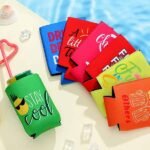
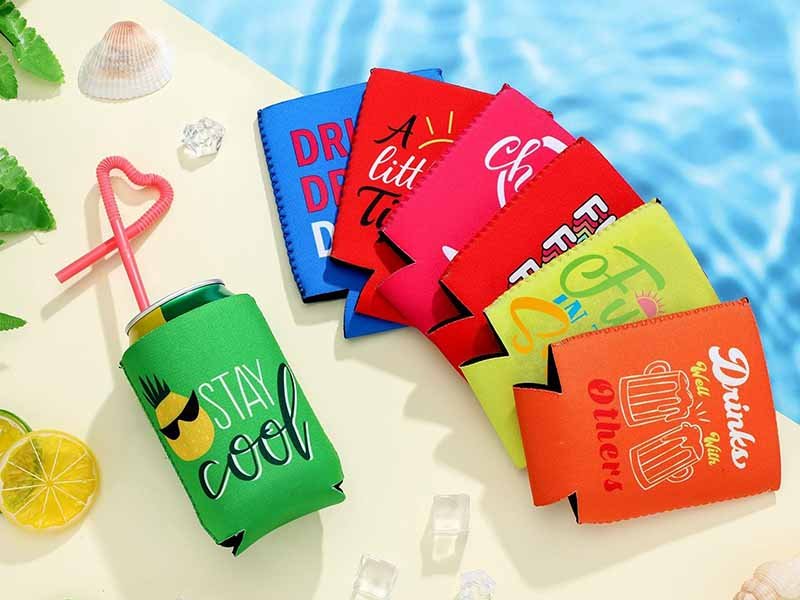
A small naming difference can create a surprisingly large sourcing problem. One supplier may quote a “foldable neoprene koozie,” another may offer a “flat neoprene can cooler,” and a third may call what appears to be the same item a “collapsible drink sleeve.” Their product photos can look nearly identical, yet the samples may differ in bottom construction, internal dimensions, neoprene thickness, sewing allowance, print coverage, packing volume, and the amount of force needed to insert the can.
A foldable neoprene koozie and a flat neoprene can cooler usually describe the same basic collapsible sleeve: a soft, sewn neoprene product that lies flat when empty and expands around a beverage can. However, “flat can cooler” may also describe an open-bottom sleeve, wraparound cooler, or slap-style design. Buyers should compare the physical construction and specifications rather than relying on product names alone.
This distinction matters when the product is being ordered by the thousand. A sleeve that is only a few millimeters too wide may rotate around a slim can and hide the printed logo. A pattern that is too narrow can make insertion difficult, stretch circular artwork into an oval, and place unnecessary stress on the seams. A poorly developed bottom can make the fitted product lean on a table even though it looked perfect in a flat photograph.
The practical question is therefore not simply whether foldable and flat can coolers are different. The better question is which construction, thickness, fit, print process, and packaging method will work for the exact beverage container and sales channel. The answer becomes much clearer once the product is examined as a manufactured soft good instead of a generic promotional giveaway.
Are Foldable Koozies and Flat Can Coolers the Same?
In most promotional-product catalogs, foldable neoprene koozies, collapsible can coolers, and fold-flat neoprene sleeves describe the same general product. They remain flat during storage and expand when a can is inserted. However, “flat can cooler” is not a standardized technical term, so buyers should confirm the bottom style, closure, panel construction, material thickness, and target container before comparing quotations.
Product Names
The naming confusion exists because most product names are written to attract buyers rather than define manufacturing specifications. “Foldable” highlights storage convenience. “Collapsible” describes how the sleeve compresses after use. “Flat” may refer to the condition in which the product is shipped or measured. “Koozie,” “can cooler,” “drink sleeve,” and “beverage insulator” can all refer to a similar product, depending on the supplier, country, catalog, or sales platform.
The word “koozie” is especially common in North American everyday language. Buyers may use it to describe nearly any soft beverage sleeve, even when the material is not technically neoprene. Manufacturers and international sourcing teams often prefer terms such as “neoprene can cooler,” “collapsible can sleeve,” or “laminated neoprene beverage holder” because these descriptions provide more useful information during quotation and sample development.
A name such as “custom flat koozie” does not confirm the material thickness, intended can size, bottom structure, face fabric, or printing process. A more precise description would be “custom 3 mm polyester-laminated neoprene collapsible can cooler for a standard 12 oz can.” That wording immediately narrows the material, format, structure, and expected application.
Buyers should therefore treat the product name as the beginning of the discussion rather than a complete specification. The factory still needs measurable information before it can determine whether two quoted products are truly comparable.
Construction Types
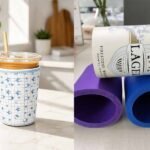
A conventional foldable neoprene can cooler is normally made from flexible laminated panels joined by sewing. The panels lie together when the sleeve is empty. Once a beverage can is inserted, the material stretches around the body while the lower section opens to support the base. This is the familiar construction used for many promotional events, brewery campaigns, corporate gifts, and retail accessories.
An open-bottom sleeve may appear almost identical from the front, but the base of the can remains partly or fully exposed. This design can reduce material consumption and simplify production, although it provides less coverage around the bottom and allows condensation to reach the table more easily. It may also move vertically if the sleeve is not fitted closely enough.
A wraparound cooler does not require the can to be pushed into a tube. Instead, the material is wrapped around the beverage and secured with hook-and-loop tape, elastic, or another closure. Slap-style products use a flexible internal strip that curls around the container when activated. These products are genuinely flat before use, but their structure, safety considerations, durability, and production cost are different from those of a standard sewn sleeve.
A front-view photograph cannot reliably identify these differences. Serious buyers should request flat, side, rear, bottom, and installed views before approving a quotation or sample.
| Common Product Term | Typical Construction | Storage Condition | Main Point to Confirm |
|---|---|---|---|
| Foldable neoprene koozie | Sewn collapsible sleeve with a flexible base | Flat when empty | Bottom design and internal fit |
| Collapsible can cooler | Usually the same sewn sleeve structure | Compressed or folded flat | Material recovery after storage |
| Flat can cooler | May be a sewn sleeve or wraparound design | Supplied flat | Closure and final three-dimensional shape |
| Open-bottom sleeve | Sewn tube without a fully enclosed base | Flat | Can exposure and vertical movement |
| Slap-style cooler | Flat wrap with an internal curling strip | Flat strip | Mechanism durability and edge comfort |
Product Verification
The simplest way to determine whether two supplier quotations cover the same product is to place them against one specification sheet. The sheet should include the target beverage container, flat finished dimensions, internal circumference, sleeve height, nominal neoprene thickness, face fabric, backing fabric, bottom construction, sewing method, print area, individual packaging, and expected order quantity.
The target container is more important than its labeled capacity. Two cans holding 330 ml may have different body diameters or heights. A sleeve designed around one version may feel loose or overly tight on another. Buyers should provide a physical can, technical drawing, manufacturer specification, or carefully measured sample whenever the container is not a widely recognized standard format.
Thickness also requires clear wording. Some suppliers describe the neoprene foam thickness before lamination, while others provide the approximate total material thickness after fabric has been bonded to both sides. Compression during measurement can create further variation. The approved specification should explain the measurement method and allow a realistic production tolerance.
Once a sample is approved, it should receive a clear version number or approval date. The related material code, artwork file, dimensions, sewing details, and packaging standard should remain attached to that version. This reduces the risk that the sales team, sampling room, printing department, and production line work from different references.
Why the Difference Matters
Small structural differences become more important as order quantity, brand visibility, and distribution complexity increase. A loose sleeve may rotate around the can, causing the main logo to face away from the user or photographer. An excessively tight sleeve may be difficult to install and can distort printed text. A thick bottom seam may prevent the product from sitting evenly, while a poorly placed side seam can interrupt important artwork.
For direct-mail campaigns, the final folded thickness may matter more than insulation. A product that fits into a sample carton may become too bulky after individual bags, cards, or inserts are added. For beverage launches, exact can fit and brand color may be the priority. For retail merchandise, the customer may judge the product by hand feel, edge finish, sewing quality, packaging, and how well it returns to shape after storage.
The conclusion is not that every foldable koozie and flat can cooler is identical. The conclusion is that product names alone cannot prove whether two items are equivalent. A serious purchasing decision should be based on construction drawings, container measurements, approved materials, sample testing, and clearly documented production requirements.
What Design Differences Matter?
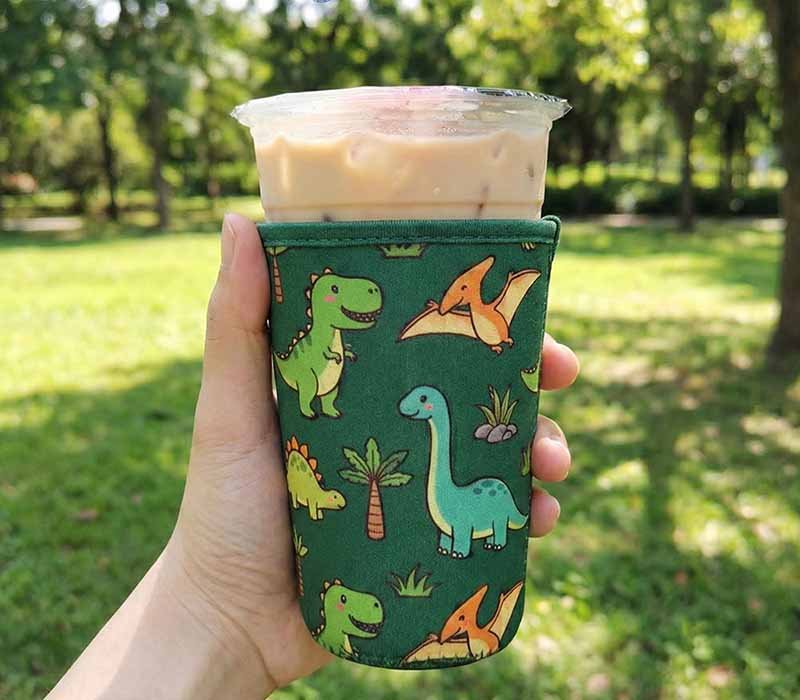
The design details that matter most are neoprene thickness, foam density, panel geometry, bottom structure, seam allowance, surface lamination, and stretch direction. These elements determine how easily the can enters the sleeve, whether the base opens correctly, how the product folds, how the artwork stretches, and whether the approved sample can be reproduced consistently during bulk production.
Neoprene Thickness
Neoprene can coolers are commonly developed in thicknesses between approximately 2 mm and 5 mm. A thinner sleeve is lighter, more flexible, and easier to compress, while a thicker sleeve provides greater cushioning and a heavier hand feel. The correct option depends on how the product will be distributed, used, printed, packed, and positioned in the market.
A 2 mm sleeve can work well for high-volume event giveaways and direct-mail projects where carton efficiency and low weight are important. It folds easily and may be less expensive to transport, but it normally feels less substantial and provides a thinner thermal barrier. The shape of the can can also be more visible through the material.
A 3 mm laminated neoprene construction is a practical starting point for many custom programs. It generally provides enough stretch for installation, sufficient body for clean printing, and a balanced level of insulation without creating excessively bulky seams. This thickness is commonly suitable for brewery promotions, beverage campaigns, corporate gifts, and branded retail accessories.
A 4 mm or 5 mm sleeve can feel more protective and premium, but the pattern must be adjusted to account for the increased seam bulk. Thicker products also occupy more carton volume and may not recover as cleanly from tight packing. Buyers should compare physical samples rather than assuming that a thicker material automatically creates a better product.
| Neoprene Thickness | Typical Application | Main Advantage | Practical Limitation |
|---|---|---|---|
| 2 mm | Direct mail and large giveaways | Lightweight and compact | Less cushioning and structure |
| 2.5 mm | General promotional programs | Balanced portability and cost | Moderate hand feel |
| 3 mm | Branded campaigns and retail promotions | Good fit, print surface, and flexibility | Slightly greater packing volume |
| 4 mm | Premium and protective designs | Thicker feel and improved cushioning | Bulkier seams and cartons |
| 5 mm | Specialized protective applications | Maximum material body | Higher cost and harder folding |
Thickness should always be considered together with foam density, compression, and stretch. Two sheets described as 3 mm can behave differently if one uses softer foam or a more elastic laminated textile.
Bottom Structure
The bottom is one of the most important functional areas of a collapsible can cooler, yet it is often missing from product listings and quotation photographs. A separate oval or circular bottom panel can provide full coverage and a stable base, but its size and sewing alignment must be carefully controlled. A panel that is too large may wrinkle, while one that is too small can pull the side walls inward.
An integrated folded bottom uses fewer separate pieces and can create an efficient flat profile. However, the pattern must allow the base to open fully when the can is inserted. Incorrect fold placement can cause the cooler to lean, twist, or retain a permanent ridge after repeated storage.
Partially open bottoms are sometimes used to improve flexibility and make insertion easier. Air can escape through the opening as the can moves downward, reducing resistance. The trade-off is reduced coverage and a greater possibility that moisture will reach the table. Fully open-bottom sleeves use even less material but rely entirely on the can for stability.
A useful sample test is to install the sleeve on the intended can and place it on a smooth, level surface. The buyer should rotate the can, press lightly on the top, and inspect whether the base remains centered. The sleeve should not rock, lean, or pull the side seams out of position.
Panel Geometry
Panel geometry controls the internal circumference, visible print area, folding behavior, and the amount of stretch applied to the artwork. Most basic collapsible sleeves use two mirrored side panels. This creates clear front and back branding areas, but the two side seams consume part of the material and form visible boundaries.
A one-piece wrapped panel can reduce the number of vertical seams, although it still requires a joining seam and may use a longer cutting area. The remaining seam can become more noticeable because both ends of the pattern meet at the same location. The decision should be based on artwork, cutting efficiency, sewing consistency, and the desired appearance.
Flat panel width is not the same as finished internal width. Several millimeters may be consumed by seam allowance on each side. The exact amount depends on neoprene thickness, stitch type, seam compression, edge finishing, and production method. Copying the outside dimensions of an existing sample without considering these factors can create a sleeve that feels unexpectedly tight.
Stitch tension also influences final dimensions. Excessive tension can compress the foam, create wavy edges, and weaken the seam when the product stretches. Loose stitching can create gaps and inconsistent fit. Bulk production should follow the same seam construction and machine settings approved during sampling.
Surface Lamination
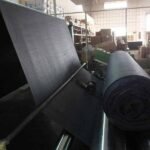
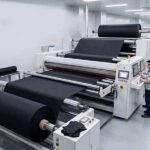
Neoprene used for can coolers is normally laminated with polyester, nylon, or another textile on one or both sides. The fabric provides the visible color, tactile surface, print compatibility, and abrasion resistance. It also changes how the material stretches around the can.
Polyester-faced neoprene is frequently chosen for sublimation because it accepts transferred color and supports detailed full-surface graphics. White or light-colored polyester is generally used when the artwork contains photographs, gradients, or bright colors. Dark stock fabrics are more practical for selected screen-printed logos, woven labels, rubber patches, or heat-transfer graphics.
Nylon-faced material can offer a smooth hand feel and good durability, but the printing method must be matched to the actual fabric. A process that performs well on one laminated surface may show poor adhesion or reduced color intensity on another. Material and printing decisions should therefore be made together.
Lamination quality must survive cutting, printing, sewing, folding, storage, and repeated use. Weak bonding can create bubbles, edge separation, or stiff patches. These defects may not appear immediately after sampling. A finished sample should be folded repeatedly, stored under light compression, and inspected again before the material is approved for a large order.
Which Performs Better in Real Use?
Neither “foldable” nor “flat” guarantees better performance. The real result depends on whether the sleeve matches the container, covers enough of the can, uses suitable laminated neoprene, and maintains its shape after repeated handling. A correctly fitted 3 mm cooler can perform better than a thicker but loose product because fit affects stability, insulation, artwork position, and user comfort.
Can Fit
Standard, slim, sleek, and tall beverage cans require different patterns. A typical North American standard 12 oz can is often approximately 65–67 mm in body diameter and 121–123 mm high. A slim 12 oz can is commonly around 57–59 mm in diameter and 155–157 mm high. These measurements are useful reference points, but actual containers should still be checked.
A standard-width sleeve placed around a slim can may rotate or slide because the internal circumference is too large. The logo may no longer face the intended direction, and air gaps can reduce the feeling of a close, secure fit. A slim sleeve placed on a wider standard can may require excessive force, stretch the artwork, and place stress on the seams.
Labeled capacity does not fully define the container. Two 330 ml cans can have different heights or profiles, especially when they come from different markets or packaging suppliers. Bottles introduce additional variation because the shoulder and body may taper.
A technical drawing or physical container is the most reliable reference. The RFQ should include body diameter, circumference, total height, desired sleeve height, and the distance between the sleeve and drinking rim. When the cooler will be packed together with a beverage, the actual production can should be used during final sample approval.
| Container Format | Approximate Diameter | Approximate Height | Sleeve Requirement |
|---|---|---|---|
| Standard 12 oz can | 65–67 mm | 121–123 mm | Standard-width collapsible pattern |
| Slim 12 oz can | 57–59 mm | 155–157 mm | Narrower and taller sleeve |
| Standard 330 ml can | 65–67 mm | 114–116 mm | Standard width with reduced height |
| Tall 16 oz can | 65–67 mm | 155–158 mm | Standard width with greater coverage |
| Glass bottle | Varies by design | Varies by design | Confirm body and shoulder dimensions |
Insulation
Neoprene slows the movement of heat between the cold beverage and the surrounding environment. It also reduces direct contact between the user’s warm hand and the metal can. This helps the drink warm more slowly, but the sleeve does not actively cool the beverage or replace a rigid vacuum-insulated holder.
Thickness contributes to thermal performance, but it is only one variable. A thick sleeve with a loose fit can allow warm air to circulate between the material and the can. A short sleeve exposes more metal. A properly sized medium-thickness cooler can therefore provide more consistent real-world performance than a thicker product that does not match the container.
Ambient temperature, sunlight, wind, humidity, starting beverage temperature, and handling frequency all influence results. A product tested indoors at 22°C should not be expected to perform identically during an outdoor summer event. Retail claims should be cautious unless they are supported by controlled testing.
For product comparison, identical cans can be filled with the same liquid and cooled to the same starting temperature. One can should remain uncovered, while the others use different sleeve samples. Temperatures can be recorded every 15 or 30 minutes under the same conditions. This test is more useful for choosing materials than relying on how cold the surface feels to the hand.
Condensation
Condensation forms when humid air contacts the cold metal surface of a beverage can. A neoprene cooler reduces the amount of exposed metal and creates a barrier between the moisture and the user’s hand. It can also reduce visible water transfer to tables, desks, event counters, and other surfaces.
An enclosed bottom generally offers more protection than an open-bottom sleeve because it covers the lower part of the can. However, moisture may collect inside the base during humid conditions. The product should be allowed to dry after use rather than being stored while wet.
The outer textile changes how moisture appears. Some fabrics show dark wet patches quickly, while others hide them more effectively. A soft knit may temporarily hold a small amount of moisture at the surface, but it should not remain damp for an unreasonable period. Buyers developing retail products should inspect both performance and appearance.
A practical condensation test can be conducted by placing a chilled can inside the cooler and observing it after 15, 30, and 60 minutes. The tester should note where moisture appears, whether it reaches the hand, whether the base leaves a water ring, and how long the material takes to dry.
Storage and Reuse
Foldable neoprene sleeves are popular because they occupy little space when empty. They can be placed in direct-mail envelopes, promotional kits, event cartons, subscription boxes, drawers, or pockets. Their actual packing efficiency depends on material thickness, bottom construction, individual packaging, and the direction in which the products are stacked.
Repeated folding can expose weaknesses that are not visible on a new sample. Poor lamination may develop bubbles or edge separation. A badly developed bottom may retain a permanent ridge. Heavy surface ink may crack if it does not stretch with the laminated fabric.
A basic reuse test should include at least 20 folding and unfolding cycles, followed by installation on the intended can. The side seams should remain straight, the bottom should open without hand adjustment, and the product should return close to its original form. The print should not crack, peel, or become visibly distorted.
For orders that may remain in storage for several months, packed samples should also be compressed in the proposed carton arrangement and inspected after several days. This simulates how the product may behave during warehousing and international transport. A reusable cooler creates more brand exposure only when it continues to look clean and function properly after repeated use.
How Do Custom Printing Options Compare?
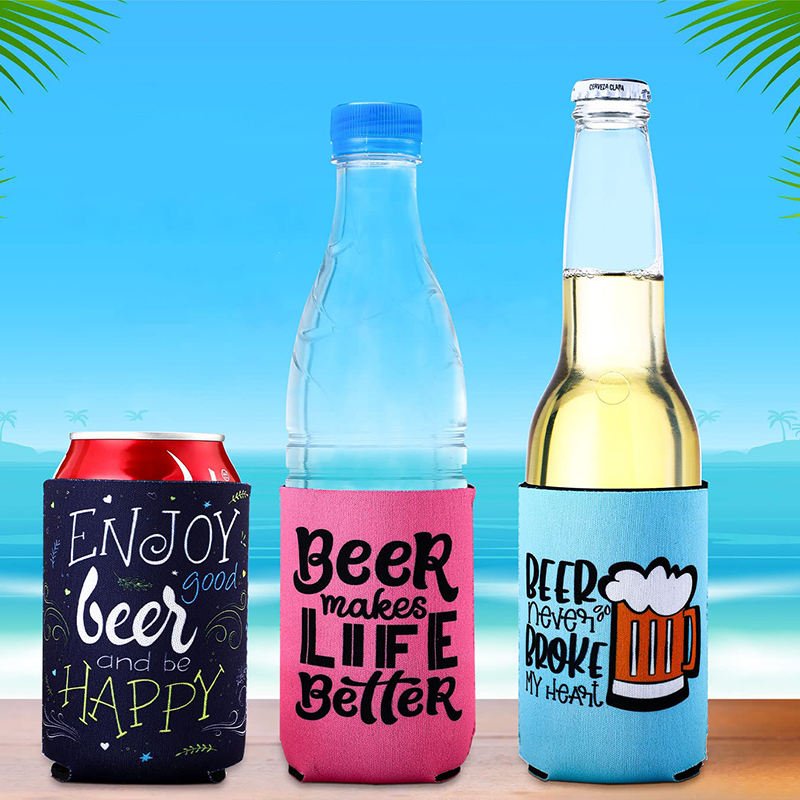
Screen printing is usually appropriate for simple spot-color logos, while sublimation is better suited to photographic, gradient, repeated, or edge-to-edge artwork on compatible polyester-faced neoprene. Heat transfer can reproduce detailed graphics in a smaller area. The correct process depends on artwork complexity, material surface, color accuracy, order quantity, seam placement, flexibility, and expected durability.
Screen Printing
Screen printing is a practical choice for bold logos, short text, simple icons, and artwork using a limited number of solid colors. Each color is generally applied separately, making the process easy to control when the design contains one or two spot colors.
This method works especially well when the background should remain the original neoprene fabric color. A white logo printed on black material can create a strong and recognizable promotional product without covering the entire surface. The result can be cost-effective for large events, corporate programs, breweries, sports clubs, and distributors.
Ink opacity should be checked on dark fabrics. A thin deposit may allow the base color to show through, while a heavy deposit may feel stiff. The ink system should remain flexible enough to move with the neoprene when the sleeve stretches around the can.
Very small lettering, fine lines, gradients, and photographic artwork are not the natural strengths of conventional screen printing. Additional colors require separate screens and tighter registration. A production sample should always be evaluated while fitted on the target can because the artwork may widen, curve, or move closer to a seam when the material is stretched.
Sublimation
Sublimation is commonly selected for photographs, gradients, illustrations, repeated patterns, flavor graphics, and artwork covering most of the visible surface. The color is transferred into a compatible polyester face rather than remaining as a thick layer on top. This helps the material retain a smooth hand feel and flexible surface.
The process usually begins with white or light-colored polyester-laminated neoprene. Artwork can extend across nearly the full panel, creating stronger visual impact for beverage launches, licensed merchandise, sports events, festival designs, and retail programs.
Color management remains important. The finished result can differ from the computer screen because of material tone, transfer temperature, ink profile, fabric batch, and compression during pressing. Pantone references should be treated as physical targets rather than guaranteed digital matches. Important brand colors should be approved on the intended production material.
Large black areas may appear slightly lighter when the sleeve stretches. Important text and faces should remain away from the seam allowance and bottom curve. Bleed must be added around the cut line so that minor production movement does not create white edges.
For complex multicolor artwork, sublimation can be more efficient than preparing and aligning several individual screen-print colors.
Heat Transfer
Heat-transfer printing can reproduce detailed multicolor logos within a selected area without covering the full neoprene surface. The graphic is printed or cut on a transfer material and bonded to the laminated fabric using controlled heat and pressure.
This process can be suitable for shorter programs, names, player numbers, complex brand marks, or designs that are difficult to separate into screen-print colors. It also allows the buyer to retain a stock-colored neoprene background.
The transfer system must be compatible with the surface textile and the neoprene lamination adhesive. Excessive temperature, pressure, or dwell time can affect the foam, flatten the texture, or weaken the bond between the face fabric and neoprene. A large transfer can also feel stiffer than the surrounding material.
Durability should be evaluated through repeated folding, stretching, and surface rubbing. The tester should inspect for edge lifting, cracking, peeling, and color transfer. Heat-transfer artwork normally performs best in a flat central area away from thick side seams and bottom folds.
This method is less suitable for continuous wraparound graphics because the transfer edge remains visible and large films can reduce flexibility.
Artwork Placement
Artwork should be developed around the actual sewing pattern rather than placed on a generic rectangular template. Side seams and bottom seams consume material, while stretching changes the visible shape of the design. A logo that appears correctly proportioned while flat can become wider or more curved after the sleeve is installed.
Important logos, QR codes, small text, websites, and legal information should remain inside clearly marked safe zones. They should not cross the side seam or sit close to the lower fold. Repeated patterns are more forgiving because small mismatches are less obvious than breaks in words, faces, or straight geometric lines.
| Artwork Type | Suitable Process | Placement Priority | Main Production Risk |
|---|---|---|---|
| One-color logo | Screen printing | Center of front panel | Low opacity or ink cracking |
| Full-color illustration | Sublimation | Main subject away from seams | Cropping and color variation |
| Small detailed mark | Heat transfer | Flat central area | Edge lifting |
| Repeated pattern | Sublimation | Full panel with bleed | Pattern mismatch at seams |
| QR code | Screen print or transfer | Low-stretch safe zone | Scanning distortion |
| Wraparound wording | Sublimation | Break wording before seam | Missing or compressed letters |
The approval process should include a flat photograph and an installed photograph. Consumers see the cooler while it is wrapped around the can, so the fitted presentation should carry more weight than the flat artwork proof.
Which Is Better for Bulk Custom Orders?
For many bulk branded programs, a conventional 3 mm foldable neoprene can cooler provides a practical balance of flexibility, insulation, printable area, material feel, sewing stability, and carton efficiency. Thinner products may suit mail campaigns, while thicker or specially shaped products may fit premium retail. The final choice should be confirmed through samples, container measurements, artwork proofs, and packed-carton calculations.
Market Application
The best can cooler construction depends on where the product will be used and how the customer will receive it. A large event program often needs easy distribution, simple installation, clear branding, and compact cartons. A lightweight foldable sleeve with a one- or two-color logo may provide better commercial value than a complex retail-style product.
Beverage brands normally benefit from a dedicated pattern matched to the actual production can. Accurate fit helps the artwork remain visible and prevents the sleeve from rotating. Full-color sublimation can support flavor graphics, seasonal campaigns, illustrations, and product-launch artwork.
Retail merchandise requires more attention to hand feel, edge finish, sewing consistency, packaging, and color matching. A 3 mm or 4 mm product may provide a more substantial presentation, although the effect on carton volume and landed cost should be reviewed.
Direct-mail programs should focus on final packed thickness and weight rather than material thickness alone. An individual bag, header card, coupon, or insert may add more volume than expected. Slim-can promotions should generally use a dedicated narrow pattern instead of forcing one standard sleeve to fit multiple container formats.
Corporate gift sets may prioritize coordination with other items. The cooler’s color, printing, packaging, and material should support the complete gift presentation rather than being evaluated only as an individual product.
Cost Factors
Material thickness influences price, but it is not the only major cost factor. Surface fabric, material color, panel dimensions, cutting yield, bottom construction, sewing complexity, printing process, artwork versions, packaging, inspection, and order quantity all contribute to the final quotation.
Full sublimation normally requires suitable white-faced material and complete printed panels. Screen printing may use stock-colored material but can require separate setup for every ink color. Custom-dyed laminated fabric can create stronger brand consistency, although it may increase the minimum material requirement and extend the sampling schedule.
Artwork quantity also affects production efficiency. An order of 5,000 pieces using one design is easier to print, count, inspect, and pack than an order of 5,000 pieces divided into 20 designs of 250 pieces each. Every additional design requires file control, setup, production separation, labeling, and quantity verification.
Packaging can significantly change landed cost. Bulk packing uses less material and labor than individual bags. Retail cards, boxes, printed inserts, barcode labels, and display packaging increase both unit cost and carton volume.
Buyers should compare quotations only when the material, construction, artwork, packaging, quantity, shipping term, and inspection requirements are aligned. A lower quoted unit price may exclude important items that appear later as separate charges.
Sample Approval
A sample is not merely a visual reference. It should confirm material, fit, structure, artwork, sewing, folding, recovery, and packaging before the order enters mass production. The target can should be inserted and removed at least ten times to reveal whether the opening is too tight, too loose, or poorly aligned.
The sample should remain installed for several hours before being removed and inspected. The material should recover reasonably close to its original shape. Seams should remain secure, and the base should reopen correctly after repeated folding.
Flat width and height should be measured at agreed reference points without manually stretching the material. The method matters because flexible neoprene can produce different readings when pulled or compressed. The measured result should be compared with the approved tolerance rather than an unrealistic expectation of zero variation.
Artwork should be inspected both flat and installed. Sublimated colors, image sharpness, pattern alignment, and seam interruption should be reviewed. Screen-printed logos should be checked for opacity, registration, flexibility, and surface condition.
The individual package and master carton should also be approved. Correct products can still create delays or complaints when they are packed in the wrong orientation, mislabeled, compressed too tightly, or divided incorrectly by color and design.
RFQ Requirements
A complete request for quotation reduces guessing and gives the manufacturer enough information to suggest realistic solutions. The target beverage container should be identified first. Buyers should provide its body diameter, circumference, height, and a physical sample or technical drawing when the format is unusual.
The RFQ should also explain the sales channel and intended use. A one-day festival giveaway has different requirements from a retail product expected to remain in stock, carry a barcode, and be reordered over several years.
The request should include:
- Product reference image or physical sample
- Target can or bottle dimensions
- Desired sleeve height
- Neoprene thickness
- Face and backing fabric
- Material color
- Bottom construction
- Artwork files
- Pantone color references
- Printing method or desired visual result
- Quantity by artwork and color
- Individual packaging
- Barcode and labeling requirements
- Master-carton limitations
- Destination country
- Required delivery date
- Inspection or testing requirements
- Expected repeat-order plan
Buyers should identify which specifications are fixed and which remain flexible. When delivery timing is fixed but material color is flexible, an available stock fabric may shorten preparation time. When an exact brand color is essential, additional time may be required for material matching, printing trials, and sample approval.
A foldable neoprene koozie and a flat neoprene can cooler are often two market names for a similar collapsible product, but reliable sourcing requires more than recognizing the name. The target container, material thickness, bottom construction, seam position, printing process, packaging, and quality standard must all be confirmed before bulk production begins.
Szoneier is a Shenzhen-based OEM/ODM manufacturer of custom bags, neoprene products, and sewn soft goods with more than 18 years of manufacturing experience. The team supports material selection, structural development, sample production, printing, sewing, quality inspection, packaging, and export delivery for branded and commercial projects.
For a custom can cooler quotation, send the reference design, actual can dimensions, logo artwork, preferred neoprene thickness, target quantity, packaging requirements, destination country, and requested delivery schedule. The project team can review whether a standard foldable sleeve, slim-can pattern, lightweight mailer, premium thick construction, or another customized solution is the most suitable direction.
Contact Szoneier to develop and sample your custom neoprene can cooler.