Many corporate gifts perform well during the five minutes in which they are presented, photographed, and shared, but fail during the months that follow. The product may carry a perfectly printed logo and fit the approved purchasing budget, yet disappear into a drawer because it does not solve a real problem. Corporate buyers therefore need to evaluate more than appearance. A strong gift should match an existing habit, provide a useful function, feel appropriate for the recipient, and remain practical to manufacture and distribute in quantity.
The best neoprene gift ideas for corporate buyers include bottle holders, can coolers, laptop sleeves, technology pouches, lunch bags, wine carriers, travel organizers, fitness accessories, and coordinated gift sets. The most suitable option is the one that matches the recipient’s routine, provides useful cushioning or insulation, offers appropriate branding space, fits the campaign budget, and can be sampled, inspected, packed, and delivered reliably in bulk.
Neoprene is useful because it can become either a compact promotional product or a more developed lifestyle accessory. A flat can cooler can support a large event, while a carefully fitted laptop sleeve can become part of an employee’s daily commute. A bottle holder can move between a gym, office, and weekend event, keeping the brand visible without forcing the recipient to change normal behavior. The difference between a forgettable giveaway and a retained corporate gift usually appears in the details: fit, thickness, surface feel, sewing, logo scale, packaging, and the small functional choices that become obvious only after the product is used.
What Makes Neoprene Good for Corporate Gifts?
Neoprene works well for corporate gifts because it combines a soft surface, flexible structure, cushioning, limited insulation, compact packing, and broad decoration potential. It is especially effective when the product needs to wrap around, protect, carry, or lightly insulate another object. Its real value comes from matching material thickness and construction to the intended use rather than choosing neoprene simply because it looks different.
Material Performance
Neoprene used in corporate merchandise is generally a flexible synthetic rubber foam laminated with polyester, nylon, or another textile face. The outer fabric provides color, touch, and printability, while the foam layer adds elasticity, body, and cushioning. This combination allows the material to follow curved objects more naturally than rigid sheet materials and to provide more protection than an ordinary unpadded fabric.
The material is particularly suitable for bottle sleeves, can coolers, laptop sleeves, pouches, lunch bags, wine carriers, and equipment covers. These products benefit from a close fit and soft structure. A bottle sleeve can stretch slightly around the bottle, while a laptop sleeve can conform to the device without the tooling required for a molded hard case. An empty neoprene bag can also compress for storage, event handling, or international shipping.
Corporate buyers should understand the limits as clearly as the advantages. Neoprene offers some resistance to water and heat transfer, but a sewn product should not automatically be described as waterproof, leakproof, or suitable for prolonged temperature control. Needle holes, zipper openings, exposed seams, and unsealed edges can allow water or air movement. Where long-duration cooling is required, a constructed cooler bag using foam insulation and a suitable lining may perform better than a simple neoprene carrier.
Thickness is one of the most visible specification choices. Common options include 2 mm, 3 mm, 4 mm, and 5 mm, but nominal thickness does not tell the whole story. Foam density, compression recovery, surface fabric, lamination quality, and material consistency also affect the finished product. Szoneier’s documented neoprene range includes these four common thickness levels for products such as koozies, bottle holders, lunch bags, laptop sleeves, covers, and sewn neoprene bags.
| Neoprene Thickness | Typical Hand Feel | Suitable Starting Applications | Main Production Consideration |
|---|---|---|---|
| 2 mm | Light, flexible, easy to fold | Can coolers, cup sleeves, small pouches, simple covers | Lower cushioning and limited structure |
| 3 mm | Balanced softness, body, and flexibility | Bottle holders, lunch bags, laptop sleeves, general pouches | Common balance of cost and performance |
| 4 mm | Firmer, more protective, more substantial | Premium sleeves, protective covers, structured carriers | Greater seam bulk and sewing difficulty |
| 5 mm | Thick, heavy, highly cushioned | Specialized protection, sports items, thick covers | Higher cost, weight, and package volume |
A thicker material does not automatically create a better product. A 4 mm sleeve with poor dimensions can be less useful than a well-fitted 2 mm sleeve. Thicker foam can make tight curves difficult to sew, increase binding bulk, distort zipper areas, and raise freight volume. Material should therefore be selected after the product size, shape, expected load, and desired hand feel have been defined.
Material Comparison
Neoprene should be compared with polyester, canvas, felt, EVA, silicone, and synthetic leather before a buyer commits to the final specification. Each material supports a different combination of structure, price, protection, appearance, and decoration. Neoprene is strongest where flexibility, close fit, cushioning, limited insulation, or a soft sporting character provides a genuine advantage.
Polyester is usually more appropriate for simple drawstring bags, lightweight totes, and low-complexity pouches that do not require padding. It is available in many fabric weights and coatings, works well with conventional sewing, and can be more economical for large-volume distribution. When a product only needs to carry lightweight items, neoprene may add cost without adding enough useful performance.
Canvas creates a firmer and more natural appearance. It works well for employee totes, retail merchandise, lifestyle programs, and gift sets that need a substantial textile feel. It does not stretch around bottles or devices in the same way as neoprene, but its structure can make larger bags easier to load and display.
Felt provides a clean, understated appearance for document sleeves, technology organizers, and desk accessories. It can be easier to cut into simple flat products, although it usually offers less elasticity, water resistance, and recovery after compression. Felt edges can also require careful treatment when the product is expected to receive repeated handling.
EVA is preferable when a project needs molded form, strong impact protection, internal cavities, or a semi-rigid protective shell. It is common in equipment cases and protective packaging but may require molds, heat forming, and a higher development commitment. Neoprene should not be positioned as a substitute for a true hard-shell EVA case where strong impact protection is required.
PU leather can create a more formal or executive appearance for document holders, travel accessories, and presentation gifts. It is less appropriate for products that need to stretch around a bottle or fold tightly into event packaging. The material decision should therefore begin with the user’s need, not with a general belief that one material is more premium than another.
Useful Life
A corporate gift creates value only when recipients decide to keep using it. The buyer cannot control every personal preference, but product selection can increase the probability of repeated use. The most dependable approach is to connect the gift to a routine the recipient already has, such as carrying a laptop, organizing charging cables, bringing lunch to work, attending fitness sessions, traveling, or using a refillable bottle.
Fit is often more important than decorative complexity. A bottle sleeve that slides off the intended bottle will not remain in use, no matter how accurate the logo color is. A laptop sleeve that is too tight may place excessive tension around the zipper and corners, while an oversized sleeve allows the device to move inside. A cup sleeve with an incorrect taper can slide downward or become difficult to install.
The buyer should also consider whether the product will be used willingly in public. A large promotional graphic may be appropriate at a sponsored festival but uncomfortable in an executive office. A discreet woven label, tonal print, or small rubber patch can produce more long-term exposure when recipients feel comfortable carrying the product in different settings.
Useful-life questions should be included during product selection rather than after sampling. Buyers should define what will go inside the product, how often it will be carried, whether it must be cleaned, how it will be stored, and which components will receive repeated stress. A product that survives a presentation but not the first month of ordinary use does not provide good value, even when its unit price appears attractive.
Responsible Claims
Neoprene is a synthetic material, so environmental and performance claims should be made carefully. Terms such as “eco-friendly,” “fully sustainable,” “waterproof,” “shockproof,” or “long-term insulated” should not be placed on packaging or marketing materials unless the product design, material documentation, and testing support those statements.
A more credible corporate-gift program evaluates the product as a complete system. Buyers can reduce unnecessary packaging, avoid ordering excessive quantities, design the product for repeated use, review recycled textile options, and request documentation for specific material claims. If a recycled polyester surface is used, the claim should identify the laminated textile rather than implying that the entire neoprene construction is recycled.
The same caution applies to functional language. Neoprene can offer cushioning, but it does not provide the protection of a molded hard case. It can provide limited insulation, but a simple sleeve does not perform like a multi-layer cooler. It can resist splashes, but stitched seams and openings may prevent the product from being waterproof.
Clear, limited wording protects the buyer’s credibility and gives the recipient a more accurate expectation. Claims such as “soft protective sleeve,” “designed for repeated use,” “lightly insulated bottle holder,” or “recycled polyester laminated surface” are more useful when they describe the actual product rather than relying on broad marketing language.
Which Neoprene Gifts Work Best?
The strongest neoprene corporate gifts have a clear purpose that recipients understand immediately. Can coolers, bottle holders, laptop sleeves, cable pouches, lunch bags, wine carriers, travel organizers, fitness accessories, and coordinated sets are dependable choices. The best category depends on the recipient’s routine, campaign environment, expected value level, required branding area, order quantity, distribution method, and delivery deadline.
Drinkware Gifts
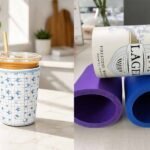
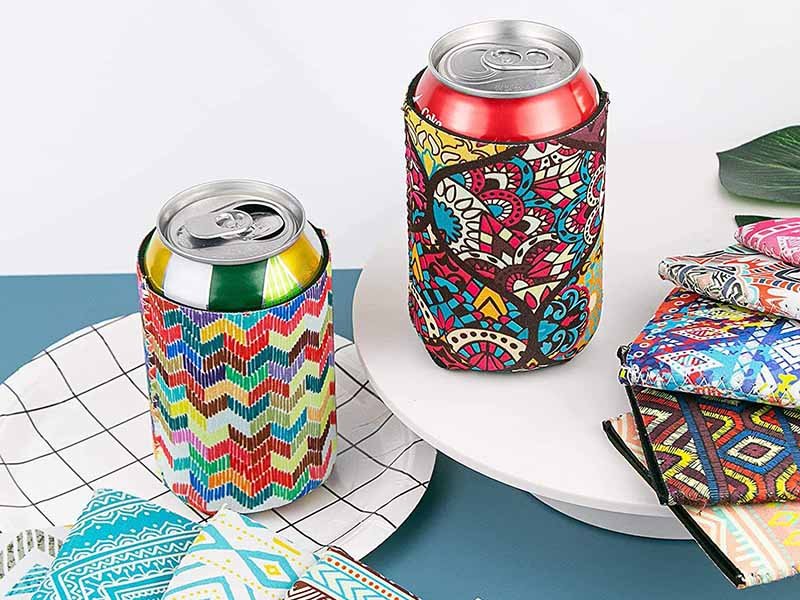
Drinkware accessories are a natural neoprene application because the material can wrap closely around bottles, cans, cups, and beverage containers. It provides a softer grip, helps manage condensation, offers limited insulation, and creates a large printable area without adding a rigid construction. These characteristics suit beverage brands, wellness programs, hospitality groups, sporting events, outdoor campaigns, and employee gifting.
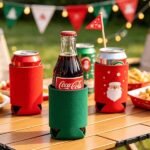
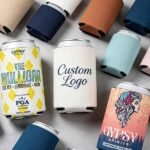
Can coolers are among the simplest products to distribute. Their flat structure reduces storage space, and they can be inserted into conference bags, mailed with invitations, or handed out at a venue. However, the buyer must distinguish between standard cans, slim cans, bottles, and other container formats. A general “one-size” design can result in poor fit when the actual diameter and height are not confirmed.
Bottle sleeves and bottle holders provide more functional options. They can include webbing handles, shoulder straps, drawstring openings, snap hooks, small pockets, or reinforced bases. A simple sleeve suits a beverage launch, while a carrier with an adjustable strap is more useful for gyms, walking programs, festivals, tourism campaigns, and outdoor teams.
Wine sleeves and carriers can support client appreciation, holiday gifting, hotel programs, distributor meetings, and real-estate presentations. A one-bottle sleeve is compact and easy to pack, while a two-bottle carrier requires stronger handle attachment, base support, and loaded testing. The gift should be developed around the intended bottle dimensions rather than a generic product photograph.
Cup sleeves can work for cafés, food events, internal meetings, and hospitality programs. The upper and lower cup diameters should be measured because many disposable cups are tapered. A sleeve that fits at the top but not the lower body can slide or wrinkle, making an otherwise simple product feel poorly developed.
Tech and Office Gifts
Neoprene technology gifts are useful because they protect objects people already carry. Laptop sleeves, tablet sleeves, cable pouches, mouse pads, desk mats, portable-drive covers, headphone cases, and charger organizers suit employee onboarding, remote-work programs, educational institutions, software launches, technology conferences, and customer-success teams.
A laptop sleeve has high visibility because it moves between homes, offices, meeting rooms, cafés, and airports. Yet a nominal screen size is not enough to define the fit. Two laptops described as 13-inch models can have different body dimensions, thicknesses, corner radiuses, and protective cases. Buyers should provide actual device measurements or a list of intended models before approving the pattern.
A useful sample should be tested for device insertion, zipper clearance, corner fit, seam tension, removal comfort, and internal movement. A close fit feels protective, but excessive tension can distort the zipper and place stress on the seams. A loose fit may appear acceptable in a photograph but provide limited cushioning during travel.
Technology pouches are often a safer choice when recipients use different devices. They can hold charging bricks, adapters, cables, power banks, earbuds, memory cards, and small peripherals without relying on one exact model. A well-proportioned pouch can also be used later for travel, stationery, or personal accessories, extending its useful life.
Desk mats and mouse pads provide broad surfaces for graphic design. Full-color artwork may suit gaming, education, or creative campaigns, while corporate workplaces often benefit from quieter colors and restrained branding. The product should support the work environment rather than make the user feel that their desk has become an advertising space.
Lunch and Travel Gifts
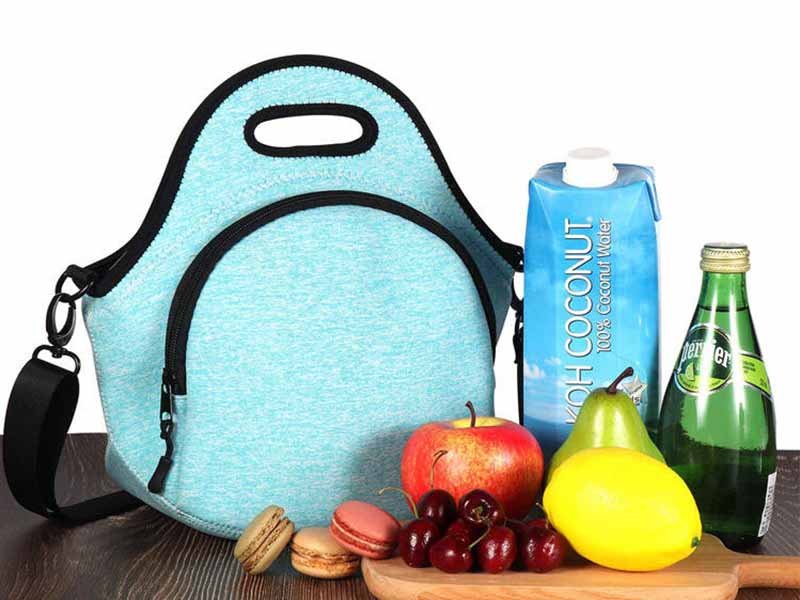
Neoprene lunch bags and travel organizers can achieve a higher perceived value because they combine material, shape, handles, closures, printing, and packaging into a complete lifestyle product. They suit employee wellness programs, school partnerships, healthcare groups, food brands, travel companies, hospitality programs, and internal reward campaigns.
A common neoprene lunch bag may hold approximately 5 to 12 liters, depending on the meal format, base width, and intended recipient. A compact design can carry one food container and a drink, while a larger meal-prep format requires a broader base, stronger handles, and an opening that allows the containers to remain upright.
Three-millimeter neoprene is a practical starting point for many lunch bags because it balances flexibility, hand feel, limited insulation, and production cost. The company’s documented product reference lists neoprene lunch bags in a typical 5–12-liter range, with a representative MOQ beginning at 200 pieces, sample development around 7–10 days, and bulk production around 25–40 days. Actual timing depends on structure, artwork, material readiness, packaging, and approval speed.
Travel pouches can carry toiletries, cosmetics, cables, medication, documents, or small personal items. Their broad use makes them suitable for mixed recipient groups. Passport sleeves, luggage-handle wraps, small shoe pouches, and technology organizers can also be coordinated into a travel set for airlines, hotels, consulting firms, international sales teams, and conference programs.
Buyers should resist adding pockets and hardware simply because they appear attractive in a rendering. Each additional zipper, lining panel, mesh pocket, hook, or label increases labor, cost, inspection work, and the number of possible failure points. The product should remain simple enough to manufacture consistently while including the features recipients will genuinely use.
Gift Sets
A coordinated gift set can communicate more intention than several unrelated promotional products. The strongest sets share a clear theme, such as work, travel, wellness, food, or fitness. A laptop sleeve and cable pouch support a technology or onboarding program, while a lunch bag and bottle sleeve support workplace wellness. A wine carrier and cup sleeve can fit hospitality or seasonal gifting.
The visual system should remain consistent across components. Buyers can coordinate main colors, accent colors, binding, webbing, zipper tape, label style, graphic pattern, and packaging. The materials do not need to be identical, but they should look deliberate when placed together. Different black materials, for example, may not match perfectly because fabric, webbing, zipper tape, foam lamination, and ink reflect light differently.
A practical gift set commonly contains two or three useful items rather than a large number of low-value accessories. More components increase pack-out errors, freight volume, and packaging complexity. The buyer must define the quantity of each component, its position in the box, the orientation of the logo, the location of instructions and labels, and how missing or defective components will be handled.
The following matrix provides a practical way to compare common products. It is intended as a purchasing starting point rather than a fixed specification because final dimensions, material, and decoration should be confirmed through sampling.
| Gift Product | Suitable Campaigns | Typical Custom Features | Main Quality Risk |
|---|---|---|---|
| Can cooler | Events, beverage launches, mass promotions | Full print, screen print, shaped edge | Incorrect can fit or color variation |
| Bottle holder | Wellness, sports, travel, outdoor campaigns | Strap, handle, hook, pocket, drawstring | Weak attachments or poor bottle fit |
| Laptop sleeve | Employee, technology, client programs | Zipper, lining, label, full-panel graphic | Incorrect device dimensions |
| Tech pouch | Onboarding, remote work, conferences | Compartments, zipper, woven label | Poor opening size or weak zipper |
| Lunch bag | Employee wellness, food, education | Handles, zipper, full print, patch | Odor, unstable base, weak handle |
| Wine carrier | Hospitality, holiday, client gifting | One- or two-bottle structure, handle | Insufficient base and handle support |
| Travel organizer | Executive, sales, airline programs | Pockets, zipper, labels, coordinated set | Excessive complexity and bulk |
| Gift set | Milestones, VIP clients, employee kits | Matching materials, colors, packaging | Missing components and packing errors |
How Do Buyers Choose the Right Gift?
Corporate buyers should select a neoprene gift by working backward from the recipient and campaign. They should define who will use the product, where it will be used, what the campaign should achieve, how many units are needed, and when the goods must arrive. Only after these questions are answered should the team choose the product, thickness, logo method, accessories, packaging, and inspection standard.
Recipient Fit
Broad descriptions such as “employees,” “customers,” or “event visitors” do not provide enough information for a reliable product choice. A field salesperson, software engineer, gym member, university student, distributor, hotel guest, and executive account may all use corporate gifts differently. A useful recipient profile should include work setting, travel frequency, common devices, beverage habits, activity level, geographic location, and the method through which the gift will be received.
Laptop sleeves are suitable when a company issues a standard device or knows the target dimensions. They create more risk when recipients use many device models or add their own protective cases. In a mixed workforce, a technology pouch may produce wider use because it does not depend on a precise laptop size.
Bottle holders work naturally for fitness participants, event attendees, outdoor staff, wellness-program members, and active commuters. They may be less suitable for a formal executive audience unless the structure, color, branding, and packaging are refined. A wine carrier may suit a client program but be inappropriate for audiences or regions where alcohol-related gifts are unsuitable.
Lunch bags can support employee wellness and workplace programs, but their capacity should reflect local eating habits. A narrow bag may be sufficient for a sandwich and bottle, while meal-prep containers require a wider base. Travel pouches have broader use because recipients can adapt them for cables, toiletries, cosmetics, medicine, or documents.
A useful purchasing question is, “What will the recipient put inside the product on the first day?” When the team cannot answer clearly, the gift may be based more on appearance than actual usefulness.
Campaign Fit
Every corporate gift should have a defined job. It may introduce a new brand, reward an employee, welcome a new team member, thank a customer, support a wellness initiative, promote an event, accompany a product launch, or strengthen a distributor relationship. The purpose affects product size, branding style, packaging, and required quality level.
A trade-show item should be easy to store, carry, and distribute. Flat can coolers, cup sleeves, and small pouches reduce booth handling and can be inserted into event bags. A complex product may attract attention but create storage and distribution problems for the event team.
An onboarding gift should support the employee’s first weeks at work. Laptop sleeves, cable pouches, desk mats, and lunch bags connect naturally with daily routines. Branding can be visible, but the design should remain appropriate outside the office because employees may use the item during commuting or personal travel.
A client-appreciation gift needs stronger perceived value and more controlled presentation. A wine carrier, travel organizer, or refined technology sleeve can be effective when the decoration is restrained and the packaging feels deliberate. A large campaign graphic may reduce the likelihood that a high-value client will use the product publicly.
A product launch allows more creative decoration. Full-surface sublimation, custom silhouettes, coordinated graphics, and campaign artwork may be appropriate because the gift is connected to a defined creative event. The buyer should still protect fit and function so the product remains useful after the launch message becomes less relevant.
| Campaign Type | Suitable Product Direction | Appropriate Branding Style | Main Purchasing Priority |
|---|---|---|---|
| Trade show or festival | Can cooler, cup sleeve, flat pouch | Bold and immediately visible | Packing and distribution efficiency |
| Employee onboarding | Laptop sleeve, tech pouch, lunch bag | Consistent with employer identity | Broad everyday usefulness |
| Wellness program | Bottle holder, lunch bag, fitness pouch | Positive and active | Comfort, fit, and carrying function |
| Client appreciation | Wine carrier, travel organizer | Refined and discreet | Perceived quality and presentation |
| Technology launch | Device sleeve, desk mat, cable pouch | Product-led graphics | Device fit and print clarity |
| Distributor meeting | Coordinated drinkware or travel set | Consistent across multiple items | Kitting and presentation |
| Anniversary campaign | Limited-edition accessory or set | Milestone-focused artwork | Long-term appeal and collectability |
Budget and Quantity
Corporate-gift budgeting should include the full delivered program rather than the factory unit price alone. Product material, decoration, packaging, testing, inspection, freight, duties, and fulfillment can all affect the final cost. A lower unit price can be offset by expensive individual boxes, multiple delivery addresses, special labels, or urgent air shipping.
Decoration choices can change cost and MOQ. A one-color screen print usually requires less development than a molded silicone patch, custom zipper puller, or several embroidered locations. Full-surface sublimation can provide strong visual impact, but the material must be compatible, the artwork must include seam allowance, and panel alignment must be reviewed.
Packaging can also alter freight volume. Bulk packing is efficient for events, while printed gift boxes create a higher perceived value but require additional space and protection. A box that is larger than necessary increases shipping cost, while a box that is too tight can compress foam, bend straps, and mark printed surfaces.
Szoneier’s documented general MOQ begins at 200 pieces for selected custom bag and soft-goods projects, depending on material availability, structure, logo process, color, accessories, packaging, and testing requirements. Neoprene products using sublimation printing may commonly be evaluated from around 300 pieces, while simple koozies may be more efficient from 500 pieces. Sample periods for neoprene sublimation products are documented at approximately 7–12 working days.
Quantity must be calculated by SKU, not only as a total order. One thousand units in a single color create a different purchasing and production condition from one thousand units divided across five colors and several sizes. The buyer should define quantity per color, product version, packaging type, destination, and required spare stock.
Gift Level
Corporate merchandise can be divided into three practical levels: promotional giveaway, reusable branded merchandise, and premium corporate gift. These categories may use the same basic product name, but their materials, decoration, construction, packaging, and inspection standards should be different.
A promotional giveaway prioritizes efficient distribution and clear branding. It commonly uses a simple structure, limited accessories, bulk or basic individual packing, and a design that recipients understand immediately. A simple product should still have accurate dimensions, clean sewing, and stable decoration. “Promotional” should not be used as an excuse for poor quality.
Reusable branded merchandise is expected to remain in use and may also be sold through a company store, retail channel, Amazon listing, or brand website. It needs stronger proportions, a better hand feel, more controlled sewing, and packaging that reflects the sales channel. The buyer should evaluate it as if it were placed beside a retail product.
A premium gift emphasizes material feel, detail, presentation, and restrained branding. A small woven label, rubber patch, tonal transfer, or custom puller may feel more suitable than a large front logo. Strong handles, clean binding, smooth zippers, and accurate dimensions become part of the perceived value.
The intended gift level should be agreed before quotation. It is difficult to achieve a premium result when the budget assumes a basic giveaway specification. Cost optimization should protect the core user experience rather than remove the reinforcement, fit control, or packaging details that make the product feel complete.
How Can Neoprene Gifts Be Customized?
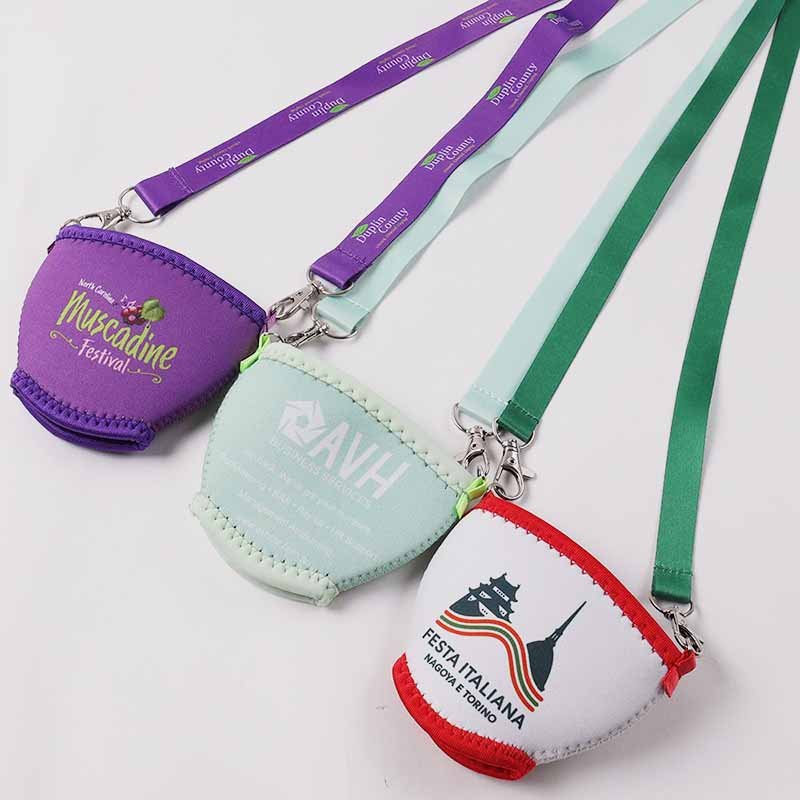
Neoprene gifts can be customized through thickness, dimensions, surface fabric, shape, color, printing, labels, patches, binding, webbing, zippers, handles, hooks, pockets, and packaging. Effective customization begins with function rather than decoration. Every structural or visual detail should support the way the recipient carries, protects, stores, or uses the product because added features affect cost, MOQ, sampling time, durability, and production consistency.
Thickness Choice
Thickness affects flexibility, cushioning, insulation, sewing difficulty, package volume, cost, and hand feel. It should be selected after the product’s dimensions, load, construction, and intended use have been defined. Selecting the thickest available material without considering the structure can make the product bulky, difficult to sew, and uncomfortable to handle.
Two-millimeter neoprene is light and flexible. It suits can coolers, cup sleeves, small pouches, and simple covers that need to fold compactly. It provides less structure and cushioning, so it may not be appropriate where the recipient expects a protective or premium feel.
Three-millimeter neoprene is a common starting point for bottle holders, laptop sleeves, lunch bags, pouches, and tote-style products. It balances flexibility, limited insulation, cushioning, and cost. The company’s material guidance identifies 3 mm as the most commonly used thickness for neoprene lunch bags, bottle holders, laptop sleeves, koozies, and totes.
Four-millimeter neoprene creates more body and protection. It may suit premium sleeves, protective covers, thicker lunch bags, or sports accessories. However, sewing difficulty increases, especially around tight curves, zipper ends, folded edges, and narrow binding.
Five-millimeter neoprene is heavier and more specialized. It may be appropriate for high-protection sleeves, particular sports products, thick covers, or protective case liners. It is not automatically suitable for small pouches because the material can dominate the product’s shape and increase shipping volume.
The buyer should also review foam density, recovery, surface-fabric weight, stretch direction, lamination, odor, and batch consistency. Two suppliers can provide nominally identical 3 mm neoprene that feels and performs differently. An approved swatch or sample should therefore become part of the production reference.
Logo Methods
Neoprene supports screen printing, heat transfer, digital printing, sublimation, embroidery, woven labels, rubber patches, silicone patches, reflective decoration, jacquard webbing, and custom zipper pullers. The right choice depends on artwork complexity, color count, order quantity, surface fabric, stretch, abrasion exposure, desired hand feel, and brand positioning.
Sublimation printing is especially useful for detailed, multicolor, gradient, photographic, or full-panel artwork. It normally works on a compatible light-colored polyester surface before the product panels are cut and sewn. Artwork should include cutting and seam allowance because portions of the design may disappear under binding or inside seams.
Screen printing works well for simple logos with a limited number of colors. It can be economical for suitable quantities, but ink adhesion, stretch, curing, and abrasion should be tested on the actual laminated surface. A print that looks correct when flat may crack or distort when the product stretches around a bottle.
Heat transfer supports detailed logos and moderate production quantities. The transfer creates a surface layer with a different touch from sublimation, so the buyer should approve its gloss, flexibility, edge quality, and resistance to handling.
Embroidery creates texture and perceived value but also introduces needle holes and localized stiffness. It is usually more suitable for smaller decoration areas. Woven labels provide a familiar retail appearance and can be inserted into seams or stitched onto a panel.
Rubber and silicone patches create dimensional branding and can be durable, but they may require a mold, setup cost, and a larger minimum commitment. Their weight and stiffness should be considered when the base product is thin or highly flexible.
The physical decorated sample should be the approval standard. A digital mockup cannot accurately show texture, shine, stretch, edge lifting, print penetration, or the interaction between the logo color and the material surface.
Structural Details
Structural customization determines whether a product functions comfortably after the initial visual impression. Handles, straps, hooks, zippers, pockets, binding, and reinforcement should be developed around the actual load and movement of the product.
For a bottle holder, the buyer should confirm bottle height, diameter, base shape, opening size, carrying direction, strap length, handle position, and balance when loaded. A snap hook should be positioned so that the holder hangs naturally rather than twisting. Handle ends and hook loops should be reinforced because they carry repeated stress.
For a laptop sleeve, internal dimensions, device thickness, corner radius, zipper position, seam allowance, opening width, and lining must be reviewed together. A zipper should not touch or scratch the device. The sleeve should be easy to open and close without becoming so loose that the device moves inside.
For a lunch bag, base stability, container dimensions, handle strength, opening width, cleaning access, and zipper movement become important. A decorative narrow opening may look attractive but make food containers difficult to insert. The product should be tested with realistic contents rather than evaluated empty.
Stress points can be strengthened with bartacks, box stitching, backing pieces, layered neoprene, or additional webbing. Edge binding should fully cover the cut foam and remain even around curves. Binding that is too stiff can deform the product, while binding that is too narrow can expose the material edge.
Custom silhouettes can increase recognition, but sharp corners, narrow channels, and small cutouts raise production difficulty. A design should appear distinctive without relying on fragile construction that cannot be repeated consistently across thousands of units.
Packaging and Kitting
Packaging should be selected according to how the product moves from the factory to the recipient. A can cooler distributed at a conference requires a different solution from a gift set mailed directly to executives. The buyer should consider protection, presentation, environmental impact, label requirements, storage, freight volume, and the speed at which event staff must unpack the goods.
Bulk packing reduces individual packaging and can be efficient for events. However, printed surfaces can rub together, and foam products may be compressed if cartons are packed too tightly. Individual bags protect the product and simplify distribution but may create unnecessary plastic unless the application requires them.
Paper bands, backing cards, hangtags, and printed sleeves can communicate product information without a full box. They are suitable for retail displays, employee stores, and event merchandise. Gift boxes create stronger presentation but require exact internal dimensions so the product is protected without excessive compression.
Kitting requires a documented pack-out sequence. The specification should define the number of components in each box, product orientation, insert position, label location, barcode location, carton quantity, destination allocation, and spare-unit handling. When several suppliers produce different components, the buyer must also decide whether assembly occurs at the product factory, a central warehouse, or a specialist fulfillment center.
Color should be approved across the complete set. A black neoprene surface, black webbing, black zipper tape, black rubber patch, and black printed box can show visible differences because each material reflects light differently. A controlled and harmonious combination is more realistic than demanding an exact visual match across unrelated materials.
What Should Buyers Check Before Ordering?
Before placing a bulk order, buyers should confirm the complete product specification, quotation scope, approved sample, material standard, logo method, accessories, packaging, inspection criteria, production schedule, and shipping plan. The purchase order should give the buyer, factory, inspector, and warehouse the same clear reference. Important decisions should not remain open after bulk material has been purchased or production has started.
RFQ Checklist
A useful request for quotation gives the manufacturer enough information to assess material consumption, construction, decoration, packaging, production risk, and delivery. A vague inquiry may receive a fast price, but that price can change after the supplier discovers details that were not included.
The RFQ should contain a product image, sketch, physical sample, or technical drawing; the intended use; finished dimensions; the object the product must fit; preferred neoprene thickness; color references; logo artwork; decoration preference; accessories; quantity by SKU; packaging; labels; destination; required arrival date; and any testing requirements.
The supplier should state assumptions clearly. Two suppliers may quote a “neoprene bottle holder” while pricing entirely different constructions. One may include 3 mm neoprene, full sublimation, binding, a reinforced handle, a snap hook, individual packing, and a barcode. Another may quote a plain 2 mm sleeve with no accessories.
A quotation should also separate optional upgrades where possible. This helps the buyer understand which elements affect cost and which elements protect essential function. A premium patch can sometimes be removed without affecting usability, while removing handle reinforcement may create a genuine quality risk.
The following checklist helps ensure that the approved sample and purchase order contain enough evidence for production control.
| Item to Confirm | Why It Matters | Approval Evidence |
|---|---|---|
| Finished dimensions | Controls fit, capacity, and appearance | Measurement sheet and physical sample |
| Neoprene specification | Affects cushioning, insulation, feel, and cost | Approved swatch, thickness, and surface fabric |
| Color direction | Different materials reproduce colors differently | Material sample or decorated sample |
| Logo method and size | Affects appearance, durability, and setup cost | Physical decorated sample |
| Handles, straps, and hooks | These are repeated-load stress points | Loaded-use and attachment test |
| Zipper and opening | Controls access and long-term function | Functional sample inspection |
| Packaging | Affects presentation, protection, and freight | Pack-out sample |
| Barcode and labels | Errors can prevent warehouse receiving | Barcode scan and label approval |
| Quantity by SKU | Controls purchasing, production, and packing | Purchase-order breakdown |
| Inspection standard | Defines acceptable bulk quality | QC checklist and approved reference sample |
Sampling Approval
Sampling is the stage where an idea becomes a production standard. It should resolve questions about material, dimensions, fit, decoration, structure, handling, and packaging before the buyer authorizes bulk production.
A reliable process begins with requirement review and material selection. The supplier develops the pattern, prepares the logo process, cuts and sews the sample, checks it internally, and then sends photographs, video, or a physical sample to the buyer. The buyer should test the product under realistic conditions and provide consolidated, measurable feedback.
Comments such as “make it feel more premium” are difficult to execute because they do not identify the required change. Feedback such as “change from 2 mm to 3 mm, widen the webbing handle to 25 mm, reduce the front logo to 60 mm, and add a bartack at each handle end” creates a clear technical action.
Color approval also requires realistic expectations. Pantone references provide direction, but laminated fabric, webbing, zipper tape, binding, patches, and printed paper cannot always reproduce an identical visual result. The approved sample should show the acceptable relationship among these materials.
The final sample should be identified and protected. The measurement sheet, artwork size, material code, accessories, stitching, logo position, packaging, and approved tolerances should also be recorded. A physical sample alone may not show which hidden details were discussed or which dimensional variation is acceptable.
Szoneier describes its role as a factory-based custom bags and soft-goods manufacturing partner with in-house sampling, material coordination, sewing production management, quality inspection, packaging, and export support. The company’s documented manufacturing experience exceeds 18 years.
Quality Control
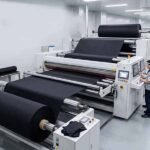
Quality control for neoprene products should begin with material and continue through printing, cutting, sewing, function, appearance, packaging, and shipment. Final inspection alone cannot fully correct the wrong thickness, unstable lamination, inaccurate full-panel print, or incorrectly cut parts.
Material checks should cover thickness, foam consistency, surface color, lamination, stretch, recovery, odor, creases, and batch identification. Cutting checks should verify panel dimensions, artwork orientation, stretch direction, and cutting cleanliness.
Printing checks should review color, graphic sharpness, coverage, logo dimensions, placement, distortion, and visible marks. Full-panel artwork also requires attention around seams and binding because an image can appear aligned on the flat panel but become interrupted after sewing.
Sewing inspection should cover stitch consistency, seam allowance, edge binding, curves, corners, reinforcement, zipper alignment, handle attachment, strap attachment, loose threads, and product symmetry. Function should be checked using the intended bottle, device, container, or load.
Packaging inspection should confirm the correct SKU, individual pack method, barcode readability, label position, carton quantity, carton marking, and destination allocation. More complex products require additional in-line inspection because defects become expensive to repair after zippers, pockets, linings, and handles have been fully assembled.
The company’s documented overall monthly capacity is approximately 120,000–200,000 pieces across custom bags and soft goods, with annual output stated at approximately 1.5–2.4 million pieces. Capacity depends on product type, structure, material readiness, logo process, packaging, SKU quantity, and production schedule, so project-specific availability should always be confirmed before the purchase order.
Delivery and Project Evidence
Delivery planning should begin with the required arrival date rather than the desired factory-completion date. Corporate programs are often tied to a conference, holiday, product launch, anniversary, sponsorship, employee meeting, or distributor event. Even a well-made product loses most of its value when it arrives after the occasion.
The buyer should work backward through warehouse receiving, local delivery, customs clearance, international transit, export handling, final inspection, packaging, bulk production, material preparation, final sample approval, and artwork confirmation. A realistic buffer should be included because urgent air freight cannot repair delayed artwork, unavailable materials, incomplete packaging, or an unapproved sample.
A documented U.S. sports-brand project demonstrates how these decisions connect. The order covered 3,000 custom neoprene bottle holders for Amazon and offline gym channels. The specification used 3 mm neoprene, polyester binding, a webbing handle, a snap hook, sublimation printing, individual OPP bags, barcode labels, and master-carton packing.
The buyer’s main concerns were inconsistent thickness, inaccurate print color, uneven binding, weak handles, and a price suitable for both promotional distribution and retail sales. Three-millimeter neoprene was selected to balance hand feel, limited insulation, structure, and cost. The binding and handle areas received additional confirmation during sampling.
The sample cycle took nine days, while bulk production took 35 days. Inspection covered neoprene thickness, sublimation color, binding alignment, handle strength, snap-hook operation, barcode accuracy, and packaging. The completed order was shipped by sea to the buyer’s U.S. warehouse.
This case does not mean every project should use the same thickness, MOQ, or schedule. It shows that product choice, material, print, structure, sample approval, quality control, packaging, and delivery must be managed as one connected program. When these decisions are separated, small specification gaps can become large bulk-order problems.
Request a Custom Review
The best corporate gift is not necessarily the most expensive item or the product with the largest logo. It is the product recipients will understand, use, and feel comfortable carrying after the event has ended. Successful projects begin with a clear recipient, use case, quantity, value level, packaging route, and required arrival date.
Szoneier is a Shenzhen-based OEM/ODM custom bags and soft-goods manufacturer supporting custom neoprene koozies, bottle holders, lunch bags, laptop sleeves, covers, pouches, bags, and related sewn products. Buyers can begin from a reference photograph, sketch, physical sample, technical pack, target dimensions, campaign concept, or target sales channel.
For a practical project review, provide the intended product, recipient group, use scenario, estimated quantity, target dimensions, logo artwork, color direction, packaging requirements, destination country, and required arrival date. This information allows the project team to evaluate material thickness, structure, logo method, MOQ, sampling, inspection points, production schedule, and shipping options before the specification is finalized.
Corporate purchasing personnel can email Szoneier to discuss customized neoprene gift solutions. A well-prepared inquiry helps compare different options, avoid unnecessary features, control the standards from sample to mass production, and create products that are more appealing to customers and more likely to be used long-term.