Seasonal neoprene collections often fail before the first sample is made. The problem is rarely a lack of creative ideas. It is usually the absence of a commercial system connecting customer demand, product roles, colors, materials, pricing, production timing, packaging, inventory, and replenishment. A summer bottle sleeve may look attractive on its own, but one visually appealing item does not automatically create a collection that retailers, distributors, e-commerce teams, or end users will understand.
A strong seasonal neoprene collection starts with a clearly defined customer, a real seasonal use case, and a controlled group of coordinated SKUs. Brands should select products that solve related needs, reuse suitable materials and trims, define a consistent color and branding system, approve production-ready samples, and plan backward from the required warehouse date. The collection should feel timely without becoming impossible to sell after the season ends.
Imagine two brands preparing similar summer launches. One approves twelve unrelated products in seven colors, using several materials, logo processes, and packaging formats. The other develops five products around one hydration-and-travel theme, using one printed neoprene laminate, two binding colors, and a shared packaging system. Both ranges may look exciting on a presentation board. Once sampling and production begin, however, only one is likely to remain manageable, consistent, and commercially healthy.
What Defines a Strong Seasonal Collection?
A strong seasonal collection connects a specific customer need with a coordinated group of products, materials, colors, prices, packaging formats, and launch dates. Every SKU should have a clear role, while shared specifications make the collection practical to sample and manufacture. The products should feel timely enough to attract attention but useful enough to retain value beyond a narrow seasonal window.
Seasonal Demand
Seasonality should be understood as a change in customer behavior rather than a decorative theme. A palm-tree pattern does not automatically make a product relevant to summer, just as a dark color does not automatically make a product suitable for winter. A seasonal product becomes commercially meaningful when its usefulness, visibility, urgency, or giftability increases during a predictable period.
During warmer months, customers may spend more time traveling, exercising outdoors, attending events, carrying cold beverages, visiting beaches, or organizing wet clothing. These behaviors may support demand for bottle holders, can coolers, beach totes, swim accessories, wet-item pouches, and compact travel organizers. Autumn often brings customers back to school, office routines, meal preparation, commuting, and indoor fitness, creating stronger use cases for laptop sleeves, lunch products, bottle carriers, and storage pouches.
A useful collection concept should answer four practical questions. What customer behavior changes during the season? Which user group experiences that change most strongly? What problem becomes more frequent or urgent? Why is neoprene an appropriate material for the product? When these answers are specific, product selection becomes easier and marketing claims become more credible.
Brands must also separate short-lived visual trends from repeatable seasonal demand. A product covered with dated holiday artwork may become difficult to sell after the event, even when the structure remains useful. A more flexible approach may use seasonal colors, removable sleeves, hangtags, gift boxes, or inserts while keeping the core product suitable for year-round use.
Collection Architecture
A collection needs a recognizable internal structure. It should not be a random list of products connected only by material or color. Customers, retailers, and purchasing teams should be able to understand why the products belong together, what role each SKU plays, and how the assortment supports different price levels or purchase occasions.
Most collections benefit from a combination of hero products, core products, supporting items, entry-price items, and carefully controlled experimental designs. The hero product receives the greatest campaign attention and expresses the theme most clearly. Core items should be easier to understand, reorder, and sell consistently. Supporting products improve bundling opportunities, while entry items allow customers to participate at a lower price.
A summer hydration collection, for example, might contain one structured neoprene bottle carrier as the hero product, two coordinated can-cooler designs, one small utility pouch, one matching lunch tote, and one gift bundle. These products perform different functions, but they can share a printed laminate, binding colors, webbing, logo treatment, labels, and packaging language.
| Product Role | Typical Share | Commercial Purpose | Neoprene Examples |
|---|---|---|---|
| Hero products | 15–25% | Create campaign focus and brand recognition | Premium bottle carrier, printed lunch tote |
| Core products | 35–45% | Generate repeatable sales | Can coolers, sleeves, pouches |
| Supporting products | 20–30% | Increase bundle and cross-sell value | Cable pouch, wet-item pouch, accessory holder |
| Entry products | 10–20% | Lower the purchase barrier | Basic koozie, simple bottle sleeve |
| Experimental products | 5–10% | Test new functions or customer groups | Pet accessory, limited travel organizer |
These percentages are useful planning ranges rather than fixed formulas. A promotional order may depend heavily on one simple item, while a mature retail brand may support a broader assortment. The important principle is that each product must justify its place through customer reach, function, pricing, bundling, or campaign value.
Buyer and Channel Fit
The target buyer should be described through behavior and use conditions, not only age, gender, or location. “Adults who like fitness products” is too broad to guide dimensions, structure, hardware, or packaging. “Urban gym users who carry a bottle, phone, access card, and small towel before work” provides more meaningful information for product development.
The sales channel also influences the collection. Amazon customers compare dimensions, functions, reviews, photographs, and pricing quickly. Shopify and DTC customers may respond more strongly to coordinated branding, storytelling, packaging, and premium details. Retail buyers need assortment logic, barcode accuracy, shelf-ready presentation, and stable replenishment. Corporate gift buyers often prioritize logo visibility, delivery deadlines, unit economics, and distribution efficiency.
The same product may require different decisions for different channels. A neoprene cosmetic pouch for a beauty brand may justify a custom lining, subtle patch, branded puller, and printed insert. A promotional version may need a simpler construction, stronger external logo visibility, faster assembly, and compact individual packaging.
A well-designed collection aligns the product, price, packaging, and channel. Problems arise when a complex premium design is offered through a price-driven channel, or when a simple promotional item is positioned as luxury without the materials, finishing, or presentation required to support that claim.
Collection Brief
The collection brief should become the central working document for design, sourcing, sampling, production, quality control, packaging, and logistics. Mood boards help communicate visual direction, but they cannot replace dimensions, specifications, quantities, artwork files, target costs, and delivery requirements.
A complete brief normally includes the target customer, sales channel, season, campaign date, proposed SKU list, product priority, target dimensions, neoprene thickness, surface fabric, colors, artwork, logo process, bindings, webbing, zippers, hardware, packaging, quantities, destination markets, testing requirements, and warehouse arrival date.
The document should distinguish between fixed requirements and areas where the manufacturer may recommend alternatives. A buyer may require an exact brand color but remain open to suggestions on thickness or binding. Another buyer may have a fixed target cost but allow changes to the closure, handle, or packaging structure.
A risk level should also be assigned to each product. A flat can cooler using stock material and basic screen printing is generally less complex than a structured lunch bag with custom sublimation, molded patches, special zippers, and printed boxes. Higher-risk products should enter development first because they are more likely to influence the launch schedule.
Which Neoprene Products Fit Each Season?
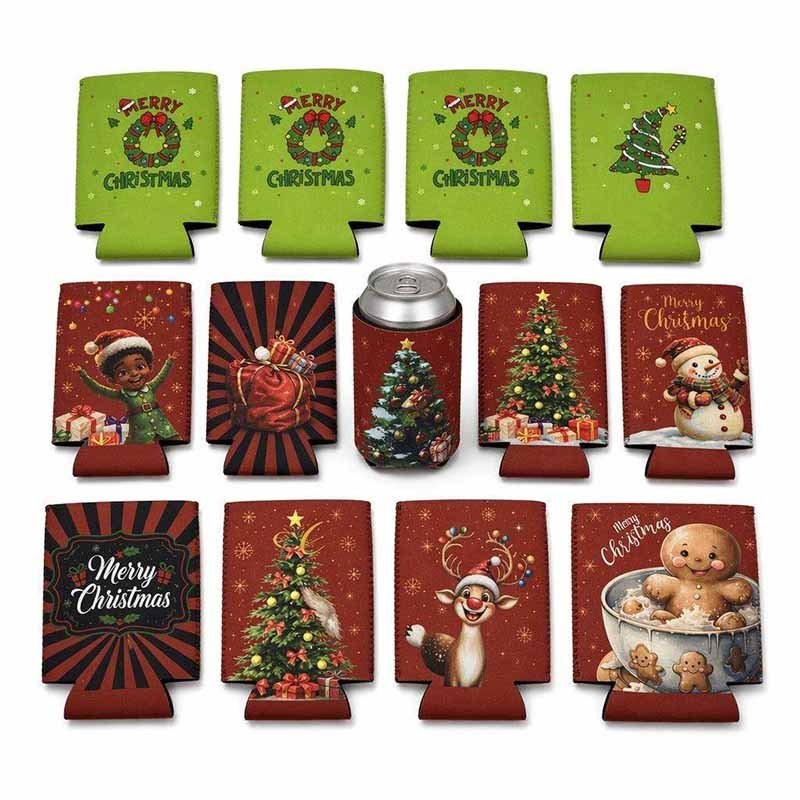
The most suitable seasonal neoprene products are those whose usefulness increases during a predictable period. Spring supports mobility and renewed outdoor activity, summer favors hydration and travel, autumn supports commuting and school routines, and winter favors protection and gifting. Product selection should follow customer behavior, sales-channel needs, and inventory risk rather than decorative trends alone.
Spring and Summer
Spring commonly marks a return to outdoor movement, fitness, travel, pet activities, weekend trips, and lighter everyday routines. Products that are easy to carry, attach, clean, and store often match these behaviors well. Suitable options may include bottle sleeves, small running accessories, protective electronic sleeves, pet-product components, compact organizers, and lightweight travel pouches.
Spring can also function as a controlled market-testing period before summer. A brand may launch one bottle-holder structure, two colorways, and a matching pouch, then use sales and customer feedback to determine which combinations should be expanded. This approach is more disciplined than approving many colors and products before any demand has been measured.
Summer is particularly relevant to neoprene because the material is commonly associated with cold drinks, travel, beaches, outdoor events, water-related activities, and soft protection. Product opportunities may include can coolers, bottle holders, wet-item pouches, beach totes, cooler accessories, sports sleeves, swim-related covers, and promotional products.
Performance claims should still remain realistic. Neoprene can provide cushioning and a degree of thermal resistance, but actual performance depends on thickness, construction, closure, seams, lining, and the conditions of use. A simple open-top bottle sleeve should not be marketed as though it performs like a fully enclosed insulated cooler bag.
Sublimation is frequently considered for summer ranges because compatible polyester-faced neoprene can support bright colors and full-surface artwork. Digital designs should always be checked through physical material samples because color, pattern scale, and image placement may change after printing, lamination, cutting, and sewing.
Fall and Winter
Fall collections often reflect a return to structured routines. School, commuting, office work, meal preparation, and indoor fitness become more prominent. Suitable neoprene products may include laptop sleeves, tablet covers, lunch bags, cable pouches, bottle carriers, document sleeves, and compact gym organizers.
A coordinated fall collection can connect several parts of the customer’s day. A laptop sleeve, lunch carrier, bottle holder, and cable pouch may share one material family, common binding, similar labels, and matching packaging. The products serve different functions, but they support one clear story around organized commuting or back-to-routine living.
Fall products often work well with deeper colors, restrained patterns, matte hardware, tonal printing, woven labels, rubber patches, or subtle contrast binding. These details can communicate seasonality without making the products unusable after the season passes.
Winter collections may focus on protection, gifting, travel, and organized indoor use. Potential products include protective laptop sleeves, wine sleeves, bottle bags, insulated lunch products, cosmetic pouches, travel organizers, and coordinated gift sets. Premium trims or packaging may improve perceived value more effectively than unnecessary structural complexity.
The word “insulated” should be used carefully. Neoprene can slow temperature transfer, but the degree of performance varies according to thickness, closure, seam construction, lining, and product shape. Any precise temperature-retention claim should be based on a relevant test rather than a general material assumption.
Holiday Programs
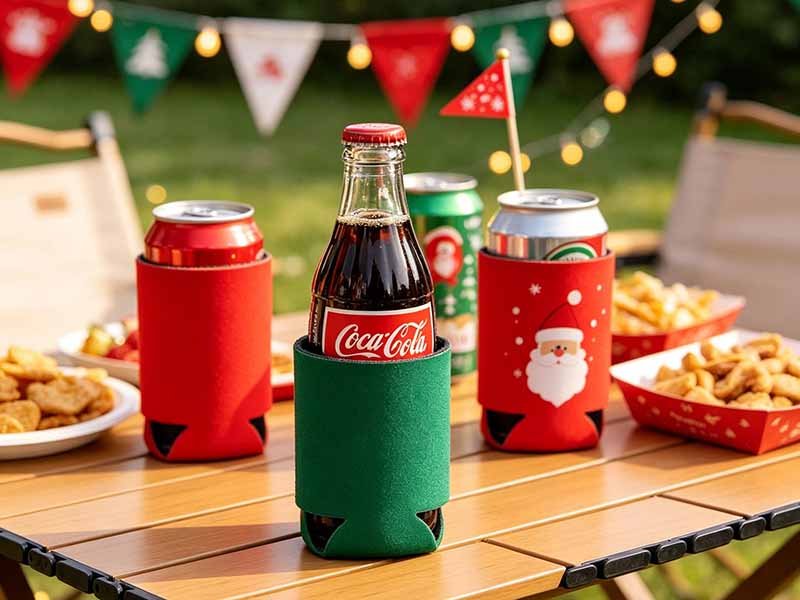
Holiday collections should begin with a specific recipient, occasion, and delivery deadline. A corporate gift program has different priorities from a consumer retail range. Corporate buyers may require visible but tasteful logos, individual packaging, multiple shipping addresses, carton labeling, and a fixed event date. Consumer brands may place greater emphasis on bundle value, storytelling, and gift presentation.
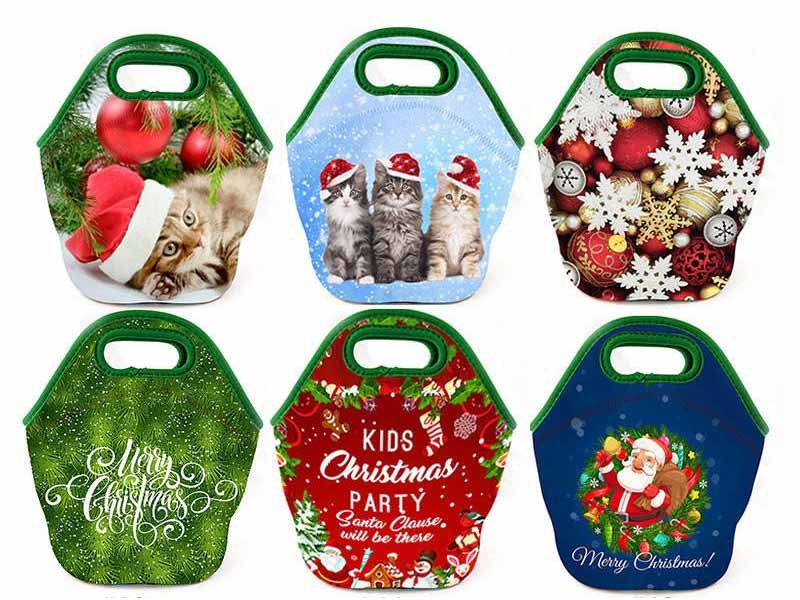
Suitable holiday products can include wine sleeves, bottle carriers, can coolers, cosmetic pouches, lunch bags, travel organizers, desk accessories, and coordinated gift sets. The strongest products are usually easy to understand immediately and do not require a long explanation of their use.
A practical way to reduce leftover-stock risk is to place the most seasonal message on removable packaging rather than permanently on the product. A dark green bottle holder with a holiday paper sleeve may remain saleable after the event, while the same product printed with a dated holiday message may require heavy discounting.
Packaging decisions should be made early because boxes, paper sleeves, inserts, barcodes, individual naming, and multi-address shipping can add more complexity than the product itself. A simple item may become a demanding project when hundreds of personalized packages must reach different destinations before one fixed date.
| Season or Program | Main Customer Behavior | Suitable Products | Main Planning Priority |
|---|---|---|---|
| Spring | Outdoor return, fitness, short travel | Bottle sleeves, pet accessories, small pouches | Flexibility and easy carrying |
| Summer | Hydration, beaches, travel, events | Koozies, bottle holders, wet pouches, beach totes | Printing and delivery deadlines |
| Fall | School, office, commuting | Laptop sleeves, lunch bags, organizers | Fit, protection, retail timing |
| Winter | Protection, indoor use, gifting | Wine sleeves, travel pouches, protective covers | Packaging and perceived value |
| Corporate holidays | Branded gifting and distribution | Can coolers, bottle sleeves, gift sets | Logo control and delivery certainty |
| Year-round core | Stable utility and replenishment | Standard sleeves, pouches, holders | Repeatable materials and construction |
SKU Count
The correct number of SKUs depends on demand visibility, purchasing budget, available sales channels, color strategy, and replenishment speed. Adding more products does not automatically create more revenue. It often divides the same demand across a greater number of inventory positions.
A simple calculation shows how quickly assortment complexity can increase:
Inventory positions = product styles × colors × sizes × packaging versions
Five products offered in four colors create twenty inventory positions. Adding two sizes increases the total to forty. When each position requires a practical production quantity, the overall inventory commitment can become much larger than the product team expected.
For an untested collection, a disciplined starting point may include three to six product styles, two to four coordinated colors, limited size variation, one shared surface material, and one main packaging system. A mature retailer with reliable historical sales may support a wider range, but a new brand should not copy that assortment depth without similar demand data.
Finished-product MOQ is not the only minimum to consider. Custom laminated fabric, printed boxes, molded patches, jacquard webbing, special hardware, and unique color components may have higher upstream requirements. Buyers should ask which material or component creates the actual minimum for each product.
How Do You Choose Materials and Branding?
Neoprene thickness, surface fabric, colors, trims, printing, and branding should be selected according to product function, durability, target cost, artwork, quantity, and production stability. The thickest material is not always the most suitable. Collections are generally easier to control when several products share approved laminates, bindings, webbing, colors, logo proportions, and packaging components.
Thickness and Structure
Neoprene thickness affects flexibility, cushioning, structure, seam bulk, weight, cost, and carton volume. Product teams sometimes choose thicker material because it feels more substantial as a small swatch. Once the material is folded, bound, curved, and sewn into a finished product, excessive thickness may create stiffness, bulky seams, or unnecessary freight cost.
A 2 mm material is commonly considered for lightweight can coolers, simple sleeves, promotional products, and flexible pouches. A 3 mm material can provide a useful balance for bottle holders, laptop sleeves, lunch products, and general accessories. A 4 mm construction may suit products requiring more structure or cushioning, while a 5 mm option should normally have a clear functional purpose.
These measurements are starting points rather than universal rules. Surface fabric, foam density, lamination, stretch, product dimensions, seam design, lining, and binding also affect the finished result. Two materials described as 3 mm may not feel identical when sourced from different production batches or constructed with different surface textiles.
The best choice is often the lowest thickness that delivers the required function, structure, protection, and perceived value. Additional thickness can increase material cost, sewing difficulty, carton volume, and shipping weight without creating a proportional improvement in customer experience.
| Thickness | Common Applications | Main Advantages | Main Checks |
|---|---|---|---|
| 2 mm | Koozies, lightweight sleeves, simple pouches | Flexible, light, lower bulk | Limited structure and cushioning |
| 3 mm | Bottle holders, laptop sleeves, lunch products | Balanced structure and flexibility | Fit, seam bulk, thickness tolerance |
| 4 mm | Protective covers, structured accessories | Greater body and cushioning | Cost, sewing control, carton volume |
| 5 mm | Specialized protection and premium structures | Increased thickness and rigidity | Weight, curved seams, manufacturing difficulty |
The prototype should always be tested with the actual item it is designed to hold. A laptop sleeve should be checked with the intended device dimensions, and a bottle holder should be tested with the target bottle diameter and height. Material thickness alone cannot confirm usable fit.
Surface Fabric
Commercial neoprene products commonly use foamed material laminated with a textile surface. That surface influences color, print appearance, hand feel, abrasion behavior, stretch, dirt visibility, and the way the material responds during cutting and sewing.
Polyester-faced neoprene is often considered when sublimation or detailed full-color artwork is required. Nylon-faced options may be selected when the project needs a different texture, stretch behavior, or abrasion profile. Buyers should avoid approving material described only as “3 mm neoprene” when the surface fabric and lamination quality have a major influence on the product.
A useful material specification records foam thickness, surface composition, color, stretch direction, printing method, lamination details, and interior requirements. Depending on the use case, it may also include expectations for odor, abrasion, colorfastness, adhesion, and relevant testing documentation.
The use environment should guide the material decision. A promotional can cooler may prioritize cost and artwork. A pet product may face scratching and repeated handling. A laptop sleeve may require a smooth interior and stable dimensions, while a bottle holder may require binding that can be sewn neatly around small curves.
Material availability is also important. Stock colors may support lower quantities and faster development. Custom laminated colors or printed rolls may require greater commitments. Before approving a special material, buyers should calculate whether it can be shared across several SKUs or future replenishment orders.
Color and Printing
Seasonal colors should balance trend relevance, brand recognition, material availability, and the risk of leftover stock. A manageable collection may include one established brand color, one or two seasonal accents, one neutral option, and one printed design.
Pantone references improve communication, but perfect visual matching across neoprene fabric, binding, webbing, zippers, labels, patches, and printed packaging may not be technically realistic. Different materials reflect light differently and use different coloring or printing processes. The practical goal is controlled coordination within approved tolerances.
Physical sampling remains essential. A digital proof can confirm graphic layout but cannot accurately show printed texture, color absorption, lamination, or how artwork will change when cut and sewn around curves.
Sublimation can support detailed full-color artwork and repeated patterns on compatible polyester-faced material. Screen printing is often practical for bold logos and simpler promotional designs. Heat transfer can support detailed graphics in a defined area, but adhesion and edge durability should be checked. Woven labels, embroidery, rubber patches, silicone patches, reflective logos, jacquard webbing, and custom zipper pullers create different tactile and positioning effects.
The artwork should fit the selected process. Small embroidered text may lose clarity, while a thick molded patch may look oversized on a slim sleeve. A complex gradient may not suit a basic screen-print setup. Physical samples should confirm scale, placement, color, hand feel, and repeatability before bulk approval.
Cross-SKU Consistency
Consistency does not mean every product must look the same. It means the collection follows a controlled material and visual language that customers can recognize across different product functions.
A collection-level specification may define one main neoprene laminate, two binding colors, one webbing family, one hardware finish, consistent logo proportions, standard label positions, shared packaging graphics, and a common naming system. Individual products can still vary in dimensions, structure, and function.
The approved sample, bill of materials, artwork file, color reference, pattern, measurement chart, and packaging specification should become the production control set. When one trim or component changes, the effect should be reviewed across the collection rather than treated as an isolated decision.
Shared components can reduce purchasing complexity and leftover material. The same binding may be used across bottle holders, lunch bags, and pouches, while one printed laminate may support several related products. This simplifies sourcing, inspection, storage, and replenishment.
Standardization should not weaken performance. A large lunch carrier may need wider webbing and stronger reinforcement than a small accessory pouch. A better approach is to establish controlled component families rather than forcing one component into every product regardless of use.
How Do You Plan Samples and Launch Timing?
A seasonal development schedule should be built backward from the required warehouse, retail, campaign, or event date. Materials and artwork should be confirmed before full sampling, every SKU should be approved for fit and production feasibility, and specifications should be frozen before bulk production. Time must also remain for inspection, packaging, freight, customs, and local distribution.
Backward Planning
The factory completion date is not the same as the market launch date. After production, products may still require final inspection, individual packing, export documentation, international freight, customs clearance, warehouse receiving, photography, listing preparation, retail allocation, and domestic distribution.
Planning should therefore begin with the date when inventory must be commercially available. Every earlier milestone should be calculated backward from that point. This approach exposes the true time available for product development and prevents teams from treating shipping as an afterthought.
A simple promotional can cooler using stock material and standard packaging may move relatively quickly. A multi-SKU retail range with custom sublimation, molded patches, special zippers, printed boxes, compliance testing, and multiple delivery destinations requires a much longer schedule.
| Development Stage | Typical Window Before Warehouse Date | Main Output |
|---|---|---|
| Market and collection planning | 24–30 weeks | Customer, theme, assortment, budget |
| RFQ and technical preparation | 20–24 weeks | Drawings, artwork, dimensions, quantities |
| Material and first samples | 16–20 weeks | Physical samples and material approvals |
| Revisions and final approval | 12–16 weeks | Production-ready sealed samples |
| Material booking and production | 7–12 weeks | Completed bulk goods |
| Inspection and packing | 5–7 weeks | Approved and labeled cartons |
| Freight and inbound handling | 1–6+ weeks | Warehouse-ready inventory |
These are practical planning ranges rather than guaranteed lead times. Mature structures and available materials may move faster, while custom components, repeated revisions, large orders, complex packaging, or distant shipping routes may require additional time.
A last safe date for major changes should be agreed upon. Changing artwork after printing has started or altering box dimensions after packaging materials have been ordered can create waste, rework, additional charges, and missed launch windows.
Sample Inputs
Sampling becomes more efficient when the development team receives a structured package of information. A reference image without dimensions, a logo without usable artwork, or a request for “premium neoprene” without a defined function creates avoidable interpretation risk.
The sample brief should identify the use scenario, target dimensions, item size, neoprene thickness, surface fabric, colors, logo process, bindings, webbing, zippers, handles, hooks, packaging, estimated quantities, destination market, required delivery date, and target commercial price.
A target cost can help the manufacturer recommend realistic materials and structures. Without a commercial range, the first sample may become more complex than the market can support, leading to expensive redesign after the product has already consumed time.
For a multi-SKU collection, one master design sheet should establish the shared rules for colors, binding, webbing, hardware, logo proportions, labels, artwork scale, and packaging. Each product can then use its own drawing and measurement chart while remaining part of the same system.
The sample should represent intended production construction as closely as possible. Temporary stock components may be acceptable for an early concept sample, but every substitution should be recorded. Buyers should know which elements are final and which will change before approval.
Multi-SKU Sampling
An efficient multi-SKU process begins with shared materials and components. When several products use the same printed laminate, the print, color, pattern scale, binding, and primary logo treatment should be approved before every final sample is cut.
The technically difficult hero product should normally enter sampling first. Its structure may reveal problems involving stretch, seam bulk, print distortion, hardware, reinforcement, or packaging that also affect simpler products in the collection.
Every SKU still needs individual review. A pattern that looks balanced on a flat laptop sleeve may distort when wrapped around a cylindrical bottle holder. Binding that runs cleanly along a straight edge may behave differently on a small curved base. One webbing width may suit a bottle carrier but feel too heavy on a compact pouch.
Revision comments should be managed in one collection-level tracker. Each comment should identify the product, issue, requested change, priority, responsible person, date, and approval status. Annotated photographs, measurements, and updated drawings are more useful than general comments such as “improve the shape.”
The final sample should be linked to a frozen bill of materials, pattern, measurement chart, artwork file, packaging specification, and revision record. This creates a reliable standard for bulk production and future repeat orders.
Deadline Protection
Seasonal deadlines are protected by early decisions, controlled changes, and realistic buffers. They are not protected by asking the production team to work faster after delays have already appeared.
The most common preventable risks include late artwork changes, unclear dimensions, unapproved packaging, missing barcodes, custom components ordered too late, and repeated sample revisions without a final decision date.
Material reservations may be useful once the design direction is stable, particularly when the project depends on custom printed rolls or limited stock colors. Buyers should understand the financial commitment and cancellation risk before asking a supplier to reserve materials.
Packaging should be developed alongside the product. Waiting until production is nearly complete to design a retail box can cause size errors, excessive empty space, higher freight volume, or delayed packing. Labels, FNSKU codes, retail barcodes, warning statements, and carton marks should be confirmed before packing begins.
Split shipping may protect a launch when some products are completed earlier than others, but it increases freight and administrative cost. Air freight can protect an event date but reduce margin. In some cases, removing one late experimental SKU is commercially wiser than delaying the entire collection.
How Do You Control Risk and Scale?
Risk can be controlled by limiting unproven SKUs, sharing materials, approving production-ready samples, documenting measurable quality standards, inspecting each product separately, and separating first-launch quantities from replenishment quantities. Scaling should happen only after the brand has reviewed sell-through, margin, complaints, returns, quality performance, and delivery results.
Cost and Inventory
The ex-factory price is only one part of the collection’s economics. Buyers must also consider development, custom materials, printing, trims, packaging, testing, inspection, freight, duties, fulfillment, storage, returns, discounts, and leftover inventory.
A low factory price can still produce weak margins if the project requires emergency air freight because development began too late. A premium box may improve presentation but increase assembly labor, carton size, shipping volume, and warehouse cost. A custom patch may add value to the hero product while becoming unnecessary expense on an entry-level accessory.
Cost should be reviewed according to product role. A hero product may carry greater development cost because it attracts attention and supports brand positioning. A simple can cooler should remain commercially efficient enough to support an accessible price. A supporting pouch may be evaluated partly through its contribution to bundles rather than only its standalone margin.
Inventory risk is most effectively reduced before the purchase order is placed. Shared materials, fewer colors, controlled sizes, and limited packaging versions allow buyers to place more meaningful quantities behind the strongest products.
Seasonal graphics can be placed on paper sleeves, hangtags, or removable inserts so that remaining products retain value after the campaign. This approach is often more flexible than permanently printing a highly dated message on the product.
MOQ must be reviewed at both finished-product and component level. A manufacturer may accept a modest finished-product quantity, but custom printed laminate, molded patches, branded webbing, special hardware, or printed boxes may require larger upstream commitments.
Quality Standards
Quality standards should be measurable and visible. Terms such as “high quality” or “similar to the sample” are not detailed enough to guide consistent production or inspection.
A production file should define the material, thickness, surface fabric, dimensions, tolerances, colors, artwork placement, logo size, seams, binding, reinforcement, closure function, cleanliness, packaging, labels, barcodes, and carton requirements.
The approved sample remains important, but it should be supported by written specifications. Physical samples can be compressed, stretched, stained, or interpreted differently over time. A measurement chart, bill of materials, and approved artwork reduce this risk.
Critical requirements should be separated from cosmetic preferences. A weak handle reinforcement may affect safety and usability, while a small visual difference in an interior seam may be cosmetic. Defect classification helps the quality team make consistent decisions.
Functional claims require appropriate checks. A bottle-holder handle may need a defined pull or load test. A laptop sleeve should be checked using the specified device dimensions. A printed logo may require adhesion or rubbing evaluation, while temperature-retention claims require relevant product testing.
Quality standards must be agreed upon before production begins. Criteria created only after a defect appears become part of a commercial dispute rather than a preventive control system.
Multi-SKU Inspection
A multi-SKU collection should not be inspected as though every product were identical. Each item may use different dimensions, artwork placements, seams, closures, components, and packaging. A defect affecting one product can be hidden when inspection results are combined across the whole order.
Incoming inspection should verify neoprene thickness, surface fabric, printed rolls, color, binding, webbing, zippers, hardware, labels, and packaging materials. Pre-production review should confirm the approved sample, bill of materials, measurement chart, artwork, and packaging instructions.
In-process inspection should focus on cutting accuracy, print direction, seam construction, binding, reinforcement, and component installation. Problems found at this stage are usually less expensive to correct than issues discovered after final packing.
Final inspection should review dimensions, appearance, fit, function, logo quality, cleanliness, and conformity to the approved sample. Outgoing inspection should verify individual packaging, barcode accuracy, carton quantity, carton marks, weight, and shipment documentation.
Important visible branding points may justify 100% checking even when other criteria are inspected using an AQL-based sampling method. First orders, complex products, premium programs, and strict retail projects may also require increased inspection or third-party verification.
An inspection report should identify the SKU, quantity inspected, defect categories, photographs, result, corrective action, and release decision. A simple statement that an order passed provides limited value for future improvement.
Scaling Decisions
Scaling should begin only after the brand understands what happened in the market. Total sales alone are not enough. A collection may appear successful while one color generates most of the profit and several other variants remain unsold.
The post-season review should examine sell-through by SKU and color, gross margin after freight and discounts, return reasons, review language, bundle performance, remaining inventory, production defects, packaging damage, forecast accuracy, replenishment speed, and launch delays.
Products can then be classified as scale, maintain, revise, or discontinue. A strong hero product may deserve new colors or sizes. A supporting pouch may remain because it increases bundle conversion. A weak product may need a dimensional change rather than complete removal. A popular item with frequent complaints should be corrected before production volume increases.
The manufacturer should receive a structured review of the season. Approved samples, patterns, bills of materials, color references, inspection findings, customer complaints, and corrective actions should be retained for repeat production.
For serious seasonal programs, the most suitable manufacturing partner is usually one that can connect material selection, pattern development, sampling, sewing, quality control, packaging, and export delivery through one coordinated system. This continuity reduces information loss and makes it easier to expand successful products without rebuilding the supply chain for every season.
Build Your Seasonal Neoprene Collection With Szoneier
A successful seasonal neoprene collection is built through coordinated commercial and manufacturing decisions. The theme should respond to a real customer need, the assortment should contain clearly defined product roles, and the materials, colors, branding, trims, and packaging should work as one recognizable system.
Samples must confirm more than appearance. They should verify fit, dimensions, structure, sewing, printing, packaging, production feasibility, and cost. Quality criteria and delivery milestones should be documented before bulk production begins, especially when the collection includes several products, colors, or sales channels.
Szoneier supports the development of custom neoprene bottle holders, can coolers, lunch bags, laptop sleeves, pouches, bags, soft covers, pet accessories, promotional products, and related sewn goods. Common project options may include 2 mm, 3 mm, 4 mm, and 5 mm neoprene, together with sublimation, screen printing, heat transfer, woven labels, embroidery, rubber patches, silicone patches, reflective details, branded webbing, and custom zipper pullers.
To evaluate a seasonal collection, buyers should provide their proposed product list, reference photographs, sketches or tech packs, target dimensions, artwork files, preferred materials, colors, quantities, packaging requirements, destination market, target cost, and required warehouse date.
The project team can then review product structure, material options, sampling requirements, MOQ factors, logo methods, production timing, quality standards, packaging, and shipping plans before the collection enters bulk production.
A well-planned collection does more than create seasonal products. It gives the brand a repeatable system for testing ideas, controlling inventory, improving quality, expanding successful SKUs, and building a more stable long-term neoprene product line.