Neoprene products often look simpler than they really are. A beverage sleeve may contain only a few panels and several stitched edges, while a laptop sleeve may appear to be little more than a soft zippered pouch. In retail, however, small differences in material thickness, internal dimensions, print alignment, seam construction, odor control, packaging, and product claims can determine whether an item earns repeat orders or becomes slow-moving inventory.
The best neoprene products for retailers include can coolers, bottle holders, lunch bags, totes, laptop sleeves, protective pouches, sports supports, and selected pet accessories. The strongest products solve an obvious problem, fit a clearly defined sales channel, ship efficiently, provide visible customization opportunities, and can expand into multiple colors, sizes, prints, or coordinated accessories without creating excessive development and inventory risk.
The most successful assortment is rarely the one with the largest number of products. It is the one in which every item has a clear customer, a practical use case, a realistic price position, and a reason to be chosen over a generic alternative. One retailer learned this after launching three highly decorated neoprene products at the same time. The most expensive design received attention but sold slowly, while a simple, accurately fitted bottle sleeve generated steady reorders because shoppers understood its value within seconds.
What Neoprene Products Sell Best?
The strongest-selling neoprene products usually combine an obvious function, manageable retail price, compact shipping size, and visible customization potential. Koozies, bottle holders, lunch bags, totes, laptop sleeves, protective pouches, sports supports, and selected pet accessories are reliable starting points. Their success still depends on the intended audience, product fit, construction quality, packaging, and how clearly the retailer communicates the practical benefit.
Drinkware Accessories
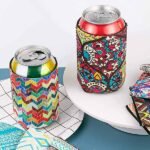
Neoprene can coolers, koozies, bottle sleeves, wine covers, and tumbler holders remain commercially attractive because customers understand their function almost immediately. They can help reduce direct contact with cold or wet containers, improve grip, provide light insulation, and create a large surface for graphics or branding. These characteristics make them suitable for gift shops, breweries, tourist stores, sporting events, festivals, corporate programs, outdoor retailers, and personalized-product websites.
The strongest drinkware products are developed around a defined container rather than being described as universally compatible. A standard beverage can, slim can, glass bottle, sports bottle, wine bottle, takeaway cup, and insulated tumbler have different heights, diameters, tapers, and weight distributions. A sleeve that fits one format properly may wrinkle, rotate, slip, or stretch excessively when used with another. Retailers should provide exact compatibility information instead of relying on a broad claim such as “fits most bottles.”
Two-millimeter neoprene can be suitable for lightweight promotional sleeves, while 3 mm often creates a more substantial retail feel without unnecessary bulk. Four-millimeter material may add body and temperature retention, but it also increases sewing difficulty, carton volume, and cost. Thickness should therefore be selected according to the product promise, target selling price, print requirements, and how often the sleeve will be stretched during normal use.
Printed artwork also needs to be evaluated after cutting and sewing, not only as a flat digital file. A centered graphic can appear misaligned once a cylindrical sleeve is formed, while patterns crossing a seam may shift or become distorted. Retailers should inspect the completed sample on the actual container, checking the seam, bottom position, edge finish, print balance, elasticity, odor, and recovery after repeated removal.
Bags and Daily Carry
Neoprene lunch bags, totes, bottle carriers, cosmetic pouches, travel organizers, wet-item bags, and small daily-use cases give retailers more opportunities to build a lifestyle collection. The material’s soft hand feel, flexibility, color potential, and light cushioning can make an everyday utility product feel more distinctive. These products can also share the same print, zipper puller, patch, lining color, or packaging style across a coordinated retail range.
A well-developed neoprene bag requires more than folding and sewing several sheets together. The handle attachment must carry the intended load, the opening must be wide enough for normal use, and the bottom should hold its shape without becoming unnecessarily rigid. Zippers need enough clearance around curves, while seams and bindings should remain clean when the bag is filled. Material that is too thin may collapse or feel inexpensive, while overly thick material can make the product bulky and difficult to turn during sewing.
Three-millimeter neoprene is a practical starting point for many general-purpose lunch bags, totes, pouches, and bottle carriers. Two-millimeter material can work for compact organizers or lightweight cosmetic bags, while 4 mm can add more cushioning and visual substance to protective or premium products. The correct thickness still depends on overall dimensions, lining, closures, reinforcement, handle design, and the customer’s expected use.
Retailers should also describe insulation carefully. Neoprene can help slow temperature change and reduce condensation, but a single-layer neoprene lunch bag should not automatically be marketed as equivalent to a heavily insulated cooler containing thick foam, reflective film, a food-contact lining, and a tightly controlled closure. Clear and realistic product claims reduce returns, improve customer trust, and make it easier to position the product against more technical alternatives.
| Product Type | Typical Thickness | Retail Strength | Main Development Risk |
|---|---|---|---|
| Can cooler | 2–3 mm | Clear function and impulse appeal | Poor container compatibility |
| Bottle holder | 3–4 mm | Useful for travel and outdoor programs | Strap and seam stress |
| Lunch bag | 3–4 mm | Everyday use and gifting potential | Overstated insulation claims |
| Neoprene tote | Around 3 mm | Large branding and print area | Weak handle reinforcement |
| Small pouch | 2–3 mm | Easy bundling and efficient shipping | Limited structure |
| Laptop sleeve | 3–4 mm | Higher perceived value | Incorrect internal dimensions |
| Sports support | 3–5 mm | Specialist functional demand | Sizing and comfort complaints |
| Pet accessory | 2–4 mm | Lifestyle and gifting potential | Cleaning and durability issues |
Protective Sleeves
Laptop sleeves, tablet cases, camera pouches, glasses cases, tool covers, and other protective neoprene products can support a higher selling price because customers are paying for fit, cushioning, organization, and surface protection. These products can also perform well in corporate gifting, school, travel, technology, and professional equipment programs when the dimensions and protection claims are carefully controlled.
Fit is the main source of both value and risk. A laptop described as 15 inches may have a different body width, thickness, corner radius, or hinge profile from another device with the same screen measurement. Retailers should therefore provide internal dimensions and a compatibility guide rather than relying only on screen size. Zipper tape, internal binding, seam allowance, foam compression, and lining thickness all reduce the usable space inside the finished sleeve.
A 3 mm construction can provide flexible protection against scratches and ordinary handling, while 4 mm may create a more substantial feel for premium designs. Neoprene should not be marketed as providing the same impact protection as a molded EVA case or another rigid shell unless the finished structure has been designed and tested accordingly. Accurate phrases such as “soft cushioning,” “scratch protection,” or “light bump protection” are often more credible than exaggerated protective claims.
Closure design should also be evaluated on the actual device. A zipper placed too close to the opening can contact the product unless a protective lip or internal guard is added. Handles, shoulder straps, and attachment loops require reinforcement because neoprene can elongate under repeated load. The approved sample should be loaded, carried, opened, closed, stretched, and packed several times before the retailer confirms bulk production.
Sports and Pet Products
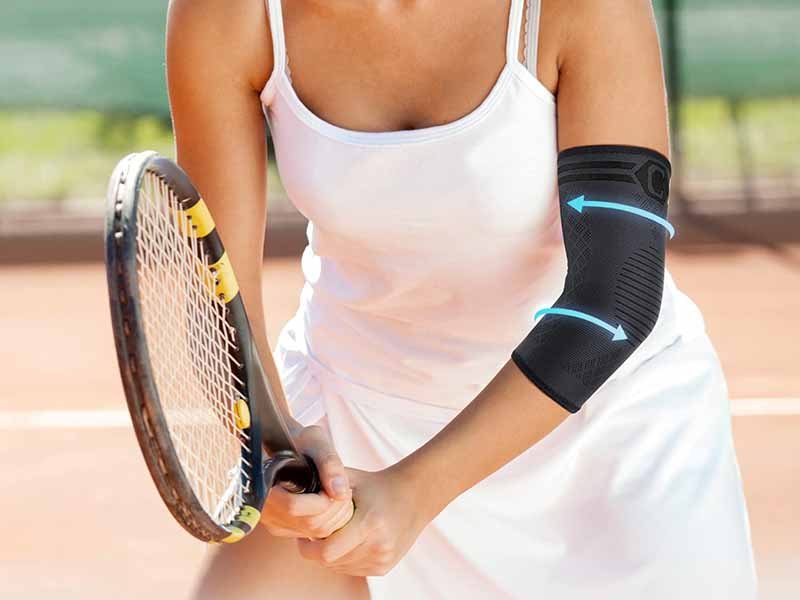
Sports supports, gloves, wraps, wetsuit-related accessories, equipment covers, and selected pet products can create strong specialist retail opportunities because neoprene provides stretch, warmth, cushioning, and close contact with curved objects or body areas. These products, however, require more technical development than a basic pouch or drink sleeve because customer satisfaction depends heavily on sizing, seam placement, comfort, movement, and repeated exposure to sweat or moisture.
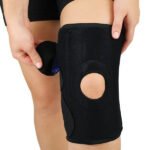
A sports support should not be developed only from appearance. Stretch direction affects movement, closure placement affects pressure distribution, and seam location affects comfort against the skin. Material that is too thick may restrict motion or trap excessive heat, while material that is too thin may fail to provide the expected support or durability. Size charts should be built from body measurements and fitting tests rather than copied from an unrelated product.
Retailers must also control product claims carefully. A neoprene support may provide warmth, compression, or a more secure feeling, but statements related to medical treatment, pain reduction, injury prevention, or recovery may require evidence and regulatory review in the destination market. Product descriptions should remain within the performance that the structure and available testing can support.
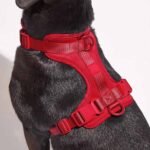
Pet-related neoprene products can include travel pouches, bottle holders, protective covers, harness components, treat bags, and washable accessories. These items should be reviewed for chewing risk, seam strength, hardware security, odor, cleaning method, edge comfort, and outdoor durability. Products that contact an animal’s skin require smooth edge finishing and carefully positioned seams. Specialist categories can generate loyal repeat customers, but only when fit, safety, and durability are treated as measurable requirements.
Which Products Fit Each Retail Channel?
Product-channel fit determines whether a good neoprene item becomes commercially successful. Gift stores favor visually clear and portable products, outdoor retailers need reliable function, fitness channels require comfort and sizing, and online sellers need searchable use cases and precise product information. The same item can perform very differently across channels because customer expectations, display conditions, price sensitivity, and return behavior are not the same.
Gift and Promotional Retail
Gift stores, tourist shops, breweries, festivals, corporate gifting companies, and promotional distributors often perform best with products that are easy to understand and highly customizable. Beverage sleeves, wine covers, glasses cases, bottle holders, small zippered pouches, lunch totes, and compact organizers provide enough useful surface area for regional artwork, event graphics, company branding, licensed designs, names, or seasonal decoration.
Visual coordination becomes especially important when the retailer is building a collection rather than selling one isolated product. A coastal gift store might combine a printed bottle sleeve, sunglasses case, wet-swimwear pouch, and compact beach tote. A corporate gift program could pair a laptop sleeve with a bottle holder and cable organizer. Shared colors, artwork, zipper details, and packaging help separate products feel like one planned range.
Promotional buyers often compare unit prices closely, but the cheapest construction can create significant reputational risk. Uneven printing, strong odor, rough edges, weak seams, or inaccurate product fit become highly visible when hundreds or thousands of units are distributed at the same event. A modest investment in material consistency, sample approval, and inspection can protect both the retailer and the brand represented on the product.
Packaging should match the distribution method. Bulk packing may be suitable for conferences or beverage events, while retail stores need header cards, belly bands, hangtags, barcodes, or small boxes that explain the product size and intended use. Gift programs may require tissue, inserts, personalized labels, or coordinated sets. Packaging should support the selling experience without adding unnecessary freight volume.
Outdoor and Fitness Retail
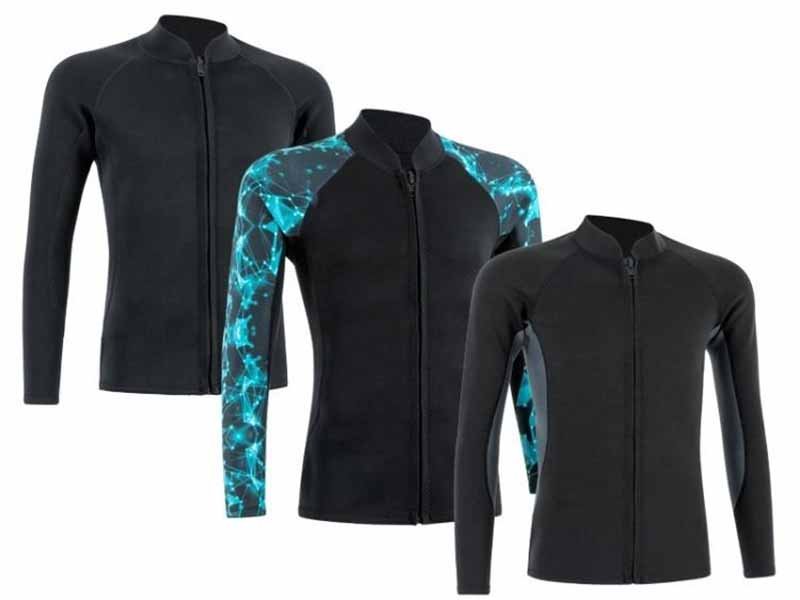
Outdoor, travel, watersports, and fitness retailers need products with a stronger functional reason to exist. Bottle carriers, sports supports, gloves, protective sleeves, wet-item pouches, equipment covers, and small gear organizers can fit these channels when their construction reflects how customers will actually use them.
A bottle holder used during walking or travel should carry a full container without the strap attachment stretching or rotating. A wrist or knee support should move with the body while maintaining comfortable contact. A wet-item pouch should be described according to its actual seam and closure construction, while a protective cover should be positioned as soft protection unless it contains additional structural elements.
Retailers should define the use environment before requesting samples. Important information includes whether the product will be used indoors or outdoors, whether it touches skin, how much water or sweat exposure is expected, how much weight it carries, how frequently closures will be operated, how it will be cleaned, and what temperatures or weather conditions it may encounter.
Outdoor and fitness shoppers may accept a higher selling price when the product removes a real inconvenience. A reinforced bottle carrier with an adjustable strap may deliver more value than a cheaper decorative sleeve. A properly graded support with smooth edge binding may produce fewer complaints than a universal-size product. In these channels, practical construction and credible performance information usually matter more than decorative complexity.
Online and Marketplace Sales
Online sellers need products that can be understood through a search result, a title, several photographs, a size diagram, and a short list of benefits. Neoprene products can perform well online when the listing addresses a specific use case rather than relying on the material name alone. “Washable travel pouch for wet swimwear” gives the customer a clearer reason to buy than the broad phrase “neoprene pouch.”
Listings should include accurate internal and external measurements, close-up images of seams and closures, compatibility information, material thickness, care instructions, and realistic performance descriptions. Products with size-dependent fit should show both centimeters and inches when appropriate. Photographs should demonstrate the product with the intended bottle, device, lunch container, or body position rather than displaying only an empty item on a white background.
Retailers should control the number of variations carefully. Too many colors, sizes, prints, closures, and structures can fragment inventory, increase advertising complexity, and make replenishment difficult. A core-and-extension strategy is usually safer: begin with one proven structure, one or two commercially important sizes, and several carefully selected visual options before expanding.
Packaging should also be designed for parcel delivery. The product must arrive without permanent creasing, distorted edges, damaged zippers, or loose labels. Marketplace programs may additionally require barcodes, polybag warnings, carton labels, bundle identification, or fulfillment-center preparation. These requirements should be confirmed before mass production rather than added after the goods have already been packed.
| Sales Channel | Strong Product Types | Main Purchase Driver | Key Requirement |
|---|---|---|---|
| Gift shop | Koozies, pouches and bottle sleeves | Artwork and gifting appeal | Clear retail packaging |
| Brewery or event | Can sleeves and bottle carriers | Immediate use and branding | Accurate container fit |
| Outdoor store | Holders, covers and wet pouches | Practical function | Durable straps and seams |
| Fitness retailer | Supports, gloves and wraps | Comfort and performance | Reliable size grading |
| Electronics retailer | Laptop and tablet sleeves | Fit and light protection | Exact internal dimensions |
| Online marketplace | Defined-use sleeves and bags | Search visibility and reviews | Accurate listing details |
| Corporate gifting | Coordinated product sets | Brand presentation | Consistent logos and packaging |
| Pet retailer | Travel pouches and accessories | Convenience and lifestyle use | Cleaning and safety review |
Seasonal and Bundle Programs
Neoprene products can adapt well to seasonal collections because colors, prints, labels, and packaging can change without rebuilding every product structure. Summer ranges may focus on beverage sleeves, beach products, bottle carriers, and wet-item pouches. Back-to-school collections can combine lunch bags, laptop sleeves, pencil pouches, and bottle holders. Holiday programs may use wine sleeves, gift sets, travel organizers, and personalized accessories.
Seasonal planning should begin early enough to allow for artwork preparation, sample development, revisions, approval, bulk production, inspection, and international delivery. Retailers should avoid placing the entire order into one highly seasonal graphic. A portion of the production can use evergreen colors or patterns that remain sellable after the main campaign has ended.
Bundles can increase perceived value and reduce direct price comparison. A lunch bag paired with a bottle sleeve and snack pouch creates a more complete offer than three unrelated accessories. A laptop sleeve bundled with a cable organizer and mouse pouch addresses a clear work or travel need. The best bundles save time, improve organization, or solve several related problems rather than simply grouping items with the same print.
The full set should be tested inside its proposed packaging. Neoprene can pack relatively flat, but thicker products, reinforced handles, rigid zipper sections, and multiple layers can increase carton volume. Excessive compression may also affect presentation after unpacking. Product and packaging dimensions should therefore be developed together so that merchandising value is not lost through an overly aggressive freight-saving method.
How Do Retailers Judge Sales Potential?
Retailers should judge sales potential through customer-problem clarity, target audience, expected selling price, landed cost, shipping efficiency, differentiation, return risk, and reorder opportunities. A product with a low factory price may still perform poorly after packaging, freight, selling fees, advertising, and returns. Strong products remain understandable, useful, and financially workable after every commercial cost is considered.
Problem and Audience
A commercially viable product should solve a problem that customers can recognize quickly. A beverage sleeve helps manage condensation and improves handling. A laptop sleeve protects a device from scratches during storage and transport. A lunch bag organizes food and provides light insulation. A bottle carrier allows a reusable bottle to be carried without occupying one hand.
When the product benefit requires several paragraphs to explain, it may be too vague for general retail. Specialist retailers can educate customers, but gift stores, marketplaces, and high-traffic retail environments usually need faster communication. The customer should be able to understand what the product does, who it is for, and why the design is useful within a short product description or several listing images.
The intended audience influences almost every manufacturing decision. A laptop sleeve designed for office professionals may use understated colors, a premium zipper, and internal organization. A student version may emphasize affordability, easy cleaning, and expressive prints. A bottle holder for hikers may require an adjustable strap and reinforced attachment points, while a promotional version may focus primarily on logo visibility and cost control.
A practical product statement should identify the user, product, and result. “A soft 3 mm neoprene bottle carrier for commuters who want to carry a reusable bottle without holding it by hand” gives the product team more useful direction than “a fashionable neoprene accessory.” Clear use statements improve material selection, sampling, packaging, photography, and customer communication.
Margin and Landed Cost
Factory unit price is only one part of retail profitability. A proper calculation should include printing, accessories, packaging, inspection, international freight, duties, destination handling, selling fees, advertising, payment charges, expected returns, and discounting. Products with similar factory prices can produce very different contributions when shipping volume, return frequency, and marketplace expenses are included.
A practical landed-cost formula is:
Landed cost per unit = Product cost + Packaging + Inspection + Freight + Duties + Destination handling
A more complete retail contribution formula is:
Contribution per unit = Net selling price − Landed cost − Selling fees − Promotional cost − Expected return cost
Retailers should compare supplier quotations only when every factory is pricing the same specification. One quotation may use 2 mm neoprene, basic screen printing, a standard zipper, and bulk packaging, while another uses 3 mm material, full-surface printing, reinforced handles, a branded zipper puller, and individual retail packaging. The prices cannot be compared fairly until the construction and packaging are aligned.
The lowest-cost option is not always the most profitable. A better zipper, stronger strap connection, more accurate size, or clearer package insert may reduce negative reviews and returns enough to justify the additional production cost. Cost engineering should protect the customer’s essential experience first and remove only features that do not support function, durability, presentation, or the intended selling price.
| Evaluation Factor | 1 Point | 3 Points | 5 Points |
|---|---|---|---|
| Benefit clarity | Difficult to explain | Understandable with context | Obvious within seconds |
| Target audience | Very narrow | Defined niche | Broad or repeatable |
| Differentiation | Highly generic | Several useful differences | Strong and visible advantage |
| Shipping efficiency | Bulky or inefficient | Manageable | Flat and compact |
| Fit-related risk | High | Moderate | Low with clear information |
| Customization potential | Limited | Several practical options | Strong collection potential |
| Reorder opportunity | One-time novelty | Seasonal | Stable or expandable |
| Margin flexibility | Little room | Acceptable | Supports promotions and fees |
A product scoring below 24 out of 40 may still succeed, but it usually needs a specialist audience, exclusive artwork, strong brand recognition, or a premium retail environment. This score should not be treated as a sales forecast. It is a structured way to identify weak assumptions before the retailer invests in samples, packaging, marketing content, and inventory.
Return and Quality Risk
Products with size, fit, closure, or performance expectations usually carry more return risk than simple accessories. A can sleeve has relatively low technical risk when container compatibility is clear. A laptop sleeve, sports support, glove, fitted bottle holder, or equipment cover requires more precise development because small measurement differences can prevent the product from working correctly.
Retailers should identify the most likely complaint before the sample is approved. Common problems include products being too tight or too loose, material feeling thinner than expected, strong odor, color differences, weak straps, rough seams, poor zipper movement, inaccurate insulation claims, misaligned printing, creasing after packaging, or cleaning instructions that do not match the product.
Each likely complaint should be converted into a measurable specification or inspection point. When fit is the main risk, the retailer should define internal measurements and test the actual object. When odor is the main risk, material selection, adhesive curing, ventilation time, storage, and packaging schedule should be reviewed. When color is critical, the buyer should approve a physical printed sample rather than relying only on a digital file.
Marketing accuracy is part of quality management. A product can be manufactured exactly according to the approved sample and still disappoint customers when the listing promises complete waterproofing, heavy impact protection, medical benefits, or extended cooling performance that the construction cannot provide. Realistic claims protect the retailer from unnecessary complaints while creating more credible customer expectations.
Reorders and Product Expansion
A strong retail product should have a logical future beyond the first purchase order. Neoprene products often support expansion through size, color, print, closure, thickness, strap, pocket, packaging, and coordinated accessories. A bottle sleeve can expand into versions for slim cans, standard cans, sports bottles, tumblers, and wine bottles, while a laptop sleeve can lead to tablet cases, cable organizers, document pouches, and travel accessories.
Retailers should plan the potential product family before launch but avoid producing every variation at once. A controlled sequence allows the buyer to learn from real customer behavior without carrying excessive inventory. One hero product can be introduced in one or two commercially important sizes and several carefully selected visual directions. Later versions can be based on actual sales, returns, and customer questions.
A practical development sequence is:
- Launch one clearly positioned hero product.
- Select one or two commercially important sizes.
- Test two to four colors or print directions.
- Review sales, returns, and customer feedback.
- Improve the approved specification.
- Add the most requested variation.
- Develop a complementary accessory.
- Standardize materials, colors, and packaging.
- Establish a reorder calendar.
- Remove weak variations before adding new ones.
Long-term programs should record the approved neoprene thickness, surface fabric, printed color, zipper shade, binding, logo method, dimensions, and packaging details. Materials described as “similar” can vary between production batches. A controlled specification makes it easier to maintain consistency across replenishment orders and prevents the buyer from approving the same decisions repeatedly.
What Makes a Quality Neoprene Product?
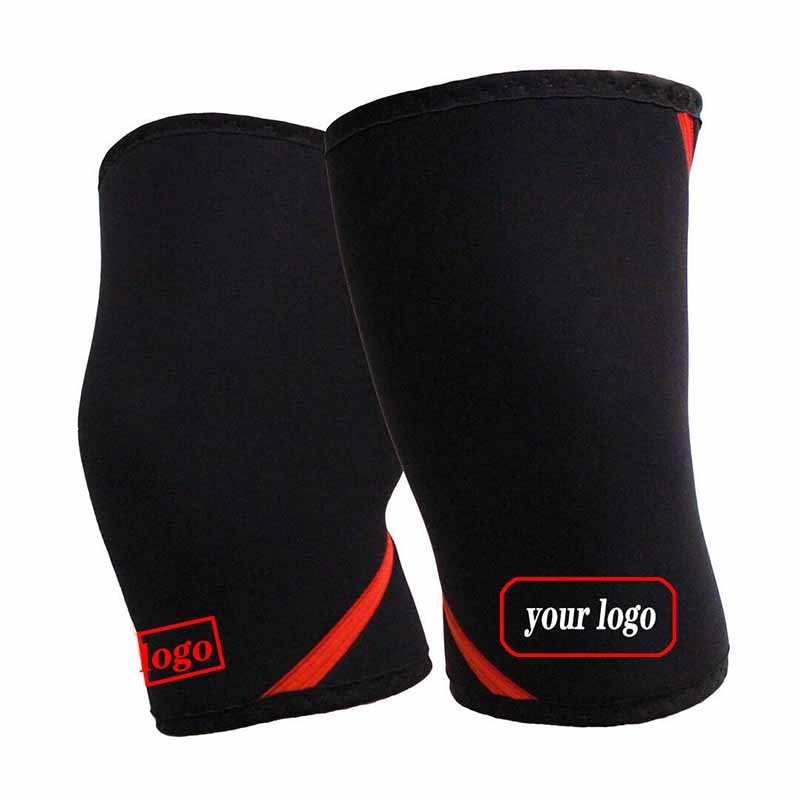
A quality neoprene product uses the correct thickness and surface lamination for its function, maintains consistent dimensions, recovers after stretching, and has clean seams, edges, closures, and printing. Odor, packaging, color consistency, and realistic performance claims also matter. Quality should be judged through measurable specifications and actual use testing rather than appearance, thickness, or broad statements about the material alone.
Thickness and Lamination
Neoprene products are commonly developed in thicknesses such as 2 mm, 3 mm, 4 mm, and 5 mm. The appropriate choice depends on flexibility, cushioning, insulation, shape retention, sewing difficulty, shipping volume, and what the customer expects the product to do. Selecting a thicker material without considering the full structure can increase cost and reduce usability without creating a meaningful retail benefit.
Two-millimeter neoprene is light and flexible, making it suitable for promotional sleeves, flat pouches, and products where compact packing matters. Three-millimeter material offers a practical balance for many can coolers, lunch bags, bottle holders, totes, and laptop sleeves. Four-millimeter material provides more body and cushioning, while 5 mm is generally more appropriate for specialist supports, liners, and protective items where the extra thickness serves a defined purpose.
Nominal thickness does not describe the full material construction. Neoprene foam is normally laminated with a surface fabric such as polyester or nylon. The facing affects stretch, hand feel, printing compatibility, abrasion resistance, color, and the total finished thickness. Adhesive quality and lamination control also influence whether the surface remains smooth or begins separating after repeated bending, stretching, or exposure to moisture.
Changing thickness after the pattern has been developed can affect fit. A sleeve designed around 2 mm material may become too small or difficult to turn when produced from 4 mm material. Folding radius, seam allowance, internal space, zipper clearance, and overall stiffness can all change. Thickness, surface fabric, pattern dimensions, seam construction, and intended fit should therefore be approved together.
| Thickness | Common Applications | Main Benefit | Main Trade-Off |
|---|---|---|---|
| 2 mm | Promotional sleeves and flat pouches | Light and economical | Limited cushioning and body |
| 3 mm | Koozies, lunch bags, totes and general sleeves | Balanced flexibility and structure | Moderate insulation only |
| 4 mm | Premium laptop sleeves and protective covers | More cushioning and substance | Higher cost and sewing difficulty |
| 5 mm | Specialist supports and protective liners | Thick and highly cushioned | Bulky for many retail products |
Fit and Construction
Fit is one of the most important quality measures for sleeves, holders, supports, gloves, covers, and other shaped neoprene products. A sample can appear visually clean when empty but perform poorly around the intended bottle, device, tool, or body area. Usable internal space is affected by material compression, seam allowance, binding width, zipper tape, lining, and the amount of stretch required during normal use.
For fitted products, the actual object or a verified three-dimensional reference is more useful than a broad market description. A listed device screen size does not fully define the product body, while a bottle capacity does not define its diameter or taper. The manufacturer should work from specific measurements and identify acceptable dimensional tolerances before mass production.
Construction should be reviewed at every stress point, including handles, shoulder straps, zipper ends, hook-and-loop corners, bottom seams, curved openings, binding joins, pocket entrances, and areas stretched during use. Reinforcement should be placed where force actually occurs rather than added only for appearance. A decorative stitch does not compensate for an attachment point that fails under normal carrying weight.
Stitch density must suit the material. Excessive needle penetration can weaken or visually damage neoprene, while loose stitching can create unstable seams. Edge finishing also changes both appearance and comfort. Raw edges may be suitable for some minimalist products, but bound edges generally provide a cleaner presentation. Products contacting skin require smooth seams and carefully selected bindings to reduce rubbing during movement.
Printing and Color
Neoprene products can use screen printing, heat transfer, sublimation, woven labels, rubber patches, silicone badges, embroidery, reflective graphics, metal plates, and other branding methods. Each technique has different requirements for artwork, surface fabric, color accuracy, abrasion resistance, order quantity, and expected product life.
Sublimation is suitable for detailed full-color graphics when the neoprene is laminated with a compatible polyester-facing fabric. It can reproduce gradients, photographic images, and all-over patterns, but the finished color must be reviewed on the actual textile surface. Computer monitors and paper proofs do not reproduce color in the same way as printed fabric.
Artwork for detailed printing should normally be prepared at production quality, commonly around 300 dpi at the intended size. Cutting and seam allowance must be considered so that important design elements do not disappear into the seam. Artwork crossing between panels requires careful alignment, although completely invisible continuity may not be realistic across thick sewn joins.
Screen printing can work well for simpler logos and limited colors, while patches and labels create a more dimensional presentation. The retailer should approve artwork size, print position, physical color reference, surface material, seam placement, logo durability, appearance after stretching, and the way the product looks under normal retail lighting. A completed sample or print strike-off provides more useful evidence than a digital mockup alone.
Odor and Finished Inspection
Neoprene products can develop noticeable odor from foam, lamination adhesive, printing, production conditions, storage, or packaging. A strong smell at first opening can lead to negative reviews even when the odor reduces after ventilation. Odor control therefore begins with material sourcing and continues through adhesive curing, ventilation, clean storage, packing timing, and the selection of packaging materials.
Finished products should have enough ventilation before being sealed into individual bags or boxes. Packing immediately after printing or lamination may trap odors that become more noticeable during a long international shipment. The retailer should evaluate the sample immediately after opening the final package rather than inspecting only an unpackaged product that has been exposed to air for several days.
A practical final inspection should cover material identity, thickness, external and internal dimensions, elasticity, recovery, odor, print color, print position, stitching, binding, zipper operation, hook-and-loop strength, handle attachment, surface wrinkles, cleanliness, packaging, barcode placement, carton quantity, and comparison with the approved production reference.
Products should also be inspected after remaining inside their actual packaging. Thick sleeves, structured bags, and reinforced accessories can become creased or distorted when compressed too tightly. A packing method that saves a small amount of freight but damages retail presentation may create higher costs through repacking, customer complaints, or returns. Quality is the combined result of material, pattern, printing, sewing, cleaning, packaging, and consistent approval standards.
How Should Retailers Source Custom Products?
Retailers should begin with a measurable product brief, develop and test a physical sample, confirm materials and claims, approve a production standard, and inspect bulk goods against that reference. Supplier selection should focus on development ability, material understanding, process control, communication, quality management, packaging, and reorder support. A low quotation has little value if the product cannot be reproduced consistently.
Product Brief
A useful request for quotation should contain enough information for the manufacturer to understand the intended product rather than guess from one photograph. The brief should identify the user, sales channel, product function, dimensions, neoprene thickness, surface fabric, artwork, accessories, packaging, order volume, destination, delivery target, and any testing or compliance requirements.
Retailers should provide a reference photo, sketch, physical sample, technical pack, or a combination of these materials. External dimensions alone may not be enough for fitted products, so the object that the sleeve or holder must fit should also be supplied or fully measured. The quantity should be divided by color, size, print, or design because production efficiency and minimum requirements may differ between a single design and many small variations.
Target price can be helpful, but it should be discussed together with the required customer experience. A responsible manufacturer cannot reduce cost without understanding which features are essential. Changing thickness, simplifying artwork, adjusting hardware, removing a pocket, modifying a strap, or changing packaging can affect function, durability, visual presentation, and customer perception.
The brief should distinguish required specifications from flexible preferences. Internal dimensions may be essential, while the exact zipper-puller shape may be negotiable. This allows cost engineering without damaging the product’s core purpose. For long-term programs, the specification should become a controlled document containing measurements, tolerances, material references, artwork, colors, packaging, inspection points, and revision history.
Sample Approval
The sample stage should prove that the product fits, functions, looks correct, can be packaged efficiently, and can be repeated in bulk. A sample should not be approved only because it resembles a reference image. Retailers should use it under realistic conditions and document every approved feature that matters to the customer experience.
The sample should be measured externally and internally, fitted around the actual bottle, device, tool, or body area, and operated repeatedly. Zippers should be opened and closed, straps loaded with realistic weight, fitted sections stretched, printed colors compared with an approved reference, and seams checked from both inside and outside. The product should also be placed into its final packaging and inspected immediately after reopening.
Sample corrections should be written in measurable terms. “Make it slightly larger” is difficult to reproduce consistently, while “increase the internal width from 330 mm to 338 mm” creates a clear instruction. “Improve the zipper” is vague, while “add a 15 mm internal protective lip beneath the zipper” identifies a specific solution.
The final approved sample should be identified as the production reference. If temporary materials, substitute colors, or handmade adjustments were used during early development, a pre-production sample may be required after the actual bulk materials, printing, accessories, labels, and packaging have been prepared. This additional checkpoint can prevent a visually attractive development sample from becoming an unrealistic production standard.
Bulk Quality Control
Bulk inspection should compare finished production against the approved sample and written specification. The inspection plan should focus on defects that affect fit, function, appearance, customer satisfaction, and product claims. Neoprene thickness, surface lamination, color, odor, cutting accuracy, dimensions, stitching, edge treatment, closures, handles, logo position, printing, cleanliness, and packaging all require appropriate control.
Retailers should define which defects are critical, major, or minor. A product made from the wrong material, a closure that does not work, or a sleeve that cannot fit the intended device is more serious than a small thread end that can be trimmed. Clear defect categories help both the factory and inspector make consistent decisions instead of relying on personal judgment.
Inspection should not begin only after the entire order has been packed. Material checks, first-production confirmation, and in-line inspection can identify issues before they affect the whole order. Early checks are especially useful for printed panels, fitted dimensions, curved seams, handle reinforcement, zipper placement, and repeated artwork alignment.
A third-party inspection can be added for large or high-risk programs, but the independent inspector still needs the approved sample, specification, tolerances, packing list, and defect definitions. Without these references, even an external inspection remains subjective. The most reliable quality process combines clear requirements, early production control, internal inspection, and final verification.
Supplier Verification
A qualified manufacturer should be able to explain how the project will move from concept to pattern, sample, revision, bulk production, inspection, packaging, and shipment. Buyers should look for specific technical answers rather than broad sales phrases such as “high quality,” “fully waterproof,” or “any design is possible.”
Useful verification questions include who develops the pattern, who manages sample revisions, which neoprene thicknesses and surface fabrics are available, how material thickness is checked, which printing method fits the artwork, how colors are approved, which operations are subcontracted, how outside processes are controlled, and what happens when bulk goods differ from the approved sample.
Retailers can request a video meeting, factory review, material swatches, similar product samples, itemized quotation, production photographs, inspection criteria, and packaging examples. A supplier that identifies risks before accepting the order is often more valuable than one that immediately agrees to every request without discussing fit, printing, thickness, claims, or manufacturing limitations.
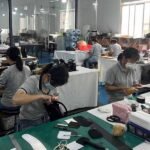
Szoneier is a Shenzhen-based OEM and ODM custom bags and soft goods manufacturer with more than 18 years of manufacturing experience. Its capabilities include custom neoprene sleeves, koozies, bottle holders, lunch bags, totes, protective cases, pouches, sports-related products, and other sewn accessories. The manufacturing system covers material sourcing, product development, sample making, production coordination, inspection, packaging, and export delivery.
Retailers should still apply the same disciplined process to every new project, regardless of the supplier’s experience. A clear specification, physical sample, written approval, bulk quality control, and realistic packaging plan remain essential. The most stable manufacturing relationships are built when the buyer provides clear commercial requirements and the manufacturer responds with measurable materials, construction, quality standards, and delivery responsibilities.
The best neoprene product is not necessarily the thickest, cheapest, most colorful, or most complicated item. It is the product that solves a recognizable problem, fits its intended retail channel, supports a sustainable landed cost, communicates its value clearly, and can be reproduced consistently through repeat orders.
Koozies and bottle sleeves are practical for impulse sales, gifting, events, and promotional programs. Lunch bags, totes, and pouches offer broader opportunities for coordinated collections. Laptop sleeves and protective covers can support higher price positions when fit and protection claims are carefully managed. Sports supports, fitted accessories, and pet products can serve specialist channels when sizing, comfort, cleaning, and durability are treated as measurable requirements.
Retailers preparing a custom project should provide a product photo, sketch, physical sample, or technical pack together with dimensions, target quantity, preferred material thickness, logo artwork, packaging requirements, intended market, and delivery destination. This information allows the manufacturer to review feasibility, structure, printing, cost drivers, quality risks, and the sample plan before bulk production begins.
To discuss a custom neoprene retail collection, send your product concept, required dimensions, order quantity, branding files, packaging needs, and target market to szoneier