Neoprene is often treated as a product category when it should be treated as a design material with a specific job to perform. It does not automatically turn an ordinary item into reliable outdoor gear. Its value appears when cushioning, insulation, flexibility, grip, moisture resistance, and soft surface protection solve a real user problem. A simple bottle holder may become a strong retail product when its fit, carrying comfort, strap strength, print durability, and condensation control are carefully developed. A more complicated product can still fail when material thickness, foam density, seam placement, or surface fabric is chosen without considering how the customer will actually use it outdoors.
The best neoprene products for outdoor brands are products that use the material’s cushioning, insulation, flexibility, moisture resistance, and soft-touch protection without relying on neoprene alone for complete waterproofing. Strong categories include bottle holders, can coolers, lunch bags, equipment sleeves, protective covers, water-sport gloves, supports, pet accessories, and selected wetsuit-related products. Product success depends on material thickness, fit, lamination, seam construction, testing, and consistent production.
Imagine two outdoor brands launching similar neoprene bottle carriers. One selects a standard shape, inexpensive foam, generic webbing, and a printed logo without testing the filled bottle weight. The other studies bottle dimensions, shoulder shape, user grip, condensation, carrying time, seam tension, strap reinforcement, and repeated outdoor use. Both products may appear similar in online photographs, but only one is likely to remain comfortable, attractive, and dependable after months of use. The difference is not the word “neoprene.” The difference is the quality of the decisions made before bulk production.
What Makes Neoprene Suitable for Outdoor Products?
Neoprene suits outdoor products because it combines flexible cushioning, thermal insulation, grip, soft protection, and resistance to light moisture exposure. It performs particularly well when a product needs to wrap around equipment, reduce surface damage, slow temperature transfer, improve carrying comfort, or provide padded contact. Finished products still require suitable seams, closures, surface fabrics, reinforcements, and realistic performance claims.
Water Resistance in Real Use
Neoprene is frequently described as waterproof, but this description can be misleading when applied to a finished sewn product. The closed-cell foam resists water penetration more effectively than many ordinary textile materials, yet most commercial neoprene products are manufactured by laminating fabric to foam, cutting the panels, and joining them through stitching. Needle holes, zippers, edge binding, ventilation openings, label attachments, and strap connections can all provide pathways through which water enters the product.
A 3 mm neoprene bottle sleeve may manage condensation, occasional splashes, and short exposure to light rain, but it should not be marketed as submersible. A soft camera cover may reduce contact with damp surfaces and offer temporary protection in changing weather, yet it cannot replace a sealed hard case or welded dry bag. Brands should define the expected exposure before selecting materials and construction methods, because the meaning of water-resistant, splash-resistant, waterproof, and submersible differs substantially.
When stronger water control is needed, the design may include overlapping flaps, coated internal layers, waterproof zippers, glued seams, seam tape, reduced needle penetration, drainage openings, or a separate waterproof compartment. These additions increase development complexity and should be evaluated as part of the complete product rather than assumed from the properties of the raw foam. A responsible brand claim should describe the tested finished product, the duration of exposure, and the conditions under which the product was evaluated.
The practical development question is therefore not simply, “Is neoprene waterproof?” A more useful question is, “How much water will this product encounter, how long will the exposure last, and through which construction points could water enter?” This approach produces clearer specifications, more accurate marketing language, and fewer customer complaints caused by expectations that the product was never designed to meet.
Cushioning and Protection
Neoprene occupies a useful position between an unpadded fabric cover and a rigid molded case. It can protect outdoor equipment from scratches, reduce direct contact between items packed together, soften minor impacts, limit vibration, and create a comfortable gripping surface without adding the volume of a hard shell. This balance makes it suitable for binocular covers, camera sleeves, fishing-reel protectors, portable-speaker cases, hydration-bottle carriers, GPS cases, tool wraps, padded shoulder sections, and compact electronic accessories.
Thickness alone does not determine protection. A loose 5 mm sleeve can provide less practical security than a well-fitted 3 mm sleeve because the protected item may continue to move and strike surrounding equipment. Product fit, foam density, compression recovery, closure position, edge stability, reinforcement, and internal grip all influence performance. A protective design should remain secure during walking, transportation, insertion, removal, and repeated outdoor handling rather than only appearing protective when displayed empty.
Neoprene is strongest when the expected risk involves scratching, rubbing, vibration, low-level knocks, or contact with other equipment. It should not automatically be selected for severe drop protection, crushing loads, or high-value fragile equipment. In those situations, a hybrid structure may be more appropriate, combining neoprene with EVA panels, PE sheets, molded inserts, microfiber linings, reinforced corners, or a rigid external shell. The level of protection should reflect the probable damage scenario rather than the desire to use a fashionable material.
Outdoor brands should also consider the relationship between protection and portability. Increasing foam thickness can improve cushioning, but it also increases material use, seam bulk, packed volume, unit weight, and shipping cost. A customer carrying equipment over long distances may prefer a compact 3 mm cover that prevents scratches rather than a bulky 5 mm cover that occupies too much backpack space. The most effective product provides the level of protection the user actually needs without creating unnecessary inconvenience.
Insulation and Comfort
Closed-cell neoprene foam slows heat transfer, which explains its widespread use in can coolers, bottle sleeves, lunch bags, wine carriers, gloves, and wetsuit-related products. It can reduce the rate at which a cold beverage warms, create a more comfortable surface between a chilled container and the user’s hand, and add a layer of thermal resistance in selected body-worn products. The same material also provides flexible padded contact, making it useful for straps, collars, handles, supports, and wearable accessories.
Insulation performance should not be judged by thickness alone. The opening size, closure system, product fit, exposed surface area, ambient temperature, wind, sunlight, contents, and frequency of opening all influence the result. A tightly fitted 3 mm bottle sleeve may behave differently from a large lunch bag made from the same material because the lunch bag has more seams, a larger opening, greater internal air volume, and different user behavior. Brands should test the complete design in realistic conditions before making time-based temperature claims.
For general consumer products, descriptions such as “helps slow temperature transfer,” “provides a flexible insulating layer,” or “helps reduce condensation contact” are often more accurate than promising that a product will remain cold for a fixed number of hours. Fixed claims should be supported by documented testing using defined starting temperatures, ambient conditions, product contents, closure frequency, and measurement methods. Without these controls, a number that appears precise may not reflect how customers use the product outdoors.
Comfort depends on more than soft foam. Surface-fabric texture, seam position, binding tension, stretch direction, ventilation, and contact pressure all affect the user experience. A smooth laminated jersey may feel comfortable against the skin, while a thick raised seam can create irritation during paddling or hiking. Wearable products should be evaluated during repeated movement, sweating, bending, and extended use rather than only during a short fitting session.
| Outdoor property | What neoprene can provide | What still depends on product design |
|---|---|---|
| Moisture resistance | Protection from splashes and condensation | Seams, zippers, openings, and validated claims |
| Cushioning | Soft impact reduction and surface protection | Fit, foam density, reinforcement, and load direction |
| Insulation | Slower temperature transfer | Closure design, dimensions, exposure, and testing |
| Flexibility | Conforming fit around equipment or the body | Pattern allowance and stretch orientation |
| Grip | Better handling and reduced slipping | Surface fabric or dedicated non-slip panels |
| Comfort | Soft, padded contact | Seam placement, edge finishing, and ventilation |
Practical Limitations
Neoprene is useful, but it is not suitable for every outdoor product. It can retain heat and moisture, which may become uncomfortable in hot climates or during high-intensity physical activity. It may dry more slowly than mesh or thin woven fabrics, and some grades can release a noticeable odor when newly unpacked, particularly after being sealed in plastic packaging for an extended period. These characteristics should be considered during material selection, packaging development, and care-instruction planning.
Surface durability also varies according to the laminated fabric. A soft smooth jersey may provide excellent printing results and skin comfort but may show abrasion when repeatedly rubbed against rocks, metal tools, hooks, or rough backpack interiors. Dark colors can absorb heat in direct sunlight, while prolonged ultraviolet exposure may contribute to fading or material aging. Saltwater, sunscreen, sweat, mud, oils, and repeated washing may also affect appearance and long-term performance.
Repeated compression can leave permanent creases or reduce shape recovery, especially when lower-density foam is tightly folded into a small retail package. Packaging trials should therefore be completed before mass production. A sample may look excellent when placed loosely in the sample room but arrive distorted after remaining compressed inside cartons for several weeks. Brands should examine how the product recovers after realistic shipping, warehouse storage, and customer unpacking.
These limitations do not make neoprene a poor material. They show why product development should begin with the intended use rather than with a material trend. Outdoor brands should identify where neoprene adds measurable value and where nylon, polyester, TPU, EVA, mesh, molded foam, or rigid materials would perform better. A credible product strategy sometimes involves deciding not to use neoprene when another material is more suitable.
Which Neoprene Products Are Best for Outdoor Brands?
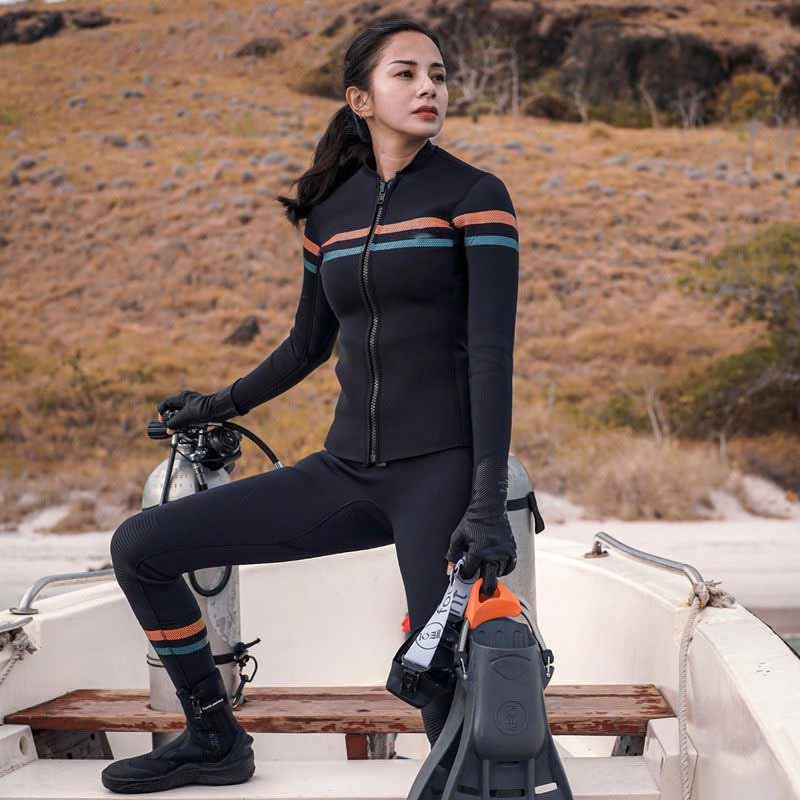
The strongest neoprene product categories are those in which the material performs a visible and useful function, including insulation, cushioning, flexible support, grip, surface protection, or padded comfort. Bottle holders, can coolers, lunch bags, protective sleeves, equipment covers, water-sport accessories, supports, and padded pet products offer practical opportunities. Brands should prioritize products with understandable benefits, manageable sizing, and repeatable construction.
Water-Sport Products
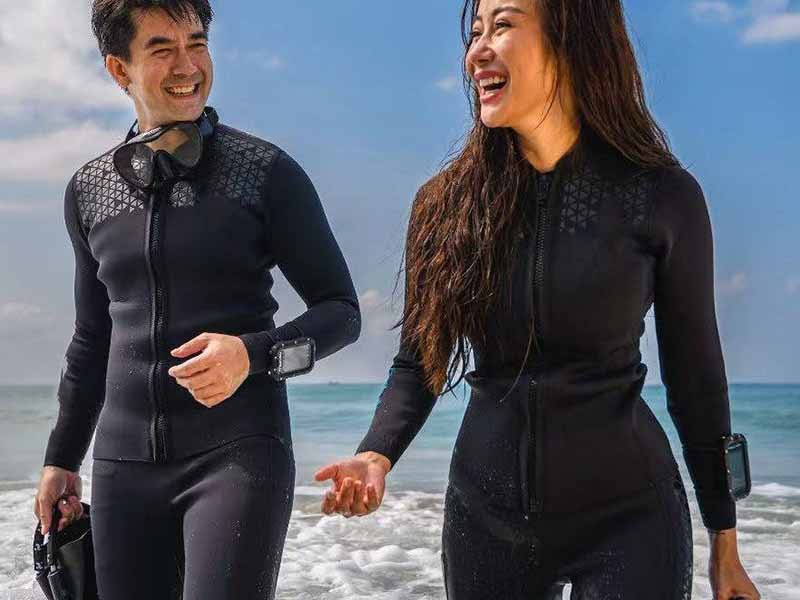
Water sports remain one of the most established applications for neoprene because users already associate the material with wet environments, thermal comfort, flexibility, and grip. Commercial opportunities include wetsuits, gloves, socks, booties, changing mats, paddle covers, board accessories, fishing-reel covers, bottle carriers, equipment wraps, and protective storage sleeves. These categories range from relatively simple accessories to highly technical products that require detailed fit development and specialized seam construction.
A changing mat, bottle sleeve, or paddle cover may use uncomplicated panel shapes and limited sizing. Gloves, footwear, and body-worn products require multiple sizes, curved panels, controlled compression, movement allowance, suitable palm materials, and careful seam placement. A wetsuit is even more demanding because panel stretch, body proportion, zipper position, neck and cuff design, thickness distribution, and seam type all affect thermal comfort and mobility. These products should not be approached as ordinary flat sewn accessories.
Brands entering the category should distinguish between simple water-sport accessories and technical wearables. Accessories can be used to validate colors, artwork, packaging, channel demand, and supplier consistency with lower development risk. Technical products require a complete size chart, repeated fitting, physical performance tests, and clearer quality tolerances. The product-development timeline should reflect that difference rather than forcing every neoprene item into the same sampling schedule.
Saltwater exposure also influences component selection. Metal adjusters, zipper sliders, rivets, buckles, and D-rings should be reviewed for corrosion resistance. Webbing, thread, laminated fabrics, and printed graphics should withstand repeated wetting, rinsing, drying, rubbing, and exposure to sunscreen or body oils. Care instructions recommending fresh-water rinsing and shade drying can improve product life, but proper care instructions cannot compensate for unsuitable materials or weak construction.
Camping and Travel Products
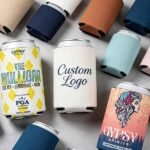
Camping and travel products are often the most accessible starting point for an outdoor brand developing a neoprene collection. Bottle holders, can coolers, lunch bags, wine carriers, utensil sleeves, toiletry pouches, portable-speaker covers, electronics sleeves, cookware protectors, and compact organizers are easy for customers to understand. They also provide generous surfaces for color, printed artwork, patches, labels, and coordinated branding without requiring the complex size grading associated with technical wearables.
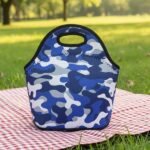
The strongest products communicate one clear benefit immediately. A bottle carrier leaves the user’s hands free and reduces contact with condensation. A can cooler improves grip and adds a flexible insulating layer. A lunch bag provides soft insulation while folding more easily than a rigid cooler. An electronics sleeve separates a power bank or portable speaker from other objects inside a backpack. These specific benefits are more persuasive than general descriptions such as “premium outdoor performance.”
Camping products also lend themselves to coordinated collections. A brand can apply the same laminated fabric, binding color, webbing, zipper pull, logo treatment, and packaging style across a bottle carrier, can cooler, lunch bag, utensil sleeve, and small gear pouch. This approach strengthens visual identity and can simplify material purchasing, color control, testing, and quality inspection. It may also support bundles, gift sets, seasonal programs, and higher average order values.
Dimensions should be developed around actual products used in the target market rather than generic factory templates. Bottle diameters and shoulder shapes vary significantly. A holder designed for a slim reusable bottle may not fit a wide insulated flask. Lunch-bag capacity should be tested with real food containers, ice packs, and beverage sizes. For travel products, brands should also evaluate packability because excessive foam thickness may make a pouch attractive on a product page but inconvenient inside a suitcase.
Equipment Protection
Protective sleeves and covers provide strong commercial value because they solve a problem that outdoor customers can see and understand. Equipment is often carried over uneven ground, stored with other items, exposed to dust and moisture, or placed inside larger bags without individual protection. Neoprene can reduce surface scratches, limit direct contact, improve grip, and soften minor impacts without requiring the weight and volume of a rigid molded case.
Potential products include covers for binoculars, cameras, GPS devices, rangefinders, fishing reels, radios, portable power banks, compact speakers, tools, hydration bottles, optics, and specialized outdoor electronics. Custom equipment protectors can also be developed for products with irregular shapes. However, fit is the main risk. A loose sleeve allows movement and rubbing, while an excessively tight sleeve can be difficult to use, particularly when customers wear gloves.
Accurate development may require the physical equipment, a three-dimensional drawing, or a complete measurement diagram showing length, width, depth, corner radius, handle positions, buttons, lenses, cables, and protruding parts. Basic measurements alone are often insufficient. Openings and closures must be placed so that the user can insert and remove the item easily while maintaining protection during movement and transportation.
High-value or fragile equipment may need a hybrid structure. Neoprene can be combined with EVA sheets, PE reinforcement, molded inserts, microfiber linings, rigid panels, or reinforced corners when greater impact resistance is required. The manufacturer and brand should discuss the probable damage scenario before selecting the construction. A product intended to prevent scratches needs a different structure from a case expected to survive drops or heavy crushing loads.
Wearables and Pet Gear
Neoprene is widely used in gloves, knee sleeves, elbow supports, wrist wraps, ankle supports, waist belts, padded shoulder sections, and strap covers. The material can create flexible compression, soft contact, and moderate cushioning while conforming to the body. These qualities are useful for outdoor activity, but body-worn products require careful pattern development because comfort depends on stretch direction, foam density, seam position, closure adjustment, and movement.
Sizing should be based on body measurements and actual movement rather than flat dimensions alone. A nominal medium size can feel very different when the foam density, lamination, or seam allowance changes. Products should be tested while bending, walking, lifting, cycling, paddling, or performing the activity for which they were designed. A support that feels comfortable for several minutes may create pressure, heat buildup, or seam irritation during extended use.
Brands must also use cautious product language. A general support or comfort product should not be described as treating, preventing, or curing a medical condition unless the claim is supported and permitted in the destination market. The intended function, target user, compression level, care instructions, and relevant testing requirements should be discussed before packaging and marketing language are finalized.
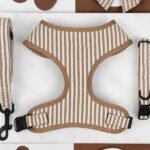
Pet products can include padded collars, leash handles, harness sections, protective wraps, travel-bottle holders, flotation-related accessories, and soft contact components. Neoprene is normally combined with webbing because the webbing carries the load while the foam improves comfort. Safety-critical products should be tested under realistic pulling force, and D-rings, buckles, adjustment sliders, webbing joints, and reinforcement stitches should be treated as structural components rather than decorative details.
| Product category | Common thickness range | Main customer benefit | Primary development risk |
|---|---|---|---|
| Can coolers | 2–3 mm | Branding, grip, and light insulation | Incorrect fit or inconsistent printing |
| Bottle holders | 3–5 mm | Carrying comfort and condensation control | Weak strap connection |
| Lunch bags | 3–5 mm | Soft insulation and packability | Poor closure or overstated thermal claims |
| Equipment sleeves | 2–5 mm | Scratch and minor-impact protection | Loose or excessively tight fit |
| Water-sport gloves | 2–5 mm | Warmth, flexibility, and grip | Size inconsistency or uncomfortable seams |
| Supports | 3–5 mm | Flexible compression and padding | Poor fit or unsupported claims |
| Pet accessories | 2–4 mm | Padded contact and comfort | Weak load-bearing construction |
| Wetsuit products | 2–5 mm or more | Thermal comfort and flexibility | Complex pattern and seam requirements |
For many outdoor brands, a sensible launch sequence begins with easy-to-size accessories such as bottle holders, can coolers, lunch bags, or general equipment sleeves. These products allow the company to test material feel, colors, graphics, packaging, and customer demand before moving into gloves, supports, fitted covers, or wetsuit-related products that require more technical development and tighter size control.
Which Neoprene Material Should Brands Choose?
The correct neoprene specification depends on how the product will be used, how much flexibility or cushioning it needs, how the surface will be printed, and what level of durability customers expect. Brands should evaluate thickness, density, compression recovery, stretch, laminated fabric, bonding quality, colorfastness, odor, and applicable chemical requirements together. A physical approved swatch is often more useful than a brief written material name.
Thickness Selection
Common product development frequently begins with 2 mm, 3 mm, 4 mm, or 5 mm neoprene. Thinner material is lighter, more flexible, easier to fold, and less bulky at seams. Thicker material generally provides greater cushioning, thermal resistance, and structure, but it also increases material consumption, sewing difficulty, packaging volume, unit weight, and shipping cost. The correct option should be selected according to product function rather than the assumption that thicker always means better.
Two-millimeter neoprene is often used for lightweight sleeves, small promotional accessories, and products that need easy folding. Three millimeters offers a practical balance for can coolers, bottle holders, bags, and general-purpose covers. Four millimeters may suit products requiring more shape, padding, or thermal performance. Five millimeters is considered for thicker protective covers, technical gloves, selected supports, or water-sport products where cushioning or warmth is a meaningful requirement.
These thickness ranges are practical starting points rather than fixed industry rules. A dense 3 mm foam may feel more supportive than a soft 4 mm foam. Surface lamination also changes perceived stiffness and total thickness. The dimensions of the finished product, the number of layers at each seam, the edge-binding method, and the closure design may make one material easier to manufacture than another even when their functional performance appears similar.
Thickness should be finalized before production patterns are approved. A product developed in 2 mm material cannot always be changed to 5 mm without altering the internal dimensions, seam allowance, zipper length, opening size, binding width, and folding behavior. Even a one-millimeter change can affect fit when the product closely wraps a bottle, electronic device, hand, knee, or piece of equipment.
| Thickness | Typical applications | Practical advantage | Common trade-off |
|---|---|---|---|
| 2 mm | Lightweight sleeves, small pouches, promotional accessories | Flexible, compact, and easy to fold | Limited cushioning and structure |
| 3 mm | Can coolers, bottle holders, soft bags, basic covers | Balanced performance, cost, and sewability | Moderate protection only |
| 4 mm | Padded covers, supports, structured accessories | Greater cushioning and shape | More bulk at seams and edges |
| 5 mm | Technical covers, gloves, thermal accessories | Stronger insulation and padding | Higher cost, weight, and sewing difficulty |
Density and Recovery
Foam density influences how neoprene responds to pressure, how well it holds shape, and how it feels during use. Lower-density foam may feel soft and comfortable at first, but it can compress more easily and provide less structural support. Higher-density foam generally retains its form more effectively and may deliver more consistent cushioning, although it can feel firmer and reduce flexibility. Products should be evaluated according to the desired balance rather than selecting density only from a price list.
Compression recovery is particularly important for products that are tightly fitted, repeatedly folded, or exposed to pressure. Bottle sleeves, equipment covers, gloves, supports, and padded straps should recover after normal use. Poor recovery can produce permanent creases, loose fit, uneven appearance, and reduced cushioning. The issue can become more visible after products remain compressed during sea freight or warehouse storage.
Density specifications are not always communicated consistently across different material suppliers, which makes physical references valuable. Brands should retain approved swatches and compare several options through hand compression, measured thickness, folding, and recovery observations. These simple checks do not replace formal laboratory testing, but they can reveal clear differences before sample development begins.
Bulk material should be compared with the approved reference during incoming inspection. Changes in foam density can affect fit even when the stated thickness remains the same. A glove may become tighter, a bottle sleeve may lose shape, and an equipment cover may no longer provide the expected cushioning. Material inspection should therefore include hand feel, compression behavior, stretch, and recovery in addition to color and thickness.
Surface Fabrics
Commercial neoprene is normally laminated with a textile surface, and this layer strongly influences appearance, stretch, printing, abrasion resistance, skin comfort, bonding, and sewing behavior. Polyester and nylon are common choices, but stretch jerseys, textured fabrics, mesh combinations, and other knitted materials may also be used. The surface fabric should be selected according to the product’s exposure, branding method, and contact with the user or surrounding equipment.
Polyester is frequently chosen for stable printing, controlled cost, and general outdoor accessories. Light-colored polyester surfaces can support sublimation printing, making them suitable for full-surface artwork and detailed graphics. Nylon-faced materials may provide a smoother hand feel and different stretch characteristics. Stretch fabrics may suit fitted gloves, supports, or wearable products, while stronger textured surfaces can improve abrasion resistance on equipment covers.
The most comfortable fabric is not always the most durable. A soft, smooth jersey may be excellent for skin contact but may show wear when repeatedly rubbed against rough tools, rock surfaces, hooks, or unlined backpack compartments. A tougher fabric may improve abrasion performance but reduce elasticity or change the appearance of printed artwork. The decision should reflect how the product will actually be used rather than how the material feels on a showroom swatch.
Brands should approve the complete laminated material rather than evaluating foam and fabric separately. Lamination can alter thickness, stiffness, recovery, stretch, color, and sewing performance. Peel strength between the foam and textile should be reviewed for products exposed to water, heat, repeated bending, washing, or long-term storage. Printing trials should also be completed on the intended production material because artwork can appear different on different base colors and surface textures.
Claims and Testing
Limestone-derived neoprene, natural-rubber foam, recycled laminated textiles, and other alternative materials are increasingly discussed in outdoor product development. These materials may provide worthwhile options, but the claim attached to the material should never replace physical evaluation. A limestone origin does not automatically prove lower total environmental impact, and a recycled surface fabric does not mean the foam itself is recycled. Product descriptions should identify exactly which component supports the claim.
Alternative materials can also behave differently during stretching, cutting, laminating, printing, gluing, and sewing. A material may visually resemble conventional neoprene yet produce different fit, recovery, bonding, or durability. Any material substitution after sample approval should be treated as a controlled product revision and tested before it is released for bulk production.
Common evaluations include thickness tolerance, foam density, tensile strength, elongation, tear resistance, compression recovery, lamination peel strength, abrasion resistance, colorfastness, dimensional stability, odor, print adhesion, and restricted substances. The exact test plan should reflect the product, user group, destination market, and marketing claims. A can cooler, body support, pet collar, children’s accessory, and wetsuit product should not automatically follow the same test program.
A general material certificate may offer useful background information, but brands should confirm that the documentation applies to the exact material, color, lamination, and production lot being purchased. Testing becomes most valuable when it addresses a specific identified risk. The right question is not whether the supplier can provide one certificate, but whether the available evidence supports the intended use and the statements printed on packaging or product pages.
How Should Outdoor Neoprene Products Be Designed?
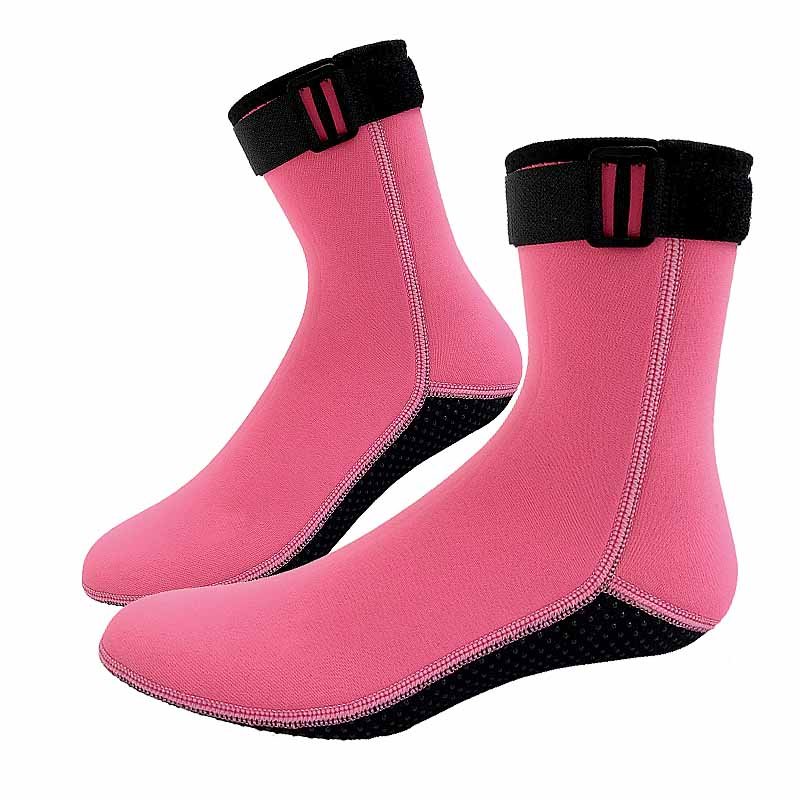
Outdoor neoprene products should be designed around actual measurements, movement, loads, moisture, abrasion, and user behavior. Successful construction coordinates pattern allowance, foam compression, stretch direction, seam type, edge finishing, openings, closures, straps, hardware, reinforcements, and branding. A visually attractive product can still fail when it is difficult to insert, uncomfortable to wear, slow to dry, or weak at concentrated attachment points.
Fit and Pattern Development
Neoprene stretches and compresses, so a finished pattern cannot always copy the exact dimensions of the target object. A fitted sleeve may require negative ease so it grips securely, while a bag or loose cover may need additional space for seam thickness, edge binding, lining, insertion movement, and dimensional tolerances. Pattern development should account for foam density and stretch direction rather than assuming that every 3 mm material behaves in the same way.
For equipment covers, measurements may need to include length, width, depth, corner radius, handle positions, buttons, lenses, cables, control areas, and other protruding parts. For bottle holders, the manufacturer should understand body diameter, shoulder shape, height, cap area, and filled weight. For body-worn products, circumference measurements, movement, compression level, and stretch orientation are more important than flat measurements alone.
A fit sample should be tested under real conditions. Equipment should be inserted and removed repeatedly. Wearable products should be evaluated while bending, walking, lifting, paddling, or performing the intended activity. The team should check whether the opening stretches permanently, whether the product rotates during use, whether controls remain accessible, and whether seams create uncomfortable pressure.
Products should also include realistic tolerances. Foam thickness, textile stretch, lamination, cutting, and sewing naturally create small variations. A pattern that functions only when every component matches a perfect nominal measurement will be difficult to reproduce consistently. When possible, the physical bottle, device, or equipment should be provided to the sample room. When that is not possible, marked photographs and detailed measurement diagrams are more reliable than a simple three-dimension list.
Seams and Edges
Seam construction influences strength, stretch, appearance, skin comfort, and moisture behavior. Overlock seams are efficient for many simple accessories and provide flexible joining. Flatlock seams produce a flatter surface for selected body-contact products but usually allow water to pass through the stitching. Blind stitching, gluing, and seam tape may be used in more technical water-sport products where reduced penetration or improved thermal performance is required.
Bound edges are common on bags, holders, covers, and supports because binding protects cut foam edges and creates a finished appearance. Binding tension must be controlled carefully. Excessive tension can make the edge curl, while loose tension creates waves and inconsistent dimensions. Binding width should also suit the thickness and number of layers at the edge.
Thick neoprene creates sewing challenges at curves, corners, zipper ends, and multilayer intersections. Several layers of 4 mm or 5 mm material can create bulky areas that are difficult to sew cleanly and uncomfortable to use. Product designers should avoid unnecessary layer buildup and consider thinner reinforcement fabrics, shaped panels, or alternative seam structures where several parts meet.
The seam method should reflect the expected use rather than appearance alone. A decorative stitch may fail under repeated stretching, while a strong raised seam may be uncomfortable against skin. Early samples may need to be cut open to inspect internal seam allowance, adhesive coverage, reinforcement, and alignment. Construction hidden inside the product often determines long-term durability more than the visible stitch line.
Reinforcement and Hardware
Neoprene is flexible and comfortable, but it should not always carry concentrated loads by itself. Handles, shoulder straps, leash connections, D-rings, buckles, and heavy equipment attachments usually require webbing, backing patches, structural textile panels, or wider load-distribution areas. The reinforcement should direct force into a stronger component rather than relying on stitches placed through a small piece of soft foam.
A bottle holder may fail when a narrow strap is stitched into a limited area without backing. A pet harness may look secure but remain unsafe when the D-ring connection passes only through neoprene. A zipper can distort or tear away if the seam allowance is too small or if repeated pulling forces are not distributed. These risks should be identified during pattern review rather than after a complaint occurs.
Common high-stress areas include strap bases, zipper ends, hook-and-loop corners, handles, fold lines, adjustment points, and openings that are stretched during insertion. Reinforcement options include extended webbing, box stitching, bar tacks, backing fabric, larger attachment panels, folded structural layers, and revised pattern shapes. The correct solution depends on the direction and magnitude of the load.
Hardware should match the outdoor environment. Saltwater and humidity increase corrosion risk, while low temperatures can affect some plastics. Buckles should be evaluated for expected impact and load, zippers should operate smoothly without distorting the foam, and hook-and-loop fasteners should have sufficient surface area. Reinforcement does not mean adding stitches everywhere, because excessive needle penetration can weaken foam. The goal is to strengthen the correct load path.
| Design area | Common failure | Practical design response |
|---|---|---|
| Strap attachment | Foam tearing around the seam | Extend webbing and add structural backing |
| Zipper ends | Seam opening or distorted foam | Increase allowance and reinforce zipper stops |
| Bound edges | Curling, waves, or inconsistent shape | Control binding tension and foam compression |
| Hook-and-loop | Corners peeling away | Round corners and stitch the full perimeter |
| Equipment fit | Item moving inside the sleeve | Adjust pattern ease and add grip surfaces |
| Saltwater hardware | Corrosion or sticking | Use appropriate plastic, coated, or corrosion-resistant parts |
Branding and Product Families
Neoprene provides a large surface for color and artwork, which is valuable for outdoor brands that rely on graphics, event identity, team programs, or recognizable product collections. Sublimation printing works well for full-surface graphics on compatible light-colored polyester laminations. Screen printing suits simpler logos and solid colors, while heat transfer can reproduce detailed artwork when stretch, abrasion, and edge adhesion have been tested.
Woven labels, rubber patches, silicone patches, reflective prints, embroidery, and branded webbing provide additional options. Each method affects the product differently. Embroidery adds texture and a premium appearance but compresses the foam and creates needle holes. Thick rubber patches reduce flexibility. Reflective details improve visibility only when placed on a surface that faces approaching light and remains visible during normal use.
The logo method should be selected according to artwork complexity, number of colors, product stretch, surface fabric, abrasion exposure, order quantity, wash expectations, and the desired retail appearance. A method that looks attractive on a flat sample board may not remain durable on a product that is frequently folded, stretched, washed, or rubbed against equipment.
Outdoor brands gain more commercial value when several products share one visual and material system. A bottle carrier, lunch bag, equipment sleeve, and pet accessory can use the same binding, webbing, zipper pulls, logo scale, label placement, and packaging direction. This creates a coherent collection rather than a group of unrelated promotional products. Reusing approved materials and trims can also simplify sourcing, color matching, inspection, and future SKU development.
How Do Brands Choose a Neoprene Manufacturer?
Brands should select a neoprene manufacturer that can manage material selection, pattern development, functional sampling, printing, sewing, reinforcement, inspection, packaging, and export delivery as a coordinated process. A reliable supplier should understand how foam thickness, density, lamination, and stretch affect fit and construction. It should also document approvals, control material changes, and avoid making unsupported waterproof, thermal, medical, or sustainability claims.
Development Capability
A capable manufacturer should be able to begin from a complete tech pack, a physical sample, a product sketch, a reference photograph, a target object, or an early product idea. The first responsibility is to turn the available information into a clear development specification. This may involve identifying missing dimensions, unclear material requirements, difficult seams, high-stress areas, unsuitable logo methods, testing needs, and cost factors before a quotation is finalized.
Pattern development is especially important for fitted covers, gloves, supports, and technical accessories. The sample team should understand how stretch direction, foam compression, edge thickness, seam allowance, and different textile laminations affect the final dimensions. A supplier that immediately prices a complex fitted product without asking questions may not have examined the risks that will determine whether the product works.
A working sample should validate more than appearance. It should confirm fit, insertion, removal, movement, closure function, seam comfort, strap strength, print placement, packaging, unit weight, and bulk-production feasibility. Simple can coolers or flat sleeves may require fewer development stages, while gloves, fitted covers, and wetsuit-related products often need more than one revision.
For complex programs, the first sample may focus on shape and fit, the next on material and construction revisions, and a pre-production sample on the final approved specification. Skipping these stages may reduce the initial development time, but it can create larger losses when an unresolved fit, seam, or component issue is repeated across hundreds or thousands of units.
Sample Validation
An approved sample should become a controlled technical reference rather than a general visual example. The brand and manufacturer should agree on material thickness, foam feel, laminated fabric, color, dimensions, tolerances, seam method, binding, logo process, labels, hardware, packaging, and functional expectations. Physical samples, approved swatches, artwork files, measurement sheets, and written comments should be kept together as one approval package.
Fit validation should use the actual bottle, device, body measurement, or equipment whenever possible. A sleeve may look correct while empty but distort after insertion. A knee support may match its flat dimensions yet feel too tight during movement. A bottle holder may carry an empty bottle successfully but fail after being loaded with the real filled weight. Testing should reflect the conditions customers will encounter.
Repeated-use checks can reveal problems that a single visual inspection will miss. Zippers should be opened and closed several times, openings stretched repeatedly, handles loaded with realistic weight, and wet-use products exposed to water before drying and inspection. Retail packaging samples can be left compressed for a defined period to evaluate whether the product recovers its original shape.
Revision comments should be specific and measurable. Statements such as “make it slightly tighter” or “improve the shape” are difficult to reproduce. Marked photographs, revised dimensions, Pantone references, approved material samples, and written acceptance criteria reduce misunderstanding. Sample approval does not eliminate all production variation, but it creates the standard against which bulk goods can be evaluated.
Bulk Quality Control
Bulk consistency begins before sewing. Incoming material should be compared with the approved reference for thickness, density, surface fabric, color, stretch, hand feel, lamination, odor, and recovery. Small material differences can affect fitted products even when the stated thickness appears unchanged. A glove may become too tight, while a bottle sleeve may lose its shape or fail to grip the intended container.
Cutting control matters because laminated foam can shift or stretch during handling. Panels should be inspected before sewing, and print placement should be confirmed on cut pieces when artwork needs to align with seams, openings, or logos. Operators should receive clear instructions for seam allowance, binding tension, reinforcement, zipper position, label placement, and allowable appearance variation.
In-line inspection should focus on issues that are easier to correct before the product is complete. These include incorrect panel dimensions, reversed stretch direction, distorted prints, inconsistent seam allowance, uneven binding, weak strap connections, incorrect zipper positions, and misplaced patches. Catching these problems during production reduces rework and prevents defects from being repeated through an entire batch.
Final inspection should include dimensions, fit, appearance, closure function, cleanliness, odor, packaging, labels, quantity, and carton markings. Fitted products may require a reference object, measurement fixture, or size template. Multi-size programs need careful size identification and packing control. An agreed AQL sampling plan can be used for general workmanship, while critical safety, fit, material, and function defects should be treated more strictly.
RFQ and Supplier Evidence
A detailed RFQ allows the manufacturer to provide a more reliable quotation, sample plan, and production schedule. At minimum, the brand should provide product use, dimensions, preferred thickness, surface fabric, colors, quantity, SKU or size breakdown, logo artwork, components, packaging requirements, destination market, testing needs, and desired delivery date. Information about the expected retail channel and target customer can also help the development team recommend suitable materials and construction.
The supplier should be able to explain how major decisions influence cost and minimum order quantity. Custom colors, full-surface printing, several sizes, special zippers, unique hardware, molded components, retail boxes, testing, and individually customized packaging can all affect pricing and lead time. A reliable supplier does not hide these cost drivers or promise that every variation can be produced under the same minimum quantity.
Evidence of manufacturing capability may include relevant samples, material swatches, development records, factory photographs, production videos, inspection reports, packaging examples, test coordination experience, and export documentation. The most valuable evidence relates directly to the product being developed. A large catalogue of unrelated products does not necessarily prove competence in fitted neoprene covers, water-sport gloves, or reinforced outdoor carriers.
A quotation that is substantially lower than other offers should be examined carefully. The difference may result from lower foam density, reduced actual thickness, a cheaper surface fabric, limited reinforcement, a different printing method, simplified packaging, reduced inspection, or unapproved material substitution. The lowest unit price is not the lowest total cost when poor fit, inconsistent color, delayed delivery, or customer returns force the brand to repeat development.
Szoneier is a Shenzhen-based custom bags and soft goods OEM/ODM manufacturer with more than 18 years of experience in material sourcing, pattern development, sampling, sewing production, quality inspection, packaging, and export delivery. The company develops custom neoprene bags, bottle holders, can coolers, lunch bags, sleeves, covers, gloves, supports, pet accessories, and related soft goods for global brands and commercial buyers.
Selected custom projects may begin from approximately 200 pieces, while fitted, technical, multi-size, or specially developed products may require higher project-specific quantities. Sample schedules depend on material availability, thickness, custom color, printing, components, fit complexity, revision requirements, packaging, and testing. Simple products may move through sampling more quickly, while technical wearables and fitted equipment covers require additional validation.
A useful project inquiry should include the intended use, dimensions, reference images or samples, preferred thickness, target quantity, colors, artwork, packaging, destination market, and launch schedule. This information allows the development team to review materials, construction, likely risks, sample requirements, and production feasibility before providing a detailed proposal.
Send a tech pack, sketch, reference product, artwork file, or equipment dimensions to begin a custom neoprene product review. A clear discussion during the early development stage can reduce sample revisions, improve sample-to-bulk consistency, and help an outdoor brand build a more reliable product line rather than launching an item that only looks suitable in photographs.