Neoprene bags have moved well beyond the familiar beach tote. They now appear in commuter collections, wellness programs, travel systems, baby accessories, cosmetic ranges, work bags, and compact crossbody designs. For DTC brands, that expansion creates a real product opportunity, but it also creates a trap. A bag can perform beautifully in a campaign photograph and still disappoint customers because the handles are uncomfortable, the interior is poorly organized, the material smells too strong, or the shape collapses once the bag is filled.
The neoprene bag trends that matter most for DTC brands are versatile carryalls, compact hands-free styles, organized work bags, coordinated accessory sets, carefully controlled color programs, and credible material claims. The strongest products combine visual distinction with practical construction, appropriate 2–5 mm neoprene thickness, reinforced carrying points, realistic moisture-resistance claims, useful storage, and sampling that verifies performance before bulk production.
The practical question is therefore not which silhouette appears most frequently on social media. It is which trend fits the customer’s routine, supports the brand’s price position, photographs clearly, performs well after repeated use, and can be reproduced consistently across several production runs. A trend becomes commercially valuable only when it survives the journey from mood board to sample, from sample to launch, and from the first launch to repeat production.
What Is Driving Neoprene Bag Demand?
Neoprene bag demand is being driven by customers who want lightweight capacity, soft tactile materials, easy-care surfaces, recognizable colors, and products that move comfortably between work, fitness, travel, parenting, and leisure. For DTC brands, neoprene also provides a flexible platform for visual storytelling, coordinated collections, practical cushioning, and product differentiation without relying on rigid or heavy construction.
Everyday Versatility
The strongest demand is not coming from products designed for one narrowly defined activity. Customers increasingly want one bag to cover several parts of the day. A tote may travel from home to the office, then to a fitness class, grocery store, or short weekend trip. This does not mean brands should produce a generic bag with no clear identity. It means the design should focus on overlapping needs such as comfortable carrying, flexible capacity, easy organization, clean styling, and simple maintenance.
Neoprene supports this lifestyle because it can feel soft against the body, compress during storage, recover after normal handling, and provide moderate cushioning for personal items. Compared with many rigid bag constructions, it can also reduce the weight of the empty bag. This matters when customers already carry laptops, chargers, bottles, cosmetics, clothing, and daily accessories. The benefit is not simply that neoprene is light. The benefit is that the overall product can feel less demanding to carry.
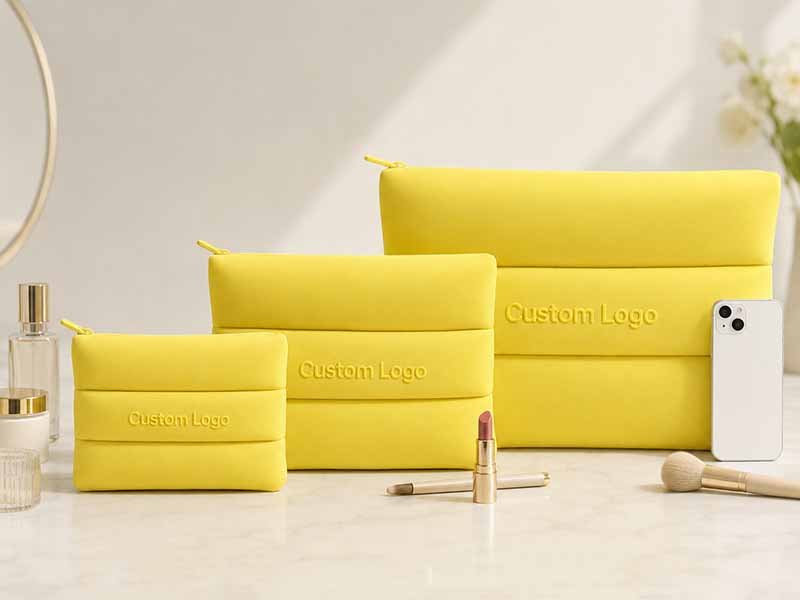
The commercial opportunity now extends well beyond beach and sports products. Brands are developing neoprene laptop carriers, commuter totes, cosmetic cases, bottle bags, lunch bags, baby organizers, travel pouches, compact slings, gym bags, and lifestyle accessories. The material becomes especially valuable when several items share a consistent color, texture, logo method, and hardware finish. One successful product can then become the foundation for a complete collection.
| Demand Driver | What Customers Experience | Practical Product Response |
|---|---|---|
| Longer daily schedules | One bag must support work, errands, and exercise | Flexible capacity, removable pouches, secure storage |
| Frequent short trips | Bags need to pack easily and recover their form | Compressible construction, reinforced base, stable handles |
| Mobile working | Electronics need protection without excessive weight | Padded device section, cable storage, balanced carrying |
| Wellness routines | Clean and used items need separation | Wipe-clean lining, wet pouch, bottle compartment |
| Social shopping | The value must be clear on a phone screen | Recognizable silhouette, visible function, strong color system |
A useful development process begins with the customer’s actual day. Product teams should map what the person carries, where the bag is placed, how long it is worn, and which items need fast access. These answers are more valuable than beginning with a fashionable shape and trying to add function afterward.
Visual Commerce
DTC brands often sell a bag before the customer can touch, open, carry, or compare it physically. This makes the product’s visual communication almost as important as its construction. A strong neoprene bag should show its shape, texture, capacity, carrying style, and main benefit clearly in photographs and short videos. Features that look impressive on a sample table may become invisible on a mobile screen, while one well-designed detail can give the product immediate recognition.
A distinctive handle, contrast edge, unusual opening, sculpted side panel, removable pouch, or clear color block can make the bag easier to identify. However, visual impact should not come from decoration alone. Too many competing elements can make the product look temporary or difficult to style. In most successful collections, one or two memorable features are supported by a cleaner overall structure.
Neoprene is particularly suitable for color-driven merchandising. Brands can develop stable core shades, seasonal color drops, collaboration prints, and limited editions without rebuilding the complete pattern every time. This makes it possible to create new campaigns around a proven construction. The practical challenge is color control. Surface fabric, material base color, lamination, printing method, texture, and photography lighting all influence how the final product appears.
Every visually driven feature should also pass a simple commercial test. It should remain useful after the campaign ends. A dramatic handle may look impressive in video but become uncomfortable when the bag is fully loaded. An open tote may photograph beautifully but frustrate commuters who need security. The best DTC products first attract attention and then reward the customer with a reliable daily experience.
Material Experience
Customers rarely describe material quality using technical language. They say that a bag feels soft, substantial, smooth, flexible, lightweight, protective, or premium. Those impressions are created by several connected variables, including sponge density, neoprene thickness, surface fabric, elasticity, lamination quality, edge finishing, stitching accuracy, reinforcement, and hardware selection.
Thickness is only one part of the experience. A well-laminated 3 mm material can feel more refined and controlled than a poorly finished 5 mm material. Thick neoprene may create better cushioning, but it can also add bulk, make curved seams difficult, and increase the weight of large products. Thin material may support folding and lower weight, but it can lose shape when used for an oversized tote or protective sleeve.
Odor is another important quality factor. Lamination adhesive, packaging conditions, storage time, production ventilation, and the length of time a product remains sealed can all affect the smell that reaches the customer. A bag may pass visual inspection and still create a negative first impression if the odor is strong when the packaging is opened. Finished samples should therefore be checked after realistic packing and storage, not only immediately after sewing.
Premium perception usually comes from consistency rather than one expensive component. The surface should appear even, the seams should remain controlled, the bag should recover after normal compression, and the edges should not expose rough foam. Zippers, handles, patches, and hardware should feel proportionate to the rest of the product. Customers may not know the manufacturing terminology, but they quickly recognize whether the final bag feels considered or unfinished.
Which Neoprene Bag Styles Are Trending?
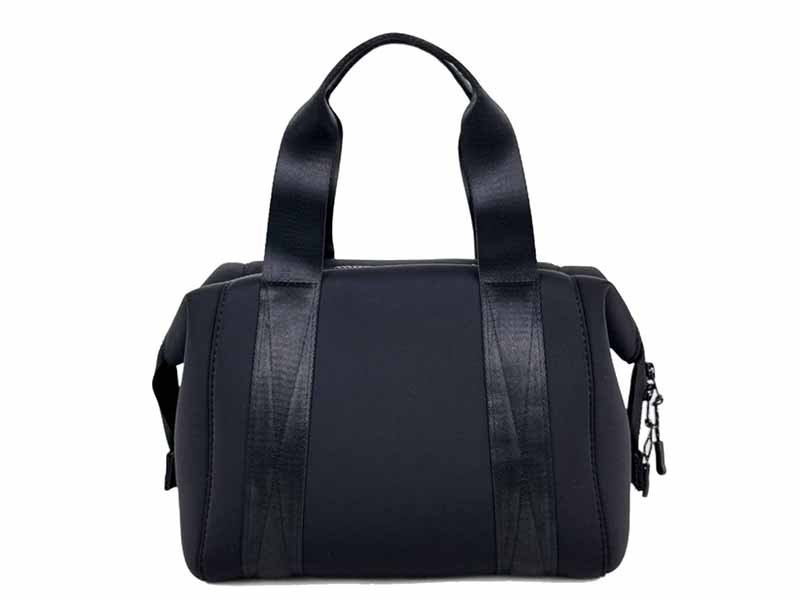
The most relevant neoprene bag styles for DTC brands include roomy carryall totes, soft work bags, compact crossbody designs, commuter-friendly hybrids, travel bags, wellness products, and coordinated pouch systems. These categories remain commercially attractive because they connect recognizable silhouettes with clear daily functions and can be extended into multiple sizes, colors, accessories, and bundled product programs.
Carryall Totes
The carryall tote remains one of the most commercially important neoprene formats because it communicates the material’s softness, capacity, and color clearly. It can serve beach, family, travel, work, shopping, and fitness customers, but each version requires different engineering. A large open bag is not automatically useful simply because it holds more. The customer must be able to carry, organize, close, clean, and store it comfortably.
A beach tote may need a wide opening, easy-clean surface, reinforced handles, detachable wet pouch, and a base that does not trap too much sand. A work tote may need quieter styling, a laptop section, a bottle pocket, a stable bottom, and a closure that protects personal items during commuting. A family tote may require fast-access storage, internal separation, and enough structure to prevent bottles or small accessories from disappearing under larger items.
The main risk with oversized totes is uncontrolled load. As the body becomes wider and taller, the handle attachments experience greater stress, the bottom may sag, and the side panels may spread. These problems should be addressed during pattern development. Reinforcement can be hidden between layers, while a removable base panel can add stability without making the complete bag permanently rigid.
Internal organization should remain simple enough to use. One secure zipper pocket, two open pockets, a bottle section, a key tether, and a detachable pouch may provide more value than ten small compartments. The bag should still have a flexible main space for clothing, towels, work materials, or shopping items.
| Style | Common Capacity Range | Typical Thickness Direction | Priority Features |
|---|---|---|---|
| Compact daily tote | 8–15 L | 2–3 mm | Secure pocket, light structure, short handles |
| Work tote | 15–25 L | 3–4 mm | Laptop section, bottle pocket, stable base |
| Beach or family tote | 25–40 L | 3–4 mm | Wide opening, reinforced handles, removable pouch |
| Large travel carryall | 35–55 L | 3–5 mm | Shoulder strap, base support, load reinforcement |
These ranges are practical starting points rather than fixed industry rules. Actual usable capacity must be checked with a finished sample because lining, seam allowances, pockets, foam thickness, closures, and reinforcement all reduce the internal space shown in a flat drawing.
Crossbody and Work Bags
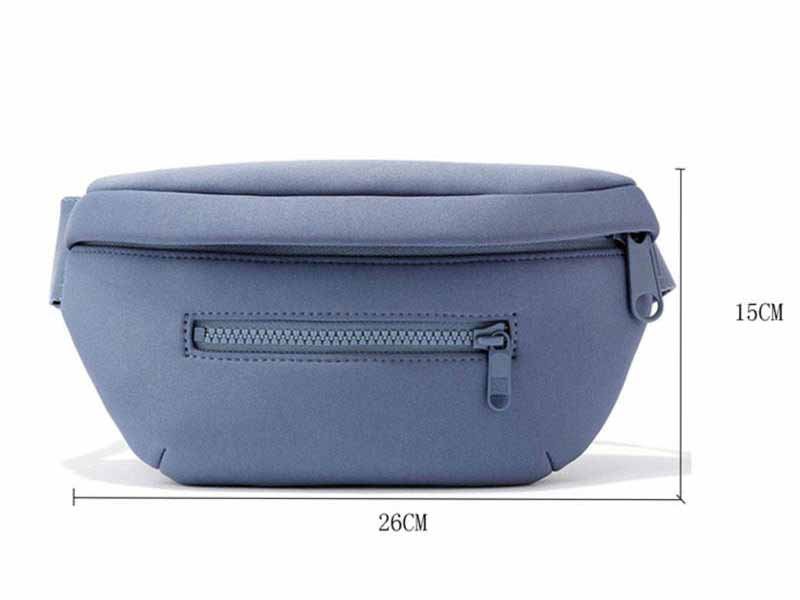
Compact crossbody bags, camera-style shapes, crescent bags, mini slings, and travel pouches are gaining attention because customers want hands-free products that feel softer than rigid handbags. Neoprene can work well for these designs, particularly when moderate cushioning is useful for phones, glasses, chargers, or small electronics.
Compact products require careful thickness selection. Material that is too thick can make the seams bulky and reduce internal volume. Material that is too soft can cause the body to collapse around the contents. The pattern must account for neoprene thickness, lining, binding, pockets, and zipper construction from the beginning. A bag that appears spacious in a flat drawing may feel unexpectedly small after all layers are assembled.
Testing should use real customer objects rather than general assumptions. Product teams should pack the sample with current phone sizes, wallets, keys, glasses, chargers, travel documents, and cosmetics. They should then open the zipper while the bag is worn, adjust the strap, and observe whether the product remains balanced.
Work bags require a slightly different approach. Customers may appreciate the comfort and softness of neoprene but still expect a professional appearance. Clean panels, controlled colors, stable bases, discreet hardware, and organized interiors help the bag feel suitable for commuting. Laptop sections should be tested with actual device dimensions and charging accessories rather than relying only on broad labels such as “fits most 15-inch laptops.”
Travel and Wellness Sets
Travel, fitness, wellness, beauty, and parenting categories are well suited to neoprene because customers value flexible storage, moderate cushioning, easy-care surfaces, and lightweight construction. Common product directions include gym totes, weekenders, yoga bags, bottle carriers, lunch bags, wet pouches, cosmetic cases, travel organizers, shoe bags, and baby accessories.
These categories also create an opportunity to develop coordinated sets. A gym tote can be paired with a bottle holder, wet-item pouch, cosmetic case, and compact crossbody. A work tote can be combined with a laptop sleeve, cable organizer, and lunch bag. A travel bag can connect with a toiletry pouch, passport holder, packing organizer, and protective sleeve.
Every accessory should have a defined role. Adding extra pieces merely to make the set appear larger often increases cost without improving customer value. A detachable pouch should fit naturally inside the main bag. A bottle holder should accommodate the diameter range used by the intended customer. A wet pouch should be made from a construction that supports the moisture claim rather than relying only on neoprene’s surface properties.
Coordinated products offer several commercial advantages. They support bundles, gifting, repeat purchases, content variation, and higher perceived value. They also allow a brand to reuse a proven material and color system across several products. This is usually more efficient than developing every new accessory from a completely unrelated material and construction.
Product Families
The strongest long-term direction is often not a single hero bag but a recognizable product family. A brand can begin with one tote and later add a compact crossbody, travel pouch, bottle holder, laptop sleeve, or lunch bag using the same visual language. This creates continuity across the website and helps customers understand how the products belong together.
Consistency does not mean every product must look identical. The shared elements may include a particular surface texture, color palette, edge treatment, zipper pull, patch shape, handle webbing, or printed pattern. The bag structures can still be adapted to different uses while preserving enough common detail to make the collection recognizable.
Product families also reduce development risk. Once the material, lamination, logo process, and key hardware have been tested, the brand does not need to restart every decision for each new item. The factory can work from an established quality reference while modifying dimensions and functions. This makes it easier to expand a successful launch into a more complete program.
The most effective collections are built around a shared customer rather than a random list of products. A wellness collection may combine gym, hydration, travel, and personal-care accessories. A commuter collection may connect work, lunch, technology, and organization products. A parenting collection may focus on carrying, cleaning, bottle storage, and compact accessories.
How Are Materials and Colors Evolving?
Neoprene materials are evolving through more precise thickness selection, varied textile laminations, perforated and embossed surfaces, mixed-material reinforcement, broader color programs, full-surface printing, and increased interest in recycled-content components. The most important development is not one universally superior material, but a more disciplined match between material specification, product function, target price, customer expectations, and repeat-production requirements.
Thickness and Structure
Neoprene thickness used for bags commonly falls between 2 mm and 5 mm, but the nominal measurement cannot be considered alone. Sponge density, surface textile, elasticity, panel size, lining, seam construction, reinforcement, and product geometry all influence how the finished bag feels and performs.
Two-millimeter material is often suitable for light pouches, promotional items, simple organizers, and products that need to fold easily. It reduces seam bulk and overall weight, but it may not provide enough cushioning or body for a large tote, laptop carrier, or protective product.
Three-millimeter material is a practical starting point for many lifestyle applications. It often provides a balanced combination of softness, moderate structure, sewing efficiency, hand feel, and manageable weight. Totes, lunch bags, bottle holders, cosmetic cases, and daily accessories can often begin development around this specification, although larger formats may still need base or handle reinforcement.
Four-millimeter material provides greater cushioning and body for laptop sleeves, protective bags, and more substantial totes. Five-millimeter construction is better reserved for products that genuinely require increased padding, thermal performance, or impact protection. Using excessively thick material for a compact lifestyle bag can make the seams bulky and the finished product less comfortable.
| Thickness | Suitable Starting Applications | Main Advantages | Common Risks |
|---|---|---|---|
| 2 mm | Small pouches, light organizers, promotional products | Low weight, flexible seams, easier folding | Limited cushioning and structure |
| 3 mm | Totes, lunch bags, bottle holders, cosmetic bags | Balanced feel, sewability, and moderate body | Large bags may require reinforcement |
| 4 mm | Laptop sleeves, protective bags, structured totes | Better padding and shape retention | Higher weight and thicker seams |
| 5 mm | Specialized protective or insulated products | Strong cushioning and thermal potential | Bulk, reduced flexibility, greater sewing difficulty |
A material swatch can help compare surface and hand feel, but it cannot prove the behavior of a complete bag. Every thickness decision should be confirmed through a finished sample that includes lining, pockets, handles, closures, edge treatment, and the intended load.
Surface Treatments
Smooth laminated neoprene remains widely used, but many brands are moving toward surfaces that feel less like traditional sports equipment. Perforated fabrics add depth and can support beach, fitness, and casual lifestyle products. Woven-face laminations create a softer textile appearance, while matte surfaces can support more understated fashion or commuter collections.
Embossing, quilting, laser-cut details, printed graphics, contrast binding, and mesh panels can add identity, but every treatment changes production behavior. Perforation may influence stretch and cutting. Embossing can lose definition after prolonged compression. Large prints can be interrupted by seams or distorted around curved panels. A finish that looks clean on a flat swatch may behave differently once it is wrapped around a three-dimensional form.
Mixed-material construction is also becoming more important. Webbing can reinforce handles and stress points. Mesh can add ventilation. PU or leather details can make the bag feel more refined. TPU can support transparent or wipe-clean sections. Metal hardware can improve perceived value but may also increase weight and shipping cost.
Every additional material introduces another supplier, tolerance, shade, lead time, and quality-control requirement. Mixed construction works best when each component performs a clear function. Decorative additions that do not improve durability, comfort, organization, or visual identity often create more complexity than value.
Color and Print Systems
Color is one of neoprene’s strongest advantages for DTC product development. A brand can preserve a successful construction while creating new launches through seasonal shades, limited editions, collaboration prints, or contrasting details. This extends the commercial life of the pattern without forcing the development team to rebuild the complete product for every campaign.
A balanced color program usually contains three groups. Core colors support stable year-round sales. Seasonal colors create freshness and content opportunities. Statement colors or full-surface prints generate stronger campaign attention and may be produced in more controlled quantities. This structure allows the brand to test trend-led shades without placing the entire assortment at risk.
Physical approval is essential because a digital color reference cannot show exactly how the final surface will appear. Fabric texture, base color, printing method, lamination, lighting, and screen calibration all affect the result. Pantone references are useful, but they should be supported by real swatches, printed strike-offs, or production material approvals.
Matching products require even stricter control. A tote, bottle holder, pouch, and laptop sleeve made from separate material lots may show visible shade differences. When possible, the brand should reserve material for the complete collection or agree on acceptable variation before production. Color should also be evaluated against real use. Pale shades may show marks quickly, while very dark interiors can make small objects difficult to locate.
Material Claims
Sustainability-related terminology is becoming more common, but it is often used too broadly. A product described as recycled neoprene may use recycled rubber content, recovered production scrap, recycled polyester surface fabric, or a combination of these elements. Limestone-based foam and water-based lamination describe different material decisions and should not be presented as interchangeable proof of sustainability.
Brands should ask which exact component contains recycled content, what percentage is used, and which documents support the statement. A certified surface fabric does not automatically mean the complete finished bag is certified. A supplier’s general environmental policy is also different from traceable documentation for a specific material and order.
Alternative materials must still meet practical performance requirements. They should be checked for odor, elasticity, recovery, hand feel, abrasion, color consistency, printing quality, lamination strength, and repeat availability. A sustainability story that results in premature cracking, weak bonding, or unstable color will not create a better long-term product.
Specific language is usually more credible than broad marketing claims. A statement such as “the laminated face fabric contains recycled polyester” gives customers clearer information than “fully eco-friendly neoprene bag.” Responsible claims protect brand trust, reduce greenwashing risk, and make it easier for search engines and AI systems to understand exactly what the product offers.
What Features Do DTC Customers Expect?
DTC customers expect neoprene bags to be organized, comfortable, easy to clean, visually consistent, and reliable during everyday use. They also expect product claims to match actual performance. Pockets, closures, carrying systems, moisture resistance, branding, and packaging should therefore be designed around real customer behavior, demonstrated clearly online, and validated on finished samples before bulk production.
Practical Organization
Interior organization is one of the clearest differences between a bag that looks useful and one that becomes part of a customer’s routine. The correct layout depends on the intended application. A work tote may need a suspended laptop section, charger storage, bottle pocket, key tether, and valuables compartment. A gym bag may need wet-item separation, fast bottle access, and enough open space for clothing. A parenting product may require one-handed access, wipe-clean sections, and removable pouches.
Adding more pockets does not automatically improve the product. Every compartment increases material, labor, weight, and cost. Poorly positioned pockets can also reduce the main capacity or distort the outer shape when they are filled. The most useful organization systems are based on the customer’s most frequently carried objects.
Pocket dimensions should be checked with actual items. Bottle pockets need realistic diameter and height ranges. Phone compartments should account for current larger devices and protective cases. Laptop sections should provide sufficient opening clearance and should not force the customer to bend or rotate the device awkwardly.
Interior visibility is another practical consideration. Very dark linings can hide marks but make small items difficult to locate. Very pale linings improve visibility but may show dirt quickly. A medium-tone interior can often provide a useful balance. Online product pages should show the organization with realistic contents instead of relying only on written pocket descriptions.
Care and Moisture
Neoprene is often selected because customers associate it with water resistance and easy cleaning. These characteristics can be valuable, but they must be described accurately. A neoprene surface may resist splashes while water can still enter through needle holes, zipper tapes, open tops, binding, seams, and hardware attachment points.
A standard sewn neoprene tote should not be described as fully waterproof unless the complete product has been constructed and tested for that claim. Water-resistant, splash-resistant, or wipe-clean language is often more realistic. A welded dry bag and a conventional sewn tote use different construction principles, even when both contain neoprene or related materials.
Care instructions should also be tested on the finished bag. The neoprene body may tolerate water, but metal hardware, printed decoration, adhesives, stiff base panels, reinforcement materials, or decorative trims may not be suitable for machine washing. The recommended method may therefore be gentle hand cleaning, wiping, and air drying.
Finished-product testing should include surface wiping, controlled hand washing, logo inspection, color-transfer checks, drying, odor evaluation, and shape recovery. Packaging tests are equally important. A product that remains tightly compressed for too long may reach the customer with creases or trapped odor. The brand should confirm how quickly the bag recovers after unpacking and whether additional ventilation is needed before final packing.
Branding Details
Neoprene supports many branding methods, including screen printing, sublimation, heat transfer, rubber patches, silicone patches, woven labels, embroidery on suitable constructions, metal plates, custom webbing, and branded zipper pulls. The correct method depends on the surface fabric, artwork complexity, number of colors, intended use, abrasion requirements, order quantity, target price, and desired visual effect.
A large printed logo can work well for fitness, beach, or promotional collections. A small tonal silicone patch may suit a quieter premium lifestyle product. Sublimation supports detailed all-over graphics when used with an appropriate polyester-based surface. Embroidery can add texture, but it may compress the foam or distort a panel if the structure and backing are not considered carefully.
Logo position should be checked while the bag is carried. A centered logo may become hidden when a soft panel folds. Artwork placed too close to a seam can appear uneven. On crossbody products, the strap or the customer’s body may cover part of the branding depending on how the bag is worn.
Branding must also survive real use. A gym bag, lunch bag, or beach tote may experience rubbing, moisture, cleaning, and repeated compression. Logo samples should therefore be tested under relevant conditions. Good branding feels integrated into the design rather than applied as an afterthought.
Handles and Closures
Handles, shoulder straps, zippers, magnets, and hardware often create more customer frustration than the main body material. A bag may look well made and still receive negative feedback because the handles dig into the hand, the shoulder strap twists, the zipper opening is too narrow, or a magnetic closure does not secure the contents.
Handle design should consider expected load, carrying duration, clothing, and body position. Soft rope handles may suit a beach product but may feel uncomfortable under a heavy work load. Wide webbing is often more practical for large totes and travel bags. Detachable shoulder straps increase flexibility, but the connection points must be reinforced and positioned so that the bag hangs evenly.
Zippers should be selected according to opening length, curvature, foam thickness, and frequency of use. A zipper may operate smoothly on an empty sample but become difficult when the bag is filled. Magnetic closures provide fast access but may not offer enough security for commuters or travelers carrying valuables.
Loaded testing is essential. The sample should be filled to its realistic working weight and carried by every intended method. After testing, the team should inspect handle stitching, attachment reinforcement, hardware, strap adjustment, zipper movement, closure strength, and body distortion. The customer interacts with the carrying system every time the bag is used, so it deserves the same development attention as color and silhouette.
How Can Brands Turn Trends into Products?
Brands can convert neoprene bag trends into successful products by linking each idea to a defined customer, translating the concept into measurable specifications, validating prototypes under realistic conditions, and controlling production against an approved standard. A trend becomes commercially useful only when it can be manufactured consistently, communicated clearly, priced responsibly, and extended into future colors, sizes, accessories, or repeat orders.
Customer Fit
The first question is not whether a bag style is popular. It is whether the style belongs in the brand’s world and solves a problem for its customer. A wellness brand, travel company, parenting business, fashion label, and professional accessories brand may all use neoprene, but they should not develop the same product.
A useful development brief begins with customer behavior. The team should define what the person carries, how long the bag is worn, where it is placed, how frequently it is cleaned, and which items require quick access. A travel product may prioritize packability, secure closures, and organized storage. A fashion tote may focus more on silhouette, color, and handle design. A baby bag may require wipe-clean sections and one-handed opening.
The sales channel also affects product decisions. A bag sold mainly through short-form video needs benefits that are immediately visible. A product sold through detailed comparison pages can support more technical explanation. A higher retail price requires a more controlled combination of material, structure, hardware, branding, packaging, and finishing.
Trends should strengthen the existing brand identity rather than replace it. The most durable products usually combine one timely visual element with several long-term functional benefits. This gives the marketing team something new to discuss while keeping the product useful after the seasonal campaign has ended.
Product Specification
A trend concept must eventually become a specification that a sample room and production team can follow. Descriptions such as soft, premium, large, strong, or waterproof are not precise enough. They must be translated into finished dimensions, materials, construction methods, performance expectations, tolerances, and approved reference standards.
Before sampling, the product team should define the intended capacity, neoprene thickness, surface fabric, lining, opening, closure, handle measurements, strap dimensions, pocket locations, base reinforcement, hardware finish, color reference, logo process, packaging method, target quantity, destination market, and expected use.
Reference products are useful, but they should not be copied without understanding the construction. A brand may like the general silhouette of a competitor’s bag but require a different load capacity, material feel, pocket layout, price, or target customer. The manufacturer should identify which elements can be retained and which must change to make the product practical and original.
Cost should be considered while the specification is being developed. Large dimensions, thick material, custom colors, complex printing, multiple pockets, heavy hardware, and retail packaging all increase cost. Early decisions are easier to adjust than late sample revisions. Every approved change should be recorded so that the specification remains current throughout development.
Sample Validation
The first prototype is not only a visual model. It is a test of proportion, hand feel, internal capacity, carrying comfort, logo appearance, sewing method, material behavior, and production feasibility. A sample may look correct while empty and still fail after it is filled, carried, compressed, cleaned, or packed for transportation.
Brands should test the product under realistic conditions. The bag should be filled with the objects the customer is expected to carry. It should be worn for an appropriate period, opened repeatedly, placed on common surfaces, compressed for shipping, cleaned according to the proposed instructions, and inspected for shape recovery.
| Checkpoint | What to Test | What a Failure May Indicate |
|---|---|---|
| Capacity | Pack real customer items | Dimensions or pocket layout may be unsuitable |
| Carrying comfort | Use the expected working load | Strap width, balance, or handle drop needs revision |
| Shape recovery | Compress and unpack the sample | Material or reinforcement may be inappropriate |
| Closure access | Open the bag while filled and worn | Zipper angle or opening length may be insufficient |
| Surface durability | Rub, wipe, and flex key areas | Print, lamination, or finish may not be durable enough |
| Organization | Remove items during normal use | Pockets may be poorly positioned or too small |
| Packaging | Pack for realistic transit conditions | Creasing, odor, or deformation may occur |
| Branding | View the bag from normal carrying distance | Logo size, contrast, or placement may need adjustment |
Feedback should be measurable. Comments such as “make it more premium” or “improve the handle” are difficult for the sample team to execute. Directions such as increasing the handle drop by 3 cm, moving the bottle pocket forward by 2 cm, reducing the logo width by 15%, or adding a 1.5 mm reinforcement panel create a clear revision path.
The final approved sample should be kept as the physical reference for production. Photographs and specifications are important, but they do not replace the value of a real approval sample when the production team needs to compare hand feel, shape, stiffness, sewing, and finish.
Production Control
Moving from an approved sample to bulk production requires the product to be converted into repeatable standards. Neoprene can vary in shade, thickness, elasticity, surface texture, odor, and lamination quality between material lots. These variables should be checked before cutting begins rather than discovered after the bags have been assembled.
Production control should cover incoming material, cutting direction, printing or patch application, sewing, reinforcement, closures, finished measurements, cleaning, packaging, and carton preparation. The approved sample, specification sheet, logo artwork, color reference, packaging instructions, and inspection criteria should be available to all relevant teams.
Important inspection points include neoprene thickness, surface consistency, lamination strength, odor, shade variation, cutting direction, stretch behavior, seam wrinkles, exposed edges, handle reinforcement, zipper function, dimensions, logo position, printed color, surface marks, and packaging deformation.
Collection consistency becomes more important when the brand produces several matching products. A tote, pouch, sleeve, and bottle holder should use aligned colors, hardware finishes, logo methods, and material surfaces. Otherwise, the collection can look fragmented even when each item passes inspection individually.
Replenishment should also be planned from the first launch. Materials, colors, patterns, approved components, and construction details must be documented well enough to support future orders. A trend-led product creates more value when it can be repeated reliably and extended into additional SKUs without restarting the complete development process.
Turning a Neoprene Trend into a Long-Term DTC Product Line
The strongest neoprene bag opportunities are not limited to one temporary silhouette. They exist where customer routines, material performance, visual identity, and scalable production overlap. Versatile totes, commuter bags, compact crossbody styles, travel systems, wellness products, and coordinated accessories all offer potential when they solve clear problems and remain easy to understand online.
Material choices should remain practical. Three-millimeter neoprene is often a useful starting point for general lifestyle products, while thinner or thicker constructions should be chosen according to flexibility, cushioning, insulation, shape, seam bulk, weight, and cost. Surface treatments, seasonal colors, and mixed materials can refresh an established design, but they should not hide weak structure or unsupported product claims.
The sample stage is where a trend becomes evidence. A successful prototype should confirm carrying comfort, usable capacity, cleaning method, organization, logo durability, shape recovery, packaging behavior, and production feasibility. The approved sample should then become part of a controlled production system that includes material standards, measurements, tolerances, inspection points, packaging requirements, and repeat-order records.
Szoneier is a Shenzhen-based OEM/ODM custom bags and soft goods manufacturer with more than 18 years of manufacturing experience. Its capabilities include neoprene material selection, pattern development, in-house sampling, sample revision, logo application, sewing-production coordination, quality inspection, custom packaging, and international delivery support for global brands, retailers, importers, and DTC businesses.
Brands preparing a neoprene bag project can begin by sharing a reference image, sketch, physical sample, or tech pack together with the intended dimensions, use scenario, preferred thickness, color reference, logo artwork, target quantity, packaging requirements, destination country, and expected launch schedule. A detailed project review helps identify structural risks early and creates a clearer path from the first prototype to stable bulk production.
For a custom quote or a product development assessment for neoprene bags, please contact Szoneier. Our team can evaluate your design concepts, recommend suitable materials and prototyping plans, and provide end-to-end support—from development through to production, quality control, packaging, and export delivery.