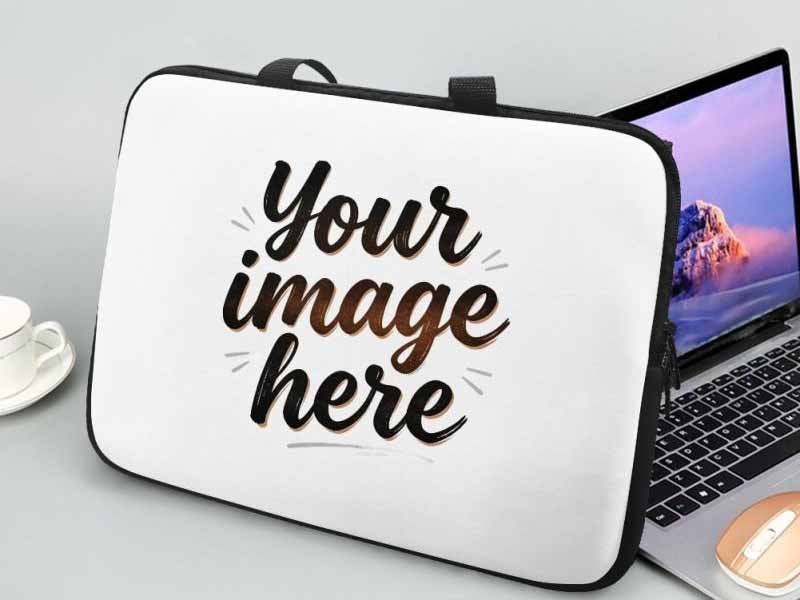
Corporate gifts are becoming harder to get right because employees and clients already own many of the standard items companies have traditionally distributed. Bottles, notebooks, tote bags, charging cables, and inexpensive desk accessories may still be useful, but they no longer feel distinctive unless the product, presentation, and recipient experience have been carefully planned. A successful gift now needs to fit naturally into daily routines while representing the company without looking like a disposable advertisement.
The strongest neoprene laptop sleeve trends for corporate gifts include practical work-anywhere use, restrained branding, accurate device sizing, personalized visual details, improved packaging, and greater material transparency. Companies are also paying closer attention to neoprene thickness, surface fabric, print quality, zipper protection, odor control, cushioning, and consistency between the approved sample and bulk production.
A laptop sleeve works because it connects branding with a real behavior. Employees may carry it between home and office, bring it into meetings, place it inside a travel backpack, or use it to protect company-issued equipment. Clients may continue using it long after an event has ended. Unlike a purely decorative gift, the product stays visible because it solves a recurring problem.
Imagine two new employees receiving onboarding packages on the same Monday. The first opens a box containing several unrelated promotional items with oversized logos. The second receives a fitted laptop sleeve in the company’s colors, a matching cable pouch, a personalized card, and clear instructions for the assigned device. Both packages include branded merchandise, but only one feels connected to the employee’s actual first day. That difference is created by dozens of practical decisions made before production begins.
What Trends Are Shaping Corporate Laptop Sleeves?
Corporate laptop sleeves are moving toward useful design, subtle branding, personalization, and hybrid-work functionality. Buyers increasingly choose products that recipients can carry repeatedly rather than items created mainly for short-term logo exposure. The strongest programs combine a professional appearance, reliable protection, appropriate laptop sizing, and branding that feels integrated into the product instead of added as an afterthought.
Minimal Branding
Minimal branding does not mean that a company should hide its identity. It means the brand is presented in a way that supports the product instead of overwhelming it. A small woven label, tonal screen print, rubber patch, custom zipper pull, or carefully positioned corner logo can often create more perceived value than a large graphic covering the entire front panel.
This approach is particularly suitable for technology companies, consulting firms, financial organizations, professional associations, and executive gift programs. Recipients are more likely to carry a sleeve into a client meeting when it resembles a professional personal accessory. A product dominated by a large promotional message may be used only during an event and then stored away.
The quieter the design becomes, the more visible the construction quality will be. On a simple black sleeve, uneven stitching, distorted corners, loose threads, poor zipper alignment, and inconsistent surface texture are easy to notice. Minimal products therefore require strong material selection and production control. Simplicity does not reduce the development standard; in many cases, it raises it.
Brand visibility should be matched to the gift scenario. An internal employee sleeve can carry a clearer company mark because it reinforces team identity. A client appreciation gift may benefit from a smaller exterior logo and a stronger brand message inside the packaging. A conference product can support brighter campaign artwork because the event identity is part of the recipient experience.
| Gift Program | Branding Direction | Suitable Logo Method | Main Objective |
|---|---|---|---|
| Executive gift | Small and understated | Woven label or tonal embroidery | Professional daily use |
| Employee onboarding | Clear but balanced | Screen print or heat transfer | Internal identity |
| Conference program | Highly visible | Sublimation or full-color print | Campaign recognition |
| Client appreciation | Lifestyle-oriented | Small patch or corner logo | Long-term retention |
| University program | Strong visual identity | Full-color print or crest | Community recognition |
Practical Personalization
Personalization is moving beyond placing an individual name directly on every product. Many corporate programs now use department colors, office locations, event artwork, employee groups, regional messages, and personalized packaging to make a large order feel more relevant without creating unnecessary production complexity.
One effective approach is to keep the main sleeve construction consistent while changing selected visual elements. A company might use the same navy 3 mm neoprene body across an entire order, then apply different zipper pull colors for sales, engineering, operations, and customer support teams. Individual names can appear on insert cards or paper bands rather than being permanently printed on the sleeve.
This system improves reorder efficiency. When new employees join several months later, the company can reorder the same core product and update only the packaging or variable label. The brand maintains a consistent visual system while avoiding the cost and management burden of producing hundreds of completely different sleeves.
Personalization also introduces data-management risks. Names, departments, locations, language versions, and delivery addresses must be reviewed carefully before production. For large programs, a structured spreadsheet should define each variation, quantity, size, and packing destination. The product may be correctly manufactured but still create a poor experience if it reaches the wrong employee or contains the wrong regional card.
Hybrid Work Use
Laptop accessories remain relevant because many employees no longer work at one permanent desk every day. A typical work routine may include a home office, company headquarters, shared meeting rooms, coworking spaces, client sites, airports, hotels, and business events. A soft laptop sleeve supports this movement because it provides protection without the size and weight of a full computer bag.
The strongest hybrid-work designs are compact enough to fit inside a backpack while remaining presentable enough to carry independently during meetings. This usually requires a balance between cushioning, closure security, low weight, and clean proportions. A sleeve that is too thin may feel inexpensive, while one with too many pockets and layers may become bulky.
Some organizations build a coordinated kit around the sleeve. Common additions include a cable pouch, mouse pad, compact notebook, reusable bottle, or welcome card. The sleeve becomes the main visual element, while the other products follow the same colors, labels, and packaging style.
A corporate kit should remain selective. Adding more items increases product cost, packing volume, freight weight, and fulfillment work. Three useful products with a unified design generally create a better impression than seven inexpensive items that recipients may never use. The goal is not to fill a box; it is to support the employee’s or client’s actual routine.
Material Transparency
Corporate buyers increasingly ask where materials come from, how they perform, what packaging is used, and which environmental claims can be supported. This does not mean that every gift needs a long technical report. It means the company should understand the product well enough to make accurate statements.
Standard neoprene should not automatically be described as environmentally friendly. A reusable sleeve may reduce the need for disposable protective wrapping, but reusability alone does not prove that the foam is sustainable. Broad claims should be replaced with specific information, such as reduced packaging, a documented recycled surface fabric, longer expected product life, or an independently verified alternative foam.
Buyers should request clear descriptions of the foam, laminated textile, adhesive process, printing method, packaging materials, and available testing documents. Terms such as “green neoprene,” “eco foam,” or “sustainable rubber” should be supported by specifications rather than treated as complete explanations.
Credible corporate gifting depends on accurate communication. A useful, durable sleeve with a modest and verifiable material claim is more trustworthy than a conventional product surrounded by exaggerated environmental language. Transparency also helps procurement teams compare suppliers using real construction details instead of marketing labels.
Which Neoprene Materials Work Best?
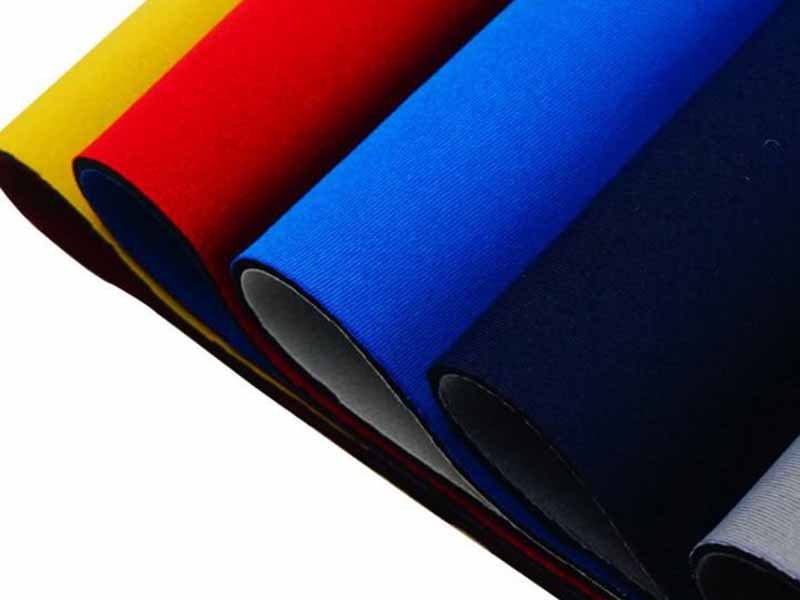
For most everyday corporate laptop sleeves, 3 mm neoprene offers a practical balance of cushioning, flexibility, weight, appearance, and production cost. Thinner material works for lightweight promotional sleeves, while 4–5 mm constructions create a more substantial feel. Thickness should always be evaluated together with density, surface fabric, compression recovery, stitching, closure design, and device fit.
Thickness and Protection
Neoprene thickness affects cushioning and hand feel, but it does not determine protection on its own. A properly fitted 3 mm sleeve can perform better than a loose 5 mm sleeve because excessive internal space allows the laptop to move and strike the edges. Product fit and construction are just as important as foam thickness.
Two-millimeter neoprene is suitable for lightweight event products and inner sleeves designed mainly to prevent scratching. It folds easily, keeps shipping weight low, and can be economical for high-volume campaigns. However, it provides limited cushioning against bumps and may feel less substantial as a premium client gift.
Three-millimeter neoprene is widely used for employee programs and general corporate gifting because it offers noticeable padding without creating excessive bulk. Four-millimeter material provides a firmer, more protective feel and can be appropriate for larger laptops or premium programs. Five-millimeter construction provides greater soft cushioning but increases seam thickness, zipper tension, product weight, carton volume, and production cost.
| Neoprene Thickness | Typical Application | Main Advantage | Practical Limitation |
|---|---|---|---|
| 2 mm | Events and slim inner sleeves | Lightweight and flexible | Limited impact cushioning |
| 3 mm | Everyday corporate sleeves | Balanced protection and portability | Not intended for severe impact |
| 4 mm | Premium employee or client gifts | More substantial hand feel | Added weight and sewing bulk |
| 5 mm | Specialized padded sleeves | Strongest soft cushioning | Higher cost and packing volume |
Nominal thickness should be treated as a target specification rather than an absolute finished measurement. Foam may compress during lamination, storage, cutting, sewing, and packing. Buyers should approve the physical material and finished sample instead of relying only on a written thickness number.
Surface Fabrics
The fabric laminated to the foam has a major influence on appearance, printing, hand feel, abrasion resistance, and perceived quality. Two sleeves can both use 3 mm neoprene while looking and performing very differently because the face fabrics, knit structures, finishes, and lamination quality are not the same.
Polyester-facing fabrics are commonly selected for corporate sleeves because they provide stable decoration surfaces and can support sublimation when the material construction is compatible. Smooth, tightly knitted polyester usually produces sharper graphics and more even color. Nylon-facing fabrics may offer a softer or more refined feel, although performance depends on yarn quality, stretch, and finishing.
The buyer should evaluate how the material behaves during real use. A smooth surface may reproduce artwork clearly but show scratches more easily. A brushed surface may feel premium but attract lint. A highly elastic textile may improve fit while making artwork alignment and cutting control more difficult.
Physical samples should be inspected under office lighting and daylight. Buyers should bend, rub, compress, and stretch the material rather than reviewing it only in a photograph. Digital images cannot accurately communicate thickness, softness, surface texture, foam recovery, or odor.
For printed programs, a strike-off made on the actual laminated fabric is more reliable than a computer proof. Colors that look bright on a backlit monitor may appear darker or less saturated on fabric. Approval should therefore move from digital artwork to physical material before bulk production.
Density and Recovery
Foam density affects how the product responds to pressure. Lower-density foam can feel soft when first handled but may remain compressed after tight packing or repeated use. Higher-density foam often offers stronger shape recovery, although it can feel firmer and may increase material cost.
Compression recovery is particularly important for international corporate gift orders. Sleeves are often stacked tightly, individually bagged, packed into export cartons, and transported for several weeks. Weak material may arrive with deep creases, flattened corners, or uneven surfaces. Some deformation disappears after unpacking, but poor recovery can permanently reduce perceived quality.
A practical material evaluation can include repeated hand compression, folding along the same line, surface rubbing, edge inspection, and a short packaging simulation. The buyer can place the sample under pressure for several days, release it, and observe how quickly the original shape returns.
The approved sample should represent the intended bulk material. If the foam source, face fabric, adhesive, or lamination method changes after approval, the final sleeve may feel different even when the supplier continues describing it as the same thickness.
Consistency is especially important for repeat corporate programs. Employees joining at different times should receive sleeves with comparable hand feel, color, and shape. Maintaining material records and approved reference samples helps suppliers reproduce the product more reliably.
Odor and Lamination
Odor is one of the fastest ways a technically acceptable neoprene sleeve can create a negative first impression. Recipients may not understand foam density or lamination specifications, but they immediately notice if a gift smells strong when removed from the packaging.
Odor can come from the foam formulation, lamination adhesive, printing process, storage environment, or sealing the product too soon after production. Packing freshly manufactured sleeves into individual plastic bags can trap volatile smells. Appropriate material selection, curing, airing, and production scheduling can reduce this risk.
Lamination should also be checked around cut edges, zipper openings, corners, and frequently folded areas. The surface fabric must remain securely bonded to the foam. Small bubbles, loose edges, or separation may become more visible after repeated use.
Odor expectations should be discussed during sampling. The sample can serve as a practical reference, although humidity, storage conditions, and shipping duration may affect the final result. Buyers should inspect products after airing them for a reasonable period rather than evaluating only the first few seconds after opening a sealed bag.
A neoprene sleeve provides soft cushioning and resistance to minor splashes, but it should not automatically be described as completely waterproof. Water can enter through zipper openings and sewn seams. Accurate performance language protects both the buyer’s reputation and the recipient’s expectations.
How Are Brands Customizing Laptop Sleeves?
Brands are customizing laptop sleeves through surface printing, patches, labels, zipper details, trim colors, sizing, and coordinated packaging. The best decoration method depends on artwork complexity, quantity, material surface, durability expectations, and brand position. Strong customization feels like part of the product design rather than a generic logo added after the construction has already been selected.
Logo Methods
Screen printing remains practical for simple corporate logos using one or a few solid colors. It provides a clean appearance, works well for many order quantities, and usually keeps decoration costs controlled. Extremely thin lines, tiny text, or complex gradients may not reproduce clearly on textured or flexible fabrics.
Heat transfer can handle more detailed artwork and multiple colors. Its performance depends on film quality, adhesive compatibility, temperature, pressure, and the surface textile. A physical test is important because too much heat can flatten the foam or change the fabric texture.
Sublimation is suitable for compatible polyester surfaces and is particularly useful for full-panel graphics, gradients, illustrations, and repeated patterns. Because the color becomes part of the textile surface, the print remains flexible and does not create a thick layer over the neoprene.
Embroidery offers texture and a premium appearance but must be carefully controlled. Dense stitching can compress the foam, stiffen the panel, and distort the surrounding material. Small emblems, initials, and simple marks generally work better than large, heavily filled designs.
| Branding Method | Best Application | Visual Result | Key Production Issue |
|---|---|---|---|
| Screen printing | Simple logos | Clean and direct | Limited fine detail |
| Heat transfer | Detailed multicolor graphics | Sharp and flexible | Adhesion and heat control |
| Sublimation | Full-panel artwork | Rich, seamless color | Compatible polyester required |
| Embroidery | Small premium emblems | Textured and refined | Dense stitching can distort foam |
| Woven label | Subtle brand identity | Retail-like appearance | Limited artwork area |
| Rubber or silicone patch | Modern lifestyle branding | Dimensional and tactile | Added component cost |
| Custom zipper pull | Discreet functional branding | Repeated user interaction | Tooling and minimums may apply |
The most suitable method is not always the most expensive one. Decoration should support how the recipient will use the sleeve and how the company wants to be perceived.
Full-Color Artwork
Full-color sleeves are well suited to creative campaigns, entertainment properties, universities, gaming programs, festivals, internal culture projects, and conference merchandise. The entire panel can be used for patterns, illustrations, gradients, photography, or event storytelling rather than a single centered mark.
However, full-surface artwork makes normal manufacturing variation more visible. A small cutting movement is difficult to notice on a plain black sleeve but may become obvious when a narrow graphic border follows the edge. Designs should include sufficient bleed and keep critical text away from seams, zipper lines, binding, and corners.
Artwork preparation must reflect the final product pattern. Front and back panels may have different dimensions, and corner radii can change how graphics appear after sewing. The print layout should also account for stretch direction and the way the material is held during cutting.
Complex patterns should tolerate slight movement. Continuous lines that must align perfectly across a side seam create unnecessary production risk unless the construction has been developed specifically for that effect.
A printed panel strike-off should normally be reviewed before the complete sleeve sample is assembled. This allows color, clarity, scale, and surface response to be adjusted before time is spent on sewing and packaging development.
Color Control
Pantone numbers provide a useful starting point, but they do not guarantee that fabric will look identical to printed paper, coated packaging, rubber patches, or digital screens. Surface texture, fabric composition, heat, ink absorption, and lighting all influence perceived color.
A controlled process begins with official artwork and color references. The supplier then prepares a fabric swatch or printed strike-off. After physical approval, the same standard should be retained for comparison during bulk production.
Critical colors should be viewed under more than one lighting condition. Dark navy can appear black in weak indoor lighting, while certain reds, greens, and grays can change noticeably under cool LED lamps. A buyer should assess the color in the environment where the product will normally be used.
Tolerance should reflect the decoration method. A one-color screen print is generally easier to control than a photographic sublimation design. Large solid areas may show heat or fabric variation more clearly than complex artwork.
Brand consistency does not always mean forcing every material to look exactly the same. Fabric, paper, rubber, metal, and plastic reflect light differently. A carefully controlled family of colors is often more realistic than expecting visual identity across all surfaces to be identical.
Packaging Details
Packaging can transform a practical laptop sleeve into a complete corporate gift. A transparent bag may be sufficient for internal distribution, but an executive, customer, or anniversary program may require a more considered presentation.
Common options include paper belly bands, printed sleeves, gift boxes, tissue, welcome cards, personalized name cards, care instructions, QR codes, and coordinated accessory packaging. Each option creates a different balance between presentation, cost, storage, and shipping volume.
Rigid boxes can increase perceived value but also increase carton size and freight cost. Personalized cards create emotional impact while introducing additional sorting and fulfillment work. Paper bands are efficient and visually attractive, but they must be designed to avoid crushing or sliding during transport.
Packaging should be tested with the actual finished sleeve. Neoprene may compress inside a tight box and need time to recover. Printed inserts should not transfer color or leave pressure marks on light-colored fabric.
A strong unboxing experience does not require excessive material. One well-designed paper band, a clear message, and carefully packed accessories may create more value than multiple decorative layers that are discarded immediately.
Which Features Increase Gift Value?
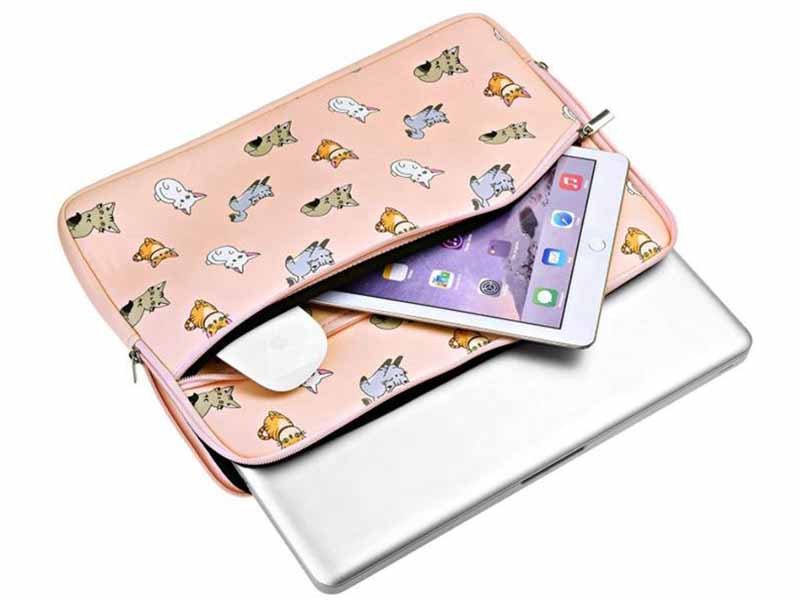
Features increase gift value when they improve daily use, device protection, or suitability for a specific work routine. Accurate fit, secure closure, protected zipper construction, and useful storage usually matter more than decorative extras. Every additional handle, pocket, hardware component, or internal layer should solve a clear problem because unnecessary features add cost, bulk, weight, and production complexity.
Closures and Zippers
Zippered sleeves are widely used because they provide secure and familiar closure. The zipper should move smoothly without excessive force, and the opening should be wide enough for the device to enter without pulling or distorting the corners.
Hardware placement matters. Zipper teeth, sliders, and pullers can scratch a metal laptop if they contact the surface repeatedly. Protective details such as an internal zipper guard, extended fabric lip, or controlled seam placement can reduce this risk.
Envelope and flap constructions create a cleaner appearance and may be suitable for minimalist or executive gifts. They reduce visible hardware but can provide less complete edge protection. Hook-and-loop closures are economical and easy to use, although the sound and long-term wear may not suit premium programs.
Open-top sleeves provide fast access and low weight. They work best as inner protection inside another bag rather than as an independently carried product. Magnetic closures may offer a refined experience, but magnet placement, strength, and pressure points should be evaluated carefully.
The correct closure depends on the intended use. An employee carrying a laptop between buildings may prioritize security, while an executive using the sleeve mainly in meetings may prefer a cleaner flap design.
Handles and Storage
A handle can improve convenience for employees moving between desks, meeting rooms, training areas, and client presentations. It is less necessary when the sleeve will remain inside a backpack or travel bag.
Because neoprene is soft and elastic, a handle should not rely only on the foam panel for support. Internal webbing, reinforcement patches, or extended attachment structures may be required to distribute the load. Stitching around these areas should be checked for distortion, loose threads, and skipped stitches.
Exterior pockets are useful for thin items such as a notebook, pen, cable, or wireless mouse. Large chargers and hard power adapters can press against the laptop and create impact points. A separate cable pouch may provide safer organization while preserving the slim profile of the sleeve.
Feature decisions should begin with actual user behavior. Adding a pocket because it appears more valuable in a product catalog may increase sewing operations and product thickness without improving the experience.
For many corporate programs, a slim sleeve combined with a separate matching accessory pouch provides better flexibility. Recipients can use the sleeve alone for meetings or carry both pieces when traveling.
Device Fit
Laptop sizing should be based on the external dimensions of the actual device, not only the advertised screen size. Two computers described as 14-inch models may have different widths, depths, thicknesses, corner shapes, and hinge structures.
The product pattern must account for foam thickness, seam allowance, zipper clearance, stretch, and normal production tolerance. A sleeve developed to exactly match the laptop’s external dimensions will usually be too tight because the seams reduce the usable internal space.
| Required Information | Why It Matters | Common Risk if Missing |
|---|---|---|
| Laptop width | Controls horizontal fit | Device moves or cannot enter |
| Laptop depth | Controls vertical fit | Zipper strains at corners |
| Device thickness | Determines internal allowance | Sleeve feels too tight |
| Corner radius | Influences pattern shape | Empty corners or pressure |
| Charger storage need | Determines pocket volume | Accessories press on device |
| Number of laptop models | Defines size grading | Universal size fits poorly |
| Quantity by model | Controls production allocation | Incorrect size distribution |
Corporate IT programs may require two or three graded sizes. This is usually more effective than forcing every device into a single universal sleeve. The exterior appearance can remain consistent while the dimensions change for each laptop group.
The approved sample should be tested with the actual computer through repeated insertion, removal, carrying, and zipper operation. A fit that appears acceptable during one quick test may feel inconvenient during daily use.
Protective Construction
Neoprene offers soft cushioning and scratch protection, but it is not a rigid protective shell. The final performance depends on thickness, density, fit, edge construction, closure, lining, and how the sleeve is carried.
Rounded corners help the product follow the shape of the laptop and reduce unused internal space. Binding can strengthen exposed edges, while a soft lining may improve surface protection. Each additional layer, however, changes flexibility, thickness, and cost.
The interior should be inspected as carefully as the exterior. Raised seams, exposed zipper tape, hard attachment points, or rough thread ends can rub against the device. A buyer should run a hand around the inside of the sample to identify potential scratch points.
Ordinary neoprene resists light splashes, but a sewn sleeve should not be described as completely waterproof. Water may enter through seams, closures, and zipper openings. Unless the construction has been specifically developed and tested, splash resistance is a more accurate description.
Realistic claims build trust. A corporate sleeve should deliver the level of protection described in the product information rather than relying on marketing language that the construction cannot support.
How Should Buyers Plan Bulk Programs?
Bulk corporate sleeve programs should begin with device models, audience, quantity, artwork, packaging, destination, and required arrival date. Buyers should approve material, sizing, branding, construction, and packaging through physical samples before mass production. Clear specifications, size allocation, staged inspection, and realistic scheduling reduce color variation, poor fit, odor, zipper defects, packing mistakes, and missed event dates.
Program Requirements
Different corporate gift programs require different product priorities. An onboarding sleeve should emphasize device fit, durability, and easy distribution. A conference sleeve may prioritize visual impact and compact packing. A client appreciation product may require more refined branding and packaging.
The buyer should define the purpose in one practical sentence. A statement such as “This sleeve will protect company-issued 14-inch laptops and be distributed to 1,200 new employees across four offices” immediately clarifies that sizing, sorting, durability, and multi-location delivery are more important than decorative complexity.
A complete initial brief should include the recipient group, intended use, device models, quantity by size, preferred material, logo files, colors, required features, packaging, destination, arrival date, and testing needs.
Without these details, different suppliers may quote different assumptions. A low price may exclude the required thickness, packaging, color control, reinforcement, or sorting work. Comparing quotations is only useful when the underlying specifications are comparable.
Clear requirements also improve design decisions. Instead of asking whether an exterior pocket is possible, the buyer can explain that employees need to carry a mouse and charging cable. The supplier can then recommend a safe pocket structure or a separate pouch.
Sample Approval
Sampling should confirm the standards that will guide bulk production. A visually attractive sample is not sufficient if device fit, zipper protection, material odor, logo durability, and packaging have not been tested.
The process normally begins with material and artwork approval. An initial prototype is then produced and tested with the intended laptop. Any required changes should be recorded clearly before a revised or final pre-production sample is created.
The approval record should include internal and external dimensions, tolerances, neoprene thickness, surface fabric, color reference, decoration method, logo size, logo position, zipper specification, handle construction, pocket details, packaging materials, labels, barcodes, and artwork version.
Written approval matters because memory and photographs are not precise enough for complex custom projects. When several sizes are included, each size should be sampled or carefully graded from an approved base pattern.
The final approved sample should be retained as a production reference. Bulk products can then be compared against the same standard for color, fit, material feel, construction, and workmanship.
Quality Control
Quality control should begin before sewing. Material thickness, surface condition, lamination, color, and odor can be checked when raw materials arrive. Printed panels should be inspected before cutting so major artwork or color problems are not discovered after assembly.
During production, inspectors should review cutting accuracy, logo placement, seam quality, zipper alignment, reinforcement points, and internal finishing. Early inspection is more efficient because corrections can be made before the same problem affects the entire order.
Finished-product inspection should cover dimensions, laptop fit, print clarity, color consistency, zipper operation, stitching, internal scratch risks, loose threads, edge shape, handle strength, odor, cleanliness, and packaging.
Programs involving employee names, regional cards, multiple sizes, or several delivery locations require an additional fulfillment check. Product quality and packing accuracy should be treated as separate responsibilities. A sleeve can be manufactured correctly but still fail the program if it is packed for the wrong employee or office.
Carton markings, quantities, and destination labels should match the final packing list. Organizing cartons by location, size, department, or recipient group can significantly reduce sorting work after delivery.
MOQ, Timing, and Cost
Minimum order quantity is influenced by more than the total number of sleeves. Material color, decoration process, custom hardware, patches, packaging, and the number of artwork or size variations may each create separate minimum requirements.
An order of 2,000 identical black sleeves with one screen-printed logo is operationally straightforward. An order of 2,000 sleeves divided among four sizes, six artwork versions, twelve employee groups, and personalized packaging requires more setup, quality control, sorting, and management.
Cost is affected by neoprene thickness, face fabric, product dimensions, number of sizes, print coverage, decoration method, zipper quality, pockets, handles, hardware, packaging, testing, fulfillment, freight, and delivery timing.
Buyers should plan backward from the required arrival date. The complete schedule includes requirement review, quotation, material confirmation, sample development, sample shipping, approval, revisions, bulk production, inspection, packing, and international transportation.
An excessively compressed schedule may limit material options, reduce time for color testing, or require expensive air freight. The lowest unit quotation is not necessarily the lowest total project cost when delays, repacking, incorrect sizing, or product replacement are considered.
A realistic timeline and complete specification usually create more value than aggressive price negotiation after important requirements have been removed.
The most successful corporate laptop sleeve programs begin with a clear understanding of the recipient. Buyers should know which computer will be carried, where the product will be used, what accessories are required, how the gift will be distributed, and how the company wants the recipient to feel when opening it.
A well-developed neoprene sleeve can protect equipment, connect remote and office-based employees, strengthen brand recognition, and support onboarding, events, customer appreciation, and recognition programs. It should be treated as a custom product-development project rather than a standard promotional item with a logo added at the end.
Before requesting a quotation, prepare the laptop models or internal dimensions, estimated quantity by size, preferred neoprene thickness, logo files, colors, closure requirements, pocket or handle needs, packaging concept, destination country, and required delivery date.
Szoneier supports custom neoprene laptop sleeve development from material selection and pattern development through sampling, branding, sewing, quality inspection, packaging, and export delivery. Buyers can submit reference products, sketches, device specifications, artwork, quantities, and packaging requirements for a project review.For a detailed quotation, contact szoneier