A neoprene pet accessory can look simple in a product photograph, but its commercial success is usually decided by details that customers do not see until the product is used. A harness may look soft but rub behind the front legs. A collar may appear water-friendly but remain damp for hours. A leash may have an attractive padded handle but fail where the loop joins the webbing. These practical differences explain why private label brands should treat pet product trends as product-development signals rather than short-lived design inspiration.
Private label brands should follow neoprene pet product trends centered on padded comfort, secure adjustment, water-friendly construction, reflective visibility, easy cleaning, coordinated product sets, outdoor use, and distinctive branding. The strongest opportunities are products that solve recognizable daily problems, can be tested against measurable requirements, and can expand into additional sizes, colors, accessories, and repeat-order programs without creating unmanageable inventory complexity.
The pet market remains large enough to support specialized product concepts, but competition is also becoming more professional. According to recent American Pet Products Association reporting, U.S. pet industry spending reached approximately $158 billion in 2025, while dog ownership extended across roughly 71 million U.S. households. That scale creates opportunity, but it does not guarantee demand for every new design. The winning question is not simply, “Is neoprene popular?” It is, “Can this material help a specific customer create a safer, more comfortable, more useful, and more recognizable pet product?” The answer usually becomes clear only after the first sample is fitted to a real dog.
What Is Driving Neoprene Pet Product Demand?
Neoprene pet product demand is being driven by higher expectations for comfort, increased outdoor activity with pets, interest in visually coordinated accessories, and greater attention to practical value. Buyers are not purchasing neoprene simply because of the material name. They are choosing products that use neoprene to improve cushioning, flexibility, moisture handling, grip comfort, protection, or brand presentation in a clearly noticeable way.
Pet Comfort Expectations
Pet owners increasingly judge collars, harnesses, and leashes in the same way they judge their own lifestyle accessories. They notice whether a material feels stiff, whether an edge rubs against the animal’s body, whether a handle is comfortable during a long walk, and whether the product remains pleasant to use after repeated exposure to rain, sweat, mud, and washing. This makes contact-zone design more important than adding padding everywhere.
Neoprene can create a softer surface without requiring a separate bulky foam insert. It is commonly laminated with polyester, nylon, or another textile face, allowing a manufacturer to combine cushioning with printed designs, color coordination, abrasion resistance, or a specific hand feel. The most effective construction places neoprene where pressure or friction is most likely to occur, such as the inner collar surface, the chest section of a harness, or the palm area of a leash handle.
More material does not automatically create more comfort. Excessive thickness can make a collar bulky, reduce flexibility around a small dog’s neck, trap heat beneath a harness, and increase drying time. It can also create thick seam intersections that are difficult to bind neatly. Experienced product developers therefore consider softness, thickness, stretch, edge construction, ventilation, and load distribution together rather than treating neoprene as a decorative layer.
A well-designed product allows the buyer to feel the difference immediately. The inner surface should be smooth, binding should not expose rough edges, labels should not sit against sensitive skin, and structural webbing should carry force without creating concentrated pressure. These details often determine whether customers describe a product as genuinely comfortable or simply padded.
Outdoor Pet Lifestyles
Walking, hiking, road trips, beach visits, camping, and other pet-friendly activities have expanded the range of conditions in which pet accessories are used. A collar that once needed to perform during a short neighborhood walk may now be expected to handle rain, mud, sand, repeated adjustment, car travel, and occasional swimming. This change creates demand for flexible, washable, and moisture-tolerant product constructions.
Neoprene is useful in outdoor pet products because it can provide cushioning, elasticity, shape support, and some resistance to water absorption. However, the performance of the finished product depends on much more than the neoprene sheet. Surface fabric, stitching holes, binding, webbing, hook-and-loop fasteners, metal hardware, labels, and internal layers all influence drying time, odor retention, cleaning difficulty, and long-term durability.
An outdoor product should therefore be developed around a specific scenario. A light urban harness may prioritize flexibility and low weight. A hiking harness may need wider load distribution, reflective visibility, stronger hardware, and reinforcement at pulling points. A travel bowl may need compact folding, stable opening, and an easy-clean surface. A water-use collar may need corrosion-resistant fittings and verified wet colorfastness.
Brands should be cautious with broad claims such as “waterproof,” “adventure proof,” or “all-weather.” A neoprene component may resist water, while seams and attached textiles allow moisture to pass through. More accurate claims such as “water-resistant,” “quick-drying construction,” or “designed for wet outdoor use” should be supported by actual testing and the performance of the complete product.
| Use Scenario | Buyer Priority | Useful Neoprene Role | Main Development Risk |
|---|---|---|---|
| Daily walking | Comfort and control | Collar lining or harness padding | Rubbing and poor adjustment |
| Hiking | Durability and visibility | Padded panels and handles | Heat buildup and hardware strength |
| Beach use | Easy cleaning and moisture handling | Water-friendly contact layer | Sand retention and color transfer |
| Car travel | Compact storage and protection | Carrier inserts and organizers | Ventilation and cleaning difficulty |
| Training | Grip comfort and fast access | Leash handles and treat pouches | Staining and opening convenience |
Style and Brand Identity
Pet accessories are increasingly treated as visible lifestyle products. Owners coordinate harnesses, collars, leashes, waste-bag holders, treat pouches, and travel accessories by color, pattern, hardware finish, or seasonal theme. This creates a strong private label opportunity because neoprene can provide a broad visual surface for printing while also contributing softness and structure.
A distinctive print can help a product stand out in marketplace thumbnails, short-form videos, social posts, and retail displays. Coordinated colors can also make several products feel like one complete collection rather than unrelated accessories. Brands can extend the same design language through customized webbing, woven labels, rubber patches, silicone logos, reflective graphics, buckles, zipper pullers, and packaging.
Visual differentiation still needs disciplined production control. A printed design may shift when it is scaled from a large harness panel to a narrow collar. Binding colors can appear different under changing lighting or between dye batches. A logo that looks balanced on a large size may dominate a small product. Product developers should therefore approve actual material swatches, print scale, logo placement, and trim combinations rather than relying only on digital renderings.
The strongest collections connect style with a functional idea. A high-visibility walking range can combine reflective graphics with bold color. A beach collection can use quick-drying materials, corrosion-resistant hardware, and ocean-inspired patterns. A premium urban line can use restrained colors, clean binding, subtle branding, and lighter hardware. The story becomes more convincing when appearance and use are developed together.
Value-Conscious Buying
Pet owners may spend more on products that improve comfort, safety, or convenience, but they still expect features to justify the price. Adding extra layers, multiple patches, unusual packaging, decorative hardware, or complex stitching can increase manufacturing cost without creating an equally strong customer benefit. A product with many features is not automatically more valuable than a focused product that solves one problem well.
A practical way to manage development is to separate features into four levels. Essential features protect fit, attachment security, seam durability, and basic usability. Meaningful upgrades improve comfort, visibility, cleaning, grip, or wet-use performance. Branding features improve recognition and merchandising. Optional decorative additions should remain only when they support the price position or strengthen the product story.
For a padded harness, the essential benefits may be correct fit, stable adjustment, secure attachment, and smooth contact edges. A meaningful upgrade may be reflective visibility. The differentiating feature may be an exclusive print or custom patch. Decorative elements that add weight, create rough contact points, or complicate cleaning should be questioned even when they look attractive in a concept drawing.
Value-conscious development also protects long-term margins. Fewer unnecessary components can reduce assembly time, quality variation, packaging volume, and replacement risk. Brands can then invest more in the features customers mention in reviews: comfort, fit, hardware reliability, cleaning convenience, and appearance after repeated use.
Which Neoprene Pet Products Are Trending?
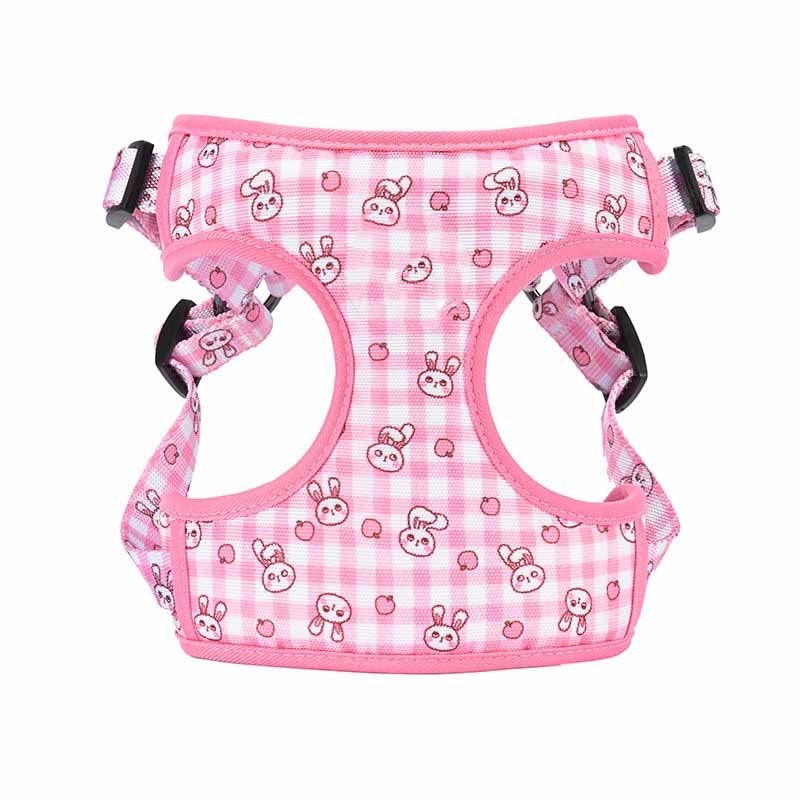
The most promising neoprene pet products include padded harnesses, soft-lined collars, comfortable leash handles, matching walking sets, training pouches, travel accessories, and selected water-use products. The strongest commercial products use neoprene for a specific function and allow brands to extend the same material, colors, and visual identity across related items without creating excessive size or inventory complexity.
Padded Harnesses
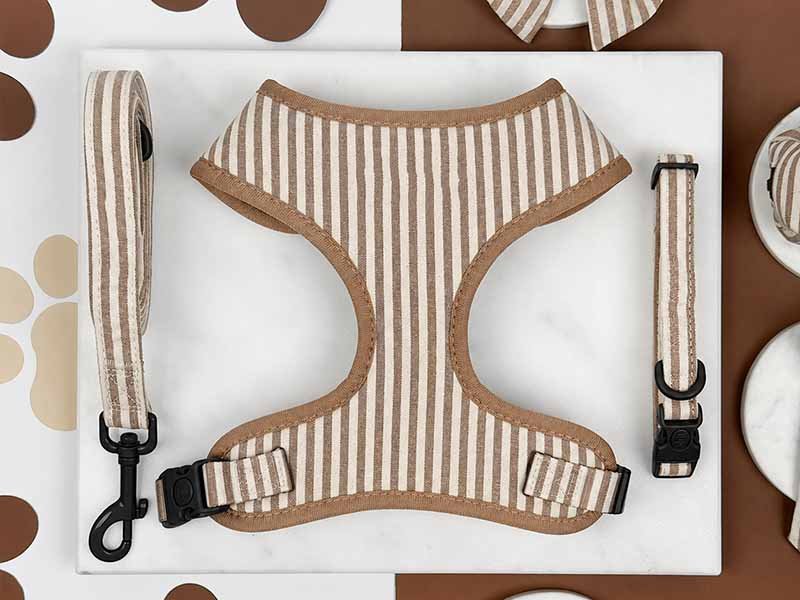
Padded harnesses remain one of the strongest opportunities for private label brands because customers understand the comfort benefit quickly. A broad, soft chest panel can distribute contact across a larger area than a narrow strap, while adjustable webbing helps the product accommodate different body shapes. The product photographs also provide enough surface area to show prints, contrast colors, reflective details, and brand identity.
The difficult part is not creating the padded panel. It is engineering the fit around the dog’s movement. Neck opening shape, chest length, shoulder clearance, strap angle, panel width, and edge position all influence performance. A harness may look correct while the dog is standing but rotate, rub behind the front legs, or restrict the shoulder when the dog begins walking or pulling.
Size grading should not be completed by enlarging one pattern proportionally. A small dog may require narrower webbing, lighter buckles, reduced edge bulk, and a shorter chest panel. A large dog may require wider structural webbing, stronger rings, longer reinforcement zones, and a different chest proportion. Dogs with similar body weight can also have very different neck and chest shapes.
Sample fitting should include standing, walking, turning, sitting, and forward pulling. Developers should record the remaining adjustment range, distance from the front leg to the binding, rotation under sideways force, ease of dressing, and stability when the product becomes wet. A strong harness balances padding, freedom of movement, structural reinforcement, ventilation, and manageable production cost.
Collars and Leashes
Neoprene-lined collars and padded leash handles remain commercially relevant because they improve familiar products without requiring customers to understand a new category. A softer inner collar surface can reduce the hard feeling created by webbing alone, while a padded handle can make a noticeable difference during long walks or sudden pulling.
The structural role of each material should remain clear. Neoprene is typically used for comfort, surface protection, body, or appearance. Load-bearing performance is more commonly created by suitable webbing, reinforced seams, correctly specified rings, buckles, adjusters, and hooks. A soft layer should not be assumed to provide the necessary strength unless the complete construction has been engineered and tested accordingly.
Collar width, thickness, buckle weight, and D-ring position should match the intended dog size. A wide padded collar may work well for a large dog but feel overly bulky on a smaller breed. Heavy metal hardware can make a lightweight leash feel unbalanced. A comfortable handle can also fail if the loop attachment is not reinforced or if binding creates a hard edge against the user’s hand.
Wet-use behavior deserves equal attention. Developers should evaluate drying time, odor retention, color transfer, surface abrasion, hardware corrosion, and dimensional stability after cleaning. These details are particularly important for products marketed for beaches, swimming, rainy climates, or repeated outdoor use.
Matching Walking Sets
Matching sets can increase average order value and help a private label brand establish a more recognizable visual system. A coordinated harness, collar, leash, waste-bag holder, and treat pouch gives customers a complete solution while creating more opportunities for bundles, gifts, seasonal launches, and retail displays.
From a manufacturing perspective, several products can share printed neoprene, webbing colors, buckles, rings, hooks, labels, patches, packaging graphics, and photography direction. Shared components can improve visual consistency and reduce the number of unique materials that must be ordered. This becomes especially valuable when a brand plans several product launches during the year.
The main challenge is SKU multiplication. Four harness sizes in five colors already create twenty harness SKUs. Adding collars in three lengths and leashes in two sizes can expand the assortment quickly. Brands should identify the product with the highest fit complexity and allow that item to guide the range. Less size-sensitive accessories can then extend the collection without multiplying inventory at the same rate.
Matching does not require every item to be constructed identically. A good collection shares a recognizable pattern, color system, hardware finish, or logo treatment while allowing each product to perform its own function. A leash can use stronger webbing, a collar can use lighter lining, and a pouch can use a different closure while still belonging to the same visual family.
| Product | Typical Size Complexity | Main Selling Point | Expansion Potential |
|---|---|---|---|
| Harness | High | Comfort, fit, and control | Sizes, prints, and activity styles |
| Collar | Medium | Soft contact and appearance | Widths, lengths, and matching colors |
| Leash | Low | Grip comfort and control | Lengths, handles, and hardware |
| Waste-bag holder | Low | Walking convenience | Bundles and impulse purchases |
| Treat pouch | Low | Training access | Pocket layouts and attachment options |
| Travel bowl | Low | Portability | Sizes, sets, and travel collections |
Travel and Water Products
Neoprene can also support travel and water-related pet products where softness, flexibility, cushioning, and moisture handling provide a practical benefit. Relevant products include collapsible bowls, treat pouches, bottle holders, carrier inserts, car organizers, protective sleeves, flotation-product panels, and selected travel storage accessories.
Each product requires a different balance of properties. A flexible bowl must hold its opening during use but fold compactly for storage. A carrier insert should provide cushioning without restricting airflow. A treat pouch needs an opening that can be accessed quickly while resisting stains and crumbs. A bottle holder should stretch enough to accommodate the container without losing its shape after repeated use.
Water products require more careful engineering than general walking accessories. A flotation product must be evaluated for buoyancy distribution, body balance, neck support, handle strength, closure security, and escape risk. Neoprene may contribute comfort, shape, or protection, but thicker material alone does not guarantee safe flotation. Claims should follow controlled testing and the requirements of the intended market.
Travel products are most persuasive when their benefits remain specific. Compact storage, easy cleaning, soft protection, fast access, reduced slipping, and coordinated packing are easier for customers to understand than vague language such as “made for every adventure.” Practical benefits also give brands clearer criteria for sample approval.
Which Features Matter Most to Buyers?
Buyers care most about correct fit, smooth body contact, secure attachment, reliable seams, easy cleaning, and durable visual branding. Neoprene thickness, surface fabric, webbing, binding, printing, hardware, and reinforcement should be specified as one complete system. The best material is not automatically the thickest option; it is the construction that best matches the product’s use, weight, safety requirements, price, and expected lifespan.
Material Thickness
Neoprene used in pet products is frequently developed within a thickness range of approximately 2 mm to 5 mm, although actual selection depends on material density, lamination, stretch, surface fabric, and intended application. A thickness number alone does not describe how the material will behave after cutting, folding, binding, compression, or repeated use.
A 2 mm material is relatively flexible and may work for collar lining, light accessory panels, or compact pouches. A 3 mm construction often provides a balanced combination of cushioning, body, and manageable seam thickness. A 4 mm layer can create more structure and protection, while 5 mm material may suit specialized padded components where weight and edge bulk are acceptable.
The product zone matters more than a single thickness used throughout the item. A harness may use neoprene at the chest and back panels while high-strength webbing manages adjustment and pulling force. A leash handle may need enough padding to soften pressure without becoming too thick to grip. A collar may use thinner material to maintain flexibility around the neck.
Physical sample comparison is essential. Two materials described as 3 mm can have different density, compression recovery, stretch, surface texture, and lamination quality. A factory with long-term neoprene experience should evaluate these differences before confirming the final bill of materials and production method.
| Thickness | General Characteristics | Common Pet-Product Use | Main Limitation |
|---|---|---|---|
| 2 mm | Light, flexible, and low bulk | Collar lining, light pouches, trim panels | Limited cushioning and structure |
| 3 mm | Balanced softness and body | Harness panels, leash handles, travel items | Needs structural webbing in load areas |
| 4 mm | More cushioning and shape | Premium contact zones and protective inserts | Bulkier edges and harder sewing |
| 5 mm | Thick and protective | Specialized padding and protection | Greater weight, warmth, and volume |
Fit and Adjustment
Fit is one of the most common causes of customer dissatisfaction, exchanges, and returns. Generic labels such as small, medium, and large are not enough because dogs with similar weight can have very different neck, chest, shoulder, and body proportions. A useful size system should define actual measurement ranges and show customers exactly where each measurement should be taken.
For a harness, specifications may include neck range, chest range, front panel length, back panel width, strap width, adjustment length, buckle size, and dimensional tolerance. A collar may require inner circumference, total length, usable adjustment range, width, buckle length, and D-ring position. These values should be recorded for every size rather than estimated from a single sample.
Fit testing should include movement. The product should be observed while the dog stands, walks, turns, sits, and pulls forward. The team should look for panel rotation, loose neck openings, pressure concentration, restricted shoulder movement, binding contact near the front legs, and strap slippage through adjusters.
The size chart should communicate fit honestly. Weight may be included as a secondary reference, but neck and chest measurements are generally more useful. Photographs or diagrams showing tape position, adjustment overlap, and the correct wearing position can reduce customer confusion and improve the quality of post-purchase reviews.
Strength and Safety
Softness should never distract from the structural requirements of a pet accessory. Pulling force is normally managed through webbing, attachment geometry, suitable hardware, seam type, stitch density, reinforcement length, and the relationship between structural and comfort materials. Neoprene usually contributes cushioning, shape, surface protection, or appearance rather than carrying the full load by itself.
Critical areas include D-ring attachments, leash hooks, buckle connections, adjustment points, handle loops, chest intersections, and transitions between thick and thin materials. These zones should be identified during pattern development and reviewed during the first sample. Large-dog products generally require different hardware and reinforcement decisions than small-dog accessories.
Development checks may include seam pull evaluation, buckle cycling, D-ring attachment testing, webbing slippage, hook operation under tension, corrosion exposure, inspection for sharp edges, small-part security, dimensional stability, and wet or dry color transfer. The final testing plan should match the product type, target dog size, use scenario, and sales market.
Brands selling into regulated markets should also consider product identification, traceability, risk assessment, technical documentation, and consumer instructions. Claims concerning restraint, flotation, visibility, safety, or environmental performance should be reviewed carefully and supported by relevant evidence.
Branding and Surface Performance
Branding methods should be selected according to the neoprene surface fabric, expected wear, product location, cleaning method, design complexity, and order quantity. Common options include sublimation printing, screen printing, heat transfer, embroidery, woven labels, rubber patches, silicone patches, reflective graphics, jacquard webbing, and customized hardware details.
Sublimation can provide full-surface patterns when a compatible textile face is used. Screen printing may suit simpler graphics and larger repeated areas. Rubber and silicone patches create a strong tactile identity, but their edges and placement should not irritate the animal. Embroidery can appear premium, although dense stitching may compress the neoprene or make a contact area less flexible.
Surface decoration should be checked under the same conditions customers are likely to create. Testing may include rubbing, flexing, washing, sun exposure, moisture, color transfer, patch adhesion, cracking, peeling, and edge lifting. Printed products used against light-colored fur require particular care because wet color transfer can create complaints even when the main construction remains intact.
Visual scale should also be reviewed across sizes. A large pattern may lose recognizable features when reduced for a small collar, while a tiny repeated print can appear visually noisy across a large harness panel. Approval should be based on actual printed material and finished samples instead of screen images alone.
How Should Brands Build a Product Line?
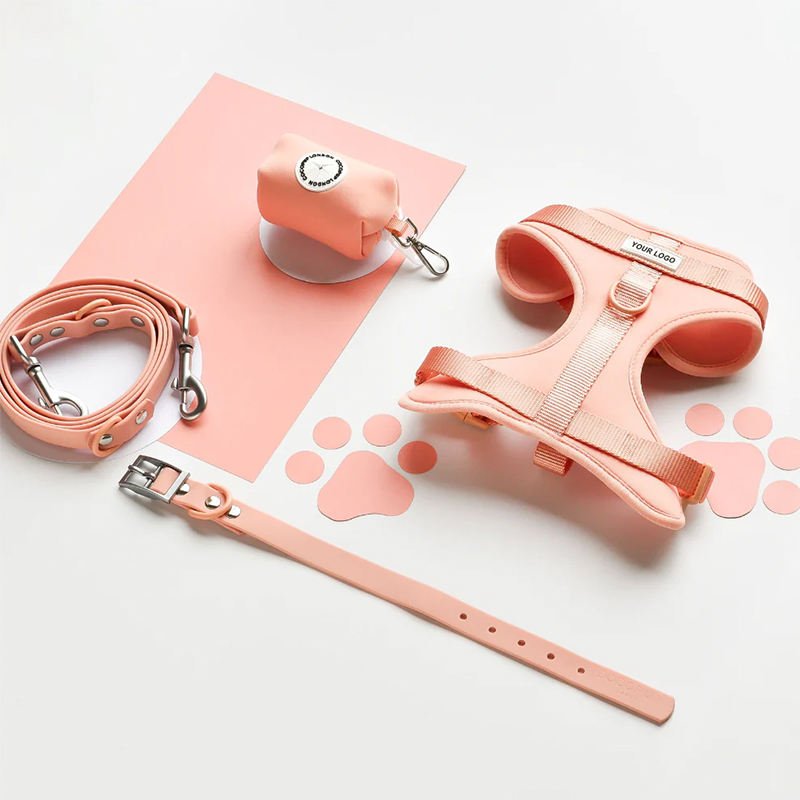
Brands should start with one clearly defined customer, one practical use case, and a controlled core assortment before expanding into multiple colors, sizes, and accessories. A focused collection is easier to sample, test, explain, stock, photograph, and improve. Shared materials, components, visual standards, and packaging can reduce complexity while preserving a recognizable private label identity.
Define the User
“Dog owners” is too broad to guide meaningful product development. A private label brand should define the intended animal, owner, activity, climate, channel, and price position before deciding on materials or features. These factors influence almost every technical choice, including weight, padding, hardware, visibility, care instructions, and packaging.
An urban owner walking a small dog may prefer lightweight buckles, flexible panels, compact storage, and fashionable colors. A hiking customer may prioritize secure attachment, wider pressure distribution, reflective visibility, corrosion resistance, and easier cleaning. A premium gift customer may focus on packaging, coordinated presentation, and perceived material quality.
The target profile should describe the dog’s approximate size and body type, typical walking duration, pulling behavior, exposure to rain or water, coat length, skin sensitivity, and expected cleaning frequency. It should also describe the owner’s shopping channel, target retail price, style preferences, and main reason for replacing an existing product.
This definition prevents contradictory requests. Without a clear user, a team may ask for maximum cushioning, very low weight, luxury hardware, a low retail price, compact packaging, and heavy-duty outdoor performance in the same product. A focused customer profile allows the brand and manufacturer to agree on which trade-offs are acceptable.
Start With Core SKUs
The safest first collection usually includes one hero product, a limited number of colors, and one or two related accessories. A padded harness can lead the launch, while a matching collar and leash improve bundle value without requiring an entirely separate material and component system.
The number of size-sensitive SKUs should remain controlled. Four harness sizes across five colors already produce twenty finished-product combinations. Adding three collar lengths and two leash sizes can expand the range quickly. A brand should therefore identify the item with the highest fit risk and build the rest of the assortment around it.
Core colors and seasonal designs should serve different purposes. Permanent colors support replenishment, long-term product photography, and consistent retail displays. Seasonal prints create freshness and social-media attention but may not justify continued stocking after the campaign. Separating these categories makes purchasing and discount planning easier.
A practical launch sequence begins with fit and demand validation, then extends into matching accessories, low-size-complexity products, and eventually activity-specific versions. Customer feedback from the first order should influence later colors, sizes, materials, packaging, and feature improvements.
| Launch Stage | Product Scope | Main Objective |
|---|---|---|
| Stage 1 | One harness, three colors, controlled size range | Validate fit and core demand |
| Stage 2 | Matching collar and leash | Improve bundle value |
| Stage 3 | Waste-bag holder or treat pouch | Add low-complexity accessories |
| Stage 4 | Seasonal print or premium hardware version | Test visual and price differentiation |
| Stage 5 | New fit or activity-focused collection | Expand using real customer data |
Build Real Differentiation
A unique print may attract attention, but lasting differentiation usually combines visible design with a meaningful improvement. Customers are more likely to remember a harness that reduces rubbing, a leash that feels better during sudden pulling, or a collar that remains comfortable after wet use than a product that relies only on decoration.
Competitor reviews provide useful development evidence. Repeated complaints about sizing, loose adjusters, rough binding, weak hooks, heavy buckles, difficult cleaning, color fading, or confusing instructions can reveal opportunities that broad market reports may miss. Brands should separate isolated complaints from recurring patterns and then verify whether the issue can be solved through design or manufacturing.
Differentiation must remain practical to produce. A complex curved panel may reduce material efficiency and create unstable binding. Custom-molded hardware may strengthen brand recognition but require tooling cost and higher minimum quantities. Several exclusive colors may look attractive in a design presentation but create large upstream commitments for webbing, lamination, buckles, and packaging.
The strongest private label concepts usually express one clear promise. Examples include lightweight urban comfort, high-visibility evening walking, quick-drying beach use, coordinated travel convenience, or premium soft-contact construction. Each feature, material, and visual decision should support that promise rather than competing with it.
Control Inventory Risk
Inventory risk grows through multiplication. Every additional color, size, product, hardware finish, and packaging version creates another finished SKU or component commitment. A collection can perform well overall while leaving several slow combinations in storage. This is why assortment architecture should be considered during product design rather than after sampling.
Shared components can reduce risk. One webbing color may support several printed neoprene patterns. One buckle family can serve related sizes. One packaging structure can be used across multiple products with different labels. Standardized rings, hooks, and patches may also improve purchasing efficiency and simplify replacement orders.
Brands should monitor real fit information from the first launch. Returns and exchanges should be recorded by size, dog measurement, product condition, and stated reason. These records can reveal whether a size chart is unclear, a panel is too long, a strap range is insufficient, or a certain breed shape requires a different fit.
The first order should be planned together with future replenishment. Material lead times, custom-color minimums, lamination quantities, printed-fabric requirements, packaging reorders, and hardware availability can affect the speed and cost of the second order. A successful product becomes difficult to scale when upstream materials were selected without considering repeat production.
How Do You Choose a Neoprene Manufacturer?
Choose a neoprene manufacturer by evaluating its ability to control material selection, pattern development, sample revisions, pet-product construction, size grading, reinforcement, branding, inspection, packaging, and delivery. A capable manufacturing partner should explain technical decisions, identify risks before bulk production, and reproduce the approved sample consistently across sizes, colors, and repeat orders.
OEM and ODM Capability
OEM manufacturing is appropriate when a brand already has a completed tech pack, approved physical sample, material specification, measurement chart, artwork, and packaging instructions. The factory’s responsibility is to interpret the documents accurately, confirm production feasibility, and reproduce the approved standard consistently during bulk manufacturing.
ODM support becomes important when the buyer has a product concept, reference image, target retail price, user scenario, or competitor example but still needs help turning the idea into a production-ready specification. The manufacturer may need to recommend neoprene thickness, surface fabric, webbing, hardware, panel structure, adjustment system, reinforcement, branding method, and packaging.
For a pet product, broad requirements should be converted into measurable details. A request for a “comfortable outdoor harness” should eventually define target dog measurements, size grading, panel dimensions, neoprene type, load-bearing materials, buckle specification, D-ring position, reflective area, logo method, acceptable tolerance, care instructions, and testing expectations.
A useful supplier does not simply agree to every requested feature. It should explain which details may create excessive bulk, unstable sewing, poor fit, high component minimums, unnecessary cost, or difficulty during repeat orders. This technical feedback helps the buyer improve the product before committing to tooling or production.
Sample Development
Sampling is the stage where major fit, construction, material, and branding problems should be discovered. A sample should not be evaluated only by appearance. It should be measured, fitted, pulled, flexed, cleaned, and compared with the written specification. Packaging and labeling should also be reviewed before mass production when they affect folding, presentation, or shipping volume.
A complex pet-product project may include material swatches, a first structural prototype, one or more revised samples, a size set, and a pre-production sample. The exact number of stages depends on the structure, size range, custom hardware, print method, and test requirements. A simple pouch may need fewer revisions than a multi-size harness with several adjustment points.
Every approved decision should be recorded. The specification should include material codes, thickness, dimensions, tolerances, webbing width, hardware reference, stitch method, reinforcement, binding, logo location, color reference, packaging, and quantity by variation. Photographs can support the document but should not replace measurable standards.
Experienced manufacturers can often identify excessive seam thickness, unstable pattern curves, difficult binding transitions, inappropriate hardware, or likely print distortion during sampling. Correcting these issues before production is generally faster and less expensive than sorting or repairing completed goods.
Production Consistency
Bulk consistency begins with approved standards and controlled incoming materials. Neoprene can vary in thickness, stretch, compression, surface fabric, lamination quality, and color. These differences can influence cutting accuracy, seam appearance, product fit, printing, and the behavior of the finished accessory after repeated use.
The approved sample should be supported by a bill of materials, measurement chart, color references, hardware codes, artwork placement, stitch details, reinforcement instructions, packaging requirements, and acceptable tolerances. Without these records, production teams may interpret visual details differently, especially across multiple sizes or production lines.
Quality control should continue through material inspection, cutting, printing, initial sewing, in-line assembly, final measurement, hardware checks, appearance review, packaging, and shipment preparation. Inspectors should check every size and color rather than assuming that one approved variation represents the entire order.
Szoneier is documented as a Shenzhen-based OEM/ODM manufacturer with more than eighteen years of experience in custom bags, neoprene products, and sewn soft goods. Its project system includes material sourcing, sampling, pattern development, sewing coordination, inspection, packaging, and export delivery, supporting buyers that need to move from a reference idea or tech pack into repeatable bulk production.
RFQ Information
A detailed request for quotation reduces assumptions and makes supplier comparisons more meaningful. A product photograph rarely shows the exact neoprene thickness, inner construction, reinforcement, webbing specification, hardware grade, print process, size tolerance, packaging, or testing expectations. Different manufacturers may quote different unseen assumptions and appear to offer very different prices for what is not actually the same product.
A useful neoprene pet-product RFQ should include the intended use, reference images or physical sample, target dog type, measurement chart, size range, neoprene thickness, surface fabric, webbing width, buckle and ring details, reinforcement requirements, logo artwork, reflective features, packaging, quantity by size and color, destination market, testing needs, and delivery schedule.
Buyers should separate mandatory requirements from flexible decisions. Fit, attachment security, and required test standards may be fixed, while face fabric, packaging structure, or logo method may remain open to alternatives. This gives the manufacturer room to recommend practical cost improvements without weakening the product’s main promise.
A capable supplier will usually ask questions before providing a final quotation. Questions about the target animal, use scenario, retail position, expected annual volume, cleaning requirements, and sales market suggest that the manufacturer is evaluating the finished product rather than calculating only material and sewing cost.
The most valuable neoprene pet trend is not always the newest or most visually dramatic one. It is the product opportunity where a brand can connect a recognizable customer problem with a useful material benefit, reliable construction, manageable inventory, and a manufacturing process that can be repeated. Comfort, quick drying, visibility, coordinated style, travel convenience, and outdoor performance can all support a successful collection when the claims are specific and the product has been developed around real use.
Szoneier supports OEM and ODM development for custom neoprene products and sewn soft goods, including projects for pet brands, retailers, importers, e-commerce sellers, and other B2B buyers. The development process can begin with a tech pack, reference sample, sketch, product image, target dimensions, brand artwork, or an early-stage concept. The team can review material thickness, surface fabric, product structure, pattern development, branding, reinforcement, packaging, quality requirements, and international delivery before bulk production.
For a more accurate quotation, provide the intended pet type, size range, product use, neoprene requirements, hardware, logo artwork, quantities by color and size, packaging expectations, destination market, and required delivery date. Contact info@szoneier.com or WhatsApp (+86) 13423847456 to discuss a custom neoprene pet-product sample, private label collection, or long-term OEM/ODM manufacturing program.