Skip to content
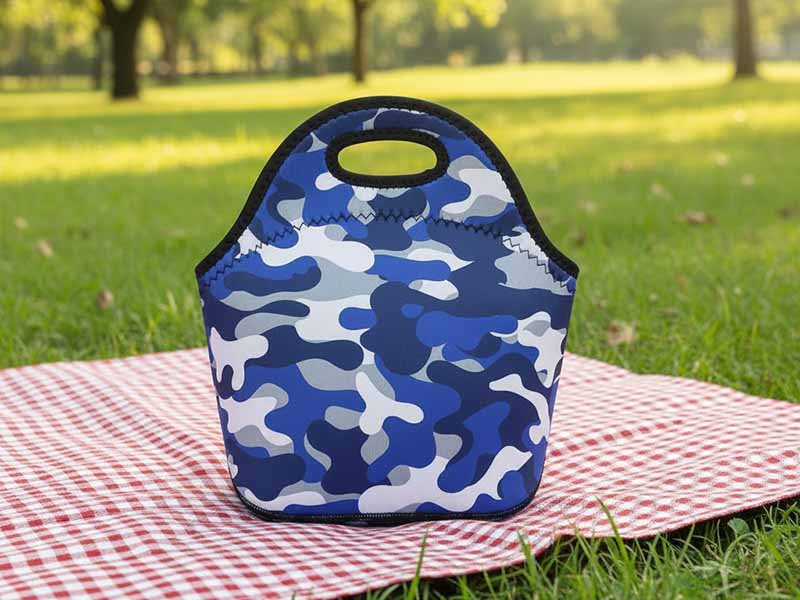
Neoprene is no longer confined to wetsuits, diving equipment, and specialist sports products. It is increasingly appearing in products used for commuting, travel, meal preparation, hydration, fitness, pet care, technology protection, and everyday organization. For lifestyle brands, that expansion creates meaningful opportunities, but it also creates a development risk: a material can look fresh on a mood board while becoming bulky, uncomfortable, difficult to clean, or expensive once the concept moves into production.
The most important neoprene product trends for lifestyle brands are multifunctional everyday bags, hydration accessories, fitted technology sleeves, fitness and recovery products, pet accessories, coordinated printed collections, and better-documented lower-impact materials. The strongest products combine clear everyday usefulness, suitable thickness, accurate fit, durable construction, recognizable branding, and a realistic manufacturing plan rather than depending on visual novelty alone.
The real opportunity is not to copy a popular tote, lunch bag, or bottle carrier. It is to understand why consumers use that product repeatedly, which details make the experience convenient, and how the approved sample can be reproduced consistently in bulk production. A lifestyle brand may have the right trend, the right colors, and the right campaign, yet still lose customers because the zipper opening is too narrow, the shoulder strap twists, or the material holds an unpleasant odor after packaging. Those small details separate an attractive concept from a dependable product line.
What Is Driving Neoprene Demand?
Neoprene demand is being driven by consumers who want products to be protective, portable, comfortable, easy to maintain, and visually distinctive at the same time. The material works particularly well in products used during commuting, travel, hydration, fitness, meal transport, outdoor activities, and pet care. Demand becomes more sustainable when neoprene solves a repeated daily problem instead of being added only for appearance.
Daily Utility
Consumers rarely divide their lives into the clean product categories used by retailers. One person may carry a laptop to work, bring lunch from home, visit the gym after work, pick up groceries, and walk a dog before returning home. Products that support this routine need to remain light enough for extended carrying, soft enough to pack or store easily, and structured enough to protect the objects placed inside them.
Neoprene fits this pattern because it can provide cushioning, flexibility, moderate insulation, shape recovery, and resistance to ordinary splashes. These properties make it useful for laptop sleeves, bottle holders, lunch bags, cosmetic pouches, soft totes, camera covers, sports supports, travel organizers, and customized protective cases. Commercial development commonly uses material between approximately 2 mm and 5 mm, although the correct specification depends on product size, expected protection, required flexibility, seam construction, and target cost.
Material selection should begin with the user’s routine rather than with the popularity of neoprene itself. A lunch bag may need a wide opening, stable base, cleanable lining, and enough internal height for stacked containers. A bottle carrier may need secure retention, a comfortable strap, and a pocket that fits a modern smartphone. A laptop sleeve may require exact device clearance and a protective barrier between the zipper and the device surface. These practical requirements determine whether neoprene creates value.
The material is not automatically suitable for every soft product. A very large tote made entirely from thick foam can become heavy, warm against the body, expensive to package, and likely to stretch under load. A thin sleeve may feel elegant but provide insufficient cushioning. Experienced product development therefore considers the complete structure, including webbing, reinforcement, lining, hardware, binding, and load distribution, rather than asking neoprene to perform every function by itself.
Function Meets Style
Lifestyle brands increasingly need to make useful products feel visually intentional. Consumers appreciate organization, protection, and easy cleaning, but they also expect products to fit personal style, work environments, travel routines, and social settings. This is why technical materials are moving into categories that were once dominated by canvas, nylon, leather, or rigid plastic.
Neoprene has a recognizable surface and a soft, slightly sculptural body. It can support restrained monochrome collections, bold color blocking, detailed sublimation prints, contrast binding, rubber patches, custom zipper pullers, woven labels, and coordinated webbing. The same material can be presented as athletic, playful, premium, urban, family-oriented, or outdoor-focused depending on the surface fabric, panel shapes, colors, trims, and product photography.
The visual opportunity becomes more valuable when it is connected to function. A fashionable lunch bag should still open wide enough for real containers. A minimalist commuter tote should remain balanced when carrying a laptop and bottle. A brightly printed bottle holder should not allow the container to slip when the user bends or walks quickly. Styling attracts attention, but consistent daily performance produces repeat use and stronger reviews.
Brands should also consider where visual elements will experience abrasion. A heat-transfer logo placed under a shoulder strap may wear faster than the same logo on a front panel. A raised patch near the bottom of a bag may repeatedly contact tables and floors. A large all-over print may look impressive, yet color matching and repeat alignment may require more careful control. Design and engineering should therefore be reviewed together during sampling.
Wellness and Mobility
Wellness now includes more than formal exercise. It covers hydration, meal preparation, commuting comfort, recovery, short outdoor activities, pet walking, and keeping personal items organized throughout the day. These habits create opportunities for products that sit between established categories and help consumers move more easily between work, fitness, travel, and leisure.
A bottle holder can include a phone compartment, card slot, key attachment, and adjustable strap. A gym tote can include a protected laptop section because many users travel directly from work. A lunch bag can use a clean, office-appropriate silhouette instead of looking like camping equipment. A pet-walking pouch can hold treats, waste bags, a small bottle, and personal items while keeping the user’s hands free.
Neoprene works well in these overlapping applications because it can be used as the main body, a padded insert, a removable sleeve, a comfort panel, or a protective layer. It does not need to cover the whole product. Combining it with breathable mesh, abrasion-resistant fabric, stronger webbing, cleanable lining, or rigid reinforcement can create a product that performs better than a design made from one material throughout.
The strongest opportunities appear where the consumer immediately understands the benefit. A padded bottle carrier protects the bottle and improves carrying comfort. A fitted sleeve reduces scratches and minor impacts. A soft pet harness improves body contact while webbing manages pulling force. When the product benefit is visible and easy to demonstrate, marketing becomes more credible and customer education becomes simpler.
| Consumer need | Product response | Measurable development point |
|---|---|---|
| Hands-free mobility | Adjustable bottle carrier or crossbody pouch | Strap width, adjustment range, balance under load |
| Daily organization | Tote with laptop, bottle, and accessory sections | Compartment dimensions and access sequence |
| Meal transport | Soft lunch bag with stable base and wide opening | Container fit, zipper width, cleanability |
| Device protection | Fitted sleeve with lining and protected closure | Device clearance, corner fit, zipper contact |
| Fitness transition | Gym bag with separate wet and dry storage | Ventilation, lining, shoe capacity, handle strength |
| Pet walking | Padded harness, leash, or walking pouch | Adjustment range, pull strength, hardware security |
| Travel convenience | Compressible organizer or protective cover | Packed volume, weight, shape recovery |
Buying Signals
Not every lifestyle trend deserves a new product line. Brands should look for evidence of repeated use, clear consumer understanding, and room for meaningful differentiation. A strong category usually has four characteristics: the benefit is easy to explain, the activity occurs regularly, the design can be improved through fit or construction, and the concept can expand into additional sizes, colors, or related products.
A simple bottle sleeve without a strap, pocket, or size-specific fit may be easy to manufacture, but it can be difficult to distinguish from low-cost alternatives. A bottle carrier designed for a defined diameter range, with a secure opening, reinforced strap attachments, and a phone pocket, has a clearer reason to exist. The strongest difference is often not additional decoration but better understanding of how the customer uses the item.
Customer reviews of existing products can reveal more useful development information than broad trend reports. Common complaints often include narrow openings, weak handles, straps that dig into the shoulder, poor device fit, difficult cleaning, lingering odor, peeling graphics, unstable bottle positioning, and pockets that do not fit current smartphones. Each complaint can be translated into a measurable requirement for a better sample.
After more than 18 years of custom bags and soft-goods manufacturing experience, one pattern remains consistent: many products fail not because the original idea was completely wrong, but because practical details were not tested with real objects and real users. Material selection, pattern development, sample revision, sewing structure, quality checks, packaging, and export delivery all need to support the same intended customer experience.
Which Neoprene Products Are Trending?
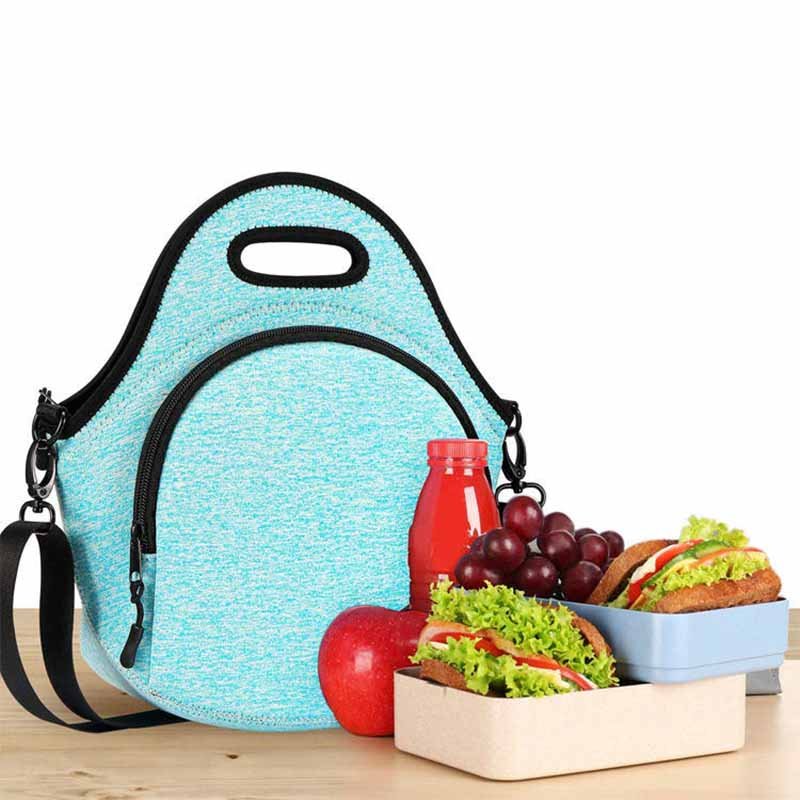
The strongest neoprene product opportunities include everyday bags, lunch and hydration accessories, fitted technology sleeves, fitness products, soft protective covers, and padded pet accessories. These categories combine visible design with functional value. The best concepts are frequently used, easy to understand, suitable for coordinated product families, and differentiated through accurate fit, structure, comfort, print design, or thoughtful organization.
Bags and Carryalls
Neoprene bags have moved beyond simple beach totes into backpacks, commuter bags, cosmetic cases, diaper bags, gym products, travel organizers, compact duffles, and casual crossbody styles. The material provides softness, visual body, and a distinctive hand feel, but the strongest designs are defined by the problem they solve rather than by the material alone.
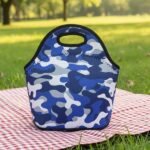
A commuter tote may include a padded device section, secure closure, bottle pocket, key attachment, stable base, and reinforced handles. A gym bag may separate footwear or damp clothing from clean items. A beauty case may open flat so the user can see products without searching through a narrow top opening. A beach tote may include a removable wet-item pouch rather than relying on one large unorganized compartment.
Large neoprene panels can stretch when loaded, particularly if handles are attached directly to soft foam without internal support. Reinforcement patches, webbing extensions, stronger base panels, wider seam allowances, and controlled stitch placement can distribute stress more effectively. A clean external appearance should not hide weak internal engineering, because most customer complaints emerge after repeated carrying rather than during the first visual inspection.
Product size changes how the same material behaves. A 3 mm cosmetic pouch may feel structured and stable, while a large 3 mm tote may require added reinforcement to avoid sagging. Brands should not transfer one material specification across every SKU without reviewing dimensions, expected load, opening construction, and carrying method. The approved result should be based on a functional sample rather than on a swatch alone.
Food, Drink, and Tech
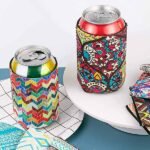
Lunch and hydration products remain natural neoprene applications because consumers can quickly understand the benefits of moderate insulation, cushioning, flexibility, and comfortable handling. Common product directions include office lunch totes, bottle sleeves, hands-free bottle carriers, can coolers, wine sleeves, cup sleeves, food-container carriers, and small picnic or snack bags.
Fit is one of the most important variables. A bottle sleeve that is several millimeters too narrow may be difficult to use, while one that is too wide can allow the container to slide out. A lunch bag can have enough calculated internal volume while still performing poorly if the zipper opening is smaller than the food containers. Real products should be placed inside the sample before dimensions are approved.
Technology products require even greater dimensional accuracy. Laptop sleeves, tablet covers, camera cases, handheld-device pouches, charger organizers, and customized equipment covers should be developed around physical products or reliable technical drawings. Screen size alone is not sufficient because two laptops sold under the same screen category may have different external dimensions, corner radiuses, and thicknesses.
A protective sleeve should account for the device’s length, width, thickness, controls, charging ports, corner shape, zipper clearance, lining thickness, and seam allowance. It should also prevent hard zipper parts, patches, rivets, or internal seams from scratching the surface. The design may require a protective flap, soft lining, or closure placed away from the most sensitive contact area.
| Product category | Common starting thickness | Main product benefit | Main development risk |
|---|---|---|---|
| Can cooler | 2–3 mm | Close fit and temperature moderation | Loose sizing or poor seam recovery |
| Bottle sleeve | 2–3 mm | Grip, cushioning, and insulation | Incorrect diameter or height |
| Bottle carrier | Around 3 mm | Hands-free carrying and protection | Weak strap attachment or poor balance |
| Lunch tote | 3–4 mm | Capacity, flexibility, and insulation | Odor, zipper stress, difficult cleaning |
| Laptop sleeve | 2–4 mm | Compact cushioning and surface protection | Tight fit, seam bulk, zipper contact |
| Camera cover | 3–5 mm | Cushioning around sensitive equipment | Poor access to controls or attachments |
| Cosmetic case | 2–3 mm | Flexible storage and clean appearance | Collapsing shape or inaccessible corners |
| Custom cover | 2–5 mm | Product-specific scratch protection | Incorrect clearances and attachment points |
These thicknesses are practical starting ranges rather than universal performance specifications. Foam density, surface fabric, lamination, product dimensions, construction, and expected retail price can change the finished result even when the nominal thickness remains the same. Szoneier’s documented neoprene manufacturing scope includes bags, lunch products, bottle holders, koozies, laptop sleeves, protective covers, fitness items, and pet accessories.
Fitness and Pet
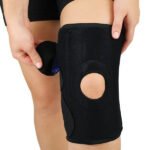
Fitness products use neoprene because it can provide softness, flexibility, cushioning, warmth, and close body contact. Common applications include knee supports, wrist supports, waist belts, lifting accessories, gloves, ankle supports, recovery wraps, and protective pads. These products require more development control than a simple pouch because comfort and fit directly influence customer acceptance.
A support can appear correct while lying flat and still fail during movement. The pattern may twist, the edge may rub against skin, the fastening area may be too short, or the product may trap more heat than expected. Size charts should therefore be based on actual body measurements and intended compression rather than generic small, medium, and large labels.
Fit samples should be evaluated while users bend, sit, walk, lift, or repeat the movement associated with the product. A knee support may need review across different thigh and calf proportions. A wrist support must consider hand orientation, thumb position, fastening direction, and the range of wrist movement. Materials that feel comfortable for five minutes may perform differently after a longer period.
Pet products offer similar visual and commercial opportunities. Neoprene can improve comfort in collars, harnesses, leashes, travel mats, bottle holders, and walking accessories, but it should generally work with load-bearing webbing instead of replacing it. Softness improves contact with the animal’s body, while reinforced straps, secure hardware, bar-tack stitching, and controlled adjustment ranges manage pulling force.
A pet harness should be reviewed for buckle placement, neck and chest proportions, range of adjustment, smooth edge finishing, pull strength, hardware size, movement restriction, and consumer measuring instructions. Attractive prints and matching accessories may support a collection, but restraint products should always prioritize structural security and real fit validation.
Portfolio Potential
A neoprene product becomes commercially more valuable when it can develop into a coordinated family. One approved print, material direction, color system, or logo method can support several products while keeping the collection visually connected. This helps brands build stronger recognition and gives customers more reasons to purchase multiple related items.
A hydration collection might include a bottle carrier, can cooler, lunch tote, wine sleeve, snack pouch, and gym carryall. A commuter collection could combine a laptop sleeve, tablet pouch, cable organizer, bottle holder, document wallet, and work tote. A pet collection may include a harness, collar, leash, walking pouch, travel mat, and portable bottle accessory.
Series development does not mean every product should use the same thickness or construction. A bottle sleeve and a large tote may share the same print while using different foam density, reinforcement, binding, and closure systems. What should remain consistent is the brand language: color direction, logo treatment, surface texture, hardware finish, label system, and packaging presentation.
Brands should avoid launching too many variations before understanding demand. Three products in four colors already create twelve SKUs before sizes are introduced. A pet harness in five sizes and four colors creates twenty SKUs on its own. A controlled first collection may therefore use one hero product, one companion product, two core colors, and one seasonal graphic, making inventory and customer feedback easier to manage.
How Is Neoprene Becoming More Sustainable?
Neoprene products are becoming more responsible through alternative rubber sources, recycled face fabrics, improved adhesive and chemical management, efficient pattern cutting, durable construction, reduced packaging, and more accurate environmental claims. No single material label proves that a finished product is sustainable. Brands should examine the full construction, supporting evidence, product lifetime, manufacturing process, and exact wording used in customer communication.
Material Choices
Traditional neoprene is a synthetic rubber material, and brands increasingly compare it with limestone-based foam and natural-rubber alternatives. These options should be evaluated through actual specifications and samples rather than ranked through broad marketing language. A change in raw-material source can be meaningful, but it represents only one part of the total finished product.
Limestone-based neoprene uses a different route for part of its raw material, yet the environmental result also depends on extraction, processing energy, foam production, lamination, transportation, cutting efficiency, durability, and end-of-life limitations. It is more accurate to describe the material specifically than to suggest that every product made with it has a lower overall impact.
Natural-rubber foam provides another direction. Brands considering this option should compare stretch, compression, recovery, odor, aging behavior, surface-lamination compatibility, color range, thickness tolerance, minimum order requirements, documentation, lead time, and cost. A material developed for a premium technical product may not be commercially suitable for a lower-priced promotional sleeve or simple beverage accessory.
The correct choice depends on product use. A premium outdoor or water-sports collection may justify higher material cost and more extensive documentation. A short-term promotional item may produce a different environmental and commercial calculation. Responsible selection means matching the material to realistic product life, expected use, price, and supply-chain evidence rather than choosing the most appealing material name.
Recycled Components
Many neoprene products are laminated with polyester or nylon face fabrics. Using documented recycled textiles can reduce reliance on virgin raw material in those components, but claims should identify exactly what portion of the product contains recycled material. The face fabric, foam, adhesive, zipper, binding, webbing, label, and packaging should not be treated as one material.
If the outer fabric contains recycled polyester while the remaining construction is conventional, the clearest description identifies the outer fabric and its verified percentage. Calling the complete product recycled can give customers an inaccurate impression unless the total product composition has been calculated and properly qualified.
Recycled components may include outer fabric, lining, binding, webbing, woven labels, packaging film, paper cards, and shipping cartons. Brands should ask whether the stated recycled percentage is pre-consumer or post-consumer, which standard or certificate supports the claim, whether the supplier documentation applies to the purchased batch, and whether the information can be traced through production records.
Pattern efficiency also matters. Curved components, directional prints, many small color panels, and large centered logos can reduce cutting efficiency. A minor adjustment to a panel shape or print placement may improve material utilization without changing the user experience. Cutting waste should be measured where possible instead of being described only through general sustainability language.
Durability remains part of responsible design. A product with recycled face fabric still performs poorly from a lifecycle perspective if its handles fail quickly, the layers separate, or the print peels after limited use. Material improvement and structural reliability should be developed together.
Chemical and Lamination Control
Neoprene sheet is normally a laminated material rather than a single homogeneous substance. The foam may be bonded to polyester, nylon, jersey, loop fabric, or another surface layer. Adhesive selection, drying, temperature, pressure, storage, and curing can affect odor, bonding strength, flexibility, color stability, and delamination risk.
Brands often focus heavily on the foam composition while overlooking lamination. In actual use, customers may complain because the bonded layers separate, the product smells strongly after opening, the printed surface changes under heat, or the adhesive performs poorly after repeated folding and flexing. These issues can damage customer trust even when the base foam specification appears acceptable.
Useful supplier questions include the type of adhesive system, availability of water-based options, expected curing time, lamination strength, storage conditions, compatibility with sublimation or heat transfer, odor-control procedures, and any restricted-substance documentation. Reports should be connected to the relevant material specification and production batch rather than presented as unrelated general factory certificates.
Finished products should be allowed appropriate airing time before packing, particularly when foam, adhesive, printing, and sealed packaging are combined. The correct procedure depends on the material and process. Immediate packing may trap odor, while uncontrolled exposure can introduce dust or deformation. Production planning should include these details instead of treating packaging as an isolated final step.
Claims That Hold Up
Environmental language should be specific enough that buyers and consumers understand what has actually improved. Broad terms such as “eco-friendly,” “green neoprene,” or “fully sustainable” can imply more than available evidence proves. A stronger claim identifies the material component, verified percentage, certificate, test, packaging reduction, or measurable production improvement.
| Claim area | Useful evidence | More precise wording | Wording to avoid without proof |
|---|---|---|---|
| Recycled face fabric | Composition report and valid certificate | “Outer fabric contains 80% recycled polyester” | “The entire product is recycled” |
| Natural rubber | Material specification and chain-of-custody evidence | “Made with documented natural-rubber foam” | “100% environmentally harmless rubber” |
| Water-based adhesive | Technical data and supplier declaration | “Laminated using a water-based adhesive system” | “Chemical-free lamination” |
| Reduced packaging | Previous and updated packaging weights | “Plastic packaging weight reduced by 25%” | “Zero-impact packaging” |
| Product durability | Defined test method and result | “Passed 10,000 zipper cycles under stated conditions” | “Guaranteed to last forever” |
| Cutting efficiency | Recorded utilization or waste data | “Pattern update reduced measured cutting waste by 12%” | “Zero-waste production” |
| Restricted substances | Current report with clear scope | “Tested for the substances listed in the report” | “Completely non-toxic” |
| Certified content | Valid certificate and covered material | “Contains material covered by certificate X” | “The full product is certified” |
A good environmental statement explains whether it applies to the material, one component, the packaging, a specific process, or the complete product. It should also remain accurate if a customer asks for supporting evidence. Precise language may appear less dramatic than a broad green claim, but it creates stronger trust and reduces the risk of misleading communication.
Which Design Features Are Winning?
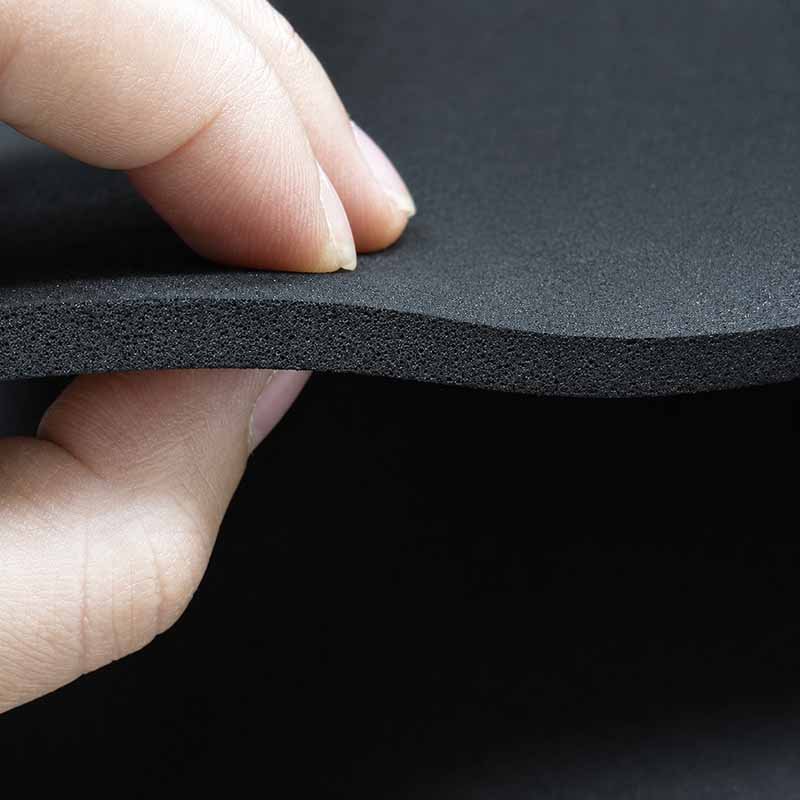
Winning neoprene products use suitable thickness, controlled structure, durable branding, comfortable contact points, and reinforcement matched to realistic loads. Strong design directions include coordinated colors, bold graphics, custom patches, fitted shapes, modular storage, adjustable components, and clean edge finishing. The best products balance softness with structural support rather than expecting foam alone to provide shape, protection, and strength.
Thickness and Density
Thickness is one of the first specifications buyers notice, but it should not be selected without considering density, surface fabric, compression, product size, and construction. Two sheets marked 3 mm can feel different because foam formulation, lamination, and fabric weight affect flexibility, recovery, and hand feel.
Thickness influences cushioning, insulation, weight, seam bulk, flexibility, folding, package volume, binding, zipper installation, and cost. A 2 mm material usually feels lighter and bends more easily, making it suitable for slim sleeves, basic beverage products, and soft covers. A 3 mm material often provides a useful balance for everyday bags, organizers, lunch products, and bottle carriers.
Four- and five-millimeter materials can provide greater cushioning or insulation, but they require more attention around corners, tight curves, zipper ends, bound edges, and folded seams. Thick foam can make a small product feel stiff and can increase carton volume significantly. It may also require different equipment, sewing methods, or panel construction.
| Thickness | Typical behavior | Common applications | Main design caution |
|---|---|---|---|
| 2 mm | Light, flexible, compact | Slim sleeves, koozies, bottle covers, lightweight pouches | Limited structure and cushioning |
| 3 mm | Balanced flexibility and body | Totes, lunch bags, organizers, bottle carriers | Reinforcement still needed at load points |
| 4 mm | Greater cushioning and insulation | Protective sleeves and structured soft cases | Increased seam bulk and package volume |
| 5 mm | Thick, protective, firmer hand | Specialized covers and higher-protection products | More difficult turning, binding, sewing, and zipper installation |
These ranges are starting references rather than guarantees. The best approach is to compare physical swatches and build a functional sample using the intended product dimensions. A small pouch and a large tote can perform very differently even when they use the same nominal thickness.
Print and Branding
Neoprene supports strong visual identity because it offers broad surface areas and can work with several branding techniques. Sublimation is often selected for detailed all-over graphics on suitable polyester-faced material. It can reproduce gradients, illustrations, repeated patterns, and multiple colors without creating a heavy surface layer.
Screen printing may be more appropriate for simpler logos and limited color counts. Heat transfer can support localized graphics, while woven labels, rubber patches, silicone patches, leather patches, embroidery, reflective elements, custom webbing, and branded zipper pullers add texture or premium detail. The correct method depends on artwork, order quantity, expected abrasion, surface fabric, hand feel, budget, and product positioning.
Logo placement should reflect actual use. A graphic positioned under a shoulder strap or near the bottom of a bag may wear faster. A raised patch may work well on an outdoor product but feel too bulky on a slim laptop sleeve. Dense embroidery can compress foam or distort a lightweight panel unless suitable backing and stitch control are used.
Color approval requires more than a digital Pantone reference. Screen settings, surface-fabric base color, heat, printing process, lamination, and lighting can alter the result. When color consistency is important, the brand should approve a physical strike-off or printed material sample before bulk production. The approved sample should remain available as a reference during production and final inspection.
Structure and Reinforcement
Neoprene feels substantial when held, but softness should not be confused with structural strength. Most failures occur where the foam connects to another component, particularly around handle attachments, shoulder-strap tabs, zipper ends, pocket corners, buckle joints, hook-and-loop areas, bound curves, narrow cutouts, and repeated fold lines.
A tote handle should not rely only on stitching through a soft panel. Internal webbing, reinforcement layers, larger load-distribution areas, and controlled stitch placement can reduce distortion. A bottle-carrier strap should be anchored securely because the load moves as the user walks. A pet harness should use structural webbing and reinforced stitching, with neoprene acting primarily as a comfort layer.
Binding protects raw edges and can improve shape, but it must be selected carefully. A binding material that is too stiff may wrinkle around curves or feel uncomfortable against skin. Stretch, thickness, stitch tension, curve radius, and operator technique affect the result. Clean binding requires consistent preparation rather than simply adding tape around the perimeter.
Zippers also need support. Thick foam can push against zipper teeth, create uneven openings, or make corners difficult to operate. A lunch bag can have sufficient internal volume while still being frustrating if the opening is too narrow. A laptop sleeve may need an internal flap to prevent the slider from contacting the device. Real-use testing should guide these decisions.
Usability Before Styling
A trend-led product must still feel natural to use. Small inconveniences quickly become negative reviews, return reasons, or weak repeat sales. Sample review should therefore include actual carrying, loading, opening, cleaning, folding, and wearing rather than relying only on photographs and flat measurements.
Reviewers should confirm whether the product can be opened with one hand, whether actual bottles or devices fit, whether the strap remains comfortable under load, whether the item stays balanced while walking, whether internal corners can be cleaned, and whether the product dries properly. The logo should remain visible during normal use, and internal seams should not create uncomfortable pressure points.
The most valuable feature may be something the customer barely notices because it works correctly. A protected zipper edge, balanced strap, well-positioned key clip, accessible pocket, or opening matched to the container shape may not dominate promotional photography, yet it strongly affects satisfaction.
Brands sometimes add too many compartments, straps, patches, and pieces of hardware in an attempt to justify a higher price. Additional features increase cost, weight, assembly time, and the number of possible failure points. Every feature should solve a recognizable user problem or contribute meaningful brand value.
A practical design review separates features into three groups: those required for safety or reliable function, those that improve convenience, and those added primarily for appearance. Cost pressure should never remove essential reinforcement, fit, or closure performance. Decorative features can be optimized only after the functional foundation is secure.
How Can Brands Turn Trends Into Products?
Brands turn neoprene trends into viable products by defining a specific user problem, writing measurable requirements, selecting suitable materials, developing functional prototypes, and controlling bulk-production standards. Trend research creates direction, but disciplined sampling determines fit, durability, cost, and consistency. A successful collection connects brand identity with a product that can be reproduced reliably and used repeatedly.
Choose the Right Problem
A product idea should be specific enough to guide material, structure, pricing, sampling, and testing. “A stylish neoprene bag” leaves too many decisions unresolved. “A hands-free carrier for 750–1,000 ml bottles, designed for commuters and weekend walking, with a secure opening, phone pocket, and adjustable strap” creates a much stronger starting point.
Before development begins, the brand should define the target user, main activity, intended contents, frequency of use, expected carrying time, sales channel, target retail position, planned quantity, delivery market, and launch date. It should also explain which existing product is being improved and what difference customers should notice immediately.
The category should fit the brand’s existing audience. A beauty brand may have a credible reason to develop cosmetic cases, organizers, or travel pouches. A hydration brand can expand naturally into bottle carriers, lunch products, and active totes. A pet brand may extend from collars and harnesses into walking pouches, travel mats, and portable drink accessories.
The first design does not need to solve every possible problem. A clear product with three well-executed functions is normally easier to explain, sample, manufacture, inspect, and sell than a product with ten average features. Complexity should be added only when the benefit is visible and the target price can support it.
Prototype What Matters
A prototype should answer questions rather than simply demonstrate that a shape can be sewn. It should validate dimensions, capacity, thickness, material recovery, surface feel, odor, print quality, logo placement, opening width, strap comfort, reinforcement, cleaning, packaging, and production feasibility.
Real objects should be used during sample review. Place the target laptop inside the sleeve, load the lunch containers, carry the bottle for a realistic period, adjust the strap for users of different heights, and fit pet products according to a controlled measurement chart. Actual use often reveals problems that cannot be identified from a technical drawing.
Measurements and decisions should be recorded. A useful sample report includes target and actual dimensions, tolerances, material code, thickness, color reference, component specifications, logo size, packaging method, revision history, and photographs of critical details. This record reduces confusion when the sample moves from development to production.
Revisions should be measurable. “Make it more premium” is too subjective. “Increase the shoulder strap from 20 mm to 30 mm,” “add an internal reinforcement measuring 60 × 80 mm,” “increase the zipper opening by 35 mm,” or “move the logo 15 mm upward” gives the sample room a clear action.
Every change may affect another part of the product. Increasing the opening may require a longer zipper. Moving a handle may alter balance. Increasing foam thickness may raise seam bulk and carton volume. Enlarging a print may require a different process. The development team should evaluate connected effects before approving the revision.
Build for Bulk
A skilled technician can make one sample slowly and carefully, but bulk production must reproduce the same result hundreds or thousands of times. Production readiness should therefore be considered before the final sample is approved. A visually attractive sample is not enough if the construction depends on difficult manual adjustments that cannot be controlled consistently.
Bulk readiness includes a confirmed material source, finished pattern, component list, color references, logo files, sewing sequence, reinforcement details, measurement tolerances, workmanship criteria, packaging instructions, inspection points, and an approved physical reference sample. These documents create a common standard for purchasing, cutting, printing, sewing, inspection, and packing.
Custom neoprene products may combine foam, laminated face fabric, lining, binding, thread, webbing, zippers, buckles, hooks, patches, printing, labels, and packaging. A change in one item can affect cost, appearance, strength, and lead time. Clear approvals reduce the risk of unplanned substitutions during production.
Quality control should focus on product-specific risks. Fit and zipper protection are critical for a laptop sleeve. Strap strength and bottle retention are central to a bottle carrier. Capacity, odor, closure, and cleaning matter for a lunch bag. Reinforcement and hardware security are essential for a pet harness.
Useful in-process checks include material thickness, lamination condition, printed color, cut-part dimensions, reinforcement position, stitch density, binding width, hardware orientation, zipper length, and product symmetry. Final inspection should compare bulk production with both written specifications and the approved sample, because photographs cannot confirm thickness, odor, fit, strength, or internal construction.
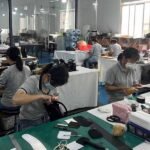
Szoneier operates as a factory-based custom bags and soft-goods manufacturer with more than 18 years of experience. Its documented system combines product development, material sourcing, sampling, sewing production coordination, quality inspection, packaging, and export delivery rather than acting only as an order-transfer intermediary.
Scale into a Collection
A successful first product can become a wider collection after the customer benefit, material system, and construction standard have been validated. Expansion may include new colors, additional sizes, companion products, seasonal prints, upgraded materials, simplified entry versions, gift sets, retail-exclusive variations, or coordinated packaging.
The first extension should remain close to what has already been learned. A successful bottle carrier may lead to a lunch tote, can cooler, or gym bag. A laptop sleeve may extend into a cable pouch, tablet case, or work tote. A pet harness can support matching collars, leashes, walking pouches, and travel accessories.
Not every specification should remain identical. Thickness, lining, closure, reinforcement, and dimensions should be adjusted for each product. What should remain consistent is the recognizable brand language: colors, print style, logo treatment, hardware finish, webbing, labels, and packaging experience.
SKU complexity should be calculated before launch. Three products offered in four colors create twelve SKUs. A harness in five sizes and four colors creates twenty SKUs before matching products are added. Each additional SKU affects material purchasing, packaging, inventory, forecasting, inspection, and replenishment.
A controlled first collection may begin with one hero product, one companion product, two core colors, one seasonal print, and a limited size range. Sales, review, and return data can then guide the next development step. Customer feedback may show that the priority is not another color, but a longer strap, wider opening, larger size, easier cleaning method, or stronger reinforcement.
From Trend to Production
The most important neoprene trend is not a single bag shape, print, or color. It is the movement toward products that combine technical usefulness with recognizable everyday design. Consumers expect portable products to look intentional, organize real objects, feel comfortable, and survive repeated use. Brands that meet those expectations can use neoprene to build coherent product families rather than isolated promotional items.
Before requesting a quotation, prepare the product reference, dimensions, intended use, target user, preferred thickness, logo artwork, color plan, quantity by SKU, packaging requirements, destination country, compliance expectations, and target delivery date. Clear project information allows material, structure, cost, MOQ, sampling, and production risks to be evaluated more accurately.
Szoneier supports custom neoprene bags, lunch products, bottle holders, koozies, laptop sleeves, protective covers, sports supports, pet accessories, and other sewn neoprene products. Buyers can submit reference images, samples, sketches, tech packs, dimensions, branding files, quantities, packaging requirements, and destination details for a practical project review.
Contact Szoneier with your neoprene product concept to discuss material selection, structural development, sampling, printing, reinforcement, quality control, packaging, and international delivery. A well-prepared inquiry helps the development team identify risks earlier and turn the idea into a more production-ready custom collection.