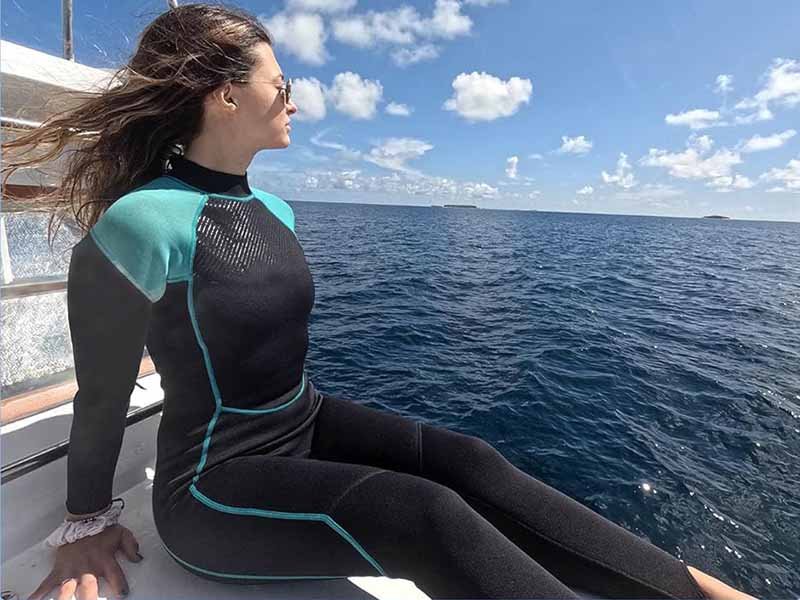
A wetsuit may look simple from the outside, but the difference between a stiff, average product and a high-performance one is often hidden inside the panel structure. For surfers, divers, swimmers, and water sports brands, the biggest problem is rarely just warmth. It is the balance between warmth, stretch, fit, durability, and long-term comfort. A wetsuit that feels too tight in the shoulders, too loose in the waist, or too bulky in the knees can quickly turn a premium-looking product into a source of returns, complaints, and poor reviews.
Neoprene wetsuits with flexible panels are made by combining neoprene foam of different grades and thicknesses, cutting it into body-mapped panels, and joining those panels with gluing, blind stitching, taping, or seam sealing methods. Flexible panels are usually placed in high-movement zones such as the shoulders, underarms, back, elbows, and knees, while warmer and more stable panels are used in the chest, back torso, and lower body. This gives the wearer better mobility without losing the insulation and structure needed for water performance.
For brands and importers, this is not only a product issue. It is a business issue. A better panel layout can lower return rates, improve user comfort, raise repeat orders, and help a private label line stand out in a crowded market. Oneier has more than 18 years of experience in neoprene material development and finished product manufacturing, serving overseas small and medium buyers as well as high-end brand clients with custom, private label, OEM, and ODM projects. When flexible panel design is done correctly, the result is not just a better wetsuit. It is a better product story, a stronger market position, and a product customers are more willing to trust. That is why the real question is not whether flexible panels matter, but how they are planned, cut, and assembled to create a wetsuit people actually want to wear.
What Is a Neoprene Wetsuit?
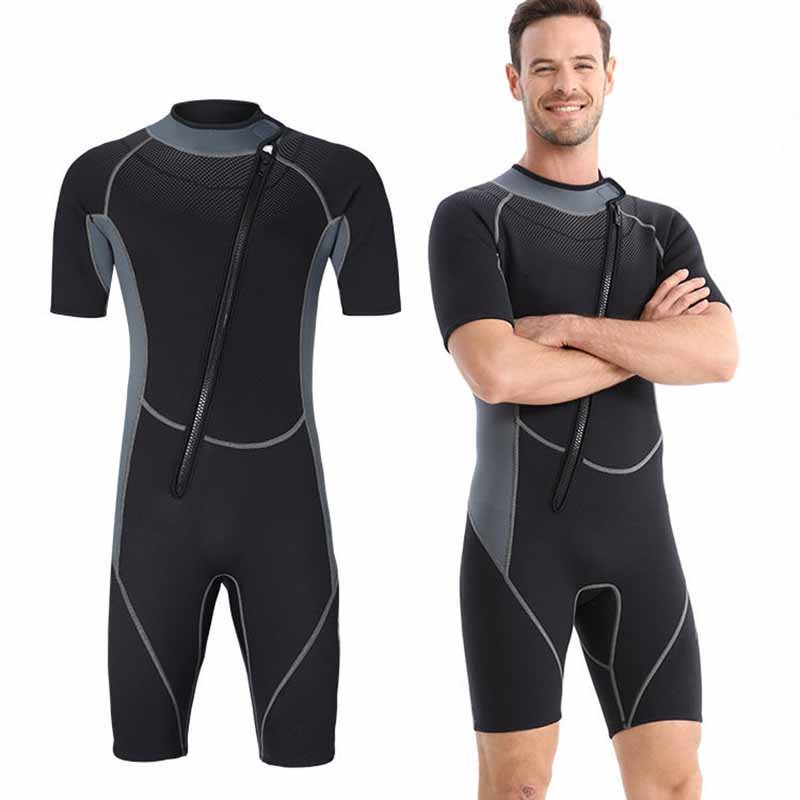
A neoprene wetsuit is a body-fitting garment made from foamed synthetic rubber designed to reduce heat loss in water, support movement, and protect the wearer during water activities. It works by using millions of tiny closed cells inside the material to slow down heat transfer, while its stretch and panel construction help the body move more naturally in cold or moderate water conditions.
What Is Neoprene in a Neoprene Wetsuit?
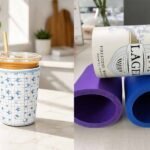
Neoprene is the core material used to build wetsuits. It is a synthetic rubber foam with a closed-cell structure. These tiny closed cells trap gas and create a barrier that slows down heat transfer. This is why neoprene is widely used in wetsuits, can coolers, gloves, braces, medical supports, and many protective soft goods.
From a manufacturing point of view, neoprene is not one single standard material. Different factories and suppliers offer different grades, densities, stretch levels, surface laminations, and thickness options. In the wetsuit market, the most common categories are SBR, SCR, and CR. Each one has different cost and performance characteristics, and the right choice depends on the target price, performance standard, and customer positioning.
| Neoprene Type | Full Name | Main Advantage | Main Limitation | Common Use |
|---|---|---|---|---|
| SBR | Styrene Butadiene Rubber | Lower cost | Lower stretch and lower aging resistance | Entry-level products |
| SCR | SBR + CR blend | Balanced cost and performance | Not as premium as CR | Mid-range wetsuits |
| CR | Chloroprene Rubber | Better elasticity, softness, and durability | Higher cost | Premium wetsuits |
For serious wetsuit development, material selection cannot be based on price alone. A low-cost foam may look acceptable in the sample stage, but problems often appear later: compression after repeated use, reduced recovery, seam stress, or customer complaints about stiffness. This is especially true in shoulder and arm zones where repeated stretching creates heavy stress on the material.
Oneier typically helps clients compare material options based on four practical questions: what water temperature the suit is for, what sport it is intended for, what retail price the brand is targeting, and how much flexibility the user expects. This approach is more useful than simply choosing the “best” material on paper, because the right neoprene should fit the market, not just the technical sheet.
How Does a Neoprene Wetsuit Keep You Warm?
A wetsuit does not keep the user warm by staying completely dry. It keeps the user warm by reducing heat loss. When a wetsuit fits properly, a thin layer of water enters between the suit and the skin. The body warms that thin layer, and the neoprene slows the loss of that heat. The closed-cell foam inside the neoprene acts as an insulating barrier.
The thickness of the neoprene has a direct effect on warmth. Thicker neoprene usually means better insulation, but it also means more weight and less stretch. Thinner neoprene improves movement and comfort but provides less thermal protection. This is why modern wetsuits often use different thicknesses in different body areas instead of one uniform thickness throughout the whole suit.
| Thickness | Typical Water Range | Main Benefit | Main Risk if Overused |
|---|---|---|---|
| 2mm | Warm water | Lightweight, high flexibility | Limited warmth |
| 3mm | Warm to mild conditions | Good balance | May be insufficient for colder use |
| 4mm | Cool water | Better insulation | Slightly stiffer movement |
| 5mm | Cold water | Strong warmth retention | More fatigue in active sports |
| 6mm+ | Very cold water | Maximum insulation | Heavy, less flexible |
In practical wetsuit design, the chest and back often use thicker panels because these areas protect the body core. The shoulders, underarms, and sleeves often use thinner, more flexible neoprene because those zones require repeated movement. For example, a surfing wetsuit may combine 3mm or 4mm in the torso with 2mm or 3mm in the arms. A diving suit may push thickness higher in the main body because thermal retention is more important than extreme shoulder mobility.
Customers often focus only on the thickness number when sourcing wetsuits, but thickness alone does not define warmth. Lamination quality, seam sealing, fit accuracy, water entry control, and panel layout also matter. A poorly built 5mm wetsuit can perform worse than a well-built 4/3mm wetsuit if the seams leak, the fit is loose, or the material quality is unstable. That is why manufacturing details matter just as much as raw material thickness.
Why Fit Matters in a Neoprene Wetsuit
Fit is one of the most important factors in wetsuit performance, and it is also one of the most common reasons for returns. If a wetsuit is too loose, water will flush through the suit too easily, which reduces warmth and creates discomfort. If it is too tight, the user may feel pressure in the neck, chest, shoulders, or knees, and movement becomes tiring. A good wetsuit fit should feel close to the body without creating restriction.
For factories and brands, fit is not only a size issue. It is a pattern issue, a panel issue, and a material issue. Two suits labeled with the same size can perform very differently depending on how the pattern is developed and how the panels are arranged around the body. This is where experienced manufacturing teams create a real difference.
Common fit problems in low-quality wetsuits include:
- Loose lower back causing water flushing
- Tight shoulder panels restricting paddling
- Poor armhole shape causing seam stress
- Knee panels positioned too high or too low
- Ankle openings too wide for water entry control
- Neck opening too loose or too tight
A well-developed neoprene wetsuit usually includes multiple body-mapped panels rather than large simple pieces. More thoughtful panel segmentation allows the suit to follow body movement more naturally. The chest, back, side waist, underarm, elbow bend, knee bend, and lower leg all behave differently in motion, so they should not be treated as one flat shape.
At Oneier, clients looking for custom wetsuit production often care about repeat orders and fewer quality claims. Better fit supports both goals. When the pattern is more accurate, customers are more likely to keep the product, recommend it, and come back for the same model again. For private label buyers, this matters because fit consistency affects not only direct sales, but also size reviews, customer trust, and long-term brand credibility.
A simple comparison helps explain why fit matters so much:
| Fit Factor | Poor Fit Result | Good Fit Result |
|---|---|---|
| Neck opening | Leaks or discomfort | Better seal and comfort |
| Shoulder shape | Restricted paddling | Easier arm movement |
| Torso contour | Water flushing | Better warmth retention |
| Knee bend area | Pulling and fatigue | Natural bending |
| Overall pressure | Fast fatigue | Better performance time |
When buyers compare suppliers, they often ask about MOQ, lead time, and sample cost first. Those are important. But in the wetsuit category, fit development may matter even more, because a low-cost product with poor fit can become expensive very quickly once returns, complaints, and rework are included.
What Are Flexible Panels in Neoprene Wetsuits?
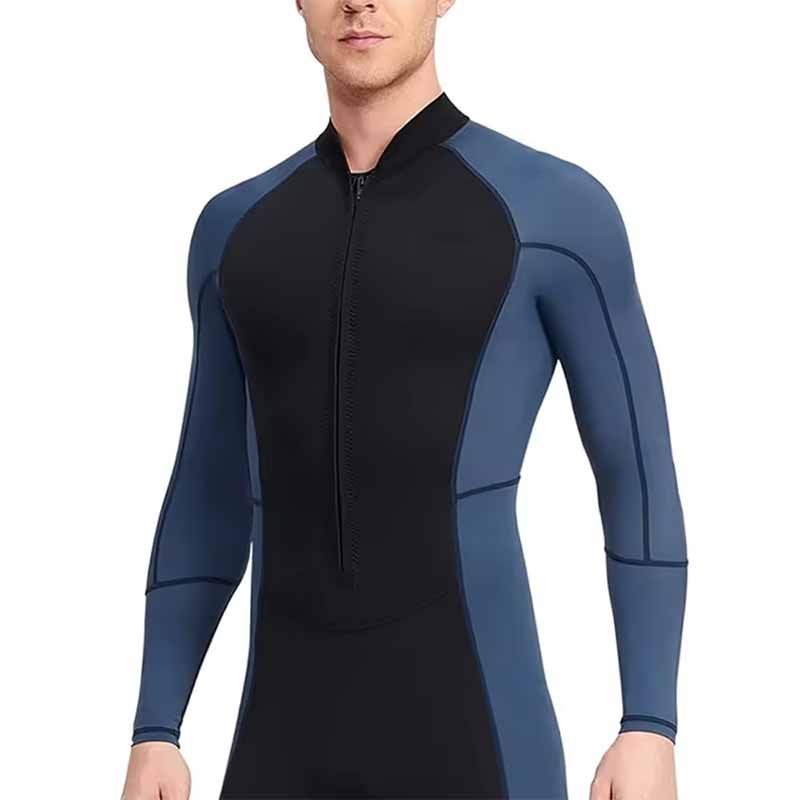
Flexible panels in neoprene wetsuits are specially planned sections made from softer, stretchier, or thinner neoprene materials and placed in areas where the body bends, rotates, or extends most often. Their purpose is to improve range of motion, reduce fatigue, and make the wetsuit feel more natural during active use, while the rest of the suit continues to provide structure and thermal protection.
What Are Flexible Panels in a Neoprene Wetsuit?
Flexible panels are not just random pieces of thinner neoprene. They are deliberate design zones created to solve a specific performance problem. In water sports, different body parts move in different ways. The shoulder rotates, the back twists, the elbow folds, the knee bends, and the chest expands with breathing. If one rigid material is used everywhere, the suit may hold warmth but feel tiring, bulky, or restrictive.
This is why advanced wetsuit construction uses panel mapping. Panel mapping means dividing the suit into functional zones and assigning different materials, shapes, and seam structures to each zone. A flexible panel may use one or more of the following:
- Thinner neoprene thickness
- Higher-stretch neoprene grade
- Softer surface lamination
- Reduced seam load in movement zones
- Improved pattern shaping for mobility
These panels are especially important in sports where shoulder and upper body mobility directly affect performance. In surfing, repeated paddling places constant stress on the shoulder area. In triathlon swimming, arm rotation and hydrodynamic efficiency matter even more. In diving, flexibility is still important, but warmth and pressure resistance may take priority depending on conditions.
From a product development view, flexible panels also allow a factory to fine-tune the feel of the suit. Some customers want a more locked-in, compressive feel. Others want a softer and freer movement experience. That means flexible panel design is not only about physical construction. It is also about product positioning. A performance surfing wetsuit, an entry-level rental wetsuit, and a premium private label suit may all use flexible panels, but they will use them in different ways.
At Oneier, this kind of customization is important because overseas buyers often serve very different customer groups. Some focus on value-driven retail. Some target premium niche markets. Some want to launch a private label range with better flexibility than what they currently source. Flexible panel design gives more room to shape that product identity.
How Do Flexible Panels Improve Movement?
The main purpose of flexible panels is to reduce movement resistance. Every time the user paddles, swims, bends, reaches, crouches, or turns, the wetsuit stretches with the body. If the material recovery is poor or the panel placement is wrong, that movement creates resistance. Over time, resistance increases fatigue and reduces comfort.
In upper body sports like surfing and swimming, shoulder resistance is one of the most noticeable pain points. Even a small increase in stiffness can make a suit feel tiring after repeated motion. This is why experienced factories focus so much on shoulder panel design, sleeve angle, underarm shaping, and seam positioning.
Flexible panels improve movement in several practical ways:
- They reduce tension in repeated stretch zones
- They help the suit follow body motion more naturally
- They lower the feeling of pulling across joints
- They support longer wear time with less fatigue
- They improve comfort without fully sacrificing structure
For brands, this has commercial value. When end users describe a wetsuit as “easy to paddle in,” “less tiring,” or “comfortable for longer sessions,” those are not just marketing words. They usually reflect better material selection and better panel engineering.
Below is a practical comparison of standard construction and flexible panel construction:
| Construction Approach | Movement Feel | User Fatigue | Warmth Balance | Product Positioning |
|---|---|---|---|---|
| Uniform material design | More rigid | Higher over time | Stable | Entry-level/basic |
| Zoned flexible panel design | More natural | Lower over time | Better balanced | Mid to premium |
There is also a manufacturing advantage. Flexible panels can reduce seam stress in high-motion zones if the pattern is developed well. This may help lower seam failure risk in use. However, the design must be controlled carefully. Too much softness in the wrong area can reduce support, cause panel distortion, or shorten product life. Good flexibility is controlled flexibility, not softness everywhere.
Where Are Flexible Panels Used in Neoprene Wetsuits?
Flexible panels are usually placed in the zones where the body needs the most freedom of movement. These areas are not identical across every wetsuit type, because the intended activity changes the movement pattern. A surfing wetsuit will focus heavily on shoulder and upper torso mobility. A diving wetsuit may still use flexible panels, but often with more attention to warmth and pressure resistance. A triathlon wetsuit may push flexibility even further for stroke efficiency.
The most common flexible panel zones include:
- Shoulders
- Underarms
- Upper back
- Side waist
- Elbows
- Knees
- Crotch or hip articulation areas
Each of these zones serves a different purpose. Shoulder panels support arm rotation. Underarm panels reduce pulling during extension. Back panels help twisting and reach. Knee panels support bending without bunching. Side waist panels make the torso feel less stiff during movement and breathing.
| Body Area | Why Flexibility Matters | Common Design Choice |
|---|---|---|
| Shoulders | Paddling and arm rotation | Thin, high-stretch neoprene |
| Underarms | Reach and extension | Softer, elastic panels |
| Upper back | Twist and posture movement | Stretch-focused panel shaping |
| Elbows | Repeated bending | Smaller articulated panels |
| Knees | Bending and squatting | Reinforced flexible panels |
| Side waist | Torso movement and comfort | Contoured stretch zones |
This is where manufacturing experience becomes very visible. A low-end factory may copy the visible look of a flexible panel layout, but the actual performance still depends on the material grade, cutting precision, seam method, and pattern accuracy behind it. Two suits may appear similar in photos and tech packs, but feel completely different once worn in water.
For importers and brand owners, this is why sample evaluation should go beyond appearance. It helps to check shoulder recovery, seam smoothness, panel alignment, bend comfort, and whether the suit pulls unevenly during movement. Many sourcing problems come from focusing only on unit cost and appearance while overlooking real wear performance.
Oneier works with clients that need custom neoprene products with flexible construction, low MOQ options, quick sampling, and OEM or private label development. In wetsuit production, flexible panel placement is one of the most important parts of that development process, because it directly affects how the end customer experiences the product. When those panels are correctly planned and correctly made, the wetsuit feels lighter, moves better, performs longer, and creates stronger product value in the market.
How Are Neoprene Wetsuits Manufactured?
Neoprene wetsuits are manufactured through a multi-step process that includes material preparation, panel design, precision cutting, bonding, stitching, and final quality inspection. Each step directly affects the wetsuit’s flexibility, durability, fit, and performance, especially when flexible panels are involved.
How Is Neoprene Prepared for Wetsuits?
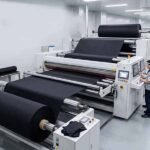
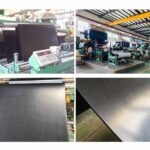
The manufacturing process begins with raw neoprene foam sheets. These sheets are produced through a chemical foaming process that creates a closed-cell rubber structure. However, the raw foam alone is not ready for wetsuit production. It must go through lamination, where fabric layers are bonded to one or both sides of the neoprene.
Lamination serves several important purposes:
- Improves surface strength and abrasion resistance
- Enhances flexibility depending on fabric type
- Allows printing, embossing, or branding
- Stabilizes the foam structure for cutting and sewing
Common lamination materials include:
| Lamination Type | Key Feature | Application |
|---|---|---|
| Nylon (standard) | Durable and cost-effective | Entry to mid-range wetsuits |
| Super-stretch fabric | High elasticity | Flexible panel zones |
| Polyester | Better UV resistance | Outdoor performance suits |
| Smooth skin (no fabric) | Water-resistant surface | Chest and wind-block areas |
The lamination quality is critical. Poor lamination can lead to delamination, where the fabric separates from the foam after repeated use or washing. This is one of the most common complaints in low-quality wetsuits.
At Oneier, lamination selection is usually based on the intended use scenario. For example, flexible panel areas may use high-stretch laminated neoprene, while chest panels may use smoother or denser materials to improve wind resistance and warmth.
Another key factor is material consistency. Even within the same batch, thickness tolerance and stretch recovery must be controlled. Reliable factories typically maintain thickness tolerance within ±0.2mm to ensure consistent production quality.
How Are Flexible Panels Cut in Neoprene Wetsuits?
Once the laminated neoprene sheets are ready, the next step is panel cutting. This stage determines how accurately the wetsuit will match the body shape and how well the flexible panels will perform.
Modern factories use CAD (computer-aided design) systems to create panel patterns. These patterns are based on ergonomic body data and are adjusted depending on size range, gender fit, and product positioning.
There are two main cutting methods:
| Cutting Method | Advantage | Limitation |
|---|---|---|
| Manual cutting | Lower cost | Lower precision, higher variation |
| CNC / die cutting | High accuracy, repeatability | Higher setup cost |
For flexible panel wetsuits, precision cutting is especially important because:
- Panel edges must align perfectly for smooth seams
- Incorrect cutting can reduce stretch performance
- Poor alignment increases seam stress and reduces durability
Flexible panels are usually cut from thinner or higher-stretch neoprene sheets, and their shapes are more complex than standard panels. For example, shoulder panels often have curved geometries to follow natural arm rotation.
Factories with strong development capabilities will also adjust panel shapes based on movement testing, not just static measurements. This means the suit is tested in motion, and patterns are refined to reduce pulling and improve comfort.
For B2B buyers, this stage is where product differentiation begins. Two factories may use similar materials, but differences in pattern design and cutting accuracy can lead to very different final products.
How Are Neoprene Wetsuit Panels Joined Together?
After cutting, the panels are assembled into a complete wetsuit. This is one of the most critical steps in manufacturing because it affects both water resistance and durability.
There are several bonding and stitching methods used in wetsuit production:
| Method | Description | Performance Level |
|---|---|---|
| Flatlock stitching | Panels stitched edge-to-edge | Good flexibility, not waterproof |
| Glued & blind stitched (GBS) | Panels glued and stitched halfway through | Better waterproofing and durability |
| Taped seams | Internal seam tape added | High durability and reduced leakage |
| Liquid sealing | Liquid rubber applied on seams | Maximum waterproofing |
For flexible panel wetsuits, the most common method is GBS with internal taping, because it provides a strong balance between flexibility and water resistance.
Key manufacturing details that affect quality:
- Glue type and application consistency
- Stitch depth and spacing
- Seam alignment accuracy
- Taping adhesion strength
Poor seam construction can lead to:
- Water leakage
- Seam splitting
- Reduced stretch in flexible zones
- Short product lifespan
Oneier uses controlled bonding processes and quality inspection checkpoints during assembly. For example, seam strength is often tested through stretch and recovery cycles, ensuring that flexible panels do not fail under repeated use.
Another important factor is seam placement. Even with good materials, placing seams in high-stress areas can reduce comfort and durability. Experienced factories avoid placing seams directly across major stretch zones when possible.
How Is a Neoprene Wetsuit Tested?
Before shipment, wetsuits go through multiple quality control checks. These checks are not only about appearance but also about performance and durability.
Typical testing items include:
- Thickness measurement
- Stretch and recovery testing
- Seam strength testing
- Water leakage inspection
- Visual inspection for defects
- Size and fit verification
Below is a typical quality control checklist:
| Inspection Item | Standard Requirement |
|---|---|
| Thickness tolerance | Within ±0.2mm |
| Seam strength | No break after repeated stretch |
| Surface quality | No bubbles, cracks, or delamination |
| Logo quality | Clear, no peeling |
| Size accuracy | Within agreed tolerance range |
Some higher-end projects may also include:
- Saltwater resistance testing
- UV exposure testing
- Repeated wear simulation
For brands, this stage is essential because it directly affects customer satisfaction and return rates. A well-tested wetsuit is more likely to maintain performance over time, which is especially important for premium positioning.
Oneier provides 100% quality inspection before shipment and supports sample approval processes to ensure the final product meets the client’s expectations. This is particularly important for custom projects, where each detail—from panel layout to logo placement—must match the original design intent.
Which Materials Are Used in Neoprene Wetsuits?
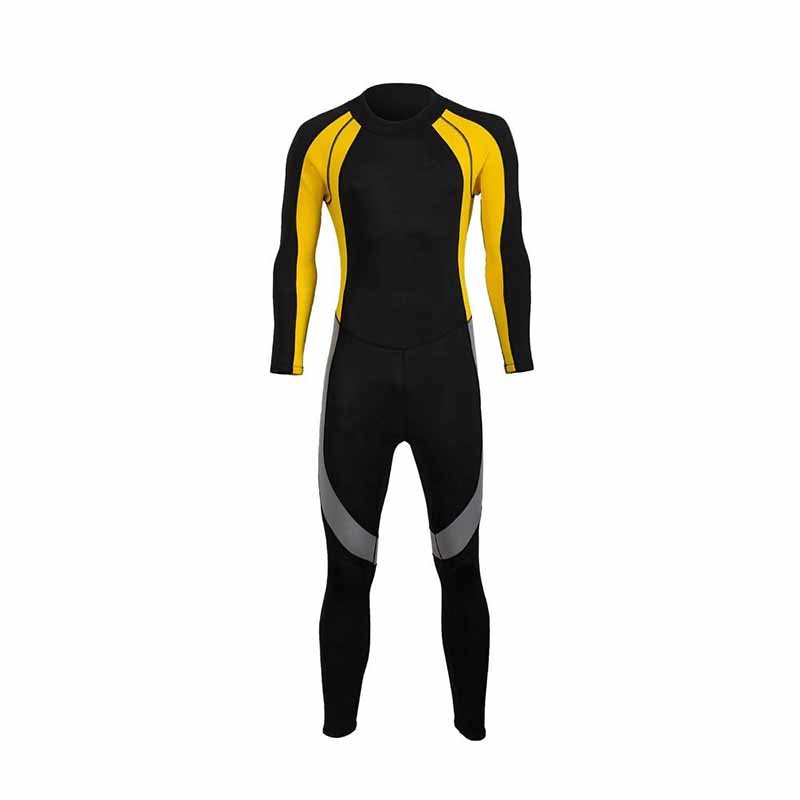
Neoprene wetsuits are made from a combination of foam materials, surface laminations, and reinforcement components. The choice of materials directly affects flexibility, durability, thermal performance, and overall product positioning.
Which Neoprene Types Are Used in Wetsuits?
As mentioned earlier, neoprene is available in different grades, and each grade serves a different market segment.
From a sourcing perspective, buyers should focus on three key performance indicators:
- Elasticity (stretch and recovery)
- Compression resistance (long-term durability)
- Environmental resistance (aging, UV, saltwater)
Here is a more detailed comparison:
| Property | SBR | SCR | CR |
|---|---|---|---|
| Stretch | Low | Medium | High |
| Durability | Medium | Good | Excellent |
| Cost | Low | Medium | High |
| Compression resistance | Lower | Moderate | Strong |
| Application | Budget products | Mid-range | Premium wetsuits |
For flexible panel wetsuits, CR or high-quality SCR is usually recommended because these materials maintain elasticity even after repeated stretching.
Another factor to consider is eco-friendly neoprene alternatives. Some brands now request limestone-based neoprene or recycled materials. While these options can improve sustainability positioning, they may come with higher costs and require careful testing to ensure performance consistency.
How Do Flexible Panels Use Different Thickness?
Flexible panel design is closely linked to thickness variation. Instead of using one uniform thickness, modern wetsuits use multi-thickness construction.
This approach allows different parts of the body to perform different functions:
| Body Zone | Thickness | Purpose |
|---|---|---|
| Chest | 4–5mm | Warmth and wind resistance |
| Back | 4–5mm | Core insulation |
| Shoulders | 2–3mm | Flexibility and movement |
| Arms | 2–3mm | Reduced fatigue |
| Legs | 3–4mm | Balance between warmth and mobility |
This design significantly improves overall performance. However, it also increases manufacturing complexity because:
- More material types must be managed
- Cutting accuracy becomes more critical
- Panel matching must be precise
For buyers, this means that not all factories can handle complex multi-thickness designs consistently. Choosing a manufacturer with experience in flexible panel wetsuits reduces risk and improves product stability.
How Do Linings Improve Neoprene Wetsuit Flexibility?
The outer and inner linings of neoprene play a major role in flexibility and comfort. Many buyers focus only on neoprene foam, but lining selection is equally important.
Different linings provide different benefits:
| Lining Type | Benefit | Common Use |
|---|---|---|
| Standard nylon | Durable and stable | Basic wetsuits |
| Super-stretch fabric | High elasticity | Flexible panels |
| Thermal lining | Heat retention | Cold water suits |
| Smooth skin | Water resistance | Chest panels |
For flexible panels, super-stretch linings are often used to maximize movement. These fabrics allow the neoprene to stretch more freely without restricting motion.
Another important detail is lamination bonding strength. If the lining is not properly bonded to the neoprene, it may separate during use, especially in high-stretch areas. This is why high-quality lamination processes are essential for flexible panel construction.
From a customer perspective, lining quality affects:
- Comfort against the skin
- Ease of putting on and taking off the suit
- Long-term durability
- Overall product feel
At Oneier, material selection is tailored based on client requirements, including flexibility level, target market, and price positioning. With over 18 years of experience, the company supports custom wetsuit development with free design, low MOQ, fast sampling, and stable production timelines, helping brands bring competitive products to market faster.
How to Choose a Neoprene Wetsuit Manufacturer?
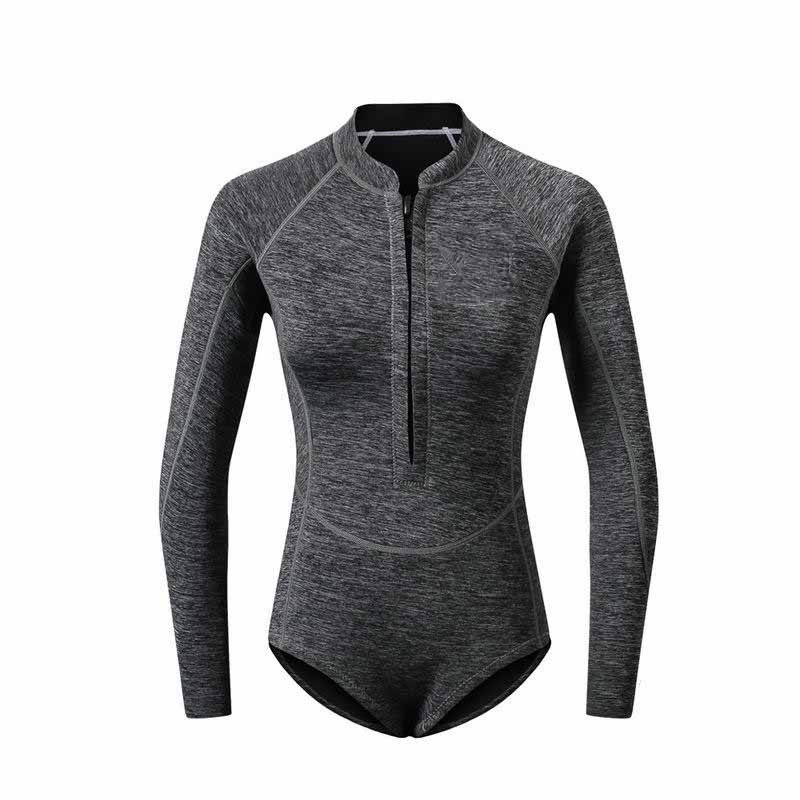
Choosing a neoprene wetsuit manufacturer is not only about price or MOQ. It is about finding a factory that can consistently deliver the right balance of flexibility, durability, fit, and production reliability. A strong manufacturer should have proven experience in neoprene material development, flexible panel construction, quality control, and international order handling.
What Makes a Good Neoprene Wetsuit Factory?
A reliable wetsuit factory must combine material expertise, production capability, and quality control systems. Many suppliers can produce simple neoprene products, but fewer can handle complex wetsuit structures with flexible panels and multi-thickness construction.
When evaluating a factory, buyers should look at the following areas:
- Years of experience in neoprene product manufacturing
- Ability to work with different neoprene grades (SBR, SCR, CR)
- Experience with flexible panel wetsuit construction
- In-house sampling and pattern development capability
- Quality inspection standards and testing methods
- Export experience and communication efficiency
Below is a practical comparison framework:
| Evaluation Factor | Low-Level Supplier | Professional Manufacturer |
|---|---|---|
| Experience | Limited to simple items | 10+ years in neoprene products |
| Panel design | Basic patterns | Ergonomic multi-panel design |
| Material selection | Fixed options | Flexible material sourcing |
| Sampling | Slow or outsourced | Fast in-house development |
| Quality control | Basic visual checks | Multi-stage inspection system |
| Communication | Delayed responses | Clear and structured process |
Oneier has over 18 years of experience in neoprene material R&D and finished product manufacturing. The company supports a wide range of neoprene applications including wetsuits, bags, koozies, sports supports, and medical braces. This cross-category experience helps improve material selection and construction techniques for wetsuit projects.
How Do Flexible Panel Designs Affect Quality?
Flexible panel design is one of the biggest factors that separate high-quality wetsuits from average products. It directly affects user comfort, performance, and durability.
A well-designed flexible panel system should:
- Match natural body movement
- Reduce seam stress in high-stretch areas
- Maintain insulation in core zones
- Provide consistent stretch recovery over time
However, poor panel design can lead to several issues:
- Uneven stretching and discomfort
- Premature seam failure
- Reduced thermal performance
- Product deformation after repeated use
Factories without enough experience may copy panel layouts visually but fail to replicate the actual performance. This is because real performance depends on:
- Correct material pairing (foam + lining)
- Accurate panel shaping
- Proper seam construction
- Balanced thickness distribution
For buyers, it is important to test not only the look of the sample but also its behavior in use. Simple checks include:
- Shoulder rotation test
- Knee bending test
- Stretch recovery after repeated pulling
- Seam smoothness and flexibility
Flexible panel design is not about adding more panels. It is about placing the right panels in the right locations with the right materials.
Why Choose Custom Neoprene Wetsuit Production?
Custom production gives brands more control over product positioning, quality, and market differentiation. Instead of relying on standard catalog products, custom wetsuits allow you to build a product that fits your target customer and brand identity.
Key advantages of custom production include:
- Unique panel design and fit
- Customized thickness combinations
- Branding options (logo, color, pattern)
- Material selection based on market positioning
- Better control over product quality
Below is a comparison between standard products and custom production:
| Feature | Standard Product | Custom Wetsuit |
|---|---|---|
| Design | Fixed | Fully customizable |
| Fit | Generic sizing | Optimized fit |
| Branding | Limited | Full private label |
| Flexibility | Standard | Adjustable by panel |
| Market positioning | Common | Differentiated |
For growing brands, custom wetsuits help create a stronger identity. For established brands, they allow continuous product upgrades and performance improvements.
Oneier provides free design support, helping clients turn ideas, sketches, or reference samples into manufacturable products. This reduces development risk and shortens the time from concept to production.
How Do MOQ and Sampling Impact Your Order?
MOQ (minimum order quantity) and sampling speed are key factors in sourcing decisions, especially for small and medium buyers.
A flexible MOQ allows buyers to:
- Test new designs with lower risk
- Launch products faster
- Adjust product lines based on market feedback
Sampling speed is equally important. A slow sampling process can delay product launches and reduce competitiveness.
Typical industry benchmarks:
| Process Stage | Average Market Time | Efficient Factory Time |
|---|---|---|
| Sample development | 10–20 days | 5–10 days |
| Sample revision | 7–15 days | 3–7 days |
| Bulk production | 30–60 days | 20–40 days |
Oneier supports:
- Low MOQ customization
- Fast sampling (quick turnaround for prototypes)
- Free samples in many cases
- Short production lead times
This makes it easier for buyers to test designs, confirm quality, and move into production without long delays.
Are Flexible Panel Wetsuits Better Than Traditional Designs?
Flexible panel wetsuits offer better movement, comfort, and performance compared to traditional single-material designs, especially in sports that require repeated upper body motion. However, the benefits depend on proper design and manufacturing quality.
Do Flexible Panels Improve Comfort and Performance?
Yes, when designed correctly, flexible panels significantly improve:
- Range of motion
- User comfort during long sessions
- Energy efficiency in movement
- Overall wearing experience
For example, in surfing or swimming, reduced shoulder resistance allows longer activity time with less fatigue. This directly improves user satisfaction.
However, flexibility must be balanced with structure. Too much softness can reduce support and durability.
Are There Trade-Offs Between Flexibility and Durability?
There are always trade-offs in product design. Increasing flexibility often means:
- Using thinner materials
- Using softer foam
- Reducing structural rigidity
This can lead to:
- Faster wear in high-stress areas
- Lower abrasion resistance
- Higher production complexity
The key is balance. A well-designed wetsuit combines:
- Flexible panels in movement zones
- Reinforced panels in high-wear areas
- Stable materials in core zones
Experienced manufacturers like Oneier focus on this balance to ensure that flexibility does not come at the cost of product lifespan.
What Trends Are Shaping Neoprene Wetsuit Manufacturing?
The wetsuit industry continues to evolve with new materials, production technologies, and sustainability demands.
Are Eco-Friendly Materials Becoming More Popular?
Yes, more brands are requesting:
- Limestone-based neoprene
- Recycled lining fabrics
- Water-based adhesives
These materials reduce environmental impact while maintaining performance. However, they may increase cost and require stricter quality control.
How Is Technology Changing Wetsuit Production?
Modern manufacturing is increasingly using:
- 3D pattern design
- Digital material simulation
- Automated cutting systems
- Advanced seam sealing techniques
These technologies improve consistency, reduce waste, and allow more precise panel construction.
For buyers, this means more stable quality and better product repeatability across orders.
Start Your Custom Neoprene Wetsuit Project with Oneier
If you are planning to develop or upgrade a wetsuit product line, the most important step is choosing a manufacturing partner who understands both material performance and market requirements.
Whether you are launching a new brand, expanding an existing product line, or improving product performance, working with an experienced factory can reduce risk and improve your final results.
You can start by sharing:
- Your target market and price range
- Reference designs or competitor products
- Required thickness and performance level
- Logo and branding requirements
From there, Oneier can help you turn your concept into a production-ready wetsuit that meets your expectations and performs well in the market.
Contact Oneier today to request a quote, get samples, and start building your custom neoprene wetsuit with flexible panel design.