

Most custom neoprene projects do not fail because someone selected the wrong logo color or overlooked a minor packaging detail. They fail because important assumptions were never translated into measurable product requirements. A material described simply as “3 mm neoprene” may behave very differently depending on its foam composition, density, recovery, surface fabric, stretch direction, adhesive system, lamination method, and production batch. A sample may look attractive on a meeting table yet perform poorly when stretched, compressed, packed, exposed to heat, or fitted around the actual product it was designed to hold.
Buyers can reduce custom neoprene product development risk by defining the application first, selecting materials through physical testing, approving a functional prototype, locking a documented production specification, controlling bulk material batches, and inspecting manufacturing against the approved standard. The safest process connects design, material, construction, branding, compliance, packaging, and quality requirements before bulk cutting begins.
This approach may appear slower during the first few days of development, but it usually prevents weeks of revisions, disputed specifications, emergency rework, missed launches, and costly returns. One sleeve that does not fit can be replaced easily. Ten thousand sleeves that do not fit the customer’s product cannot. The difference between those outcomes is rarely luck. It is usually determined by the quality of the decisions made before the first bulk panel reaches the cutting table.
What Risks Should Be Defined First?
The first risks to define are functional failure, material mismatch, dimensional error, weak construction, branding defects, compliance gaps, cost changes, and delivery delays. Each concern should be linked to a measurable requirement, a practical verification method, an approval stage, and a clear acceptance limit before sampling begins. When expectations remain subjective, even an attractive sample can create serious commercial problems later.
Define the Real Use
A custom neoprene product should be defined by the job it must perform rather than only by its product name. A “neoprene sleeve” could be a lightweight promotional cover, a shock-absorbing electronics case, a thermal bottle holder, a sports support, or a protective industrial component. Although these products may use similar laminated foam materials, their requirements for flexibility, recovery, insulation, abrasion resistance, compression, fit, appearance, and service life can be completely different.
Begin by documenting the actual user, object, and environment. Clarify whether the product will be stretched repeatedly, compressed in retail packaging, exposed to sunlight, carried outdoors, washed, worn against the skin, or used around moisture, sweat, oils, cosmetics, or cleaning agents. A promotional can cooler used for a single event does not require the same recovery, seam strength, odor control, or long-term durability as a sports support worn several times each week.
The object being covered or protected should be measured directly whenever possible. Dimensions copied from an online listing may exclude raised buttons, handles, curved corners, protective cases, or normal manufacturing variation. For close-fitting sleeves and holders, a difference of only a few millimeters can create difficult insertion, excessive compression, or an opening that becomes loose after repeated use. Providing a physical reference object or verified three-dimensional dimensions substantially reduces interpretation risk.
The most useful project briefs describe performance in observable terms. “Premium quality” is difficult to inspect, while “the holder should remain fitted after repeated insertion and removal” gives the development team something meaningful to test. “Good protection” is subjective, while “the device corners must not contact the zipper slider during normal use” creates a clear structural requirement. The more measurable the request becomes, the easier it is to quote, sample, approve, manufacture, and inspect consistently.
Rank the Failure Modes
Not every potential defect deserves the same amount of time or investment. A slightly uneven internal stitch may be cosmetic, while an opening that is too small can make the entire product unusable. Before development begins, buyers should rank possible failure modes according to their severity, estimated likelihood, and how difficult they would be to detect before shipment.
A practical risk-priority method scores severity, occurrence, and detection difficulty from 1 to 5. Multiplying the three values produces a risk-priority score ranging from 1 to 125. This number does not replace experienced judgment, but it helps teams decide which areas require additional prototypes, stronger tests, tighter tolerances, or earlier inspection points.
| Potential Failure | Severity | Likelihood | Detection Difficulty | Practical Control |
|---|---|---|---|---|
| Product does not fit | 5 | 3 | 4 | Test with the actual object and lock finished dimensions |
| Lamination separates | 4 | 2 | 4 | Approve bulk material and perform flex or peel checks |
| Print cracks during stretching | 3 | 3 | 3 | Test the final logo process on the selected material |
| Seam opens under use | 5 | 2 | 3 | Pull testing, reinforcement review, and in-line checks |
| Color differs between batches | 3 | 3 | 2 | Approved color standard and dye-lot comparison |
| Packaging deforms the product | 3 | 2 | 4 | Packed-product compression and recovery trial |
High-scoring risks should be resolved before decorative refinements. In practice, development teams sometimes spend several rounds adjusting logo size, zipper pull color, or label placement while the product still has unstable fit or inadequate foam recovery. The correct priority is to validate essential function first, followed by construction, material stability, branding, and finally the smaller cosmetic details that do not determine whether the product can be used.
Risk ranking also makes internal communication easier. A purchasing manager may focus on cost, a designer may focus on appearance, and a quality engineer may focus on measurable defects. A shared risk table gives all three teams a common framework for deciding where additional cost or development time is justified.
Lock the Critical Requirements
A reliable specification should include finished dimensions, measurement points, acceptable tolerances, complete material construction, nominal thickness, surface fabric, stretch direction, color references, logo process, seam method, edge finishing, accessories, labeling, packaging, and inspection criteria. The specification should be detailed enough for a new production or inspection team to understand what was approved without relying on informal messages.
The word “neoprene” is not a complete material description. Two laminated sheets with the same quoted thickness can behave differently because of foam density, blend, surface jersey, adhesive, compression recovery, and stretch orientation. The specification should identify the complete laminated construction rather than only the foam name. Where practical, an approved physical swatch should be retained alongside the written material reference.
Critical requirements should also be separated from preferences. Safety, legal compliance, and essential function belong in the critical category. Fit, durability, construction, branding, and material consistency are normally major requirements. Small cosmetic differences may be classified as minor when they do not affect use, customer acceptance, or retail presentation.
This distinction becomes especially important during inspection. Without written defect definitions, a buyer and manufacturer may agree that a product should be “clean and well made” but disagree later over whether a slightly offset internal stitch is acceptable. Clear defect categories turn personal opinions into repeatable inspection decisions.
A strong specification package normally includes the following documents:
- Technical drawing with finished dimensions and measurement locations
- Bill of materials covering foam, fabrics, thread, binding, labels, and hardware
- Workmanship standard covering seams, reinforcement, edge finishing, and cleanliness
- Artwork files with logo size, location, color, and application method
- Packaging specification covering labels, unit packs, cartons, and shipping marks
- Test and inspection plan with defect categories and acceptance criteria
The goal is not to create unnecessary paperwork. The purpose is to remove assumptions while changes remain inexpensive. A ten-minute clarification before sampling can prevent several days of remaking patterns, reordering printed panels, or negotiating responsibility after bulk production has started.
Set Commercial Boundaries
Technical risk cannot be separated from cost, order volume, material minimums, and lead time. A custom color, special laminated fabric, molded component, printed zipper, or uncommon packaging format may require a supplier minimum that is higher than the finished-product order quantity. These commercial conditions should be identified before the buyer accepts a final quotation.
The project should define the estimated order quantity, number of colors, development budget, required testing, packaging format, delivery destination, and target launch date. A low unit price based on standard stock material cannot be compared directly with a quotation that includes custom lamination, special branding, retail-ready packaging, individual labels, and destination-market testing.
Buyers should also distinguish prototype cost from production cost. Sample making involves pattern development, manual cutting, small material purchases, repeated setup, artwork preparation, and individual courier delivery. These costs are distributed across thousands of units during bulk production but remain concentrated in one or two prototypes during development.
Time should be divided into realistic stages rather than treated as one total number. Requirement review, material sourcing, pattern development, sample sewing, revision, pre-production approval, bulk material preparation, manufacturing, inspection, packing, and transportation each create separate scheduling dependencies. Compressing one stage normally shifts risk into another.
Skipping a pre-production sample may save several days, but it can create a much larger delay if the bulk material, production machinery, or line workmanship produces a different result from the development sample. A realistic schedule is not the longest schedule a supplier can propose. It is the shortest schedule that still preserves the essential approval and control points.
Which Neoprene Material Fits the Product?
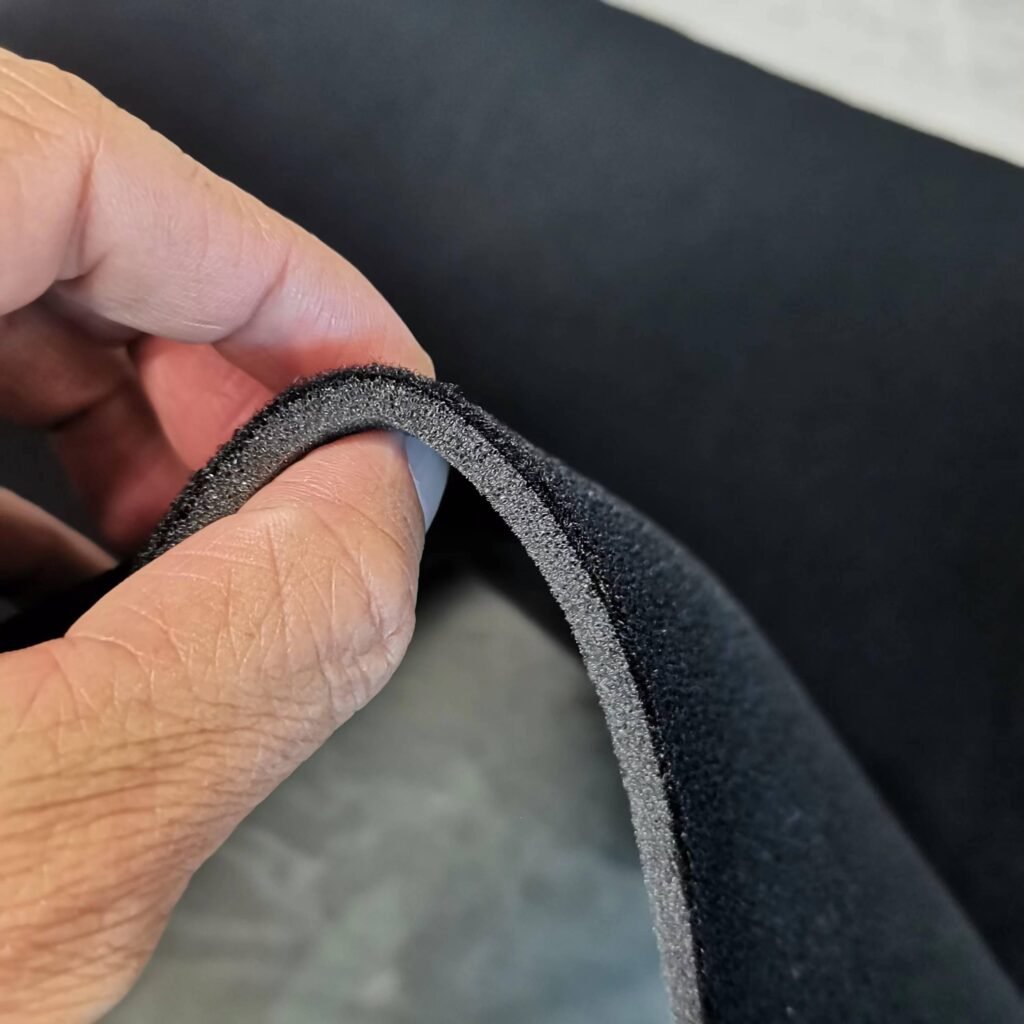
The correct material is the laminated neoprene construction that delivers the required fit, cushioning, flexibility, recovery, appearance, and durability at an acceptable total cost. Buyers should compare foam type, density, thickness, surface fabric, stretch direction, adhesive performance, and processing compatibility through physical samples. Selecting material only by price or a generic commercial label creates unnecessary risk.
Compare the Foam Options
Commercial sourcing discussions often use terms such as SBR, SCR, and CR, but these names should be treated as starting points rather than complete technical specifications. Formulations, blend proportions, density, hardness, cell structure, odor, and processing quality can vary among material manufacturers. A physical sample and application-based evaluation are more useful than relying only on a material abbreviation printed in a quotation.
SBR-based sponge is frequently considered for price-sensitive promotional products, simple sleeves, and soft-goods applications where advanced weather, oil, or long-term environmental resistance is not the main purchasing requirement. CR-based material is more often considered when a project requires stronger overall durability or more demanding resistance properties. Blended commercial materials may offer a practical balance between performance and cost.
The most expensive foam is not automatically the safest choice. A promotional can cooler used occasionally may not benefit from the same material specification as a sports support, protective electronics case, outdoor cover, or industrial accessory. Over-specifying the foam increases cost without necessarily improving the experience that the end customer can notice.
Material selection should consider expected service life, frequency of stretching, required compression recovery, contact with skin, exposure to water, sunlight, heat, oils, or chemicals, and the product’s intended retail position. A premium lifestyle brand may also place greater importance on surface feel, odor level, color consistency, and long-term shape retention than a short-term promotional program.
Physical samples should be compared side by side. Hand feel, rebound, edge appearance, odor, and deformation are difficult to evaluate through photographs. When possible, materials should be converted into small functional prototypes because foam behavior can change significantly after lamination, folding, binding, stitching, printing, and compression.
Choose the Right Thickness
Common commercial thicknesses for custom neoprene soft goods include 2 mm, 3 mm, 4 mm, and 5 mm. Thinner materials are generally lighter, more flexible, and easier to fold, while thicker materials provide greater cushioning, insulation, and structure. Greater thickness also creates bulkier seams, larger shipping volume, and more demanding edge-finishing requirements.
| Nominal Thickness | Common Applications | Practical Advantages | Main Development Risks |
|---|---|---|---|
| 2 mm | Can coolers, promotional sleeves, light pouches | Flexible, lightweight, and economical | Limited cushioning and weaker shape retention |
| 3 mm | Bottle holders, laptop sleeves, lunch bags | Balanced protection, flexibility, and cost | May remain too soft for heavier equipment |
| 4 mm | Protective sleeves, sports goods, structured covers | Improved cushioning and insulation | Thicker intersections and harder edge finishing |
| 5 mm | Specialty supports, protective pads, high-cushion cases | Greater padding and structural feel | Higher cost, weight, stiffness, and sewing complexity |
These figures are practical reference points rather than universal rules. Foam density, surface fabric, product geometry, and compression during use may be as important as nominal thickness. A dense 3 mm construction can sometimes feel more supportive than a softer 4 mm material, while a highly stretchable surface fabric may make the same foam feel less structured.
Buyers should confirm whether the quoted thickness refers to the foam core or to the complete laminated sheet. The surface textile and adhesive layer can increase the finished measurement. Measurement pressure also matters because cellular materials compress, which means two teams using different gauges or methods may record different results from the same sheet.
A useful thickness specification should define the target, permitted variation, measurement tool, measurement location, and whether the requirement applies to the foam or the full laminate. When functional performance is important, thickness should be combined with a recovery or compression check rather than treated as the only material-quality indicator.
The final thickness decision should always be verified in the finished product. A number on a material sheet cannot predict how several layers will behave at a seam, how easily a zipper will close, or whether a user can comfortably stretch the opening around the intended object.
Match the Surface Fabric
The textile laminated to the foam influences appearance, print quality, abrasion resistance, stretch, friction, hand feel, color consistency, and customer perception. Polyester jersey is commonly used because it supports many colors and branding methods. Nylon may provide a smoother feel and different abrasion performance. Stretch fabrics suit fitted products, while brushed or loop surfaces can be selected for comfort or fastening functions.
Surface choice should follow the actual product environment. A high-stretch jersey can improve the fit of a shaped holder, but it may also make logo placement and dimensional control more difficult. A dense surface fabric may improve print definition while reducing flexibility. A brushed material may feel comfortable against the skin but attract more lint or require additional cleaning controls during production.
Color approval should be performed on the final laminated material. The same Pantone target can appear different on polyester, nylon, textured fabric, or brushed surfaces. The tone of the underlying foam, adhesive, fabric structure, printing method, and lighting environment may also influence visual perception.
Stretch direction should be marked on the pattern and controlled during cutting. Panels cut in different directions can produce noticeably different fit and recovery even when their flat dimensions are identical. This is particularly important for fitted sleeves, braces, curved holders, and products that rely on controlled tension to remain in place.
Surface fabric also affects sewing and binding. A slippery textile may shift during assembly, while a highly elastic material may stretch under the presser foot. These characteristics should be considered during pattern development rather than corrected only through final inspection.
Test Material Compatibility
A finished neoprene product is a system containing foam, laminated textile, adhesive, thread, binding, zippers, hook-and-loop tape, labels, inks, transfer films, patches, and packaging. Every component may look acceptable separately while creating problems when combined under real production and use conditions.
Logo methods should be tested after stretching, bending, and compression. A heat transfer may appear perfect on a flat panel but crack when fitted around a bottle. Dense embroidery may compress the foam and create puckering around the stitched area. A thick rubber patch may distort a lightweight panel or make a frequently handled product uncomfortable.
Binding should be evaluated around the smallest curves and thickest intersections. A tape that looks clean on a straight test strip may wrinkle, twist, or become excessively stiff around a tight radius. Thread tension and stitch density should also be adjusted so that the seam remains secure without cutting into or over-compressing the foam.
Zippers should be operated with the intended object inside the product. Foam compression changes the tension around the opening, and a zipper that operates smoothly on an empty sample may become difficult to close when the sleeve is filled. The slider, teeth, seam allowance, and internal protective flap should be checked together.
Packaging compatibility is frequently overlooked. A tightly compressed product may remain deformed after several weeks in a carton. Dark components or printed packaging may mark light-colored fabrics. A packed-sample trial, followed by a recovery check after storage, can identify these issues before thousands of products are packed in the same way.
How Should Samples Be Tested?
Samples should be tested against actual use, approved specifications, and realistic manufacturing conditions. The process should confirm material, fit, construction, logo durability, packaging, and manufacturability in separate stages when necessary. A sample should not be approved only because it looks attractive in photographs. Critical dimensions, stretch, recovery, function, and repeated-use behavior must also be verified.
Start With Material Swatches
Material swatches provide the earliest and least expensive opportunity to reject an unsuitable direction. Each swatch should be evaluated for surface appearance, color, finished thickness, hand feel, stretch, recovery, odor, lamination quality, branding response, and compatibility with the target product.
Swatches should be compared in the environment where the product will be sold or used. Factory lighting may hide a color difference that becomes obvious in daylight or retail lighting. A fabric that feels soft when flat may become stiff after several layers are folded, compressed, and bound into a seam.
A practical review can score each material from 1 to 5 for appearance, color, stretch, recovery, thickness consistency, odor, lamination, branding response, durability, and price suitability. The total score is helpful, but one serious weakness may still disqualify a material that performs well in most other categories.
For example, a material may receive high marks for appearance, cost, print quality, and softness but perform poorly in recovery. If the product depends on a close fit, that single weakness matters more than the overall score. Material evaluation should therefore follow the intended function rather than a simple average.
The approved swatch should be retained and identified with the supplier reference, construction, color, thickness, and approval date. This physical standard gives purchasing and inspection teams something meaningful to compare against when bulk material arrives. Digital photographs alone cannot accurately preserve hand feel, stretch, surface texture, or odor.
Use Staged Prototypes
Simple products may require only one or two samples, while fitted, technical, or multi-component products benefit from staged approval. Separating material, structure, function, branding, and packaging decisions reduces the likelihood that several problems will be mixed together in one prototype.
| Sample Stage | Main Purpose | Key Approval Points | Risk Reduced |
|---|---|---|---|
| Material swatch | Confirm material direction | Color, feel, stretch, thickness, lamination | Building a sample with unsuitable material |
| Structural sample | Confirm pattern and construction | Size, shape, access, seams, and fit | Pattern and assembly errors |
| Functional sample | Confirm real-use performance | Insertion, protection, recovery, and handling | Attractive product that performs poorly |
| Branding sample | Confirm logo process | Position, color, adhesion, and stretch behavior | Cracking, distortion, or poor visibility |
| Pre-production sample | Confirm bulk-ready standard | Final BOM, workmanship, labels, and packaging | Sample-to-bulk inconsistency |
Each revision should receive a version number and written change list. Without revision control, a team may approve the dimensions from one sample, the color from another, and the logo from a third. Production then has no single complete standard to reproduce.
Sample comments should be specific. “Make it better” does not explain whether the problem is material, pattern, construction, workmanship, or personal preference. A clearer comment would state that the opening should increase by 4 mm, the binding should remain unchanged, and the logo should move 8 mm away from the seam.
The final approved sample should use materials and processes available for bulk production. Handmade adjustments, temporary zippers, substitute fabrics, manually mixed ink colors, or non-production adhesives should be disclosed. A visually perfect sample is not a reliable standard if the same construction cannot be repeated efficiently during manufacturing.
Test Real-World Fit
Close-fitting neoprene products should be tested with the actual object, device, container, or body area. Flat dimensions alone cannot predict performance because neoprene stretches, compresses, and recovers. The pattern may appear correct on paper but behave differently when the material is bent around curved surfaces or tensioned across an opening.
A bottle holder should be checked on the intended bottle diameter, height, shoulder shape, and base. A laptop sleeve should be evaluated for insertion force, corner clearance, zipper contact, internal movement, and the effect of any protective shell already fitted to the device. A sports support should be assessed for comfort, pressure distribution, movement, and recovery after repeated stretching.
Repeated-use evaluation does not always require expensive laboratory equipment during early development. Controlled manual cycles can identify obvious weaknesses. The development team may repeatedly insert and remove the object, open and close the zipper, stretch the opening, compress the product, and bend the branded area. The test method and number of cycles should be recorded so alternative sample versions can be compared fairly.
Products intended for washing, water exposure, sunlight, heat, or cold need additional evaluation. The test plan should reflect the claims made to customers. A casual promotional cooler sleeve and a performance sports product should not use the same validation program simply because both contain laminated neoprene.
Fit testing should also include expected product variation. Bottles, electronic devices, and manufactured components may have their own dimensional tolerances. A sleeve that fits only one perfect reference item may fail when used with normal production variation. Where practical, testing should use several objects or defined minimum and maximum dimensions.
Approve Everything in Writing
Final approval should cover product code, revision date, finished dimensions, tolerances, material construction, thickness, color, pattern, stitch method, reinforcement, edge finishing, logo artwork, labels, accessories, packaging, and inspection requirements. The approved physical sample should be identified clearly and stored with the supporting documents.
Photographs are valuable, but they cannot replace specifications. A photograph does not show foam density, recovery, seam strength, exact measurements, or the intended stretch direction. Written requirements prevent later disagreements over details that were never visible in images or video calls.
Any temporary component used during sampling should be recorded. If a sample uses an available black zipper while bulk production requires a custom-colored zipper, the difference must be documented and approved. The same principle applies to thread, labels, patches, packaging, internal reinforcement, and printing methods.
The approval package should also define whether substitutions are allowed. A manufacturer should not replace foam, laminated fabric, adhesive, hardware, thread, or packaging without written permission when the change could affect fit, appearance, durability, compliance, or customer experience.
Both parties should understand their responsibilities. The buyer normally confirms intended use, artwork, market, branding, and commercial requirements. The manufacturer confirms material availability, manufacturability, process capability, and production controls. When both sides document their decisions, problems can be escalated before they become shipment-level defects.
How Do You Keep Bulk Production Consistent?
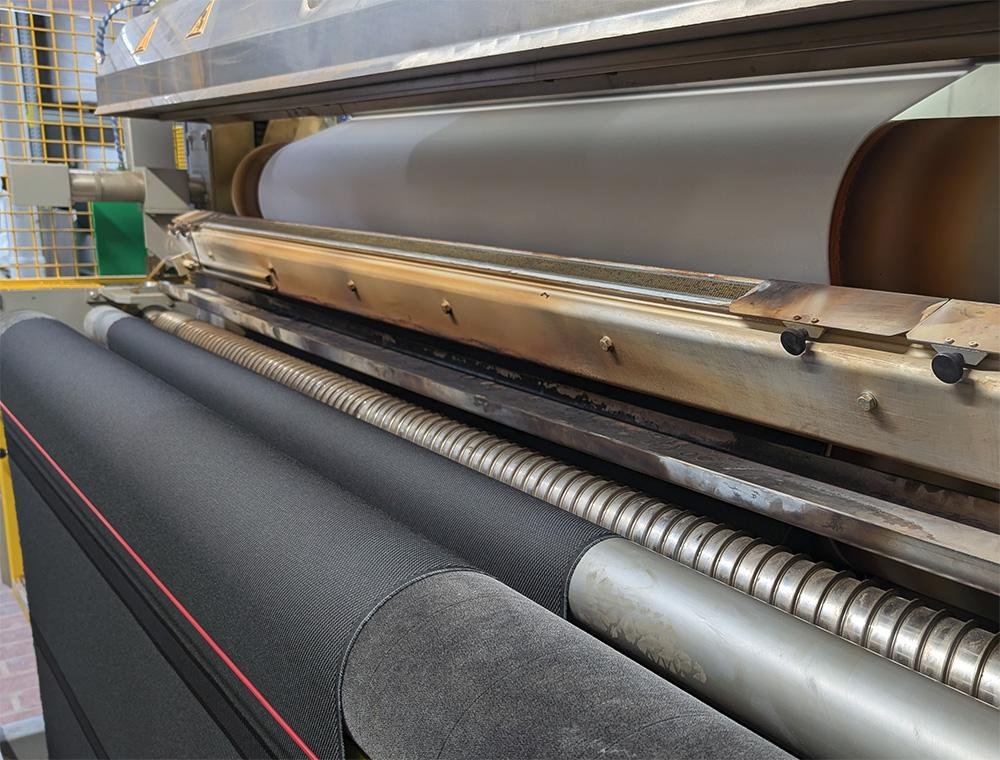
Bulk consistency depends on converting the approved sample into controlled specifications, verifying bulk materials, approving first production units, inspecting critical operations during manufacturing, and checking completed goods against agreed defect limits. Strong systems prevent variation while production is running instead of relying entirely on a final inspection after thousands of units have already been completed.
Lock the Production Standard
The approved physical sample is important, but it should not be the only production reference. Samples can become compressed, damaged, misplaced, or separated from the comments that explain them. Production teams need a complete technical package that translates the approved result into repeatable materials, dimensions, and processes.
The locked production standard should include the final bill of materials, pattern version, measurement table, tolerance limits, artwork files, color references, stitch requirements, reinforcement details, packaging files, and inspection checkpoints. Each document should carry the product code and revision number so outdated files cannot be confused with the current approval.
Critical-to-quality features should be highlighted. For a fitted sleeve, opening width, stretch direction, and internal clearance may be critical. For a cooler bag, insulation construction, zipper operation, and handle reinforcement may require greater attention. For a promotional holder, logo placement, print quality, and color consistency may carry greater commercial importance.
All changes after approval should follow a written process. If the selected laminated fabric becomes unavailable, the replacement should be reviewed for color, thickness, stretch, recovery, printing response, and sewing behavior. Calling two materials “similar” does not make them interchangeable.
Repeat orders should reference the same controlled documents. When the material supplier, process, packaging, or product construction changes, a new revision should be issued. This prevents the original specification from becoming outdated while production gradually moves in a different direction over several orders.
A reliable standard should be simple enough for production workers and inspectors to use. Extremely complex documentation that remains in an office does not control quality. The most effective specifications combine clear drawings, measurable limits, photographs, approved physical references, and concise checkpoints at the operations where variation is most likely to occur.
Control Incoming Materials
Bulk material should be compared with the approved swatch before cutting. Inspection should cover surface fabric, color, finished thickness, stretch direction, foam feel, recovery, odor, visible contamination, and lamination defects. Discovering a material problem after printing or cutting significantly increases the cost and difficulty of correction.
Color comparison should be performed under controlled or agreed lighting whenever possible. Material from different dye lots should not be mixed randomly within visible product sets. For branded series containing several related products, a color difference between a bottle holder, lunch bag, and laptop sleeve may be more noticeable than variation within one individual item.
Thickness should be measured using an agreed method because cellular foam compresses under pressure. Buyers requiring tighter control should define whether the limit applies to the foam core or the finished laminated sheet. Measurement records should identify the tool, location, and number of points checked.
Stretch direction should be confirmed before cutting. A batch of otherwise correct material can still create inconsistent fit if panels are placed in different orientations. Cutting markers, pattern labels, and operator instructions should clearly show the required direction for products where controlled stretch matters.
Material traceability does not need to be complicated. A receiving record can identify the supplier, batch, color lot, receiving date, inspected quantity, and related production order. This information becomes valuable when a later problem affects only part of a shipment or when a repeat order must match a previous batch.
Incoming inspection should also cover accessories that influence function or appearance. Zippers, binding, thread, labels, hook-and-loop tape, patches, and packaging should be checked against approved references before they enter production. A correct neoprene material cannot compensate for an unsuitable zipper or mismatched binding color.
Inspect During Production
Final inspection alone cannot efficiently control a multi-step sewing process. If a seam allowance, logo position, panel size, or stretch orientation is wrong, hundreds of units may be affected before completed products are opened for inspection. The most effective control occurs near the operation that creates the risk.
| Control Gate | Main Checks | Recommended Timing |
|---|---|---|
| Incoming material | Color, thickness, stretch, lamination, and surface defects | Before cutting |
| Cutting approval | Pattern version, direction, dimensions, and edge quality | At cutting start |
| First-piece review | Fit, construction, logo, measurements, and function | Before full production |
| In-line inspection | Stitching, seams, binding, alignment, and cleanliness | Throughout assembly |
| Finished-product check | Function, dimensions, appearance, and accessories | Before packing |
| Packing audit | Labels, quantities, unit packs, cartons, and shipping marks | Before shipment |
First-piece approval is particularly valuable. Development samples are often produced slowly by experienced sample makers, while bulk units are manufactured using production machines, line workers, and standard output targets. The first completed production units confirm whether the approved design can be repeated under real manufacturing conditions.
Measurements should be taken after the operation that creates the dimension. Detecting an incorrect opening width before edge binding is less expensive than removing binding from hundreds of completed products. A logo position should be checked after initial printing or application rather than after all panels have been processed.
In-line inspection should focus on repeated patterns, not only isolated appearance. When the same defect appears several times, production should pause long enough to identify the root cause. Continuing production while separating defective pieces may control quantity in the short term but fails to prevent the same problem from returning.
Quality data should be communicated to the production supervisor, not only recorded on an inspection sheet. The purpose of an in-line check is to improve the process while correction remains possible. Inspection that does not influence production becomes documentation rather than control.
Define Final Acceptance
Final inspection should compare the shipment with the approved sample, specifications, defect definitions, and purchase requirements. It should cover finished dimensions, fit, material, color, logo application, stitching, closures, cleanliness, function, labels, unit packaging, carton quantities, and shipping marks.
Many buyers use AQL-based sampling for ordinary consumer soft goods. A common commercial arrangement may require zero acceptance for critical defects and use limits such as 2.5 for major defects and 4.0 for minor defects. These values are examples rather than universal rules. The buyer, manufacturer, and inspection company should agree on the actual plan before production begins.
Critical defects may include unsafe components, missing mandatory information, serious contamination, or a failure that makes the product unusable. Major defects can include incorrect dimensions, broken seams, poor logo application, significant color variation, or nonworking zippers. Minor defects are normally smaller cosmetic issues that do not materially affect use or retail saleability.
Functional checks should use appropriate reference objects or fixtures. A laptop sleeve cannot be fully evaluated while empty. A bottle holder should be checked on the intended bottle. A closure should be operated repeatedly rather than viewed only in the closed position. Products that rely on stretch should be inspected in both relaxed and fitted conditions.
Packaging inspection should verify more than quantity. Unit packs should protect the product without causing permanent compression. Labels, barcodes, carton marks, and assortment quantities should match the approved documents. Carton dimensions and weight may also affect freight cost, warehouse handling, and retailer acceptance.
Final inspection verifies shipment readiness, but it cannot replace material control, first-piece approval, or in-line inspection. The safest system uses prevention during production and sampling verification before release.
Which Supplier Controls Reduce Total Risk?
A low-risk supplier can identify technical problems before sampling, document approved requirements, control materials and external processes, manage revisions, inspect production, and communicate changes before they affect the order. Buyers should look beyond unit price and showroom samples. The strongest evidence is a repeatable system connecting development, bulk manufacturing, quality control, packaging, and delivery.
Review Development Capability
A capable development team asks detailed questions before confirming that a product can be made. It should request the intended application, dimensions, target object, preferred thickness, quantity, branding, packaging, destination market, and delivery expectations. The quality of these questions often reveals more than a polished company presentation.
A weak supplier may quote immediately from a photograph without confirming material construction, measurements, or expected performance. An experienced team will identify missing dimensions, unusual material requirements, risky logo positions, excessive seam thickness, unsuitable edge-finishing methods, or structural details that may be difficult to repeat during bulk production.
Useful development evidence includes material comparisons, pattern recommendations, sample stages, revision records, cost-driver explanations, material minimum information, testing suggestions, and manufacturability feedback. The supplier should be able to explain why a certain foam, surface fabric, stitch, binding, or branding method is suitable rather than simply presenting the lowest-cost option.
Buyers should also verify whether sample development and production are connected. When a prototype is made by one workshop and bulk production is transferred to an unrelated factory, knowledge can be lost during handover. The project needs controlled specifications, approved references, and a clear person responsible for translating sample decisions into production instructions.
Experience should be evaluated in relation to similar constructions rather than only the number of years a company has operated. A manufacturer familiar with bags may still need additional development work for fitted medical supports, highly elastic sports products, or industrial covers. Relevant product knowledge, material understanding, and process control matter more than general claims.
A reliable development partner should also be willing to challenge risky requests. Agreeing to every idea may feel cooperative, but it creates little value when a material, structure, tolerance, or claim cannot be supported in production. Early technical disagreement is often safer than late commercial disappointment.
Check External Process Control
Custom neoprene projects frequently involve foam suppliers, lamination factories, printing companies, embroidery workshops, zipper manufacturers, label producers, packaging vendors, and testing laboratories. A finished-product manufacturer does not need to perform every process internally, but it must control the specification, approval, timing, and inspection of each external operation.
Buyers should ask how bulk laminated material is approved, how print colors are verified, how custom accessories are tracked, and how subcontracted processes are inspected. External processing should not become invisible simply because the buyer communicates with one project manager.
Special attention should be given to custom colors, lamination, and printed panels. A small fabric order may need to wait for a suitable production schedule at the textile or lamination supplier. Printing requires artwork preparation, color approval, setup, curing, and inspection. These stages should appear in the production timeline rather than being treated as instant supporting activities.
The supplier should disclose when a process is outsourced and explain how the result will be controlled. Transparency is more valuable than an unrealistic claim that every foam sheet, fabric, zipper, printed logo, label, and carton is made within one building.
External suppliers should work from the same approved references. A printing company should receive the correct artwork version and approved color. A lamination supplier should receive the correct foam, surface fabric, adhesive, and thickness requirement. A packaging vendor should receive the latest dieline, label position, and barcode file.
When an external process fails, the finished-product manufacturer should have a corrective-action route. The buyer should not be expected to coordinate separately with every upstream vendor. A well-managed supplier network gives the buyer one accountable project team while preserving visibility into the processes that influence product quality.
Match Compliance to the Market
Compliance requirements depend on the product type, intended user, sales country, materials, packaging, and performance claims. A laptop sleeve, children’s accessory, skin-contact sports support, promotional item, and industrial cover may require very different documentation and testing.
The buyer should provide the destination market and intended product category at the beginning of development. Testing may need to consider the foam, laminated textile, adhesive, ink, labels, plastic accessories, metal components, and packaging. The relevant scope depends on the actual product rather than on the general word “neoprene.”
Generic certificates from an unrelated material or previous order may not prove compliance for the current product. Test reports should be reviewed for the sample description, tested components, laboratory identity, issue date, applicable standard, and whether the tested construction matches the material intended for bulk production.
Retailers, distributors, and brand owners may impose requirements that go beyond national legislation. These requirements may affect chemical testing, labeling, traceability, packaging warnings, restricted substances, quality documentation, and factory assessment. They should be included in the project specification before sampling because compliance-related changes can affect materials, cost, and lead time.
Product claims should also be controlled. Terms such as waterproof, fire-resistant, medical-grade, antibacterial, food-safe, or protective should not be used without an appropriate technical basis. Neoprene itself does not automatically make the entire finished product waterproof or suitable for a regulated application. Seams, closures, accessories, and construction determine the performance of the complete item.
The manufacturer can help prepare samples, material information, and production records, but the importer or brand owner should confirm the final legal obligations with a qualified laboratory or compliance professional for the target market.
Verify Operational Evidence
Statements such as “strict quality control,” “professional factory,” and “high quality” are difficult to evaluate. Buyers should request evidence connected to the actual project, including approved specifications, sample records, material inspection, first-piece approval, in-line checks, final inspection, packing verification, corrective actions, and shipment documentation.
A factory visit or structured video review can help confirm the sample room, material storage, cutting, printing, sewing, inspection, and packaging workflow. The purpose is not to count every machine. The purpose is to verify that the claimed process exists and that responsibility for the buyer’s order is clearly assigned.
Communication behavior before the purchase order is also evidence. Frequent unexplained quotation changes, vague material descriptions, reluctance to document tolerances, and silent substitutions are warning signs. Reliable suppliers explain uncertainty early, document changes, and avoid promising untested performance.
A supplier scorecard may allocate points across product knowledge, material selection, sampling, production control, quality systems, compliance coordination, communication, packaging, and delivery. Unit price should be evaluated alongside these factors rather than treated as the only decision criterion.
The lowest quotation can produce the highest total cost when a project requires extra sample rounds, urgent air freight, repacking, discounting, returns, or replacement production. A slightly higher unit price may be commercially safer when it includes better development support, material consistency, inspection, and communication.
The true test is repeat production. A dependable manufacturing partner should preserve approved materials, dimensions, workmanship, branding, and packaging when the project returns several months later or expands into new colors, sizes, and related products. Long-term consistency requires documented standards rather than relying on the memory of one salesperson or sample maker.
Are You Ready to Develop a Lower-Risk Neoprene Product?
Reducing risk does not mean making the development process unnecessarily complicated. It means resolving important questions while changes are still affordable. Define what the product must do, identify the failure modes that would create the greatest commercial damage, validate the material physically, test the product under realistic use, approve one complete production standard, and require controlled inspection from incoming material to final packaging.
Before requesting a final quotation, prepare as much of the following information as possible:
- Product image, sketch, physical sample, reference link, or tech pack
- Intended application and target customer
- Finished dimensions or the object the product must fit
- Preferred thickness, surface fabric, stretch, and hand feel
- Logo artwork and expected branding method
- Estimated order quantity, colors, sizes, and SKU combinations
- Destination market and known compliance requirements
- Unit packaging, labeling, carton, and barcode expectations
- Target delivery date and destination country
- Quality concerns or problems experienced with earlier suppliers
A manufacturer should be able to review this information and identify what remains uncertain before confirming a final production plan. When the project is not yet fully defined, the first goal should be to establish a reliable material and sample direction rather than forcing an artificially precise bulk quotation from incomplete information.
Szoneier is a Shenzhen-based factory-oriented custom bags and soft goods manufacturer with more than 18 years of manufacturing experience. Its project system covers material sourcing, pattern development, prototype production, sewing coordination, quality inspection, packaging, and export delivery for custom bags, covers, holders, sleeves, and other neoprene soft goods. Selected custom projects may begin from 200 pieces, depending on material availability, structure, branding, color, and packaging requirements.
Buyers can send product drawings, reference photographs, physical samples, dimensions, logo files, expected quantities, destination markets, packaging needs, and target delivery dates for an initial project review. The development team can then identify the main technical and commercial risks, compare suitable material directions, establish a practical sampling route, and convert the approved result into a controlled bulk production standard.
A successful custom neoprene product is not created by eliminating every possible uncertainty. It is created by identifying the uncertainties that matter, testing them in the correct order, and documenting the decisions that must remain consistent from the first material swatch to the final packed carton.