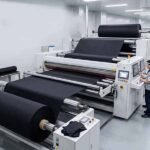
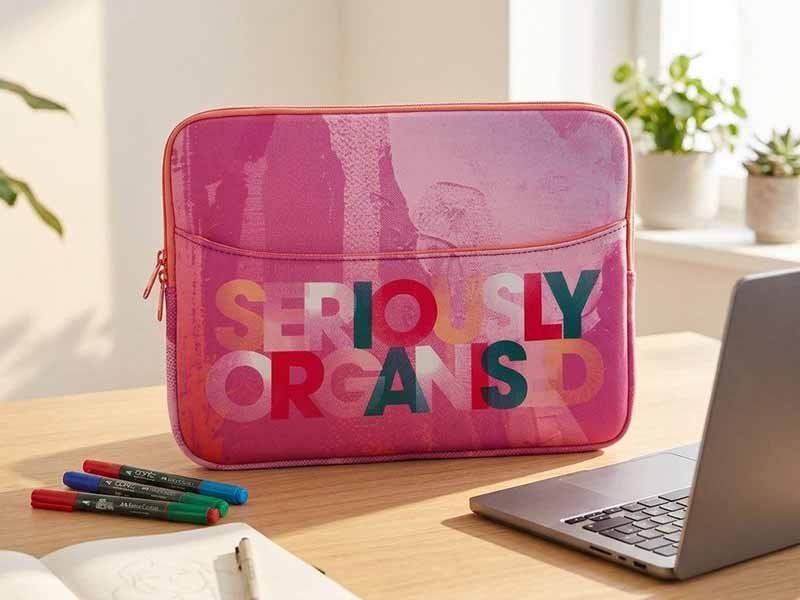
The most successful technology accessories rarely begin with a decorative logo placed on a generic product. They begin with a real problem: a laptop gets scratched inside a backpack, a charger disappears beneath tangled cables, a drone controller needs protection without the weight of a hard case, or an employee welcome kit feels incomplete without something genuinely useful. Neoprene is often considered because it is flexible, lightweight, compact, brandable, and capable of providing practical cushioning for everyday electronic products.
The best neoprene products for tech brands are custom laptop and tablet sleeves, cable organizers, charger pouches, fitted equipment cases, desk mats, mouse pads, and coordinated technology gift sets. The strongest options are designed around a specific device or user routine, use an appropriate thickness and construction, protect against realistic daily risks, and can be produced consistently across multiple sizes, colors, and repeat orders.
The product category may appear straightforward, but small development choices determine whether the finished accessory feels professional or disposable. A few millimeters of incorrect allowance can ruin a laptop sleeve, an exposed zipper can scratch the device it was meant to protect, and a desk mat can lose its value if it arrives curled or carries a strong odor. One carefully engineered accessory can become the beginning of a complete technology product line, while one poorly specified sample can end the project before the first launch.
What Neoprene Products Work Best?
The best neoprene products solve a frequent, easy-to-understand problem involving device protection, accessory organization, portability, workspace comfort, or branded presentation. Laptop sleeves, tablet sleeves, cable organizers, fitted equipment cases, desk mats, mouse pads, and coordinated gift sets usually provide the strongest combination of daily usefulness, visible branding, practical manufacturing, and opportunities for future product-line expansion.
Laptop and Tablet Sleeves
Laptop and tablet sleeves remain the most dependable starting point for many technology brands because customers already understand their purpose. A good sleeve protects finished surfaces from scratches, separates the device from chargers and keys, reduces the effect of light knocks, and makes daily transport easier without adding the weight of a hard case. The broad printable surface also gives brands considerable freedom in color, artwork, logo placement, and retail presentation.
The most important decision is whether the product should use universal sizing or a model-specific pattern. Universal sizes simplify inventory because one sleeve can accommodate several devices, but the additional internal allowance can permit movement. Model-specific sleeves generally create a more premium fit, especially when the pattern reflects the device’s actual length, width, thickness, hinge shape, corner radius, rubber feet, protective bumpers, and any cover that remains attached during use.
Screen size should never be used as the only measurement. Two laptops marketed as 14-inch devices can have noticeably different external dimensions because the screen measurement refers to the display diagonal rather than the complete housing. For reliable development, the buyer should supply finished device dimensions, photographs, a technical drawing, a physical device, or a 3D model. The approved sample should then be tested with the actual equipment rather than an approximate wooden block.
Construction details can improve protection without making the sleeve unnecessarily bulky. A zipper guard can prevent metal or plastic zipper components from touching the device. A soft laminated lining can reduce surface friction, while reinforced binding can strengthen edges exposed to repeated handling. External charger pockets, carrying handles, elastic retainers, or stylus loops may improve usability, although each added feature should be checked to ensure it does not create pressure against the device.
Cable and Charger Organizers
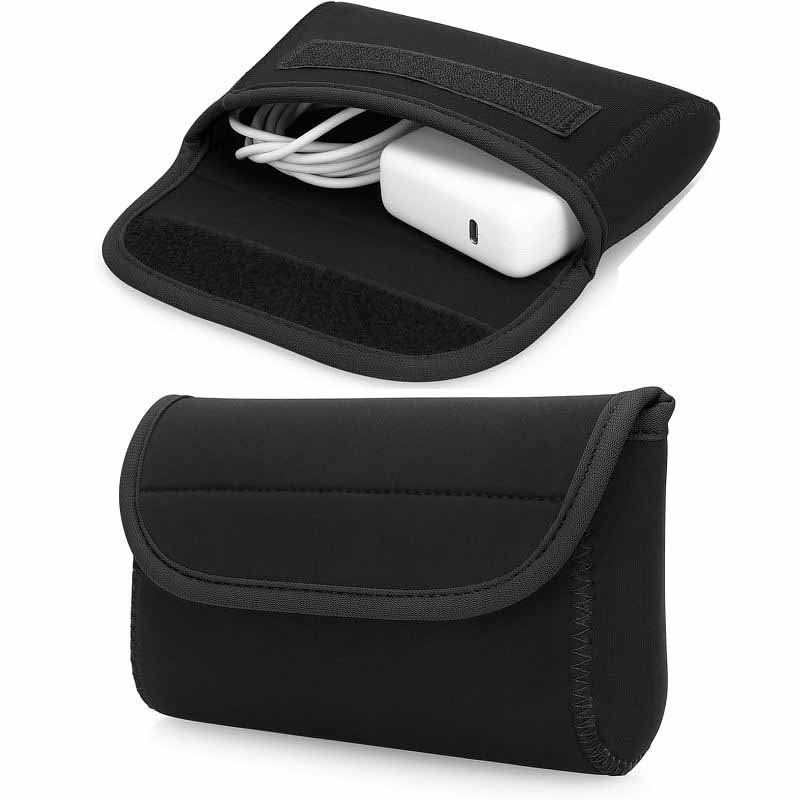
Cable and charger organizers address one of the most common frustrations among technology users: small accessories become tangled, difficult to locate, or damaged when they move freely inside a larger bag. A practical organizer can hold charging cables, wall plugs, memory cards, USB adapters, power banks, earbuds, styluses, card readers, and compact mice while keeping them separated from laptops, tablets, cameras, or other sensitive equipment.
The internal arrangement should reflect a realistic user routine rather than an attempt to include the highest possible number of pockets. Too many narrow elastic loops can restrict the user, increase sewing time, and make the product difficult to close when thick chargers are inserted. A more effective approach is to identify the five to eight accessories the target customer carries most often and build the organizer around their real sizes, shapes, and cable-bending requirements.
A lightweight travel pouch may need only one zippered compartment and a few elastic loops, while a professional organizer may use two panels, mesh pockets, a padded divider, a power-bank compartment, and removable internal sections. Photographers, field technicians, gamers, remote employees, and frequent travelers all carry different equipment. A successful design therefore begins with a defined user rather than a generic request for “more storage.”
Testing should be completed with the organizer fully loaded. The development team should confirm that the zipper closes without excessive force, cables are not sharply bent, heavy plugs do not press against neighboring devices, and small adapters remain securely retained. The organizer should also preserve a reasonably flat shape when packed. If the finished product becomes a rigid lump, the internal layout probably needs to be simplified or redistributed.
Specialized Device Cases
Specialized neoprene cases can create stronger differentiation than standard sleeves because they are developed around a particular product, accessory kit, or technical workflow. Suitable applications include microphone pouches, headphone bags, handheld-console sleeves, gaming-controller covers, portable-monitor cases, camera-lens pouches, drone-controller cases, sensor covers, battery organizers, diagnostic-instrument sleeves, smart-home equipment bags, and protective covers for portable industrial hardware.
The product should be designed around more than the largest outer dimensions of the device. Controls, connectors, joysticks, lenses, triggers, screens, antennas, feet, handles, and removable components all influence the pattern. A drone-controller case must avoid constant pressure on the joysticks, while a microphone pouch may need additional room for a cable, clip, windshield, or mount. A camera-lens pouch requires a stable base and a closure that does not rub against sensitive glass surfaces.
Neoprene is particularly useful for scratch protection, surface separation, lightweight cushioning, and compact storage. It should not be treated as a universal replacement for rigid protection. Devices exposed to severe drops, crushing, heavy stacking, or frequent transport in uncontrolled environments may require EVA panels, PE board, molded foam, rigid shells, or structured woven-fabric cases. A hybrid construction often provides a better result than simply increasing the neoprene thickness.
The best specialized case is not necessarily the thickest one. A carefully fitted 3 mm case with a soft lining, protected zipper, reinforced corners, and controlled internal movement can perform better than a loose 5 mm sleeve with weak seams. Protection comes from the entire construction system, including the fit, opening, seam placement, accessory layout, reinforcement, and way the user carries the product.
Desk Mats and Gift Sets
Neoprene desk mats and mouse pads are attractive to technology brands because they remain visible for long periods during work, gaming, video calls, content creation, and home-office use. They can support full-surface graphics, subtle corporate branding, gaming artwork, instructional graphics, or coordinated campaign designs. Their apparently simple construction, however, requires careful control of surface texture, printing, edge alignment, thickness, flatness, backing grip, packaging, and odor.
Compact mouse pads commonly range from approximately 220 × 180 mm to 300 × 250 mm, while extended desk mats often range from about 700 × 300 mm to 900 × 400 mm. Technology brands may also create nonstandard shapes or device-specific workstation layouts. A thickness of 2 mm can keep the product lightweight, while 3 mm or 4 mm options may provide a more substantial feel and greater comfort during long use.
Gift sets create additional value when the products share a clear purpose. A remote-work kit might combine a laptop sleeve, cable organizer, mouse pad, and cleaning cloth. A travel kit may include a tablet sleeve, charger pouch, passport organizer, and compact accessory case. The products should share a consistent color palette, decoration method, packaging language, and quality level so the set feels intentionally designed rather than assembled from unrelated promotional items.
Packaging must be developed alongside the products. Desk mats may be rolled or packed flat, and each method affects carton size, freight cost, recovery from curling, and the unboxing experience. Gift sets require accurate internal box dimensions, component placement, insert design, barcode planning, master-carton configuration, and protection during transportation. A beautiful set can lose much of its value if products arrive compressed, distorted, or loosely arranged.
| Product Type | Common Specification | Primary Benefit | Main Development Risk |
|---|---|---|---|
| Laptop sleeve | 3–5 mm neoprene | Daily device protection | Incorrect internal fit |
| Tablet sleeve | 2–4 mm neoprene | Lightweight portability | Opening too tight or loose |
| Cable organizer | 2–3 mm neoprene | Accessory organization | Poor compartment planning |
| Desk mat | 2–4 mm neoprene | Workspace comfort and branding | Curling or print distortion |
| Specialized case | 3–5 mm or hybrid construction | Product-specific protection | Pressure on controls or screens |
| Technology gift set | Multiple coordinated products | Higher perceived program value | Packaging and SKU complexity |
Why Does Neoprene Suit Tech?
Neoprene suits many technology accessories because it combines flexible cushioning, low weight, soft surface contact, insulation, compact storage, and broad branding compatibility. It is particularly effective for reducing scratches, separating devices from hard accessories, and softening minor daily impacts. Its limitations are equally important: ordinary sewn neoprene products are not rigid, fully waterproof, crush-resistant, or appropriate for every high-risk equipment application.
Cushioning and Surface Protection
Neoprene is commonly manufactured as a foam sheet laminated with polyester, nylon, or another textile surface. The foam compresses when force is applied and then recovers, helping to reduce the effect of ordinary knocks and pressure. For technology accessories, this behavior is valuable because customers often need protection that is lighter, softer, and easier to pack than a molded or rigid case.
Surface protection is sometimes more important than dramatic impact claims. Laptop lids, tablet screens, camera bodies, gaming devices, and painted instruments can be damaged by keys, charger plugs, metal accessories, rough bag interiors, or exposed zipper components. A correctly fitted neoprene sleeve creates a controlled barrier around the device and reduces direct contact with objects that may scratch, mark, or abrade the finish.
The finished level of protection depends on several connected factors. Foam density, thickness, compression recovery, laminated fabric, internal lining, seam placement, corner coverage, closure design, and internal movement all influence performance. A loosely fitted thick sleeve may allow the device to build momentum before striking an edge, while a thinner but accurately fitted sleeve can keep the device stable and distribute minor pressure more evenly.
Critical contact areas deserve special attention. Upper corners may sit close to the zipper, heavy chargers may press through external pockets, and overlapping seams may create internal ridges. These risks can be reduced with zipper guards, recessed openings, soft linings, extended flaps, pocket separation, and reinforcement placed only where it is needed. Careful construction usually adds more useful protection than thickness alone.
Thickness and Density
Technology accessories commonly use neoprene in nominal thicknesses such as 2 mm, 3 mm, 4 mm, and 5 mm. Thickness affects cushioning, flexibility, weight, edge bulk, sewing difficulty, recovery, product appearance, packing volume, and cost. The correct option depends on the weight of the device, expected use, target price, surface lamination, construction method, and whether the accessory will be carried alone or placed inside another bag.
A 2 mm material is compact and flexible, making it suitable for lightweight covers, simple pouches, mouse pads, cable wraps, and products where minimal bulk is important. A 3 mm option often provides a balanced result for laptop sleeves, tablet sleeves, accessory organizers, and general-purpose technology cases. A 4 mm or 5 mm option can create a more substantial padded feel, although the additional thickness requires careful management at corners, bindings, zipper seams, and folded edges.
Density can be as important as nominal thickness. Two materials both described as 3 mm neoprene may feel and perform differently because one foam is softer and compresses easily while the other is firmer and holds its shape. Surface fabrics and adhesives also change the hand feel, stretch, recovery, and actual finished thickness. Buyers should therefore approve physical swatches rather than selecting material from a written description alone.
The final decision should be confirmed through a complete sample containing the intended device. Development teams should evaluate insertion force, internal movement, zipper closure, seam bulk, compression around corners, product recovery after removal, and the balance between cushioning and portability. A material that feels impressive as a loose swatch may become too bulky once multiple layers are folded, bound, and sewn.
| Nominal Thickness | Typical Product Direction | Main Advantage | Main Limitation |
|---|---|---|---|
| 2 mm | Mouse pads, covers, light pouches | Flexible and compact | Limited cushioning depth |
| 3 mm | Laptop sleeves, organizers, general cases | Balanced protection and portability | Moderate structural support |
| 4 mm | Premium sleeves, heavier device covers | More substantial cushioning | Bulkier seams and corners |
| 5 mm | Specialized cases and padded applications | Deeper padded feel | Greater weight, cost, and packing volume |
Water Resistance and Honest Claims
Neoprene material can resist light moisture, but an ordinary sewn neoprene accessory should not automatically be described as waterproof. The finished product contains needle holes, seams, binding, zipper tape, openings, labels, and attachment points. Water may enter through those areas even when the foam sheet itself resists immediate penetration. The construction, not just the material name, determines the finished level of protection.
For most laptop sleeves, tablet cases, and cable pouches, “water-resistant” or “helps protect against light splashes” is more accurate than “waterproof.” This language describes ordinary office, commuting, or travel conditions without suggesting that the product can withstand immersion or prolonged exposure to heavy rain. Responsible claims improve customer trust and reduce disputes caused by unrealistic expectations.
The buyer should define the intended exposure scenario before selecting the structure. A sleeve used between a car and an office has different requirements from a field case carried outdoors for several hours. A reversed zipper, internal storm flap, coated lining, sealed seam, laminated waterproof fabric, or alternative closure may improve moisture protection, but these changes affect appearance, flexibility, cost, and production complexity.
Marketing claims should be linked to finished-product testing. A brand using terms such as waterproof, drop-proof, or shockproof should define the relevant test method, sample condition, device weight, drop height, exposure duration, or pass criteria. Clear limitations are not a weakness. They demonstrate that the product has been developed for a real use case rather than promoted through unsupported material claims.
Branding and Material Alternatives
Neoprene supports a wide range of branding techniques, which makes it suitable for retail accessories, product bundles, corporate kits, gaming merchandise, and event programs. Sublimation printing works well for detailed full-surface patterns, gradients, illustrations, and colorful desk mats. Screen printing suits clean logos with limited colors, while heat transfer can reproduce more complex artwork on suitable laminated surfaces.
Embroidery, woven labels, rubber patches, silicone badges, leather patches, reflective graphics, metal plates, jacquard webbing, and custom zipper pullers can create additional visual depth. Each method introduces practical considerations. Embroidery may compress the foam and stiffen the decorated area, while a metal plate can scratch a device if placed on the wrong panel. Large heat-transfer graphics may distort or crack when repeatedly stretched across a curved surface.
Artwork should be tested on the exact production material because surface texture, fabric color, foam thickness, heat, pressure, and adhesive behavior affect the final appearance. Logo size, placement, distance from seams, color target, surface finish, and acceptable tolerance should be recorded in the approved specification. This documentation becomes especially important when the same design is reproduced across several sizes or repeat production batches.
Other materials may offer better performance when the application requires rigidity, crush protection, shape retention, or severe drop resistance. EVA can create semi-rigid molded cases, PE or PP board can reinforce flat panels, molded foam can support sensitive equipment, and polyester or nylon fabrics can provide abrasion-resistant outer shells. The best solution may combine neoprene pockets or panels with stronger structural materials rather than asking neoprene to perform outside its natural strengths.
Which Products Fit Each Brand?
The right neoprene product depends on what the brand sells, how customers use the product, the level of protection required, and the intended sales or distribution channel. Consumer-electronics companies often need fitted sleeves and bundled accessories, while software firms may prefer employee kits. Gaming, audio, camera, drone, and corporate programs require different dimensions, internal structures, artwork, packaging, and quality priorities.
Consumer Electronics Brands
Consumer-electronics brands can use neoprene products to extend a core hardware purchase into a practical accessory ecosystem. Natural product options include laptop sleeves, tablet covers, portable-monitor cases, charger organizers, power-bank pouches, cable wraps, stylus holders, and compact travel cases. These accessories can protect the original device, improve portability, increase perceived value, and create additional retail or cross-selling opportunities.
The commercial role of the accessory should be defined before development. A sleeve included inside the device package may need efficient construction, low packing volume, and simple branding. A separately sold premium accessory may justify a soft lining, model-specific fit, external pocket, branded zipper puller, custom packaging, and a higher level of finishing. Promotional products may prioritize campaign graphics and distribution efficiency rather than advanced internal construction.
Product compatibility must be controlled across device generations. A new laptop may retain the same screen category while changing its housing dimensions, hinge position, feet, or corner geometry. Patterns should therefore be identified by model code, finished dimensions, and revision number rather than a description such as “13-inch laptop sleeve.” This reduces the risk of accidentally using an outdated pattern for a new product launch.
Packaging and logistics also influence the design. A sleeve that looks excellent on a display table may create excessive shipping volume if it cannot fold or nest efficiently. The buyer should consider whether the accessory ships with the device, through retail distribution, directly to customers, or as part of an ecommerce bundle. Carton quantity, packaging dimensions, barcode placement, weight, and protection during transportation should be reviewed before bulk production.
SaaS and IT Companies
SaaS, IT-service, cybersecurity, cloud-computing, and enterprise-technology companies usually use neoprene products for employees, customers, partners, conferences, and internal equipment programs. Laptop sleeves, cable organizers, charger pouches, desk mats, mouse pads, and coordinated onboarding kits are often more relevant than device-specific retail accessories because these companies typically do not manufacture the hardware themselves.
Branding generally works better when it feels integrated into daily use. A small woven label, tonal screen print, subtle rubber patch, or restrained color combination may feel more professional than an oversized promotional logo. Employees and customers are more likely to continue using an accessory when it looks like a well-designed product rather than a temporary giveaway.
Laptop sizing can be challenging because a company may issue several models across departments and regions. One strategy is to create two or three controlled sleeve sizes that accommodate the most common devices. Another is to collect exact device information before ordering. Universal sizing reduces administrative work, while model-specific sizing improves the user experience and reduces internal movement.
Distribution should be planned at the same time as product development. Kits sent individually to remote employees need stronger outer packaging, clear address labeling, and possibly multi-location fulfillment. Products distributed at headquarters or conferences can use lighter presentation packaging. A successful program should account for product version, employee location, device size, language, barcode, replacement needs, and the practical process of distributing hundreds or thousands of individual items.
Gaming and Audio Brands
Gaming brands can develop controller sleeves, handheld-console cases, headset pouches, mouse pads, extended desk mats, cable organizers, battery holders, and portable-accessory kits. These products often support stronger visual treatments, including full-surface graphics, contrasting binding, reflective elements, silicone patches, and custom zipper pullers. The visual design should remain compatible with performance and should not create hard pressure points near screens or delicate controls.
Mouse pads and desk mats require more than attractive artwork. The surface should provide consistent movement, the backing should remain stable, the edges should lie flat, and the printing should not distort at the perimeter. Products packed in rolls should recover after unpacking, while flat-packed products must be protected from bending. Gaming customers quickly notice surface variation, edge lifting, odor, or poor tracking behavior.
Audio accessories involve more three-dimensional shapes. Headphones, microphones, transmitters, portable interfaces, cables, mounts, and windscreens do not fit naturally into flat rectangular sleeves. Gussets, darts, padded dividers, mesh pockets, reinforcement, or structured panels may be required. A soft pouch can protect against scratches, but expensive studio equipment may need additional internal separation or a semi-rigid outer construction.
Development should follow the complete packing routine. Designers need to know whether headphones are folded, whether cables remain attached, whether a microphone travels with a mount, and whether spare batteries or adapters share the case. A product built around the real equipment set will feel intentional and professional, while a case developed only from maximum external dimensions may create pressure, movement, or unusable interior space.
Camera, Drone, and Corporate Programs
Camera and drone companies often benefit from component-specific products such as lens pouches, filter organizers, battery holders, microphone sleeves, drone-controller covers, propeller straps, sensor cases, and accessory pouches. These products help keep individual components separated, reduce surface contact, and make complex equipment kits easier to organize during travel, field work, or product demonstrations.
Internal pressure management is essential. Batteries should be separated from metal items, controller joysticks should not remain compressed, lens surfaces should not contact rough closures, and propellers should not scratch other components. Soft linings, elastic retainers, mesh sections, individual compartments, gussets, and removable dividers can improve protection, but each feature should be tested with the full equipment set.
Corporate technology programs often prioritize consistency, presentation, and distribution. A conference giveaway may need strong visual branding and efficient bulk packing, while a premium customer gift may require restrained decoration, higher-grade details, and a presentation box. An internal equipment program may focus on labeling, laptop sizes, replacement orders, department codes, and consistent delivery across several offices.
The program should be managed as a system rather than a single product purchase. Different regions may require different languages, logos, device sizes, packaging labels, or delivery destinations. Clear product codes, carton marks, packing lists, barcode records, and approval files help prevent errors when several similar versions move through production and distribution at the same time.
| Brand Category | Strong Starting Products | Main Development Priority |
|---|---|---|
| Consumer electronics | Device sleeves, charger pouches, product bundles | Accurate device compatibility |
| SaaS and IT | Employee kits, desk mats, cable organizers | Broad daily usefulness |
| Gaming | Desk mats, controller cases, handheld sleeves | Surface performance and graphics |
| Audio | Headphone bags, microphone cases, cable pouches | Shape and internal separation |
| Camera and drone | Lens pouches, battery holders, controller cases | Pressure control and component protection |
| Corporate programs | Sleeves, organizers, coordinated gift sets | Distribution, labeling, and presentation |
How Should Products Be Specified?
Neoprene products should be specified through measurable details rather than broad descriptions. A dependable specification covers the target device, internal usable dimensions, finished external dimensions, material thickness, foam character, laminated fabric, lining, construction, closure, branding, color, packaging, tolerance, inspection criteria, and intended use. A physical device or accurate technical drawing can significantly reduce sampling errors and production misunderstandings.
Device Measurements and Fit
Accurate development begins with the finished external dimensions of the device, including length, width, depth, corner radius, hinge shape, handles, rubber feet, buttons, protective covers, and other protruding features. A display-size description is insufficient because it does not represent the housing. Two products with the same screen size may require different patterns, openings, zipper lengths, and internal allowances.
The buyer should photograph the device from the front, side, top, and relevant detail angles. Ports, controls, vents, joysticks, lenses, and attachment points should be identified if they must remain accessible or protected. The development team also needs to know whether a charger, stylus, mouse, cable, stand, protective shell, or other accessory remains attached or shares the same case.
Fit should be defined as close, relaxed, or expandable. A close fit creates a premium appearance and limits movement, but the opening must still allow comfortable insertion. A relaxed fit supports several similar models but may require internal retention. Expandable designs can accommodate accessories, although gussets and elastic panels add complexity and may change the product’s visual character.
Patterns must account for foam thickness, stretch, seam allowance, binding, lining, reinforcement, and zipper installation. External measurements do not guarantee internal usable space because thick materials and folded seams reduce the interior. The final sample should be approved through an actual fit test, including insertion, removal, closure, carrying, and inspection for pressure points.
Material and Component Selection
A complete material specification should record more than the phrase “black neoprene.” It should identify nominal thickness, approved foam sample, surface fabric, backing fabric, color reference, stretch direction, texture, gloss, odor expectation, print compatibility, and any environmental, recycled-content, or compliance requirement relevant to the destination market.
Surface lamination changes both appearance and performance. Polyester jersey is widely used and compatible with many decoration methods, while nylon jersey may offer a smoother hand feel. Brushed or soft-touch linings can improve contact with screens and polished surfaces. Printed outer fabrics may require particular heat, pressure, and adhesion conditions. Each material combination should be approved as a physical swatch.
Components should also be specified carefully. Zipper type, slider, puller, tape color, hook-and-loop fastener, elastic width, mesh, webbing, thread, label, patch, reinforcement, and packaging materials all influence the finished result. A generic instruction such as “quality zipper” is not precise enough for repeat production because suppliers, tooth sizes, finishes, and slider behavior can vary.
Where stronger protection is required, neoprene can be combined with EVA, PE board, molded foam, polyester, nylon, microfiber, spacer mesh, or structured inserts. The material system should follow the actual risk and user scenario. Adding structural material only where needed can provide better performance and lower bulk than using very thick neoprene across the entire product.
Construction and Branding Details
Construction determines whether the product remains practical after repeated use. Important features include zipper guards, edge binding, internal pockets, elastic loops, gussets, handles, reinforcement panels, dividers, linings, strap attachments, and closure placement. Every feature should address a clear user need because unnecessary components increase cost, sewing time, weight, and potential failure points.
A charger pocket may improve convenience but can press a hard adapter against the laptop if no separation is provided. A metal zipper can look premium but may scratch the device without an internal guard. Thick binding can strengthen the edge while creating bulky corners. Handles and straps must be attached to reinforced areas capable of carrying the intended device weight.
Branding files should include approved artwork, dimensions, color references, placement measurements, orientation, method, and tolerance. The development team should check whether the logo crosses a seam, sits too close to a binding, stretches around a curved device, or becomes hidden when a pocket is loaded. Decoration approval should be based on the real material and finished sample rather than a digital rendering alone.
The approved sample should become a controlled reference for appearance and construction. It should be linked to the pattern version, bill of materials, material swatches, logo file, packaging instruction, and revision date. This system helps the production team reproduce the product consistently and prevents old comments or obsolete artwork from reappearing during later orders.
Testing and Inspection
Testing should match the intended use and the claims made to customers. A promotional mouse pad does not require the same inspection plan as a fitted case for a high-value instrument. The buyer and manufacturer should define the critical risks, expected conditions, inspection method, sample size, tolerance, and acceptance criteria before production begins.
Common checks include finished dimensions, internal usable space, real-device fit, seam appearance, stitch security, zipper operation, logo adhesion, logo alignment, color consistency, odor, surface abrasion, compression recovery, handle or strap strength, packaging condition, barcode accuracy, and carton marking. The most important tests should reflect how the customer actually carries, opens, loads, and stores the product.
A practical fit test involves placing the intended device inside the sample, closing it, carrying it in the expected manner, and checking for movement, pressure, zipper contact, seam ridges, and difficult insertion. Desk mats should be evaluated for flatness, edge curl, surface consistency, print alignment, and recovery after packaging. Organizers should be tested while loaded with the intended accessories.
Defect categories should be defined clearly. A small internal stitch variation may be minor, while incorrect dimensions, exposed sharp components, a nonfunctioning zipper, inaccurate artwork, or a case that cannot accept the intended device would normally be considered more serious. Clear standards make final inspection more consistent and reduce disagreements after goods have been completed.
| Specification Area | Information to Record | Practical Reason |
|---|---|---|
| Device and usable size | Length × width × depth, protrusions, accessories | Controls actual fit |
| Neoprene material | Thickness, approved swatch, surface fabric, stretch | Controls cushioning and appearance |
| Closure system | Zipper length, type, position, guard, slider | Controls access and scratch risk |
| Construction | Seams, binding, pockets, reinforcement, lining | Controls durability and usability |
| Branding | Method, size, color, placement, tolerance | Controls visual consistency |
| Packaging | Individual pack, insert, barcode, carton dimensions | Controls presentation and logistics |
| Quality criteria | Dimensions, defects, fit test, functional checks | Controls acceptance decisions |
| Version control | Pattern code, BOM revision, sample approval date | Supports repeat production |
How Do Brands Choose a Manufacturer?
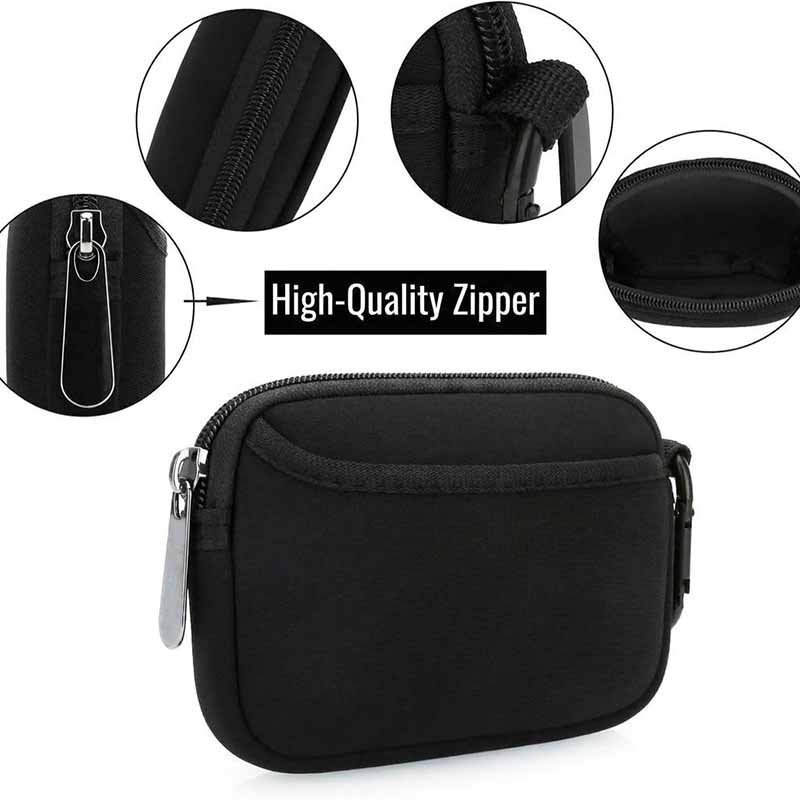
A reliable neoprene manufacturer should be evaluated through product-development ability, material knowledge, sample accuracy, production documentation, quality management, capacity, communication, packaging support, and repeat-order consistency. The best partner is not simply the supplier offering the lowest unit price. It is the manufacturer that identifies technical risks early, protects the approved specification, reports problems transparently, and delivers consistent products across multiple batches.
Sampling and Engineering Capability
Sampling is the first practical demonstration of whether a manufacturer understands the product. Buyers should observe how the development team handles incomplete concepts, device measurements, material selection, pattern creation, construction risks, branding tests, packaging, and revisions. A capable team does not merely copy the brief; it asks questions that prevent foreseeable problems.
A project may begin with a tech pack, sketch, reference sample, photograph, competitor product, website link, physical device, target size, target quantity, or target cost. The manufacturer should convert those inputs into a clear sample specification covering finished dimensions, material, surface lamination, lining, closure, pockets, handles, artwork, packaging, testing, and approval requirements.
Useful questions reveal practical experience. The team may ask whether the laptop has a protective shell, whether the charger shares the sleeve, whether the zipper can contact the device, whether the desk mat will be rolled, or whether the controller joysticks can tolerate pressure. These questions help transform a visual idea into a product that works after production.
Sample revisions should be controlled through version numbers and consolidated comments. Feedback from design, purchasing, marketing, engineering, and quality teams should be combined before the next sample begins. This prevents contradictory instructions and makes it clear which sample, artwork, material, and construction have been approved for bulk production.
Documentation and Change Control
Bulk consistency depends on records rather than memory. A dependable manufacturer should use an approved sample, pre-production sample, pattern, size specification, bill of materials, material swatches, accessory standards, logo files, packaging instructions, inspection checklist, and revision history. These records connect the buyer’s approval to the cutting, printing, sewing, finishing, inspection, and packing teams.
Each SKU should have a clear identification code. Similar sizes, colors, and logo versions can easily become confused during production and warehousing. The product code should appear on internal work orders, packaging labels, barcode records, carton marks, inspection reports, and packing lists. Multi-SKU programs need especially disciplined identification.
Change control is an important indicator of supplier reliability. If the approved foam, laminated fabric, zipper, patch, color, or packaging becomes unavailable, the manufacturer should report the issue and request approval before substitution. A replacement that appears similar may change the product’s hand feel, fit, print color, durability, or packing performance.
Repeat orders should begin with a review of the previous approved version. The team should reconfirm the BOM, pattern, material status, artwork, packaging, quantity, delivery address, and any new compliance requirements. “Same as last time” is not a complete production instruction, especially when several months have passed or materials have changed.
MOQ, Capacity, and Lead Time
MOQ is influenced by material availability, custom color requirements, lamination, printing, logo methods, zippers, patches, packaging, the number of sizes and colors, and any required testing. A simple pouch using available black material may support a lower quantity than a multi-size retail program using custom-colored foam, full-surface printing, branded hardware, and individual boxes.
Buyers should examine the MOQ at both SKU and total-program level. A supplier may accept a moderate total quantity but still require minimum production for each color, print, size, or custom component. Splitting an order into too many versions can increase material waste, setup time, labeling complexity, and quality risk. A structured launch assortment is often more practical than introducing every planned option at once.
Lead time should be divided into material sourcing, sample development, sample approval, pre-production preparation, printing, cutting, sewing, inspection, packaging, and export delivery. A straightforward product may move efficiently after approval, while a complex multi-SKU project with custom materials and gift packaging requires more planning. Production should not be scheduled from an estimated sewing time alone.
The buyer should work backward from the required arrival date. Freight booking, customs clearance, warehouse appointments, ecommerce preparation, event setup, and regional distribution may add considerable time after the goods leave the factory. Sharing launch dates, forecast quantities, and replenishment plans early allows the manufacturer to recommend a more realistic production and delivery schedule.
Quality, Communication, and Repeat Orders
Quality control should begin with incoming material and components rather than waiting until finished-goods inspection. Neoprene sheets, laminated fabrics, zippers, labels, elastic, patches, printing, packaging, and other materials should be checked against the approved specification. Cutting, decoration, sewing, assembly, finishing, and packing should each have appropriate checkpoints.
Final inspection should use agreed defect definitions and measurable tolerances. Critical concerns may include unsafe components or serious functional failures. Major defects can include incorrect sizing, nonfunctioning closures, wrong artwork, exposed parts that scratch the device, or construction that prevents normal use. Minor issues may include limited cosmetic variation that does not affect function or the agreed appearance standard.
Communication becomes most valuable when something goes wrong. A reliable partner reports material differences, failed print tests, construction problems, capacity constraints, and delivery risks early enough for the buyer to make a decision. Hiding a problem until final inspection usually creates more cost than acknowledging it during sampling or pre-production.
For long-term programs, retained samples, versioned BOMs, approved swatches, color references, inspection reports, and repeat-order reviews help manage variation between production batches. Buyers should also examine whether the manufacturer can coordinate packaging, barcodes, carton labels, split shipments, multiple delivery locations, and export documents when the program grows beyond a single product.
| Manufacturer Record or Capability | Why It Matters |
|---|---|
| Approved sample and pre-production sample | Defines the accepted product |
| Pattern and size specification | Maintains fit across production batches |
| BOM and approved material swatches | Controls materials, components, and substitutions |
| Logo and packaging files | Maintains brand and retail consistency |
| Inspection criteria and defect definitions | Creates measurable acceptance standards |
| Revision and change-control records | Prevents outdated versions from entering production |
| Multi-SKU identification system | Reduces mixing during sewing, packing, and delivery |
| Repeat-order review process | Confirms that later batches follow the correct version |
Which Neoprene Product Should Your Tech Brand Develop First?
The first product should sit close to the brand’s core offer and solve a problem customers already recognize. A laptop brand may begin with a fitted sleeve, a charging company may develop a cable organizer, a gaming business may start with a desk mat, and a drone or audio company may need a device-specific protective pouch. A software company may gain more value from a coordinated employee technology kit.
Brands can prioritize opportunities by examining five practical questions:
- Which device or accessory does the target customer use and carry most frequently?
- What recurring problem involves scratches, organization, portability, workspace comfort, or presentation?
- Does neoprene provide the right level of protection, or is a hybrid structure required?
- Can the branding feel natural enough that the customer will continue using the product?
- Can the same development platform support additional sizes, colors, bundles, or repeat orders?
A strong first product creates a foundation for future development. One laptop sleeve can lead to tablet sizes, charger pouches, desk mats, travel organizers, controller cases, and gift sets. Expansion should happen after the original pattern, material, branding method, packaging, fit, and quality standard have been validated. This approach reduces risk while giving the brand a consistent visual and technical platform.
Szoneier is a Guangdong-based OEM and ODM manufacturer supporting custom neoprene sleeves, pouches, organizers, covers, desk accessories, promotional products, gift sets, and related sewn soft goods. With more than 18 years of industry experience, the team can assist with material selection, pattern development, sampling, logo processes, production documentation, quality inspection, packaging, and international delivery coordination.
To request a quote or initiate a custom project, please provide equipment dimensions, product photos, sketches or tech packs, logo designs, estimated quantities, packaging requirements, target markets, and desired delivery dates. You can contact Szoneier by emailing info@szoneier.com.