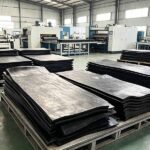
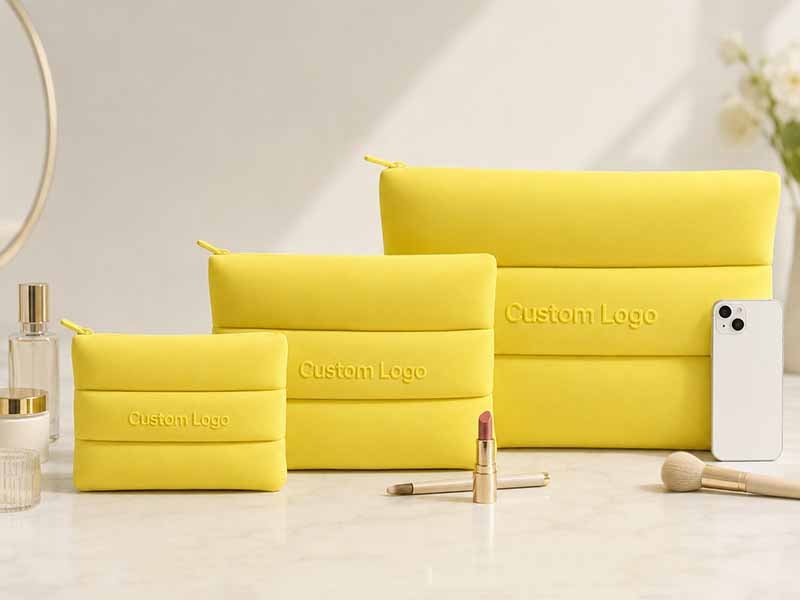
Most private label neoprene products do not fail because the original idea was weak. They fail because important development decisions were left unresolved until the sample or bulk-production stage. A bottle holder can look attractive but fit too tightly. A laptop sleeve can use thick material yet offer poor internal clearance. A lunch bag can display perfect artwork on a computer screen but show inconsistent color after printing, lamination, cutting, and sewing. These problems normally begin before the first production worker touches the material.
To develop private label neoprene products, first define the user, function, dimensions, price position, sales channel, and quality requirements. Then select the correct neoprene thickness and laminated fabric, engineer the structure, choose branding and packaging, develop and revise physical samples, approve a production standard, and control materials, workmanship, inspection, and delivery through documented specifications and an experienced OEM or ODM manufacturer.
The real objective is not simply to place a logo on a soft product. It is to create something that performs as promised, looks consistent across hundreds or thousands of units, reaches the market in channel-ready packaging, and can be reordered without restarting the entire development process. Imagine opening the first production carton and finding that every product feels like the approved sample, every logo appears in the right position, and every package is ready for sale. That result may feel effortless to the end customer, but behind it is a carefully controlled chain of commercial, material, engineering, and production decisions.
What Should You Define Before Development?
Before development begins, define the target user, product purpose, dimensions, sales channel, target price, branding, packaging, order quantity, destination market, and delivery deadline. These decisions allow a manufacturer to recommend a suitable neoprene construction, estimate realistic costs, prepare an effective sampling plan, and identify technical risks before they become expensive production problems.
Product Purpose
A useful private label brief begins with the problem the product must solve, not simply the name of the item. Saying that you need a neoprene sleeve does not explain what it will hold, how often it will be used, whether it must provide impact protection, whether it will be carried inside another bag, or how the customer expects it to feel. Those details determine whether the design needs flexibility, cushioning, insulation, grip, compression, shape retention, or a combination of several functions.
Different products place very different demands on neoprene. A can cooler usually prioritizes insulation, grip, printing, and economical production. A laptop sleeve needs accurate internal dimensions, surface protection, zipper clearance, cushioning, and clean edge construction. A sports support may need controlled compression, stretch recovery, skin comfort, and seams that remain comfortable during repeated movement. A lunch bag adds carrying strength, closure design, internal capacity, cleanability, and packaging considerations.
The sales channel changes the design priorities as well. A promotional giveaway may be developed around visual impact, delivery speed, and cost control. A premium retail accessory may need a smoother hand feel, better hardware, tighter color matching, cleaner binding, and more refined packaging. An Amazon product also needs to account for fulfillment labels, packaging dimensions, carton efficiency, product-review risks, and repeat replenishment.
A practical project statement should identify the user, use environment, main functions, and sales position. For example, a buyer might specify that the product is a reusable 3 mm neoprene bottle sleeve for outdoor consumers, designed to fit a 750 ml bottle, improve grip, reduce condensation, and ship in compact retail packaging. That statement gives the product-development team a much stronger starting point than a folder containing several unrelated competitor images.
Product Specifications
Dimensions should be based on the actual object, equipment, container, or user requirement rather than a generic category name. A standard bottle may refer to several different diameters and heights. A 13-inch laptop sleeve may need to fit devices with different body widths, thicknesses, corner radii, and charging-port positions. When a neoprene product is intended to fit closely, a few millimeters can determine whether it feels secure or becomes frustrating to use.
Critical measurement points should therefore be identified before sampling. Depending on the product, these may include usable internal width, internal height, opening circumference, zipper length, strap length, pocket depth, wall thickness, seam allowance, and finished tolerance. Measurements should also indicate whether they refer to the inside or outside of the finished product, because neoprene thickness and compressed seams can reduce available internal space.
| Specification Area | Information to Define | Practical Impact |
|---|---|---|
| Product use | User, environment, frequency, required functions | Guides material and structural decisions |
| Dimensions | Length, width, height, diameter, fit tolerance | Controls pattern accuracy and finished fit |
| Neoprene | Thickness, foam feel, surface fabric, stretch, color | Affects protection, flexibility, appearance, and cost |
| Construction | Seams, binding, zipper, handle, pockets, reinforcement | Determines durability and sewing complexity |
| Branding | Artwork, size, color, position, application method | Affects appearance, setup charges, and production |
| Quantity | Total units, sizes, colors, and SKU distribution | Influences MOQ and material purchasing |
| Packaging | Polybag, sleeve, box, barcode, insert, carton requirements | Affects cost, freight volume, and channel readiness |
| Market | Destination country, channel, and testing needs | Guides labels, documentation, and compliance review |
| Timing | Sample deadline and required bulk-delivery date | Determines schedule feasibility and material options |
Reference images are useful, but each image should be annotated. Mark which features should remain, which should change, and which were included only to show general style. A reference sample may have the correct proportions but an unsuitable zipper, weak stitching, excessive odor, poor packaging, or an uncomfortable handle. Unless those differences are explained, the development team may reasonably copy details the buyer never intended to keep.
A complete RFQ should include the product type, intended use, measurements, material preference, logo artwork, expected quantity, color and size breakdown, packaging requirements, destination country, required delivery date, and any testing or labeling expectations. Providing a target cost range can also help the manufacturer avoid proposing materials or processes that do not fit the intended business model.
OEM or ODM
OEM development is most appropriate when the product has already been substantially defined. An OEM-ready buyer normally has a technical drawing, measurement chart, construction details, artwork, material standard, label files, packaging instructions, and quality requirements. The manufacturer’s main responsibility is to review production feasibility, create an approval sample, reproduce the specification, and maintain consistency throughout bulk manufacturing.
ODM support is more suitable when the buyer has a market opportunity, early concept, competitor reference, rough sketch, or target application but still needs help converting the idea into a production-ready product. The manufacturer may contribute recommendations on neoprene thickness, laminated fabric, pattern structure, seam placement, reinforcement, closures, logo methods, packaging, and cost optimization.
Many commercially successful projects use a combination of both models. The buyer retains control of the brand position, user experience, commercial objectives, and visual identity, while the manufacturing team contributes practical knowledge about material availability, cutting efficiency, seam construction, stretch direction, printing limitations, assembly order, and bulk-production risk.
The distinction matters because it determines what the buyer can reasonably expect from the manufacturer. A factory cannot quote or reproduce an exact product when important specifications remain undecided. At the same time, a supplier that is competent at following an existing sample may not necessarily have the development resources required to convert an unfinished idea into a stable product.
An experienced factory-based development partner should be able to begin with a complete tech pack, physical reference sample, annotated photograph, sketch, competitor link, target size, target cost, or channel requirement. Szoneier’s documented development system covers material coordination, pattern making, sample development, sewing, inspection, packaging, and export-delivery support for custom soft goods and neoprene products.
Commercial Priorities
Every private label project involves trade-offs among performance, appearance, price, quantity, customization, and delivery speed. These priorities should be ranked before sampling starts. A product tied to a fixed campaign or retail-launch date may need to use stock neoprene colors, existing binding, standard zippers, and a familiar printing process. A premium product may justify custom lamination, a molded logo, higher-grade hardware, and additional sample rounds.
The buyer should also identify the intended retail or wholesale price level. The manufacturer does not need to know confidential profit margins, but an approximate target cost helps the development team recommend realistic materials and processes. A construction designed for a premium specialty retailer may be commercially unsuitable for a mass promotional program, even if both products appear similar in an early sketch.
Order planning should explain whether the initial quantity is a one-time campaign, a market-validation order, or the beginning of a repeat program. A 200-piece development run and a forecast of 20,000 units per year require different purchasing and production decisions. The smaller order may prioritize flexibility and available materials, while the larger program needs more formal material continuity, production records, inspection standards, and reorder planning.
The strongest product briefs do not necessarily contain every technical answer. Instead, they provide enough commercial context for technical decisions to be made responsibly. When the user, function, target cost, channel, timing, and scale are clear, the manufacturer can compare options without guessing what matters most to the buyer.
Which Neoprene Material Should You Choose?
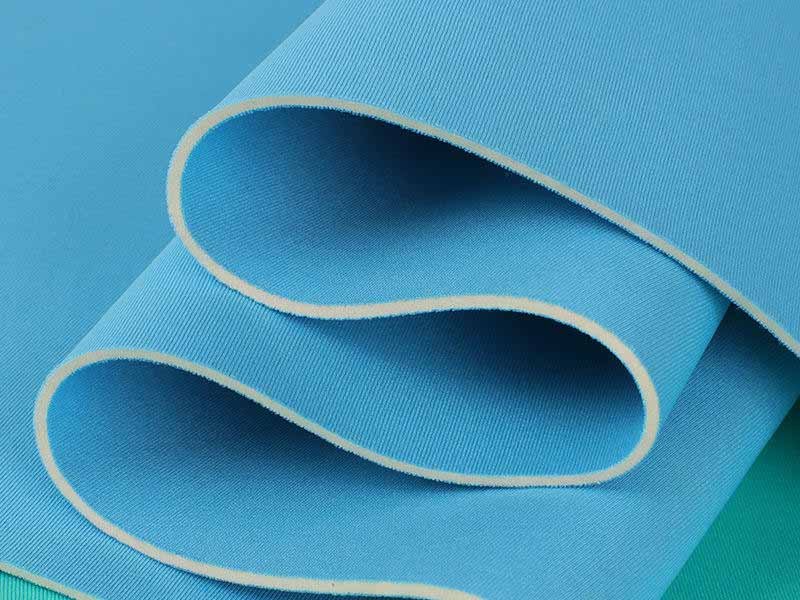
Choose neoprene by evaluating function, thickness, foam density, flexibility, stretch recovery, surface fabric, lamination quality, odor, skin contact, water exposure, printing requirements, weight, and target cost. Thickness alone does not define performance. Two materials described as 3 mm neoprene may feel, stretch, recover, sew, and age differently because their foam structure and laminated fabrics are not identical.
Thickness and Performance
Many private label neoprene accessories use material between approximately 2 mm and 5 mm, although specialized applications may use constructions outside this range. Thickness influences flexibility, cushioning, insulation, weight, seam bulk, carton volume, and the ability to form tight curves. It must therefore be selected according to how the finished product will be used rather than according to a general belief that thicker material always means better quality.
A 2 mm construction is usually lighter and easier to fold, making it practical for simple can coolers, flexible covers, and promotional sleeves. A 3 mm material often provides a balanced combination of flexibility, perceived quality, insulation, and protection for bottle holders, laptop sleeves, bags, and pouches. A 4 mm or 5 mm construction can add cushioning and structure, but it also increases material consumption, seam thickness, weight, and sewing difficulty.
| Nominal Thickness | Typical Characteristics | Common Applications | Main Development Concern |
|---|---|---|---|
| 2 mm | Lightweight, flexible, compact, easier to fold | Can coolers, simple sleeves, promotional covers | Limited cushioning and structure |
| 3 mm | Balanced flexibility, insulation, and protection | Bottle holders, laptop sleeves, bags, pouches | Fit and seam allowance must be controlled |
| 4 mm | Greater cushioning and shape retention | Protective sleeves, structured carriers | Increased bulk and turning difficulty |
| 5 mm | Strong cushioning and thermal performance | Specialized supports and protective products | Higher weight, cost, and carton volume |
Increasing thickness may improve protection, but it can also reduce internal capacity. A laptop sleeve patterned only from the device’s external dimensions may become too tight once the foam and seam allowances occupy space. A cylindrical holder may need a controlled amount of stretch so the product fits securely without becoming difficult to remove.
The approved physical material and finished sample should be used together with the written thickness specification. Neoprene is a compressible foam laminated with textiles, so minor thickness variation can occur depending on measurement pressure, surface fabric, and production batch. For applications where fit matters, the product should always be tested with the real bottle, device, container, or equipment.
Foam Quality
The internal foam determines more than nominal thickness. Density, hardness, cell structure, softness, compression, flexibility, and recovery affect how the product feels and performs over time. Two materials can have the same measured thickness but respond differently when bent, stretched, compressed, or repeatedly used.
A softer, lower-density material may feel comfortable and inexpensive, but it can lose shape or compress more quickly. A firmer construction may provide stronger shape retention and protection but feel less flexible. Products designed for repeated stretching, such as fitted holders or sports accessories, require reliable recovery so they do not become permanently loose after limited use.
Material evaluation should involve practical handling rather than relying only on a supplier description. Compress the swatch and observe how quickly it returns to its original thickness. Stretch it repeatedly in the intended direction, fold it several times, and compare its condition with an unused reference. For products stored under pressure or packed tightly, examine whether the material develops permanent creases or distortion.
Odor also deserves careful attention. Fresh rubber-based foam and lamination adhesives can produce a noticeable smell, particularly when the product is sealed immediately after production. Strong or persistent odor may create complaints for products used indoors, near food containers, or close to the body. Material selection, adhesive systems, ventilation time, packaging, and storage conditions can all influence the final result.
Claims such as medical grade, non-toxic, eco-friendly, recycled, or environmentally responsible should be supported by relevant material documents or testing. These descriptions should not be added merely because they sound attractive in a product listing. Buyers should confirm the exact material, test method, certificate scope, and production batch to which any claim applies.
Surface Fabrics
Most commercial neoprene products use foam laminated with one or more textile surfaces. These fabrics influence appearance, print quality, abrasion resistance, softness, color stability, stretch, cleanability, and sewing behavior. The foam and fabric should therefore be evaluated as a combined construction rather than as separate materials.
Polyester surfaces are commonly used when stable color, cost control, and sublimation printing are important. Nylon surfaces can provide a smoother or softer feel and may offer different stretch characteristics depending on the fabric construction. Some protective sleeves use a durable outer textile and a softer internal surface, while simpler promotional products may use similar fabric on both sides.
Full-surface printed products require a textile compatible with the intended printing method. The artwork must also account for cutting lines, seams, curves, binding, and panel transitions. A graphic that appears continuous on a flat computer file may become interrupted when the product is divided into separate pattern pieces and assembled.
The inside surface deserves as much attention as the exterior. A laptop or tablet sleeve should not create excessive friction or scratch risk. A skin-contact accessory should be evaluated for comfort, moisture, seam placement, and repeated movement. Products intended for pets, outdoor equipment, or travel may prioritize abrasion resistance, dirt visibility, and cleanability.
Colors should be approved on the actual laminated textile. A Pantone reference provides a useful target, but the same color can appear different on polyester, nylon, zipper tape, binding, sewing thread, molded patches, printed ink, and paper packaging. For brand-critical colors, reviewing all components together provides a more realistic picture of the finished product.
Lamination and Construction
Neoprene foam is normally laminated with textile before cutting and sewing. The bond between the foam and the fabric must remain stable through printing, stretching, folding, cutting, sewing, packaging, transport, and normal use. Weak lamination may produce bubbling, peeling, wrinkling, edge separation, or uneven stretch.
These problems may not be visible in a small showroom swatch. They often appear when a larger panel is folded, compressed, turned through a narrow opening, stitched around a curve, or stored in packaging. A development sample should therefore use material that is reasonably representative of the expected bulk construction.
A practical material specification should identify the foam type, nominal thickness, exterior fabric, interior fabric, color, stretch direction, lamination method, printing compatibility, and approved reference swatch. When product performance depends on directional stretch, the pattern should also indicate how each component must be positioned during cutting.
Material availability should be considered alongside appearance. A highly unusual textile may produce an impressive development sample but require a high minimum quantity, long lead time, or custom lamination for every reorder. For a long-term private label program, a repeatable construction with reliable sourcing can be more valuable than a distinctive material that cannot be purchased consistently.
Szoneier’s documented neoprene range includes products such as neoprene bags, can coolers, bottle holders, lunch bags, laptop sleeves, covers, pet products, and wetsuit-related accessories, with common thickness options of 2 mm, 3 mm, 4 mm, and 5 mm selected according to function, cost, and structure.
How Do You Customize Branding and Packaging?
Match the branding process to the artwork, neoprene surface, order quantity, wear conditions, flexibility, and brand position. Control the logo size, placement, color, adhesion, and acceptable tolerance through a physical sample. Packaging should be designed for the real sales and delivery channel so the product remains protected, correctly labeled, efficient to ship, and ready for retail or fulfillment.
Logo Methods
There is no universal logo process that is best for every neoprene product. The correct choice depends on the artwork, number of colors, size, placement area, order quantity, surface fabric, expected abrasion, stretch, cleaning conditions, budget, and desired brand impression.
Screen printing is commonly used for simple logos with a limited number of colors. It works well on many flat neoprene panels and is often selected for promotional can coolers, bottle holders, and pouches. The printed area should be tested when it will be repeatedly stretched, sharply folded, or exposed to friction, because these conditions can affect long-term appearance.
Sublimation is useful for full-color or all-over graphics on compatible polyester surfaces. It can reproduce detailed artwork and large color areas without creating a thick surface layer. However, the final appearance depends on the textile, heat process, artwork resolution, pattern placement, and seam construction. Colors should be approved on the actual laminated material rather than on paper alone.
Heat transfer can reproduce detailed logos and may be practical for certain quantities, but flexibility and adhesion should be tested after bending and stretching. Embroidery creates texture and a premium appearance, although dense stitching can compress the foam, add stiffness, or distort the panel. Woven labels provide consistent branding while placing less stress on the neoprene surface.
Rubber and silicone patches create a dimensional branded feature and can support distinctive colors and shapes. They may require molds, tooling charges, and minimum quantities. Their weight, flexibility, thickness, and attachment method should be evaluated, particularly when the product is small or must bend easily.
The final artwork specification should identify the approved file, process, dimensions, position, color reference, surface finish, attachment method, and acceptable placement tolerance. Szoneier’s available branding processes include screen printing, heat transfer, digital printing, sublimation, embroidery, woven labels, rubber patches, silicone patches, reflective logos, jacquard webbing, and custom zipper pullers.
Color Control
Color control becomes more complicated when the finished product combines neoprene fabric, printed graphics, binding, zipper tape, thread, labels, molded patches, and packaging. Even if every component is intended to match one Pantone color, differences in substrate, surface texture, gloss, lighting, and manufacturing method can make them appear slightly different.
The first step is to identify which colors are commercially critical. The main brand color, large printed area, or highly visible logo usually deserves tighter control than an internal thread or hidden care label. For important programs, the buyer can approve a component board showing the neoprene surface, binding, zipper, thread, logo, label, and packaging together.
Computer screens should not be used as the only approval reference. Screens vary, while textile printing depends on ink, heat, surface fabric, lamination, and production settings. A physical material swatch, print strike-off, lab dip, logo sample, or finished prototype provides a more realistic basis for approval.
Color expectations must also remain practical. Requiring an exact visual match among textile, molded silicone, sewing thread, coated metal, and paper may not be achievable because each material reflects light differently. A better approach is to define which components must match closely and which may remain within an agreed visual range.
Full-surface graphics should be reviewed for artwork scale, image position, color saturation, fine-detail clarity, seam alignment, and distortion around curves. The design should account for binding and stitching areas so critical text, faces, icons, or brand elements are not cut or hidden during assembly.
Bulk material should be compared with the approved standard before cutting. A color problem discovered at this stage may require a replacement batch or written acceptance, but a color problem discovered after thousands of finished units have been assembled is far more difficult and expensive to correct.
Labels and Packaging
Private label development usually requires more than a visible exterior logo. Depending on the product, destination market, and sales channel, the label set may include a main brand label, material label, care label, size label, country-of-origin label, warning statement, barcode, SKU label, hangtag, instruction card, or fulfillment label.
Responsibility for label wording should be clearly assigned. A manufacturer can print and attach the labels, but the brand owner or importer should verify legal wording, translations, product claims, and market-specific requirements. Unsupported statements about insulation, safety, environmental impact, material composition, or performance should not be added merely to strengthen marketing language.
Packaging should be selected according to how the product will be stored, transported, displayed, fulfilled, and opened. Common solutions include individual polybags, printed paper sleeves, hanging cards, kraft boxes, retail boxes, dust bags, insert cards, barcode labels, instruction sheets, FNSKU labels, and export cartons.
Neoprene may develop temporary folds or compression marks when packed too tightly. Before bulk packing, the team should test the folding direction, number of pieces per carton, pressure on printed surfaces, recovery after unpacking, and whether the logo or binding becomes marked. This is especially important when products remain in transit or storage for several weeks.
Packaging is also a major cost and freight variable. A rigid retail box may create a strong shelf presentation but occupy substantially more shipping volume than a compact paper sleeve or flat polybag. Packaging development should therefore balance brand experience, product protection, shipping efficiency, warehouse handling, and disposal expectations.
Channel Requirements
The right packaging solution depends on the actual route to market. Retail-store packaging must communicate quickly and display the product clearly. Direct-to-consumer packaging must protect the product while avoiding excessive parcel dimensions. Amazon packaging requires accurate warehouse labels and preparation. Corporate gift programs may require coordinated inserts, sets, and recipient-ready presentation.
| Sales Channel | Main Packaging Priority | Common Risk to Control |
|---|---|---|
| Retail store | Display quality, barcode visibility, customer information | Weak shelf presentation or incorrect labeling |
| Shopify or DTC | Unboxing experience, parcel efficiency, protection | Oversized shipping volume or transit damage |
| Amazon FBA | FNSKU accuracy, polybag rules, carton data | Relabeling, delay, or warehouse rejection |
| Wholesale | SKU identification and carton efficiency | Mixed colors, sizes, or quantities |
| Corporate gifts | Presentation and set completeness | Missing inserts or mismatched components |
| Promotional events | Fast distribution and economical packing | Unnecessary packaging cost |
For multi-SKU orders, the packing instructions should identify the product name, color, size, quantity, purchase order, carton number, destination, and any channel-specific label. Clear carton data reduces receiving errors and makes warehouse handling more efficient.
Packaging should be reviewed early enough to affect the product and quotation. A hangtag may require a loop or attachment point. A small box may require the product to fold in a particular direction. A barcode may need a flat area free from texture or curvature. These are product-development decisions rather than last-minute packing details.
A manufacturer with packaging and export experience should be able to coordinate polybags, paper sleeves, hangtags, barcode labels, retail boxes, inserts, master cartons, carton markings, FBA labels, and international delivery documents. The objective is not to use the most elaborate packaging, but to create the most appropriate system for the product, channel, customer experience, and supply chain.
How Does Sampling Prepare the Product for Production?
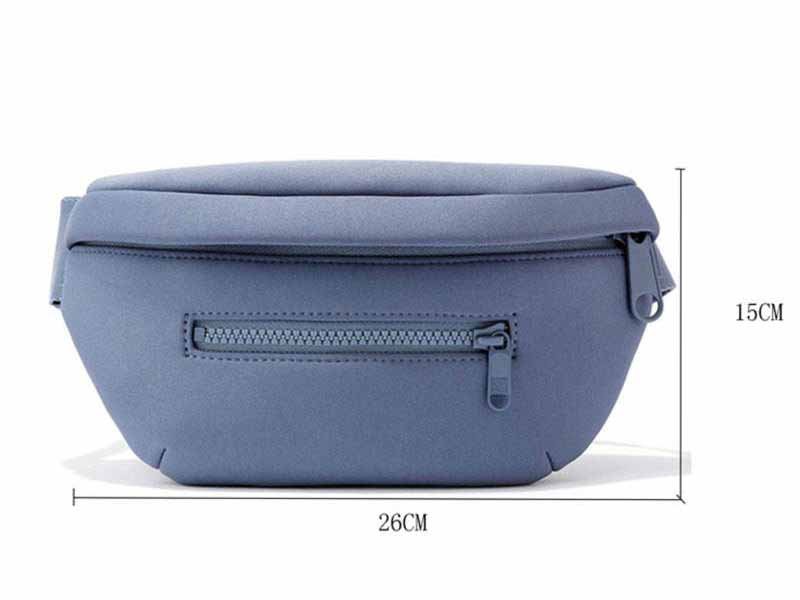
Sampling converts drawings, assumptions, and material descriptions into a physical production standard. It allows the buyer and manufacturer to verify fit, dimensions, thickness, construction, logo, color, accessories, packaging, workmanship, and cost before bulk production. A disciplined process includes a clear brief, material approval, pattern development, prototype assembly, recorded revisions, functional testing, and final pre-production approval.
Sample Inputs
The first sample becomes more useful when the development team receives complete, organized information. At minimum, the buyer should provide the intended product, expected use, dimensions, reference images, material preference, artwork, quantity, packaging direction, destination market, and required delivery schedule.
A tech pack is helpful, but it does not need to be complicated. A clear drawing with labeled dimensions and annotated details can be more useful than a polished document that leaves key decisions unresolved. When measurements are important, show where each point begins and ends rather than providing only a list of numbers.
A physical reference sample can accelerate development because it communicates hand feel, structure, size, and construction more effectively than photographs. However, the buyer should identify which details should remain and which require improvement. The manufacturer needs to know whether the sample is being provided for its fit, material, shape, zipper, packaging, or only its general appearance.
Changes should be described precisely. Instead of saying that the handle should be stronger, explain whether the improvement should come from wider webbing, additional stitching, internal reinforcement, a different attachment position, or increased load capacity. Instead of asking for a larger product, identify which dimensions must change and whether the overall proportions should remain the same.
Artwork files should be supplied in an editable vector format where possible. The sample team should also receive Pantone references, logo dimensions, barcode data, label text, print positions, and packaging files before those elements are developed.
The buyer should clarify the purpose of the sample. A rough structural prototype may use available colors and temporary accessories to confirm shape and fit. A marketing or sales sample may need final materials, exact branding, and retail packaging. A pre-production sample should represent the actual bulk standard. Treating all three as the same stage can add unnecessary cost and delay.
First Prototype
The first prototype tests whether the design works as a physical product. The development team reviews the dimensions, material thickness, stretch direction, pattern structure, seam allowance, closures, branding, assembly sequence, and likely production challenges before cutting the sample components.
Pattern development is especially important for fitted neoprene products. The pattern cannot always use the exact external dimensions of the object because the foam thickness and seams reduce internal capacity. Stretch may be intentionally used to create a secure fit, but excessive tension can distort the logo, stress the seams, compress the contents, or make the product difficult to remove.
A typical first-sample workflow includes reviewing the brief, confirming materials, preparing the pattern, cutting the components, applying branding, sewing the product, checking dimensions, testing basic function, conducting an internal workmanship review, and sharing photographs or video before dispatch.
Simple samples made from available materials can normally move more quickly than products requiring custom lamination, full-surface printing, molded patches, unusual hardware, multiple fitted sizes, or complicated packaging. As a practical planning reference, straightforward samples may require approximately 3–5 working days, regular custom samples about 5–7 working days, and more complex developments around 10–15 working days before international delivery.
These time ranges should not be treated as automatic promises. Missing artwork, unclear dimensions, material procurement, molds, color approval, packaging development, and multiple decision makers can extend the process. A complete brief and prompt consolidated feedback usually save more time than repeatedly asking the sample room to accelerate an unclear project.
Photographs and videos can confirm general shape, color direction, logo position, and visible workmanship, but they cannot fully communicate material feel, odor, compression, internal fit, or user comfort. When these characteristics matter, the buyer should inspect the physical prototype.
Sample Review
A sample should be reviewed against measurable requirements rather than a general feeling that it looks acceptable. Begin with the intended function. A bottle holder should fit the specified bottle and remain easy to remove. A laptop sleeve should protect the device without excessive compression. A sports support should remain comfortable during movement and recover after stretching.
The review should cover critical dimensions, fit, material thickness, surface texture, stretch, recovery, odor, seam quality, binding, reinforcement, zipper operation, logo placement, color, label content, packaging, and overall user experience. The sample should be tested with the real device, bottle, container, equipment, or body area whenever possible.
Repeated-use checks are valuable even during development. Operate the zipper several times, stretch and release the material, carry the product by its handle, pack and unpack it, and observe high-stress seams. These simple actions frequently reveal problems that are not visible when the sample is left flat on a table.
Feedback should be consolidated into one numbered revision file. Annotated photos are useful because they show the exact location of each requested change. The buyer should also separate defects from new design decisions. A logo applied in the wrong position is a defect, while replacing a printed logo with a silicone patch is a design change that may affect cost and timing.
Short messages sent through several email or chat threads increase the risk that one instruction will be overlooked. A single approved revision record gives the project manager, sample maker, pattern maker, material buyer, and branding supplier the same information.
Small corrections can often be completed faster than revisions requiring a new pattern, different material, new artwork, fresh lamination, or a molded component. Buyers should evaluate whether each change materially improves function, brand value, production stability, or customer experience rather than revising a product indefinitely without a clear commercial reason.
Production Approval
The final approved sample should represent what the factory is expected to manufacture. It should not be an early prototype that used temporary material, approximate colors, substitute accessories, or unfinished packaging unless those differences are clearly documented and resolved before production.
A pre-production sample is particularly important when the original development sample was made from a small showroom swatch or an available substitute. Before large quantities are cut, both sides should verify that the actual bulk neoprene, binding, zipper, logo, labels, and packaging work together as expected.
The approval package should include the signed or clearly approved sample, measurement chart, bill of materials, material references, color standards, artwork, logo specifications, construction notes, accessory details, label files, packaging instructions, and inspection criteria.
Every post-approval change should be documented in writing. Verbal instructions are difficult to control across sourcing, printing, cutting, sewing, inspection, and packing. Even a seemingly small change to a zipper, thread, binding, patch, or label can affect appearance, cost, production timing, and repeat-order consistency.
For future orders, the buyer and manufacturer should preserve the approved sample, pattern version, material source, artwork file, measurement record, and inspection history. A reliable reorder should not depend on one employee remembering what was produced several months earlier.
Sampling is not an administrative delay before production. It is the least expensive stage at which material, fit, branding, structure, and packaging problems can still be corrected without affecting hundreds or thousands of finished units.
How Do You Control Cost, Quality, and Scale?
Control cost by understanding material, labor, branding, packaging, testing, and quantity drivers. Control quality by locking an approved specification and inspecting materials, cutting, branding, sewing, finished products, and packing. Scale only after the initial production run proves that the product can be manufactured consistently, delivered on time, and reordered using documented materials, patterns, and inspection standards.
MOQ and Cost
MOQ is influenced by more than the assembly factory’s willingness to accept an order. Neoprene sheet quantities, custom lamination, fabric colors, printed graphics, woven labels, molded patches, zipper colors, packaging, molds, and cutting efficiency may each have separate minimum requirements.
Selected custom soft-goods projects may begin from approximately 200 pieces, but the exact MOQ depends on product structure, material availability, number of colors, number of sizes, logo process, custom accessories, and packaging. Buyers should confirm whether a quoted MOQ applies to the total order, each color, each size, each artwork, or each SKU.
The main unit-cost drivers include neoprene thickness and grade, laminated textile, material consumption, cutting yield, number of panels, seam and binding complexity, printing, logo processes, zippers, webbing, fasteners, labels, testing, packaging, quantity, and production schedule.
Development expenses should be separated from recurring unit costs. Sample fees, printing screens, molds, custom color development, special material trials, packaging prototypes, and third-party tests may be one-time or occasional charges. Separating these costs makes future reorder pricing easier to understand and compare.
Cost optimization should focus on removing complexity that customers do not value. Practical adjustments may include using available material colors, standardizing accessories across several SKUs, reducing unnecessary seams, simplifying hidden details, selecting a logo method suited to the quantity, or reducing packaging volume.
Reducing neoprene thickness only to reach a lower quotation can create weak cushioning, poor fit, insufficient insulation, or a cheap hand feel. The strongest cost decision protects the features that influence customer satisfaction and brand position while simplifying details that add cost without creating meaningful value.
A serious quotation should clearly state the assumed material, dimensions, branding, quantity, packaging, testing, and delivery term. Comparing prices without comparing these assumptions can lead buyers to select a lower quotation that does not represent the same product.
Quality Control
Quality control begins with an approved specification. Inspectors cannot consistently judge a product when the material, measurements, color, logo, construction, and packaging requirements have not been defined.
| Inspection Stage | Key Checks | Main Risk Controlled |
|---|---|---|
| Incoming material | Thickness, color, surface, odor, lamination, quantity | Incorrect or inconsistent raw material |
| Cutting | Pattern, stretch direction, quantity, edge quality | Fit and component-alignment problems |
| Branding | Artwork, color, size, position, adhesion | Visible logo and brand defects |
| Sewing | Stitching, seam shape, binding, reinforcement | Cosmetic and structural failures |
| In-line inspection | Measurements and repeated workmanship | Large-volume repetition of the same defect |
| Final inspection | Function, appearance, cleanliness, quantity | Customer-facing defects |
| Packing inspection | Labels, SKU, packaging, carton marks | Fulfillment, delivery, and warehouse errors |
Critical measurements should be checked from consistent reference points and against agreed tolerances. A close-fitting device sleeve or compression accessory normally requires tighter dimensional control than a loose promotional pouch.
Branding should be inspected early in production. Discovering an incorrect logo color, position, or artwork after the entire order has been assembled creates far greater loss than identifying it on the first printed or sewn pieces.
Functional checks should match actual use. These may include zipper cycling, handle loading, stretch and recovery, fit testing, closure operation, seam pulling, insulation comparison, packaging recovery after compression, and visual inspection after repeated handling.
Defects should be classified according to their effect on safety, function, saleability, and appearance. An open seam, unusable fit, incorrect barcode, wrong logo, missing label, or unauthorized material substitution is more serious than a minor internal cosmetic mark.
For large, high-value, or retail-sensitive orders, the buyer may define an AQL sampling plan or arrange an independent pre-shipment inspection. However, final inspection should not replace process control. The most effective quality system prevents repeated defects during material preparation, branding, cutting, and sewing rather than discovering them only after the order is complete.
Sample-to-Bulk Control
The most common production disappointment is not that the bulk order is completely wrong. It is that the material feels slightly different, the product fits more tightly, the logo has moved, the color is less accurate, or the sewing looks less refined than the approved sample.
Consistency depends on controlling the information used by the production team. The approved physical sample should be supported by a bill of materials, measurement chart, pattern version, color standard, artwork, accessory specification, construction notes, packaging file, and inspection criteria.
Bulk material should be approved before cutting, particularly when the development sample used a small swatch or temporary substitute. The production foam, laminated textile, binding, zipper, thread, label, logo, and packaging should be compared with the approved references.
Change control is equally important. Materials and components should not be substituted without written approval. An alternative described as equivalent may have a different color, thickness, stretch, texture, odor, or durability. Even when the replacement appears acceptable, it should be documented so future reorders do not rely on incorrect records.
Initial production units should be reviewed before full-scale assembly proceeds. This checkpoint can identify repeated problems such as inaccurate seam allowance, measurement drift, logo movement, uneven binding, incorrect stitch density, or packaging damage before they affect the entire order.
Production records should remain available for future purchase orders. When an item is reordered six or twelve months later, material suppliers, accessory availability, and production teams may have changed. The preserved records allow the manufacturer to identify what must remain the same and what requires fresh approval.
Szoneier operates as a factory-based custom bags and soft-goods manufacturing partner with more than 18 years of experience covering material sourcing, pattern development, sampling, sewing coordination, quality inspection, packaging, and export delivery. The company’s structure is intended to support projects from early concepts and trial quantities through repeat bulk production.
Scaling the Product Line
A successful first product can become the foundation for a broader private label collection. Scaling may involve additional colors, new sizes, different price levels, complementary products, seasonal graphics, channel-specific packaging, or market-specific labels.
A bottle holder may expand into can coolers, wine sleeves, lunch carriers, and related beverage accessories. A laptop sleeve can lead to tablet sleeves, charger pouches, cable organizers, and protective cases. A neoprene tote may become part of a coordinated collection including a cosmetic pouch, bottle holder, lunch bag, and storage case.
The most efficient product families share controlled elements. They may use the same approved neoprene construction, coordinated color system, common binding, repeat zipper colors, consistent logo methods, standardized labels, related packaging, and shared quality criteria.
This approach can reduce development effort and improve visual consistency, but each new product still requires its own fit, pattern, material-consumption, and production review. A 3 mm construction that performs well for a bottle holder may not automatically be appropriate for a large tote, protective device sleeve, or fitted sports accessory.
Capacity should also be evaluated by product complexity rather than a general factory headline. A production line can manufacture far more flat can coolers than structured bags containing zippers, handles, multiple panels, linings, pockets, and several branding operations. A realistic capacity review should therefore use the approved construction, planned quantity, packaging, and required delivery date.
The safest scaling strategy is not to place the largest possible first order. It is to prove the specification, confirm the customer response, preserve the production data, improve any weak details, and then expand the quantity and product range without losing the standard that made the original product successful.
Developing a private label neoprene product is ultimately the process of turning a commercial idea into controlled manufacturing information. The original concept creates the opportunity, but clear specifications, physical samples, approved materials, recorded revisions, production controls, and dependable communication make that opportunity commercially repeatable.
Szoneier supports custom neoprene bags, bottle holders, can coolers, lunch bags, laptop sleeves, soft covers, pet accessories, protective products, and related sewn soft goods. Buyers can begin with a full tech pack, physical reference sample, annotated images, sketch, competitor link, or early-stage product concept.
For an efficient project review, provide the product type, intended use, measurements, preferred neoprene thickness, target quantity, color and size breakdown, logo artwork, packaging requirements, destination country, target price position, testing needs, and required delivery date. The development team can then review the material construction, sampling route, branding options, MOQ, cost factors, quality checkpoints, production timing, packaging, and export-delivery requirements.
A useful inquiry does not need to contain every technical answer. It needs to contain enough information to begin the right technical conversation. Detailed RFQs, tech packs, artwork, packaging files, quality requirements, and purchasing plans can be submitted to info@szoneier.com, while product photos, sketches, quantities, and initial project information can be shared through WhatsApp at (+86) 13423847456.