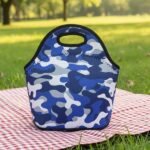

A neoprene can cooler looks simple, but the product does two jobs at the same time. It keeps a drink colder for longer, and it carries a brand message in a way people actually hold, use, and keep. That is why this category keeps showing up in promotions, breweries, sporting events, resort shops, gift programs, and retail add-on lines. The challenge is that not all can coolers perform the same. Some lose shape quickly. Some print poorly. Some fit the can badly. Some look cheap the moment they are touched. When customers compare samples side by side, they usually notice three things first: the hand feel, the print result, and the fit. Those three details are directly decided by manufacturing.
Neoprene can cooler manufacturing with custom color designs is the process of turning neoprene sheets into insulated drink sleeves through pattern making, cutting, printing, stitching or gluing, and finishing. The goal is to produce a cooler that fits the container well, keeps its shape, shows color clearly, and supports custom branding for promotional or retail use.
That is where the product becomes more interesting than it first appears. A can cooler may cost only a small amount per piece, but it often stays with the user for months or years. It gets packed for beach days, pulled out at tailgates, used at barbecues, and passed around at events. In other words, a small product can create a long brand life. And once you look at it that way, material quality, color accuracy, and factory capability start to matter a lot more than most first-time importers expect.
What Is Neoprene Can Cooler Manufacturing?
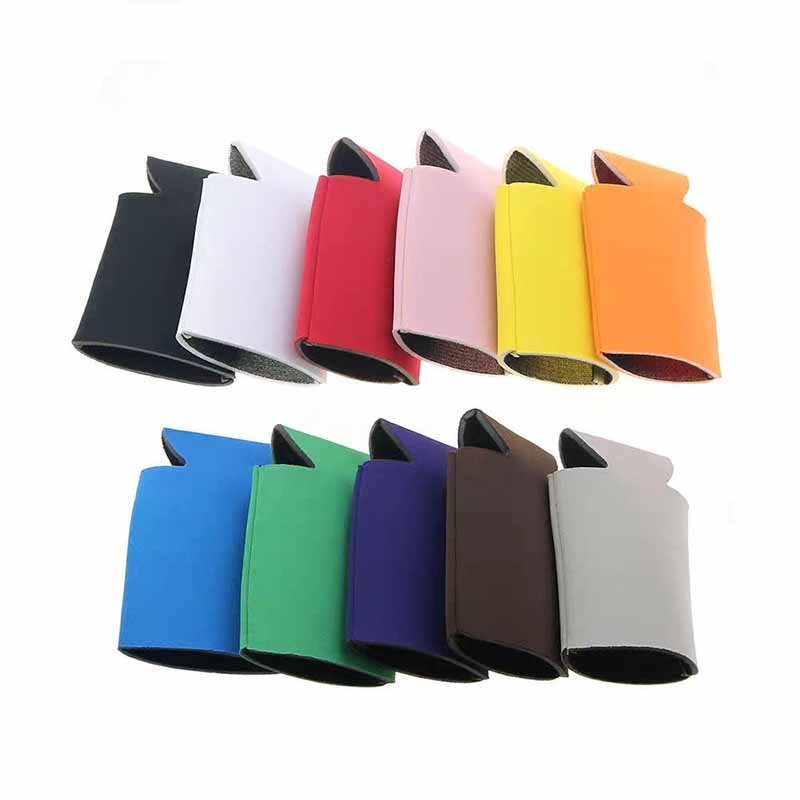
Neoprene can cooler manufacturing is the process of making insulated drink sleeves from neoprene material, then adding structure, decoration, and finishing details to suit promotional or retail use. Good manufacturing focuses on fit, insulation, print quality, durability, and cost control at the same time.
What is a neoprene can cooler?
A neoprene can cooler is a flexible insulated sleeve made from synthetic rubber foam, usually the same material family widely used in wetsuits and protective soft goods. Its job is simple: wrap tightly around a can or bottle, reduce temperature transfer, improve grip, and limit condensation on the user’s hand.
For customers sourcing this item, the value is not just “keeping drinks cold.” A neoprene cooler also gives the product a more premium hand feel than many low-cost foam alternatives. It feels smoother, denser, and more durable. It folds flat more neatly, recovers shape better, and usually supports cleaner printing or panel-based decoration.
The most important performance points are:
- Insulation: the foam structure helps slow outside heat from warming the drink
- Grip: the surface helps the user hold a cold can more comfortably
- Condensation control: the sleeve helps reduce moisture transfer to the hand
- Brand visibility: the outside surface becomes a portable logo area
- Reusability: neoprene coolers are often kept and reused far longer than disposable promo items
A few common product dimensions seen in the market help explain how standardized this category has become. Some standard 12 oz can coolers are sold around 4 inches tall with a diameter around 3.25 inches, while one neoprene 12 oz insulator listing shows an item size around 3 inches diameter x 4.25 inches high and a logo area around 3 x 3 inches. This shows how much of the market is built around repeatable sizing and consistent decoration zones.
For customers, this means the product is easy to launch, but still leaves room for differentiation through material thickness, construction style, trim color, fold-flat design, zipper structure, and all-over print.
Why choose neoprene can cooler manufacturing?
The main reason brands choose neoprene is balance. It gives a better feel than basic foam, a stronger visual effect than plain low-cost sleeves, and a better chance of repeat use after the event or purchase.
From a sourcing perspective, neoprene works well because it helps solve several business needs at once:
- it supports a more premium product image
- it allows rich color and stronger decoration
- it handles repeated folding and daily use better
- it fits both promotional and retail channels
- it can be produced in multiple shapes without completely changing the production logic
This becomes clearer when comparing common market options:
| Comparison Point | Neoprene Can Cooler | Basic Foam Can Cooler |
|---|---|---|
| Hand feel | Softer, denser, more premium | Lighter, cheaper feel |
| Shape recovery | Better | Often weaker |
| Reusability | Higher | Lower |
| Decoration potential | Strong | More limited |
| Product positioning | Mid-range to premium promo / retail | Budget giveaway |
Market listings also show that neoprene coolers are often marketed as durable, fold-flat, and comfortable to hold, while lower-priced alternatives lean more heavily on cost and volume. 4imprint describes neoprene holders as comfortable and easy to fold flat, while Quality Logo Products highlights neoprene as the same material family used for wetsuits and promotes color and style variety.
For customers, this matters because promotional products are judged quickly. If the surface looks dull, the print cracks, or the sleeve feels flimsy, the product stops working as a brand asset. With neoprene, the factory has more room to produce a cooler that feels worth keeping.
What makes neoprene can cooler different?
What separates neoprene from many other can-cooler materials is that it is not only functional; it is highly customizable without losing usability. That combination is why it remains popular in event marketing, beverage promotions, wedding goods, brewery merchandise, sports programs, and private label accessory lines.
The main differences show up in these areas:
- Material depth: neoprene usually feels thicker and more substantial
- Visual quality: it can support cleaner and more attractive decoration
- Construction options: stitched, glued, collapsible, zipper, bottle-shape, and slim-can styles are all possible
- Perceived value: users often see it as a better product, not just a throwaway item
- Merchandising flexibility: one material can support entry-level and premium-looking lines
This is important because the same category can serve very different customers. A low-cost event giveaway may only need a collapsible standard can sleeve. A brewery may want stronger color saturation and retail-ready stitching. A resort gift shop may want a full-wrap tropical print. A sports club may want a slimmer fit for newer 12 oz slim cans.
The market already reflects this split. You can find standard 12 oz collapsible styles, slim-can styles designed for beverages like seltzers and light beer formats, bottle coolers for longneck bottles, and zipper-wrap versions aimed at a more finished retail look. Product listings also show growing emphasis on multiple item colors, mixed-color orders, and same-design printing across several colorways.
For Oneier’s target customers, this opens up an important product strategy: instead of treating can coolers as a single low-value SKU, they can be developed as a small product family with different fits, looks, and decoration levels for different sales channels.
Which Neoprene Can Cooler Types Are Popular?
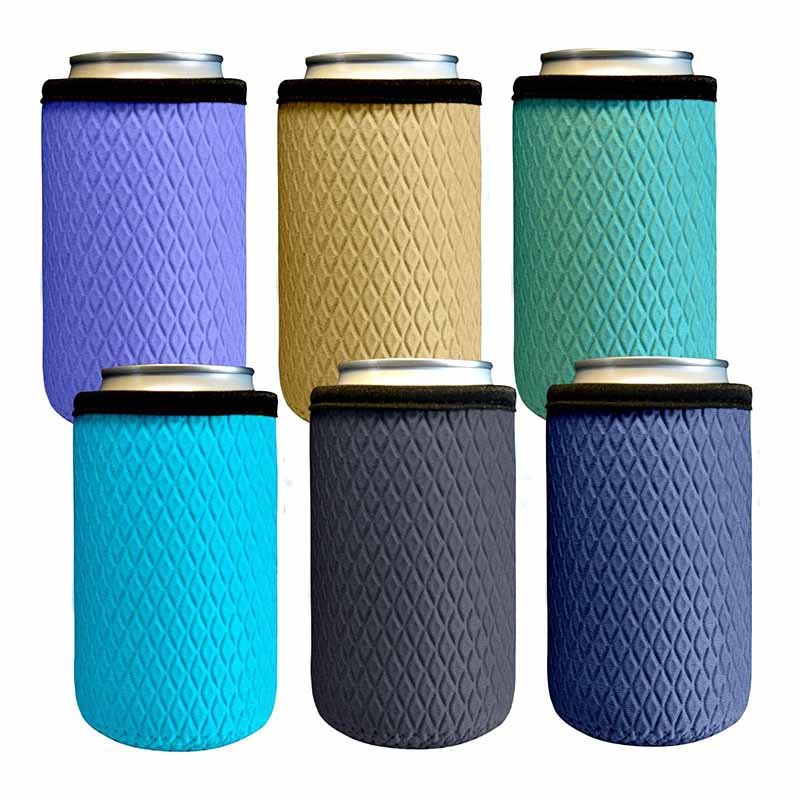
The most popular neoprene can cooler types are standard can sleeves, collapsible coolers, slim can coolers, bottle coolers, and zipper-wrap styles. Each one serves a different market need, from low-cost event giveaways to more polished retail or hospitality programs.
Which neoprene can cooler styles sell best?
The best-selling styles are usually the ones that match the widest drink formats and the easiest distribution methods. That is why standard 12 oz styles and collapsible versions remain so strong in the market. They are simple, easy to store, easy to ship, and familiar to end users.
In practice, the strongest-selling styles usually look like this:
| Style | Why It Sells | Best Channel |
|---|---|---|
| Standard can sleeve | Familiar, simple, broad appeal | Events, giveaways, bars |
| Collapsible can cooler | Ships flat, stores flat, lower freight burden | Promotions, mailers, bulk programs |
| Slim can cooler | Fits newer beverage formats | Beverage brands, younger consumer markets |
| Bottle cooler | Good for beer and glass bottle programs | Breweries, bars, weddings |
| Zipper-wrap cooler | More finished look and tighter fit | Retail, premium promo packs |
One reason collapsible styles do well is freight efficiency. Flat-folding construction can reduce packing volume, which matters a lot in large promotional orders. Another reason is easy distribution. People can slip them into bags, pockets, or event packs without much effort.
Current product pages also reflect how strong collapsible and slim styles have become. Several retailers promote slim can coolers specifically for 12 oz skinny cans used by seltzer and similar drink categories, and neoprene collapsible versions are positioned as durable, event-friendly, and easy to carry.
For customers planning a new line, the commercial takeaway is clear: start with the style that matches the beverage format and the distribution model, not just the cheapest shape to produce.
Which neoprene can cooler fits cans and bottles?
Fit matters more than many importers expect. If the sleeve is too loose, it looks sloppy and insulates less effectively. If it is too tight, users struggle to insert or remove the can. A good fit improves not just thermal performance, but also perceived quality.
The most common format groups are:
| Drink Format | Cooler Direction | What to Watch |
|---|---|---|
| Standard 12 oz can | Classic sleeve or collapsible cooler | Diameter tolerance and bottom recovery |
| 12 oz slim can | Narrower body pattern | Accurate stretch ratio |
| Longneck bottle | Taller neck profile | Neck taper and logo placement |
| Mixed use can/bottle | Flexible compromise pattern | Fit will be acceptable, not perfect |
Product listings show that some coolers are sold as dual-fit items for standard cans and bottles, while others are made specifically for slim cans or longneck bottles. That split is important because today’s beverage market is more fragmented than before. Energy drinks, hard seltzers, sparkling water, canned cocktails, and craft beer all create different packaging demands. 4imprint lists one style for standard 12 oz cans or bottles and even some larger formats, while Totally Promotional pushes dedicated slim-can versions for narrow beverages.
For factory development, correct fit depends on more than nominal size. The pattern must account for:
- neoprene thickness
- stretch behavior
- seam allowance
- gluing or stitching method
- whether the product is collapsible or structured
- how tightly the brand wants the sleeve to hug the container
This is why sample approval should always include real fit testing with the exact container type. A pattern that works for one beverage format may not feel right on another, even when the size difference looks small on paper.
Which neoprene can cooler works for promotions?
For promotions, the most effective styles are usually standard can coolers and collapsible coolers because they are easy to distribute, easy to decorate, and easy for customers to keep. They also give a strong printable area without adding too much product complexity.
Promotional customers usually care about five things first:
- low landed cost
- clear logo visibility
- broad audience appeal
- simple packaging and shipping
- repeat-use value after the event
That is exactly why can coolers remain strong in the promo market. Compared with many low-cost giveaways, they are more likely to be used again. A pen may disappear. A flyer may get thrown away. A cooler used at parties, sporting events, beach outings, and barbecues can continue showing the logo long after the campaign ends.
The market signals this clearly. Quality Logo Products describes collapsible neoprene KOOZIE-style products as strong promotional giveaways for beverage-related businesses and notes minimums such as 50 pieces on some neoprene insulator listings. Totally Promotional notes that some slim can coolers can be ordered in relatively small quantities, and certain full-color or same-design dual-side options are used to increase visual value without creating a completely custom retail product.
For customers, the smart approach is to choose the promo model based on campaign type:
| Campaign Type | Recommended Product Direction |
|---|---|
| Trade show giveaway | Collapsible standard can cooler |
| Brewery launch | Bottle cooler or premium stitched can cooler |
| Beach / resort merchandise | Full-color printed neoprene cooler |
| Sports event | Standard or slim-can cooler in team colors |
| Wedding / party favors | Bottle cooler or custom-color collapsible cooler |
That is where Oneier can add value. A factory with neoprene experience can help customers move beyond a generic giveaway and develop a product that fits the actual event, drink format, and brand image more precisely.
How Is Neoprene Can Cooler Manufactured?
Neoprene can cooler manufacturing is a step-by-step process that includes material preparation, printing, cutting, bonding or stitching, and final inspection. Each step directly affects the product’s appearance, durability, and cost, especially when custom color designs are involved.
How is neoprene can cooler material prepared?
The manufacturing process begins with neoprene sheet preparation. Neoprene itself is a foam material laminated with fabric layers on one or both sides. The most common structure for can coolers is:
- Polyester fabric + neoprene foam + polyester fabric
This sandwich structure gives the product:
- A printable surface
- Flexibility and stretch
- Insulation performance
Material thickness is one of the first decisions to make. The most common options are:
| Thickness | Feel | Use Case |
|---|---|---|
| 2mm | Lightweight, flexible | Budget promotions |
| 3mm | Balanced thickness | Most standard products |
| 5mm | Thick, premium feel | High-end retail |
Thicker material improves insulation and durability, but also increases:
- Material cost
- Shipping weight
- Production difficulty
Color also starts at this stage. Customers can choose:
- Pre-dyed fabric (solid color base)
- White fabric for full-color printing
For custom color projects, white laminated neoprene is usually preferred because it allows better color accuracy during printing.
How is neoprene can cooler cut and stitched?
Once materials are ready, the next step is cutting and shaping. This is where product consistency is controlled.
The process usually includes:
- Pattern design The factory creates cutting templates based on can size and product style.
- Die cutting or laser cutting
- Die cutting is faster and more cost-efficient for large orders
- Laser cutting offers higher precision for complex shapes
- Edge finishing Edges may be:
- Raw cut (lower cost)
- Folded and stitched (cleaner look)
- Bound with fabric tape (premium finish)
- Assembly (stitching or gluing)
| Method | Advantage | Limitation |
|---|---|---|
| Gluing | Smooth surface, low cost | Less durable over time |
| Flatlock stitching | Strong, flexible | Visible seams |
| Zigzag stitching | Reinforced edges | Slightly higher cost |
Collapsible coolers often use glued seams for flat folding, while premium products use stitching for durability.
Production efficiency depends heavily on this stage. A simple glued cooler can be produced faster, while stitched designs require more labor and time.
How is neoprene can cooler printed with color?
Printing is one of the most important steps because it determines how the final product looks to the customer.
There are three main printing methods:
| Method | Color Effect | Best For |
|---|---|---|
| Sublimation printing | Full-color, photo-quality | Complex designs |
| Screen printing | Solid colors, bold logos | Simple branding |
| Heat transfer | Detailed graphics | Medium complexity |
Sublimation printing is the most popular for custom color designs because:
- It allows unlimited colors
- It creates smooth, vibrant gradients
- The ink becomes part of the fabric (no cracking)
Screen printing is more cost-effective for:
- Large quantities
- Simple logos (1–3 colors)
Heat transfer sits between the two, offering flexibility but slightly lower durability than sublimation.
Color accuracy is also important, especially for brands with strict guidelines. Factories usually match colors using:
- Pantone references
- Sample approval before mass production
Common issues in printing include:
- Color deviation
- Blurry edges
- Ink fading
This is why experienced manufacturers control:
- Ink quality
- Temperature during printing
- Fabric compatibility
Oneier typically supports full-color sublimation with Pantone matching, ensuring consistent brand identity across large orders.
What Custom Color Designs Work for Neoprene Can Cooler?
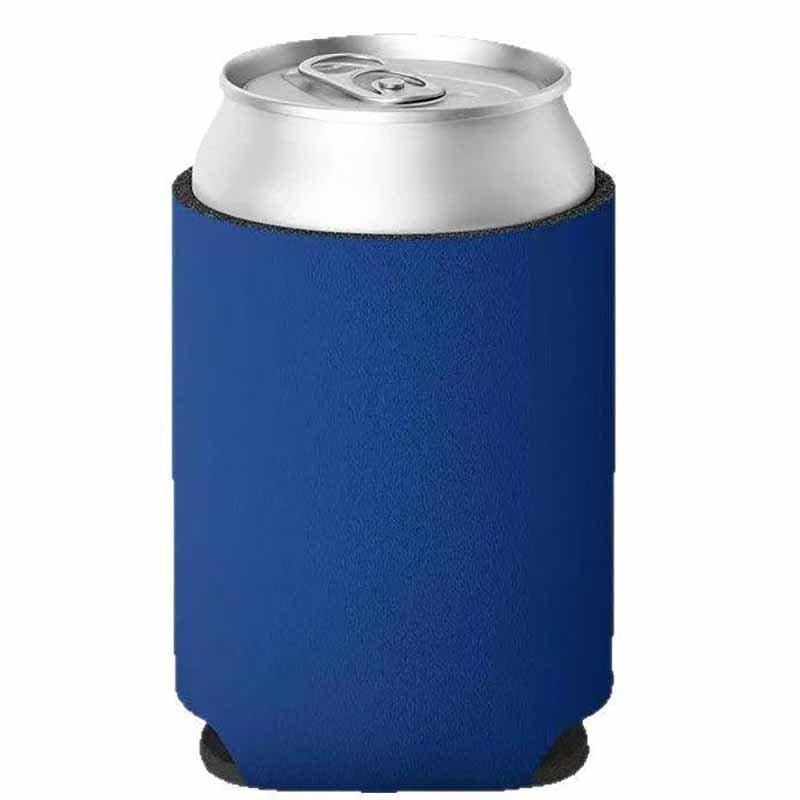
Custom color design is one of the biggest reasons brands choose neoprene can coolers. A strong design increases visibility, improves perceived value, and makes the product more likely to be kept and reused.
What printing methods for neoprene can cooler?
The choice of printing method depends on design complexity and order quantity.
Key selection logic:
- Use sublimation for:
- Full-color designs
- Gradients and photos
- Complex branding
- Use screen printing for:
- Simple logos
- Large-volume orders
- Cost-sensitive projects
- Use heat transfer for:
- Small runs
- Mid-level detail
Here is a quick comparison:
| Factor | Sublimation | Screen Printing | Heat Transfer |
|---|---|---|---|
| Color range | Unlimited | Limited | Medium |
| Cost per unit | Medium | Low (large qty) | Medium |
| Durability | High | Medium | Medium |
| Design flexibility | High | Low | Medium |
For most modern promotional products, sublimation is becoming the standard because it supports high visual impact.
How to match colors on neoprene can cooler?
Color matching is often overlooked, but it directly affects brand consistency.
Factories typically follow this process:
- Customer provides Pantone code or design file
- Factory creates digital mockup
- Sample is printed and approved
- Production follows approved sample
Challenges in color matching:
- Neoprene fabric absorbs ink differently than paper
- Lighting conditions affect perception
- Large-area printing may vary slightly
To reduce risk, customers should:
- Request pre-production samples
- Approve physical samples, not just digital files
- Allow small tolerance in color variation
A professional factory will maintain color consistency across batches, which is critical for repeat orders.
What designs make neoprene can cooler stand out?
In a crowded market, design determines whether a product gets noticed and used.
Popular design approaches include:
- Full-wrap graphics Covers entire surface for maximum impact
- Bold logo placement Simple but highly visible
- Color blocking Combines multiple solid colors
- Pattern-based design Repeating elements for visual identity
- Event-specific themes Seasonal or campaign-based designs
Here is a comparison of design strategies:
| Design Type | Impact Level | Cost Impact |
|---|---|---|
| Simple logo | Medium | Low |
| Multi-color logo | High | Medium |
| Full-wrap print | Very high | Medium |
| Custom artwork | Premium | High |
- Bright colors and gradients attract attention
- Clean, minimal logos appeal to premium brands
- Full-color designs dominate promotional campaigns
For brands, the goal is not just to “print a logo,” but to create a product people actually want to use.
How to Choose Neoprene Can Cooler Manufacturer?
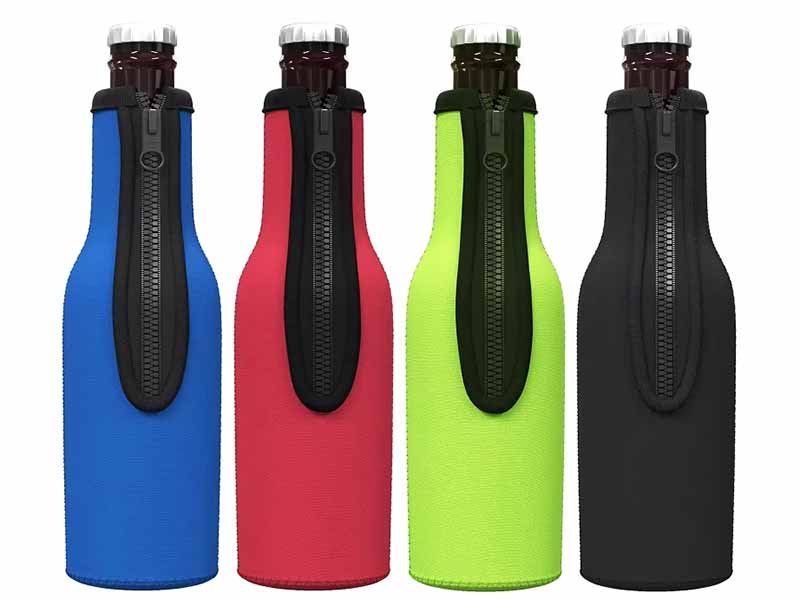
Choosing the right neoprene can cooler manufacturer has a direct impact on your product quality, brand image, delivery reliability, and long-term profitability. A good factory does more than produce—it helps you avoid costly mistakes, optimize your design, and scale your business smoothly.
How to evaluate neoprene can cooler factory?
When comparing manufacturers, it is important to look beyond price. The real value comes from consistency, communication, and technical capability.
Here are the key evaluation points:
| Evaluation Area | What to Look For | Why It Matters |
|---|---|---|
| Manufacturing experience | 10+ years in neoprene products | Reduces production risk |
| Material knowledge | Understanding of neoprene lamination and thickness | Ensures correct product performance |
| Printing capability | Sublimation, screen printing, heat transfer | Supports design flexibility |
| Sample development | 5–7 days sampling time | Faster product launch |
| Quality control | Inspection standards (AQL or internal QC system) | Reduces defects |
| Production capacity | Ability to handle large orders | Supports business growth |
| Communication | Clear and fast responses | Avoids delays and errors |
A reliable factory should be able to:
- Translate your idea into a workable product structure
- Recommend improvements to reduce cost or improve usability
- Identify risks early (fit issues, color mismatch, material problems)
- Provide accurate timelines for sampling and production
Oneier, with over 18 years of experience in neoprene product manufacturing, supports customers through the entire process—from concept development to final production—helping reduce trial-and-error costs.
What MOQ for neoprene can cooler manufacturing?
MOQ (Minimum Order Quantity) is one of the most important factors for customers, especially for small and medium-sized brands testing new products.
Typical MOQ ranges:
| Product Type | MOQ Range |
|---|---|
| Standard can cooler | 500–1000 pcs |
| Full-color sublimation cooler | 300–500 pcs |
| Custom shape or structure | 500–2000 pcs |
Factors that affect MOQ:
- Printing method (sublimation allows lower MOQ)
- Number of colors
- Complexity of design
- Material customization
Lower MOQ advantages:
- Reduces inventory risk
- Allows testing multiple designs
- Supports seasonal or limited editions
Oneier offers low MOQ customization, making it easier for brands to:
- Launch new products faster
- Test market demand
- Adjust designs based on feedback
This flexibility is especially valuable for:
- E-commerce sellers
- Promotional companies
- Startup brands
Why choose OEM neoprene can cooler manufacturing?
OEM manufacturing allows brands to focus on sales and marketing, while the factory handles production and technical execution.
Key benefits include:
- Lower investment compared to in-house production
- Access to professional manufacturing expertise
- Faster product development cycles
- Flexible scaling from small to large orders
Comparison of business models:
| Model | Advantages | Limitations |
|---|---|---|
| In-house production | Full control | High cost, complex setup |
| OEM manufacturing | Cost-efficient, scalable | Requires reliable partner |
| Wholesale buying | Fast and simple | Limited customization |
Most successful promotional product brands use OEM because it allows them to:
- Focus on branding and distribution
- React quickly to market trends
- Expand product lines without heavy investment
With Oneier’s OEM/ODM service, customers can move from idea to sample in as fast as 5–7 days, reducing time-to-market and improving competitiveness.
Why Is Custom Neoprene Can Cooler Manufacturing Growing?
Custom neoprene can cooler manufacturing is growing because brands are no longer competing only on price. They are competing on design, quality, and user experience. Customers expect products that look good, feel good, and represent a brand clearly.
Why are custom neoprene can cooler trending?
Several market shifts are driving this growth:
- Increase in branded promotional products
- Growth of outdoor and social activities
- Rising demand for reusable products
- Stronger focus on visual branding
Neoprene can coolers meet all these needs because they:
- Are reusable and durable
- Offer large printable surfaces
- Work across multiple industries (events, hospitality, retail)
From a business perspective, custom coolers provide:
- High brand visibility
- Low cost per impression
- Long product lifespan
This makes them one of the most efficient promotional tools available.
How does private label neoprene can cooler help brands?
Private label products allow brands to create unique identity without owning manufacturing facilities.
Benefits include:
- Full control over product design
- Ability to build brand recognition
- Higher profit margins compared to generic products
- Stronger customer loyalty
Market positioning comparison:
| Product Type | Brand Strength | Profit Margin |
|---|---|---|
| Generic cooler | Low | Low |
| Private label cooler | Medium | Medium |
| Fully customized cooler | High | High |
Many brands start with simple logo printing, then move toward:
- Full-color designs
- Custom shapes
- Premium materials
Oneier supports this transition by offering flexible production solutions that grow with your brand.
How can manufacturers support brand growth?
A strong manufacturer becomes a long-term partner, not just a supplier.
Key support areas include:
- Product development Helping refine designs and improve usability
- Cost optimization Suggesting alternative materials or processes
- Quality consistency Maintaining stable production across batches
- Lead time control Ensuring timely delivery for seasonal demand
- Scalability Supporting growth from small orders to large volumes
Oneier’s integrated system (material sourcing + production + printing) allows better control over:
- Cost
- Quality
- Delivery time
This is especially important for brands planning long-term growth.
Start Your Custom Neoprene Can Cooler Project with Oneier
If you are planning to develop a neoprene can cooler with custom color designs, choosing the right manufacturing partner is the first step toward a successful product.
Whether you need:
- A promotional can cooler
- A retail-ready product line
- Or a private label solution
Oneier can help you turn your idea into a product that stands out in the market.
Send us your design, logo, or idea today, and get a professional quotation within 24 hours.