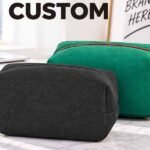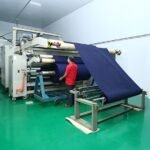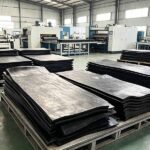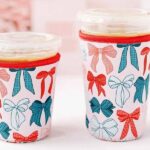
Choosing between OEM and ODM manufacturing may appear to be a simple sourcing decision, but it influences nearly every part of a neoprene product’s commercial life. The manufacturing model affects who controls the design, how quickly the first sample can be completed, how much development capital is required, whether competitors can source a similar product, and how easily the product can be improved after launch. A decision that saves several weeks at the beginning may create limitations later, while a heavily customized product can consume resources before market demand has been proven.
OEM is generally better for brands that already have a clear design, defined specifications, proprietary features, or long-term differentiation goals. ODM is usually better for brands that need a faster route to market, want to use a proven product structure, or require manufacturing support to turn an early idea into a workable sample. Many brands achieve the best balance through a hybrid model that combines an existing factory platform with selected custom features.
Consider a common sourcing situation. A brand finds a neoprene sleeve that looks almost right, changes the color, adds a logo, and launches quickly. Sales are encouraging, but customers begin asking for a better zipper position, improved protection, and a size that fits a newer device. The original shortcut has now become the starting point for a more technical product-development project. Understanding OEM and ODM before sampling helps brands decide which work should be completed now, which can wait, and which features truly deserve proprietary development.
What Are OEM and ODM Neoprene Products?
OEM neoprene manufacturing follows a buyer-defined product specification, while ODM manufacturing begins with a manufacturer-developed design, pattern, or product platform. OEM usually provides more control over product identity and technical details. ODM normally reduces the amount of development work required before sampling. The right choice depends on the maturity of the product idea, available technical resources, launch schedule, budget, and need for exclusivity.
What Does OEM Mean?
OEM stands for original equipment manufacturing. In an OEM neoprene project, the buyer normally owns or controls the main product concept and provides enough information for the factory to reproduce, engineer, or industrialize it. The input may include a physical sample, technical drawing, measurement chart, bill of materials, tech pack, artwork file, packaging specification, performance requirement, or a combination of these documents.
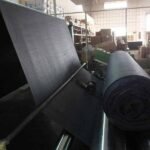
The manufacturer’s responsibility is not limited to cutting and sewing the supplied design. A capable OEM partner must convert the buyer’s information into a repeatable production standard. That process can involve confirming foam thickness, checking stretch direction, identifying the laminated surface fabric, preparing production patterns, reviewing seam allowances, testing printing methods, selecting accessories, defining tolerances, and determining whether the intended construction can remain consistent during bulk manufacturing.
OEM is especially suitable when the product has features that customers will notice or competitors cannot easily replace. A sports brand may require a support wrap with a specific compression profile. An electronics brand may need a neoprene sleeve that fits several device models without excessive movement. A beverage company may require a bottle holder with a proprietary silhouette, reinforced carrying point, and packaging system developed for retail display.
A detailed design does not remove the need for factory input. Neoprene is flexible, compressible, and sensitive to cutting, lamination, heat, adhesive, and seam construction. Measurements that look precise in a digital drawing may not behave identically in a finished soft product. An experienced manufacturer should therefore challenge specifications that could cause wrinkling, uncomfortable seam buildup, weak stress points, printing distortion, excessive material waste, or inconsistent bulk production.
What Does ODM Mean?
ODM stands for original design manufacturing. In an ODM neoprene project, the manufacturer contributes more of the product concept, pattern structure, material combination, or production solution. The buyer may begin with a target customer, intended use, reference image, estimated retail price, branding direction, delivery date, or list of desired features rather than a complete technical package.
The manufacturer may recommend an existing product platform and adapt its dimensions, colors, laminated fabric, edge finishing, handle design, logo method, packaging, closure system, or internal organization. Because the basic construction has already been sampled or produced, the path to a workable first sample can be shorter than developing every panel and component from the beginning.
ODM is useful for companies that understand their market but do not maintain an internal soft-goods development team. A fitness brand may know that it wants a neoprene waist support for everyday training but may not know how many panels should be used, which closure position provides balanced compression, or how the edge should be finished to reduce skin irritation. A manufacturer with relevant experience can turn those commercial requirements into a testable prototype.
A credible ODM service should involve more than placing a logo on a generic product. True ODM development may include functional adjustments, material changes, pattern revisions, accessory selection, cost engineering, packaging improvement, and repeated sample evaluation. The amount of work varies, so buyers should define exactly which parts are based on an existing design and which parts will be developed specifically for their brand.
Why Are the Terms Often Confused?
OEM and ODM are not used consistently across every supplier, sourcing agency, or manufacturing region. Some factories describe any customized order as OEM, even when the buyer selects from an existing catalog. Others use ODM for projects in which the customer supplies an idea and the factory completes the engineering. Private label is also frequently used for products that receive only logo, color, label, or packaging changes.
Because the terminology is inconsistent, buyers should not make decisions based only on the title printed on a quotation. The project documents should explain who provides the pattern, who specifies the materials, which modifications are exclusive, whether the base design can be sold to other customers, who owns tooling, and whether technical files can be transferred after development.
| Decision Area | OEM Neoprene Project | ODM Neoprene Project |
|---|---|---|
| Starting point | Tech pack, physical sample, drawing, or defined specification | Product idea, market need, reference image, or existing platform |
| Design leadership | Mainly controlled by the buyer | Shared or mainly led by the manufacturer |
| Pattern development | Usually created or controlled for the buyer | Often adapted from an existing pattern |
| Technical workload | Higher for the buyer and factory | Usually lower for the buyer |
| Product uniqueness | Potentially high | Depends on the level of modification |
| First-sample speed | Slower when engineering is required | Often faster with a mature structure |
| Internal expertise | More buyer-side technical input required | Manufacturer provides more development support |
| IP documentation | Usually critical | Important when modifications or exclusivity are requested |
| Typical use | Proprietary products and mature programs | Faster launches and guided product development |
The most useful sourcing question is therefore not simply, “Do you offer OEM or ODM?” A better question is, “Which parts of this product will be developed exclusively for us, which parts already exist, and who will control the resulting technical files?” That question reveals the real scope of the manufacturing relationship.
Is Private Label the Same as ODM?
Private label, ODM, and OEM can overlap, but they describe different levels of product control. Private label normally starts with a nearly finished product. The buyer changes the logo, label, color, packaging, or a small number of visible details, while the core pattern and construction remain unchanged. It offers the fastest route to branding but usually creates the least structural differentiation.
ODM may begin with an existing platform, but the manufacturer and buyer can modify more meaningful features. The dimensions may be changed for a particular device, the closure may be repositioned, a handle may be reinforced, a pocket may be added, or the laminated fabric may be selected for a different appearance or performance level. These changes can produce a more distinctive product without requiring a completely new engineering process.
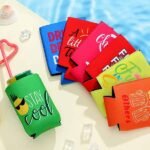
OEM normally begins when the buyer controls the design intent and expects the manufacturer to follow a defined specification. A promotional neoprene can cooler with a printed logo may be private label. A bottle sleeve adapted from a factory pattern with a new shape and carrying system may be ODM. A patented protective sleeve with buyer-controlled dimensions, materials, seam construction, artwork placement, and packaging would normally fall under OEM.
Which Model Gives You More Product Control?
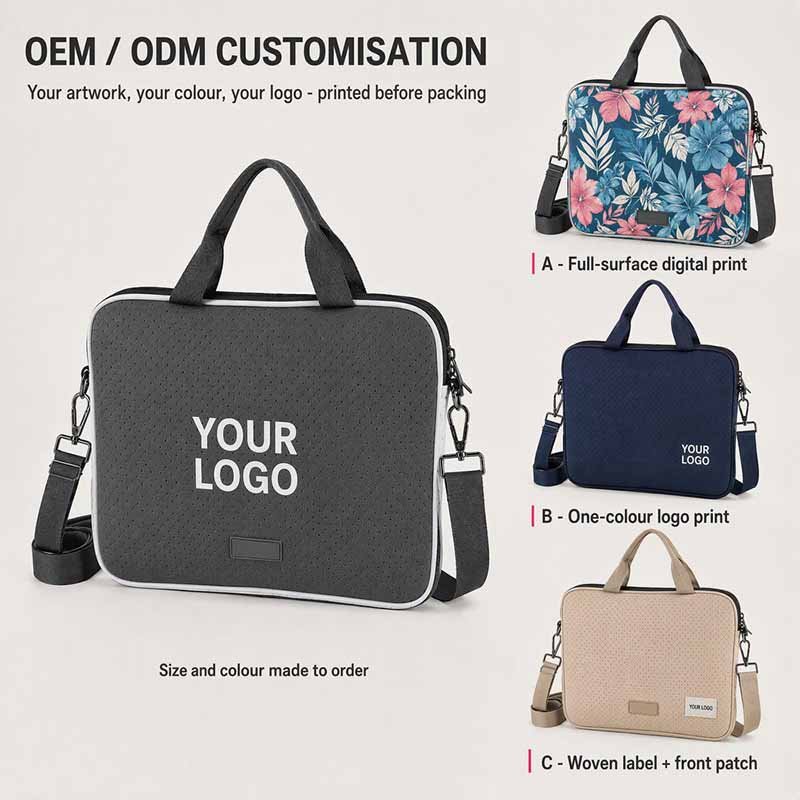
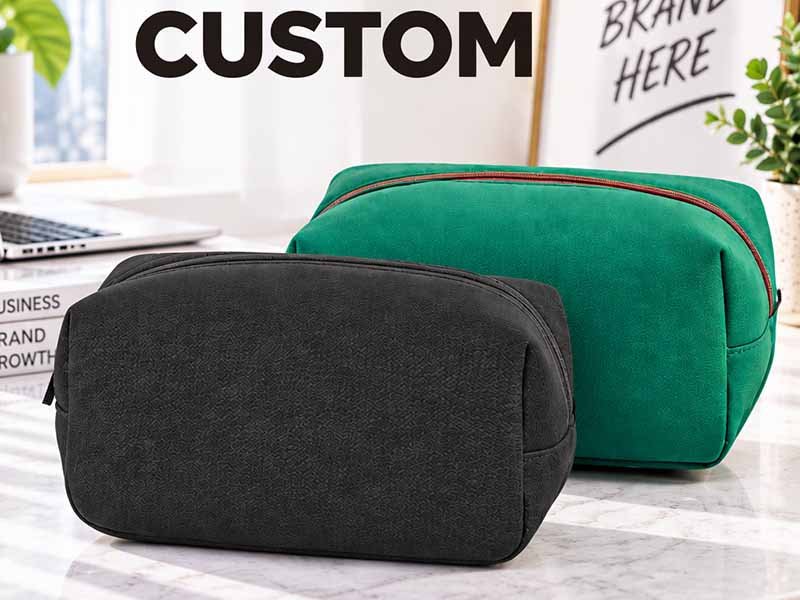
OEM normally provides greater control over dimensions, materials, construction, tolerances, appearance, performance, packaging, and intellectual property. ODM gives buyers control over selected customization points while retaining part of a factory-developed foundation. Greater control can support stronger differentiation, but it also requires clearer specifications, more approvals, and greater responsibility for decisions that affect cost, usability, manufacturability, and quality consistency.
How Much Design Control Do You Need?
Product control should be considered in layers rather than treated as a simple yes-or-no decision. A buyer may control the logo and packaging but allow the factory to determine seam allowances. Another buyer may control the exact dimensions, closure position, foam specification, laminated fabric, internal reinforcement, and inspection tolerance. Both projects are customized, but the depth of control is very different.
For simple promotional products, extensive engineering may provide little commercial return. A company ordering neoprene can coolers for an event may care mainly about print clarity, finished size, color consistency, edge finishing, and delivery. Creating a proprietary foam system or complex pattern would add cost without creating meaningful value for the end user.
Performance-oriented products require tighter control. Sports supports, diving accessories, protective covers, laptop sleeves, insulated carriers, and wearable neoprene products can fail even when they look correct. Stretch direction, seam position, compression, edge comfort, zipper protection, reinforcement, and dimensional tolerance may directly influence performance and customer satisfaction.
Brands can manage development more efficiently by dividing requirements into three groups. Non-negotiable requirements include proprietary features, critical dimensions, performance expectations, safety needs, and visible brand elements. Controlled preferences include colors, lining options, binding details, zipper styles, logo processes, and packaging choices. Manufacturer-led details include seam allowances, cutting efficiency, internal reinforcement methods, and realistic production tolerances.
This structure prevents a brand from overengineering details that customers never notice while protecting the features that support product value. It also gives the manufacturer enough flexibility to recommend solutions that reduce waste, improve consistency, and prevent avoidable production difficulties.
Which Neoprene Specifications Matter?
Neoprene is often discussed as though it were one standard material, but commercial neoprene products can use different foam compositions, thicknesses, densities, hardness levels, stretch properties, surface fabrics, finishes, and lamination methods. Two suppliers may both quote a 3 mm material, yet the samples can differ noticeably in compression, flexibility, surface feel, recovery, odor, weight, and appearance.
Thickness is one of the easiest specifications to compare, but it should never be selected in isolation. Increasing thickness may improve cushioning or thermal insulation, yet it can also make the product heavier, less flexible, more difficult to bind, and more expensive to ship. A thicker material can also create bulky seam intersections, particularly where several folded panels, bindings, handles, or zipper tapes meet.
The laminated surface fabric influences printing, abrasion resistance, stretch, touch, and visual quality. Polyester is commonly used where printing efficiency and cost control are important. Nylon can provide a smoother surface and premium hand feel. Stretch textiles may suit supports or fitted products. Hook-compatible surfaces, textured fabrics, and abrasion-resistant laminations may be useful for specialized applications.
| Common Product Type | Typical Planning Thickness | Important Control Points |
|---|---|---|
| Promotional can cooler | 2–4 mm | Circumference, printing, bottom seam, edge finish |
| Bottle holder | 3–5 mm | Stretch recovery, handle reinforcement, fit tolerance |
| Laptop or tablet sleeve | 3–6 mm | Device clearance, cushioning, lining, zipper protection |
| Lunch bag or soft cooler | 3–6 mm | Insulation, closure, leakage control, handle strength |
| Sports support | 2–5 mm | Compression, comfort, stretch direction, closure placement |
| Diving accessory | 2–7 mm | Thermal performance, fit, flexibility, seam construction |
| Protective equipment cover | 3–10 mm | Impact protection, abrasion resistance, opening design |
These ranges are useful for early planning, but they are not universal product specifications. The final selection should consider intended use, product dimensions, climate, target price, expected lifespan, packaging volume, required testing, and the amount of bending or compression the product will experience during use.
Who Owns the Design?
Design ownership is one of the most important commercial differences between OEM and ODM, yet it is often discussed only after a successful sample has already been developed. At that point, the buyer may discover that it owns the logo and packaging but does not own the base pattern, cutting files, tooling, or technical construction.
When the buyer provides original drawings, concepts, artwork, measurements, and technical specifications, the manufacturing agreement should define how those assets may be used. The agreement may restrict displaying the sample, supplying an identical product to another customer, publishing project images, retaining confidential files, or using custom features in a factory catalog.
ODM ownership can be more complex. The factory may retain ownership of the original platform while the buyer owns the logo, graphics, packaging, and specifically commissioned modifications. Changing a color, adding a label, or adjusting one pocket does not automatically make the complete product exclusive. Exclusivity should be negotiated, documented, and linked to clearly defined design elements.
Buyers should confirm whether the base pattern is already used by other brands, which modifications are exclusive, who owns new molds or cutting dies, whether source files will be released, and whether the product can be transferred to another factory. Clear answers at the beginning can prevent disputes when the product becomes commercially successful.
Does More Control Always Produce a Better Product?
More control produces better results only when the buyer understands what should be controlled. A detailed specification can reduce ambiguity, but excessive restrictions can lock the product into a construction that is expensive, uncomfortable, inefficient, or difficult to reproduce. Neoprene products require a balance between design intention and the behavior of flexible laminated materials.
A brand may insist on a seam position because it looks clean in a rendering, but the seam may create uncomfortable pressure when the product is worn. A buyer may request extremely tight tolerances that cannot be maintained consistently after the foam is compressed, laminated, cut, sewn, packed, and stored. A large print may be placed across a high-stretch area where distortion or cracking becomes more likely.
Strong OEM projects are collaborative. The buyer protects the customer experience, brand identity, and proprietary features, while the manufacturer identifies risks in pattern geometry, seam buildup, printing, cutting, binding, accessory attachment, material recovery, and bulk consistency. The approved result should preserve the product’s commercial purpose without making production unnecessarily fragile.
ODM also requires active buyer involvement. A proven factory design may be easy to manufacture, but it does not automatically match the buyer’s target audience, retail price, brand positioning, packaging method, or sales channel. The buyer still needs to test the sample, review customer-facing details, and define which improvements are necessary before bulk production.
How Do OEM and ODM Affect Cost and Lead Time?
ODM often reduces initial development cost and shortens sampling because it uses an existing pattern or proven construction. OEM normally requires more specification review, material matching, pattern development, testing, and revision. However, final unit cost depends more on materials, labor, accessories, logo processes, packaging, quantity, and quality requirements than on whether the project is labeled OEM or ODM.
What Costs Should You Compare?
Buyers frequently compare suppliers using only the quoted unit price, but this approach can hide the actual cost of developing and launching a neoprene product. An OEM quotation may include pattern work, material trials, printing setup, accessory development, multiple sample rounds, testing, and stricter inspection requirements. An ODM quotation may appear lower because the factory has already completed part of that work.
The total project cost can include sample fees, pattern or grading charges, cutting dies, molds, printing screens, custom-dyed fabric minimums, special zipper or hook-and-loop minimums, packaging development, laboratory testing, sample freight, bulk freight, inspection expenses, import duties, repacking, and possible rework. Some of these costs appear before production, while others become visible only after the product reaches the market.
A lower unit price can become expensive when the product generates returns, poor reviews, delivery delays, or replacement inventory. A sleeve that does not fit the intended device, a support that causes discomfort, or a bottle holder with a weak handle may require a complete redesign. The cost of new photography, updated packaging, listing changes, and unsold inventory may exceed the original price difference between suppliers.
A better comparison evaluates the landed cost and the expected cost over the product’s commercial life. Buyers should consider how many sample rounds are likely, whether the material can remain available, how easily the product can be inspected, whether packaging is efficient, and how much risk exists if the first production run does not meet expectations.
How Long Does Development Take?
The time required to reach an approved sample depends on the quality of the starting information. A complete OEM package can sometimes move faster than a vague ODM brief because the manufacturer does not need to interpret the product’s purpose. A poorly prepared OEM request may move slowly because every missing measurement, material, or construction detail requires another communication cycle.
ODM can shorten the first-sample stage when the factory already has an appropriate pattern, material combination, and assembly method. The development advantage becomes smaller when the buyer changes the target user, function, dimensions, cost level, or packaging direction after sampling has started. Repeated strategic changes usually create more delay than the manufacturing model itself.
| Project Stage | Straightforward ODM | Defined OEM | Complex OEM or New Development |
|---|---|---|---|
| Initial technical review | 1–3 working days | 2–5 working days | 3–10 working days |
| Material confirmation | 2–7 working days | 3–10 working days | 1–3 weeks for special materials |
| First sample | About 5–10 working days | About 7–15 working days | About 2–4 weeks |
| Revision round | 5–10 working days | 7–15 working days | About 1–3 weeks |
| Pre-production confirmation | 3–7 working days | 3–10 working days | About 5–15 working days |
| Typical bulk production | About 20–35 days | About 25–45 days | About 35–60 days |
These figures are practical planning ranges rather than guaranteed schedules. Custom laminations, special colors, new tooling, laboratory testing, complex printing, multiple sizes, high SKU counts, peak-season capacity, international holidays, and slow approval cycles can extend the project. Buyers should also include sample shipping time and internal review time when planning a launch.
The quickest project is normally the one with the clearest decision process. A single authorized person should consolidate feedback from design, sales, quality, compliance, and packaging teams. Conflicting comments from several departments can turn a seven-day revision into a month-long cycle even when the factory completes its work on schedule.
How Does MOQ Change?
MOQ is usually determined by the least flexible component in the product rather than the number of pieces a sewing line can assemble. A factory may be able to cut and sew 200 units, but a supplier may require a larger quantity for a custom laminated color. Zipper tape, printed textile, molded labels, custom buckles, hook-and-loop colors, packaging, or special adhesives can each introduce separate minimums.
ODM can support a more manageable opening quantity when it uses available foam, standard laminated colors, existing accessories, established patterns, and proven packaging. OEM requirements may raise MOQ when the project introduces custom specifications across several components or requires materials that cannot be purchased efficiently in small quantities.
Brands can reduce initial MOQ pressure by limiting the number of colors, using one size during validation, selecting available material colors, choosing standard bindings and zippers, using digital printing when technically suitable, avoiding custom-molded accessories, and applying an existing packaging structure. Related SKUs can sometimes share materials or packaging components to create better purchasing efficiency.
Selected Szoneier custom soft-goods projects can begin from approximately 200 pieces, although the exact MOQ depends on material availability, product structure, logo process, accessories, colors, packaging, testing requirements, and whether custom tooling is needed. The company positions itself as a factory-based OEM/ODM manufacturer with more than 18 years of experience in custom bags, neoprene products, sewn soft goods, sampling, quality control, and export delivery.
Is ODM Always Cheaper?
ODM is often less expensive at the beginning because the factory has already absorbed some pattern-development and process-learning costs. This advantage can be meaningful for seasonal products, promotional programs, uncertain demand, or a brand entering a new category. The buyer can focus available capital on packaging, marketing, inventory, and customer acquisition instead of developing every structural detail.
The economics may change when the item becomes a long-term core product. A shared ODM structure can be easy for competitors to source, making price comparison more intense. The brand may need to spend more on advertising and visual presentation to differentiate a product that looks similar to several alternatives. It may eventually fund a second development program to create a stronger competitive position.
OEM requires more investment at the start, but a unique structure, improved fit, better packaging efficiency, reduced defect rate, or stronger customer experience can create value over repeated production runs. The development cost can be distributed across several years of sales, multiple colors, related sizes, or an expanded product family.
The relevant question is not whether ODM has the lowest opening quotation. The relevant question is which approach creates the best total commercial result over the expected life of the product. Short-lived items and untested concepts often benefit from ODM, while established products with meaningful volume may justify deeper OEM investment.
What Risks Should Brands Compare?
OEM risk is concentrated in specification accuracy, engineering choices, development investment, and intellectual-property protection. ODM risk is concentrated in limited exclusivity, similarity to competing products, dependence on the supplier’s platform, and reduced control over technical details. Both models carry material, quality, compliance, communication, and delivery risks, so buyers should evaluate the complete manufacturing system instead of relying on a low price or attractive sample.
What Can Go Wrong in OEM?
OEM projects often fail when the specification appears complete but does not define the details that control production. A tech pack may list a finished dimension without explaining how it should be measured or what tolerance is acceptable. It may specify 3 mm neoprene without defining the laminated surface, stretch behavior, density, hardness, or acceptable variation.
Visual drawings may show a clean finished edge but fail to state whether it should be raw cut, overlocked, bound, folded, glued, or stitched. The reference sample may use an internal reinforcement that cannot be seen without disassembly. Artwork may cross a seam or high-stretch area, creating distortion during use. These gaps force production teams to make assumptions.
Material substitution is another risk. A factory may replace a foam or laminated textile because the original material is unavailable, too expensive, or below the supplier’s minimum. Even when the replacement looks similar, it may change stretch, recovery, surface feel, odor, color, printing behavior, or durability. Substitutions should therefore require written approval and, when necessary, a revised sample.
The safest OEM system uses one controlled set of documents. The approved sample, measurement chart, bill of materials, color references, artwork files, packaging standard, and written quality criteria should agree with one another. When instructions conflict, the purchase order should identify which document has priority and how changes will be approved.
What Can Go Wrong in ODM?
ODM projects can feel less risky because the factory already knows how to make the basic product. That familiarity may encourage buyers to skip technical and commercial questions. An attractive sample may be offered to multiple brands, the selected material may not match the expected usage level, or the original product may have been designed for a different customer group.
A factory platform that performs well as a promotional item may not be suitable for a premium retail brand. A generic sports support may fit average users but fail to provide the compression, comfort, or sizing consistency expected by a specialized fitness audience. A neoprene bag developed for domestic distribution may use packaging that is inefficient for international e-commerce fulfillment.
ODM buyers should avoid selecting features only because they are already available. Every feature should serve the target customer, retail price, brand identity, or sales channel. The manufacturer should explain which parts of the design are proven, which components are being changed, and whether those changes require new testing or production validation.
Dependence on factory-owned tooling can also create long-term risk. When the manufacturer owns the pattern, mold, or proprietary process, moving production to another supplier may require redevelopment. That dependence may be acceptable for a short promotional project but more serious for a high-volume product expected to remain in the range for several years.
How Should Quality Be Controlled?
Quality control should begin before the purchase order enters mass production. Final inspection can identify visible defects, incorrect packaging, or measurement problems, but it cannot fully correct the wrong material, uncomfortable construction, weak functional design, or poor fit. The quality plan should therefore follow the product from material approval through shipment.
Material approval should confirm thickness, laminated surface, color, hand feel, stretch, recovery, odor expectations, and any required compliance documentation. Construction approval should define seam type, stitch density, edge treatment, reinforcement points, zipper protection, handle attachment, closure placement, adhesive use, and acceptable workmanship.
Measurement approval should identify where every important dimension begins and ends, how flexible parts are positioned during measurement, and which tolerances are realistic. A neoprene product can change shape when compressed or stretched, so measurement methods must be repeatable. Appearance approval should address artwork position, print size, color targets, wrinkles, stains, edge cleanliness, and allowable visual variation.
A pre-production sample should use intended bulk materials and production methods. In-line inspection should take place early enough to correct problems before the entire order is completed. Final inspection should cover workmanship, dimensions, function, accessories, packaging, labeling, carton information, quantities, and cleanliness.
The inspection depth should reflect product risk. A promotional can cooler does not require the same control system as a medical support, child-related product, diving accessory, load-bearing carrier, or protective equipment cover. Quality standards should be proportionate, measurable, and linked to how customers actually use the product.
What Should a Supplier Prove?
A professional website, polished quotation, and attractive sample can create a strong first impression, but they do not prove that a supplier can control bulk production. Serious buyers should look for evidence that the manufacturer understands materials, pattern development, sampling, production coordination, quality inspection, packaging, and export delivery.
Useful evidence can include a sample-room review, material swatches, technical explanations, similar product examples, production-process photographs, sample revision records, measurement reports, inspection checklists, packaging standards, and test reports that apply to the actual product or material. A video factory review can help buyers evaluate cutting, sewing, quality-control, packaging, and warehouse conditions before placing a larger order.
Buyers should also ask which processes are completed internally and which are handled by specialized partners. Neoprene lamination, printing, molded labels, adhesive bonding, embroidery, packaging, and laboratory testing may involve different suppliers. Outsourcing is not automatically a weakness, but responsibility must remain clear and traceable.
A reliable supplier will not respond to every request with an immediate promise. Experienced manufacturers identify where a requirement may create cost, lead-time, consistency, safety, or performance risk. Honest technical resistance during development is often more valuable than effortless agreement followed by problems during bulk production.
Which Model Is Better for Your Brand?
OEM is usually better when a brand has a proven concept, defined technical requirements, proprietary features, internal product knowledge, and a strong need for long-term differentiation. ODM is usually better when speed, controlled development cost, and access to proven construction matter more than complete originality. A hybrid approach often provides the best balance by combining an existing platform with selected custom features.
Which Model Fits Your Brand Stage?
A company developing its first neoprene product faces a different decision from an established retailer replacing a long-term supplier. Early-stage product teams may understand their target customer but lack reliable data about preferred dimensions, materials, functions, packaging, and acceptable retail pricing. Heavy investment in a completely original structure can create unnecessary inventory and development risk before demand is proven.
A well-selected ODM platform allows an early-stage brand to test the category while retaining control over visible branding, material level, colors, packaging, and selected features. Customer feedback from the first production run can then guide more technical improvements. This approach turns the initial launch into a controlled learning process rather than an irreversible engineering commitment.
Established brands often have stronger reasons to choose OEM. They may already understand return rates, customer complaints, packaging limits, best-selling sizes, performance gaps, and expected order volume. Their internal teams can provide clearer specifications, and the projected sales volume can justify deeper pattern development, testing, tooling, and quality control.
| Brand Situation | Better Starting Model | Main Reason |
|---|---|---|
| First product in a new category | ODM or hybrid | Faster validation with less development work |
| Mature product changing supplier | OEM | Existing specification and performance history |
| Promotional or event product | ODM or private label | Speed and branding matter more than exclusivity |
| Proprietary sports product | OEM | Fit, compression, materials, and IP require control |
| Seasonal retail program | ODM or hybrid | Timeline and inventory exposure are critical |
| Long-term flagship SKU | OEM | Differentiation can justify development investment |
| Buyer has only reference images | ODM | Manufacturer must create the technical solution |
| Buyer has a complete tech pack | OEM | Product requirements are already buyer-defined |
| Multi-SKU brand collection | Hybrid | Shared materials and platforms reduce development time |
| Product demand is uncertain | ODM | Limits early engineering and tooling exposure |
The correct model can also vary across one product range. A brand may use OEM for a flagship protective sleeve, ODM for matching accessory pouches, and private label for promotional can coolers. Development resources should be concentrated where unique design creates meaningful customer value.
Can You Combine OEM and ODM?
OEM and ODM do not need to be treated as permanent or mutually exclusive choices. A hybrid project can begin with a factory-developed pattern while introducing buyer-controlled features such as an exclusive front profile, custom pocket system, upgraded lining, special print layout, reinforced handle, unique closure, or proprietary packaging.
Another practical strategy is to launch through ODM and move toward OEM after collecting market data. The first version reveals whether users are satisfied with fit, comfort, capacity, closure strength, material thickness, and packaging. The second version can then focus development resources on the problems customers actually experience rather than assumptions made before launch.
A hybrid approach is also useful for product families. A brand may develop one original core structure and adapt factory-standard patterns for lower-priority accessories. Shared materials, colors, bindings, labels, and packaging can keep the collection visually consistent even when the level of structural customization varies between SKUs.
This strategy protects capital and reduces unnecessary complexity. Not every item deserves a completely original pattern, and not every product creates competitive advantage through structure. The purpose of customization is not to maximize the number of unique components. It is to invest in the details that customers notice, use, and value.
What Questions Should You Ask Before Choosing?
Brands should answer several internal questions before contacting a manufacturer. The team should determine whether it already has a complete product specification, which features create customer value, whether the design must be exclusive, how quickly the product needs to launch, and how much inventory risk the business can accept.
The expected product life also matters. A short promotional campaign may not justify extensive proprietary development. A core product expected to remain in the range for several years may deserve stronger engineering, clearer ownership, more testing, and a more controlled supply chain.
Buyers should also evaluate their internal ability to approve technical decisions. OEM development requires timely feedback on materials, dimensions, artwork, construction, packaging, and tolerances. When no one inside the company can make these decisions, the project may become slow and inconsistent even with a capable manufacturer.
Before choosing a model, clarify the following points:
- Do we have a complete tech pack, sample, or measurement standard?
- Which product features create meaningful differentiation?
- Does the design need to be exclusive?
- What is the realistic opening quantity?
- How quickly must the product reach the market?
- How many sample revisions can the schedule support?
- Who will approve technical decisions?
- Are custom materials commercially justified?
- Which product tests are required?
- How much inventory risk can the business accept?
- Will the product remain in the range for several years?
- Who owns patterns, molds, dies, and technical files?
- Can the supplier offer the base design to another buyer?
- How will sample standards be transferred into bulk production?
- What happens when an approved material becomes unavailable?
The answers normally reveal the most appropriate direction. Brands that require exclusivity, precise performance, long-term production, and strong differentiation usually move toward OEM. Brands that prioritize speed, manageable initial investment, and manufacturer-led development usually gain more from ODM.
How Should You Start the Project?
A useful OEM inquiry should contain more than a request for price. Buyers should provide the latest technical drawing, measurement chart, physical sample or reference photographs, expected quantity, target market, material requirements, artwork, packaging expectations, testing needs, delivery country, and required launch date. Requirements that remain open to recommendation should be clearly marked.
An ODM inquiry should explain the intended user, product function, target retail position, expected quantity, approximate dimensions, preferred launch date, branding direction, sales channel, and examples of products the buyer likes or dislikes. The manufacturer should understand what the product is expected to achieve, not merely what it should resemble.
The first technical review should identify whether the project is truly OEM, ODM, private label, or a hybrid. It should also identify missing information, material risks, expected sample stages, likely MOQ drivers, testing requirements, packaging considerations, and the decisions that must be made before a reliable quotation can be issued.
Szoneier supports both OEM and ODM development for custom neoprene products and related sewn soft goods. Buyers can submit a tech pack, physical sample, drawing, or detailed specification for OEM review, or begin with a reference image, use case, target material, estimated quantity, and brand concept for ODM development. Its manufacturing system covers material sourcing, pattern development, sampling, sewing production, quality inspection, packaging, and export delivery.
For a project-specific assessment, send your product files, reference images, expected quantity, target market, packaging requirements, and delivery country to info@szoneier.com. The team can review whether OEM, ODM, private label, or a hybrid approach offers the most practical route from concept to approved sample and stable bulk production.