
Choosing a custom neoprene manufacturer can look straightforward until several suppliers quote what appears to be the same product at very different prices. One factory may calculate the cost using firmer foam, stronger lamination, reinforced seams, controlled printing, and retail-ready packaging. Another may quietly assume thinner material, simpler stitching, generic accessories, and loose inspection standards. Without a written comparison method, a buyer may select the lowest price while unknowingly approving a completely different product.
To choose a custom neoprene products manufacturer in China, first define the product, performance, material, quantity, packaging, testing, and delivery requirements. Then verify the factory’s material knowledge, sampling ability, production control, quality procedures, communication, and export experience. Compare suppliers using the same specification and approved physical sample. The right manufacturer should explain trade-offs clearly and reproduce the approved standard consistently during bulk production.
A product manager once approved an attractive neoprene lunch bag sample that looked excellent in photographs. When the bulk shipment arrived, the bags felt softer, the walls collapsed more easily, and the material produced a stronger odor after opening the cartons. The supplier had changed the foam and lamination to protect its margin. The problem was not simply poor manufacturing. The buyer had approved an appearance without locking the material construction, tolerances, packing method, and inspection standard.
What Does Your Neoprene Project Require?
A manufacturer can only recommend the right neoprene, construction, branding method, packaging, and production plan after it understands the finished product and how it will be used. A clear project brief should define dimensions, performance, quantity, market, branding, compliance, and delivery expectations. This allows suppliers to quote the same standard and exposes technical risks before sampling or bulk production begins.
Which Product Are You Developing?
The phrase “custom neoprene product” covers a wide range of items that require very different manufacturing skills. A laptop sleeve, bottle holder, lunch bag, promotional koozie, sports support, pet accessory, protective cover, and water-sport product may all use laminated rubber foam, but their pattern accuracy, stretch, cushioning, seam construction, surface fabric, printing, and packaging requirements are not interchangeable.
A laptop sleeve needs controlled internal dimensions, appropriate corner protection, zipper clearance, soft contact surfaces, and enough cushioning to protect the device without creating unnecessary bulk. A bottle holder must fit closely, stretch without permanent deformation, and maintain a clean shape after repeated use. A lunch bag may need insulation, reinforced handles, a stable opening, easy-clean surfaces, and packaging that does not leave the walls permanently compressed.
Wearable products require another level of attention. A sports support may need controlled stretch, recovery, soft edges, ventilation, and seam placement that avoids uncomfortable pressure during movement. The factory must understand not only the exterior shape but also the user, environment, contact time, expected lifespan, cleaning method, and failure conditions.
Provide drawings, measurements, reference products, annotated photographs, or a physical sample whenever possible. It is also useful to explain what the product must not do. A sleeve must not scratch a device, a bottle holder must not slide down, and a wearable support must not create pressure points. Negative requirements often communicate the real technical priorities more clearly than broad terms such as “premium” or “high quality.”
What Performance Does It Need?
Neoprene products are often expected to deliver several benefits at the same time, including cushioning, flexibility, insulation, grip, comfort, shape recovery, water resistance, and an attractive surface appearance. These characteristics do not always improve together. Increasing thickness may improve cushioning but also increase weight, packing volume, seam bulk, and production difficulty. A softer foam may feel comfortable but provide less structure and slower recovery.
The project brief should rank performance requirements instead of treating every feature as equally important. A protective electronics sleeve may prioritize accurate fit, cushioning, and abrasion resistance. A beverage holder may prioritize grip, insulation, print appearance, and recovery after stretching. A promotional product may place greater emphasis on artwork, quantity, delivery date, and cost than on long-term heavy use.
Broad claims should be converted into observable or measurable requirements. Instead of requesting “good insulation,” explain the intended environment and length of use. Instead of requesting “strong handles,” state the expected load and carrying method. Instead of asking for a “waterproof bag,” clarify whether the product only needs to resist splashes or must prevent water entry under a defined test.
Neoprene foam may resist water penetration, but a finished product also contains seams, needle holes, zippers, bindings, openings, and attached components. A responsible manufacturer should not promise complete waterproof performance unless the construction and test method support that claim. Performance must be evaluated at the finished-product level rather than inferred from the foam alone.
| Product Type | Common Starting Thickness | Primary Requirements | Common Development Risk |
|---|---|---|---|
| Promotional koozie | 2–3 mm | Fit, printing, insulation, low bulk | Loose fit or distorted artwork |
| Bottle holder | 2–4 mm | Grip, recovery, insulation, handle strength | Stretch loss or weak seams |
| Laptop sleeve | 3–5 mm | Cushioning, fit, zipper protection | Incorrect internal dimensions |
| Neoprene lunch bag | 3–5 mm | Insulation, structure, carrying strength | Compression or weak openings |
| Protective cover | 2–5 mm | Accurate fit, abrasion resistance, cushioning | Poor pattern accuracy |
| Wearable support | Project-specific | Comfort, stretch, recovery, soft edges | Pressure points or inconsistent fit |
These figures are practical starting references rather than universal specifications. Two materials with the same nominal thickness can perform differently because of foam density, cell structure, firmness, surface fabric, lamination, compression, and finished-product construction. Physical sampling remains necessary before the final material and dimensions are approved.
What Are Your Commercial Requirements?
A technically successful product may still become a poor commercial project if the order structure, packaging volume, test cost, target price, or launch schedule is not considered during development. The manufacturer should know whether the project is a market test, seasonal campaign, retail program, promotional event, e-commerce launch, corporate gift program, or long-term replenishment item.
Order quantity should be separated by product, size, color, artwork, and packaging version. An order of 2,000 pieces may initially appear efficient, but five colors, four sizes, and two logo versions create forty production combinations. Each combination affects material purchasing, printing setup, cutting, sewing, packing, inspection, and the risk of components being mixed.
The destination market and sales channel also influence the product. A retailer may require barcodes, assortment packing, carton labels, test documentation, and strict warehouse delivery windows. An Amazon program may require FNSKU labels, carton limits, fulfillment preparation, and repeat-order planning. A promotional project may prioritize a non-negotiable event date, while a premium brand may prioritize material consistency, packaging presentation, and future color matching.
Target pricing should be discussed together with essential features. Cost reduction can come from using available laminate colors, simplifying the logo process, reducing packaging volume, improving pattern yield, consolidating colors, or adjusting noncritical dimensions. Removing reinforcement, changing the foam, or reducing inspection without understanding the consequences can turn a small unit-price saving into a much larger quality or replacement cost.
How Should You Prepare the RFQ?
A useful request for quotation allows several factories to quote the same product instead of creating prices based on different assumptions. At minimum, provide the product type, finished dimensions, estimated quantity, size and color breakdown, preferred thickness, surface material, logo artwork, packaging, destination country, and required delivery date.
For fitted products, provide the exact dimensions or a physical model of the device, bottle, tool, or equipment the product must hold. For wearable items, include size ranges, body measurements, adjustment requirements, and areas where seams or edges must be avoided. When a reference image is used, mark which elements should be copied, improved, removed, or replaced.
The request should also state which points are fixed and which remain open to manufacturer recommendations. For example, the product dimensions and logo may already be confirmed, while the foam thickness, edge finish, and packaging remain flexible. This allows the factory to offer meaningful technical alternatives without changing the core product concept.
A complete RFQ should include the following information:
- Product photo, drawing, tech pack, or physical-sample reference
- Finished dimensions and acceptable tolerances
- Intended use and main performance requirements
- Preferred neoprene thickness and surface material
- Quantity by color, size, artwork, and packaging version
- Logo file, size, colors, position, and preferred process
- Zippers, binding, webbing, labels, hardware, or accessories
- Individual packaging, labels, barcodes, and carton requirements
- Target country, testing needs, and retail-channel requirements
- Required sample date, production date, and delivery destination
A good RFQ does not need to answer every technical question. Its purpose is to reveal the remaining questions before quotations and samples are approved. A manufacturer that identifies missing information and explains the effect on cost or quality is generally more useful than one that sends an immediate price based on unconfirmed assumptions.
Which Material Skills Should the Factory Have?
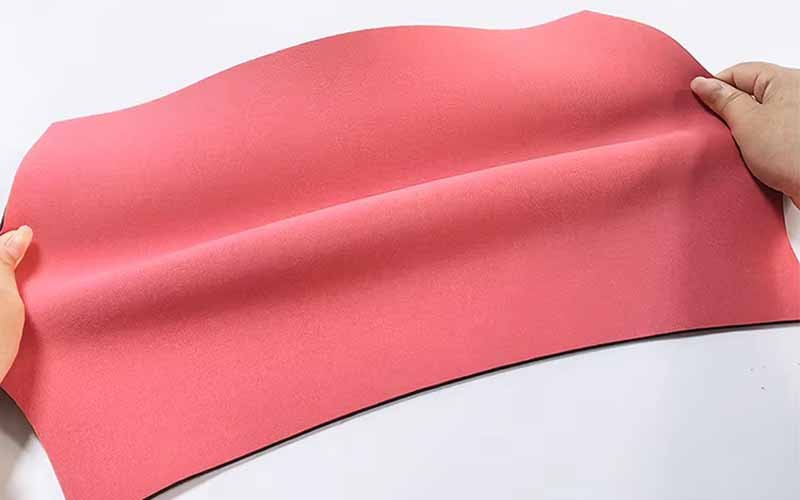
A capable factory should understand foam type, thickness, density, firmness, elasticity, recovery, surface lamination, bonding, odor, printing compatibility, cutting behavior, and sewing performance. More importantly, it should connect these variables to the product’s actual function, target cost, compliance requirements, appearance, and expected lifespan instead of recommending one generic material for every project.
Does It Understand Neoprene Grades?
The term “neoprene” is often used broadly in commercial sourcing. Suppliers may discuss CR, SBR, SCR, limestone-based foam, or other rubber-foam formulations, but these names alone do not provide a complete quality specification. Finished performance is also influenced by density, cell structure, firmness, thickness, surface textile, adhesive system, storage conditions, and batch consistency.
Two sheets described with the same grade and thickness may feel and perform differently. One may recover quickly after compression, while another remains visibly flattened. One may provide a firm structure suitable for a sleeve, while another feels softer and works better around a bottle or body. A material name should therefore begin the technical discussion rather than end it.
The manufacturer should explain why it recommends a particular construction. Its explanation should address required stretch, shape recovery, cushioning, insulation, surface feel, odor expectations, skin contact, logo method, durability, and price position. Vague labels such as “Grade A,” “premium quality,” or “environmentally friendly” should be supported by material details, swatches, testing information, and clear comparison points.
When practical, request at least two options. One can be the recommended production specification, while the other may reduce cost or improve performance. The supplier should explain how the change affects firmness, appearance, durability, MOQ, lead time, printing, and finished-product behavior. A lower-cost alternative is only useful when the buyer understands what is being traded away.
Can It Control Thickness and Lamination?
Thickness is one of the easiest specifications to discuss and one of the easiest to misunderstand. A value such as 3 mm may refer only to the foam, or it may describe the total laminated construction. Compression during storage, cutting, sewing, and packing can also affect measured thickness and the way the finished product feels.
Buyers should confirm the nominal thickness, measurement method, accepted tolerance, and whether the number includes the surface fabrics. The approved sample should be made with the intended production material. A visually similar substitute can change fit, seam bulk, cushioning, folding behavior, printing, and packaging volume even when both materials are described with the same thickness.
Density and firmness should be evaluated together with thickness. A firm 3 mm construction may offer more controlled protection than a soft 4 mm construction. A highly compressible foam may reduce packing volume temporarily but recover slowly after cartons are opened. A resilient material may cost more while providing a better retail appearance and more consistent product fit.
Most custom products use foam laminated with polyester, nylon, stretch textile, fleece, hook-compatible fabric, or another surface. The laminate affects color, texture, abrasion resistance, printing, comfort, and flexibility. Lamination should be checked for bubbling, wrinkles, peeling, uneven bonding, surface contamination, color differences, and separation after repeated bending.
| Material Variable | What the Buyer Should Confirm | Possible Product Effect |
|---|---|---|
| Nominal thickness | Foam-only or total laminated thickness | Fit, cushioning, seam bulk, packaging |
| Foam firmness | Soft, medium, or firm hand feel | Comfort, structure, shape recovery |
| Surface fabric | Polyester, nylon, stretch fabric, fleece, or custom textile | Appearance, abrasion, printing, comfort |
| Stretch direction | Limited, two-way, or multidirectional behavior | Fit, distortion, pattern accuracy |
| Lamination quality | Bonding method and approval checks | Peeling, bubbling, long-term durability |
| Color source | Standard stock or custom-produced color | MOQ, lead time, repeat-order consistency |
| Odor expectation | Foam, textile, adhesive, and storage approval | Customer acceptance and airing requirements |
| Compression recovery | Shape after storage and tight packing | Retail presentation and dimensional stability |
Custom colors and special laminates may carry higher material minimums than standard stocked options. Ask whether the proposed color is readily available, dyed to order, or laminated specifically for the project. This affects MOQ, material lead time, repeat-order availability, and the risk of color differences between production batches.
Which Processes Can It Handle?
Material knowledge has limited value if the factory cannot convert the material into a stable finished product. Custom neoprene manufacturing may involve pattern making, die cutting, hand cutting, lamination, skiving, gluing, stitching, flatlock or overlock construction, edge binding, zipper installation, webbing reinforcement, printing, labels, patches, and final shaping.
Soft and elastic materials can compress, stretch, or move during cutting. Stretch direction must remain consistent across panels, especially for fitted products. If the front and back panels are cut in different directions, they may behave differently during sewing and use. Accurate cutting is particularly important for laptop sleeves, protective covers, bottle holders, and wearable products.
The logo method must also match the surface material. Screen printing may work well for simpler graphics and solid colors. Sublimation can create full-surface artwork on compatible light-colored polyester laminates. Heat transfer can reproduce detailed designs but must be evaluated for adhesion, flexibility, heat marking, and stretch. Embroidery may create a premium appearance but can make the foam stiff or distorted when stitch density is too high.
Woven labels, rubber patches, silicone patches, reflective logos, and custom zipper pullers can strengthen brand identity, but they introduce additional stitching points, adhesives, weight, or stiffness. The factory should test the actual process on the actual production material. A successful logo trial on ordinary polyester does not prove that the same settings will work on laminated neoprene.
Can It Recommend the Right Specification?
A professional manufacturer should not simply ask the buyer to choose a thickness from a catalog. It should connect product use, material behavior, construction, branding, packaging, and cost into a production-ready specification. This requires the supplier to understand the intended experience of the final user as well as the limitations of manufacturing.
For a laptop sleeve, the factory may need to balance cushioning with precise internal dimensions and zipper clearance. For a koozie, excessive firmness may make insertion difficult, while overly soft foam may provide a loose fit. For a lunch bag, the wall thickness must work together with the opening, handle reinforcement, lining, and packing method. For a wearable product, the foam, surface fabric, edge finish, and seam location must work together to support comfort.
The supplier should also identify specifications that affect each other. Changing thickness may require revised patterns, seam allowances, zipper lengths, edge-binding widths, carton quantities, and shipping volume. Changing the surface textile may affect logo adhesion, color appearance, stretch, abrasion, and cleaning. These dependencies should be discussed before a sample is approved.
Material recommendations become credible when the factory can provide swatches, explain trade-offs, develop a physical prototype, and document the approved construction. The goal is not to select the most expensive material. The goal is to select the most appropriate material for the product, market, brand position, expected use, and total commercial plan.
How Do You Verify the Factory?
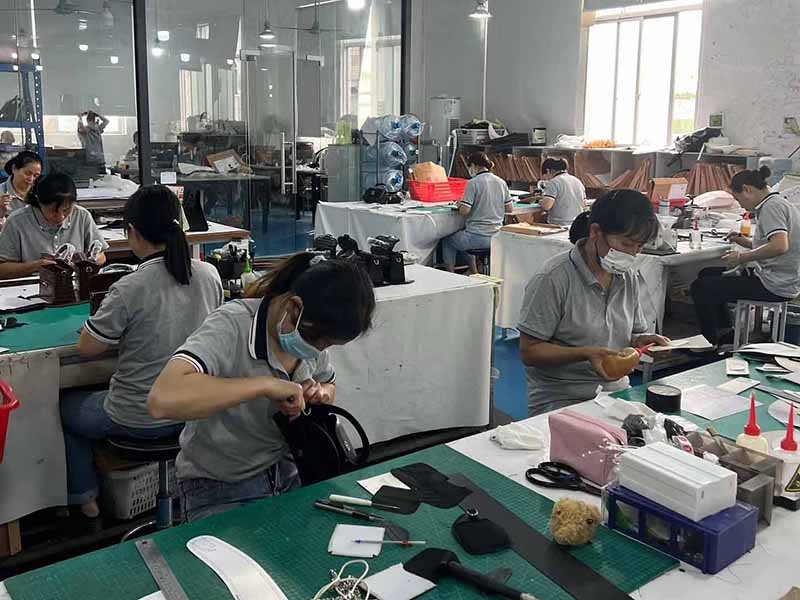
Verify a manufacturer by identifying who controls material approval, sampling, pattern development, cutting, branding, sewing, inspection, packaging, and shipment. Review relevant products, project records, production areas, technical staff, quality procedures, and capacity through live video, an onsite visit, or an independent audit. Manufacturing capability should be supported by project-specific evidence rather than general claims or polished marketing materials.
Is It a Factory or Trading Company?
The most useful question is not simply whether the supplier calls itself a factory. The more important question is which stages of the project it controls directly and which operations are completed by specialist partners. Many experienced manufacturers use external lamination, printing, testing, or additional production resources. Outsourcing is not automatically a problem, but hidden or unmanaged outsourcing creates serious quality and communication risks.
Ask who will make the pattern, approve the material, purchase the foam, arrange lamination, apply the logo, cut the panels, sew the product, inspect production, pack the order, and manage corrective action. The supplier should be able to explain the complete production route and identify the person responsible at each stage.
A live video review is often more revealing than a polished company video. Ask to see the sample room, approved materials, pattern-making area, cutting section, sewing floor, inspection tables, packing area, warehouse, and similar finished products. During the video, request close-up views of seams, bindings, zippers, reinforcement points, labels, and current production records.
A trading company can still provide value when it manages qualified production partners effectively, but the buyer should know the true structure. The supplier must remain accountable for the final product, sample-to-bulk consistency, corrective actions, documentation, and delivery, regardless of where individual operations are completed.
Does It Have Relevant Experience?
Total years in business and overall output are useful indicators, but experience with the same product category is more predictive. A factory that produces large quantities of simple koozies may not have the fit, zipper, lining, and dimensional-control experience required for laptop sleeves. A water-sport specialist may understand stretch materials but lack experience with retail packaging, barcodes, fulfillment labels, or structured bags.
Ask for examples that share the important challenges of your project. Similarity may involve product structure, fit, thickness, branding method, closure, load, target market, user group, packaging, or testing requirements. A useful supplier should be able to explain what was difficult, how the original sample was improved, and what production controls were introduced.
Physical samples are more informative than photographs. Check foam feel, recovery, edge finishing, seam alignment, print sharpness, zipper movement, reinforcement, cleanliness, shape, and odor. When physical samples are unavailable, ask for detailed videos that show the interior construction, seam allowances, stress points, and the product being used.
Experience with the buyer’s sales channel also matters. Retail programs may require assortment packing, barcodes, test files, inspection windows, and strict delivery appointments. E-commerce orders may require individual packaging, fulfillment labels, carton limits, and frequent replenishment. Promotional projects may require rapid high-volume output before a fixed event date.
Can You Review Its Facilities?
A useful factory review should follow the product from development to shipment. Begin with the sample room and material area, then review pattern making, cutting, logo application, sewing, in-line inspection, final inspection, packaging, and warehouse management. The purpose is not merely to count machines but to understand how information and quality standards move through the facility.
During a video or onsite review, ask the team to show an approved sample and explain how it is connected to the measurement sheet, material code, artwork, and packing instructions. Review how material rolls or sheets are identified, how cut panels are separated by size or color, how first production pieces are approved, and how defects are recorded.
The factory should also explain how it handles specialist processes or partner facilities. If printing, lamination, or part of the sewing is completed elsewhere, ask how approved materials, patterns, samples, and inspection standards are transferred. The buyer should understand who checks the components when they return and who has authority to stop production when a problem is found.
For important projects, factory verification may include a live video review, customer visit, third-party audit, sample-room review, production trial, or pre-shipment inspection. The level of verification should reflect order value, product risk, compliance exposure, delivery urgency, and the cost of a failed launch.
| Verification Area | Evidence to Request | Positive Signal | Warning Sign |
|---|---|---|---|
| Material control | Approved swatches, material codes, incoming records | Production material is traceable | Vague promise of “same quality” |
| Sample control | Revision history and retained approval sample | Each change has a documented version | Changes remain in chat messages only |
| Production | Live review and process explanation | Supplier can trace every main operation | Production location remains unclear |
| Quality control | In-line and final inspection records | Defects are categorized and corrected | Only a final visual check is performed |
| Capacity | Product-specific weekly output | Schedule includes realistic bottlenecks | One general monthly capacity number |
| Packaging | Packing instructions and carton records | Labels and carton marks are verified | Packing is discussed after production |
| Communication | Updated specifications and responsible coordinator | One controlled source of project information | Different teams provide conflicting answers |
Who Will Manage Your Project?
A custom product normally passes through sales, material sourcing, pattern making, sampling, logo application, production, quality control, packaging, and logistics. Many manufacturing failures are caused by information loss between these departments rather than by a lack of machinery or basic sewing ability.
Ask who owns the master specification and revision history. Every important decision should be consolidated into a controlled document covering dimensions, tolerances, material, color, logo, accessories, packaging, testing, and delivery. Verbal comments and scattered messages should not remain the only source of production information.
Each sample revision should be dated and connected to updated measurements, photographs, material notes, or artwork. A comment such as “make the handle stronger” is not precise enough for production. The updated document should identify the revised webbing width, reinforcement method, stitch pattern, and approved appearance.
Multi-SKU projects require additional control. A matrix should show the differences among colors, sizes, logos, labels, and packaging versions. This helps prevent the wrong logo, component, barcode, or package from being applied to the wrong product.
The project manager should also provide updates at the points where buyer action is needed, such as material approval, logo trial, sample revision, first production approval, final inspection, and packaging confirmation. Constant messaging is not necessary, but accurate communication at decision points can prevent costly delays and repeated defects.
How Is Quality Controlled?
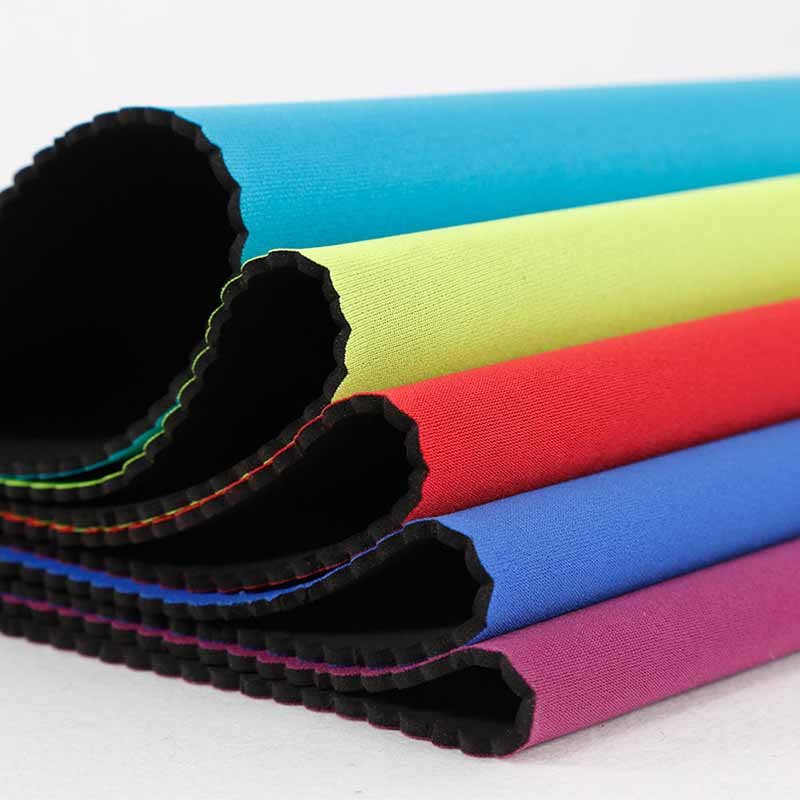
Quality is controlled by converting the approved sample into measurable production standards and checking those standards during material receipt, cutting, branding, sewing, assembly, final inspection, and packing. Buyers should approve materials, dimensions, colors, workmanship, logo placement, accessories, packaging, testing, and tolerances before production because final inspection cannot reliably correct problems created earlier in the process.
How Is the Sample Approved?
A sample should confirm that the product can be repeated consistently, not simply that one handmade unit looks attractive. Approval should cover the neoprene construction, thickness, firmness, surface fabric, color, measurements, tolerances, seams, binding, zippers, webbing, labels, logo application, packaging, and functional performance.
Fitted products should be tested with the real device, container, tool, or equipment they are designed to hold. Wearable items should be checked for size, pressure points, seam placement, edge comfort, closure adjustment, and recovery after stretching. Bags and protective covers should be evaluated for loading, opening, carrying, shape, and repeated handling.
The buyer and manufacturer should retain matching approval samples identified by date or version. These samples should be linked to the latest measurement sheet, material specification, artwork, and packaging instructions. When a change is approved, both the document and physical reference should be updated.
Photographs are useful for checking appearance, but they cannot reliably communicate thickness, foam firmness, elasticity, odor, surface texture, compression recovery, or exact fit. A physical approval sample is particularly important when the product relies on cushioning, controlled stretch, close fit, body contact, or a structured retail appearance.
Cost-reduction changes should be resampled when they affect material, dimensions, construction, branding, or packaging. A replacement foam or laminate may look similar in photographs but behave differently during sewing, packing, transport, and use.
How Is Bulk Consistency Checked?
Bulk consistency begins before sewing. Incoming neoprene, laminated fabric, binding, zippers, webbing, labels, patches, packaging, and other components should be compared against approved references. The factory should check thickness, color, surface texture, stretch, bonding, defects, contamination, and odor before large quantities are cut.
Material batches can vary even when they share the same general description. Large or sensitive orders may require approval from the actual production batch rather than reliance on an earlier development swatch. Retained swatches and traceable material codes make repeat orders easier to manage.
Cutting is another critical control point because soft foam can shift, stretch, or compress. Pattern direction, stretch direction, nesting, notches, and panel matching should remain consistent. The first cut panels should be measured before the entire quantity is processed. For printed products, artwork placement must be checked after sewing because a logo centered on a flat panel may shift when the panel becomes a curved product.
The first production units should be reviewed before the line continues. Inspectors should check dimensions, seam type, stitch quality, binding tension, zipper alignment, logo position, reinforcement, labels, cleanliness, and shape. Early approval prevents a setup mistake from being repeated across the entire order.
In-line inspections should focus on recurring defects such as wavy bindings, uneven seam allowances, loose threads, skipped stitches, distorted corners, zipper rippling, panel mismatch, logo movement, weak attachments, and compressed edges. Findings should be recorded and connected to corrective actions rather than handled only through individual rework.
Which Tests Are Required?
Testing should be selected according to product type, intended user, destination market, material composition, sales claims, and retailer requirements. A laptop sleeve, children’s swimming accessory, sports support, pet product, beverage holder, and industrial cover should not rely on one generic testing list.
Physical evaluation may include dimensions, seam strength, handle attachment, zipper cycling, print adhesion, abrasion, colorfastness, compression recovery, fit, load, repeated flexing, and recovery after packaging. Products in contact with skin may require additional consideration of edge comfort, surface feel, odor, color transfer, restricted substances, and care instructions.
Chemical and regulatory testing should cover the components used in the finished product. A report for the foam alone may not cover the laminated fabric, ink, adhesive, zipper, plastic buckle, metal part, label, or packaging. Buyers should confirm applicable requirements for the destination country and product category before production materials are finalized.
Certificates should be reviewed carefully. Confirm the applicant, tested material, component description, standards, issue date, laboratory, and relationship between the tested sample and the actual order. A general factory certificate does not automatically prove that every custom product complies with the requirements of every market.
Test methods and acceptance criteria should be agreed before production begins. Testing after the order is complete may reveal a problem when material replacement or structural improvement is no longer practical.
How Are Defects Handled?
A quality system should define what happens when a defect is discovered. Nonconforming components or products should be identified, separated, evaluated, reworked when appropriate, reinspected, and recorded. The supplier should not mix questionable units back into normal production without a documented decision.
Defects should be categorized by type, frequency, location, and severity. Repeated skipped stitches may indicate a machine or needle problem. Wavy binding may result from incorrect tension or operator technique. Inconsistent dimensions may come from cutting movement, pattern wear, or uncontrolled seam allowance. Correcting the cause is more valuable than repeatedly repairing finished units.
For significant issues, the factory should provide a corrective-action explanation covering the problem, affected quantity, immediate containment, root cause, repair method, reinspection, and prevention plan. This record is particularly useful for repeat orders because it reduces the chance that the same defect will return.
Final inspection should use the approved sample, measurement sheet, artwork, packaging instructions, and defect standards. Inspection may be completed by the factory, the buyer, or an independent third party, depending on order value and risk.
Packaging must also be inspected. Verify product orientation, labels, barcodes, quantity, carton marks, carton dimensions, gross weight, protective materials, and compression. Tight packing can damage the shape of thicker or structured neoprene products, so recovery after unpacking should be evaluated before shipment approval.
What Should You Compare Before Ordering?
Compare manufacturers using the same specification, quantity breakdown, quality standard, packaging, testing scope, delivery destination, and trade term. The final decision should balance material knowledge, sample accuracy, production control, compliance support, communication, capacity, transparent pricing, defect prevention, and repeat-order reliability. A low unit price is not meaningful when different suppliers are quoting different materials or excluding major project costs.
What Do MOQ and Lead Times Include?
MOQ is influenced by more than factory efficiency. Neoprene sheets, custom lamination, custom colors, printing setup, molds, labels, zippers, patches, packaging, and testing may each create a separate minimum. Buyers should ask whether the MOQ applies per product, material, thickness, color, size, artwork, or packaging version.
A project with four colors and three sizes creates twelve production combinations. Even when the total quantity is commercially reasonable, some combinations may be too small for efficient material purchasing, cutting, printing, sewing, or packaging. Consolidating colors, using available laminates, or launching fewer sizes may reduce both cost and manufacturing risk.
Lead time should be divided into specification confirmation, material sourcing, custom lamination, sample development, revision, approval, pre-production preparation, bulk cutting, branding, sewing, inspection, testing, packaging, and export handling. A promise of “thirty days” is not useful unless the starting point and included stages are clearly defined.
Ask what event starts the production schedule. Some suppliers calculate lead time from deposit receipt, while others begin only after the final sample, artwork, packaging, material, and purchase details are approved. The buyer should provide the required warehouse date, retail launch date, or event date so that the manufacturer can work backward and identify the latest safe approval and shipment milestones.
A realistic schedule with stated dependencies is more valuable than an aggressive promise that ignores material availability, test timing, public holidays, inspection, freight booking, or packaging production.
Is the Quotation Complete?
A quotation should describe exactly what is included rather than providing only a unit price. Without a complete specification, the lowest offer may be based on thinner foam, a cheaper laminate, fewer stitches, simpler packaging, generic accessories, a different logo method, or limited inspection.
The material description should state the nominal thickness, surface textile, color source, and any important performance assumptions. Branding details should include the process, artwork size, number of colors, and placement. Zippers, binding, webbing, labels, patches, packaging, cartons, sample charges, tooling, testing, and freight scope should be included or clearly excluded.
The quotation should also explain whether the material is standard stock or custom-produced. A low finished-product MOQ may still require a larger quantity of custom laminate. Buyers should confirm what happens to unused custom material, whether it can be stored, how long it will remain usable, and whether future orders can match the same color and construction.
Quotation validity matters because foam, textile, printing, packaging, and freight costs may change during a long development period. The supplier should state when the quotation may require review and which changes would cause the price to be recalculated.
Prices are only comparable when every supplier quotes the same product standard. When one offer is substantially lower, ask which material, construction, packaging, inspection, or commercial assumption is different. A professional manufacturer should be able to explain the cost difference without hiding it behind a general claim of better pricing.
How Strong Is Communication?
Good communication is measured by accuracy, documentation, risk identification, and follow-through rather than reply speed alone. A quick “yes, we can do it” has less value than a clear explanation of what information is missing, which material is appropriate, what may affect the schedule, and which requirements need testing.
The quotation and sampling stages provide an effective test of supplier communication. A capable team should ask whether dimensions are flat or finished, whether thickness includes lamination, whether the logo process suits the surface, whether the product needs splash resistance or verified waterproof performance, and how colors, sizes, labels, and packaging are divided.
Important decisions should be reflected in updated drawings, measurement sheets, quotations, sample records, artwork, and packing instructions. It should be clear which document version is approved and which points remain open. Relying on scattered emails or chat messages increases the risk of different departments using different information.
Technical limitations should be communicated honestly. A factory that explains why an artwork may distort, a seam may become bulky, a custom color may require a higher MOQ, or a delivery date may be risky is often more dependable than a supplier that agrees to every request.
Communication should continue through material preparation, production, inspection, packing, and shipment. Buyers should receive updates when approval or action is required, especially for production materials, logo trials, sample revisions, first production pieces, final inspection, carton labels, and shipping documents.
How Do You Make the Final Choice?
The final decision should reflect the total cost of failure, not only the first-order unit price. A delayed launch, poor fit, peeling lamination, incorrect barcode, inconsistent color, weak handle, or damaged retail packaging can cost far more than a small difference in manufacturing price.
Use a weighted scorecard based on the specific risks of the project. Material knowledge and dimensional fit may carry the highest weight for laptop sleeves or protective covers. Printing accuracy and delivery timing may be more important for promotional programs. Compliance documentation, skin-contact performance, and size consistency may be critical for wearable or children’s products.
| Evaluation Area | Suggested Weight | Main Question |
|---|---|---|
| Product-category experience | 15% | Has the supplier made products with similar structure and use? |
| Material knowledge | 15% | Can it explain foam, thickness, lamination, and alternatives? |
| Sampling capability | 15% | Can it develop, revise, document, and retain an approval sample? |
| Quality control | 15% | Are materials and products checked before, during, and after production? |
| Production control | 10% | Who controls cutting, branding, sewing, assembly, and packing? |
| Testing and compliance | 10% | Can the supplier coordinate relevant testing and documentation? |
| Commercial transparency | 5% | Are MOQ, charges, assumptions, and trade terms clear? |
| Communication | 5% | Are decisions accurately recorded and risks explained? |
| Capacity and schedule | 5% | Is output realistic for the product and required season? |
| Delivery and continuity | 5% | Can the supplier support shipping and repeat-order consistency? |
| Total | 100% | Choose based on evidence, not presentation alone |
A supplier may score well overall while remaining unsuitable because it performs poorly in the project’s highest-risk area. A high-volume promotional factory may not be the right choice for a technical wearable product. A factory with strong sewing skills may still be unsuitable if it cannot support testing, detailed documentation, or strict retail packaging.
Long-term value also depends on repeatability. Ask how the supplier retains patterns, approved samples, material codes, color references, artwork, packaging files, inspection standards, and corrective-action records. A repeat order should not require the entire project to be developed again.
Common warning signs include vague material descriptions, unrealistically low prices without specifications, certificates unrelated to the ordered product, refusal to show production areas, unclear subcontracting, changing technical answers, missing sample records, and pressure to start production before final approval.
Szoneier is a Shenzhen-based custom bags and soft goods OEM/ODM manufacturer with more than 18 years of manufacturing experience. Its neoprene capabilities include custom bags, bottle holders, koozies, lunch bags, laptop sleeves, soft covers, pet products, and related sewn goods. The manufacturing system supports material selection, pattern development, sampling, branding, sewing-production management, quality inspection, packaging, and export delivery.
Buyers can begin an evaluation by sending a product photograph, drawing, tech pack, physical-sample information, finished dimensions, expected quantity, preferred material, logo artwork, packaging requirements, destination market, and target delivery date. The project team can then review the appropriate thickness, lamination, structure, sample plan, MOQ, cost factors, quality requirements, production schedule, testing needs, and shipping options.
Please contact Szoneier for a detailed assessment or quotation regarding custom neoprene products. Providing clear project information enables the team to offer precise recommendations, create production-ready samples, and ensure a smooth transition from the development phase to mass production and subsequent repeat orders.