Skip to content
A successful neoprene fitness product is rarely successful because of the material alone. It succeeds because the brand chooses a clear training scenario, solves an obvious user problem, controls fit and comfort, and turns those decisions into a product that can be manufactured consistently. Knee sleeves, wrist weights, training gloves, lifting belts, bottle holders, and gym pouches may all use neoprene, but they involve very different levels of development difficulty, sizing risk, quality control, packaging, and customer education.
The best neoprene products for fitness brands include knee and elbow sleeves, adjustable ankle and wrist weights, lifting belts, training gloves, bottle holders, and compact gym accessories. The right choice depends on the target workout, required support, sizing complexity, target retail price, customization potential, and expected order volume. Strong collections often combine one technical hero product with two or three simpler accessories.
That combination matters because the product with the strongest visual impact is not always the safest commercial starting point. One brand may need a high-compression lifting collection, while another may perform better with soft wearable weights and coordinated studio accessories. A gym chain may gain more value from branded bottle holders and member kits than from specialist support equipment. Before choosing a product, imagine two sample rooms: one filled with impressive prototypes that never reached stable production, and another containing three well-tested products that customers reorder every season. The second room usually belongs to the stronger business.
Which Neoprene Fitness Products Sell Best?
The strongest neoprene fitness categories are support sleeves, wearable weights, lifting accessories, training gloves, bottle holders, and compact gym merchandise. Support products help brands establish technical credibility, while wearable weights and accessories offer broader lifestyle appeal. The best commercial range usually combines a recognizable hero product with simpler items that are easier to size, customize, bundle, inspect, and reorder.
Support Sleeves
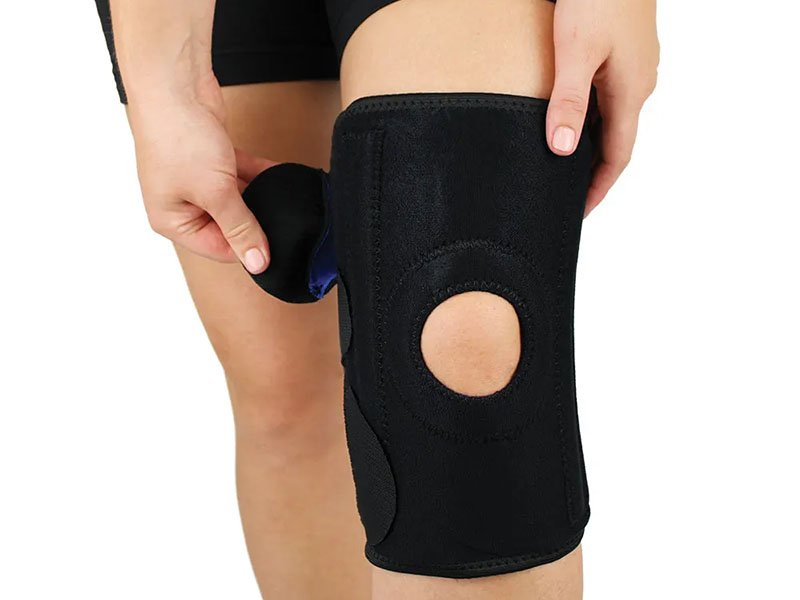
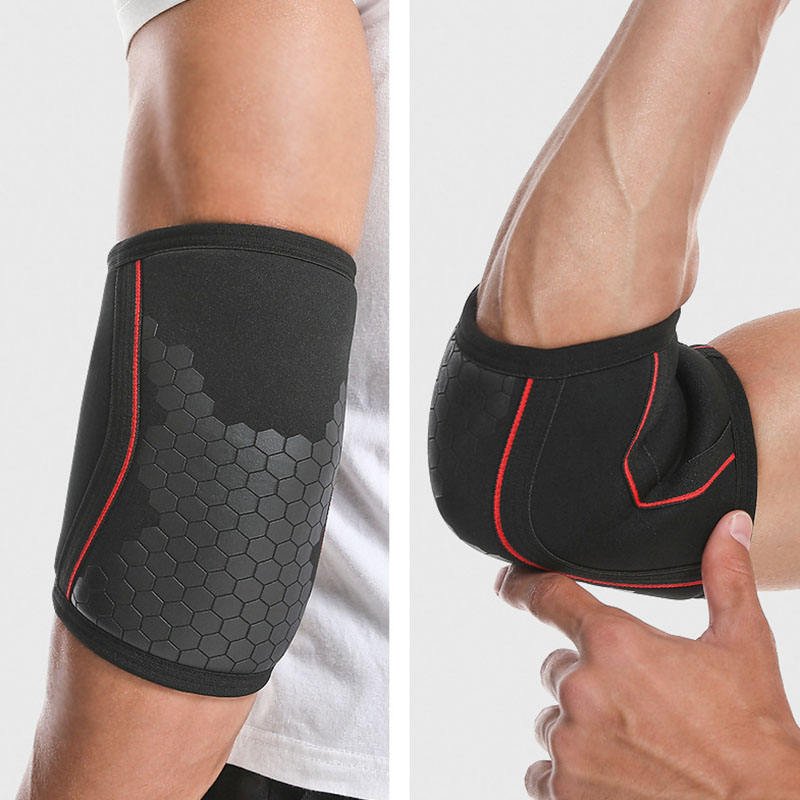
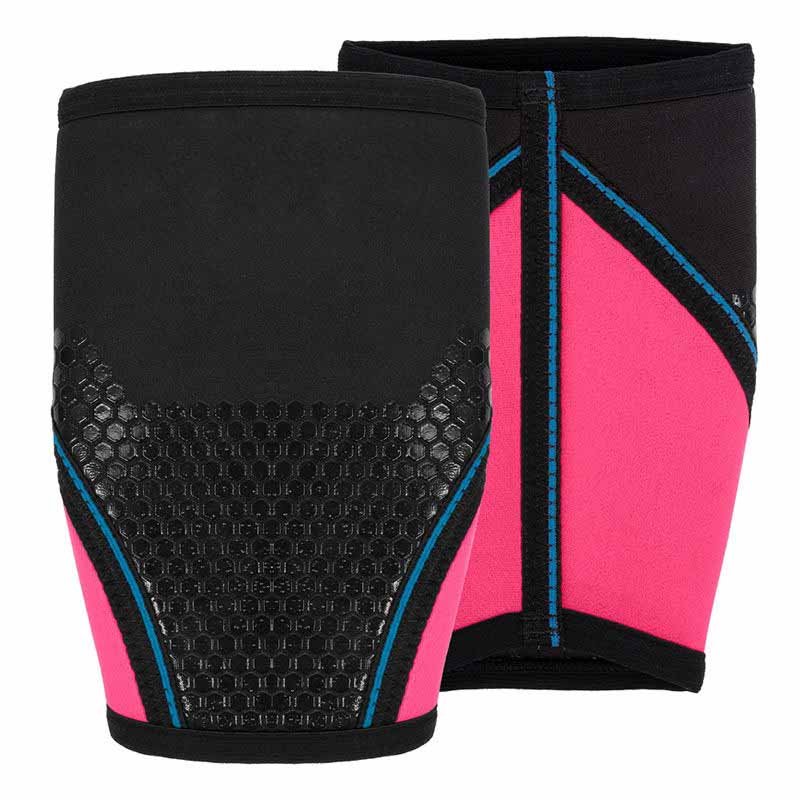
Knee and elbow sleeves remain commercially important because customers immediately understand what they are designed to do. They are commonly associated with strength training, functional fitness, warm-up routines, general gym sessions, and situations where users want compression, warmth, or a more secure feeling around a joint. A well-developed sleeve can give a fitness brand stronger technical credibility than a simple promotional product because fit, panel shape, stretch, and seam placement are all visible in actual use.
Fit is the main source of both product value and product risk. A sleeve must follow the body without creating excessive pressure at the top or bottom opening. It should stay in position during squats, lunges, walking, sitting, and repeated joint movement. A sample that feels acceptable while the tester is standing may still roll, slide, bunch behind the knee, or create irritation after twenty minutes of training.
For many general fitness applications, neoprene between approximately 3 mm and 5 mm is a practical development range. Thinner constructions normally allow greater flexibility and lower heat retention, while thicker constructions can feel more structured but may also restrict movement. Thickness should therefore follow the intended training activity instead of being used as a simple quality claim.
Accurate size grading also matters. Human limb proportions do not increase evenly from one size to another, so a manufacturer should not simply enlarge every pattern dimension by the same percentage. Opening circumference, total length, taper, panel angle, stretch direction, seam location, and the balance between thigh and calf measurements must be reviewed together.
Wearable Weights
Neoprene ankle and wrist weights often reach a broader audience than specialist lifting supports. They can suit home fitness, Pilates, barre, walking, light resistance training, studio classes, travel workouts, and general wellness programs. They are also visually flexible products because the outer surface can be customized with colors, printed patterns, woven labels, silicone patches, contrasting webbing, and branded closures.
The main engineering challenge is not simply choosing soft neoprene. It is keeping the internal weight stable. Sand, steel shot, iron bars, or removable blocks need to remain evenly distributed during movement. When filling shifts into one area, the product can rotate, bounce, or produce uncomfortable pressure points. Internal compartments should therefore be sized and stitched according to the chosen filling rather than added as a decorative construction detail.
A practical product range often uses two or three resistance levels instead of offering too many small variations. Excessive options complicate packaging, inventory management, product descriptions, carton packing, and replenishment. The fastening range must also accommodate meaningful differences in wrist and ankle circumference without leaving an excessively long loose strap.
Samples intended for both wrists and ankles should be tested in both positions. The same shape can behave differently because wrist and ankle anatomy, movement direction, and pressure zones are not identical. Walking, leg raises, arm extensions, side steps, and slow controlled studio movements can reveal instability much faster than a static fitting.
Gloves and Belts
Training gloves and lifting belts can support a higher-value fitness collection, but both require more development than their appearance suggests. A glove must balance palm protection, grip freedom, finger movement, ventilation, wrist adjustment, and easy removal. A lifting belt must provide structure without folding at the edges, pressing into the ribs, or becoming uncomfortable when the user bends, sits, or changes exercise position.
Neoprene training gloves are usually combined with other materials rather than made from one material throughout. Mesh can improve airflow, synthetic leather or microfiber can support palm durability, silicone printing may improve grip, and terry fabric may be used around the thumb area. Neoprene commonly provides cushioning, flexible shaping, and wrist comfort, but the final performance depends on how all materials work together.
For belts, the development brief should clearly identify whether the product is intended for general gym training, bodybuilding, weightlifting, or another activity. Width, stiffness, thickness, back-panel shape, closure method, edge construction, and internal reinforcement should follow that use. A wide and rigid design is not automatically more professional if it prevents comfortable movement.
Marketing language should remain accurate. Brands can describe material thickness, reinforcement, adjustability, warmth, fit, intended training use, and construction without claiming that the product will prevent injuries, cure pain, or correct a medical condition. Carefully defined product claims usually build more trust than dramatic promises.
Branded Accessories
Bottle holders, gym pouches, phone sleeves, protective covers, and compact carrying cases are usually easier to develop than body-fitted support products. They involve fewer sizes, lower return risk, and more visible surface area for printing or branding. These features make them useful for gym merchandise, sports nutrition promotions, trainer kits, event programs, corporate wellness campaigns, and entry-level retail products.
A 2–3 mm neoprene construction is often a practical starting point for holders and pouches where cushioning, insulation, shape, or hand feel is required. The exact material still needs to match the product dimensions and load. A tall bottle holder with a metal snap hook may require firmer material, stronger binding, and reinforced handle attachment than a simple zippered accessory pouch.
Small accessories should not be treated as disposable products merely because their structures are simpler. Binding alignment, print clarity, zipper movement, handle strength, snap-hook function, material odor, surface cleanliness, barcode accuracy, and carton packing all influence how customers judge the brand.
Accessories also make it easier to build a coordinated collection. A bottle holder, phone sleeve, and gym pouch can share the same laminated fabric, Pantone colors, edge binding, logo method, hardware finish, and packaging style. This type of consistency often creates more brand value than launching several unrelated products with different visual languages.
| Product | Common Neoprene Range | Main Customer Benefit | Main Development Risk | Size Complexity |
|---|---|---|---|---|
| Knee sleeve | 3–5 mm | Compression, warmth, secure feel | Slippage, edge pressure, poor grading | High |
| Elbow or wrist support | 2–4 mm | Adjustable support and comfort | Closure range and seam irritation | Medium-high |
| Ankle or wrist weight | 2–4 mm outer layer | Wearable resistance | Filling movement and rotation | Medium |
| Training glove | 2–4 mm panels | Padding and grip comfort | Palm fit and finger movement | High |
| Lifting belt | Project-specific | Structure and adjustment | Excess stiffness or edge folding | High |
| Bottle holder | 2–3 mm | Insulation and branding | Weak handle or poor binding | Low |
| Gym pouch or sleeve | 2–3 mm | Storage and surface protection | Zipper, print, and shape control | Low |
How Do You Match Products to Fitness Niches?
A neoprene product should be matched to a clearly defined workout, user expectation, retail channel, and performance requirement. Strength-training customers usually care about stability and durability, while Pilates and home-fitness customers may prioritize comfort, appearance, compact storage, and simple fastening. Gyms and studio operators often need products that are easy to distribute, explain, replace, and reorder.
Strength Training
Strength-focused brands usually gain the most value from knee sleeves, wrist supports, elbow sleeves, lifting belts, and training gloves. These products fit the needs of customers who regularly use barbells, dumbbells, cable equipment, or functional training stations. However, grouping them into one collection does not mean they should share the same level of stiffness, compression, or construction.
The intended training intensity must be established before material decisions are made. A general gym sleeve should not automatically use the same thickness and compression as a specialist lifting sleeve. Customers completing longer mixed workouts often need greater mobility and lower heat buildup, while users performing shorter heavy sets may prefer a firmer and more structured feel.
Durability requirements should follow actual stress points. Sleeve seams experience repeated flexing. Wrist supports depend on stable hook-and-loop performance. Gloves wear fastest around the palm, thumb, finger openings, and wrist closure. Belts place repeated load on the fastening system, edge binding, back panel, and reinforcement layers.
Visual styling should support technical credibility rather than replace it. Bold colors, reflective graphics, and large logos may attract initial attention, but customers will judge the product by fit, comfort, and consistency after repeated training sessions. A smaller logo on a carefully shaped product usually creates greater long-term value than a dramatic design that slides, folds, or causes discomfort.
Home Fitness
Home-fitness products must feel easy to understand and convenient to use without constant instruction from a trainer. Adjustable wearable weights, flexible supports, bottle holders, phone sleeves, and storage pouches work well because the customer can quickly understand their purpose and incorporate them into an existing workout routine.
Space and storage are major considerations. Many users keep fitness equipment in bedrooms, living rooms, apartments, small workout corners, or travel bags. A product that is difficult to store, slow to dry, or awkward to fasten may be used less frequently, even if its technical specifications look impressive on a product page.
Wearable weights should feel secure without appearing intimidating. The strap should close quickly, the filling should remain balanced, and the product should not scratch floors or nearby furniture. A compact carrying pouch can improve storage, protect surrounding items, and make the set feel more complete.
Home-fitness customers may also care strongly about color and packaging. Soft neutral tones, coordinated sets, compact boxes, and clear care instructions can matter as much as a highly technical appearance. Realistic wear testing should last at least twenty to thirty minutes because brief tests often fail to reveal heat buildup, loosening straps, gradual rotation, or skin irritation.
Pilates and Studios
Pilates, barre, yoga-adjacent exercise, and boutique studio programs often favor lightweight wearable weights, flexible supports, bottle holders, compact pouches, and coordinated accessories. Customers in these environments may place greater value on comfort, clean design, low-profile shapes, color coordination, and smooth movement than on maximum compression.
Products for studio use should avoid unnecessary bulk. A thick and rigid construction may look substantial in a photograph but interfere with floor exercises, leg extensions, arm movements, or contact with a mat. Lower-profile closures, softer binding, carefully divided filling compartments, and reduced seam thickness can improve the user experience.
Slow, controlled studio movements can expose weight-distribution problems more clearly than fast exercise. If filling moves from one compartment to another, the user may feel the imbalance during every arm raise or leg extension. Sampling should therefore include controlled movement, side lying, bridges, leg circles, arm extensions, and transitions between standing and floor positions.
Studios may also require several color versions or private-label programs based on one proven structure. Using the same base construction with different fabrics, binding, labels, and packaging is often more efficient than developing a new pattern for every program. A coordinated line might include wearable weights, a bottle holder, a towel pouch, and a simple carrying bag.
Gyms and Fitness Programs
Gyms, personal-training companies, sports nutrition brands, corporate wellness providers, and fitness events often use neoprene products as merchandise, membership gifts, challenge rewards, trainer equipment, or retail add-ons. Their purchasing priorities may be different from those of a specialist consumer brand because operational simplicity and repeat-order consistency are often more important than broad size selection.
Staff need products that are easy to count, store, hand out, and explain. A highly size-sensitive item can create problems during events or membership campaigns, while bottle holders, pouches, phone sleeves, adjustable supports, and universal accessories are easier to distribute.
Packaging should match the channel. A retail product may require a barcode, hanging card, size label, product description, and care information. A member-gift program may only require individual packaging, product identification, grouped cartons, and clear quantity control. Removing unnecessary retail packaging can lower packing labor, reduce carton volume, and simplify distribution.
Logo visibility often matters because the product is expected to reinforce the gym or campaign identity. All-over sublimation, woven labels, rubber patches, heat-transfer logos, and branded webbing are practical options, but the selected method should match the material stretch and product contact zones. Repeat programs should preserve approved colors, artwork dimensions, material codes, packaging files, and inspection records.
| Fitness Niche | Best-Fit Products | Main User Priority | Main Product Risk | Brand Opportunity |
|---|---|---|---|---|
| Strength training | Sleeves, belts, gloves, wrist supports | Stability and durability | Fit and seam failure | Technical positioning |
| Home fitness | Wearable weights, pouches, holders | Simplicity and storage | Rotation and loose straps | Accessible product sets |
| Pilates and barre | Lightweight weights, flexible supports | Comfort and appearance | Bulk and heat buildup | Color-led collections |
| Gym merchandise | Holders, pouches, adjustable supports | Branding and distribution | Inconsistent printing | Member kits and retail |
| Fitness events | Universal-size accessories | Fast distribution | Packing and labeling errors | Promotional exposure |
| Corporate wellness | Compact equipment sets | Ease of use | Unclear instructions | Branded wellness programs |
What Neoprene Specifications Matter Most?
The most important specifications are thickness, foam density, recovery, surface fabric, stretch direction, lamination, pattern shape, seam construction, closures, odor, and skin comfort. Thickness alone does not determine quality. A reliable fitness product must balance flexibility, support, heat retention, weight, durability, sewing feasibility, manufacturing consistency, and the expected retail price.
Thickness and Foam
Neoprene thickness should be selected according to movement, compression, cushioning, insulation, product shape, and expected hand feel. Approximately 2 mm can suit lightweight covers, flexible panels, and applications where low bulk matters. Around 3 mm often offers a practical balance for holders, pouches, wearable weights, and some support products. Constructions approaching 4–5 mm may feel more structured but require more careful pattern and seam development.
Nominal thickness is only one part of the specification. Two materials marked as 3 mm can feel noticeably different because of foam density, cell structure, laminated fabric, surface coating, and compression during production. One may feel soft and easy to fold, while another feels firm and resistant.
Foam recovery is especially important for sleeves and adjustable supports. Material that stretches but recovers slowly can lose shape after repeated use. Material that is excessively firm may create strong edge pressure, restrict movement, or make the product difficult to put on.
Brands should approve both a raw-material swatch and a finished sample. The raw swatch helps confirm thickness, color, surface, and foam feel, while the finished sample reveals how the material behaves after cutting, printing, sewing, binding, folding, and stretching. Bulk material should be measured at several points and compared with the approved reference.
Surface Fabrics
Neoprene is commonly laminated with polyester, nylon, mesh, or other knitted fabrics. The selected surface affects color, print quality, stretch, abrasion resistance, hand feel, moisture behavior, lamination strength, and cost.
Polyester-faced neoprene is often chosen for clear printed graphics and compatible sublimation applications. Nylon-faced constructions can provide a smooth surface and useful flexibility, although actual performance depends on the fabric specification and lamination. Mesh, terry, elastic knit, or soft-touch fabrics may be introduced to improve ventilation, grip, comfort, or skin contact.
Stretch direction must match the pattern. A sleeve cut in the wrong direction may feel restrictive even when the raw material has good elasticity. Wearable weights may require controlled stretch to reduce rotation, while gloves need more flexibility around finger openings, the thumb curve, and the wrist.
Lamination quality should be checked in high-flex areas, curved panels, printed zones, and raw edges. Weak bonding can create bubbles, wrinkles, or separation after repeated bending, cleaning, and sweat exposure. Color approval should also use physical samples because dark and bright colors can appear different under changing lighting conditions.
Seams and Closures
Seam construction should be selected according to flexibility, skin contact, product thickness, load, appearance, and production feasibility. No single seam is appropriate for every neoprene fitness product. A construction that works well on a bottle holder may create excessive bulk or irritation on a body-fitted sleeve.
Raised seams should be kept away from pressure and high-friction areas whenever possible. On knee sleeves, gloves, and wrist supports, seam position can affect comfort as much as the stitch type. Curved joints, thumb openings, strap roots, zipper ends, and handle attachments require additional attention because they experience repeated movement or concentrated load.
Binding protects raw edges and improves appearance, but it must follow curves without rippling, twisting, or pulling the product out of shape. Narrow binding may look refined but can be difficult to control on thick neoprene. Wider binding may be easier to sew but can feel bulky on a lightweight product.
Hook-and-loop tape must provide sufficient holding strength without damaging nearby fabric. Strap length should cover the intended circumference range, while buckles, snap hooks, and zippers should match the expected load. Brands may establish internal closure-cycle targets, but those targets should be treated as product-specific quality requirements rather than universal standards.
Comfort and Care
Comfort includes softness, but it also includes heat buildup, odor, edge pressure, drying time, seam position, strap ends, and surface friction. A product that feels comfortable during a short fitting may become irritating after repeated movement or extended training.
Neoprene retains more warmth than many lightweight woven fabrics. This can be useful in products intended to provide warmth or a secure feeling, but it may become uncomfortable during long sessions or hot-weather use. Perforated panels, mesh zones, thinner sections, and reduced coverage can improve airflow, although each change affects strength, cost, and appearance.
Freshly manufactured neoprene may have a noticeable material odor. Controlled airing before individual packaging can improve the first-use experience. Products sealed too soon in plastic packaging may trap odor, especially during long shipping periods.
Care instructions should reflect realistic use. Many neoprene fitness products are best cleaned gently by hand and dried away from direct heat. Labels or packaging should explain cleaning, drying, storage, and regular checks of seams and closures. Comfort testing should include repeated movement for at least twenty to thirty minutes rather than a brief standing inspection.
| Specification | Practical Range or Check | What It Influences | Common Failure |
|---|---|---|---|
| Thickness | Approximately 2–5 mm for many fitness applications | Flexibility, support, heat, bulk | Choosing thickness by appearance alone |
| Thickness consistency | Compare several points with approved material | Batch uniformity | Uneven hand feel |
| Surface fabric | Polyester, nylon, mesh, soft knit, or combinations | Print, stretch, abrasion, comfort | Incorrect stretch direction |
| Closure evaluation | Product-specific repeated-cycle target | Long-term holding performance | Early loss of grip |
| Wear testing | 20–30 minutes of relevant movement | Slippage, heat, pressure, irritation | Static testing only |
| Size validation | Users near lower, middle, and upper limits | Real fit range | Proportional grading errors |
| Logo evaluation | Stretch, rub, sweat, and cleaning simulation | Adhesion and appearance | Cracking or peeling |
| Odor review | Test after airing and sealed storage | First-use experience | Packing too soon |
How Do You Compare Product Potential?
Product potential should be compared through audience fit, technical complexity, size risk, return exposure, customization space, target price, freight cost, bundling value, and repeat-order feasibility. A popular product may still be a poor first SKU when it requires difficult grading, heavy inventory, expensive shipping, or testing capabilities the brand has not yet developed.
Demand and Brand Fit
Market demand matters, but it should not be separated from the brand’s audience, price position, content, and distribution channels. A powerlifting brand may create more value from a carefully developed knee sleeve than from a broadly appealing bottle holder. A wellness brand may achieve stronger market fit with wearable weights because they align with its visual style, training routines, and social content.
Brands should begin by listing the workouts, customer profiles, and retail channels they already understand. A product can appear in thousands of online searches and still perform poorly when it does not match the brand’s customer expectations or marketing ability.
Frequency of use is another useful factor. Products used several times each week may create stronger customer attachment, but they also receive greater wear and generate higher quality expectations. Products used occasionally may experience less physical stress but require a clearer reason for purchase.
The product should also be easy to explain. Customers need to understand its purpose, fit, size, care, and difference from competing products within a short product-page visit. A balanced initial collection often includes one product that demonstrates expertise, one product with broader everyday appeal, and one accessory that increases basket value.
Cost Drivers
Material cost is only one component of the final unit price. Panel count, cutting efficiency, sewing time, size range, closures, reinforcement, printing, labels, internal weights, packaging, testing, inspection, order quantity, and freight all contribute to the landed cost.
Curved anatomical products generally require more development time and sewing control than flat holders or pouches. A wide size range increases pattern work, cutting management, labeling, carton sorting, and inventory complexity. Custom-colored neoprene may also require higher raw-material commitments than available stock colors.
Heavy wearable products need careful freight planning. An ankle-weight set may have an acceptable factory cost but a high landed cost because mass directly affects express, air, and sometimes local fulfillment expenses. Packing density, carton weight, pallet use, shipping method, and warehouse handling should be reviewed before retail pricing is confirmed.
Packaging can materially change the cost. Rigid boxes provide a premium appearance but increase volume and material use. Compact cartons, printed paper sleeves, or recyclable bands may communicate enough information with less freight impact. Quotations are easier to compare when product, logo, packaging, testing, and shipping assumptions are shown separately.
Size and Return Risk
Body-fitted products carry greater return risk than universal or adjustable accessories. Knee sleeves, gloves, belts, and some supports may require several sizes, clear measurement instructions, and carefully tested grading. A technically sound product can still receive negative reviews when customers choose the wrong size or when the actual fit does not match the size chart.
Measurement instructions should state exactly where and how to measure. A diagram is often more effective than text alone. The product page should also explain whether the intended fit is close, firm, supportive, or relatively flexible.
Adjustable products reduce formal size counts but do not remove fit risk. A wrist weight may be sold as one size while still having a fastening range that is too long for one customer and too short for another. The effective circumference range should be measured rather than assumed.
Returns should be treated as a product-development cost. A lower manufacturing price is not a saving when it creates more refunds, customer-service work, damaged packaging, and unsellable returned stock. Samples should be reviewed by users near the minimum and maximum measurements of each proposed size.
Customization and Bundles
Products with large visible surfaces and limited anatomical complexity are usually easier to customize. Bottle holders, gym pouches, equipment sleeves, and some wearable weights can support printed graphics, custom binding, woven labels, reflective details, rubber patches, silicone patches, or color-blocked panels.
Technical sleeves and gloves can also carry strong branding, but decoration must not interfere with stretch, grip, or skin comfort. A thick patch may work well on a pouch but cause irritation on a knee sleeve. A large transfer logo may crack or restrict movement when positioned across a high-stretch area.
Bundles work best when products share a real use scenario. A strength set could include wrist supports, lifting straps, and a carry pouch. A studio set could combine ankle weights, wrist weights, and a storage bag. A gym membership kit might include a bottle holder, phone sleeve, and towel pouch.
A useful bundle should share materials, colors, logo placement, packaging style, and a clear story. Customers should immediately understand how the products work together instead of seeing the set as several unrelated items placed in one box.
| Evaluation Factor | Knee Sleeve | Wearable Weight | Training Glove | Bottle Holder | Gym Pouch |
|---|---|---|---|---|---|
| Technical complexity | 5 | 3 | 4 | 2 | 2 |
| Size risk | 5 | 2 | 5 | 1 | 1 |
| Branding area | 3 | 4 | 4 | 5 | 5 |
| Bundle potential | 4 | 5 | 4 | 5 | 5 |
| Freight sensitivity | 2 | 5 | 2 | 2 | 1 |
| Sampling difficulty | 5 | 3 | 4 | 2 | 2 |
| First-launch suitability | 3 | 4 | 3 | 5 | 5 |
The 1–5 scores provide a comparative planning tool for this product group. A score of 5 indicates a higher level of the stated factor rather than a universal industry rating.
How Do You Develop a Custom Product Line?
A custom neoprene line should begin with a defined user, workout, product function, size system, material specification, branding plan, target price, packaging format, and quality standard. Physical prototypes should then be tested, revised, and approved before production. Reliable development depends on measurable specifications rather than photographs, informal descriptions, or thickness alone.
Product Brief
A useful development brief does not need to be complicated, but it should answer the questions that influence material selection, pattern design, quotation, testing, and production. The process should begin with the target user and intended workout. The brand should then define what the product is expected to do, how it should feel, and which claims or functions are outside its intended scope.
The manufacturer should receive a reference photo, sketch, physical sample, or technical drawing. Dimensions should include more than overall length and width. Body-fitted products may also require opening circumference, taper, panel width, strap range, seam position, stretch direction, and clearly marked measurement points.
A practical development brief should include:
- Intended training activity
- Target user
- Required product dimensions
- Proposed size range
- Preferred neoprene thickness
- Surface fabric and color
- Required flexibility or support
- Closure and reinforcement details
- Logo artwork
- Packaging and barcode needs
- Estimated order quantity
- Destination market
- Testing expectations
- Desired delivery period
- Target retail position
An experienced manufacturer should review the brief rather than simply quote it. The team may identify that a seam crosses a pressure zone, the closure range is too narrow, the logo is positioned on a high-stretch panel, or the selected thickness will produce more stiffness than expected. These corrections are easiest to make before the first prototype.
Sampling and Fit
Sampling should resolve technical questions rather than merely produce an attractive prototype. The first sample may be used to confirm dimensions, pattern shape, material, seam placement, closure length, weight distribution, branding position, and basic comfort. It does not always need every final packaging detail or color version.
After fitting, revisions should be written as measurable changes. Comments such as “make it tighter,” “improve the shape,” or “make it more premium” are difficult to execute consistently. A useful revision identifies the exact measurement, panel, seam, strap, material, or finish that needs to change.
Support products require movement testing rather than static fitting. Squats, lunges, walking, bending, arm flexion, grip work, repeated fastening, and extended wear reveal problems that cannot be seen when the sample is lying on a table.
Wearable weights should be checked for total weight, left-right consistency, filling stability, fastening range, pressure points, and rotation. Gloves should be tested with actual training equipment. Bottle holders and pouches should be loaded with the intended objects. Once the product is stable, a final approved or production sample should represent the intended bulk material, logo, size, construction, and packaging.
Branding and Packaging
Branding should be selected according to stretch, surface fabric, skin contact, cleaning method, and visual position. Sublimation can work well on compatible polyester-faced neoprene and allows detailed or all-over graphics. Screen printing may suit simpler artwork, while heat transfer, woven labels, embroidery, silicone patches, rubber patches, and reflective graphics each create different visual and tactile effects.
Logos should be evaluated after stretching, rubbing, sweat exposure, and realistic cleaning. A decoration that looks perfect on an unused sample may crack, peel, distort, or become uncomfortable when the product is worn.
Packaging should protect the product, communicate essential information, and match the sales channel. Retail products may need barcodes, size labels, warnings, care instructions, and product descriptions. Gym programs or promotional orders may require simpler individual packing and clear carton identification.
Packaging should not compress the product into an unnatural shape for long storage periods. Thick sleeves, belts, and structured holders may need enough space to recover after unpacking. Artwork files should include final dimensions, placement, colors, and print methods. Packaging versions should also be controlled so outdated barcodes, claims, or designs are not used during repeat production.
Bulk Quality Control
Bulk quality control begins before cutting. The approved sample, bill of materials, measurement chart, artwork, packaging specification, and inspection criteria should be confirmed and version-controlled. Any approved change should be recorded because photographs and verbal instructions alone are not reliable references for multi-size or multi-color production.
Incoming neoprene should be checked for thickness, surface condition, color, odor, stretch, recovery, and lamination. Hook-and-loop tape, webbing, buckles, zippers, labels, patches, and other accessories should be compared with approved references.
A first-piece inspection is valuable because it identifies problems before the complete order continues. Measurements, seam placement, binding, reinforcement, closure function, weight, and logo position can be reviewed at this stage. In-line inspections can then identify inconsistent sewing, incorrect labels, weak attachments, distorted panels, or printing mistakes while correction remains practical.
Final inspection should include appearance, dimensions, function, packaging, barcode, carton marks, and quantity. Products with internal weights need additional checks for total weight, pair consistency, compartment sealing, and filling movement. Body-fitted products should be measured across multiple sizes. Repeat orders should preserve material codes, pattern versions, approved colors, artwork, packaging files, and previous inspection findings.
Szoneier operates as a Shenzhen-based custom bags and soft-goods OEM/ODM manufacturer with more than 18 years of experience in material sourcing, sample development, sewn-product manufacturing, quality inspection, packaging, and export delivery. Its product capabilities include custom neoprene products and related fitness accessories, supported by factory-based sampling and coordinated production resources.
A strong custom neoprene collection does not need to begin with ten products. It needs to begin with the right product, a clear specification, realistic testing, and a manufacturing plan that can be repeated. Brands that define their customer, use scenario, fit, material, branding, and inspection requirements before bulk production usually face fewer surprises after launch.
To begin a custom neoprene fitness project, send Szoneier a product photo, sketch, physical sample, or tech pack together with the intended workout, size requirements, preferred thickness, logo artwork, packaging needs, estimated quantity, destination country, and expected launch schedule. The project team can review material options, construction, sample requirements, production feasibility, inspection points, packaging, and delivery before preparing a project-specific proposal.