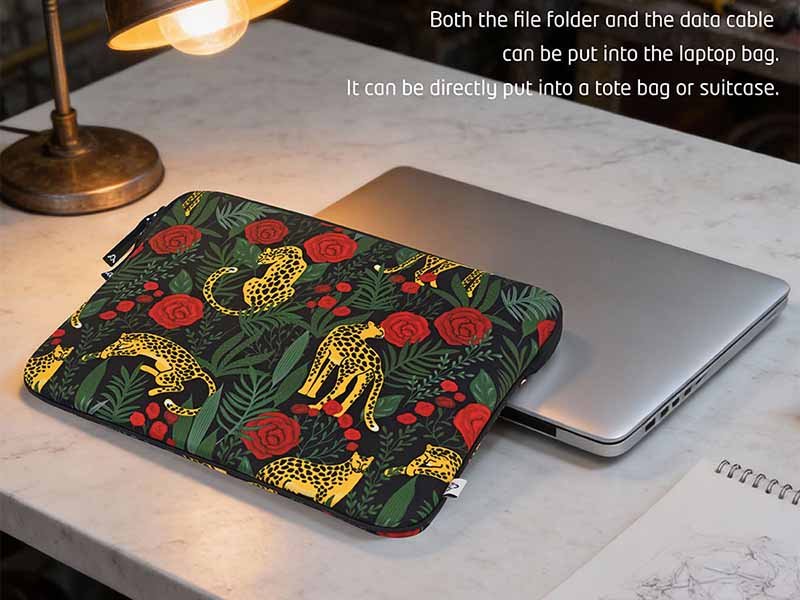
A neoprene laptop bag looks simple when it is lying flat on a desk. That is exactly why many importers, startup brands, and even experienced sourcing teams underestimate it. They see a soft sleeve, a zipper, maybe a handle, and assume the product is easy to make. In real production, it is not. A good neoprene laptop bag has to balance protection, weight, fit, appearance, stitching stability, zipper durability, logo performance, and cost. If one part is wrong, the whole product feels cheap. A bag with weak lamination wrinkles after short use. A bag with the wrong neoprene thickness becomes bulky and hard to carry. A bag with poor zipper tape or uneven stitching quickly damages customer trust.
A neoprene laptop bag is a protective sleeve or carrying bag made from laminated neoprene foam, usually combined with polyester, nylon, or jersey fabric. It protects laptops through cushioning, flexibility, light water resistance, and a close body fit. In manufacturing, product quality depends on foam thickness, lamination structure, cutting accuracy, stitching method, zipper quality, and finishing details.
That is why this product matters more than many people expect. For a school brand, it has to survive daily commuting. For a tech accessory brand, it has to look clean enough to sit next to premium devices. For an Amazon seller, it has to photograph well, resist returns, and keep cost under control. For a private label client, it has to carry the logo without looking like a low-cost giveaway. Oneier has spent more than 18 years developing neoprene materials and converting them into finished products such as bags, koozies, wetsuits, sports supports, and medical supports. That manufacturing background matters, because in neoprene goods, material knowledge is not separate from product quality. It is the foundation of it.
What Is a Neoprene Laptop Bag?
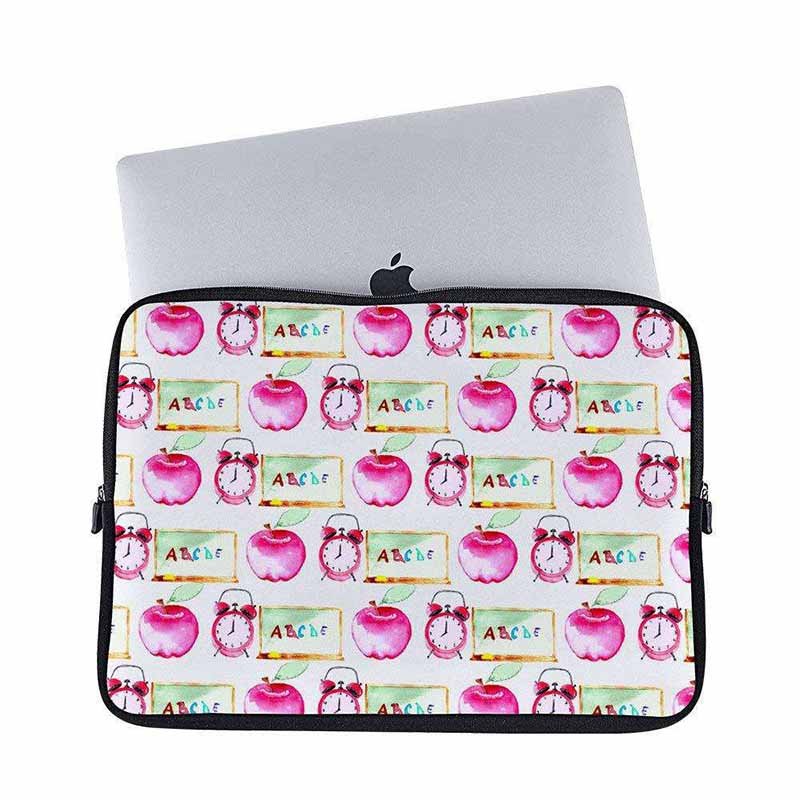
A neoprene laptop bag is a soft protective bag made from neoprene foam laminated with fabric on one or both sides. It is designed to reduce scratches, absorb light shock, improve carrying comfort, and give laptops a cleaner, safer layer during daily transport. The best versions do not rely on material alone. They combine the right foam density, size fit, zipper protection, and construction details to create a product customers actually trust.
What Is Neoprene in a Laptop Bag?
In a laptop bag, neoprene is not just “soft rubber.” It is a structured material system. The center layer is neoprene foam, and this foam is usually laminated with outer and inner textile surfaces. That structure is what gives the material its value. The foam provides cushioning and rebound. The fabric layers provide appearance, color, printability, abrasion resistance, and a softer touch against the laptop surface.
A basic neoprene laptop bag material structure usually looks like this:
| Material Layer | Main Function | What Clients Should Care About |
|---|---|---|
| Outer fabric | Appearance, color, logo surface, abrasion resistance | Affects visual quality and branding result |
| Neoprene foam core | Cushioning, thickness, flexibility, shock absorption | Affects protection level and body feel |
| Inner fabric | Scratch resistance, lining comfort, interior finish | Affects user experience and product grade |
Most laptop sleeve projects use laminated neoprene in the range of 2mm to 6mm. The foam itself can feel very different depending on density, stretch, surface lamination, and finishing. Two sleeves may both be listed as 3mm, but one feels supportive and premium while the other feels loose, spongy, and unstable. That is why experienced factories do not choose neoprene by thickness alone.
Clients usually care about five things first: protection, look, weight, logo effect, and price. Neoprene directly affects all five. A softer low-density foam may reduce cost, but it can also deform faster and make the sleeve look weak on shelf. A denser foam gives better body and protection, but if the design is already tight, the laptop may fit poorly. This is where a factory with neoprene product experience becomes useful. Oneier’s background in neoprene fabric development and finished neoprene products helps clients avoid the common mistake of buying “by millimeter only” instead of buying by performance.
Why Is a Neoprene Laptop Bag Popular?
Neoprene laptop bags remain popular because they solve a real problem without making daily carrying inconvenient. Most laptop users do not want a heavy case. They want something light, slim, protective, and easy to carry inside another bag or by hand. Neoprene works well because it gives a noticeable protective layer without turning the product into hard luggage.
Compared with several common materials, neoprene sits in a practical middle position:
| Material | Cushioning | Weight | Flexibility | Water Resistance | Printing Surface |
|---|---|---|---|---|---|
| Leather | Low to medium | Heavy | Low | Low | Limited |
| Polyester fabric only | Low | Light | Medium | Medium | Good |
| EVA hard shell | High | Medium to heavy | Very low | High | Limited |
| Neoprene | Medium to high | Light | High | Medium to high | Good |
This balance is what keeps neoprene relevant. It protects better than plain woven fabric. It feels softer and more convenient than hard shell cases. It is lighter than leather and usually easier to customize. For many brands, that means broader market appeal.
There is also a strong commercial reason. Neoprene supports many design directions without needing a completely different production system. A factory can make a basic zip sleeve, an envelope-style sleeve, a top-handle laptop bag, a messenger-style laptop case, or a multi-function travel sleeve using similar base materials and related processing methods. For a client building a product line, this matters. One successful base sleeve can grow into a small collection.
Neoprene also photographs well. That may sound minor, but for e-commerce sellers it is not minor at all. Clean edges, bright print, smooth body, and visible thickness help online conversion. Customers shopping online cannot touch the sleeve. They judge by visible structure, perceived padding, zipper finish, and how well the product appears to fit the laptop. A good neoprene sleeve communicates protection visually before the customer even reads the details.
Are Neoprene Laptop Bags Protective?
Yes, but protection depends on how the bag is built, not just on whether it uses neoprene. Many sellers describe neoprene as protective, but there is a large difference between basic scratch protection and real everyday impact protection. The foam can cushion the laptop, but only if the thickness, density, lamination, pattern fit, and zipper area are handled correctly.
Protection in a neoprene laptop bag usually comes from these factors:
| Protective Element | What It Does | Risk If Done Poorly |
|---|---|---|
| Foam thickness | Creates cushioning between laptop and outside pressure | Too thin feels cheap and protects poorly |
| Foam density | Controls rebound and support | Too soft collapses fast |
| Inner lining | Reduces surface scratches on device | Rough lining can mark the laptop |
| Pattern fit | Keeps the device from sliding too much | Oversized fit reduces protection |
| Zipper guard | Prevents zipper teeth from contacting the device | Device corners get scratched |
| Edge construction | Protects corners and keeps shape stable | Corners split or deform sooner |
A useful way to look at thickness is this:
| Neoprene Thickness | Use Level | Product Feel |
|---|---|---|
| 2mm | Light scratch protection | Slim, soft, low structure |
| 3mm | Daily office and school use | Balanced, flexible, popular |
| 4mm | Stronger everyday protection | More padded, more premium feel |
| 5mm | Heavier device protection | Thicker body, stronger visual padding |
| 6mm+ | Specialty or rugged styles | Bulky for daily minimalist carry |
In many projects, 3mm to 5mm is the commercial sweet spot. A 13-inch or 14-inch sleeve for everyday commuting often works well in 3mm or 4mm. A larger 15.6-inch bag with handles and accessory storage may benefit from 5mm if the client wants a more substantial protective feel.
Still, thickness alone is not enough. A poorly made 5mm sleeve can protect less effectively than a well-built 3mm sleeve. Why? Because protection also depends on construction. If the zipper is sewn too close to the laptop edge, if there is no zipper welt, if the corners are overly tight, or if the foam compresses badly after short use, customers will notice the weakness quickly. Good factories understand that a neoprene laptop bag protects through a system, not through a single material claim.
How Should Clients Judge Neoprene Material Quality Before Sampling?
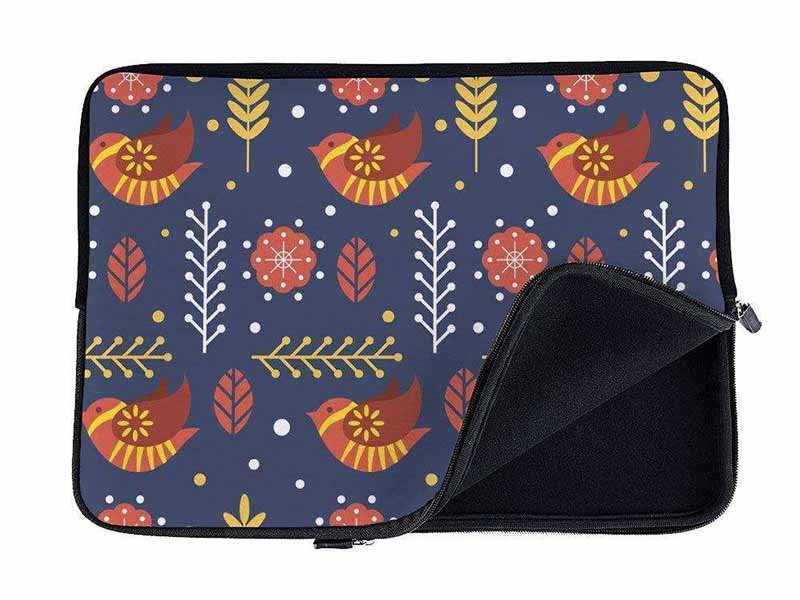
Many neoprene laptop bag projects fail long before the first sample is made. The reason is simple: clients approve a material based only on thickness or price. In neoprene products, thickness alone does not tell the whole story. Two materials labeled “3mm neoprene” can behave very differently in real use. One may feel dense, smooth, and supportive, while the other feels loose, spongy, and unstable.
Before requesting a production sample, clients should evaluate the neoprene material itself. This early evaluation helps avoid wasted sampling cycles, unnecessary redesign, and inconsistent product quality in bulk production. A few practical checks can reveal whether a material is suitable for laptop protection or likely to cause problems later.
1. Check Neoprene Thickness and Density Together
Most laptop sleeves use neoprene thickness between 3 mm and 5 mm, but density is equally important. Thickness determines how much cushioning the bag appears to have, while density determines how well the foam supports weight and recovers after compression.
Clients should request both measurements when reviewing neoprene material.
| Property | What to Check | Why It Matters |
|---|---|---|
| Thickness | 3 mm / 4 mm / 5 mm | Determines padding level |
| Foam density | kg per cubic meter | Determines support strength |
| Compression recovery | How fast foam rebounds | Indicates long-term durability |
For example:
| Thickness | Density Range | Product Feel |
|---|---|---|
| 3 mm | 180–220 kg/m³ | Slim sleeve, moderate protection |
| 4 mm | 200–240 kg/m³ | Balanced protection and flexibility |
| 5 mm | 220–260 kg/m³ | Stronger cushioning, premium feel |
If density is too low, the foam collapses easily and loses shape after several months of use. A higher-density foam gives the sleeve a firmer body and better protection during everyday carrying.
2. Inspect Lamination Quality
Neoprene used in laptop bags is almost always laminated with outer fabrics such as polyester or nylon. The lamination process bonds these fabrics to the foam core using adhesive and heat.
Poor lamination is one of the most common quality problems in neoprene products. Over time it can lead to:
- Surface bubbling
- Fabric separation
- Wrinkled appearance
- Reduced durability
Clients should examine lamination quality carefully before approving a material.
| Inspection Method | What to Look For |
|---|---|
| Visual check | Smooth surface with no wrinkles |
| Edge inspection | Fabric layers bonded tightly to foam |
| Bending test | No visible separation when folded |
| Stretch test | Fabric remains attached during stretching |
A simple bending test can reveal weak lamination quickly. Fold the neoprene sheet repeatedly along the same line. If bubbles or lifting appear between the fabric and foam layers, the lamination quality is poor.
3. Evaluate Surface Fabric Quality
The outer fabric laminated onto neoprene determines how the laptop sleeve looks and how well it supports printing or branding. Different fabrics create different product positioning.
Common lamination fabrics include:
| Fabric | Characteristics | Typical Use |
|---|---|---|
| Polyester | Smooth and printable | Promotional laptop sleeves |
| Nylon | Strong and textured | Premium laptop bags |
| Jersey fabric | Soft and elastic | Sports-style neoprene products |
Clients should evaluate several fabric characteristics:
- Surface smoothness for printing
- Abrasion resistance for daily use
- Color consistency across different rolls
- Stretch compatibility with the neoprene foam
A high-quality fabric layer improves both the visual appearance and durability of the bag. Rough or uneven fabrics may cause poor printing results or wear quickly during use.
4. Test Stretch and Shape Stability
Neoprene naturally stretches, but excessive stretch can create problems in laptop bag production. If the material stretches too easily, the finished bag may lose its shape or fit loosely around the laptop.
A simple stretch test can reveal whether the material is stable enough for bag construction.
| Test Step | Observation |
|---|---|
| Stretch neoprene gently | Check how far it extends |
| Release the material | Observe how quickly it returns |
| Repeat several times | Look for permanent deformation |
Stable neoprene should stretch moderately and recover quickly without remaining stretched.
Excessive elasticity often causes production issues such as:
- Misaligned panels during sewing
- Uneven zipper installation
- Loose fit around the laptop
Factories experienced in neoprene products usually evaluate stretch behavior before approving materials for laptop sleeves.
5. Check Odor and Chemical Residue
Another factor that buyers often overlook is material odor. Neoprene foam is produced through chemical processes, and poor-quality materials may retain strong smells.
A strong chemical odor can negatively affect the customer experience when the product is first opened.
Clients should perform a simple smell test:
| Evaluation | What to Observe |
|---|---|
| Open the material packaging | Detect initial odor strength |
| Leave material exposed for 10 minutes | Observe if smell fades |
| Rub surface lightly | Check if odor intensifies |
High-quality neoprene materials usually have minimal odor that dissipates quickly after exposure to air.
6. Examine Edge Cutting and Cell Structure
When neoprene is cut, the exposed foam cells reveal the internal structure of the material. Inspecting this cross-section can provide valuable information about foam quality.
| Foam Appearance | Material Quality |
|---|---|
| Fine, uniform cells | Higher-quality foam |
| Large uneven cells | Lower density and weaker structure |
| Smooth edge cut | Good lamination stability |
| Rough crumbling edge | Poor bonding between layers |
A uniform foam cell structure indicates that the neoprene was produced under controlled conditions.
7. Compare Material Samples Side by Side
One of the most effective ways to evaluate neoprene materials is direct comparison. Requesting several sample swatches allows clients to feel differences in density, elasticity, and surface quality.
When comparing materials, clients should review:
| Comparison Factor | Why It Matters |
|---|---|
| Weight per sheet | Indicates density differences |
| Compression feel | Reveals cushioning performance |
| Surface texture | Affects product appearance |
| Lamination smoothness | Predicts long-term durability |
Even small variations in these characteristics can lead to noticeable differences in the final product.
8. Confirm Material Consistency for Bulk Production
Finally, clients should confirm that the chosen material can be supplied consistently for large production runs. Sampling from a single sheet does not guarantee that bulk material will behave the same way.
Factories should be able to confirm:
| Production Factor | Importance |
|---|---|
| Stable supplier source | Prevents variation between batches |
| Consistent foam density | Maintains product protection level |
| Reliable lamination process | Ensures uniform appearance |
Manufacturers with their own neoprene production experience, such as Oneier, often have greater control over these factors because they work directly with neoprene materials rather than purchasing them randomly from the market.
What Real Product Details Matter Most to Customers?
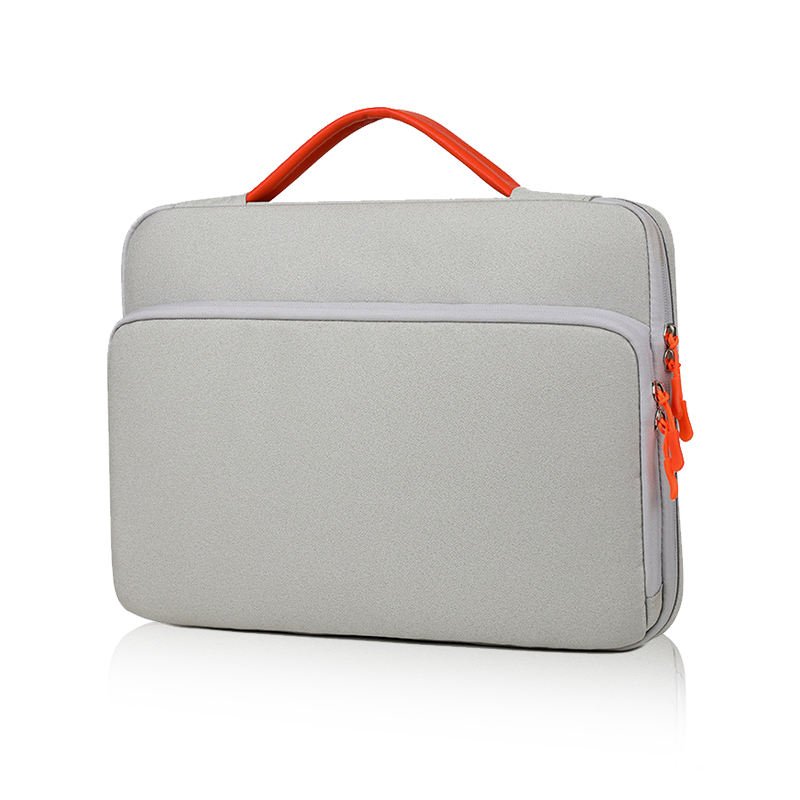
When people buy a neoprene laptop bag, they rarely think about foam density, lamination structure, or seam construction. Instead, they judge the product through simple experiences: how the bag feels in the hand, whether the zipper moves smoothly, how well the laptop fits inside, and whether the bag still looks good after several months of daily use. For brands developing neoprene laptop sleeves, understanding these practical expectations is critical. Small manufacturing details often determine whether a product receives positive customer reviews or frequent returns.
Most buyers focus on a few practical aspects: protection, fit, durability, usability, and visual quality. These concerns translate directly into manufacturing decisions that factories must control carefully.
Laptop Protection and Cushioning Performance
Protection is the first reason customers choose a neoprene laptop bag. Most users expect the sleeve to protect their laptop from minor impacts during commuting, travel, or daily office use. If the bag feels too thin or collapses easily under pressure, customers immediately perceive it as low quality.
Laptop protection in neoprene sleeves mainly depends on three material factors: thickness, density, and structural reinforcement.
| Design Factor | Typical Range | Customer Impact |
|---|---|---|
| Neoprene thickness | 3–5 mm | Determines cushioning feel |
| Foam density | 200–240 kg/m³ | Affects shock absorption |
| Reinforced seams | Double stitching | Improves durability |
In practical use, a 3 mm neoprene sleeve usually provides basic protection for lightweight laptops, while 4–5 mm neoprene offers stronger cushioning for larger devices such as 15-inch laptops. Customers often notice this difference immediately when they squeeze the bag.
Another protective element is corner structure. Laptop corners experience the highest impact forces during accidental drops. Manufacturers sometimes add reinforced stitching or slightly rounded panel shapes to distribute pressure more evenly.
Proper Laptop Fit and Interior Space
A well-designed neoprene laptop bag should fit the device snugly without being overly tight. If the sleeve is too loose, the laptop moves inside the bag and loses some of the protective benefits of the neoprene padding. If it is too tight, users may struggle to insert or remove the device.
Laptop sleeve sizes are usually developed based on common device dimensions.
| Laptop Screen Size | Typical Sleeve Internal Size |
|---|---|
| 13 inch | 33 × 23 cm |
| 14 inch | 35 × 25 cm |
| 15.6 inch | 39 × 27 cm |
| 16–17 inch | 41 × 29 cm |
Factories must also consider the thickness of modern laptops. Some ultra-thin devices require slightly tighter sleeve patterns, while gaming laptops may need more internal space due to thicker bodies.
Interior lining material is another important factor for customer satisfaction. Soft fabrics such as brushed polyester or microfiber are often used inside neoprene sleeves to prevent scratches on laptop surfaces.
Zipper Quality and Daily Usability
One of the most common complaints about laptop sleeves involves poor zipper performance. A zipper that catches, jams, or scratches the device quickly becomes frustrating for users.
Several zipper characteristics affect usability:
| Zipper Feature | Customer Benefit |
|---|---|
| Nylon coil zipper | Flexible and smooth operation |
| Protective zipper guard | Prevents metal contact with laptop |
| Larger pull tab | Easier to open and close |
| Reinforced zipper ends | Prevents tearing at stress points |
Nylon coil zippers are commonly used in neoprene laptop bags because they are lightweight and less rigid than metal zippers. They also bend more easily around curved sleeve openings.
The zipper guard is another small but important detail. This protective fabric strip prevents the zipper teeth from touching the laptop surface during insertion or removal.
Durability and Long-Term Shape Retention
Customers expect a laptop sleeve to maintain its shape even after months of use. If the bag begins to stretch excessively, sag, or lose its structure, it quickly appears worn out.
Durability depends on several construction details:
| Construction Detail | Effect on Durability |
|---|---|
| Edge stitching | Prevents panel separation |
| Foam density | Maintains structural shape |
| Fabric abrasion resistance | Reduces surface wear |
| Reinforced seams | Improves stress resistance |
Manufacturers often perform compression and stress tests to evaluate durability. For example, a sleeve may be compressed repeatedly to simulate daily carrying pressure. High-quality neoprene should rebound quickly after compression rather than remaining flattened.
Visual Appearance and Brand Perception
Although protection and durability are important, visual appearance also plays a major role in purchasing decisions. Laptop accessories are often visible in offices, classrooms, or public spaces, so customers prefer products that look clean and modern.
Several design elements influence appearance:
| Design Feature | Visual Effect |
|---|---|
| Smooth lamination | Clean surface finish |
| Even stitching | Professional craftsmanship |
| Precise panel alignment | Symmetrical appearance |
| High-quality printing | Clear brand identity |
Logo quality is especially important for branded products. A poorly printed logo can reduce the perceived value of the entire product. Manufacturers must match the printing method to the neoprene surface to achieve consistent results.
For example, sublimation printing works well for full-surface graphics, while screen printing is often used for simple logos on promotional sleeves.
Storage and Functional Features
Many customers prefer laptop sleeves that provide additional storage space for accessories. Chargers, cables, and small notebooks are commonly carried alongside laptops.
Manufacturers often incorporate extra features such as:
| Feature | Function |
|---|---|
| Front zipper pocket | Stores chargers and cables |
| Internal divider | Separates laptop and tablet |
| Carry handle | Improves portability |
| Shoulder strap | Converts sleeve to messenger bag |
These features must be designed carefully to avoid increasing bulk. One of the main advantages of neoprene laptop sleeves is their slim profile, so added functionality should not compromise portability.
Balance Between Protection and Portability
Ultimately, the best neoprene laptop bag balances several competing factors. Customers want strong protection but do not want a bulky case. They want durability but also expect a lightweight product that is comfortable to carry.
Manufacturers must therefore adjust material thickness, design features, and construction techniques to achieve this balance.
A well-designed neoprene laptop bag should provide:
- Reliable protection from minor impacts
- Comfortable daily portability
- Smooth zipper operation
- Consistent visual quality
- Long-term structural durability
When these factors work together, the product not only protects the device but also delivers a positive user experience. For brands and retailers, meeting these expectations is essential because customer reviews, repeat purchases, and product reputation depend heavily on these small but important details.
How Is a Neoprene Laptop Bag Made?
A neoprene laptop bag is manufactured through a sequence of controlled production stages that transform raw neoprene sheets into a finished protective sleeve. The process normally includes neoprene foam preparation, fabric lamination, precision cutting, panel assembly, zipper installation, stitching or bonding, edge finishing, and final inspection. Each stage affects the bag’s durability, appearance, and protective performance.
How Is Neoprene for Laptop Bags Produced?
Neoprene used in laptop bags begins as synthetic rubber foam, typically produced through a chemical foaming process that creates a flexible closed-cell structure. This foam provides elasticity and cushioning, but by itself it is not suitable for consumer products. To become usable material for bags, the foam must be laminated with textile surfaces.
The lamination process bonds fabric layers to the neoprene foam using heat and adhesive. The resulting composite material combines the structural strength of fabric with the shock-absorbing characteristics of neoprene.
A typical neoprene sheet used for laptop bags is built from three layers:
| Material Layer | Function | Manufacturing Consideration |
|---|---|---|
| Outer fabric | Visual appearance, abrasion resistance | Polyester or nylon commonly used |
| Neoprene foam | Cushioning and structure | Density and thickness determine protection |
| Inner fabric | Device protection and comfort | Often soft jersey or brushed fabric |
The lamination quality directly affects how the finished bag performs. Poor lamination can cause bubbling, wrinkling, or layer separation over time. High-quality lamination creates a stable composite sheet that cuts cleanly and holds shape during sewing.
Manufacturers evaluate laminated neoprene through several material checks before it enters production:
| Inspection Item | Purpose |
|---|---|
| Thickness measurement | Ensures consistent foam thickness |
| Density evaluation | Determines cushioning strength |
| Surface inspection | Detects wrinkles or bonding defects |
| Stretch test | Evaluates elasticity and recovery |
Factories like Oneier often control neoprene sourcing carefully because even small variations in foam density or lamination quality can affect the finished product’s durability.
How Is a Neoprene Laptop Bag Cut?
Once neoprene sheets are prepared, the next stage is cutting the material into precise panels. Accurate cutting is essential because neoprene stretches easily. If patterns are not aligned properly, the final bag may appear uneven or distorted.
Most manufacturers rely on one of two cutting methods:
| Cutting Method | Advantages | Limitations |
|---|---|---|
| Steel die cutting | Fast, consistent for large production | Requires tooling preparation |
| CNC cutting | Flexible for prototypes and small runs | Slightly slower for bulk orders |
Steel die cutting is the most common method for mass production. A steel blade shaped like the pattern is pressed onto the neoprene sheet, cutting the material quickly and uniformly.
During cutting, manufacturers also account for material stretch direction. Neoprene stretches differently along its length and width, so the pattern must be aligned to ensure the bag maintains the correct shape once assembled.
Cut panels usually include:
- Front body panel
- Back body panel
- Zipper binding strip
- Optional pocket panels
- Handle reinforcement pieces
Careful panel layout improves material utilization and reduces waste. Efficient layout planning can increase material yield by 5–10 percent, which directly affects production cost.
How Is a Neoprene Laptop Bag Sewn?
After cutting, the panels move to the sewing stage where the structure of the laptop bag is assembled. Neoprene behaves differently from traditional woven fabrics, so specialized sewing techniques are often required.
Factories commonly use flatlock stitching or overlock stitching when assembling neoprene products.
| Stitch Type | Characteristics | Typical Application |
|---|---|---|
| Flatlock stitch | Smooth seam with minimal bulk | High-end neoprene sleeves |
| Overlock stitch | Strong seam with visible edge | Sports-style neoprene products |
| Straight stitch | Standard seam construction | Bags with fabric binding |
Flatlock stitching is often preferred for laptop sleeves because it creates a smooth seam that does not rub against the laptop surface. Overlock stitching is stronger but produces a visible seam ridge.
During sewing, the zipper is usually installed before the body panels are fully closed. Zipper selection plays a major role in product reliability.
Important zipper specifications include:
| Zipper Component | Importance |
|---|---|
| Zipper teeth | Durability and smooth opening |
| Zipper tape | Compatibility with neoprene stitching |
| Zipper puller | Ease of use and branding opportunity |
Many factories use nylon coil zippers for neoprene laptop bags because they are flexible and less likely to scratch electronic devices.
Additional reinforcement may also be added near the zipper ends and corners. These areas experience higher stress during daily use.
How Is a Neoprene Laptop Bag Finished and Inspected?
Once sewing is complete, the bags move to the finishing stage. This stage improves the product’s appearance and ensures each item meets quality standards.
Typical finishing tasks include:
- Removing loose threads
- Cleaning surface marks
- Checking seam alignment
- Inspecting zipper functionality
- Measuring bag dimensions
Quality inspection normally follows a structured process.
| Inspection Stage | What Is Checked |
|---|---|
| Material inspection | Fabric defects, thickness accuracy |
| In-line inspection | Stitch quality and assembly consistency |
| Final inspection | Appearance, measurement, and functionality |
Factories often perform a load or compression test to verify protective performance. A laptop sleeve may be subjected to pressure or drop simulation to ensure the neoprene foam absorbs impact effectively.
After inspection, bags are folded and packed according to customer requirements. Packaging may include polybags, barcode labels, hangtags, and custom cartons.
Which Materials Are Used in a Neoprene Laptop Bag?
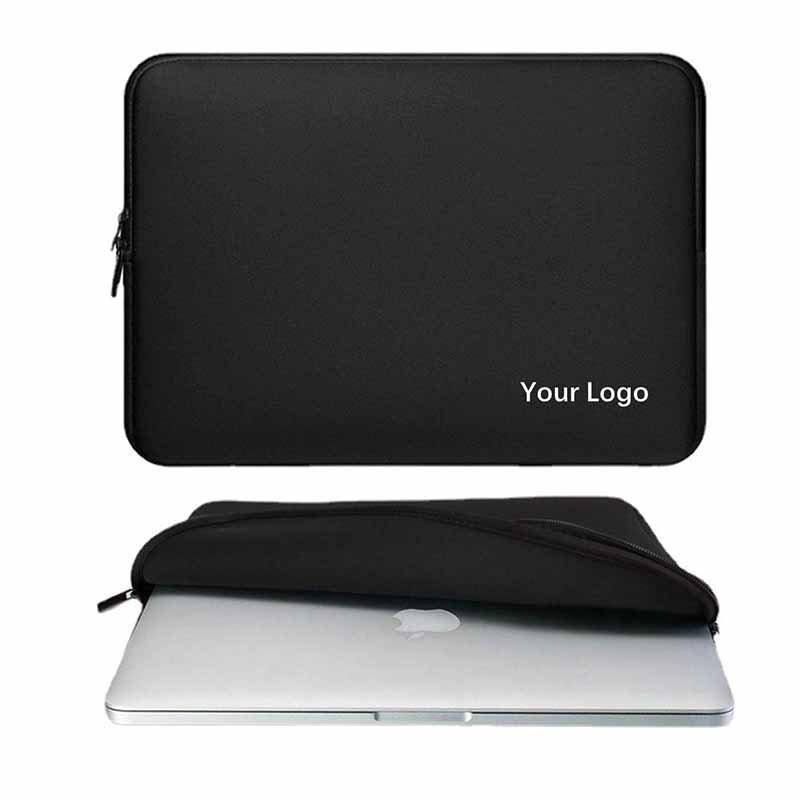
Material selection influences the durability, cost, appearance, and protective performance of a neoprene laptop bag. Manufacturers typically combine neoprene foam with textile laminations, zippers, and accessories to achieve the desired balance between protection and usability.
Which Neoprene Thickness Fits Laptop Bags?
Neoprene thickness is one of the most important design decisions for laptop sleeves. Thicker material provides greater cushioning, but it also increases weight and bulk.
The most common neoprene thickness options include:
| Thickness | Typical Use |
|---|---|
| 2–3 mm | Slim laptop sleeves and tablet cases |
| 4 mm | Balanced protection for daily laptop use |
| 5 mm | Premium sleeves with stronger padding |
| 6 mm+ | Heavy-duty protective cases |
Manufacturers usually recommend 3–5 mm neoprene for standard laptop sleeves because it offers a good balance between protection and portability.
When selecting thickness, designers consider several factors:
- Laptop size and weight
- Intended use environment
- Target product price
- Desired product appearance
A slim office sleeve might prioritize portability, while a travel laptop bag may require thicker foam for stronger impact protection.
Which Fabrics Are Laminated to Neoprene Laptop Bags?
The fabrics laminated to neoprene foam determine how the bag looks and feels. Different outer fabrics provide different textures and printing possibilities.
Common lamination fabrics include:
| Fabric Type | Characteristics |
|---|---|
| Polyester | Smooth surface, excellent for printing |
| Nylon | Durable with a premium texture |
| Jersey fabric | Soft and elastic surface |
| Custom printed fabric | Allows complex graphic patterns |
Polyester lamination is widely used for promotional laptop sleeves because it supports vibrant color printing. Nylon lamination, on the other hand, is often chosen for higher-end products due to its durability and refined appearance.
Inner lining fabrics are usually softer materials designed to protect laptop surfaces. Some manufacturers use brushed fabrics or microfiber surfaces to minimize scratches.
Do Neoprene Laptop Bags Use Zippers and Accessories?
Most neoprene laptop bags include zippers because they allow the sleeve to open fully while keeping the laptop secure during transport.
Common accessories found in neoprene laptop bags include:
| Accessory | Function |
|---|---|
| Zipper | Opening and closing mechanism |
| Zipper puller | Improves usability and branding |
| Carry handle | Adds portability |
| Shoulder strap | Allows crossbody carrying |
| Internal pocket | Stores chargers and accessories |
Manufacturers also consider how accessories interact with neoprene material. For example, handles may require reinforcement patches to prevent stretching, while zipper edges may include protective guards to prevent scratching devices.
These small construction details often distinguish high-quality laptop sleeves from cheaper alternatives.
What Custom Options Do Neoprene Laptop Bag Manufacturers Offer?
A professional neoprene laptop bag manufacturer does more than produce standard sleeves. Most brands entering this category want products that reflect their identity, match their market positioning, and stand out among competing laptop accessories. Customization therefore becomes one of the most important services a manufacturer can provide.
A capable factory can modify the bag’s size, structure, printing method, accessories, packaging, and even the neoprene material itself. These options allow brands to develop unique laptop bags that fit their target users, whether the product is meant for retail, corporate gifts, promotional events, or technology accessories.
How Are Logos Added to Neoprene Laptop Bags?
Logo customization is one of the most common requests when developing neoprene laptop bags. Different logo methods produce different visual effects, durability levels, and costs. Choosing the right method depends on the design complexity, product positioning, and quantity of the order.
The most widely used logo techniques for neoprene bags include:
| Logo Method | Appearance | Best For |
|---|---|---|
| Screen printing | Flat ink surface | Simple logos, promotional bags |
| Heat transfer printing | High detail graphics | Complex artwork or photos |
| Embroidery | Raised thread texture | Premium or fashion-oriented products |
| Embossing | Pressed logo in material | Minimalist or high-end designs |
| Sublimation printing | Full color edge-to-edge graphics | Custom printed neoprene sleeves |
Screen printing remains the most economical method for large orders with simple logos. Heat transfer printing allows much more detailed artwork, including gradients and complex patterns. Sublimation printing, often used with polyester laminated neoprene, allows the entire surface of the sleeve to display custom graphics.
Logo durability is also important for customer satisfaction. For example, screen printed ink should remain flexible so it does not crack when the neoprene stretches. High-quality printing processes are designed to maintain adhesion even after repeated folding or daily use.
Manufacturers like Oneier often help clients choose the best logo method based on artwork, fabric surface, and order quantity, ensuring the final result matches both visual expectations and cost targets.
Which Sizes Can a Neoprene Laptop Bag Have?
Laptop sizes vary widely, so neoprene sleeves are typically produced in multiple dimensions. Manufacturers design patterns based on common laptop screen sizes, but custom dimensions are often required for specialized devices.
Standard laptop sleeve sizes typically include:
| Laptop Size | Sleeve Dimensions (Approximate) |
|---|---|
| 11–12 inch | 31 × 22 cm |
| 13–14 inch | 35 × 25 cm |
| 15–15.6 inch | 39 × 28 cm |
| 16–17 inch | 42 × 30 cm |
However, many brands request custom sizing to ensure a snug fit for specific devices. This is particularly common when sleeves are designed for certain laptop models.
Besides size, manufacturers can also adjust structural features:
| Custom Feature | Function |
|---|---|
| Front accessory pocket | Stores chargers or cables |
| Carry handle | Converts sleeve into handheld bag |
| Shoulder strap | Adds crossbody carrying option |
| Extra padding panel | Improves impact protection |
| Internal divider | Allows storage of tablets or documents |
Designing these features requires careful pattern development. Adding a pocket or handle may seem simple, but it changes how the neoprene stretches and how the bag distributes weight. Experienced manufacturers review these design details during sampling to ensure the bag remains comfortable and durable.
Do Neoprene Laptop Bag Manufacturers Offer OEM?
OEM and private label production are central services for most neoprene laptop bag manufacturers. In OEM manufacturing, the factory produces products according to the client’s design and branding requirements.
A typical OEM production process includes:
| Stage | Description |
|---|---|
| Design confirmation | Client provides artwork and specifications |
| Sampling | Factory produces prototype samples |
| Revision | Adjustments are made to size or structure |
| Mass production | Bulk manufacturing begins |
| Quality inspection | Products are checked before shipment |
| Delivery | Goods are packaged and shipped to client |
Private label services go one step further by incorporating the client’s brand identity throughout the product. This may include custom woven labels, printed packaging, branded zipper pullers, or retail-ready hangtags.
Factories with integrated neoprene production experience, like Oneier, can support OEM projects more efficiently because they control both material sourcing and product assembly. This integrated supply chain often shortens sampling time and helps maintain consistent quality across production batches.
How Do You Choose a Neoprene Laptop Bag Manufacturer?
Selecting the right manufacturer is one of the most important decisions in a neoprene laptop bag project. The factory’s expertise influences product quality, production efficiency, and long-term supply reliability. Brands that choose the right partner can scale their product lines smoothly, while those that select inexperienced suppliers often face delays, defects, or inconsistent results.
What Makes a Neoprene Laptop Bag Manufacturer Reliable?
Several operational factors help determine whether a manufacturer is capable of producing high-quality neoprene laptop bags. These factors go beyond price and should be evaluated carefully during supplier selection.
Key indicators of a reliable manufacturer include:
| Capability | Why It Matters |
|---|---|
| Material expertise | Ensures correct neoprene thickness and lamination |
| Sampling ability | Allows rapid development and design improvement |
| Production capacity | Supports large orders and consistent delivery |
| Quality control system | Prevents defects during manufacturing |
| Communication efficiency | Ensures design changes are handled quickly |
Manufacturers with extensive neoprene experience often provide valuable product advice. For example, they may recommend different foam densities depending on the target market or suggest design adjustments that reduce production cost without compromising quality.
Factories that specialize in neoprene products—such as wetsuits, sports supports, and laptop sleeves—usually possess deeper material knowledge than general bag factories.
How Do MOQ and Sampling Affect Neoprene Laptop Bags?
Minimum order quantity (MOQ) and sampling speed play an important role for brands launching new products. Smaller brands often prefer factories that allow low MOQs so they can test market demand without investing in large inventory.
Typical MOQ structures for neoprene laptop bags may look like this:
| Order Stage | Typical Quantity |
|---|---|
| Sample development | 1–3 pieces |
| Pilot order | 100–300 pieces |
| Bulk production | 500–1000 pieces |
Factories that support flexible MOQs help clients launch products faster. Sampling speed is equally important because product revisions are common during development.
Sampling timelines usually follow this pattern:
| Sampling Step | Time Required |
|---|---|
| First prototype | 5–7 days |
| Sample revision | 3–5 days |
| Final approval | 2–3 days |
Manufacturers with experienced development teams can shorten these timelines by quickly adjusting patterns or materials.
Why Source a Neoprene Laptop Bag from China?
China has become one of the largest manufacturing hubs for neoprene products due to its integrated industrial supply chains. Regions specializing in textile and rubber processing often include suppliers for foam materials, lamination services, sewing factories, and accessory manufacturers within the same area.
This industrial ecosystem offers several advantages:
| Advantage | Benefit |
|---|---|
| Complete supply chain | Faster sourcing of materials |
| Skilled workforce | Higher manufacturing efficiency |
| Specialized equipment | Consistent product quality |
| Competitive pricing | Lower production costs |
Factories like Oneier operate within this manufacturing environment and combine multiple capabilities under one organization. With over 18 years of experience in neoprene material development and product manufacturing, Oneier supports the production of neoprene bags, laptop sleeves, wetsuits, sports supports, and other neoprene products.
Because the company works directly with neoprene materials, it can control foam quality, lamination structure, and product development more effectively than factories that rely entirely on external suppliers.
Start Your Custom Neoprene Laptop Bag Project with Oneier
Developing a successful neoprene laptop bag requires more than selecting a material and adding a zipper. The product must balance protection, design, durability, and manufacturing efficiency. Choosing an experienced manufacturing partner ensures these factors are managed correctly from the beginning of the project.
Oneier specializes in neoprene product manufacturing and has over 18 years of experience working with international brands and small to medium buyers.
Whether you are launching a new laptop accessory brand or expanding your existing product line, the Oneier team can assist with material selection, design optimization, and production planning.
If you are planning a custom neoprene laptop bag, contact Oneier today to discuss your design ideas and receive a professional quotation. A well-developed product starts with the right manufacturing partner.