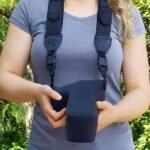
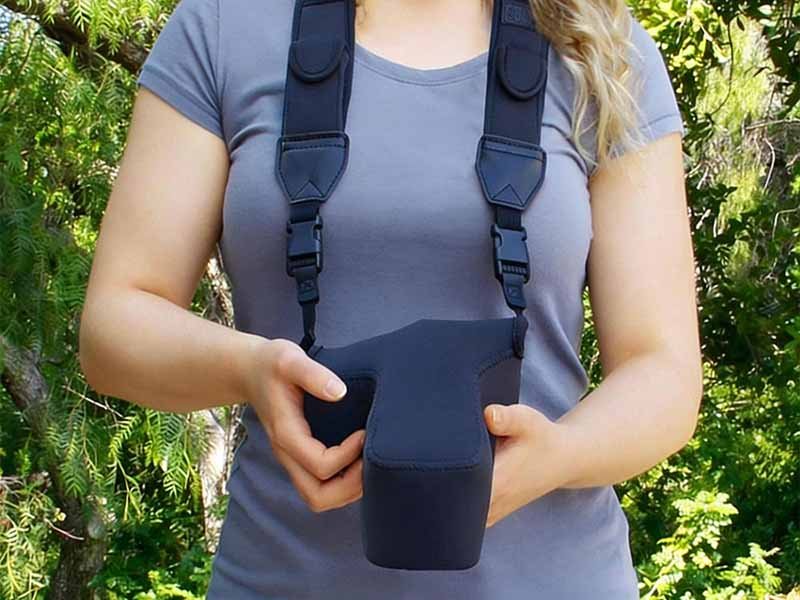
A good camera cover looks simple, but the product behind it is not simple at all. A neoprene camera cover has to do several jobs at the same time. It has to protect the camera body from scratches, soften light impact during daily carrying, resist moisture in outdoor use, feel soft in the hand, look clean on the shelf, and still stay within a price range that works for the market. That is why so many camera accessory projects fail at the factory stage rather than at the idea stage. Some covers look good in photos but feel too thin in real use. Some have decent material but weak stitching around stress points. Some have accurate size, but the logo cracks, the zipper jams, or the smell is too strong after opening the package.
Neoprene camera cover manufacturing is the process of turning neoprene sheet material into finished protective camera covers through material selection, laminating, pattern development, cutting, stitching, logo application, inspection, and packaging. A reliable factory does not just make the cover look right. It also controls thickness, elasticity, seam strength, fit tolerance, and production consistency, so the final product protects the camera and reflects the customer’s brand standard.
For importers, private label sellers, photography brands, and promotional product companies, this matters more than many people expect. A camera cover is a small item, but it can directly affect return rate, review score, and repeat order potential. A loose fit can make the product feel cheap. A strong smell can trigger complaints. A weak seam can turn a first order into a last order. On the other hand, a well-made neoprene cover can become a stable, repeatable product because it is lightweight, easy to ship, practical for everyday use, and flexible in design. Many overseas customers choose Chinese factories like Oneier because they need more than production capacity. They need flexible MOQ, quick sampling, free design support, stable quality, and short lead times that let them test the market without taking excessive inventory risk.
A lot of people first notice neoprene camera covers when they are already worried about damage. Maybe they scratched a new lens in a backpack, or maybe a camera knocked against a tripod, a laptop corner, or a car door during travel. At that moment, the product is no longer an accessory. It becomes insurance for daily use. That is exactly why this category continues to attract real demand, and why choosing the right manufacturing partner makes such a big difference.
What Is a Neoprene Camera Cover
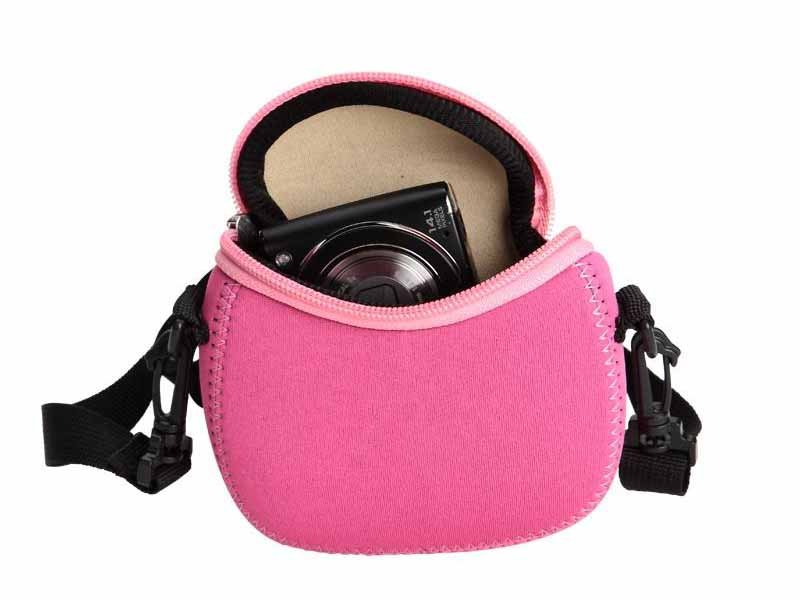
A neoprene camera cover is a soft protective cover made from synthetic rubber foam laminated with fabric, designed to reduce scratches, minor bumps, dust exposure, and light moisture contact during daily use. It is popular because it offers a strong balance of protection, flexibility, light weight, and cost control, making it suitable for DSLR cameras, mirrorless cameras, lenses, and related photography gear.
What is neoprene camera cover material
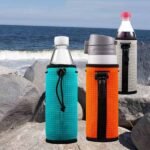
Neoprene is the core material used in many soft protective products because it combines cushioning, flexibility, and water resistance in a way that ordinary fabric cannot. In camera cover manufacturing, neoprene is usually not used alone. It is commonly laminated with textile layers on one or both sides to improve appearance, printing performance, color options, abrasion resistance, and handling feel. This structure gives the material both protective performance and a more finished commercial look.
A standard neoprene camera cover material usually includes three functional parts:
| Material Part | Main Function | What Customers Should Check |
|---|---|---|
| Outer fabric layer | Surface appearance, color, logo support, abrasion resistance | Texture, color consistency, print performance |
| Neoprene core | Cushioning, flexibility, water resistance, shape memory | Thickness, density, smell, rebound |
| Inner lining | Soft contact with camera body, scratch reduction | Smoothness, lint level, cleanliness |
In practical production, common neoprene thickness for camera covers is around 3mm to 5mm. A 3mm cover often feels lighter and more compact, which fits travel use and retail-friendly packaging. A 5mm cover provides more cushioning and a thicker hand feel, which may be more suitable for premium or outdoor-oriented product lines. Thickness alone does not determine quality. Density, foam uniformity, and lamination quality matter just as much.
Customers often focus on appearance first, but material quality problems usually show up later. Low-grade neoprene may have a strong chemical odor, uneven thickness, poor rebound, or weak bonding between layers. These issues can lead to warped shape, seam instability, and a shorter usable life. Good neoprene material should feel smooth, recover after pressure, maintain relatively even thickness across the sheet, and show clean lamination without bubbling or edge separation.
For customers building their own brand, this part is important because the material directly affects perceived value. Even if two camera covers look similar online, the one using better neoprene will usually feel more substantial in hand, last longer, and create fewer complaints after sale. In many real purchasing decisions, that difference is worth far more than a small savings in unit price.
Why use neoprene camera cover protection
Customers choose neoprene camera covers because they solve a very practical problem: cameras get damaged in ordinary daily movement long before they suffer a major accident. Many cameras are scratched inside backpacks, bumped during travel, rubbed against metal accessories, or exposed to rain and dust while being carried between shooting locations. A neoprene cover is made to reduce this kind of daily wear without turning the camera into a bulky, hard-to-carry object.
The main protective value of neoprene camera covers can be broken down clearly:
- They reduce direct friction between the camera body and surrounding objects.
- They soften light impact from knocks during carrying and transport.
- They add a barrier against dust, moisture, and dirty surfaces.
- They help keep cameras separated from keys, chargers, buckles, and tripod parts.
- They provide a more secure and comfortable grip for some users.
In product development, this type of protection is often described as practical daily protection rather than extreme-duty protection. That distinction matters. A neoprene camera cover is not meant to replace a rigid protective hard case during high-risk shipping or severe impact conditions. It is meant to reduce the small and repeated forms of damage that happen much more often in real life.
The market appeal is also connected to portability. Compared with hard shell camera cases, neoprene covers are lighter, easier to store, easier to customize, and usually lower in cost. This makes them attractive to several customer groups:
| Customer Type | Why They Like Neoprene Camera Covers |
|---|---|
| Photography brands | Easy to customize, practical product category |
| Amazon sellers | Lightweight, easy to ship, broad demand |
| Camera stores | Useful add-on product with good margin potential |
| Outdoor brands | Soft protection for travel and field use |
| Promotional product buyers | Large logo area and low entry cost |
From a commercial point of view, neoprene covers are also efficient products for OEM development. They usually require less hardware than complex bags, fewer materials than structured cases, and shorter development cycles than technical sewn products with many components. For many customers, that means lower sampling risk and faster market entry.
Are neoprene camera covers waterproof
Many customers ask whether neoprene camera covers are waterproof, and the most accurate answer is that most neoprene camera covers are water-resistant rather than fully waterproof. This difference is important because it affects product positioning, customer expectation, and return risk.
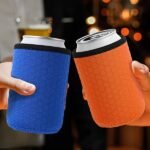
Neoprene itself has a closed-cell foam structure, which helps resist water penetration better than ordinary absorbent fabrics. That is one reason why neoprene is also widely used in wetsuits, koozies, sports supports, and various outdoor products. However, a finished camera cover is not defined by foam alone. Once the material is cut and sewn into shape, water resistance depends on the full construction, including seams, openings, zipper area, and edge finish.
Here is a more practical way to understand the performance level:
| Exposure Condition | Expected Protection Level |
|---|---|
| Light rain | Good |
| Water splash | Good |
| Humid outdoor use | Good |
| Wet table or grass contact | Moderate to good |
| Heavy rain for long duration | Limited |
| Full water submersion | Poor |
This is why manufacturing details matter so much. A factory can improve water resistance through several technical choices:
- using tighter seam construction
- using glued and stitched panels in some designs
- reducing unnecessary openings
- selecting water-resistant zipper options
- adding flap structure over closure areas
- improving edge finish to reduce moisture entry points
Still, even with those improvements, most soft neoprene camera covers should not be sold as diving-proof or submersion-safe products unless they are built with a much more technical waterproof structure. Overpromising here is a common mistake in low-end sales copy. Serious customers usually prefer clear language because it protects their brand reputation after sale.
For OEM customers, the best approach is to define the use scene early. If the product is intended for commuters, travel users, hobby photographers, and outdoor day use, strong water resistance is usually enough. If the product is intended for marine sports, boat photography, or severe weather use, the design standard must be higher, and the project may need a different construction route altogether.
Do neoprene camera covers prevent damage
Yes, neoprene camera covers do help prevent damage, but they work best against the kinds of damage that happen most often in daily use rather than the most extreme kinds of accidents. This is one of the most important points to explain correctly when developing or selling the product.
A camera cover made from good neoprene can reduce three common risks very effectively:
- surface scratches from contact with rough or hard items
- minor impact from small drops, knocks, and collision during carrying
- dust and light moisture exposure during travel or outdoor movement
These benefits may sound simple, but they address a large share of real customer complaints. In many cases, users are not dropping their cameras from staircases. They are putting them into backpacks, carrying them through airports, moving them in vehicles, or setting them down quickly on imperfect surfaces. That is exactly where neoprene performs well.
A realistic performance view helps customers choose correctly:
| Damage Risk | Neoprene Camera Cover Performance | Notes |
|---|---|---|
| Scratches | Strong | Very useful in backpacks and storage |
| Light knocks | Strong to moderate | Depends on thickness and fit |
| Dust exposure | Strong | Helps keep body surface cleaner |
| Light rain | Moderate to strong | Depends on construction |
| Heavy drops | Limited | Hard cases protect better |
| Sharp puncture | Limited | Not designed for blade or pointed impact |
Another important factor is fit. A well-fitted neoprene camera cover protects better than a loose one because the material stays in contact with the camera body and absorbs movement more effectively. If the cover is oversized, the camera may still shift inside the product and pick up friction marks. This is why professional pattern development matters. A cover is not just cut to approximate size. It should be built around body dimensions, lens shape, grip projection, and closure behavior.
For customers creating custom products, this section is where product positioning becomes clear. Neoprene camera covers are not supposed to do everything. They are supposed to do the most useful things well: stay light, stay flexible, reduce daily wear, and offer practical protection at a reasonable cost. When made well, they are a very dependable category with long-term market demand.
What customers should really evaluate first
When customers compare different neoprene camera cover suppliers, many start with price, but that is rarely the best first checkpoint. The more useful first question is whether the factory understands how the product will actually be used. A factory with real neoprene product experience will usually ask better questions before quoting. They may ask about camera model range, target retail price, logo method, desired thickness, packaging style, order quantity, and sales channel. These questions matter because they shape the final balance between cost, protection, and appearance.
For example, a cover designed for gift and promotional use may need:
- lower entry MOQ
- simpler construction
- large printable logo area
- compact packaging
- faster sampling speed
A cover designed for a premium outdoor brand may need:
- thicker neoprene
- cleaner seam workmanship
- lower odor material
- stronger color consistency
- more detailed packaging and labeling support
This is where an experienced manufacturer like Oneier brings practical value. A factory that already works with neoprene bags, koozies, sports supports, medical supports, wetsuits, and related sewn neoprene products usually understands how neoprene behaves in cutting, stitching, printing, lamination, and long-term use. That experience helps reduce trial-and-error costs for customers, especially during the sample stage.
The safest way to evaluate early is to use a simple supplier review table:
| Check Item | Why It Matters | What to Ask |
|---|---|---|
| Neoprene experience | Reduces sampling errors | How many neoprene product categories do you make |
| Material options | Affects feel and protection | What thickness and fabric laminations do you offer |
| Pattern accuracy | Affects fit and usability | Can you develop based on camera size or sample |
| Logo methods | Affects branding result | What printing or embossing methods do you support |
| MOQ flexibility | Affects testing risk | What is the MOQ per design and color |
| Sampling speed | Affects launch timing | How many days for custom sample |
| QC process | Affects repeat order stability | What inspections are done before shipment |
Customers who do this homework early usually make better supplier decisions and avoid the common trap of selecting a factory based only on a low opening quote. In neoprene product manufacturing, the factory that looks cheapest at the beginning is often not the one that stays cheapest after remake cost, delay cost, complaint cost, and replacement cost are included.
Which Neoprene Camera Cover Types Exist
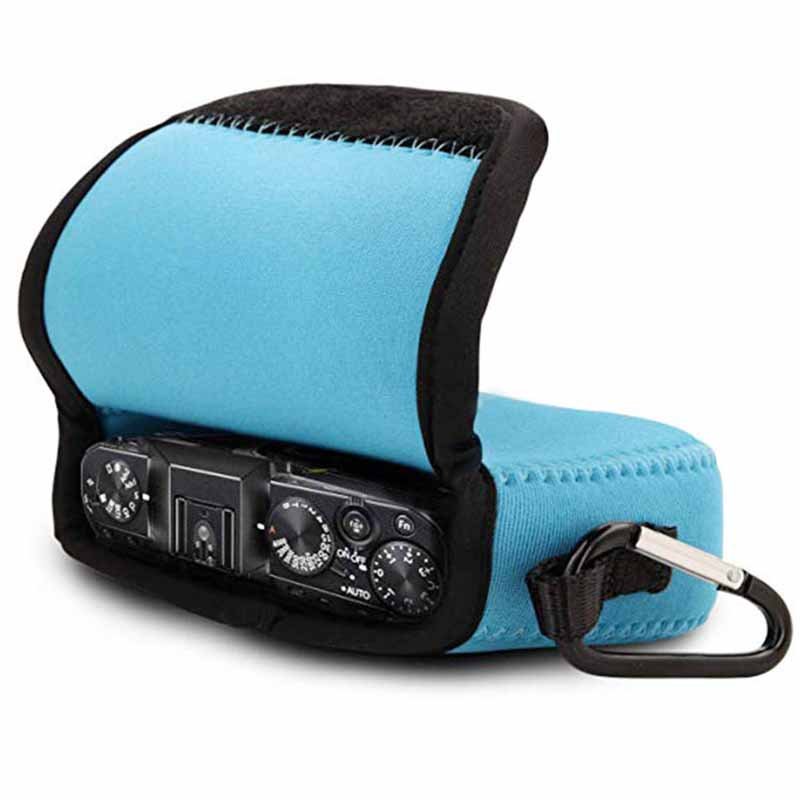
Neoprene camera covers come in different styles based on camera type, usage scenarios, and user preferences. The most common types include sleeves, wrap covers, pouch-style covers, and lens covers, each designed to balance protection, portability, and ease of access.
Which neoprene camera cover styles are common
The market is not dominated by one single design. Instead, several structures coexist because different users prioritize different features such as speed of access, level of protection, and compact storage.
The most widely produced styles include:
| Style Type | Structure | Best Use Scenario | Key Advantage |
|---|---|---|---|
| Sleeve type | Simple slip-in design | Daily storage, backpack use | Lightweight, low cost |
| Wrap type | Fold-over with Velcro | Fast shooting access | Flexible fit |
| Zipper pouch | Fully enclosed with zipper | Travel and transport | Better protection |
| Drawstring pouch | Soft closure with cord | Lightweight carrying | Easy to use |
| Lens cover | Cylindrical shape | Lens protection | Snug fit |
Each structure directly affects manufacturing complexity and cost.
- Sleeve type is the most cost-efficient and fastest to produce. It requires fewer sewing steps and minimal hardware.
- Zipper pouch adds more protection but increases labor cost due to zipper installation and alignment.
- Wrap type requires more precise pattern development because it must fit different camera shapes while still closing securely.
From a business perspective, sleeve and zipper pouch designs usually perform best in volume sales because they balance cost and perceived value.
Which neoprene camera cover fits different cameras
Not all camera covers are interchangeable. Fit is one of the most important factors affecting product performance and customer satisfaction.
Cameras vary significantly in size and shape:
| Camera Type | Typical Dimensions | Recommended Cover Type |
|---|---|---|
| DSLR (with lens) | Large, bulky body | Zipper pouch or wrap |
| Mirrorless camera | Medium compact | Sleeve or pouch |
| Compact camera | Small size | Sleeve or drawstring |
| Action camera | Very small | Custom-fit pouch |
| Camera lens | Cylindrical | Lens cover |
A common mistake in production is using a “one-size-fits-all” approach. This often leads to poor fit:
- Too tight → difficult to insert/remove
- Too loose → reduced protection
- Poor shape match → unstable inside cover
Professional factories usually develop patterns based on:
- Camera body dimensions
- Lens length and diameter
- Grip and protrusion areas
- Closure behavior
For OEM customers, providing a physical sample or accurate size drawings can significantly improve the first sample result and reduce revision cycles.
What thickness for neoprene camera cover
Thickness is one of the most important technical parameters because it directly affects protection level, weight, and cost.
The most commonly used thickness options are:
| Thickness | Feel | Protection Level | Common Use |
|---|---|---|---|
| 2mm | Thin, flexible | Basic | Promotional items |
| 3mm | Balanced | Moderate | Mainstream products |
| 5mm | Thick, solid | Strong | Premium protection |
| 7mm+ | Very thick | Heavy-duty | Niche applications |
Key considerations:
- 3mm is the most widely used because it balances cost and usability.
- 5mm offers better cushioning but increases material cost by 20–40%.
- Thicker material also increases shipping volume, which affects logistics cost.
Thickness alone does not define quality. A well-made 3mm cover with high-density neoprene can outperform a poorly made 5mm cover.
For product positioning:
- Entry-level → 2mm–3mm
- Mid-range → 3mm
- Premium → 5mm
Customers targeting Amazon or retail shelves often choose 3mm because it fits price expectations while still delivering good performance.
Which closure for neoprene camera cover
Closure design is a key detail that directly affects user experience and product positioning.
The most common closure types include:
| Closure Type | Ease of Use | Protection Level | Cost Impact |
|---|---|---|---|
| Open sleeve | Very easy | Basic | Lowest |
| Velcro flap | Easy | Moderate | Low |
| Zipper | Moderate | High | Medium |
| Drawstring | Easy | Moderate | Low |
| Magnetic flap | Very easy | Moderate | Medium |
Each option has trade-offs:
- Zipper closures provide the best sealing and protection but require precise installation. Poor zipper quality is one of the top causes of customer complaints.
- Velcro closures are flexible and cost-effective but may wear out over time and create noise during use.
- Open sleeves are simple and cheap but offer minimal protection against falling out.
- Drawstring closures are lightweight but less secure than zippers.
From a manufacturing perspective, zipper quality is critical. Common issues include:
- Uneven stitching causing zipper waves
- Low-quality sliders breaking after repeated use
- Fabric catching during opening/closing
For higher-end products, some customers choose water-resistant zippers, which increase both cost and perceived value.
How design affects neoprene camera cover performance
Beyond basic structure, small design details can significantly impact product performance and customer perception.
Important design elements include:
1. Edge finishing
Clean edge finishing improves durability and appearance.
- Overlock stitching → flexible, cost-effective
- Binding edge → stronger, more premium look
2. Stitch density
Higher stitch density improves seam strength.
| Stitch Density | Result |
|---|---|
| Low | Weak seams, risk of opening |
| Medium | Standard durability |
| High | Strong, long-lasting |
3. Internal structure
Some covers include additional padding zones or reinforced panels for better protection.
4. Fit tolerance
A difference of even 5–10mm can affect usability:
- Too tight → difficult insertion
- Too loose → poor protection
5. Logo placement
Position affects both aesthetics and production difficulty.
- Flat areas → easier printing
- Curved areas → higher defect risk
What designs sell better in the market
Real sales data across e-commerce platforms and wholesale markets shows clear trends:
| Feature | Market Preference |
|---|---|
| Thickness | 3mm dominates |
| Closure | Zipper pouch most popular |
| Color | Black, gray, navy lead |
| Logo | Simple, centered logos |
| Packaging | Compact, retail-ready |
Customers increasingly prefer:
- Clean, minimal designs
- Neutral colors
- Functional features over decorative elements
For new brands, starting with simple, proven designs is often more effective than launching overly complex products.
How to choose the right product type for your business
The best neoprene camera cover type depends on your business model:
| Business Type | Recommended Product Strategy |
|---|---|
| Amazon seller | Lightweight, zipper pouch, 3mm |
| Brand owner | Custom fit, premium material, strong branding |
| Promotional buyer | Low MOQ, simple sleeve |
| Distributor | Mixed styles for wider coverage |
| Outdoor brand | Thicker material, water-resistant design |
A practical approach:
- Start with 1–2 core designs
- Test market response
- Expand based on sales data
This reduces risk and improves inventory turnover.
How Neoprene Camera Cover Is Made
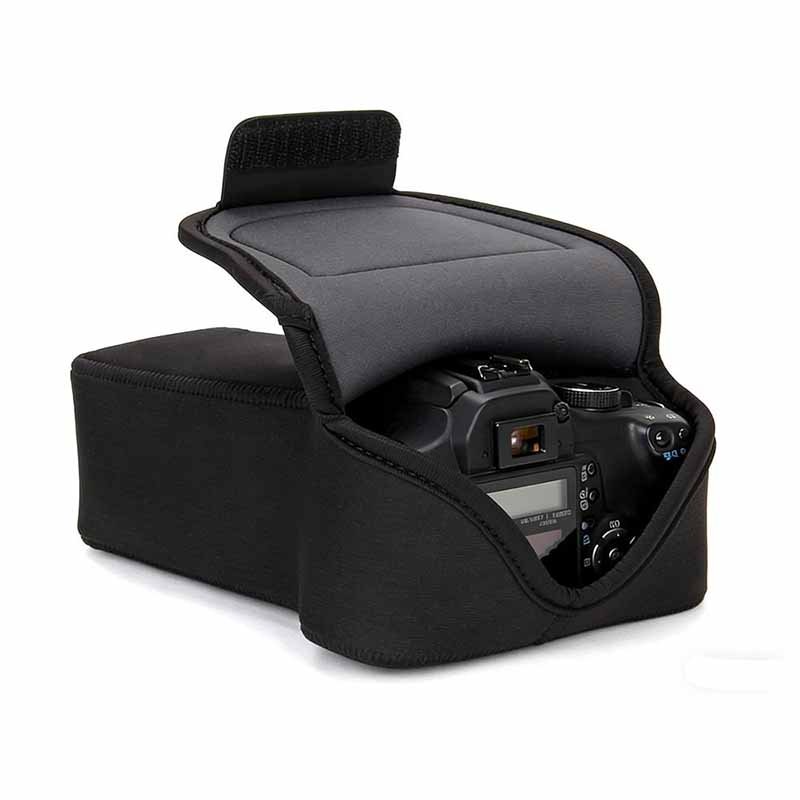
Neoprene camera covers are manufactured through a controlled process that includes material selection, lamination, pattern development, cutting, stitching, branding, and quality inspection. Each step directly affects durability, fit, and final product consistency.
How neoprene camera cover material is prepared
Everything starts with neoprene sheets, but not all neoprene is the same. Material preparation determines how the product will perform months after use—not just how it looks on day one.
Neoprene used in camera covers is typically laminated with fabric layers to improve strength and appearance. The lamination process bonds the foam core with outer fabrics such as polyester or nylon.
Key preparation steps include:
- Selecting neoprene density (affects cushioning and durability)
- Choosing fabric type (affects texture and print quality)
- Laminating layers under controlled temperature and pressure
- Cutting sheets into workable panel sizes
Material quality differences are often visible in:
| Factor | Low Quality | High Quality |
|---|---|---|
| Smell | Strong chemical odor | Mild or no odor |
| Elasticity | Poor recovery | Good rebound |
| Surface | Uneven | Smooth and uniform |
| Bonding | Easy delamination | Strong adhesion |
For OEM customers, requesting material samples before production is critical. It helps verify feel, smell, thickness consistency, and print compatibility.
How neoprene camera cover is cut and shaped
After material preparation, the next step is cutting. This stage defines the product’s shape, size accuracy, and overall fit.
Two main cutting methods are used:
| Method | Advantage | Limitation |
|---|---|---|
| Die cutting | Fast, consistent, ideal for mass production | Requires mold cost |
| Laser cutting | Flexible, precise for small runs | Higher cost per unit |
Key points in cutting:
- Pattern must account for material stretch
- Seam allowance must be included
- Curved parts require precision to avoid distortion
A small error in cutting can create major problems later:
- Misalignment during stitching
- Uneven edges
- Poor fit around camera body
Professional factories often create custom molds (die tools) for stable mass production. This improves consistency across thousands of units.
How neoprene camera cover is stitched
Stitching is one of the most important steps because it determines structural strength and long-term durability.
Common stitching methods include:
| Stitch Type | Application | Performance |
|---|---|---|
| Flatlock stitching | Smooth joints | Comfortable, flexible |
| Overlock stitching | Edge finishing | Cost-effective |
| Blind stitching | Water resistance | Premium option |
Key quality factors:
- Stitch density (more stitches = stronger seams)
- Thread quality (affects durability and appearance)
- Alignment (affects product shape)
Weak stitching is one of the most common causes of product failure. Typical issues include:
- Seams opening after repeated use
- Thread breakage
- Uneven stitching lines
A good factory will reinforce stress points, such as:
- Corners
- Zipper ends
- Opening edges
For higher-end products, double stitching or reinforced stitching is often used.
How neoprene camera cover logo is added
Branding is a key part of product value. The same cover can sell at very different price levels depending on logo quality.
Common logo methods:
| Method | Effect | Cost Level | Durability |
|---|---|---|---|
| Silk screen printing | Clean, simple | Low | Medium |
| Heat transfer printing | Detailed graphics | Medium | Medium |
| Embossed logo | Premium feel | Medium | High |
| Rubber patch | Strong branding | Medium | High |
| Embroidery | Textured look | High | High |
Key considerations:
- Simple logos are more stable in mass production
- Complex multi-color designs increase defect risk
- Large logos may affect material flexibility
For most OEM projects, silk printing + embossing are the most balanced options.
How neoprene camera cover quality is checked
Quality control is what separates reliable suppliers from unstable ones.
A standard QC process usually includes:
1. Material inspection
Check thickness, smell, elasticity
2. In-line production inspection
Check stitching, alignment, logo quality
3. Finished product inspection
Check dimensions, appearance, functionality
4. Packaging inspection
Check labeling, packing accuracy
Typical inspection checklist:
| Check Item | Standard |
|---|---|
| Size tolerance | ±3–5mm |
| Stitch strength | No loose threads |
| Logo quality | No fading or misprint |
| Smell level | Acceptable for retail |
| Zipper function | Smooth operation |
Factories with strict QC can reduce defect rates to below 1–2%, while weak QC factories may exceed 5–8%, which directly impacts customer returns.
What Custom Neoprene Camera Cover Options
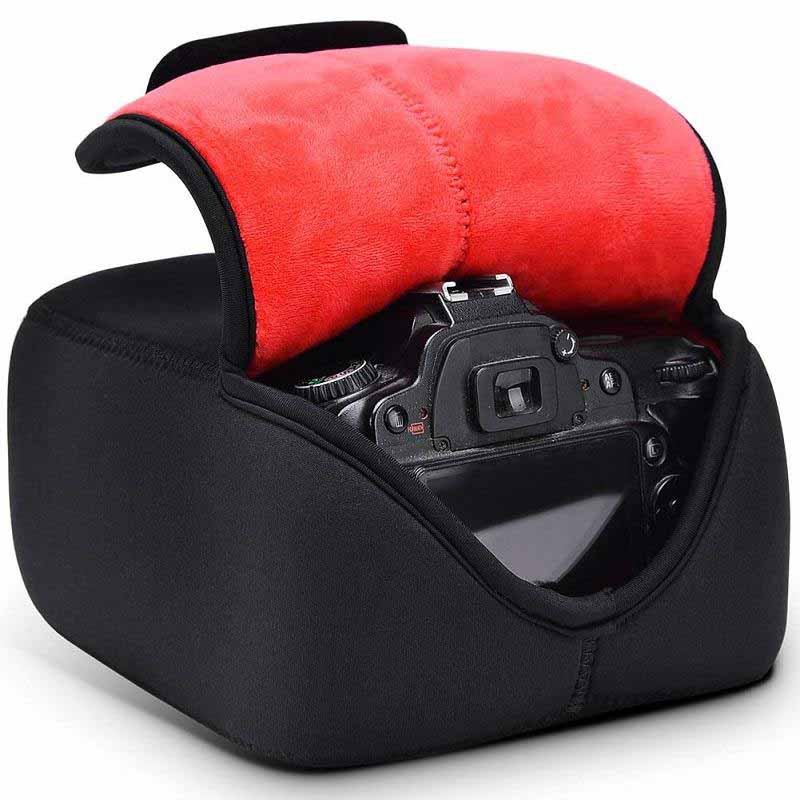
Custom neoprene camera covers can be tailored in logo, color, size, structure, and packaging to match brand identity and market positioning.
What logo options for neoprene camera cover
Logo customization directly affects perceived value.
Most commonly used options:
- Silk screen (cost-effective for large orders)
- Heat transfer (good for detailed graphics)
- Embossed (premium and subtle)
- Woven labels or patches
For brand positioning:
| Brand Type | Recommended Logo |
|---|---|
| Budget | Silk screen |
| Mid-range | Heat transfer |
| Premium | Embossed or patch |
Which colors for neoprene camera cover
Color choice affects both branding and production stability.
Most popular colors:
- Black
- Gray
- Navy
- Dark green
Bright colors are possible but may increase:
- Dye inconsistency risk
- Production complexity
Pantone matching is available but requires:
- Minimum order quantity
- Additional dyeing cost
How to design neoprene camera cover branding
Effective branding is simple and functional:
- Keep logo visible but not oversized
- Use contrast colors for clarity
- Avoid overly complex graphics
Design mistakes to avoid:
- Too many colors
- Poor placement on curved surfaces
- Overcrowded layout
What packaging for neoprene camera cover
Packaging plays a key role in perceived value and sales performance.
Common options:
| Packaging Type | Use Case |
|---|---|
| PE bag | Low cost, bulk orders |
| Printed polybag | Retail-ready |
| Paper box | Premium branding |
| Custom hang tag | Store display |
Retail-focused customers often choose compact, branded packaging to improve shelf appeal.
How to Choose Neoprene Camera Cover Manufacturer
Choosing the right manufacturer determines product quality, delivery reliability, and long-term cooperation success.
What to check in neoprene camera cover factory
Key evaluation points:
- Experience in neoprene products
- Production capacity
- Material sourcing ability
- Quality control system
Factories with multi-category neoprene experience (bags, koozies, wetsuits, supports) usually perform better.
How MOQ affects neoprene camera cover orders
MOQ directly impacts cost and flexibility.
| MOQ Level | Advantage | Limitation |
|---|---|---|
| Low MOQ (50–100 pcs) | Easy testing | Higher unit cost |
| Medium MOQ (300–500 pcs) | Balanced | Moderate cost |
| High MOQ (1000+) | Lowest cost | Higher risk |
Oneier supports low MOQ customization, which is ideal for testing new designs.
How to test neoprene camera cover quality
Before bulk production:
- Request samples
- Check stitching strength
- Test zipper durability
- Evaluate smell and material feel
A simple real-use test:
- Put camera inside
- Shake and carry
- Simulate daily use
Why choose China neoprene camera cover supplier
China remains the leading source due to:
- Mature supply chain
- Competitive pricing
- Fast production cycles
- Strong customization capability
Factories like Oneier offer:
- 18+ years experience
- Free design support
- Fast sampling (5–7 days)
- Short lead time (25–30 days)
- Full OEM/ODM service
How Much Neoprene Camera Cover Cost
Neoprene camera cover pricing depends on material, size, design complexity, and order quantity.
What affects neoprene camera cover price
Main cost factors:
| Factor | Impact Level |
|---|---|
| Material thickness | High |
| Size | Medium |
| Logo method | Medium |
| Structure complexity | Medium |
| Order quantity | High |
Material alone can account for 40–60% of total cost.
How quantity changes neoprene camera cover cost
Economies of scale are significant:
| Quantity | Estimated Price |
|---|---|
| 100 pcs | $3.50–$6.50 |
| 500 pcs | $2.20–$4.20 |
| 1000 pcs | $1.80–$3.50 |
| 5000 pcs | $1.20–$2.50 |
What is average neoprene camera cover price
Typical OEM pricing range:
- Basic sleeve: $1.20–$2.50
- Zipper pouch: $2.00–$4.50
- Premium custom: $3.50–$6.50
Start Your Custom Neoprene Camera Cover with Oneier
If you are planning to develop your own neoprene camera cover line, the most important step is choosing a factory that understands both material and market.
Oneier has over 18 years of experience in neoprene product manufacturing, including bags, koozies, sports supports, medical supports, and wetsuits. We support full customization.
Whether you are launching a new product or scaling an existing line, working with an experienced factory can save time, reduce risk, and improve product consistency.
Send us your design or idea today, and get a fast quotation with professional support.