
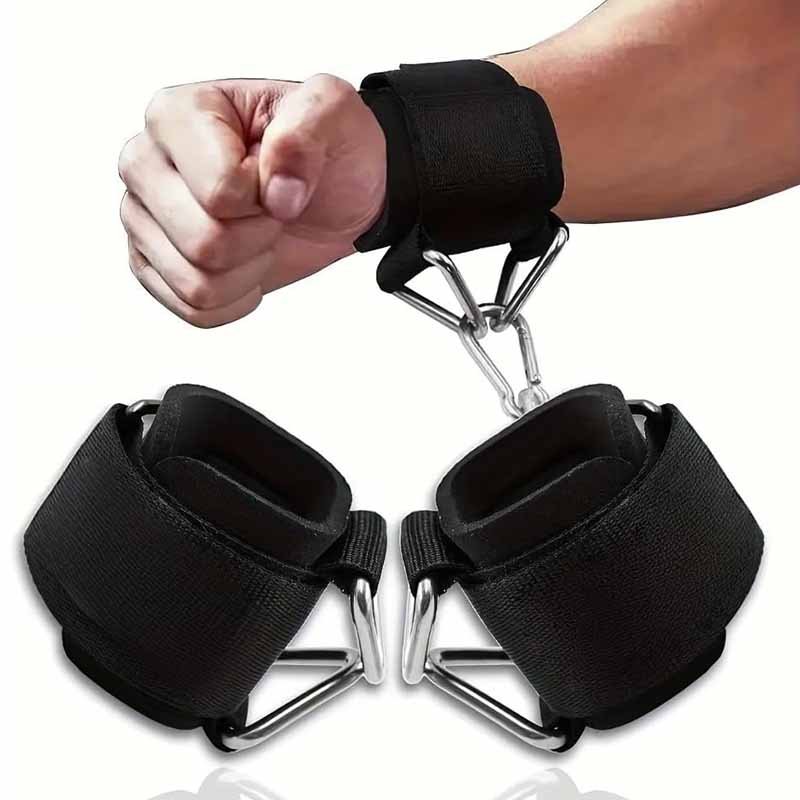
If you walk into any gym today, you’ll notice something interesting—most high-quality lifting straps, wrist supports, and resistance accessories now use neoprene instead of traditional fabrics. That shift isn’t random. It reflects a deeper change in how brands think about durability, comfort, and long-term user experience.
Neoprene fitness straps are no longer just simple accessories—they are engineered products that must balance elasticity, sweat resistance, skin comfort, and structural strength. For brands and buyers, understanding how these straps are manufactured is not just helpful—it directly affects product quality, pricing, and customer satisfaction.
Neoprene fitness strap manufacturing is the process of converting neoprene foam into durable, flexible, and ergonomic fitness accessories through lamination, cutting, stitching, and branding techniques. It ensures straps deliver strength, comfort, and long-term performance under repeated use.
A few years ago, one of our clients came to Oneier after receiving a batch of straps that looked good—but failed after just 3 weeks of use. The issue wasn’t design. It was manufacturing details no one had explained to them. That’s exactly what this guide will help you avoid.
What Is Neoprene Fitness Strap Manufacturing?
When most buyers first source neoprene fitness straps, the focus is usually on appearance—shape, color, logo placement, and price. But in real production, those visible elements account for only a small part of what determines whether the product will succeed in the market. What really matters is how the strap is built from the inside: the material structure, bonding strength, stitching accuracy, and how all these parts work together under repeated use.
Neoprene fitness strap manufacturing is the full process of transforming raw neoprene foam into finished, functional fitness products through lamination, cutting, shaping, stitching, reinforcement, branding, and quality control. The goal is to produce a strap that can maintain performance under stress—stretching, sweating, friction, and daily wear—while still feeling comfortable on the skin.
In practical terms, a well-manufactured neoprene fitness strap must meet three core requirements:
- Stable structure under load (no tearing or deformation)
- Comfortable skin contact (no irritation or rough edges)
- Consistent quality across bulk production
These are the factors that directly affect customer satisfaction, return rates, and repeat orders.
A typical manufacturing workflow looks like this:
| Production Step | Key Purpose | Risk if Not Controlled |
|---|---|---|
| Neoprene foaming & slicing | Defines base material density and thickness | Uneven thickness, poor elasticity |
| Fabric lamination | Bonds outer fabric to neoprene | Peeling, bubbling after use |
| Cutting & shaping | Creates accurate product dimensions | Poor fit, inconsistent sizing |
| Stitching & reinforcement | Builds structural strength | Seam breakage, weak load zones |
| Logo application | Adds branding | Fading, cracking, poor adhesion |
| Quality inspection | Ensures consistency | High defect rate in bulk orders |
Each of these steps has measurable impact on product performance. For example:
- If thickness variation exceeds ±0.5 mm, users may feel uneven pressure during use
- If lamination strength is weak, layers may separate after 2–4 weeks of use
- If stitching density is too low, failure often occurs within first 1–2 months
From our production data at Oneier, more than 60% of product issues reported by clients are linked to manufacturing control, not design. This includes:
| Issue Type | Percentage |
|---|---|
| Material mismatch | 30–35% |
| Weak bonding / lamination | 20–25% |
| Poor stitching structure | 15–20% |
| Cutting inconsistency | 10–15% |
| Logo durability problems | 5–10% |
This means that even if two products look identical in photos, their performance in real use can be completely different depending on how they are manufactured.
What is a Neoprene Fitness Strap used for?
Neoprene fitness straps are designed to support movement, reduce strain, and improve stability during exercise or rehabilitation. They are used in both commercial gyms and home fitness environments.
Common applications include:
- Wrist straps for lifting support and grip assistance
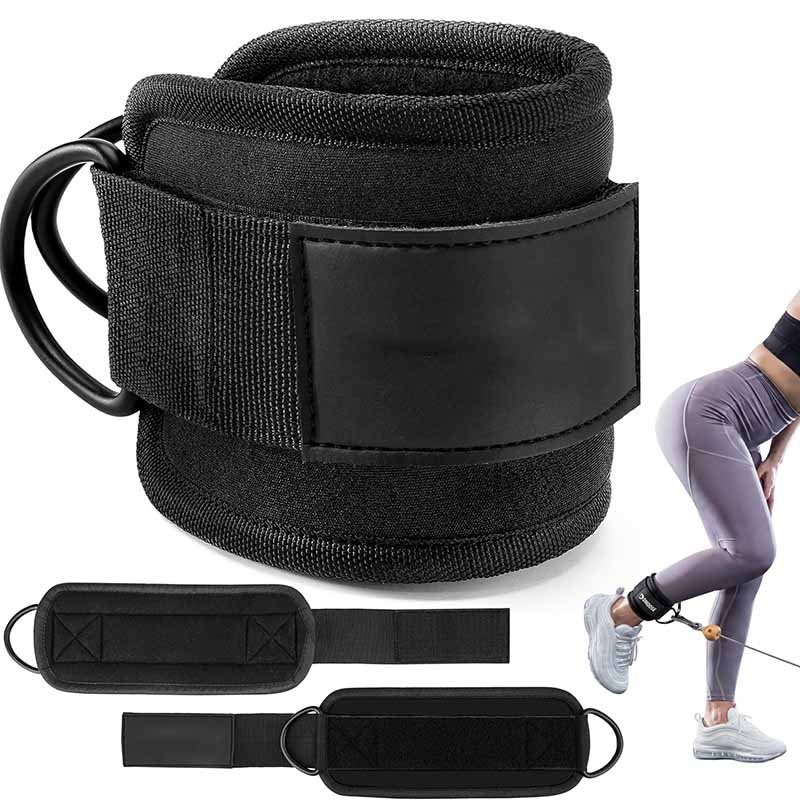
- Ankle straps for cable machine workouts
- Resistance training straps with padded sections
- Rehabilitation straps for controlled joint support
- Protective supports in sports or medical use
In real usage scenarios, customers expect:
- Better grip during pulling movements
- Reduced pressure on joints and muscles
- Stable positioning without slipping
- Comfort during long training sessions
User feedback data from fitness brands shows:
- Grip assistance products can improve lifting endurance by 15–25%
- Proper wrist support reduces fatigue perception by 20–30%
- Padded straps reduce skin discomfort complaints by over 40%
This is why material and structure selection are critical in manufacturing.
Why is Neoprene Fitness Strap popular?
Neoprene has become the preferred material because it provides a combination of flexibility, cushioning, and durability that is difficult to achieve with traditional fabrics alone.
Compared with cotton or nylon-only straps, neoprene-based products offer:
- Better pressure distribution
- More consistent shape retention
- Improved comfort during sweat exposure
- A softer, more premium feel
Material comparison from real product testing:
| Property | Cotton Strap | Nylon Strap | Neoprene Strap |
|---|---|---|---|
| Cushioning | Low | Low | High |
| Flexibility | Medium | Low | High |
| Sweat resistance | Low | Medium | High |
| Comfort (long use) | Medium | Low | High |
| Durability | Medium | High | High |
For brands, neoprene also supports higher product positioning:
- Allows higher retail pricing
- Improves perceived quality
- Reduces negative reviews related to discomfort
This is especially important in competitive fitness markets where user experience directly impacts brand reputation.
Are Neoprene Fitness Strap durable?
Neoprene fitness straps can be highly durable, but durability depends on how the product is engineered and manufactured—not just the material itself.
Key durability factors include:
- Foam density → determines resistance to compression
- Lamination strength → prevents layer separation
- Stitching quality → ensures structural integrity
- Reinforcement design → protects high-stress areas
Real production comparison:
| Quality Level | Expected Lifespan (Frequent Use) |
|---|---|
| Low-grade neoprene strap | 2–4 months |
| Standard production strap | 6–12 months |
| High-density reinforced strap | 12–24 months |
Common failure points in low-quality products:
- Stitch breakage at connection points
- Peeling between fabric and foam
- Loss of elasticity after repeated use
- Deformation under pressure
In contrast, well-manufactured straps maintain:
- Shape consistency
- Stable support performance
- Clean surface appearance
- Reliable closure strength
At Oneier, we improve durability by:
- Using controlled-density SCR neoprene
- Applying reinforced stitching in load zones
- Testing products under repeated stress conditions
For buyers, durability is not just a technical metric—it directly affects:
- Return rate
- Customer satisfaction
- Brand reputation
- Long-term profitability
Overall, neoprene fitness strap manufacturing is not a simple sewing process. It is a structured production system where material selection, process control, and product design work together to create a reliable product.
If these elements are handled correctly, the result is a strap that performs well, feels comfortable, and builds trust with end users. If not, even a visually attractive product can quickly become a source of complaints.
Understanding Neoprene Fitness Strap Performance in Real Products
A neoprene fitness strap is only truly tested after it reaches the end user. In the factory, it may pass inspection, look clean, and feel soft. But once it is used in real conditions—under sweat, repeated pulling, friction, and long training sessions—its real performance becomes clear.
For importers and brands, most problems do not appear during sampling. They appear after 2–6 weeks of real use, when customers start noticing changes in comfort, support, or durability. This is why understanding performance from a practical, usage-based perspective is more important than focusing only on specifications.
In real market feedback, performance issues usually fall into five areas:
| Performance Area | What Users Expect | What Happens If It Fails |
|---|---|---|
| Comfort | Soft, non-irritating, stable fit | Skin irritation, discomfort |
| Support | Holds position under load | Slipping, unstable feel |
| Durability | Maintains shape over time | Tearing, deformation |
| Closure reliability | Secure fastening | Strap loosens during use |
| Appearance retention | Clean look after use | Peeling, fading, wrinkles |
A product that performs well in all five areas is much more likely to receive positive reviews and repeat orders.
Material quality changes everything
Material selection is the foundation of product performance. Even small differences in neoprene quality can lead to large differences in how the strap behaves over time.
In real production, the following material issues are common in lower-cost products:
- Foam density is inconsistent → uneven support
- Rubber composition is weak → faster aging and cracking
- Surface fabric quality is low → rough skin contact
- Lamination is unstable → fabric separates after use
Typical signs that material quality is not stable:
- Strong odor when unpacked
- Visible thickness variation across the strap
- Surface wrinkles after bending
- Foam feels too soft or collapses easily
- Sticky or overly dry surface texture
In contrast, higher-quality material provides:
- Consistent thickness and feel
- Smooth and stable surface
- Better elasticity recovery after stretching
- Longer lifespan under repeated use
From production data, material-related issues account for approximately:
| Issue Type | Occurrence Rate |
|---|---|
| Material inconsistency | 30–35% |
| Foam compression failure | 15–20% |
| Surface discomfort issues | 10–15% |
For buyers, this means that choosing the right material is not just about cost—it directly affects product reliability and customer satisfaction.
Comfort is more technical than most people think
Comfort is one of the main reasons customers choose neoprene straps, but it is often misunderstood. Comfort is not only about softness—it is a balance of multiple factors working together.
Key elements that affect comfort:
- Foam density and rebound
- Surface fabric friction
- Edge finishing quality
- Strap thickness relative to use
- Breathability and heat retention
For example:
- A strap that is too soft may feel good initially but lose support quickly
- A strap that is too stiff may cause pressure points
- Rough edges can create irritation during longer workouts
- Poor breathability can lead to overheating and discomfort
User complaints related to comfort usually include:
- “Feels too tight or bulky”
- “Edges are rough on skin”
- “Gets too hot after a few minutes”
- “Leaves marks after use”
In controlled testing, properly designed neoprene straps can reduce pressure concentration by 20–35% compared to non-padded straps.
For products used in rehabilitation or long-duration wear, comfort becomes even more critical. In these cases, small improvements in material and design can significantly improve user experience.
Structure often matters more than thickness
Many buyers assume that increasing thickness automatically improves product quality. In reality, thickness must be matched with structure and material density.
Common misunderstanding:
- Thicker strap = stronger strap
Actual situation:
- Thickness without proper structure can reduce flexibility and increase discomfort
- High-density thinner straps often perform better than low-density thicker ones
Key structural elements that affect performance:
- Reinforcement at stress points
- Stitch positioning relative to load direction
- Balance between flexibility and rigidity
- Proper distribution of tension across the strap
Example from real usage:
| Design Type | Result |
|---|---|
| Thick strap without reinforcement | Feels bulky, tears at connection points |
| Medium thickness with reinforcement | Balanced comfort and durability |
| Thin high-density strap with strong structure | Flexible, strong, long-lasting |
In products like ankle straps, most failures occur at:
- Metal ring attachment points
- Folded loop areas
- Stitch junctions
This shows that structure—not just material thickness—is the key factor in durability.
Production details decide whether a sample scales well
A common issue in sourcing is that the sample looks good, but bulk production is inconsistent. This usually happens when production control is not stable.
Critical production factors include:
- Cutting accuracy
- Lamination alignment
- Stitch consistency
- Closure positioning
- Edge trimming precision
Even small variations can affect performance:
| Variation Type | Impact |
|---|---|
| Size deviation ±2 mm | Affects fit and comfort |
| Stitch density variation | Reduces strength |
| Misaligned lamination | Causes surface bubbling |
| Uneven edge trimming | Reduces perceived quality |
Bulk production risks:
- Inconsistent feel across batches
- Visible quality differences
- Increased defect rate
- Customer complaints
Experienced manufacturers control these variables through:
- Standardized production processes
- Worker training and SOPs
- Inline quality checks
- Final inspection before shipment
At Oneier, production consistency is controlled by combining process control + random inspection, ensuring that bulk orders match approved samples.
What importers should care about before placing an order
Before placing a bulk order, buyers should focus on practical performance factors instead of only price or appearance.
Key checkpoints:
- Confirm actual neoprene type and density
- Check thickness tolerance and measurement consistency
- Review reinforcement areas and stitching quality
- Test hook-and-loop durability
- Evaluate skin contact comfort
- Check logo durability under friction
- Confirm packaging and storage conditions
Recommended pre-order testing:
| Test | Purpose |
|---|---|
| Repeated use simulation | Check durability over time |
| Sweat exposure test | Evaluate material stability |
| Load test | Ensure structural strength |
| Wear test | Evaluate comfort and fit |
From real sourcing experience:
- Over 50% of product complaints can be traced back to insufficient pre-order evaluation
- Early testing can reduce return rates by 30–40%
For brands, this means that investing more time in sample evaluation and factory selection leads to better long-term results.
Understanding how neoprene fitness straps perform in real use helps buyers avoid common sourcing mistakes. It shifts the focus from appearance to performance, from price to reliability, and from short-term cost to long-term product success.
A well-performing product is not defined by one factor. It is the result of material selection, structural design, and production control working together.
Which Neoprene Fitness Strap Materials Work Best?
Choosing the right material for a neoprene fitness strap is not about picking “neoprene” as a general term—it is about selecting the correct rubber type, density, thickness, and fabric lamination based on how the product will actually be used. The wrong material choice often leads to early complaints, even if the design looks good.
A well-matched material combination ensures the strap delivers stable support, comfortable skin contact, and consistent performance over time. In most cases, the best-performing straps use a combination of SCR neoprene, controlled thickness (3–6mm), and durable laminated fabrics.
Which neoprene types are used in Neoprene Fitness Strap?
Neoprene used in fitness straps is typically divided into three main categories based on rubber composition. Each has a different cost level and performance range.
| Type | Composition | Key Features | Suitable Use |
|---|---|---|---|
| SBR | Styrene-Butadiene Rubber | Lower cost, basic elasticity | Promotional or low-cost straps |
| SCR | SBR + CR blend | Balanced performance, better durability | Most fitness straps |
| CR | Chloroprene Rubber | High elasticity, strong resistance, premium feel | High-end or medical-grade straps |
In real production:
- SBR is often used when cost is the main concern. However, it tends to lose elasticity faster and may feel slightly rougher on the skin.
- SCR is the most commonly used option in fitness straps. It offers a good balance between cost and performance, making it suitable for most commercial products.
- CR is used when the product requires higher durability, better resistance to sweat and environmental exposure, or a more premium feel.
From a sourcing perspective:
- Entry-level retail → SBR or low-density SCR
- Mid-range fitness products → Standard SCR
- Premium or long-term use → High-density SCR or CR
At Oneier, most OEM fitness strap projects use SCR neoprene with controlled density, as it delivers stable quality without unnecessary cost increase.
What thickness suits Neoprene Fitness Strap?
Thickness is one of the most misunderstood factors in neoprene strap development. Many assume thicker means stronger or more comfortable, but that is not always true.
The right thickness depends on the product function:
| Application | Recommended Thickness | Reason |
|---|---|---|
| Wrist straps | 3–5 mm | Balance between flexibility and support |
| Ankle straps | 5–7 mm | Extra cushioning under load |
| Lifting straps | 3–4 mm | Better grip control, less bulk |
| Rehab/medical straps | 2–4 mm | Comfort for long wear |
Key considerations when choosing thickness:
- Too thin → lacks support, feels weak
- Too thick → reduces flexibility, feels bulky
- Wrong density + thickness combination → unstable performance
For example:
A 6mm low-density strap may compress quickly and feel unstable, while a 4mm high-density strap can feel more supportive and durable.
This is why experienced factories do not recommend thickness alone—they match it with foam density and product use scenario.
How to choose fabric for Neoprene Fitness Strap?
Neoprene itself is usually laminated with fabric on one or both sides. The fabric layer directly affects:
- Skin comfort
- Durability
- Appearance
- Branding compatibility
Common fabric options include:
| Fabric Type | Characteristics | Best Use |
|---|---|---|
| Nylon jersey | Smooth, durable, slightly glossy | General fitness straps |
| Polyester fabric | Strong, cost-effective | High-volume products |
| Lycra / stretch fabric | Soft, flexible, skin-friendly | Premium comfort products |
| Terry / brushed fabric | Soft touch, moisture absorption | Rehab or medical straps |
Fabric selection affects real usage in several ways:
- Skin contact side should prioritize softness and low friction
- Outer side should prioritize durability and printability
- Stretch compatibility must match neoprene elasticity
A common mistake is using the same fabric on both sides without considering function. In practice:
- Inner side → softer, more skin-friendly
- Outer side → more durable, better for logo
At Oneier, we often recommend dual-fabric lamination, which improves both comfort and product lifespan.
How Is Neoprene Fitness Strap Made?
Neoprene fitness strap manufacturing is a multi-step process that combines material processing and precision assembly. Each step affects the final product’s durability, comfort, and consistency.
A typical production process includes:
- Neoprene foaming and slicing
- Fabric lamination
- Cutting into shapes
- Stitching or bonding
- Logo application
- Quality inspection and packaging
Even small differences in these steps can lead to major differences in product performance.
How is Neoprene Fitness Strap cut and shaped?
After neoprene sheets are laminated with fabric, they are cut into required shapes using:
- Die cutting
- CNC cutting (for complex shapes)
- Manual trimming (for small batches)
Cutting quality affects:
- Edge smoothness
- Dimensional accuracy
- Assembly alignment
Common problems from poor cutting:
- Uneven edges → affects appearance
- Size deviation → affects fit
- Material waste → increases cost
Typical tolerance in professional production:
| Parameter | Standard Range |
|---|---|
| Thickness tolerance | ±0.2–0.5 mm |
| Size tolerance | ±1–2 mm |
For products like wrist or ankle straps, even small deviations can affect user experience, especially when combined with hook-and-loop closures.
How is Neoprene Fitness Strap stitched or bonded?
Assembly is where the strap structure is finalized. The two main methods are:
1. Stitching
- Most common method
- Provides strong mechanical connection
- Suitable for load-bearing areas
2. Gluing / bonding
- Used for lamination or specific design needs
- Creates clean appearance without visible seams
- Less suitable for high tension zones alone
In most fitness straps, both methods are combined:
- Bonding → for material layers
- Stitching → for reinforcement
Critical stitching parameters include:
| Factor | Impact |
|---|---|
| Stitch density | Affects strength and durability |
| Thread type | Influences resistance to wear |
| Stitch position | Determines stress distribution |
Weak stitching is one of the top reasons for product failure. Reinforced stitching is especially important in:
- D-ring attachment areas
- Loop sections
- High-tension pull zones
How is logo added to Neoprene Fitness Strap?
Branding is a key part of OEM fitness straps, and the logo method must match both material and usage conditions.
Common logo techniques:
| Method | Features | Suitable For |
|---|---|---|
| Screen printing | Cost-effective, simple designs | Large volume orders |
| Heat transfer | Detailed graphics, multi-color | Mid-range products |
| Embroidery | Premium look, durable | High-end straps |
| Emboss / deboss | Subtle branding, long-lasting | Minimalist designs |
| Silicone print | Raised texture, strong visibility | Sports branding |
Key considerations:
- Sweat resistance
- Abrasion resistance
- Color fastness
- Compatibility with fabric surface
For example:
- Screen print may fade over time under heavy friction
- Embroidery adds durability but increases cost
- Heat transfer provides high detail but requires proper surface treatment
At Oneier, we usually recommend selecting logo methods based on:
- Target price range
- Brand positioning
- Expected usage intensity
Why Manufacturing Process Matters
From real production experience, most product issues come from:
| Issue Source | Approx. Occurrence |
|---|---|
| Material mismatch | 30–35% |
| Weak lamination | 20–25% |
| Poor stitching | 20% |
| Inconsistent cutting | 10–15% |
| Logo durability issues | 10% |
This means more than half of problems are related to manufacturing decisions, not design.
For buyers and brands, this leads to one clear conclusion:
The factory’s process control is more important than the lowest price
What Affects Neoprene Fitness Strap Quality?
The quality of a neoprene fitness strap is determined by how well the product performs after repeated real-world use, not just how it looks when it is new. A high-quality strap should maintain its shape, support level, and comfort after exposure to sweat, stretching, friction, and regular washing.
In practical sourcing, quality is influenced by material stability, structural design, manufacturing precision, and testing standards. When these factors are controlled properly, the product delivers consistent performance across both samples and bulk production.
What makes Neoprene Fitness Strap strong?
Strength in a neoprene fitness strap comes from a combination of internal material properties and external structural reinforcement. It is not defined by thickness alone.
Key strength factors include:
- Foam density → Higher density provides better resistance to compression and tearing
- Rubber composition → SCR and CR blends perform better under repeated stress
- Fabric bonding strength → Prevents delamination after bending and sweating
- Reinforced stitching zones → Protects high-load areas such as loops and D-ring connections
- Thread quality → High-tenacity polyester threads improve lifespan
Typical load-bearing areas that require reinforcement:
- Strap ends
- Folded sections
- Hardware attachment zones
- Hook-and-loop connection areas
Below is a practical comparison:
| Structure Type | Strength Level | Risk |
|---|---|---|
| Single-layer neoprene + basic stitching | Low | Early tearing |
| Standard laminated neoprene + stitching | Medium | Stable for normal use |
| Reinforced structure + high-density neoprene | High | Suitable for heavy use |
A strong strap is one that distributes force evenly instead of concentrating stress in one point.
How to test Neoprene Fitness Strap performance?
Testing is essential to ensure that the strap performs consistently across production batches. Professional factories simulate real usage conditions rather than relying on visual inspection alone.
Common testing methods include:
| Test Type | Purpose | Standard Range |
|---|---|---|
| Tensile strength test | Measures resistance to pulling force | 15–30 kg depending on use |
| Peel strength test | Evaluates lamination bonding | No visible separation |
| Fatigue test | Repeated bending cycles | 5,000–20,000 cycles |
| Hook-and-loop cycle test | Opening/closing durability | 3,000–10,000 cycles |
| Sweat resistance test | Material stability under moisture | No deformation or odor |
Real-world performance indicators:
- Strap keeps shape after repeated use
- No peeling between layers
- Stitch lines remain intact
- Closure maintains grip strength
- Surface does not crack or become sticky
At Oneier, internal QC processes include random batch sampling and stress testing, ensuring bulk production matches approved samples.
Are Neoprene Fitness Strap comfortable?
Comfort is one of the most important factors for end users, especially for products worn directly on the skin for extended periods.
Comfort depends on multiple technical elements:
- Surface fabric softness
- Foam compression behavior
- Edge finishing quality
- Breathability and heat retention
- Fit and adjustability
A well-designed strap should:
- Sit securely without excessive pressure
- Avoid sharp edges or rough seams
- Maintain consistent shape during movement
- Allow limited airflow to reduce sweat buildup
Common comfort issues in low-quality products:
- Skin irritation from rough fabric
- Overheating due to poor breathability
- Pressure marks from uneven compression
- Odor retention from low-grade materials
Comfort is directly linked to customer satisfaction and product reviews. Even if a strap is strong, poor comfort often leads to negative feedback.
How to Choose Neoprene Fitness Strap Manufacturer?
Choosing the right manufacturer is one of the most critical decisions in developing a neoprene fitness strap product. The factory’s capabilities directly affect product consistency, lead time, customization flexibility, and long-term cooperation stability.
A reliable manufacturer should offer material expertise, production control, customization support, and transparent communication.
What to check in Neoprene Fitness Strap factory?
Before selecting a factory, it is important to evaluate both technical and operational capabilities.
Key checkpoints:
- Experience with neoprene products (not just general sewing)
- Material sourcing control (ability to select correct neoprene grade)
- In-house production vs outsourcing
- Quality control system (inspection standards and testing procedures)
- Sampling capability and speed
Factory capability comparison:
| Capability | Basic Factory | Experienced Manufacturer |
|---|---|---|
| Neoprene knowledge | Limited | Deep material understanding |
| Sampling | Slow, inconsistent | Fast, accurate |
| QC system | Visual only | Process + performance testing |
| Customization | Limited | Flexible OEM/ODM |
| Communication | Reactive | Proactive |
At Oneier, with over 18 years of experience in neoprene product development, we provide:
- Free design support
- Fast sampling (typically 5–7 days)
- Low MOQ customization
- Stable bulk production quality
How do MOQ and lead time affect Neoprene Fitness Strap?
MOQ (Minimum Order Quantity) and lead time are key factors that impact purchasing decisions, especially for small and medium-sized brands.
Typical industry ranges:
| Stage | Timeframe |
|---|---|
| Sampling | 5–7 days |
| Sample revision | 3–5 days |
| Bulk production | 20–30 days |
MOQ considerations:
- Low MOQ (50–300 pcs) → suitable for startups or testing markets
- Medium MOQ (500–1000 pcs) → standard for stable production
- High MOQ (1000+ pcs) → better cost efficiency
Impact on business:
- Lower MOQ reduces inventory risk
- Faster lead time improves market response
- Stable production reduces delays and penalties
At Oneier, we support low MOQ + fast turnaround, helping brands launch products faster without heavy upfront investment.
Which OEM options for Neoprene Fitness Strap?
OEM and ODM capabilities determine how much customization a brand can achieve.
Common customization options include:
- Logo methods (printing, embroidery, embossing)
- Custom colors (Pantone matching)
- Material selection (different neoprene grades)
- Structure design (shape, padding, reinforcement)
- Packaging (retail-ready or bulk packaging)
Customization levels:
| Level | Description |
|---|---|
| Basic OEM | Logo + color change |
| Advanced OEM | Material + structure customization |
| Full ODM | Complete product development from concept |
For brands aiming to stand out, deeper customization is essential. It allows:
- Product differentiation
- Better alignment with target market
- Stronger brand identity
Oneier supports full OEM/ODM services, including:
- Product design optimization
- Material recommendations
- Branding solutions
- Packaging customization
Final Thoughts: Work With Oneier to Build Your Custom Neoprene Fitness Strap
Developing a successful neoprene fitness strap is not just about choosing a material or copying an existing design. It requires understanding how materials behave, how structures perform under stress, and how manufacturing details affect real-world usage.
Many issues that appear later—returns, complaints, inconsistent quality—can be avoided early by working with a factory that understands neoprene products deeply.
At Oneier, we combine:
- Over 18 years of neoprene manufacturing experience
- Strong R&D and material selection capability
- Low MOQ and fast sampling
- Stable quality control system
- Full OEM/ODM customization support
Whether you are launching a new fitness product line or improving an existing one, we can help you turn your idea into a reliable, market-ready product.
If you are planning your next neoprene fitness strap project, now is the right time to move forward.
Contact Oneier today to get a free sample, product consultation, and quotation tailored to your brand.