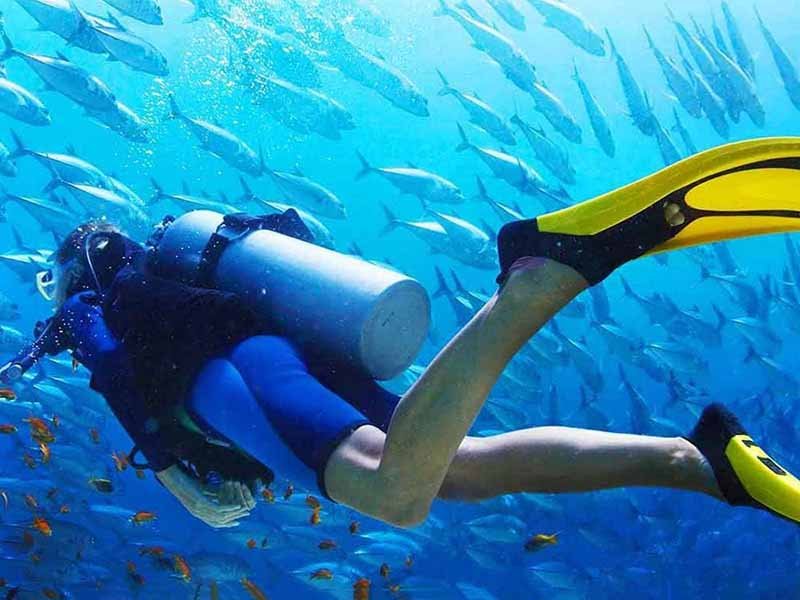
A diving wetsuit is one of those products that looks simple until you actually have to make one well. On paper, it is just neoprene, fabric, zippers, and seams. In real use, it has to keep a diver warm in moving water, stretch with the body during long dives, resist compression, survive saltwater, and still look clean after repeated wear. That is why a good wetsuit is not just sewn apparel. It is a technical product built around temperature control, body fit, pressure, movement, and durability. For importers, diving brands, and private label startups, the real challenge is not finding a factory that can “make wetsuits.” The real challenge is finding a factory that understands how thickness, panel layout, foam grade, seam method, and finishing details work together in the water, not just on a sample table.
Diving wetsuits are manufactured by selecting the right neoprene grade and thickness, laminating it with suitable fabrics, cutting ergonomic body panels, gluing and stitching seams, adding zippers and seals, and checking fit, flexibility, and workmanship through quality control. The finished wetsuit must balance warmth, comfort, movement, and durability based on the intended diving conditions.
Many customers only discover the difference after testing. A sample can feel soft in the hand yet perform poorly underwater. A suit can look clean from the outside but flush water through the seams after twenty minutes in cold water. A zipper can look fine in photos but become the first point of failure after a season of use. Oneier has seen this again and again over more than 18 years of working with neoprene materials and custom products. The real story of a wetsuit begins long before the diver enters the water, and that is where manufacturing decisions start to matter.
What Is a Diving Wetsuit?
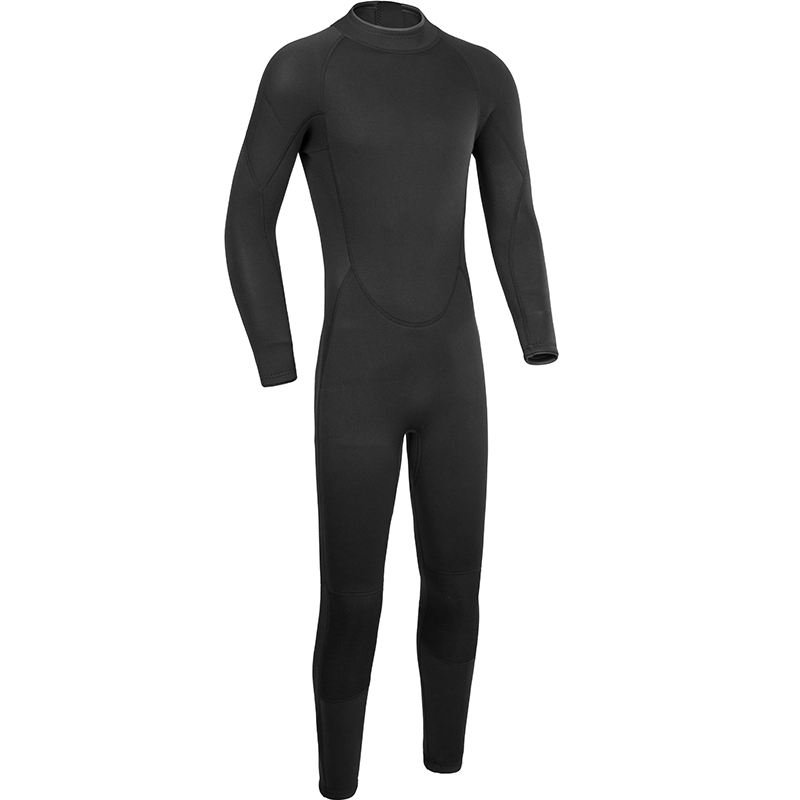
A diving wetsuit is a neoprene-based protective garment made to slow body heat loss in water while giving the diver flexibility, light impact protection, and surface abrasion resistance. Its performance depends on material quality, thickness, fit, seam construction, and pattern design, not just appearance.
What is a diving wetsuit made of?
A diving wetsuit is built around one core material: neoprene foam. But neoprene alone is not enough. In most commercial wetsuits, the full material structure includes the foam core, outer laminated fabric, inner lining, seam adhesive, stitching method, zipper system, and sealing components. Each one affects how the suit performs in real diving conditions.
The basic material structure usually looks like this:
| Layer | Main Role | What Customers Should Care About |
|---|---|---|
| Outer fabric | Abrasion resistance and surface finish | Affects wear resistance, appearance, and printing |
| Neoprene foam core | Insulation and buoyancy | Directly affects warmth, softness, and flexibility |
| Inner fabric | Skin comfort and support | Affects comfort, donning, and internal durability |
| Seam glue and stitching | Panel connection | Affects water resistance and lifespan |
| Zipper and seals | Entry, closure, and leakage control | Affects convenience and flushing control |
In practical sourcing, many customers ask only about thickness, such as 3 mm, 5 mm, or 7 mm. Thickness is important, but it is only one part of the material story. Two 5 mm suits can feel very different if the neoprene density, elasticity, lamination quality, and lining stretch are different. One may feel soft and flexible but compress too easily. Another may feel firmer yet hold warmth better over time.
A simple thickness guide helps frame the conversation:
| Thickness | Common Water Range | Product Positioning |
|---|---|---|
| 2 mm–3 mm | Warm water | Entry dive travel, tropical use |
| 4 mm–5 mm | Mild to cooler water | Mainstream scuba use |
| 6 mm–7 mm | Cold water | Colder recreational or professional diving |
For custom brands, the material decision should start with the actual use case. Is the suit meant for tropical diving holidays, dive schools, rental programs, cold-water recreational use, or a more technical market? Oneier usually helps clients start from those real conditions first, then work backward into neoprene grade, thickness, and lining options. That approach leads to fewer sampling mistakes and better long-term product performance.
How does a diving wetsuit work?
A diving wetsuit works by reducing heat loss. Water removes body heat much faster than air, so even water that feels comfortable at first can become tiring or unsafe over time. The wetsuit helps by creating insulation around the body and limiting the speed at which cold water can circulate against the skin.
What really happens in use is more practical than many product descriptions make it sound. The suit does not keep the diver dry. It allows a thin layer of water to enter, then reduces further exchange so that body heat warms that thin layer. At the same time, the neoprene foam itself contains gas cells that help slow heat transfer. That is why both fit and material quality matter so much. If the suit is too loose, water flows through too easily and the diver gets cold faster. If it is too tight, movement becomes difficult, breathing feels restricted, and the user may reject the product even if the thermal performance is strong.
The working logic can be simplified like this:
| Performance Factor | What It Does | What Happens If It Is Poor |
|---|---|---|
| Fit | Reduces water circulation | More flushing, faster heat loss |
| Neoprene quality | Provides insulation and flexibility | Worse warmth, harder movement |
| Seam construction | Controls leakage through joins | More cold spots and water entry |
| Thickness | Adds thermal protection | Poor temperature coverage |
| Seals and zippers | Reduce weak points | Neck, wrist, ankle, or back leakage |
This is why a wetsuit should never be developed only as a fashion garment. Body mapping matters. Shoulder movement matters. The chest, underarm, crotch, knee, and lower back areas all behave differently during diving. A well-made diving wetsuit manages warmth and movement together. A poorly made one forces the user to choose between them.
For private label customers, this is also where returns often begin. If the suit looks fine but feels stiff in the shoulders, leaks at the neck, or compresses too much after repeated use, the customer notices very quickly. Oneier’s development process focuses heavily on this stage because the best-looking sample is not always the best-performing wetsuit.
Are all diving wetsuits the same?
Not even close. The biggest mistake many new clients make is assuming that all wetsuits in the market are based on the same product logic, just with different logos. In fact, diving wetsuits vary widely in thickness, neoprene grade, seam method, flexibility level, pattern engineering, zipper configuration, panel count, surface finish, and target market.
A rental-center wetsuit, for example, is usually designed for durability, repeated use, and easier sizing tolerance. A premium direct-to-consumer wetsuit usually prioritizes better fit, more stretch, cleaner seam finishing, and stronger visual presentation. A technical cold-water suit may prioritize warmth and sealing even if the feel is firmer. A surfing wetsuit may emphasize paddle flexibility more than thermal stability for scuba use.
The difference becomes clearer in comparison:
| Wetsuit Type | Priority | Common Construction Logic |
|---|---|---|
| Entry-level recreational | Lower cost and usability | Standard neoprene, simpler seams |
| Dive school or rental | Durability and repeated use | Tougher outer fabric, stable sizing |
| Mid-range scuba | Balanced warmth and flexibility | Better neoprene and improved seams |
| Premium diving | Fit, warmth, lower flushing | Higher-grade neoprene, better pattern design |
| Cold-water focused | Thermal protection | Thicker panels, stronger sealing structure |
The market also differs by customer expectation. Some clients want the lightest possible suit for tropical destinations. Others want a strong private label product that feels premium in retail. Others need a suit that can survive high-use training programs. These are not the same manufacturing tasks.
This is why Oneier does not treat wetsuit projects as simple logo customization. With over 18 years of neoprene product experience, the company looks first at function, then at structure, then at branding. That order matters. A good logo cannot fix the wrong neoprene, the wrong seam, or the wrong pattern balance.
Which Materials Are Used in Diving Wetsuit Manufacturing?
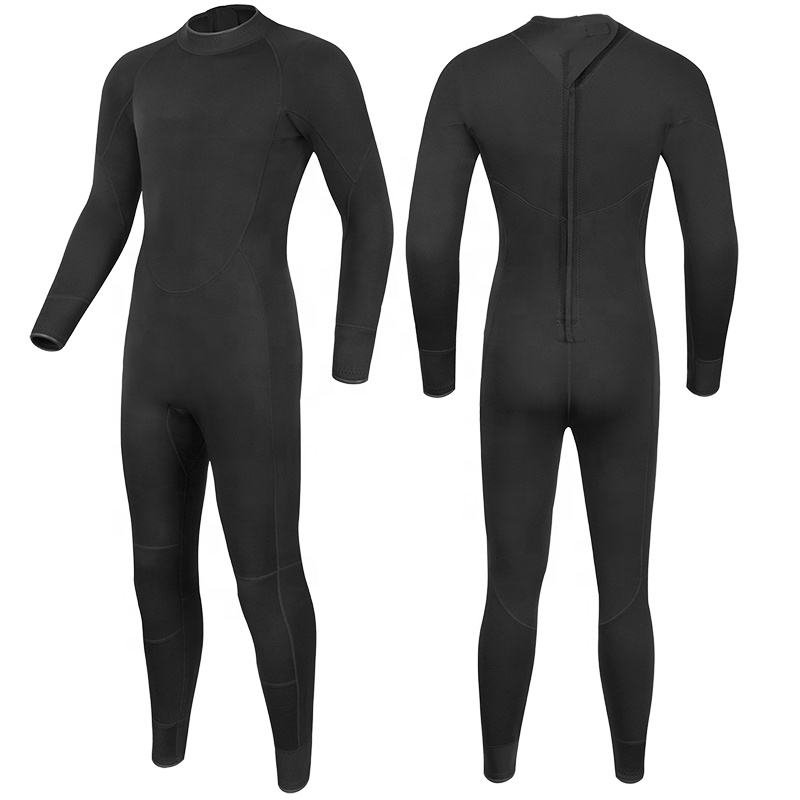
The materials used in diving wetsuit manufacturing decide most of the product’s real performance. Neoprene type, fabric lamination, stretch level, surface treatment, and adhesive system all affect warmth, flexibility, water absorption, durability, and final cost. A better wetsuit usually starts with better material choices, not better marketing.
Which neoprene is used in diving wetsuits?
Neoprene is the heart of the wetsuit, but “neoprene” is too broad a word to be useful on its own. In production, clients should care about the foam grade, density, elasticity, compression resistance, lamination stability, and intended use level. Those factors affect whether the suit feels entry-level, mid-range, or premium.
Most clients can think of neoprene sourcing in three practical levels:
| Neoprene Level | Main Characteristics | Suitable For |
|---|---|---|
| Standard grade | Lower cost, more basic stretch | Promotional, entry-level, budget lines |
| Better-performance grade | Improved flexibility and feel | Mainstream retail and scuba brands |
| Premium or specialized grade | Better softness, stretch recovery, thermal stability | Higher-end custom projects |
Another important point is compression performance. In diving, neoprene is exposed to water pressure. Lower-grade foam can compress faster, which reduces insulation feel over time. This matters more in scuba use than in many surface-water sports. Clients who want to build a serious diving line should ask not only about thickness, but also about how stable the foam remains during repeated use.
From a product-development point of view, material choice often affects cost more than any other single component. A higher-grade neoprene sheet can raise material cost noticeably, but it may also improve fit feel, reduce complaints, and support a better selling price. That is why the cheapest neoprene is not always the cheapest business decision.
Oneier helps customers compare material options against their target market. A lower MOQ startup project may need a careful balance between product feel and retail margin. A premium brand may accept higher material cost in exchange for a better hand feel and stronger repeat-order potential. That kind of matching is more useful than simply choosing the cheapest available foam.
What fabrics are used in wetsuit manufacturing?
Neoprene foam almost always needs fabric lamination. The fabric on the outside and inside changes how the wetsuit feels, stretches, wears, and prints. This is one of the most overlooked parts of wetsuit development, especially by customers who focus only on thickness and logo artwork.
Common laminated fabric options include nylon, polyester, and stretch-based blends. Each one has trade-offs.
| Fabric Type | Main Advantage | Main Limitation | Common Use |
|---|---|---|---|
| Nylon | Softer hand feel, common in wetsuits | Can vary by abrasion level | Mainstream wetsuit lining |
| Polyester | Good stability and cost control | Often less stretch than premium options | Cost-sensitive lines |
| Stretch blend | Better mobility and body feel | Higher cost | Premium flexibility zones |
Fabric selection affects several customer-facing issues at the same time. A better outer fabric can improve abrasion resistance in knees, seat, elbows, and shoulders. A better inner lining can improve comfort and help the suit slide on more easily. A stretch-focused lamination can improve movement but may require tighter process control during cutting and assembly.
Placement also matters. Not every part of the wetsuit has to use the same laminated structure. Some projects benefit from more flexible fabrics in the shoulders and underarms while keeping more stable materials in high-wear zones. That is how better wetsuit engineering often works in practice: not by making the whole suit from one “best” material, but by choosing the right materials for the right zones.
For custom clients, this creates room for smart product positioning. A mainstream suit does not need the most expensive stretch fabric everywhere. But using smarter fabric placement in key movement areas can improve perceived quality without pushing the whole BOM too high. Oneier often develops projects in exactly this way so customers can stay competitive on cost while still upgrading performance where users notice it most.
Are eco diving wetsuit materials available?
Yes, but clients should look at eco wetsuit materials in a practical way rather than treating them as a simple label. In the market today, “eco” can refer to different things: alternative neoprene sources, recycled lining fabrics, lower-impact adhesives, or cleaner process choices. Not every eco claim means the same thing, and not every sustainable option works equally well for every project.
In custom development, the most common eco-related directions include these:
| Eco Option | What It Changes | Why Clients Use It |
|---|---|---|
| Alternative neoprene source | Changes raw material route | Sustainability positioning |
| Recycled fabric lining | Changes laminated textile input | Marketing and environmental goals |
| Water-based or lower-solvent adhesive systems | Reduces chemical intensity | Factory compliance and cleaner production |
| Smarter packaging | Reduces packaging waste | Retail and branding value |
The first thing clients should understand is cost. Eco materials often come with a higher raw material price or narrower sourcing flexibility. The second thing is consistency. Not every eco material behaves exactly like standard options in stretch, lamination feel, or process stability. That does not make them inferior. It just means development should be honest and tested properly.
The best use of eco material usually depends on brand positioning. If your customer base values sustainability strongly, eco upgrades can support pricing, storytelling, and retailer acceptance. If your market is mainly cost-driven entry-level sport use, the upgrade may need to be more selective. In some cases, using recycled lining or better packaging gives a stronger cost-to-value ratio than changing every material in the suit.
Oneier supports custom neoprene product development with both standard and upgraded material paths, depending on the project target. For many clients, the smartest solution is not “all eco” or “all standard,” but a balanced build that protects performance while still giving the brand a meaningful sustainability story. That usually creates a more realistic product and a more realistic margin.
How Is Diving Wetsuit Manufacturing Done?
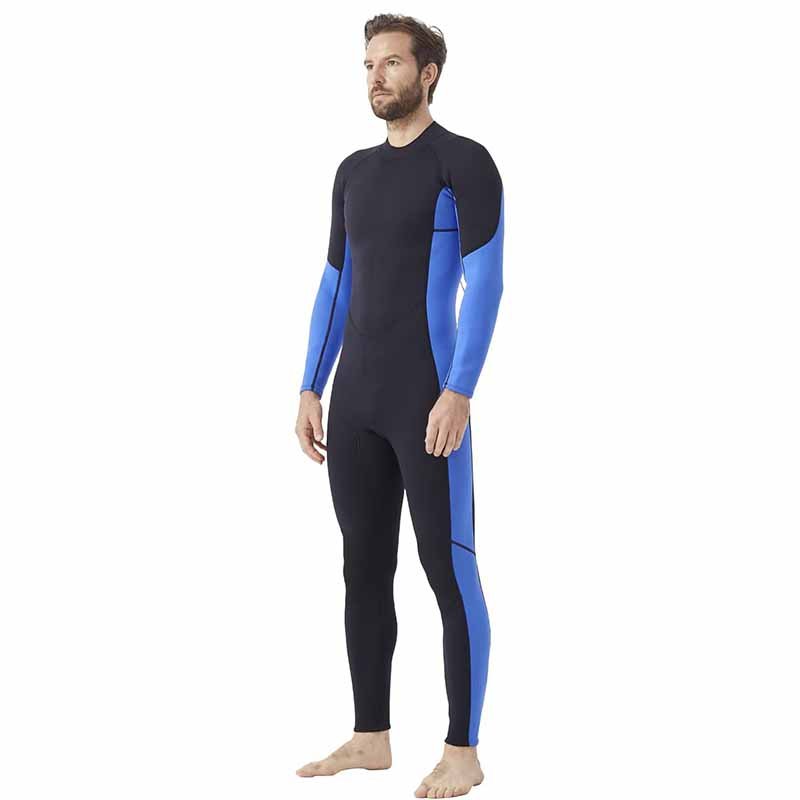
Diving wetsuit manufacturing is a multi-step process that combines material preparation, precision cutting, bonding, stitching, and assembly. Each stage directly affects warmth, flexibility, durability, and final product consistency. A well-controlled production process ensures that every wetsuit performs the same in real underwater conditions, not just in samples.
How is neoprene prepared for diving wetsuits?
Before any cutting or sewing begins, neoprene must be prepared properly. This stage determines whether the material will behave consistently during production and use.
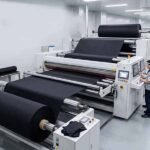
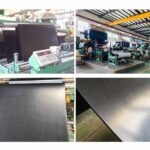
Neoprene usually arrives in large sheets after being foamed and laminated with fabric layers. However, not all sheets are immediately ready for cutting. Factories typically carry out several preparation steps:
- Thickness verification
- Density and elasticity check
- Surface inspection (holes, bubbles, uneven lamination)
- Color consistency check
A common issue in low-quality production is uneven thickness. Even a small variation (for example ±0.3 mm) can affect insulation and fit. For diving wetsuits, especially 5 mm and 7 mm suits, consistency across panels is critical.
Here is a basic material inspection reference:
| Inspection Item | Acceptable Standard |
|---|---|
| Thickness tolerance | ±0.2 mm |
| Surface defects | None visible |
| Lamination bonding | No peeling |
| Elastic recovery | ≥90% return after stretch |
Another key factor is material resting time. After lamination, neoprene sheets often need to rest before cutting. This stabilizes the material and reduces deformation during production.
From a practical standpoint, better factories reject unstable material early rather than trying to fix problems later. This reduces waste and avoids quality issues in bulk orders.
How are diving wetsuit panels cut?
Once the material is approved, the next step is panel cutting. This is where the wetsuit starts to take shape.
Unlike simple garments, wetsuits are built from multiple curved panels designed to follow the human body. A standard diving wetsuit can include:
- 20–40 individual panels depending on design complexity
- Different thickness zones (chest, back, limbs)
- Stretch zones for movement
Cutting methods include:
- Manual cutting (for small runs or sampling)
- Die cutting (for consistent bulk production)
- CNC cutting (for high precision and complex designs)
Accuracy in cutting is extremely important. Even small misalignments can lead to:
- Poor seam matching
- Uneven fit
- Increased stress at joints
Typical tolerance standards:
| Parameter | Target |
|---|---|
| Cutting deviation | ≤1 mm |
| Panel symmetry | High consistency |
| Edge quality | Clean, no tearing |
Another important detail is panel orientation. Neoprene has directional stretch properties, so panels must be aligned correctly to maximize flexibility in movement areas like shoulders and knees.
Experienced factories like Oneier use optimized pattern layouts to reduce material waste while maintaining performance. This helps control cost without sacrificing product quality.
How are seams made in wetsuit manufacturing?
Seam construction is one of the most critical parts of a diving wetsuit. It directly affects warmth, durability, and comfort.
Unlike regular clothing, wetsuits are not just stitched—they are first glued, then stitched.
The most common seam types include:
| Seam Type | Method | Performance |
|---|---|---|
| Flatlock stitch | Stitch only | Flexible, but not water-resistant |
| Glued & blind stitched (GBS) | Glue + hidden stitch | Strong, low water entry |
| Fully sealed seams | Glue + stitch + tape | Best waterproof performance |
GBS (Glued and Blind Stitched) is widely used in diving wetsuits because it provides a balance between strength and water resistance.
The seam process typically includes:
- Apply adhesive to panel edges
- Press panels together
- Stitch partially through the material (not fully penetrating)
- Optional: apply seam tape or liquid seal
Key performance factors:
- Seam strength
- Flexibility
- Water resistance
A poorly constructed seam leads to:
- Water flushing
- Cold spots
- Early failure
From production experience, seam failure is one of the top reasons for customer complaints. That is why serious factories invest heavily in skilled workers for seam bonding and stitching.
How are zippers added to diving wetsuits?
Zippers are another critical component, especially for ease of use and durability.
Common zipper types in diving wetsuits:
| Type | Position | Advantage |
|---|---|---|
| Back zipper | Rear | Easy to wear |
| Chest zipper | Front upper | Better sealing |
| Front zipper | Full front | Easy entry, flexible |
Zipper installation is not just about attaching hardware. It involves:
- Reinforcing surrounding panels
- Sealing edges to reduce water entry
- Ensuring smooth operation under tension
Key considerations:
- Zipper quality (nylon vs metal)
- Corrosion resistance (important in saltwater)
- Seal design (to reduce leakage)
A weak zipper can become the first failure point of a wetsuit. That is why many brands prefer higher-quality zippers even if they increase cost slightly.
How is quality controlled in wetsuit production?
Quality control runs through the entire production process, not just at the end.
A typical QC system includes:
1. Material inspection
- Check neoprene thickness and defects
2. In-line inspection
- Monitor seam quality
- Check panel alignment
- Verify stitching consistency
3. Final inspection
- Fit and shape check
- Stretch test
- Zipper function test
- Appearance check
4. Random sampling
- Load and stress testing
Here is a practical QC checklist:
| Item | Standard |
|---|---|
| Seam bonding | No gaps or peeling |
| Stitch quality | Even and secure |
| Panel alignment | Symmetrical |
| Zipper function | Smooth operation |
| Elastic recovery | No deformation |
Factories with strong QC systems can maintain defect rates below 3%, which is critical for brands selling through e-commerce or retail channels.
Production Timeline Overview
For planning purposes, here is a typical timeline:
| Stage | Time |
|---|---|
| Sample development | 5–10 days |
| Sample revision | 3–7 days |
| Bulk production | 20–35 days |
| Shipping | 7–30 days |
For seasonal or bulk orders, early planning is essential to avoid delays.
This manufacturing stage is where most of the product value is created. Materials define potential, but production determines whether that potential becomes a reliable product.
Oneier’s experience in neoprene product manufacturing allows brands to move from concept to production with fewer errors, better consistency, and faster turnaround.
Which Features Improve Diving Wetsuit Performance?
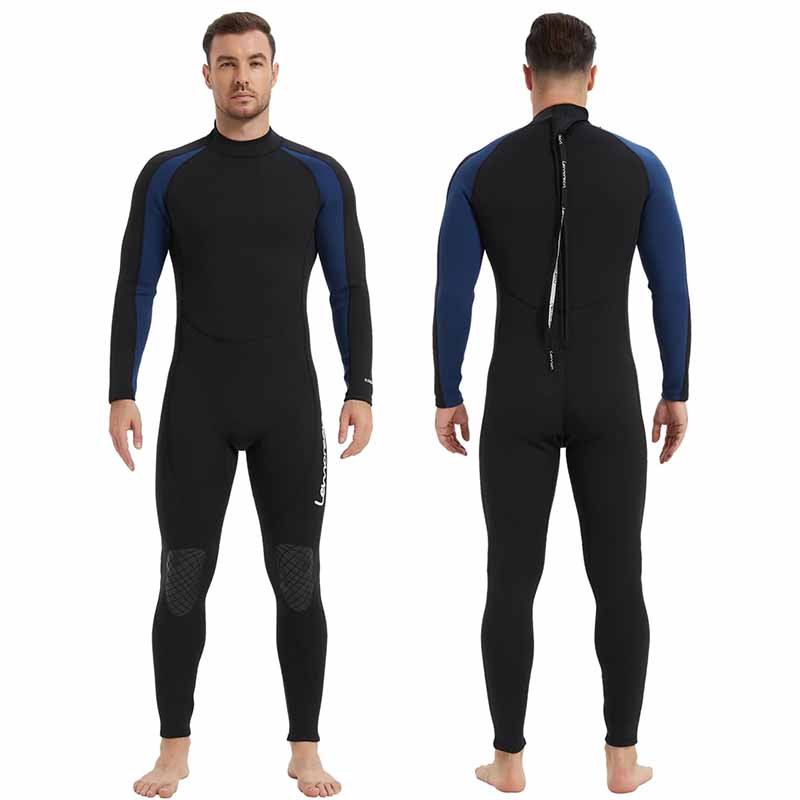
Diving wetsuit performance depends on a combination of thickness, seam construction, material elasticity, and ergonomic design. These factors determine how well the suit retains heat, allows movement, and withstands repeated use in real diving conditions.
Which thickness is best for diving wetsuits?
Wetsuit thickness is the first factor most customers consider, but choosing the right thickness depends on water temperature, dive duration, and user tolerance.
A simple reference:
| Thickness | Water Temperature | Use Case |
|---|---|---|
| 2–3 mm | 24°C+ | Tropical diving |
| 4–5 mm | 18–24°C | Recreational scuba |
| 6–7 mm | <18°C | Cold water diving |
However, thickness alone does not define warmth. Two suits with the same thickness can perform very differently due to:
- Neoprene density
- Seam sealing
- Fit quality
For example, a well-fitted 5 mm wetsuit with good seam sealing can feel warmer than a poorly fitted 7 mm suit with water flushing.
From a product development perspective, many brands now use body-mapped thickness, such as:
- 5 mm chest and back (core warmth)
- 3–4 mm arms and legs (flexibility)
This approach improves both comfort and performance without significantly increasing cost.
How do seams affect diving wetsuits?
Seams are one of the most important factors affecting wetsuit performance. They directly influence water entry, flexibility, and durability.
There are three main seam performance levels:
| Seam Type | Water Resistance | Flexibility | Durability |
|---|---|---|---|
| Flatlock | Low | High | Medium |
| GBS (glued & blind stitched) | Medium–High | Good | High |
| Fully sealed | Very high | Medium | Very high |
For diving wetsuits, GBS seams are the most widely used because they balance cost, performance, and flexibility.
Key impacts of seam construction:
- Poor seams → water flushing → faster heat loss
- Overly stiff seams → reduced mobility
- Weak bonding → early product failure
Additional upgrades include:
- Seam taping (internal reinforcement)
- Liquid seam sealing
- Double gluing for higher strength
In real use, seam quality often determines whether a wetsuit feels “professional” or “basic.”
What design improves diving wetsuits?
Design is not just about appearance—it directly affects how the wetsuit performs underwater.
Key design improvements include:
1. Ergonomic Panel Design
- Follows natural body movement
- Reduces resistance and fatigue
2. Stretch Zones
- High-flex panels in shoulders and arms
- Improves mobility during diving
3. Seal Design
- Smooth skin seals at neck, wrists, ankles
- Reduces water entry
4. Reinforcement Areas
- Knees, elbows, seat
- Improves durability
5. Zipper Placement
- Chest zip → better sealing
- Back zip → easier entry
A well-designed wetsuit balances:
- Comfort
- Flexibility
- Thermal protection
For brands, investing in design often brings higher customer satisfaction than simply increasing thickness.
How to Choose a Diving Wetsuit Manufacturer?
Choosing the right wetsuit manufacturer is critical for product success. A reliable factory ensures consistent quality, accurate sampling, and scalable production. The wrong choice can lead to delays, defects, and customer complaints.
What to check in wetsuit manufacturing factories?
When evaluating a wetsuit factory, focus on real production capability rather than marketing claims.
Key checkpoints:
1. Neoprene Expertise
- Do they understand different neoprene grades?
- Can they recommend materials based on use case?
2. Production Experience
- Years in neoprene manufacturing
- Product range (wetsuits, bags, accessories)
3. Sampling Quality
- Accuracy of first sample
- Ability to revise quickly
4. Quality Control
- In-line inspection system
- Final inspection standards
5. Communication
- Clear technical feedback
- Fast response time
Comparison:
| Factor | Weak Factory | Strong Factory |
|---|---|---|
| Material knowledge | Basic | Professional |
| Sampling accuracy | Low | High |
| QC system | Limited | Structured |
| Communication | Slow | Efficient |
Factories like Oneier, with long-term experience in neoprene product manufacturing, usually provide more reliable support across these areas.
How do MOQ and samples work for diving wetsuits?
MOQ and sampling determine how easily a brand can start a new product line.
Typical MOQ range:
| Product Type | MOQ |
|---|---|
| Basic wetsuit | 100–300 pcs |
| Custom design wetsuit | 300–500 pcs |
| Complex wetsuit | 500+ pcs |
Sampling process:
- Confirm design and specifications
- Create pattern and prototype
- Produce sample (5–10 days)
- Test and adjust
- Approve for production
Sample costs:
| Type | Cost |
|---|---|
| Standard sample | $50–$100 |
| Complex sample | $100–$200 |
Many factories offer sample fee refunds after bulk orders, reducing risk for new customers.
Why choose an experienced diving wetsuit manufacturer?
Experience matters because wetsuit manufacturing is not simple sewing—it requires material knowledge, pattern engineering, and process control.
Experienced manufacturers provide:
1. Faster Development
- Fewer sample revisions
- Better initial design accuracy
2. Stable Quality
- Consistent seams and fit
- Lower defect rates
3. Cost Optimization
- Efficient material usage
- Reduced waste
4. Customization Support
- Private label branding
- Packaging solutions
5. Reliable Delivery
- On-time production
- Scalable capacity
Comparison:
| Aspect | New Factory | Experienced Factory |
|---|---|---|
| Development speed | Slow | Fast |
| Product consistency | Variable | Stable |
| Technical support | Limited | Strong |
| Delivery reliability | Uncertain | Reliable |
With over 18 years of experience, Oneier supports global clients in developing custom neoprene products, including diving wetsuits, bags, koozies, and protective gear.
Final Thoughts: Build Your Custom Diving Wetsuit with Oneier
A successful diving wetsuit is the result of many small but critical decisions—material selection, panel design, seam construction, and production control. Each detail affects how the product performs underwater and how customers perceive its value.
For brands, the goal is not just to create a wetsuit that looks good, but one that performs consistently, feels comfortable, and builds long-term trust with users.
Working with an experienced manufacturer reduces risk and improves product outcomes from the very beginning.
Whether you are launching a new wetsuit line or upgrading an existing product, you can share your requirements:
- Thickness and design
- Target market
- Logo and branding
- Order quantity
- Delivery timeline
Contact Oneier today to start your custom diving wetsuit project and bring your product to market with confidence.