A good neoprene travel tote looks simple on the outside, but the manufacturing behind it is not simple at all. The difference between a tote that feels soft, strong, and premium and one that wrinkles, stretches out, or breaks at the handle often comes down to a few technical decisions made inside the factory. Material grade, foam thickness, fabric lamination, cutting accuracy, handle reinforcement, edge finishing, and stitching method all matter. For importers, brand owners, and private label clients, these details affect not only product quality, but also return rate, selling price, customer satisfaction, and reorder stability. A tote that looks attractive in a sample can perform very differently after six months of daily use, after repeated folding, or after carrying 8 to 12 kilograms during travel.
A neoprene travel tote is made through a controlled production process that includes neoprene selection, outer fabric lamination, pattern making, precision cutting, panel assembly, stitching or gluing, handle reinforcement, finishing, and final inspection. The best results come from balancing softness, structure, durability, and cost instead of focusing on only one factor.
That is why experienced factories do not treat a neoprene tote as just another sewn bag. In real production, even a small change such as moving from 3 mm to 4 mm material, or changing the handle joint reinforcement, can shift both cost and performance in a visible way. When a product is meant to carry travel essentials, cosmetics, spare clothes, laptops, or beach items, those details stop being technical paperwork and start becoming the reason a customer places the second order.
What Is a Neoprene Travel Tote?
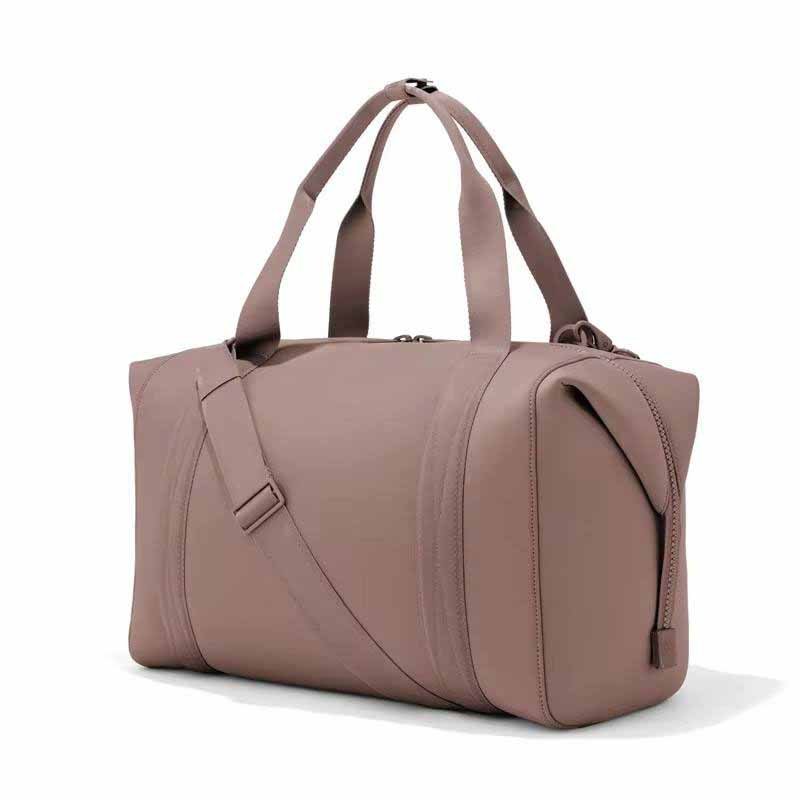
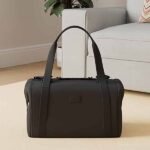
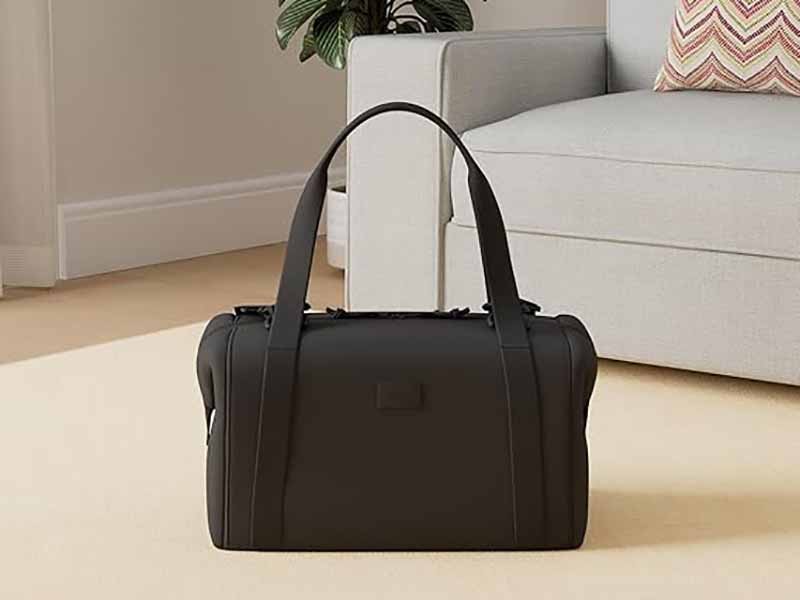
A neoprene travel tote is a soft-structured carry bag made from foam-based neoprene laminated with fabric on one or both sides. It is chosen for its light cushioning, flexible body, smooth hand feel, and better water resistance than many traditional fabric totes. For travel use, it gives a more modern look than canvas while offering more protection than basic woven bags.
What Defines a Neoprene Travel Tote?
A neoprene travel tote is not defined by shape alone. Its real identity comes from the material system and how that material behaves in daily use. Neoprene is a synthetic rubber foam with a closed-cell structure. After lamination, it becomes suitable for cutting, sewing, printing, embossing, and shaping into bags. In a travel tote, that structure gives the product several practical benefits at the same time: softness, resilience, light shock absorption, and a cleaner appearance than many low-cost bags.
For a customer comparing options, the most noticeable feature is feel. A neoprene tote usually feels smoother, thicker, and more substantial in the hand than polyester or canvas. It can also recover its shape better after folding. That matters for travel products because the bag may be compressed inside luggage, used as a carry-on, then reused in hotels, airports, gyms, or shopping environments. If the material collapses too easily or leaves permanent creases, the perceived quality drops immediately.
From a production point of view, a neoprene travel tote is usually built around the following structure:
| Component | Common Specification | Why It Matters |
|---|---|---|
| Neoprene core | 2 mm / 3 mm / 4 mm / 5 mm | Determines body, softness, cost, and weight |
| Surface fabric | Polyester / nylon / Lycra | Affects texture, print result, and abrasion performance |
| Handle type | Self-material / webbing / PU | Changes load capacity and appearance |
| Closure | Open top / zipper / magnetic snap | Impacts security and product positioning |
| Bottom structure | Flat / gusseted / reinforced | Affects volume and stability |
A well-made neoprene travel tote normally carries 6 to 12 kg in daily use, depending on size, handle construction, and reinforcement layout. For larger beach or overnight styles, the practical capacity can go higher, but only if the seam structure is designed for it. Many low-cost suppliers copy the outer look of a neoprene tote but reduce material density, skip reinforcement patches, or use unstable lamination. The bag may look acceptable in photos, yet fail after repeated loading or warm-weather use.
That is why serious customization starts with function. Is the tote meant for travel, beach, laptop carry, mom-and-baby use, retail gifting, or premium private label? The answer changes the engineering. A travel tote must do more than look neat on a sample table. It needs to keep its shape, protect the contents, remain comfortable in hand, and still look good after real use.
Why Choose a Neoprene Travel Tote?
Customers usually choose neoprene travel totes for one reason at first glance: they look more premium than ordinary fabric totes. But the real value is deeper. Neoprene is one of the few bag materials that combines softness, body, and stretch in a way that improves daily comfort without making the product feel cheap or disposable.
For brands, that matters because the market for travel and daily-carry bags has become crowded. A product needs visual appeal, practical use value, and enough differentiation to justify its price. Neoprene helps on all three points. It gives a clean silhouette, accepts bold colors well, and creates a more polished retail impression than thin woven fabrics.
Here is a practical comparison many clients care about:
| Performance Factor | Neoprene Travel Tote | Canvas Tote | Polyester Tote |
|---|---|---|---|
| Hand feel | Soft and cushioned | Dry and firm | Thin to medium |
| Water resistance | Good | Low | Medium |
| Shape recovery | Good | Low to medium | Medium |
| Stretch tolerance | High | Low | Low |
| Shock buffering | Good | Poor | Poor |
| Premium look | Strong | Medium | Medium |
| Printing effect | Clean on laminated surface | Good, depends on weave | Good |
| Washability | Moderate | Good | Good |
| Cost level | Medium to high | Low to medium | Low to medium |
Neoprene also performs well in product positioning. A canvas tote may sell on price and simplicity. A neoprene tote usually sells on perceived quality, comfort, and style. That is important for private label customers who want a product that can sit in the mid-range or upper-mid-range part of the market. In many cases, a neoprene tote can support a retail price that is 20% to 60% higher than a basic polyester tote, depending on branding, packaging, and design execution.
Another reason brands like neoprene is product storytelling. The material naturally connects with active lifestyle, travel, beach, fitness, and modern urban use. That makes it easier to market across different customer groups without changing the core product too much. A single body pattern can be adapted into travel, gym, shopping, or weekend use by adjusting the print, handle material, accessory color, or closure detail.
For customization clients, neoprene is also efficient because it allows many variations without rebuilding the entire production system. Thickness, gusset width, zipper choice, inner pocket layout, logo method, and lining details can all be adjusted. That makes it easier for a factory like Oneier to support both lower-volume new projects and stable reorder programs.
Where Are Neoprene Travel Totes Used?
Neoprene travel totes are used in more places than many customers expect. They are no longer limited to beach bags or casual women’s accessories. Today, they are developed for travel sets, retail collections, promotional products, resort merchandise, fitness lines, and everyday commuter use. Their flexibility is one of the strongest reasons importers and brands keep coming back to the category.
The end use directly affects how the product should be manufactured. A travel tote used for airport carry-on needs different structural decisions than a beach tote or a branded gift tote. The first may need a zipper, stronger shoulder straps, and interior pocket organization. The second may need higher volume, easier cleaning, and better resistance to sand and moisture. The third may prioritize print impact and cost control over maximum load-bearing performance.
Here are common market uses and the manufacturing points behind them:
| Use Scenario | Common Product Focus | Manufacturing Priority |
|---|---|---|
| Travel carry tote | Capacity, comfort, zipper security | Reinforced handles, bottom support |
| Beach tote | Volume, water resistance, easy cleaning | 3 mm to 5 mm material, simple interior |
| Gym tote | Stretch, odor control, durability | Strong seams, practical pocket layout |
| Retail fashion tote | Appearance, branding, shape | Smooth lamination, clean edge finish |
| Promotional tote | Cost and logo visibility | Efficient construction, controlled MOQ |
| Mommy tote | Storage and comfort | Wider gusset, pocket design, stronger straps |
From a factory perspective, this is where experience becomes important. A supplier that only knows how to cut and sew neoprene may not be able to adjust the design according to the real use case. Oneier’s long-term experience with neoprene products such as bags, koozies, sports supports, medical supports, and wetsuits is valuable here because different neoprene categories teach different lessons. A wetsuit factory understands panel shaping and seam performance. A support brace factory understands elasticity, comfort, and repeated-use stress. A neoprene bag factory understands aesthetics, handle load, and mass production consistency. When those skills come together, the result is a better tote.
For a client, the takeaway is simple: do not treat all neoprene totes as the same product. A travel tote should be engineered around the way it will actually be carried, opened, loaded, folded, stored, and sold. That is what turns a good-looking design into a dependable product line.
What Materials Are Used in Neoprene Travel Tote Production?
The material system of a neoprene travel tote usually includes the neoprene foam core, laminated face fabric, optional lining materials, handles, reinforcement pieces, and accessories such as zippers, snaps, or hooks. Among these, the neoprene grade, thickness, and lamination quality have the strongest influence on bag performance, appearance, and cost.
Which Neoprene Is Used for Travel Totes?
Not all neoprene is the same. In manufacturing, clients usually hear three material names: SBR, SCR, and CR. These are not marketing labels. They refer to different rubber compositions, and each one affects feel, durability, aging behavior, and price.
The three most common options are:
| Type | Full Name | Main Advantage | Main Limitation | Relative Cost |
|---|---|---|---|---|
| SBR | Styrene Butadiene Rubber | Lowest cost | Lower aging and weather performance | Low |
| SCR | SBR + CR blend | Balanced performance and price | Not as premium as full CR | Medium |
| CR | Chloroprene Rubber | Better durability, feel, and stability | Higher cost | High |
For most custom neoprene travel totes, SCR is the most practical choice. It gives a good balance between softness, resilience, tensile strength, and cost. It performs better than basic SBR in many daily-use environments, especially where the product may experience heat, repeated folding, or longer usage cycles. That is why many export-grade neoprene bags sit in the SCR range.
CR neoprene is usually selected for premium projects, stricter material expectations, or higher-end positioning. It often offers better consistency, better touch, and stronger long-term performance, but the cost increase is real. Depending on thickness and lamination choice, moving from SCR to CR can increase material cost by roughly 20% to 45%. For a client building a price-sensitive promotional bag, that may not be necessary. For a private label brand targeting stronger market positioning, it may be a reasonable investment.
Clients should also pay attention to density, not just type. Two 3 mm neoprene sheets can feel very different if the foam density is different. Lower-density material may feel softer at first, but it often gives weaker body support and poorer recovery after load. A more stable density usually gives a cleaner product shape and better durability.
A practical sourcing rule is this: do not ask only for “3 mm neoprene.” Ask for neoprene type, density range, laminated fabric type, and intended use. That gives the factory a much clearer target and reduces the risk of a sample looking good while bulk production performs differently.
What Fabrics Are Laminated on Neoprene Travel Tote?
Neoprene by itself is not enough for a finished bag. It needs a fabric surface. That fabric is laminated onto the foam core to make the material suitable for printing, sewing, shaping, and daily abrasion. The fabric layer also influences visual quality more than many first-time customers realize.
The most common laminated fabrics for neoprene travel totes are polyester, nylon, and stretch fabrics such as Lycra blends. Each has a different purpose.
| Laminated Fabric | Surface Look | Strength | Print Effect | Common Use |
|---|---|---|---|---|
| Polyester | Standard matte to slight sheen | Good | Good | Most common custom totes |
| Nylon | Smoother, slightly richer look | Very good | Good | Premium totes |
| Lycra blend | Softer, stretchier surface | Medium | Moderate | Fashion-oriented designs |
Polyester is the most common because it balances cost, color performance, and production stability. It works well for printed or solid-color totes and is suitable for large-volume orders. Nylon is often chosen when the customer wants a smoother, cleaner, slightly more premium hand feel. It may cost more, but it can improve first impression and support a better retail presentation.
The lamination process itself is critical. Weak lamination can lead to bubbling, edge separation, or face-fabric lifting after heat exposure or long-term storage. In export manufacturing, stable lamination should maintain clean adhesion without visible peeling around curves, edges, and handle joints. When factories rush lamination or use unstable adhesive systems, the problem may not show immediately in the sample, but can appear later in shipping containers or warm-weather markets.
For clients, that means laminated fabric is not just a decoration layer. It is part of the structural quality. When comparing suppliers, ask to see lamination consistency, not only color cards. A good factory should be able to show clean cross-sections, stable adhesion, and bulk production control.
How Thick Should Neoprene Travel Tote Material Be?
Thickness is one of the most important decisions in neoprene tote development because it affects appearance, weight, structure, comfort, cost, and final positioning. Many clients start with 3 mm because it is common, but that is not always the best choice for every project.
Here is a practical thickness guide:
| Thickness | Feel | Structure | Weight | Common Use |
|---|---|---|---|---|
| 2 mm | Soft, light | Less body | Lightest | Fashion tote, low-load use |
| 3 mm | Balanced | Good daily structure | Moderate | Standard travel tote |
| 4 mm | Fuller hand feel | Stronger body | Heavier | Premium tote, higher load |
| 5 mm | Thick and cushioned | Strongest body | Heaviest | Beach or large-format tote |
A 2 mm bag is lighter and may look sleek, but it is less suitable for heavy daily use unless reinforced carefully. A 3 mm bag is the most common balance point for travel totes. It gives enough body for the bag to look substantial without becoming too heavy. A 4 mm or 5 mm bag creates a stronger premium feel and better structure retention, but also increases material cost, shipping weight, and sometimes sewing difficulty.
In real factory costing, each additional millimeter can noticeably increase material consumption and finished bag weight. Depending on bag size and neoprene type, moving from 3 mm to 4 mm can raise material cost by around 12% to 20%. For large orders, that becomes a meaningful number. But if the bag is meant to support a premium selling price, the better hand feel may justify it.
Thickness should therefore be chosen based on three things: target market, load expectation, and price point. A brand selling premium weekend totes may benefit from 4 mm. A promotional travel tote may work well at 3 mm. A lightweight fashion shape may prefer 2 mm. The right answer is not the thickest option. The right answer is the one that makes the bag perform correctly for the intended customer.
How Is a Neoprene Travel Tote Made?
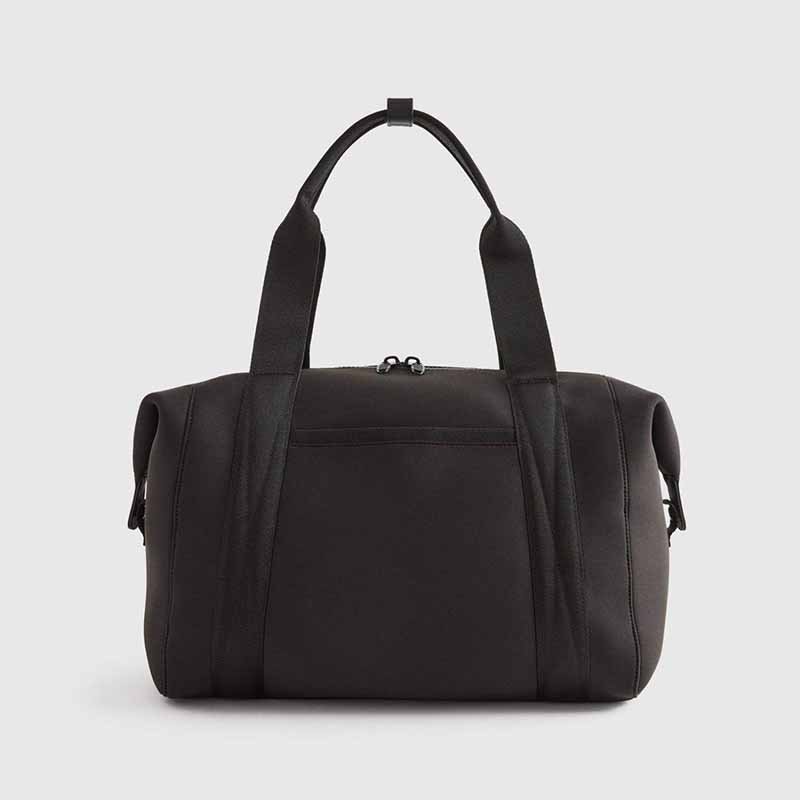
A neoprene travel tote is made through a sequence of material inspection, pattern development, cutting, panel matching, handle preparation, sewing or gluing, reinforcement, finishing, and final quality control. Good manufacturing depends on controlling small details at every stage so that the sample standard can be repeated consistently in bulk production.
How Is Neoprene Prepared for Travel Tote?
The first stage is material preparation. This is where many quality outcomes are decided before any cutting or sewing begins. The factory needs to confirm that the neoprene sheet meets the approved specification in type, thickness, density, fabric lamination, color, elasticity, and surface cleanliness.
For serious production, incoming material checks usually include the following points:
| Inspection Item | What Is Checked | Why It Matters |
|---|---|---|
| Thickness | Millimeter consistency across sheet | Prevents shape and sewing variation |
| Density | Foam compactness and resilience | Affects body and recovery |
| Lamination | Bonding between foam and fabric | Prevents peeling and bubbling |
| Surface quality | Scratches, stains, color issues | Protects appearance |
| Elasticity | Stretch and rebound | Affects use comfort and shape retention |
Material conditioning is also important. Neoprene should not go straight from unstable storage into production. If the material has been exposed to temperature swings, it may curl, tighten, or behave inconsistently during cutting. Better factories stabilize material in a controlled workshop environment before cutting. That reduces dimensional change and improves pattern accuracy.
For custom clients, this stage is also where color, logo placement zone, and fabric direction need to be confirmed. Neoprene is forgiving in some ways, but visual inconsistency becomes obvious on finished totes, especially when the design uses clean solid colors or large printed areas. When preparation is done well, the next steps become smoother, faster, and more stable.
How Are Neoprene Travel Tote Panels Cut?
Cutting determines whether the bag will look clean and assemble correctly. In neoprene bag production, poor cutting creates problems that show up later as uneven seams, twisted bodies, mismatched handles, and unstable openings. Good factories take cutting very seriously because it affects both quality and material waste.
The two main cutting methods are die cutting and computer-controlled cutting. Die cutting is efficient for stable, high-volume orders with fixed dimensions. Computer-controlled cutting is more flexible for new developments, lower-volume custom work, and more complex shapes.
Clients should care about cutting accuracy because neoprene does not behave exactly like woven fabric. It has stretch, thickness, and compression. If the pattern is not compensated correctly, the finished size can drift. In production, reasonable control often means holding a cutting tolerance around ±0.5 mm to ±1.0 mm, depending on the part and bag style.
Cutting quality affects the following:
- Edge neatness
- Symmetry of front and back panels
- Handle alignment
- Zipper matching
- Bottom seam stability
- Material utilization rate
Factories with stronger pattern engineering can also improve material yield. That matters on large orders because neoprene is not the cheapest bag material. Better nesting of patterns can reduce waste and improve final costing. For customers running frequent reorders, this becomes a long-term advantage, not just a one-time factory detail.
Cutting should not be treated as a simple mechanical step. In neoprene manufacturing, it is one of the foundations of a premium finished look.
How Is a Neoprene Travel Tote Assembled?
After cutting, the tote moves into assembly. This is where separate panels become a bag with structure, volume, and function. Assembly is the stage where clients start to see whether the product really matches the approved sample, because body balance, seam smoothness, and opening shape all become visible.
A standard neoprene travel tote often includes these parts:
| Part | Function |
|---|---|
| Front panel | Main appearance area |
| Back panel | Main structure area |
| Side gussets | Adds capacity |
| Bottom panel or fold | Supports load and shape |
| Handle straps | Carrying system |
| Inner pocket | Storage organization |
| Zipper or top trim | Closing system |
The order of assembly depends on the design. In many cases, inner components such as pockets are attached first, then the main body panels are joined, then handles are added or secured, and finally top closure or finishing details are completed. For self-material neoprene handles, the connection area must be controlled carefully because too much compression or poor stitch placement can weaken the joint.
Good assembly is not only about joining pieces. It is about controlling stress distribution. If the handle connection is placed too high, load may pull the opening unevenly. If the gusset is not matched accurately, the bag may lean or wrinkle. If the bottom area is too soft, the tote may collapse when placed down.
For custom clients, assembly quality has a direct effect on how premium the product feels in hand. A neat assembly line can turn a simple tote into a product that looks organized, stable, and ready for retail. A weak assembly line can make even good raw materials look ordinary.
How Are Handles Added to Neoprene Travel Tote?
Handle construction is one of the most important parts of a neoprene travel tote because it carries most of the load stress. Many bag complaints come from this area: torn seams, stretching at the root, discomfort in hand, or visible distortion around the attachment point. That is why experienced factories pay close attention to handle material, width, length, reinforcement, and stitching method.
Common handle options include:
| Handle Type | Look | Load Performance | Common Use |
|---|---|---|---|
| Neoprene self-material | Clean and matching | Medium | Fashion and soft-structure totes |
| Nylon webbing | Practical and strong | High | Travel and utility totes |
| Polyester webbing | Good branding flexibility | High | Retail and promotional totes |
| PU wrapped handle | More polished appearance | Medium to high | Premium private label products |
Reinforcement matters just as much as the handle material itself. Common reinforcement methods include box stitching, cross stitching, bar-tack reinforcement, and hidden support patches inside the body panel. When the bag is expected to carry more than 8 kg regularly, skipping reinforcement is a costly mistake. A strong reinforcement layout can improve practical load reliability significantly and reduce return risk.
Comfort also matters. A handle that is technically strong but too narrow may cut into the hand or shoulder. A wider handle spreads pressure better, especially for travel use. That is why Oneier often adjusts handle width, drop length, and attachment zone according to the bag’s final purpose instead of using one fixed standard across every order.
For clients developing a custom tote, the handle should be treated as part of the product’s engineering, not just an accessory. It influences comfort, durability, appearance, and perceived quality all at once.
Which Techniques Improve Neoprene Travel Tote Quality?
The quality of a neoprene travel tote is not decided by material alone. It is decided by how that material is joined, reinforced, shaped, and checked during production. A strong tote usually comes from the right combination of stitching, bonding, reinforcement, and process control rather than from one expensive raw material.
What Stitching Is Used in Neoprene Travel Tote?
Stitching is one of the core manufacturing decisions in neoprene tote production because it directly affects load-bearing ability, seam appearance, flexibility, and long-term durability. Many clients focus on color, size, and logo first, but in real-world use, seam quality often decides whether the bag keeps performing after repeated travel, folding, lifting, and washing.
For neoprene travel totes, the most common stitching methods are overlock stitching, flat stitching, hidden seam stitching, and reinforcement stitching at stress points. Each method has its own role, and a factory should not apply the same seam approach to every part of the bag.
Here is a practical comparison:
| Stitching Method | Main Function | Visual Effect | Strength Level | Common Use |
|---|---|---|---|---|
| Overlock stitching | Joins panel edges efficiently | Visible edge seam | Good | Standard tote body seams |
| Flat stitching | Creates flatter seam surface | Cleaner and more premium | Good | Fashion and cleaner-profile totes |
| Hidden seam stitching | Reduces visible seam effect | More refined look | Medium to good | Premium private label styles |
| Bar-tack stitching | Reinforces stress points | Small dense stitch zone | Very high | Handle roots, pocket ends |
| Box-X stitching | Spreads load across attachment zone | Technical look | Very high | Shoulder straps and heavy-load handles |
Overlock stitching is widely used because it is efficient and stable in production. It works well for standard neoprene totes where visible seam lines are acceptable. It helps hold the edge securely and keeps production cost under control. However, it creates a more casual appearance, so some premium brands prefer flatter and cleaner seam styles.
Flat stitching creates a neater look and reduces seam bulk. This can improve hand feel and make the tote look more refined on the shelf. But it requires more precise cutting and alignment. If the pattern is even slightly off, the seam will look uneven. That means flat stitching usually asks more from the factory’s workmanship.
At the handle connection and upper opening, reinforcement stitches matter more than the main seam style. This is where many bags fail first. A simple straight stitch may look fine in a sample, but once the bag starts carrying 8 to 12 kilograms repeatedly, the stitch hole line can become the tearing line. That is why stronger factories add bar-tack or box-X reinforcement in high-stress zones.
From a customer’s point of view, the question is not “Which stitching is best?” The better question is “Which stitching is right for the intended use?” A lightweight retail tote may prioritize clean appearance. A travel tote needs stronger seam security. A good factory balances both.
How Is Neoprene Travel Tote Bonded?
Bonding is the hidden part of neoprene bag manufacturing that many clients do not notice at first, but it has a huge impact on product stability. In a neoprene tote, bonding may happen during material lamination, seam support, reinforcement placement, zipper positioning, and trim attachment. If bonding is weak, the bag can start to fail even when the stitching looks acceptable.
There are two main bonding layers to understand. The first is material bonding, where the face fabric is laminated to the neoprene foam. The second is product bonding, where adhesives are used during bag assembly to support sewing, shape control, or seam sealing.
In practical manufacturing, bonding helps in several ways:
- Keeps laminated fabric attached to the neoprene core
- Stabilizes curved edges before stitching
- Supports zipper insertion and top-edge construction
- Reduces shifting during assembly
- Strengthens some seam areas before final sewing
- Improves shape retention in selected designs
A strong factory does not use glue as a shortcut to hide weak sewing. It uses bonding as a controlled support method. For example, when the opening edge of a tote is zipped, pre-bonding can help keep the zipper line straighter before stitching. When reinforcement patches are added inside the handle root, temporary bonding can help place the patch correctly and improve production consistency.
Clients should also understand the risks of poor bonding. If the wrong adhesive is used, or if curing is not stable, several problems can appear:
| Bonding Problem | Visible Result | Business Impact |
|---|---|---|
| Delamination | Fabric separates from foam | Product complaints, poor appearance |
| Edge lifting | Corners or openings peel | Lower retail quality impression |
| Heat instability | Adhesive softens in warm shipping/storage | Bulk order risk |
| Uneven curing | Hard spots or bubbles | Inconsistent hand feel |
| Odor issues | Strong chemical smell remains | Negative customer feedback |
For export orders, bonding quality is especially important because products may sit in cartons, travel through changing climates, and stay in storage before reaching the final customer. A bag that looks fine in the factory may develop peeling or bubbles later if the bonding system is unstable.
That is why experienced neoprene manufacturers treat bonding as part of engineering, not just part of assembly. For clients developing custom travel totes, it is worth asking not only how the bag is sewn, but also how it is bonded and stabilized during production.
How Is Neoprene Travel Tote Reinforced?
Reinforcement is where a neoprene travel tote moves from looking good to actually performing well. Travel totes are expected to carry real weight: clothing, bottles, books, tablets, cosmetics, travel documents, and sometimes even laptops. Without proper reinforcement, the foam body may survive, but the stress points will not.
The most important reinforcement areas in a neoprene tote are usually:
- Handle attachment points
- Upper opening corners
- Bottom seam or base folds
- Zipper ends
- Inner pocket corners
- Shoulder strap anchor points, if detachable straps are used
These areas experience repeated pulling, bending, and load transfer. A tote may be lifted hundreds or even thousands of times during its usable life. Each lift adds small stress to the same points. If the bag is only stitched once through soft material without support, the force concentrates on a narrow line. Over time, that line weakens.
Common reinforcement methods include the following:
| Reinforcement Method | Where Used | Main Benefit |
|---|---|---|
| Bar-tack stitching | Handle roots, zipper ends | Locks high-stress points firmly |
| Box-X stitching | Straps and load-bearing joints | Distributes force across wider area |
| Inner support patch | Behind handle joint | Adds tear resistance |
| Webbing anchor extension | Down body panel | Transfers load deeper into bag |
| Bottom support layer | Base of large tote | Improves shape and load stability |
For larger neoprene totes, reinforcement often needs to work together with pattern design. A wide gusset, for example, can increase capacity, but if the bottom seam is not supported, the bag may sag heavily when filled. A bag with longer handles may be comfortable on the shoulder, but if the handle is attached too near the edge without internal support, the upper body panel may distort.
A practical example many clients face is the difference between a sample bag and a repeat-order bag. The sample may look great because it is handled lightly. But once bulk users start loading it daily, the hidden weak points appear. Reinforcement is what protects a project from that gap between first impression and actual use.
For Oneier and similar experienced manufacturers, reinforcement planning is one of the areas where factory experience shows clearly. A supplier with real neoprene product experience does not just copy a shape. It studies how force moves through the bag and then builds structure accordingly. That is what clients should pay for when they choose a manufacturing partner, not just lower unit price.
How Is Neoprene Travel Tote Customized?
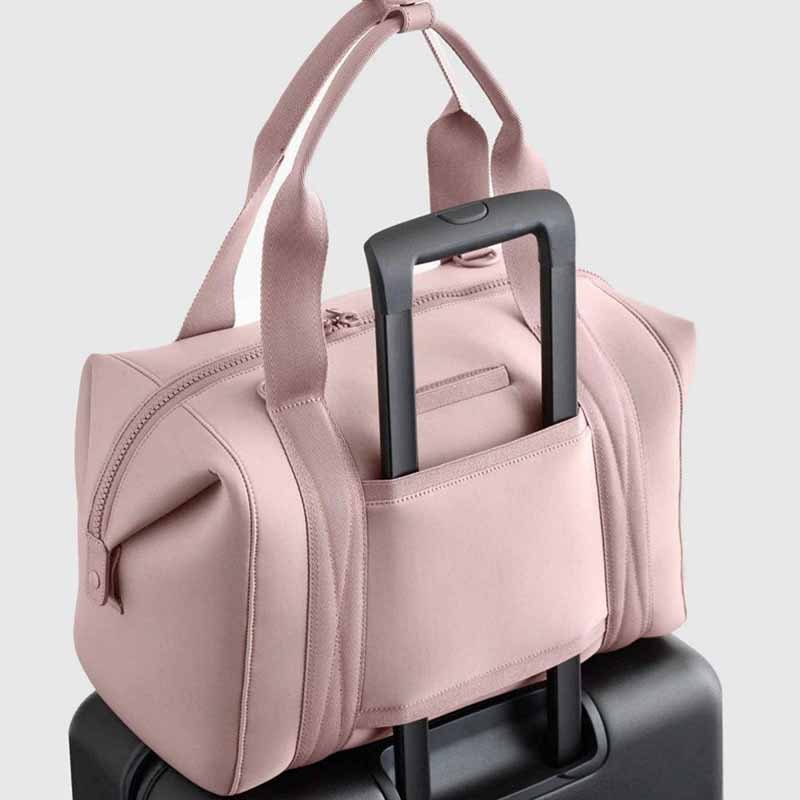
Neoprene travel tote customization usually includes logo application, bag dimensions, handle style, closure type, color matching, pocket design, and packaging. Good customization is not just about making the bag look different. It is about matching the product to the client’s target market, price level, and intended use.
What Logo Options Fit Neoprene Travel Tote?
Logo customization is one of the most visible parts of a neoprene tote project because it affects both product appearance and brand recognition. The right logo method depends on material surface, target price, design style, and the visual effect the client wants to achieve.
Neoprene travel totes can support a wide range of branding methods because the laminated surface is more adaptable than many rough woven fabrics. The most commonly used options include screen printing, heat transfer printing, sublimation printing, embroidery on added panels, embossed patches, rubber labels, woven labels, and metal logo accessories.
Here is a practical overview:
| Logo Method | Best For | Visual Effect | Cost Level | Notes |
|---|---|---|---|---|
| Screen printing | Simple logos, solid colors | Clear and direct | Low to medium | Good for stable large orders |
| Heat transfer | Multi-color graphics | Sharp and flexible | Medium | Good for smaller runs |
| Sublimation printing | Full-surface patterns | Rich all-over design | Medium | Works best on suitable fabric surfaces |
| Rubber patch | Sporty or outdoor look | Strong 3D effect | Medium | Durable and modern |
| Embossed patch | Premium branding | Quiet luxury look | Medium to high | Strong for private label |
| Woven label | Small brand sign-off | Subtle detail | Low | Good supporting logo method |
| Metal plate/logo | High-end styling | Premium accent | High | Better for fashion positioning |
For clients, the key is not choosing the most expensive logo method. It is choosing the method that fits the product. A resort tote with bold colors may work better with sublimation or heat transfer. A clean premium travel tote may look stronger with an embossed logo patch or minimalist woven label. A promotional tote may need the clarity and efficiency of screen printing.
Logo placement also matters. Common positions include the front center, upper front corner, handle area, zipper puller, inner pocket, and side panel. Good placement should stay visible without interfering with the tote’s structure. A very large logo may look impressive on a flat concept drawing, but once the bag is loaded and stretched, the branding may distort if the placement is poorly chosen.
That is why serious customization involves more than logo selection. It involves logo size, placement, surface compatibility, and production method. A factory that understands these points can help clients avoid designs that look good digitally but fail visually in the final product.
How Are Sizes Designed for Neoprene Travel Tote?
Size design is one of the most commercial parts of custom tote development because it directly influences product use, shipping cost, retail positioning, and customer satisfaction. A tote that is too small loses practical value. A tote that is too large may become heavy, unstable, or too expensive to ship.
For neoprene travel totes, size is usually developed around actual carrying scenarios rather than around arbitrary dimensions. Good factories ask what the tote needs to hold. That answer guides width, height, gusset depth, opening length, handle drop, and bottom structure.
Common size ranges look like this:
| Tote Category | Approximate Size Range | Common Use |
|---|---|---|
| Small tote | 28–35 cm width | Personal essentials, light daily use |
| Medium tote | 36–45 cm width | Standard travel and shopping use |
| Large tote | 46–55 cm width | Beach, overnight, family use |
But size design is not only about outer dimensions. It also includes usable internal volume and carrying comfort. For example:
- A wider opening improves packing convenience
- A deeper gusset increases capacity but can reduce shape stability
- A taller body may fit bottles or clothing better
- A longer handle drop improves shoulder use
- A reinforced base helps large totes sit better when filled
Clients should also think about shipping efficiency. Neoprene is soft and flexible, which helps packing, but larger totes still increase carton space and freight cost. For many brands, the most profitable product is not the biggest bag, but the best-balanced one: large enough to feel generous, compact enough to control logistics cost.
A strong customization process often includes size prototyping. Oneier and other experienced factories usually support sample development so the client can test actual use before mass production. That step is valuable because dimensions that look perfect on paper can feel wrong in the hand. A 2-centimeter handle drop adjustment or a slightly wider gusset can change comfort and functionality more than expected.
In short, size design should start from user behavior, then connect back to cost and production reality. That is how a tote becomes easier to sell and easier to reorder.
Can Neoprene Travel Tote Be OEM or Private Label?
Yes, neoprene travel totes are highly suitable for OEM, ODM, and private label production. In fact, neoprene is one of the more adaptable materials for custom bag programs because it supports structural variation, multiple branding methods, and a wide range of market positions from promotional to premium retail.
For clients, the three common development paths are usually:
| Model | What It Means | Best For |
|---|---|---|
| OEM | Client provides design/specification | Brands with clear product direction |
| ODM | Factory adapts or develops design | Clients who want faster development |
| Private Label | Existing or semi-custom style with client branding | Retailers and growing brands |
OEM is suitable when the client already has a clear structure, dimensions, artwork, and market goal. This gives maximum control, but it also requires more development detail. ODM is more efficient when the client wants a manufacturer to improve or adapt a concept based on production experience. Private label works well when speed matters and the brand wants a proven structure with its own logo, colors, and packaging.
Neoprene totes fit all three models because the product category is flexible. A factory can adjust:
- Material type and thickness
- Color and print pattern
- Gusset structure
- Handle material and length
- Pocket arrangement
- Closure system
- Packaging format
- Hangtag and branding details
This flexibility is one reason international small and medium importers and premium brand clients often use factories like Oneier for custom neoprene products. The supplier can support low-MOQ development, quick sampling, free design assistance, and private label execution without forcing the client into a rigid, one-style system.
For clients entering the market, private label can reduce development risk. For established brands, OEM provides stronger control over product identity. The important thing is choosing the right factory support model from the beginning. That helps the project move faster and reduces misunderstanding between design intent and production outcome.
What Affects Neoprene Travel Tote Cost?
Neoprene travel tote cost is mainly affected by material grade, thickness, fabric lamination, bag size, handle construction, logo method, reinforcement level, packaging, and order quantity. The cheapest option is not always the most profitable one. Better cost control usually comes from choosing the right specification for the market rather than reducing every detail.
How Does Material Impact Neoprene Travel Tote Cost?
Material is usually the largest cost block in neoprene tote production. That is why early material decisions have a strong effect on pricing. Many clients think cost changes mainly come from printing or accessories, but in most neoprene projects, the foam type, thickness, laminated fabric, and overall pattern consumption drive a large share of the final unit price.
The biggest material cost factors are:
| Cost Driver | Why It Changes Cost |
|---|---|
| Neoprene type | CR costs more than SCR, SCR more than SBR |
| Thickness | More millimeters means more raw material weight |
| Density | Higher-density foam can improve feel but cost more |
| Laminated fabric | Nylon and premium face fabrics cost more than standard polyester |
| Bag size | Larger patterns use more material and create more waste |
| Waste rate | Complex shapes may reduce material utilization |
A simple but very real example: two travel totes may look similar in photos, but one uses 3 mm SCR with polyester lamination and self-material handles, while the other uses 4 mm CR with nylon lamination, webbing straps, zipper closure, and reinforced base support. The second product can cost much more even before branding and packaging are added.
For clients, the smart move is not asking for the cheapest material combination first. It is matching the material to the intended selling level. If the product is going into premium retail, a better hand feel and stronger body may support a much better margin. If the project is for gifting or promotional distribution, a more controlled material specification may be the wiser choice.
This is where an experienced factory adds value. Instead of simply quoting one number, it can suggest where cost should be spent and where cost can be saved without visibly hurting performance. That helps clients build a better product strategy, not just a lower purchase price.
What Is MOQ for Neoprene Travel Tote Orders?
MOQ is one of the first questions most clients ask, and for good reason. MOQ affects development risk, inventory pressure, testing flexibility, and total project budget. In neoprene travel tote production, MOQ is not decided by one rule only. It depends on material customization, logo method, color count, printing complexity, and whether the project uses stock components or fully custom parts.
A practical MOQ breakdown often looks like this:
| Project Type | Common MOQ Range | Why |
|---|---|---|
| Simple private label tote | 100–300 pcs | Existing structure, easier setup |
| Standard custom tote | 300–500 pcs | Custom logo, color, or size |
| Full custom printed tote | 500–1000 pcs | More setup steps and material planning |
| Multi-SKU development | Higher combined MOQ | Production needs to stay efficient |
Oneier’s low-MOQ customization capability is important for smaller overseas clients and premium niche brands because it gives them room to test the market without overcommitting. This matters especially for new product launches, seasonal collections, boutique retail programs, and pilot orders.
However, clients should also understand why MOQ exists. Factories need to prepare materials, arrange cutting and sewing, confirm logo application, and manage quality control. Very small runs can push setup cost into a higher share of the unit price. That means extremely low order quantity often leads to much higher per-piece cost.
In many cases, the more useful question is not “What is the lowest MOQ?” but “What MOQ gives the best cost-performance balance?” Sometimes increasing an order from 200 pieces to 500 pieces improves price enough to justify the added quantity. Sometimes staying smaller is still the better business decision if the project is a test.
A good factory should explain this clearly and help the client choose a quantity that matches both budget and sales reality.
How Long Does Neoprene Travel Tote Production Take?
Lead time affects launch timing, inventory planning, shipping cost, and customer confidence. For neoprene travel totes, production time depends on whether the project is based on an existing design or a fully custom structure, and whether the materials and branding methods are standard or specially developed.
A common timeline looks like this:
| Stage | Usual Time Range | Notes |
|---|---|---|
| Design confirmation | 1–3 days | Faster if specs are clear |
| Sampling | 5–10 days | Depends on complexity |
| Sample revision | 3–7 days | If changes are needed |
| Material preparation | 5–12 days | Longer for custom colors/prints |
| Bulk production | 20–35 days | Depends on order volume |
| Packing and shipment prep | 2–5 days | Includes final checks |
For standard repeat orders with stable materials, production can move faster. For first-time custom programs with new artwork, custom lining, or multiple logo methods, it may take longer. The key for clients is to confirm specifications early. Late changes in size, thickness, color, or logo position can delay the project more than expected because they affect multiple stages at once.
Quick sampling is one of Oneier’s strengths, and that matters because sample speed helps clients make decisions sooner. But speed should not come at the cost of control. A rushed sample that does not reflect the true bulk standard can create bigger delays later. The best production schedule is one that is realistic, stable, and clearly communicated.
For seasonal or travel-related products, timing matters even more. Missing the selling window can do more damage than paying slightly more for better planning. That is why good factories work not only as producers, but also as scheduling partners.
How to Choose a Neoprene Travel Tote Manufacturer?
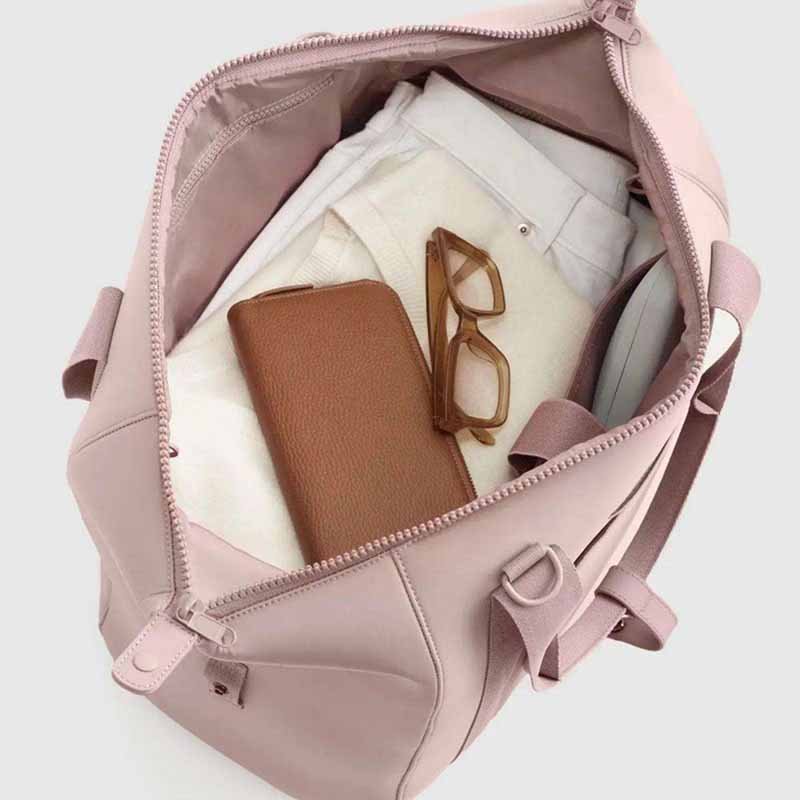
A good neoprene travel tote manufacturer should have real neoprene material experience, stable sampling ability, strong reinforcement and stitching control, flexible customization service, and consistent bulk quality. The best supplier is not simply the one with the lowest quote, but the one that can repeatedly turn your design target into a dependable finished product.
What Makes a Good Neoprene Travel Tote Factory?
A good factory is not judged by one nice sample alone. It is judged by whether it can deliver the same quality across repeat orders, different colors, different seasons, and different order sizes. For a custom neoprene tote project, that consistency is what protects brand reputation.
Clients can evaluate a factory using these practical points:
| Evaluation Point | What to Look For |
|---|---|
| Neoprene experience | Long-term work with neoprene products, not only general bags |
| Product range | Experience in bags, sleeves, koozies, wetsuits, supports |
| Sampling speed | Fast but accurate development process |
| Quality system | Incoming material checks, inline checks, final inspection |
| Custom service | OEM, private label, packaging, logo execution |
| Communication | Clear answers, practical suggestions, reliable follow-up |
Oneier’s background is strong here because it has more than 18 years of experience in neoprene material development and manufacturing across several neoprene product categories. That matters because neoprene is not the easiest material to handle well. A factory that works with wetsuits, supports, and bags often has a deeper understanding of stretch control, seam behavior, shaping, and durability than a general sewing factory that has only recently added neoprene items.
A good factory should also be able to explain why it recommends a certain thickness, handle type, or seam method. That kind of advice shows it is building products based on use, not just copying pictures.
How Important Is Experience in Neoprene Travel Tote?
Experience is very important because neoprene behaves differently from woven and nonwoven materials. It stretches, compresses, rebounds, and reacts differently during sewing, cutting, and storage. Factories without enough neoprene experience may still produce a visually acceptable sample, but they often struggle when the order moves into bulk production.
Experience affects several critical areas:
- Pattern compensation for stretch material
- Lamination stability and material selection
- Seam method choice for different tote styles
- Reinforcement planning at stress points
- Handle comfort and load performance
- Quality consistency between sample and mass production
An experienced neoprene manufacturer can often identify risks before sampling starts. For example, it may warn that a wide open-top tote with thin material and long self-material handles will lose shape under load. Or it may suggest that a premium logo method should be moved to a flatter panel area for better final appearance. These are not abstract opinions. They are practical corrections that protect the client’s product.
This is why many overseas small and medium buyers and premium brands prefer to work with specialized factories instead of general bag producers. When the material is technical, factory learning curve becomes the client’s risk. Experience reduces that risk.
What Services Should a Neoprene Travel Tote Supplier Offer?
A strong supplier should offer more than manufacturing. It should support product development, sampling, material guidance, logo selection, packaging coordination, and quality control. For custom projects, those services often make the difference between a smooth launch and a stressful one.
Useful supplier services include:
| Service | Why It Matters |
|---|---|
| Free design support | Helps turn rough ideas into workable specs |
| Quick sampling | Speeds up decisions and market testing |
| Low MOQ | Makes small launches and niche projects possible |
| Free samples or material swatches | Helps approval and comparison |
| OEM/ODM support | Gives flexibility for different project stages |
| Quality assurance process | Protects consistency in bulk |
| Short lead time | Improves launch timing and replenishment |
| Packaging support | Adds retail and private label value |
Oneier’s service model fits many of these points well: free design assistance, low-MOQ customization, quick sampling, free sample support, short lead time, and production experience across bags, koozies, sports supports, medical supports, and wetsuits. For clients, this means the conversation can move beyond “Can you make it?” to “How should we make it better for the target market?”
That shift is important. The best supplier is not just an order taker. It is a manufacturing partner that helps improve the final product, reduce avoidable risk, and support long-term reorder confidence.
How to Build a Better Neoprene Travel Tote Program With Fewer Risks
A successful neoprene travel tote project is not only about making a good-looking bag. It is about making a bag that sells well, performs well, and can be reordered without quality drift. Many first orders fail to become long-term business not because the product idea is bad, but because the early decisions were made too quickly. Thickness was chosen by guesswork, handle structure was underdeveloped, logo method did not match the material, or the sample looked fine but did not reflect true bulk production standards.
For brands, importers, and private label clients, the smarter approach is to build the project around real use conditions first. Ask what the tote needs to carry. Ask how often it will be used. Ask whether it is meant for travel, resort retail, gym use, gifting, or premium daily carry. Once that is clear, the right material system, structure, and branding method become much easier to define.
A stable tote program usually starts with five decisions:
| Key Decision | What It Controls | Why It Matters |
|---|---|---|
| Neoprene type | Durability and feel | Affects positioning and lifespan |
| Thickness | Body, comfort, cost | Impacts both function and freight |
| Handle structure | Load-bearing and comfort | Determines real carrying experience |
| Logo method | Brand presentation | Influences retail impression |
| MOQ and timeline | Inventory and launch speed | Affects business risk and flexibility |
When these points are matched correctly, the project becomes easier to manage. Sampling becomes more efficient. Pricing becomes more accurate. Bulk production becomes more stable. Reorders become easier because the product is built on a clearer technical foundation rather than on visual imitation alone.
Why Product Positioning Matters Before Sampling
One of the most common mistakes in custom bag development is starting from a photo instead of starting from a market position. A photo can show shape and color, but it cannot show foam density, seam strength, handle comfort, or how the bag behaves when loaded. Two totes may look almost identical online and still perform very differently in actual use.
That is why good development should begin with positioning questions such as:
- Is the bag for low-cost promotion or premium retail?
- Is the target user carrying towels and beachwear, or electronics and documents?
- Is visual softness more important, or is load stability more important?
- Does the brand want strong logo visibility or a more understated look?
- Is the first order a market test, or the start of a repeat program?
These questions are not theoretical. They affect real production outcomes. For example, a travel tote for premium retail may need 4 mm neoprene, a cleaner zipper opening, stronger base support, and a quieter logo treatment. A resort gift tote may need 3 mm neoprene, bright full-surface printing, and lower-weight structure to keep price under control. Without this positioning step, the factory can only guess, and guessing is expensive.
For clients who want a smoother launch, the best route is usually to define the selling scenario before finalizing the specification. That helps the manufacturer recommend the right balance instead of simply quoting whatever appears in the tech pack.
How Sampling Should Be Used the Smart Way
A sample is not only a visual approval step. It is a technical test. It should answer practical questions before the project reaches bulk production. Many clients approve a sample after checking only color, size, and logo placement. That is not enough for a neoprene travel tote, especially when the product will carry real weight and be used repeatedly.
A better sample review should include:
| Sample Check Point | What to Review |
|---|---|
| Body feel | Too soft, too stiff, or balanced |
| Handle comfort | Width, drop length, hand feel |
| Opening shape | Stays neat or collapses easily |
| Seam appearance | Clean, even, and secure |
| Reinforcement | Present at real stress points |
| Load test | Holds expected weight without distortion |
| Branding result | Sharp, centered, and appropriate |
| Overall balance | Looks premium when empty and when filled |
Clients should also test the bag in use instead of only on a table. Put in clothing, bottles, a laptop, or travel items. Carry it by hand. Carry it on the shoulder. Open and close the zipper repeatedly if there is one. Set it down and see if the shape holds. These simple actions reveal more than visual inspection alone.
A smart sample process may add a few days, but it often saves weeks later by reducing revisions, complaints, and bulk-order surprises. This is especially important for overseas clients, because correcting a production mistake after shipment is much harder and more expensive than correcting it during sampling.
How to Reduce Return Risk After Launch
Product returns in this category often come from a few repeated causes: handle failure, seam cracking, poor shape retention, logo wear, edge lifting, or mismatch between what the customer expected and what the bag actually does. These are not random accidents. Most of them can be reduced during the development stage.
Here are the most practical risk-control actions:
- Choose a neoprene grade that matches the intended price level
- Confirm thickness based on actual use, not only appearance
- Reinforce handle roots and zipper ends from the start
- Avoid oversized logos in high-stretch areas
- Use sample load testing before approving bulk
- Confirm packaging that prevents crushing during shipment
- Keep approved sample and bulk spec fully aligned
Factories with real neoprene experience are valuable here because they can often identify hidden failure points before production begins. That helps the client avoid the false economy of a cheaper quote that later turns into complaints, replacements, or weaker reorder confidence.
For long-term business, fewer returns usually mean more than saved replacement cost. They protect ratings, customer trust, and the chance of the product becoming a repeatable line instead of a one-season experiment.
What Should Clients Ask Before Placing a Neoprene Travel Tote Order?
Before placing an order, clients should confirm the neoprene type, thickness, size, handle construction, logo method, reinforcement details, MOQ, sample standard, lead time, packaging method, and quality control process. These points reduce misunderstanding and help the factory turn a concept into a consistent finished product.
What Specification Questions Should Be Confirmed?
Many custom projects become slower and more expensive because the basic technical questions were never fully confirmed at the beginning. Clear specifications make quoting more accurate and sampling more efficient.
The most important questions include:
| Question | Why It Should Be Confirmed Early |
|---|---|
| What neoprene type will be used? | Prevents material mismatch |
| What thickness is required? | Controls body, cost, and weight |
| What is the exact finished size? | Avoids volume and comfort issues |
| What is the handle material and drop length? | Affects carrying experience |
| What closure type is needed? | Changes use function and cost |
| What logo method is approved? | Impacts appearance and unit price |
| Is inner organization required? | Changes complexity and labor |
| What packaging is needed? | Affects retail readiness and freight |
The more clearly these points are defined, the easier it becomes for the factory to produce a sample that is close to the final order target.
What Production Questions Should Be Asked?
Beyond product specification, clients should also ask how the order will be managed in the factory. This is where production reliability becomes visible.
Useful production questions include:
- How will incoming neoprene be checked?
- What reinforcement method will be used at the handle root?
- Will there be a load test during development?
- How is lamination quality controlled?
- What final inspection points are standard?
- How is bulk quality kept consistent with the approved sample?
- What is the realistic lead time for first order and reorder?
- How are delays communicated if materials change?
These questions help the client understand whether the supplier is simply a workshop or a true manufacturing partner.
What Business Questions Should Be Asked?
For overseas importers and brand owners, the business side matters just as much as the technical side. A product can be good, but if MOQ is too high, timeline is unstable, or the factory cannot support packaging and label details, the project may still struggle.
Important business questions include:
| Business Point | Why It Matters |
|---|---|
| Low MOQ availability | Helps new launches and market tests |
| Sampling speed | Affects launch planning |
| Free design support | Useful when idea is still evolving |
| Free sample policy | Reduces early project friction |
| OEM/ODM flexibility | Supports different project stages |
| Reorder stability | Protects long-term business growth |
A factory like Oneier is well suited for this kind of client discussion because it already works with overseas small and medium buyers and premium brand customers on custom, private label, and OEM/ODM neoprene products. That experience helps bridge the gap between design intent and production reality.
Why Oneier Is a Strong Manufacturing Partner for Neoprene Travel Totes
Oneier is not working from theory alone. The company has more than 18 years of experience in neoprene material development and the production of neoprene-based products. That background matters because a good neoprene travel tote requires more than general sewing skill. It requires understanding how neoprene behaves in cutting, shaping, reinforcing, printing, and long-term use.
What Makes Oneier Different in Neoprene Manufacturing?
Oneier’s strength comes from both material experience and product range. Because the factory works with neoprene bags, koozies, sports supports, medical supports, wetsuits, and other neoprene products, it has a broader technical base than factories that only handle simple sewn bags.
This wider experience helps in areas such as:
- Material selection for different product goals
- Better understanding of stretch and rebound behavior
- Stronger seam and reinforcement planning
- More practical advice on comfort and durability
- Faster adaptation for custom structures and branding requests
That matters for clients because technical mistakes in neoprene production usually appear later, not earlier. A factory with deeper experience is better positioned to prevent those mistakes before they become expensive.
What Services Make Oneier Attractive to Overseas Clients?
Oneier’s service advantages match what many overseas clients actually need when developing a custom neoprene tote line.
| Oneier Advantage | Client Benefit |
|---|---|
| 18+ years of neoprene experience | Lower development risk |
| Wide product range in neoprene | Better technical understanding |
| 100% quality assurance | More confidence in consistency |
| Free design support | Easier product development |
| Low MOQ customization | Better for small and medium orders |
| Quick sampling | Faster decision-making |
| Free sample support | Easier early approval |
| Short lead time | Better launch timing |
| OEM/ODM and private label support | Flexible project cooperation |
For small and medium importers, these points reduce risk. For premium brands, they improve control. For both, they make it easier to build products that are commercially practical, not just visually appealing.
What Kind of Clients Can Work With Oneier?
Oneier is well suited for:
- Growing private label brands
- Boutique retailers
- Promotional product distributors
- Travel and lifestyle product importers
- Resort and beachwear collections
- Fitness and wellness accessory brands
- Established brands seeking a neoprene specialist
- New entrants testing a tote line with lower MOQ
This flexibility is important because not every project starts at the same scale. Some clients need a fast pilot run. Some need a refined premium line. Some need a dependable manufacturing partner for repeated reorders. A supplier that can support all three stages creates more long-term value.
Conclusion: A Better Neoprene Travel Tote Starts With Better Manufacturing Decisions
A neoprene travel tote may look like a simple product, but the finished result depends on many connected manufacturing choices. The right neoprene grade, the right thickness, the right lamination, the right cutting accuracy, the right seam method, the right reinforcement, and the right customization plan all work together. If one of these parts is weak, the final bag may still look acceptable in photos, but it will struggle in real use. If they are planned well, the tote becomes more durable, more comfortable, more attractive, and easier to sell.
For brands and importers, the real goal is not only to make a bag. It is to make a bag that matches the market, supports the price point, earns repeat orders, and protects brand reputation. That is why material knowledge and factory experience matter so much in this category. A dependable neoprene tote program is built through practical engineering and stable production, not guesswork.
If you are planning to develop a custom neoprene travel tote, now is the right time to turn your idea into a workable product with the right factory support. Oneier can help you with free design support, low-MOQ customization, quick sampling, free samples, short lead times, and OEM/ODM or private label production based on more than 18 years of neoprene manufacturing experience.
Send Oneier your concept, reference photos, logo file, target size, or rough idea, and start building a neoprene travel tote that is designed for real use and ready for real business.