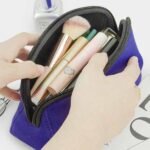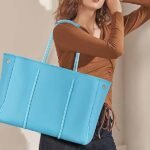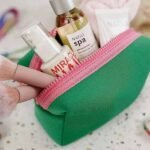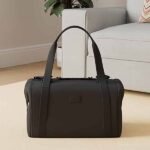
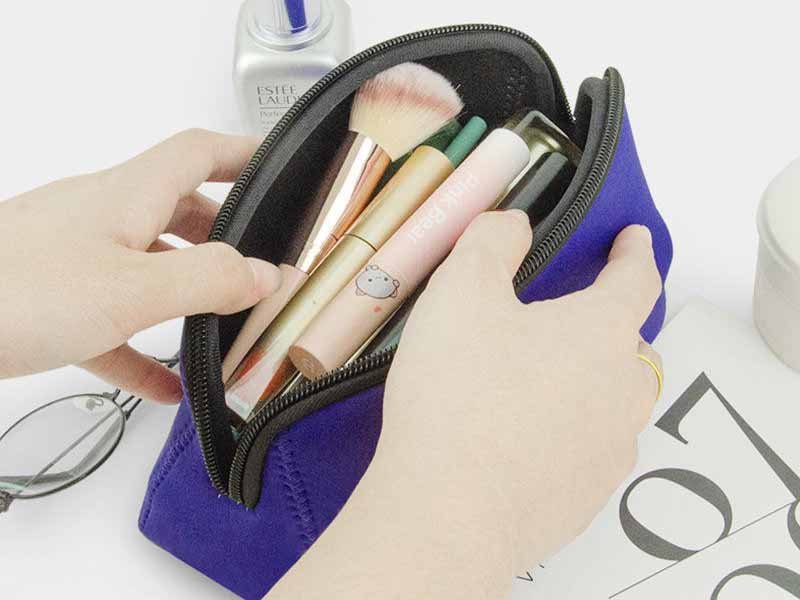
A neoprene makeup bag can look soft, modern, and premium on the outside, but the real test starts after customers begin using it every day. They open it in the morning, throw it into a handbag, carry it during travel, and pull the zipper back and forth again and again. In many cases, the material still looks fine long after the weak point has already failed: the zipper. That is why the strongest neoprene makeup bag is not simply the one with the nicest shape or color. It is the one that combines the right neoprene structure with a zipper system strong enough for repeated daily use.
Neoprene makeup bag manufacturing is the process of turning neoprene sheets into finished cosmetic bags through material selection, pattern development, cutting, sewing, zipper installation, edge finishing, inspection, and packaging. A good result depends on the balance between neoprene thickness, bag structure, zipper quality, seam strength, and production consistency.
Many cosmetic bag projects look easy at first. Then bulk production begins, and the real problems appear: the bag feels too soft, the zipper catches at the corner, the stitching pulls after repeated use, or the final product looks less premium than the approved artwork. That gap between concept and reality is where experienced manufacturing matters most. A good neoprene makeup bag does more than hold cosmetics. It protects the user experience, supports the brand image, and gives customers a reason to keep using the product instead of replacing it after a few weeks. That is exactly where this topic becomes much more interesting than it first appears.
What Is Neoprene Makeup Bag Manufacturing?
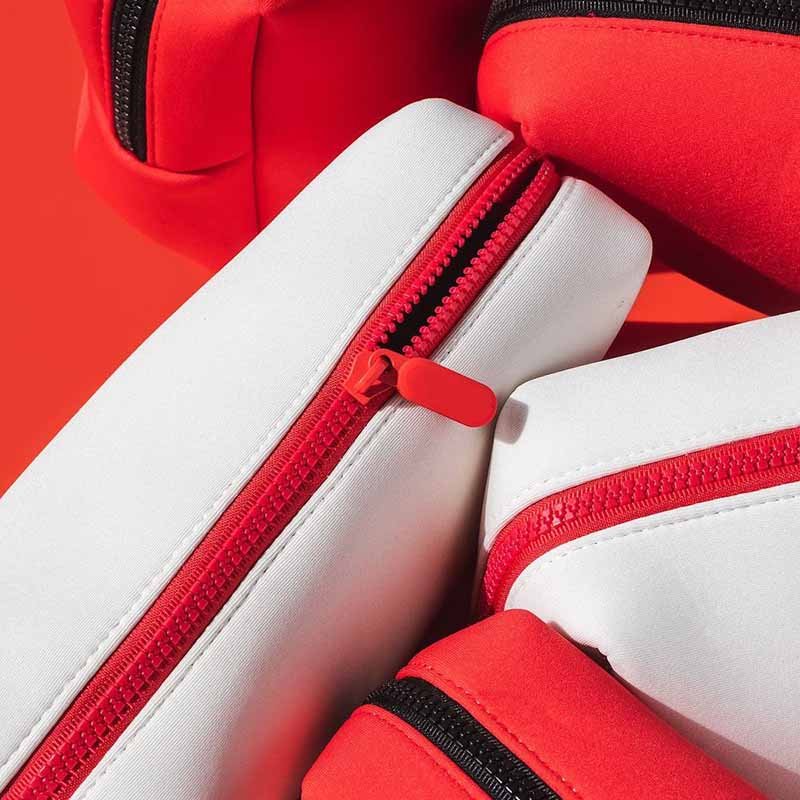
Neoprene makeup bag manufacturing is the process of turning neoprene sheets into finished cosmetic bags that are soft, structured, water-resistant, and durable in daily use. It includes material selection, thickness confirmation, pattern development, cutting, sewing, zipper installation, edge finishing, inspection, and packaging. The goal is not just to make a bag, but to make one that feels right in hand, opens smoothly, holds its shape, and performs well over time.
For most customers, the biggest concern is simple: Will the bag look good and still work after months of use? That answer depends on how well each step in manufacturing is controlled. A neoprene makeup bag is not like a thin fabric pouch. It has thickness, elasticity, and a foam structure, which means production must be handled more carefully.
A typical production flow looks like this:
| Stage | What Happens | Why It Matters |
|---|---|---|
| Material selection | Choose neoprene type, thickness, surface | Affects feel, durability, cost |
| Pattern making | Define size, shape, zipper opening | Determines usability and appearance |
| Sample making | First physical version | Identifies problems early |
| Cutting | Cut neoprene panels | Affects symmetry and consistency |
| Sewing | Assemble body and zipper | Determines strength and finish |
| Zipper installation | Attach zipper to opening | Key for daily use performance |
| Finishing | Trim threads, shape bag | Improves visual quality |
| Inspection | Check size, seams, zipper | Reduces defects |
| Packaging | Pack for shipment | Affects logistics and presentation |
What Is Neoprene Makeup Bag Manufacturing Material?
Neoprene is a synthetic rubber material with a foam core and fabric layers on both sides. This structure gives it a soft, padded feel while still holding its shape better than most fabrics.
For makeup bags, this material offers clear advantages:
- It protects items like glass bottles or compacts
- It resists water and small spills
- It keeps the bag looking full instead of collapsing
- It feels more premium compared to thin fabric
However, not all neoprene is the same. Customers often notice differences immediately when they touch the product.
| Material Type | Feel | Visual Effect | Common Use |
|---|---|---|---|
| Standard neoprene | Soft, slightly elastic | Smooth, simple | General cosmetic bags |
| High-density neoprene | Firmer, more structured | Cleaner and more premium | Retail and branded products |
| Soft jersey neoprene | Very soft | Casual look | Lifestyle and promotional bags |
For most cosmetic bag projects, customers prefer a balance between softness and structure. If the material is too soft, the bag looks weak. If it is too stiff, it feels bulky.
Which Thickness Works Best?
Thickness is one of the first decisions that directly affects how the bag performs. It influences structure, protection, weight, and cost.
Most neoprene makeup bags fall into this range:
| Thickness | Feel | Use Case | Cost Level |
|---|---|---|---|
| 2mm | Light and flexible | Simple pouches, giveaways | Low |
| 3mm | Balanced | Daily makeup bags | Medium |
| 4–5mm | Thick and structured | Travel bags, premium products | High |
In real projects, 3mm thickness is the most widely used because it balances cost, structure, and usability.
Customers often make one common mistake: choosing thinner material to save cost. This can lead to:
- Bag losing shape
- Lower perceived value
- Shorter product lifespan
A slightly thicker bag often improves customer satisfaction significantly.
Are Materials Durable?
Neoprene itself is durable, but the final durability depends on how the bag is made.
In daily use, a makeup bag may be:
- Opened and closed multiple times per day
- Placed in handbags or luggage
- Exposed to moisture or spills
- Compressed under other items
A well-made neoprene bag can handle these conditions better than many fabric alternatives.
Durability comparison:
| Material | Water Resistance | Shape Retention | Cushioning | Expected Lifespan |
|---|---|---|---|---|
| Cotton | Low | Low | Low | 3–6 months |
| Polyester | Medium | Medium | Low | 6–12 months |
| Neoprene | High | Medium–High | High | 12–24 months |
However, durability is not only about the material sheet. Weak stitching or poor zipper installation can reduce the lifespan significantly. That is why material and construction must work together.
How Do Materials Affect Cost?
Material choice is the largest cost factor in neoprene makeup bag manufacturing. In most cases, it accounts for more than half of the total unit price.
Typical cost structure:
| Cost Element | Percentage |
|---|---|
| Neoprene material | 45–60% |
| Zipper | 10–15% |
| Labor | 15–20% |
| Branding & packaging | 5–10% |
Several material decisions can quickly change the price:
- Increasing thickness from 2mm to 3mm → noticeable cost increase
- Using higher-density neoprene → higher cost but better feel
- Adding lining or structure → increases material and labor cost
- Choosing premium zipper → small cost increase, large value improvement
A practical comparison:
| Option | Cost Change | Impact |
|---|---|---|
| Upgrade zipper quality | +8–12% | High impact on usability |
| Increase thickness | +10–20% | Better structure and durability |
| Add decoration | +10% | Limited functional improvement |
For most customers, the best strategy is not to choose the lowest price. It is to choose the combination that delivers the best balance between cost and performance.
From a business perspective, neoprene makeup bag manufacturing is not just about producing a bag. It is about producing a product that customers will continue to use. A bag that feels better, works smoothly, and lasts longer will naturally create better reviews, stronger brand perception, and higher repeat orders.
What Matters in Neoprene Makeup Bag Manufacturing?
The most important factors in neoprene makeup bag manufacturing are neoprene quality, thickness selection, zipper performance, seam construction, edge finishing, and size consistency. These details decide whether the bag only looks good in a product photo or actually performs well in a customer’s hand over time.
When customers review a neoprene makeup bag, they rarely use technical terms. They say things like “this feels cheap,” “the zipper is rough,” “the bag is too floppy,” or “this one feels nice and solid.” Behind those reactions are a set of production decisions the factory made much earlier.
The first major factor is material quality. Not all neoprene feels the same. Some sheets are dense and smooth. Others feel lighter, rougher, or less stable. A cosmetic bag made from low-grade neoprene may look fine in the beginning but lose shape faster, especially near the opening and corners. Material quality affects not only durability but also how “premium” the bag feels as soon as it is picked up.
The second major factor is thickness. This directly affects structure, protection, and user perception. A bag that is too thin may collapse and feel weak. A bag that is too thick may become bulky, expensive, and less elegant for beauty packaging. Thickness needs to match the intended use, not just the target price.
The third major factor is zipper quality. In daily use, the zipper is often touched more than any other part of the bag. It needs to open smoothly, resist tooth separation, survive repeated cycles, and stay aligned with the curved or straight bag opening. A beautiful neoprene body with a poor zipper is one of the most common reasons customers stop using a bag.
The fourth factor is construction quality. This includes seam density, corner handling, reinforcement at stress points, and how cleanly the zipper is integrated into the body. Neoprene can hide some flaws visually because of its soft structure, but poor construction usually shows up later through distortion, uneven shape, or seam fatigue.
The fifth factor is finishing detail. This is where many products separate into low-end and higher-end categories. Clean edges, balanced panels, smooth zipper ends, consistent piping or binding, and accurate logo positioning all improve the user’s impression. In beauty and personal care markets, these details matter a lot because the bag is often part of the presentation, not just a storage item.
The table below shows what customers usually notice first and which factory choices create that result:
| What End Users Notice | What Usually Causes It |
|---|---|
| Soft but firm hand feel | Right neoprene density and thickness |
| Smooth zipper movement | Better zipper selection and correct installation |
| Bag keeps shape well | Balanced thickness and stable cutting |
| Clean premium look | Good seam alignment and finishing |
| Long-term usability | Strong zipper, clean sewing, better material control |
From a sourcing perspective, these factors should be discussed before sampling, not after mass production begins. Once the product is in bulk production, changing thickness, zipper construction, or major panel design becomes expensive and slow.
At Oneier, the real value in neoprene makeup bag manufacturing is helping customers make these decisions clearly at the early stage. That is especially important for private label, custom logo, and OEM/ODM projects where the bag needs to match a very specific market position. A low-cost giveaway pouch and a premium beauty gift bag may look similar in simple drawings, but they require very different manufacturing priorities to succeed.
What Is Neoprene Makeup Bag Manufacturing Material?
The main material in neoprene makeup bag manufacturing is neoprene laminated with surface fabrics such as polyester, nylon, or jersey. This layered structure gives the bag cushioning, flexibility, water resistance, and a fuller shape than many standard woven cosmetic bags.
From a customer’s point of view, neoprene feels different immediately. It is soft, slightly padded, and more protective than basic fabric. This makes it a natural choice for makeup bags because beauty products are often small, easily scratched, and sometimes leak or spill. A neoprene bag helps reduce impact and gives a cleaner, more substantial feel in hand.
But material choice is not just about using “neoprene” in a general sense. The factory usually needs to consider several material layers and details:
- The neoprene core density
- The outer fabric finish
- The inner surface treatment
- Optional lining or reinforcement
- Edge finishing material if binding is used
Each of these affects the product differently. For example, a smoother nylon-faced neoprene usually gives a cleaner and more polished look. A jersey-faced neoprene may feel softer and more casual. Some customers want a sporty finish, while others want something more refined for beauty retail.
The table below shows how different surface options usually perform:
| Surface Type | Hand Feel | Appearance | Abrasion Resistance | Best Use |
|---|---|---|---|---|
| Nylon | Smooth | Cleaner and slightly premium | Good | Beauty bags, travel bags |
| Polyester | Balanced | Commercial and versatile | Good | General cosmetic bag production |
| Jersey | Soft | Casual and comfortable | Medium | Soft-touch lifestyle bags |
Customers should also understand that neoprene is not only chosen for appearance. It changes how the product behaves. Compared with cotton or polyester pouch materials, neoprene gives better cushioning and shape memory. That can make a cosmetic bag feel more like a real product and less like simple packaging.
At Oneier, material recommendation usually starts from the end use. A bag meant for makeup brushes, compact cosmetics, skincare items, or travel bottles may need a different neoprene grade or finish depending on how structured, lightweight, or protective it needs to be.
Which Thickness Works Best?
The best neoprene thickness for a makeup bag usually depends on what the bag is meant to hold, how premium it should feel, and how compact the customer wants the final product to be. In many commercial projects, 3mm neoprene is often the most balanced choice because it gives enough body without becoming too bulky.
Thickness matters because it affects nearly everything:
- Shape retention
- Cushioning
- Zipper fitting behavior
- Bag weight
- Material cost
- Shipping cost
- Customer perception in hand
A very thin neoprene bag may save money, but it can also feel flat and less protective. A very thick bag can feel luxurious, but it may take up too much space, increase freight cost, and make the zipper opening feel heavier or stiffer than needed.
Here is a simple working comparison:
| Thickness | Feel in Hand | Protection Level | Product Look | Cost Trend | Best For |
|---|---|---|---|---|---|
| 2mm | Light and soft | Basic | Slim, less structured | Lower | Small pouches, low-cost projects |
| 3mm | Balanced | Good | Clean and commercial | Medium | Most daily-use makeup bags |
| 4mm | Thicker and fuller | Strong | More premium | Medium to high | Travel bags, heavier contents |
| 5mm | Heavy and solid | Very strong | Bulky but protective | High | Special protective bags |
For many customers, the most useful question is not “what is the thickest option?” but “what thickness makes sense for this product?” A beauty brand using the bag as a gift-with-purchase may want a sleek and lightweight feel. A travel kit brand may want stronger protection. A promotional order may prioritize price and shipping efficiency.
Thickness also affects the zipper area. The thicker the neoprene, the more carefully the zipper must be installed to keep opening and closing smooth. If the bag is bulky but the zipper tape and opening are not matched correctly, the user may feel resistance at the corners or when overfilling the bag.
Oneier usually helps customers choose thickness based on use scenario first, price target second. This approach tends to produce a better result because thickness is one of the most visible and most tactile quality signals in the finished bag.
Are Materials Durable?
Yes, neoprene materials are generally durable, but real durability depends on the full construction, not only the neoprene sheet itself. A strong neoprene makeup bag needs the right combination of material density, seam stability, zipper integration, and edge handling.
One reason neoprene is popular is that it handles daily movement well. It bends, compresses, and recovers better than many standard woven materials. It is also more resistant to water exposure and less likely to wrinkle badly. For makeup bags used in bathrooms, handbags, gym bags, and travel cases, this makes a big practical difference.
Still, “durable neoprene” can mean different things depending on the product grade. A lower-grade neoprene may feel soft at first but age faster under repeated flexing or rough handling. A better-grade neoprene with stable lamination and cleaner construction will usually hold up better over time.
Customers should look at durability through four practical questions:
- Will the bag keep its shape after months of use?
- Will the seams remain stable at the corners?
- Will the zipper area stay smooth and intact?
- Will the outer surface keep looking clean after friction and travel use?
The comparison below helps explain where neoprene stands among common cosmetic bag materials:
| Material | Water Resistance | Shape Retention | Cushioning | Long-Term Appearance |
|---|---|---|---|---|
| Cotton | Low | Low to medium | Low | Can wrinkle and stain easily |
| Polyester | Medium | Medium | Low | Stable but less protective |
| PU leather | Medium | High | Low | Can look premium but may crack over time |
| Neoprene | High | Medium to high | High | Soft, clean, and resilient |
For customers, this means neoprene is often a very practical choice when they want a bag that feels modern, protects the contents better, and survives repeated daily use. But the real test is not just the material sheet in isolation. It is whether the factory turns that material into a well-constructed product.
At Oneier, durability is viewed as a system. Material, zipper, sewing, and finishing all need to support each other. If one part is weak, the overall durability drops fast, no matter how good the neoprene looks on paper.
How Do Materials Affect Cost?
Material choice is usually the biggest cost driver in neoprene makeup bag manufacturing. In most projects, neoprene and related material components make up the largest portion of the unit price, often more than labor or packaging.
Customers sometimes ask why one neoprene bag quote is clearly higher than another even when the dimensions look similar. In most cases, the answer comes back to materials and construction details:
- Thickness difference
- Surface fabric grade
- Lining or no lining
- Zipper grade
- Binding or cleaner edge finishing
- Printing or labeling method
A cost breakdown for a standard custom neoprene makeup bag often looks like this:
| Cost Component | Approximate Share |
|---|---|
| Neoprene and surface materials | 45%–60% |
| Zipper and puller | 10%–18% |
| Sewing and assembly labor | 15%–22% |
| Logo and branding details | 5%–12% |
| Packaging and overhead | 5%–10% |
From a customer perspective, not all cost increases are equal. Some material upgrades bring real value. Others mostly add expense without changing how the bag performs.
The most worthwhile material-related investments often include:
- Upgrading from very thin to medium neoprene
- Choosing a better zipper
- Improving the surface finish for a cleaner hand feel
- Adding better reinforcement around stress areas
Less useful cost increases may include decorative extras that do not improve daily usability.
Here is a simple value comparison:
| Upgrade | Cost Impact | Impact on User Experience |
|---|---|---|
| Better zipper | Medium | Very high |
| 2mm to 3mm neoprene | Medium | High |
| Premium puller detail | Low to medium | Medium |
| Decorative extra trim | Medium | Low to medium |
For most customers, the smartest approach is not to build the cheapest neoprene makeup bag possible. It is to build the most reliable and convincing product within the target budget. That usually means spending money first on the parts customers touch and use the most: the material, the zipper, and the construction quality.
At Oneier, this is where early development support makes a big difference. When customers understand which material choices create visible value and which ones mainly increase cost, they can make better product decisions and avoid expensive adjustments later.
How Does Neoprene Makeup Bag Manufacturing Work?
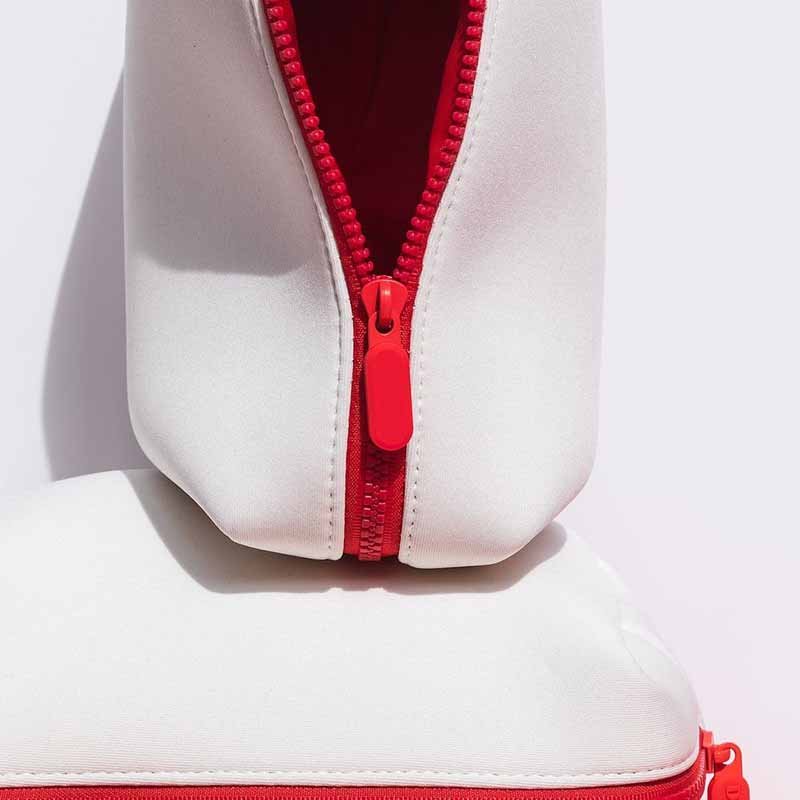
Neoprene makeup bag manufacturing follows a clear sequence: confirm specs → develop pattern → make sample → approve materials → cut panels → sew body → install zipper → finish edges → inspect → pack. Each step affects how the bag looks, feels, and performs in daily use—especially zipper smoothness, seam strength, and shape consistency.
For customers, the most important question is: Will bulk production match the approved sample? That depends on how tightly each step is controlled. Neoprene is thicker and slightly elastic, so small errors in cutting or stitching can show up as uneven openings, wavy zippers, or bags that don’t sit straight.
A practical production timeline for a standard custom order:
| Stage | Time | What You Should Check |
|---|---|---|
| Spec confirmation | 1–2 days | Size, thickness, zipper type, logo |
| Sample making | 3–7 days | Hand feel, shape, zipper movement |
| Sample revision | 3–5 days | Adjust thickness, opening, logo |
| Bulk cutting & sewing | 10–20 days | Consistency, seam quality |
| Inspection & packing | 2–5 days | Zipper test, size tolerance |
Below is what actually happens inside the factory and what customers should pay attention to at each step.
How Is Neoprene Prepared?
Before cutting starts, the factory prepares neoprene sheets to make sure they are stable and consistent. Neoprene comes laminated with fabric on both sides, and different batches can feel slightly different.
Preparation usually includes:
- Checking thickness (e.g., 3mm tolerance ±0.2mm)
- Checking surface quality (no scratches, bubbles, or uneven lamination)
- Matching color between rolls
- Letting material rest to reduce tension
Why this matters:
- Uneven thickness → bag shape inconsistency
- Surface defects → visible quality issues
- Color mismatch → bulk order inconsistency
Common problems if skipped:
| Issue | What Customers See |
|---|---|
| Thickness variation | Some bags feel thicker than others |
| Surface defects | Marks or uneven texture |
| Color difference | Bags look different in the same order |
A reliable factory will control material before cutting, not after problems appear.
How Are Bags Made?
Once material is ready, the factory moves to cutting and sewing.
Cutting stage:
- Panels are cut based on pattern
- Precision is important (tolerance usually ±2–3mm)
- Incorrect cutting leads to uneven bags
Sewing stage:
- Side panels are joined
- Bottom or gusset is formed
- Top opening is prepared for zipper
Neoprene requires careful handling during sewing:
- Too much pressure → material gets compressed
- Too little control → seams become loose
- Wrong tension → bag edges become wavy
What good sewing looks like:
| Feature | Result |
|---|---|
| Straight seams | Clean appearance |
| Even stitching | Better durability |
| Symmetrical panels | Balanced shape |
What poor sewing causes:
- Bag leaning to one side
- Uneven opening
- Weak seams at corners
Customers should always check sample symmetry and stitching before approving production.
How Are Durable Zippers Added?
Zipper installation is the most sensitive part of the process. It directly affects usability.
Steps include:
- Align zipper with opening
- Sew zipper tape to neoprene panels
- Control curve (especially for rounded shapes)
- Reinforce both ends
Key technical points:
- Zipper length must match opening exactly
- Stitching must hold firmly without distorting zipper
- Ends must be reinforced to prevent tearing
Common problems:
| Problem | Cause | Result |
|---|---|---|
| Zipper stuck at corners | Poor curve control | Hard to open |
| Wavy zipper line | Uneven stitching | Low-quality look |
| Zipper separates | Weak stitching | Product failure |
For daily-use makeup bags, zipper quality and installation are more important than decorative features.
Which Zippers Are Used?
Different zippers are used depending on product level and use case.
| Zipper Type | Flexibility | Cost | Best Use |
|---|---|---|---|
| Nylon coil | High | Low | Most cosmetic bags |
| Plastic molded | Medium | Medium | Structured bags |
| Metal zipper | Low | High | Premium products |
| Waterproof zipper | Medium | High | Travel or wet use |
Nylon coil zippers are the most common because they bend easily with neoprene and provide smooth operation.
Customers should focus on:
- Smooth slider movement
- Strong teeth alignment
- Durable puller
A small upgrade in zipper quality often improves the entire product.
How Is Quality Checked?
Quality control happens throughout production, not just at the end.
Main checkpoints:
- Material inspection before cutting
- In-line inspection during sewing
- Final inspection before packing
Key inspection items:
| Check Item | Standard |
|---|---|
| Size tolerance | ±3–5mm |
| Zipper function | Smooth, no sticking |
| Stitch strength | No loose threads |
| Shape consistency | Symmetrical |
Practical tests often include:
- Opening/closing zipper 20–50 times
- Pull test on seams
- Visual check under light
Common issues found in weak quality control:
| Issue | Impact |
|---|---|
| Loose stitching | Short lifespan |
| Zipper misalignment | Poor usability |
| Size variation | Packing problems |
Strong quality control reduces returns and improves customer satisfaction.
How Are Durable Zippers Added in Neoprene Makeup Bag Manufacturing?
Durable zippers are added during the sewing stage of neoprene makeup bag manufacturing through a combination of correct zipper selection, precise alignment, controlled stitching, and reinforcement at stress points. A well-installed zipper should open smoothly, stay aligned with the bag shape, and withstand thousands of open-close cycles without failure.
Zipper installation is one of the most critical steps because neoprene behaves differently from thin fabrics. It has thickness, elasticity, and resistance. If the zipper is not matched properly to the material and structure, it may feel tight, misaligned, or unstable after repeated use.
How Are Durable Zippers Positioned?
Zipper positioning is the first step that determines whether the bag will open and close smoothly. The zipper must follow the natural shape of the bag opening, whether it is straight, curved, or slightly rounded.
Key positioning factors include:
- Matching zipper length to opening size
- Controlling curve tension for rounded shapes
- Keeping left and right sides symmetrical
- Allowing proper seam allowance
If the zipper is too short, the opening becomes tight and difficult to use. If it is too long, it may buckle or create uneven edges.
Common positioning issues:
| Problem | Cause | Result |
|---|---|---|
| Uneven opening | Misaligned panels | Bag looks twisted |
| Tight corners | Poor curve control | Zipper gets stuck |
| Wavy zipper line | Incorrect stitching tension | Low-quality appearance |
Factories with strong experience will adjust the zipper layout based on the bag design instead of using a fixed template.
How Are Durable Zippers Sewn?
Sewing zippers onto neoprene requires different handling compared to thin textiles. Because neoprene is thicker and slightly elastic, stitching must be controlled carefully.
Important sewing techniques:
- Using appropriate needle size for neoprene thickness
- Maintaining even stitch density
- Controlling pressure to avoid compression marks
- Reinforcing zipper ends (start and stop points)
The zipper tape must be sewn securely but not overly compressed. If the stitching is too tight, it can distort the zipper track. If it is too loose, the zipper may shift or separate over time.
A well-sewn zipper should:
- Stay flat along the opening
- Move smoothly without resistance
- Maintain alignment after repeated use
How Are Zipper Ends Reinforced?
Zipper ends are the highest stress points because they absorb the force when users open or close the bag quickly.
Reinforcement methods include:
- Backstitching at both ends
- Adding fabric tabs or neoprene extensions
- Using bar-tack stitching
- Folding and locking zipper ends
Without proper reinforcement, zipper failure often starts at the ends.
Load stress comparison:
| Reinforcement Type | Durability Level | Risk of Failure |
|---|---|---|
| No reinforcement | Low | High |
| Basic backstitch | Medium | Moderate |
| Bar-tack reinforcement | High | Low |
| Reinforced tab + bar-tack | Very high | Very low |
For cosmetic bags used daily, reinforced zipper ends are strongly recommended.
How Does Zipper Installation Affect User Experience?
Customers notice zipper performance immediately. Even if the bag looks good, a poor zipper will create a negative impression within seconds.
Key user experience factors:
- Smooth opening and closing
- No catching at corners
- Comfortable puller grip
- Stable alignment after repeated use
A good zipper gives a sense of quality and reliability. A poor zipper creates frustration and reduces product value.
For brands, zipper performance directly affects:
- Product reviews
- Return rates
- Repeat purchases
That is why zipper installation is not just a technical step—it is a key part of product success.
Which Zippers Are Used in Neoprene Makeup Bag Manufacturing?
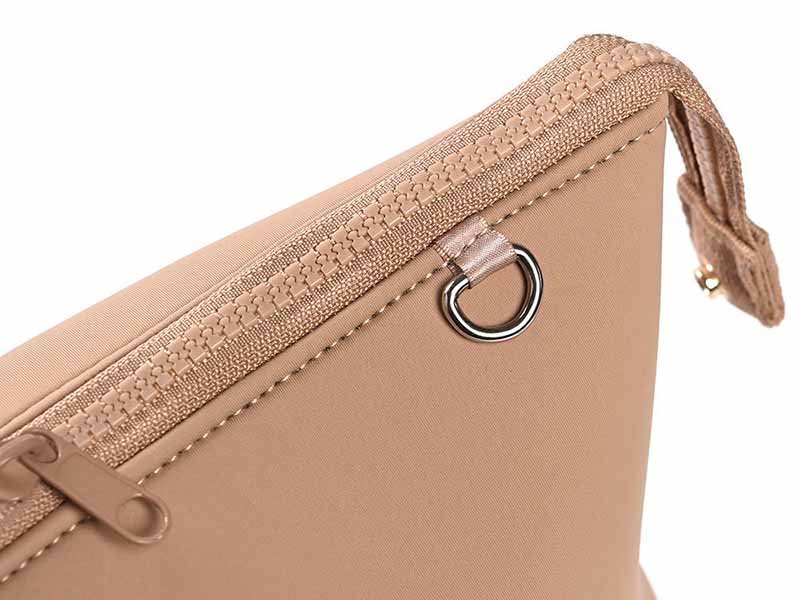
The most commonly used zippers in neoprene makeup bag manufacturing include nylon coil zippers, metal zippers, and waterproof zippers. Each type offers different advantages in flexibility, durability, appearance, and cost.
Choosing the right zipper is one of the most important decisions because it directly affects product lifespan and customer satisfaction.
Which Zipper Types Work Best?
Each zipper type serves different needs:
| Zipper Type | Flexibility | Durability | Cost | Best Use |
|---|---|---|---|---|
| Nylon coil zipper | High | Good | Low | Most makeup bags |
| Metal zipper | Low | Very high | High | Premium products |
| Plastic molded zipper | Medium | High | Medium | Structured bags |
| Waterproof zipper | Medium | High | High | Travel and wet environments |
Nylon coil zippers are the most widely used because they bend easily with neoprene and provide smooth operation.
Metal zippers look more premium but are less flexible, which can be a disadvantage for soft neoprene bags.
What Makes a Zipper Durable?
Durability depends on several factors:
- Zipper teeth material
- Tape quality
- Slider strength
- Manufacturing precision
A durable zipper should pass:
- Repeated open-close testing (5,000–10,000 cycles)
- Load testing under stress
- Smoothness testing without snagging
Zipper quality comparison:
| Quality Level | Expected Lifespan |
|---|---|
| Low-grade zipper | 1–3 months |
| Standard zipper | 6–12 months |
| High-quality zipper | 1–3 years |
Investing in better zipper quality often has a much higher return than upgrading decorative features.
Are Waterproof Zippers Necessary?
Waterproof zippers are not always required, but they are useful in certain cases.
Best scenarios for waterproof zippers:
- Travel makeup bags
- Gym or outdoor use
- Products exposed to moisture
Advantages:
- Prevents liquid leakage
- Adds premium appearance
- Improves product differentiation
Limitations:
- Higher cost
- Slightly stiffer operation
For standard cosmetic bags, a high-quality nylon zipper is usually sufficient. Waterproof zippers are more suitable for specialized or premium products.
How Do Zippers Affect Product Positioning?
Zippers influence how customers perceive the product.
Example:
| Product Level | Zipper Type |
|---|---|
| Promotional | Basic nylon zipper |
| Mid-range retail | Smooth nylon zipper with custom puller |
| Premium | Metal or waterproof zipper |
A stronger zipper can make the entire bag feel more valuable, even if the material is unchanged.
Why Needs Durable Zippers in Neoprene Makeup Bag Manufacturing?
Durable zippers are essential because they are the most frequently used component in a makeup bag. A weak zipper can fail quickly, making the entire product unusable even if the material and design are good.
How Do Zippers Affect Durability?
Zippers determine how long the bag can be used.
A strong neoprene body without a reliable zipper still results in product failure.
Failure rate comparison:
| Component | Failure Risk |
|---|---|
| Fabric | Low |
| Seams | Medium |
| Zipper | High |
Most customer complaints about cosmetic bags are related to zipper problems.
What Makes Zippers Strong?
Strong zippers require:
- High-quality teeth
- Durable slider
- Reinforced ends
- Proper installation
A combination of these factors ensures long-term performance.
Are Waterproof Zippers Better?
Waterproof zippers provide additional protection and premium feel, but they are not always necessary.
They are better when:
- Product positioning is premium
- Protection is required
- Design supports higher cost
How Do Zippers Improve Use?
Zippers directly affect daily usability:
- Easy access to contents
- Secure closure
- Smooth operation
A good zipper makes the bag feel effortless to use, which increases customer satisfaction.
How to Choose Neoprene Makeup Bag Manufacturing Factory?
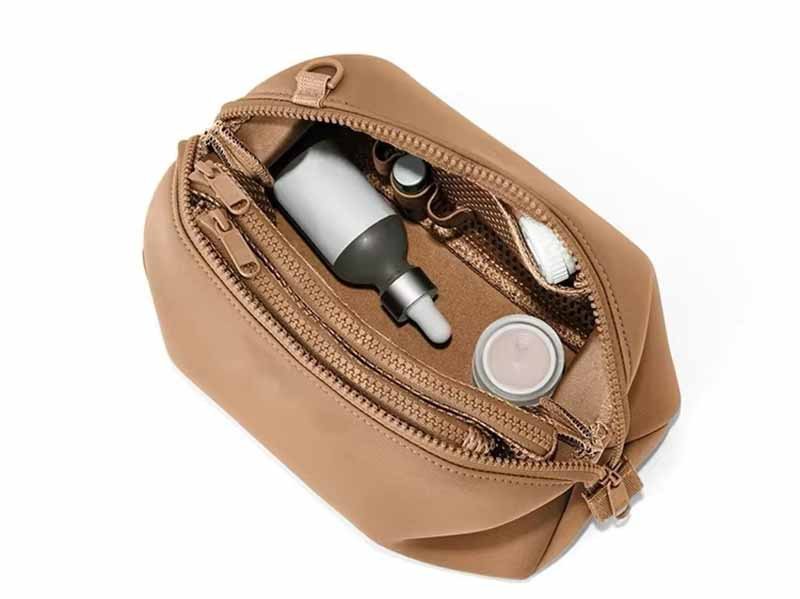
Choosing the right factory for neoprene makeup bag manufacturing is not only about price. It is about whether the supplier can consistently deliver the same quality, control zipper performance, support customization, and help you avoid production risks. A good factory becomes a long-term partner. A weak one often creates hidden costs through delays, defects, and unstable product quality.
A neoprene makeup bag may look simple, but as explained earlier, it combines material behavior, zipper integration, and sewing precision. Not every factory can manage all these parts well. That is why customers need to evaluate suppliers based on real production capability, not just samples or catalog images.
What Experience Matters?
Experience in neoprene product manufacturing is one of the most important factors. Neoprene behaves very differently from cotton, PU, or polyester. Factories that specialize in neoprene products such as wetsuits, sports braces, and protective gear usually have better control over cutting, stitching, and shaping.
Key experience indicators:
- Years working with neoprene materials
- Product range (bags, koozies, wetsuits, braces)
- Ability to handle different thicknesses
- Knowledge of zipper integration with neoprene
A factory that only occasionally produces neoprene bags may struggle with consistency, especially in bulk production.
A factory like Oneier, with more than 18 years of neoprene manufacturing experience, understands how to balance flexibility and structure, which is critical for cosmetic bags.
How Important Is MOQ?
MOQ affects how easily you can start or test a product.
Typical MOQ comparison:
| Factory Type | MOQ |
|---|---|
| Large factory | 3000–5000 pcs |
| Mid-size factory | 500–2000 pcs |
| Flexible manufacturer | 100–500 pcs |
Low MOQ is especially important for:
- New brands
- Product testing
- Seasonal items
- Limited edition designs
With lower MOQ, customers can reduce inventory risk and adjust designs based on real market feedback.
Oneier supports low MOQ customization, which helps small and medium buyers launch products faster.
Which Custom Options Matter?
Customization is where your product becomes different from competitors.
Key customization areas:
- Bag size and shape
- Neoprene thickness
- Zipper type and color
- Logo method (print, emboss, label)
- Inner structure (lining, pockets)
- Puller design
- Packaging
Not all customization adds value. Customers should focus on features that improve usability and brand identity.
Example:
| Custom Feature | Impact |
|---|---|
| Custom zipper puller | Strong branding |
| Better thickness | Better durability |
| Extra decoration | Limited practical value |
The goal is to create a product that looks good and performs well.
How Fast Is Production?
Production speed affects how quickly you can enter the market.
Typical timeline:
| Stage | Time |
|---|---|
| Sample development | 3–7 days |
| Sample revision | 3–5 days |
| Bulk production | 15–30 days |
| Shipping | 7–25 days |
Fast sampling is critical because it allows quick testing and adjustments.
Short lead time also reduces missed opportunities, especially for promotional campaigns or seasonal sales.
Oneier focuses on fast sampling and short lead times to help customers stay competitive.
How Does Quality Control Affect Orders?
Quality control determines whether your product meets expectations consistently.
Poor quality leads to:
- Returns
- Negative reviews
- Lost customers
Strong quality control includes:
- Pre-production confirmation
- In-line inspection
- Final inspection
Consistency is especially important for repeat orders.
A reliable factory ensures that the second and third orders match the first one.
What Trends in Neoprene Makeup Bag Manufacturing?
Neoprene makeup bag manufacturing is evolving as customer expectations increase. Buyers now look beyond basic functionality and focus more on durability, design, sustainability, and user experience.
Are Eco Materials Growing?
Yes, sustainability is becoming more important, even in neoprene products.
Trends include:
- Recycled neoprene
- Reduced packaging
- Longer-lasting products
However, durability is still the most important factor. A bag that lasts longer is often more sustainable than one made with eco material but fails quickly.
How Are Designs Changing?
Design is becoming more functional and user-focused.
Common changes:
- Wider openings for easy access
- Structured bottoms for stability
- Multi-compartment interiors
- Lightweight but durable construction
Customers now expect both convenience and style.
What Do Buyers Want?
Modern buyers want:
- Reliable quality
- Reasonable pricing
- Fast delivery
- Flexible customization
They also prefer suppliers who can provide guidance, not just production.
Are Premium Zippers the Future?
Yes, zipper quality is becoming a key differentiator.
More brands are upgrading to:
- Smoother sliders
- Custom pullers
- Waterproof zippers
A better zipper improves both durability and perceived value.
What Mistakes Should You Avoid in Neoprene Makeup Bag Manufacturing?
Most problems with neoprene makeup bags don’t come from complicated design—they come from small decisions made too quickly at the beginning. Customers often focus on price, appearance, or delivery time, but overlook details like thickness, zipper grade, and construction method. These are exactly the areas that determine whether the product performs well after a few weeks of use.
A well-made neoprene makeup bag should open smoothly, hold its shape, resist daily wear, and keep a clean look over time. When something goes wrong, it usually traces back to unclear specifications, rushed sampling, or choosing the wrong supplier for the job.
Below are the most common mistakes and how they affect real orders.
Choosing Price First Instead of Specifications
One of the most common mistakes is comparing suppliers only by unit price. Two factories may both quote for a “neoprene makeup bag,” but the actual products can be very different in thickness, zipper quality, and construction.
Typical hidden differences behind a lower price:
- Thinner neoprene (2mm instead of 3mm)
- Lower-grade zipper with shorter lifespan
- Fewer stitches per inch (weaker seams)
- Less strict quality control
Example comparison:
| Specification | Low-Cost Option | Balanced Option |
|---|---|---|
| Thickness | 2mm | 3mm |
| Zipper | Basic | Reinforced nylon |
| Stitching | Loose | Standard density |
| Unit Cost | Lower | Slightly higher |
| Lifespan | 1–3 months | 6–12+ months |
Saving 10–15% on cost can result in much higher return rates and customer complaints. For most brands, a slightly higher cost with better specifications leads to better long-term value.
Ignoring Zipper Quality
Zippers are the most frequently used part of a makeup bag. When they fail, the entire product becomes unusable.
Common zipper-related mistakes:
- Choosing low-grade zipper to reduce cost
- Not reinforcing zipper ends
- Using zipper not suited for neoprene thickness
- Skipping zipper testing
Real impact:
| Zipper Quality | Typical Outcome |
|---|---|
| Low-grade | Breaks within weeks |
| Standard | Works for light use |
| High-quality | Long-term daily use |
Most negative reviews for cosmetic bags are related to zipper failure. Investing in a better zipper usually costs less than dealing with returns and lost customers.
Skipping Proper Sample Testing
Approving a sample without real testing is a risky step.
Many customers only check:
- Appearance
- Size
- Logo
But they don’t test:
- Zipper smoothness over multiple uses
- Bag shape when filled
- Stitch strength under load
Recommended sample tests:
| Test | Method |
|---|---|
| Zipper test | Open/close 30–50 times |
| Load test | Fill with real products |
| Shape test | Place on flat surface |
| Handling test | Put in and out of bag |
Skipping these tests often leads to bulk production issues that are expensive to fix later.
Unclear Specifications Before Production
Lack of clear specifications is one of the biggest causes of inconsistent production.
Important details that must be confirmed:
- Thickness (e.g., 3mm ± tolerance)
- Size (length, width, height)
- Zipper type and color
- Logo method and position
- Stitching standard
- Packaging method
Without clear specs, factories may interpret requirements differently.
Example:
| Item | Without Clear Spec | With Clear Spec |
|---|---|---|
| Thickness | “Medium” | 3mm neoprene |
| Zipper | “Good quality” | Nylon coil zipper with reinforcement |
| Size | “Approximate” | 20×12×8 cm |
Clear specifications reduce misunderstanding and improve consistency.
Choosing the Wrong Factory
Not every factory is experienced in neoprene production. Some factories mainly produce fabric bags and may not fully understand neoprene behavior.
Common issues with inexperienced factories:
- Poor control of neoprene cutting
- Weak zipper integration
- Inconsistent shape in bulk production
- Difficulty handling thicker materials
Factory comparison:
| Capability | General Bag Factory | Neoprene Specialist |
|---|---|---|
| Material control | Medium | High |
| Zipper integration | Basic | Advanced |
| Consistency | Medium | High |
Working with a factory that specializes in neoprene products significantly reduces risk.
Overlooking Real Use Scenarios
Many designs look good on paper but don’t work well in real use.
Common design mistakes:
- Opening too small for easy access
- Bag too soft to hold shape
- Zipper difficult to operate when full
- No internal structure for organization
Customers should always consider:
- What items will go inside the bag
- How often it will be used
- Whether it needs to stand upright
- Whether it will be used during travel
Design should match real usage, not just visual style.
Ignoring Quality Control in Bulk Production
Some customers assume that once the sample is approved, production will automatically match it. This is not always the case.
Common bulk issues:
- Size variation
- Zipper alignment inconsistency
- Stitching differences
- Surface defects
Basic quality control checklist:
| Check Item | Standard |
|---|---|
| Size tolerance | ±3–5mm |
| Zipper function | Smooth operation |
| Stitch quality | No loose threads |
| Appearance | Clean and consistent |
Factories with strong quality control systems reduce these risks significantly.
Adding Too Many Unnecessary Features
Some customers try to add too many features in one product:
- Extra compartments
- Complex shapes
- Decorative elements
This can lead to:
- Higher cost
- Longer production time
- More production errors
A simpler, well-executed design often performs better than a complex one.
Not Planning for Reorders
A successful product usually leads to repeat orders. However, some customers do not plan for consistency.
Key points for reorders:
- Keep the same material source
- Maintain the same specifications
- Work with the same factory
Inconsistent reorders can lead to:
- Different feel
- Color variation
- Customer dissatisfaction
How Can Oneier Help You Build Better Neoprene Makeup Bags?
Oneier is a specialized neoprene manufacturer with over 18 years of experience in product development and production. The company supports a wide range of neoprene products, including makeup bags, koozies, sports supports, medical braces, and wetsuits.
What makes Oneier different is the focus on both product performance and customer needs. Instead of simply producing bags, the team helps customers choose the right materials, structure, and zipper solutions based on real usage scenarios.
Final Call to Action
If you are planning to develop a neoprene makeup bag that stands out in quality, durability, and design, now is the right time to start.
The team will help you turn your idea into a working sample quickly and guide you through production with clear and reliable support.
A good makeup bag is not just about appearance. It is about how it performs every day in your customer’s hands. If you want a product that customers keep using instead of replacing, work with a manufacturer who understands every detail behind it.
Send your inquiry to Oneier today and start building your custom neoprene makeup bag.