Skip to content
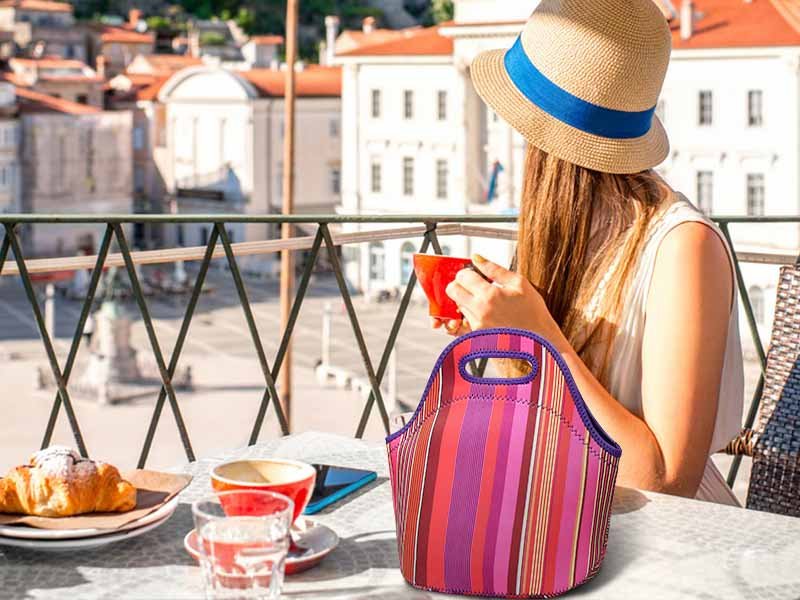
A neoprene lunch tote often looks simple enough that people assume it is an easy product to make. It is soft, flexible, lightweight, and familiar. But once a brand actually starts developing one, the hidden complexity shows up very quickly. Why does one tote hold its shape better while another turns loose and saggy after a few weeks? Why do some neoprene lunch totes feel cleaner, stronger, and more premium in the hand, while others look bulky, smell heavier, or start failing at the seams? Why do certain products keep food cooler longer even when the exterior looks almost identical? The answer is almost never “just the material.” It is the combination of neoprene grade, foam thickness, lamination quality, pattern design, stitching control, zipper construction, and finishing details that creates the final result.
Neoprene lunch tote manufacturing is the process of developing and producing insulated lunch totes using laminated neoprene sheets, usually made with foam rubber in the middle and fabric layers on the outside. The manufacturing process includes material selection, thickness planning, pattern development, cutting, printing, stitching, reinforcement, inspection, and packaging. A good neoprene lunch tote is not only soft and attractive. It must also deliver the right balance of insulation, stretch control, durability, shape retention, washability, and cost efficiency.
This is exactly why so many lunch tote projects look promising in the sample room but perform very differently after launch. A lunch tote can appear attractive in photos, yet fail once customers start carrying lunch boxes, soup containers, drinks, fruit cups, and ice packs every day. The handles may stretch, the zipper wave, the seams pucker, or the body lose its clean shape. In one real-world development scenario, a brand approved a nice-looking sample, only to discover later that the bulk version felt much softer and less supportive than the original sample. The reason was a small change in neoprene density and lamination. That one hidden adjustment changed the whole product. This is why understanding the manufacturing side matters before the first order is placed.
What Defines Neoprene Lunch Tote Manufacturing?
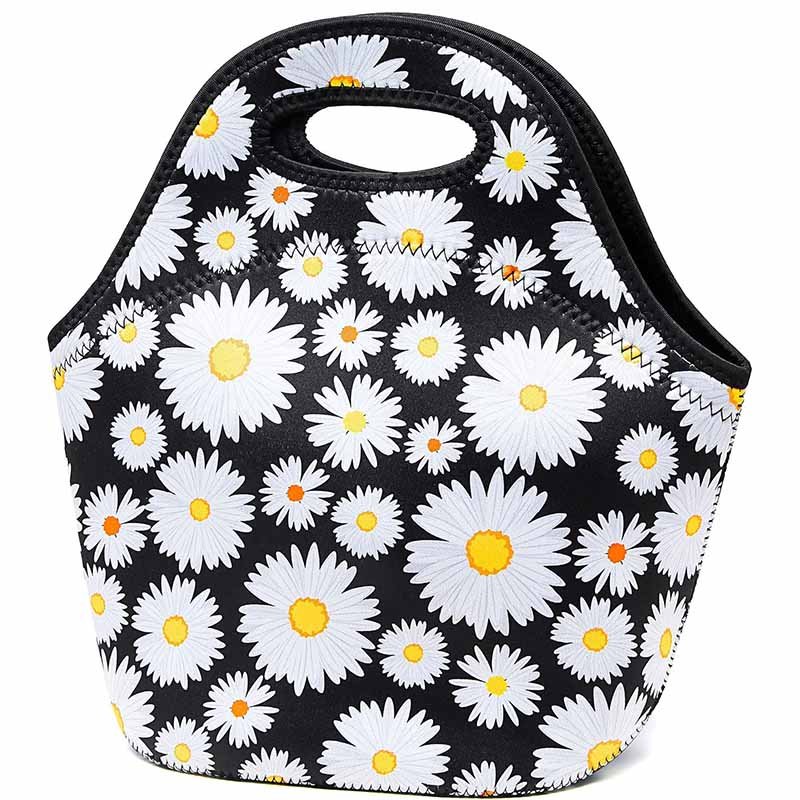
Neoprene lunch tote manufacturing is defined by how neoprene foam, outer laminates, structure planning, and production control work together to create a lunch tote that is insulated, flexible, durable, and suitable for daily repeated use. The real value is not just making the tote look good. It is making sure the tote performs well after weeks and months of actual carrying, cleaning, stretching, and temperature changes.
What is neoprene lunch tote manufacturing
Neoprene lunch tote manufacturing starts with a material system that behaves very differently from woven fabrics such as canvas, polyester, or nylon. Neoprene is not simply “soft fabric.” It is a foam-based material, usually built with a rubber foam core and textile laminates bonded to one or both sides. That construction gives it several useful properties at the same time: cushioning, flexibility, moderate insulation, water resistance, and a smooth hand feel that many customers immediately associate with modern lunch bags and drink carriers.
A neoprene lunch tote is usually developed around these core layers:
- outer laminated fabric surface for color, printability, abrasion resistance, and visual texture
- middle neoprene foam layer for insulation, cushioning, and body
- inner laminated layer for support, cleanability, and structure control
This layered build is what makes the product different from standard sewn lunch bags. In traditional lunch totes, insulation may come from aluminum foil, PE foam, EPE foam, or separate padding layers. In neoprene lunch totes, the insulation and the soft body are part of the main material itself. That changes the whole production logic.
From a manufacturing perspective, neoprene lunch tote development is not only about sewing. It usually involves:
- selecting the right neoprene density
- deciding the right thickness for use scenario
- checking whether the lamination is strong enough
- confirming whether the material recovers after folding and stretching
- balancing softness and shape retention
The table below shows how a neoprene lunch tote is structurally different from more basic lunch bag categories:
| Product Type | Main Body Material | Core Performance | Main Manufacturing Focus |
|---|---|---|---|
| Neoprene lunch tote | Laminated neoprene foam | Stretch + insulation + softness | Foam control, lamination, sewing |
| Polyester lunch bag | Woven polyester + foam/foil | Structure + surface durability | Fabric sewing, insulation assembly |
| Canvas lunch tote | Canvas + lining | Style + basic carrying | Sewing, washing, shape control |
| EVA lunch case | Molded EVA shell | Strong shape + protection | Molding, lamination, zipper fitting |
This is why an experienced neoprene factory matters. A normal bag factory may be good at woven fabrics but still struggle with how neoprene stretches, rebounds, compresses, and reacts during cutting and stitching. Oneier focuses on neoprene material development and neoprene product manufacturing, so the logic begins at the material level instead of only at the sewing line. That makes a big difference when the goal is to create a lunch tote that feels soft but still works well every day.
Why neoprene lunch tote manufacturing matters
It matters because customers use lunch totes in a much harsher way than many brands expect. A lunch tote is opened and closed frequently. It is carried by one hand, packed tightly into backpacks or office bags, placed in cars, put into refrigerators, set on wet surfaces, and exposed to heat, cold, spills, oils, and repeated wiping. A neoprene lunch tote that feels fine in the first week may start showing problems very quickly if the manufacturing quality is weak.
The most common customer complaints usually come from a few areas:
- the bag stretches too much and loses its shape
- the zipper opening becomes wavy or distorted
- the seams show stress after repeated loading
- the handle joint feels weak when carrying bottles or glass containers
- the insulation feels less effective than expected
- the material smell remains strong because low-grade neoprene was used
These issues often trace back to manufacturing decisions that are invisible in product photos. For example, two lunch totes may look almost the same online, but one uses more stable 3 mm laminated neoprene with better stitching tension and stronger handle reinforcement, while the other uses softer low-density foam with less stable lamination. Once customers start daily use, the difference becomes obvious.
The financial effect can be significant. Lower-quality neoprene lunch totes may cost less upfront, but they often create hidden costs later through returns, replacements, low reviews, and weaker repeat sales.
| Manufacturing Level | Common Product Result | Estimated Complaint Risk | Market Effect |
|---|---|---|---|
| Low control | Stretching, seam issues, unstable feel | High | Weak reviews, lower trust |
| Mid control | Acceptable use, some variation | Medium | Usable, but less distinctive |
| Strong control | Better shape, better feel, better finish | Lower | Stronger customer confidence |
For brands, this is a product where touch and daily experience matter a lot. People interact with lunch totes in a practical, personal way. They notice whether the zipper is smooth, whether the tote feels too floppy, whether the handles are comfortable, and whether the bag still looks neat after being folded and carried repeatedly. Good neoprene lunch tote manufacturing therefore affects much more than production quality. It affects how premium the brand feels in the customer’s daily routine.
This is also where Oneier’s experience helps. With more than 18 years of experience in neoprene material research, development, and production, plus the ability to customize different neoprene products such as bags, koozies, sports supports, medical supports, and wetsuits, Oneier understands how neoprene behaves across different uses. That matters because lunch totes need a different balance from wetsuits or bottle sleeves. The material cannot simply be “good neoprene.” It has to be the right neoprene for the product.
How neoprene lunch tote works
A neoprene lunch tote works by using foam structure and material density to slow down temperature transfer while also cushioning the contents and allowing the bag to flex around containers of different shapes. The key idea is simple: neoprene contains closed cells filled with gas. These tiny cells reduce direct heat exchange compared with plain woven fabric. That is why neoprene feels warmer, thicker, and more insulating than a basic single-layer fabric.
In daily use, the performance of the lunch tote depends on several factors working together:
- neoprene thickness
- foam density
- bag volume
- closure design
- amount of empty air inside the tote
- whether ice packs are used
- how long the product needs to maintain temperature
A lot of customers misunderstand insulation and expect neoprene alone to perform like a hard cooler. That is not the correct comparison. A neoprene lunch tote is better understood as a soft insulated carry solution. It is well suited for school lunches, office meals, snacks, drinks, and short-to-medium daily transport, especially when paired with cold packs or chilled containers.
The table below gives a clearer view of how design choices influence real use performance:
| Factor | Lower Level Result | Higher Level Result |
|---|---|---|
| Thickness | Less insulation, lighter feel | Better insulation, more body |
| Zipper closure | Better heat retention than open top | Cleaner closure, more practical use |
| Empty internal space | Faster temperature loss | Better fit improves efficiency |
| Ice pack use | Moderate cooling only | Stronger cooling duration |
Most commercial neoprene lunch totes use 3 mm or 5 mm neoprene. A 3 mm tote is lighter, easier to fold, and more common for daily lunch carry. A 5 mm tote usually feels thicker, slightly firmer, and offers improved cushioning and somewhat better thermal performance, though it also increases material cost and shipping weight.
Another important point is that neoprene lunch totes work not only because of temperature control, but also because of flexibility. They can stretch around lunch boxes, fruit containers, baby bottles, beverage cans, or meal-prep containers without needing a rigid shell. That makes them convenient for real life. The best-performing product is usually not the thickest one, but the one where size, thickness, closure, and use case are matched correctly.
What makes neoprene lunch tote different
What makes a neoprene lunch tote different is that it combines softness, stretch, cushioning, and moderate insulation in one main body material. Most lunch bags rely on multiple internal layers to create this effect. Neoprene gives a large part of that functionality directly from the main sheet material itself. That changes the feel of the product, the way it is manufactured, and the way customers use it.
Compared with woven lunch bags, neoprene lunch totes usually offer these practical differences:
- more flexible fit for different container shapes
- softer hand feel and more casual everyday look
- easier compression when stored or packed
- cushioning effect for bottles and meal boxes
- cleaner silhouette without too many layered materials
That said, neoprene is not automatically the best choice for every lunch bag project. It has strengths, but also trade-offs. It is softer than rigid lunch boxes, so shape retention depends more on pattern design and thickness. It may also feel warmer or bulkier than thin fabric bags. For some retail targets, that is a benefit. For others, it may not be the right positioning.
The comparison below helps show where neoprene stands:
| Feature | Neoprene Lunch Tote | Polyester Lunch Bag | Hard Lunch Box |
|---|---|---|---|
| Softness | High | Low to medium | Very low |
| Flexibility | High | Low | Very low |
| Shape retention | Medium | Medium | High |
| Insulation support | Medium | Depends on inner layers | Higher with rigid walls |
| Portability | High | High | Lower |
| Storage when empty | Easy to fold | Moderate | Bulky |
For many brands, neoprene lunch totes work especially well when the target customer values convenience, softness, modern look, portability, and everyday ease of use. They are often attractive for office workers, school use, baby food carry, short commutes, meal-prep users, and gift-oriented product lines. They also support strong customization opportunities because the material works well with different colors, prints, zipper styles, and branded design directions.
For Oneier, this category fits naturally into a broader neoprene manufacturing system. Since the company already works with many neoprene product categories and has strong capabilities in material development, design, sampling, production, and custom logo manufacturing, it can help customers adjust the lunch tote not only from a style perspective but also from a performance perspective. That is often where the most meaningful product improvement happens.
Which Materials Are Used in Neoprene Lunch Tote Manufacturing?
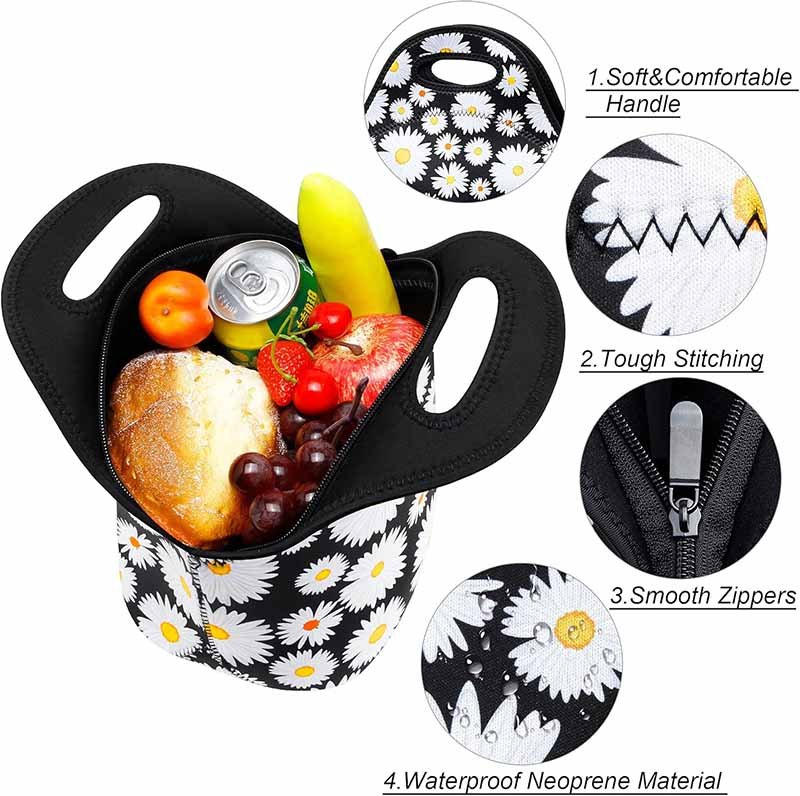
Neoprene lunch tote manufacturing relies on a combination of neoprene foam, laminated fabric layers, inner linings, and functional accessories such as zippers and handles. Each material choice directly affects insulation, durability, flexibility, appearance, and cost. A well-designed lunch tote uses a balanced material system rather than focusing on a single component.
What is neoprene in lunch tote manufacturing
Neoprene used in lunch tote manufacturing is typically SBR (Styrene-Butadiene Rubber) or CR (Chloroprene Rubber) foam laminated with fabric layers. It is produced in sheets and then cut into patterns for bag construction.
Standard neoprene structure:
- outer fabric layer (polyester or nylon jersey)
- middle foam layer (closed-cell rubber)
- inner fabric or coating layer
Key material characteristics:
- closed-cell structure → helps reduce heat transfer
- elasticity → allows stretching and shape adaptation
- cushioning → protects containers inside
- water resistance → resists light moisture
Types of neoprene:
| Type | Feature | Application |
|---|---|---|
| SBR neoprene | Cost-effective, widely used | Standard lunch totes |
| CR neoprene | Better durability, odor control | Premium products |
Another factor is foam density. Higher density neoprene:
- feels firmer
- recovers shape better
- lasts longer
Lower density neoprene:
- feels softer
- stretches more easily
- may lose shape faster
This is why two products with the same thickness can feel completely different.
Which thickness fits neoprene lunch tote
Thickness is one of the most important decisions in neoprene lunch tote manufacturing. It directly affects insulation, structure, flexibility, and cost.
Common thickness options:
| Thickness | Feel | Use Case |
|---|---|---|
| 2 mm | Light, very flexible | Compact lunch bags |
| 3 mm | Balanced | Most standard lunch totes |
| 5 mm | Thick, more structured | Premium insulated totes |
Key differences:
- 2 mm neoprene
- lightweight and easy to fold
- lower insulation performance
- suitable for light use
- 3 mm neoprene
- best balance between weight and performance
- widely used for daily lunch totes
- good stretch and recovery
- 5 mm neoprene
- better insulation and cushioning
- stronger shape retention
- higher material cost and shipping weight
Selection logic:
- for everyday office/school use → 3 mm is most common
- for premium or cooler-style bags → 5 mm preferred
- for compact or fashion-oriented totes → 2 mm possible
Choosing the wrong thickness often leads to product mismatch:
- too thin → poor insulation, weak structure
- too thick → bulky feel, higher cost
How lining supports neoprene lunch tote
Although neoprene itself has a laminated surface, many lunch totes include additional lining or inner treatment to improve usability and hygiene.
Common lining approaches:
- laminated inner surface (easy wipe cleaning)
- PEVA or aluminum film lining (enhanced insulation)
- fabric lining (added structure and pockets)
Comparison:
| Lining Type | Benefit | Limitation |
|---|---|---|
| Laminated neoprene | Simple, washable | Moderate insulation |
| PEVA/aluminum | Better insulation | Less flexible |
| Fabric lining | Better structure | Less water-resistant |
A good lining improves:
- cleaning convenience
- odor control
- internal structure stability
Poor lining choices can cause:
- difficult cleaning
- faster wear
- trapped moisture
In high-quality production, lining is selected based on real use scenarios, not just cost.
Which accessories complete neoprene lunch tote
Accessories may seem secondary, but they strongly influence durability and user experience.
Key components include:
- zippers
- handles
- stitching thread
- binding edges
Zippers
| Type | Strength | Use |
|---|---|---|
| Nylon zipper | Flexible | Most lunch totes |
| Plastic zipper | Stronger teeth | Heavy-duty use |
Important factors:
- zipper smoothness
- tape strength
- resistance to deformation
Handles
Handles are usually made from:
- neoprene extension
- nylon webbing
- reinforced fabric straps
Handle reinforcement methods:
- bartack stitching
- cross stitching
- double-layer construction
Weak handles are one of the most common failure points in lunch totes.
How Does Neoprene Lunch Tote Manufacturing Work?
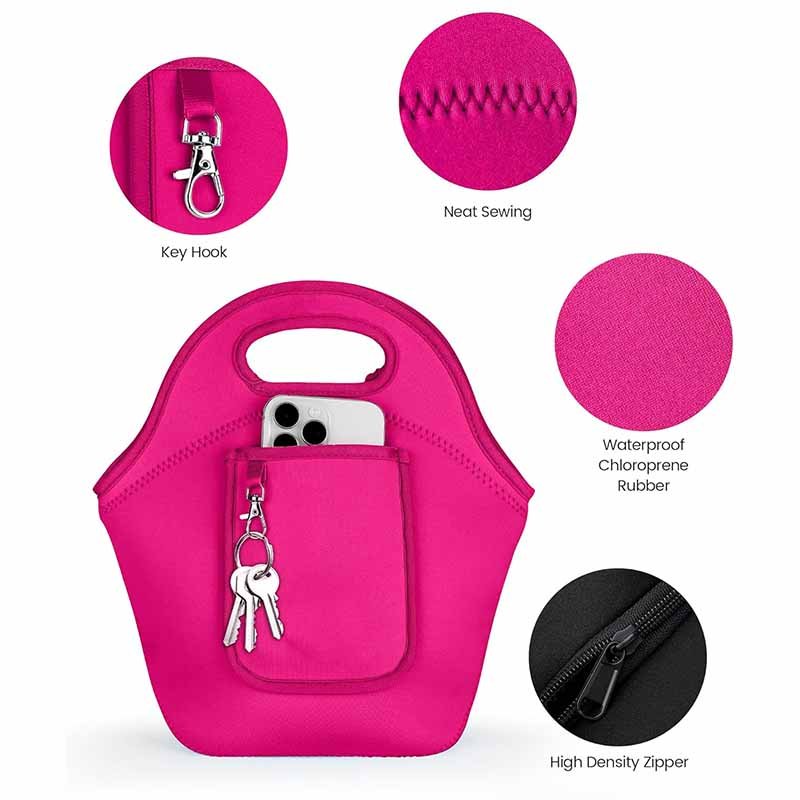
Neoprene lunch tote manufacturing involves design development, material preparation, cutting, printing, stitching, and quality control. Unlike standard fabric bags, neoprene production requires careful handling of stretchable foam material to ensure clean cuts, stable seams, and consistent shape.
How design starts in neoprene lunch tote
Design begins with defining real use conditions.
Key parameters:
- bag size (small, medium, large)
- capacity (number of containers)
- closure type (zipper or open top)
- handle style
- target thickness
- branding requirements
At this stage, experienced factories help optimize:
- proportions (height vs width vs depth)
- stretch allowance
- seam placement
A common mistake is designing neoprene bags like rigid bags. Neoprene stretches, so pattern design must account for expansion.
How cutting works in neoprene lunch tote
Cutting neoprene is more complex than cutting woven fabric because of its elasticity and thickness.
Methods:
- die cutting (common for bulk production)
- CNC cutting (higher precision)
- manual cutting (sampling stage)
Key challenges:
- controlling edge smoothness
- avoiding material deformation
- maintaining consistent dimensions
Comparison:
| Method | Accuracy | Speed | Use |
|---|---|---|---|
| Manual | Medium | Slow | Samples |
| Die cutting | High | Fast | Bulk |
| CNC | Very high | Medium | Complex shapes |
Poor cutting leads to:
- uneven edges
- mismatched panels
- assembly issues
How stitching works in neoprene lunch tote
Stitching neoprene requires special handling because the material is thicker and stretchable.
Common techniques:
- flatlock stitching (clean, flexible seams)
- overlock stitching (edge finishing)
- binding seams (improved durability)
Challenges:
- controlling tension to avoid puckering
- preventing seam breakage under stretch
- maintaining consistent seam alignment
Typical reinforcement areas:
- handle joints
- zipper ends
- bottom corners
Thread selection:
- polyester thread for strength
- thicker thread for heavy-duty designs
How QC works in neoprene lunch tote
Quality control ensures that each batch meets performance expectations.
Main inspection points:
- Material inspection
- thickness consistency
- lamination quality
- odor level
- Production inspection
- stitching quality
- alignment
- logo placement
- Final inspection
- zipper performance
- shape consistency
- overall appearance
Functional testing:
- stretch recovery test
- load test
- zipper cycle test
Typical defect control:
| Issue | Cause |
|---|---|
| Shape loss | Low-density neoprene |
| Seam failure | Poor stitching tension |
| Delamination | Weak bonding |
| Uneven edges | Poor cutting |
Factories like Oneier apply structured QC systems to maintain consistency across production.
What Features Define Neoprene Lunch Tote Quality?
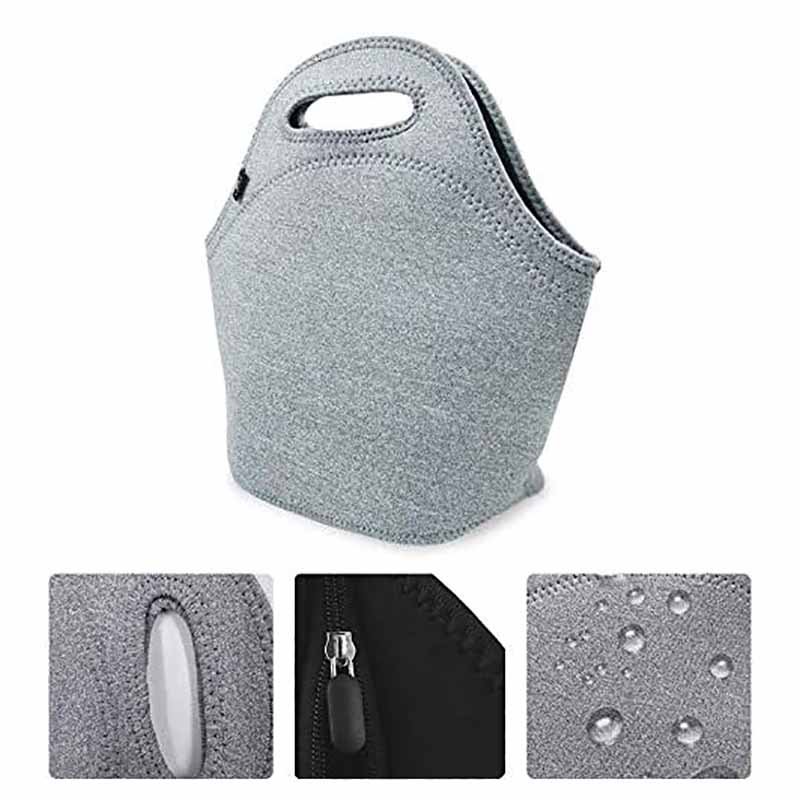
Neoprene lunch tote quality is defined by insulation performance, shape retention, durability, stitching strength, and daily usability. A high-quality tote should keep food temperature stable for several hours, maintain its form after repeated use, resist stretching, and remain easy to clean. These features come from the right combination of material choice, structural design, and production control.
How insulation works in neoprene lunch tote
Insulation is one of the main reasons customers choose neoprene lunch totes. The closed-cell foam inside neoprene reduces heat transfer, helping maintain the temperature of food and drinks.
However, real insulation performance depends on more than just the material.
Key factors affecting insulation:
- neoprene thickness
- internal air space
- closure design
- external temperature
- use of ice packs
Performance comparison:
| Setup | Estimated Cooling Retention |
|---|---|
| 2 mm neoprene, no zipper | 1–2 hours |
| 3 mm neoprene, zipper closure | 2–4 hours |
| 5 mm neoprene, zipper + ice pack | 4–6+ hours |
Important points:
- neoprene slows heat transfer, but does not stop it completely
- zipper closure improves insulation significantly
- smaller internal space performs better
In real use, customers get the best results when neoprene is combined with ice packs or pre-chilled items.
How durability is built in neoprene lunch tote
Durability is a combination of material quality, construction method, and reinforcement.
Key durability factors:
- neoprene density
- lamination strength
- stitching quality
- handle reinforcement
Typical stress areas:
- handle connections
- zipper ends
- bottom corners
Reinforcement techniques:
- bartack stitching on handles
- double stitching at seams
- binding edges for added strength
Durability comparison:
| Factor | Low Quality | High Quality |
|---|---|---|
| Neoprene density | Soft, overstretching | Firm, stable |
| Stitching | Loose, uneven | Tight, consistent |
| Reinforcement | Minimal | Reinforced joints |
A durable neoprene lunch tote should withstand daily loading of:
- food containers
- bottles
- snacks
without losing shape or breaking seams.
How waterproof works in neoprene lunch tote
Neoprene itself is water-resistant, but not fully waterproof.
Water performance depends on:
- surface lamination
- seam construction
- closure design
Water resistance levels:
| Level | Description |
|---|---|
| Basic | Resists light splashes |
| Moderate | Handles minor spills |
| High | Requires sealed seams |
Common misunderstanding:
- neoprene blocks water penetration through the material
- but stitching holes allow moisture entry
To improve water resistance:
- use laminated inner surfaces
- reduce exposed seams
- design better closures
For lunch totes, full waterproofing is rarely necessary, but good spill resistance is important.
How flexibility improves neoprene lunch tote
Flexibility is one of neoprene’s biggest advantages.
Benefits:
- adapts to different container shapes
- allows compact storage when empty
- improves carrying comfort
However, flexibility must be controlled.
Too much stretch leads to:
- shape loss
- sagging appearance
- reduced perceived quality
Balanced flexibility comes from:
- correct neoprene thickness
- proper pattern design
- reinforcement at key areas
The goal is not maximum softness, but controlled flexibility.
How to Choose Neoprene Lunch Tote Manufacturing Partner?
Choosing the right neoprene lunch tote manufacturing partner determines product quality, consistency, and long-term brand success. A reliable factory should understand neoprene material behavior, support customization, and maintain stable production standards.
What to check in neoprene lunch tote factory
When selecting a factory, focus on real capabilities rather than just price.
Key evaluation points:
- experience with neoprene products
- material sourcing options
- sampling capability
- production consistency
- quality control system
Factory comparison:
| Factory Type | Strength | Risk |
|---|---|---|
| Trading company | Easy communication | Limited production control |
| Small workshop | Low cost | Inconsistent quality |
| Specialized neoprene factory | Strong expertise | Higher reliability |
A factory experienced in neoprene, like Oneier, understands material behavior and avoids common production mistakes.
How MOQ works in neoprene lunch tote
MOQ depends on complexity and customization.
Typical ranges:
| Product Type | MOQ |
|---|---|
| Simple design | 100–300 pcs |
| Custom logo | 200–500 pcs |
| Complex structure | 300–1000 pcs |
Oneier supports low MOQ starting from 50 pcs, which is useful for:
- new product testing
- small brands
- Amazon sellers
Lower MOQ reduces risk but may slightly increase unit cost.
How customization works in neoprene lunch tote
Customization allows brands to differentiate products.
Main customization areas:
Material
- thickness (2 mm / 3 mm / 5 mm)
- neoprene type (SBR / CR)
Design
- size and shape
- compartments
- handle style
Branding
- sublimation printing
- screen printing
- embossed logos
Packaging
- polybags
- retail boxes
- custom labels
Customization overview:
| Area | Options |
|---|---|
| Material | Thickness, density |
| Design | Size, structure |
| Branding | Print, emboss |
| Packaging | Custom retail |
How OEM works in neoprene lunch tote
OEM production allows brands to create their own product line.
Standard workflow:
- Design or reference submission
- Material selection
- Sample development (5–7 days)
- Sample approval
- Bulk production (25–30 days)
- Inspection and shipping
Timeline:
| Stage | Time |
|---|---|
| Sampling | 5–7 days |
| Production | 25–30 days |
A good OEM partner will:
- optimize design for manufacturing
- improve durability
- control cost
Work With Oneier to Build Your Neoprene Lunch Tote
At this point, one thing becomes clear: a successful neoprene lunch tote is not just about choosing neoprene. It is about understanding how material, thickness, structure, and production work together to create a product that performs well in real daily use.
Oneier brings over 18 years of experience in neoprene material development and product manufacturing.
we help brands create products that are not only visually appealing, but also reliable in the market.
Whether you are launching a new lunch tote or improving an existing product, the right manufacturing partner makes a measurable difference.
Send us your design, idea, or reference product today. Oneier will help you turn it into a high-quality neoprene lunch tote that your customers will use every day with confidence.