
What Are Neoprene Golf Iron Covers?
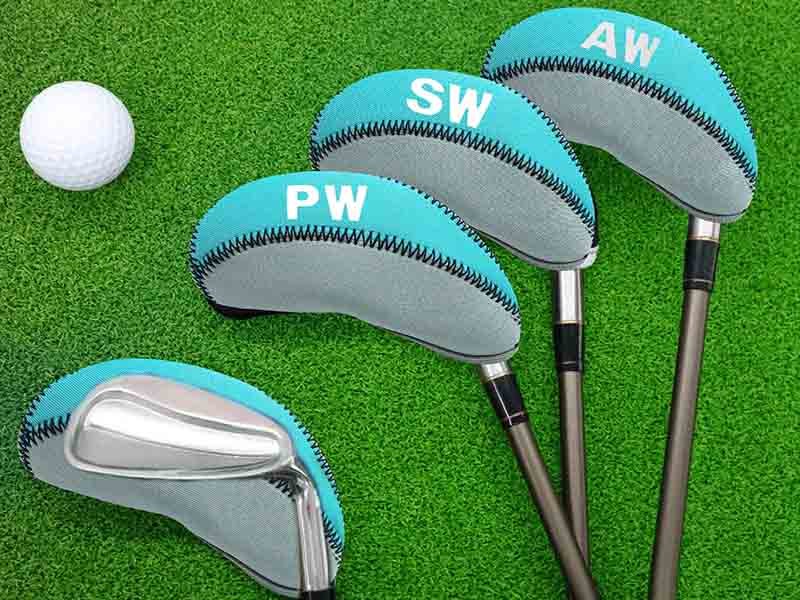
You’ve probably seen golfers slipping snug sleeves over their irons and wedges and wondered: are those really necessary—or just another accessory? For many players and pro shops, neoprene iron covers are a quiet upgrade that pays for itself by reducing clatter, preventing nicks, and keeping sets looking new for longer. They’re also a branding canvas for teams, clubs, and retailers. If you’re considering custom or wholesale iron covers, materials, thickness, closures, and printing options matter more than you think.
Neoprene golf iron covers are soft, stretchable sleeves made from closed-cell neoprene that slip over iron and wedge heads to prevent scratches, reduce bag chatter, and keep clubs dry and quiet. Compared with leather, PU, silicone, or knit options, neoprene balances impact protection, water resistance, weight, and cost, with easy branding and low MOQs. Choose thickness (2–5 mm), closure (slip-on, Velcro, magnetic, zipper), and clear numbering for fast club selection.
Hooked? Great—because tiny spec choices (millimeters of thickness, stitch type, or magnet strength) determine whether covers feel premium and last seasons—or stretch out and tear by summer. Below is a practical, buyer-first guide you can use to spec, compare, maintain, and source neoprene iron covers with confidence.
What are Neoprene Golf Iron Covers and What Problems do They Solve?
Neoprene iron covers shield iron and wedge faces from dings, finish wear, and moisture, cutting bag chatter and resale-killing scratches. They quiet your carry, keep grooves cleaner, and protect delicate finishes like black PVD. For retailers and teams, they also create brandable real estate with logos, numbers, and colorways—without the weight, cost, or moisture issues of some alternatives.
Golf bags are noisy, mobile metal ecosystems. Heads collide on every step or cart bump (“bag chatter”), accelerating micro-denting, paint loss, and toe/leading-edge abrasion. Grooves pick up grit, ferrules scuff, and satin or dark finishes go glossy prematurely. Neoprene—closed-cell, buoyant, and slightly compressive—solves three pain points:
Impact Damping:
A 3–5 mm neoprene sleeve adds a forgiving interface between heads. While it’s not a helmet, the foam structure attenuates contact energy so chatter marks are notably reduced. Long-term, fewer cosmetic hits typically translate to higher trade-in/resale value and a tidier in-bag look.
Moisture & Dust Barrier:
Closed-cell neoprene resists water ingress better than knit fabrics. After a dewy morning or rain shower, covers limit moisture contact and help keep grooves clean. They won’t replace towel-drying, but they buy time and prevent grit from grinding into faces during the round or ride home.
Noise Control & Etiquette:
Whether you’re walking a muni or playing a twilight match, a quieter bag is simply nicer for you and the group. Neoprene notably reduces clatter, which is why many walkers, push-cart users, and van-lifers swear by them.
From a retailer/team perspective, the smooth surface accepts screen print, heat-transfer, sublimation panels, and logo patches—turning practical protection into a sellable, brandable accessory. For OEM/ODM buyers, the same platform supports SKU variety (numbering, color coding, finishing) without re-engineering the core pattern.
Which Irons and Wedges do They Fit, and What Thickness/Size Should You Choose?
Match cover pattern and size to your set: cavity-backs and game-improvement heads need slightly larger patterns than compact blades. Common thicknesses are 2–3 mm (lightweight, easy on/off) and 4–5 mm (maximum protection). Confirm sole-to-top height and toe-to-heel length, and choose clear numbering (3–9, PW, AW, SW, LW) for pace of play.
Fit drives day-to-day satisfaction. Too tight, and players fight the covers. Too loose, and they twist or slip. Use these practical fit checks:
- Head Profile: Blades (compact), players’ cavities (mid), game-improvement/super-GI (larger).
- Critical Dimensions to Share with Your Supplier:
- Toe-to-heel length
- Sole width and face height
- Topline thickness
- Leading-edge radius vs. sharper profiles (affects seam wear)
Typical Size Guidance
| Iron Type | Head Size Trend | Cover Pattern Note |
|---|---|---|
| 3–5 Iron (Players) | Compact | Standard narrow pattern fits; 2–3 mm feels quickest on/off |
| 6–9 Iron (Players’ Cavity) | Mid | Standard pattern with slightly deeper crown |
| PW/AW/SW/LW (Wedges) | Taller faces, varied soles | Wedge-specific pattern with more face height and deeper toe |
| GI/Super-GI Irons | Larger sole/topline | Request “GI fit” pattern with extra depth/height allowance |
Thickness: Pros & Cons
| Thickness | Protection | Feel/On-Off | Weight | Use Case |
|---|---|---|---|---|
| 2 mm | Light | Very easy | Minimal | Minimalist, blades, frequent on/off |
| 3 mm | Balanced | Easy | Light | Most golfers; best value |
| 4 mm | High | Moderate | Medium | Travel, cart bumps, GI sets |
| 5 mm | Max | Slightly snug | Heavier | Tournament travel, premium protection |
Numbering & Identification
At minimum, print 3–9, PW, AW (or GW), SW, LW. For combo sets, add “U” or “48/50/52/54/56/58/60” as small face or crown marks. For quick picking, some retailers add toe-color coding (e.g., wedges in a distinct color).
Pro Tip for Buyers:
If you sell to multiple profiles, specify two master patterns: “Players/Standard” and “GI/Deep” to cover ~95% of heads with minimal SKU sprawl.
How do Neoprene Covers Compare to Leather, PU, Silicone, and Knit Alternatives?
Neoprene offers best overall balance: strong impact damping, water resistance, low weight, easy branding, and attractive cost/MOQ. Leather looks premium but is heavier and pricier; PU is sleek but less durable in cold cracks; silicone is ultra-durable yet heavy and grabby; knit is breathable and stylish but absorbs water. For wholesale/OEM, neoprene typically wins on value, versatility, and production scalability.
Different materials target different buyer priorities:
| Material | Protection | Water | Weight | Durability | Branding | Cost | Notes |
|---|---|---|---|---|---|---|---|
| Neoprene | High | High | Low | High | Excellent | $$ | Flexible fits; quiet; easy print/panels |
| Leather | Medium-High | Medium | Medium | High (with care) | Emboss/patch | $$$$ | Luxe look; maintenance needed |
| PU (Synthetic Leather) | Medium | Medium | Low-Med | Medium | Great | $$$ | Clean look; watch cold-crack grades |
| Silicone | Very High | High | High | Very High | Molded deboss | $$$ | Durable, but heavier/grabbier in bag |
| Knit (Acrylic/Cotton) | Medium | Low | Low | Medium | Embroidery/patch | $$ | Classic aesthetic; absorbs water |
Why neoprene wins in B2B/OEM:
- Production Flexibility: Panels, piping, patches, and prints are straightforward. You can offer team, pro-shop, and corporate SKUs rapidly.
- Quality/Value Curve: At 3–4 mm, neoprene delivers protection and quietness rivaling thicker silicone—with easier handling and lower freight weight.
- Comfort & Usability: Soft stretch means easier on/off across varied head shapes—reducing return risk.
Where alternatives make sense:
- Leather for boutique/luxury sets with premium packaging.
- Silicone for ultra-rugged rental/fleet environments.
- Knit for heritage looks where moisture is an infrequent concern.
- PU for slick, uniform branding when temperatures are mild and cost must sit below leather.
Do Iron Covers Affect Pace of Play, Course Etiquette, or USGA/R&A Rules?
Iron covers are permitted equipment accessories. They don’t change performance but can slow play if numbering isn’t clear or if closures are fussy. Choose large, high-contrast IDs, easy on/off closures, and keep covers off once a club is pulled for the hole. Replace them between holes or on the next tee to stay courteous and quick.
Etiquette & Pace:
The only real pace risk is time spent hunting numbers or fighting zippers/Velcro. Solve it in the spec:
- High-Contrast Numbers: White on dark, black on light, or reflective silver on color blocks.
- Fast Closures: Slip-on or quality magnets are fastest; Velcro needs good hook density; zippers should be auto-lock and short-throw.
- Routine: Many golfers pop the cover off on the tee, stash it in a pocket, then re-cover at the next tee or after holing out. This keeps the group moving.
Rules:
Headcovers are outside agencies; they don’t alter club characteristics. During a stroke, just make sure no foreign material (like a cover) is intentionally used to influence the shot. That’s common sense and aligns with standard interpretations.
Noise & Courtesy:
One subtle etiquette benefit: noise reduction. Quiet bags are friendlier when greens are close to tees, or when groups stack up. Walkers and push-cart users especially appreciate the calmer soundscape.
Which Closure and ID Style is Best—Zipper, Velcro, Magnetic, or Slip-on Numbering?
For most golfers, slip-on or magnetic covers offer the best speed and durability. Velcro is cost-effective but collects lint; zippers feel secure yet can snag and slow use. Ensure oversized, high-contrast numbering (3–9, PW/AW/SW/LW) and consider color cues for wedges. For travel or rough cart play, 4–5 mm slip-on or zippered patterns maximize retention.
Closure Options: Pros & Watch-outs
| Closure | Speed | Security | Durability | Notes |
|---|---|---|---|---|
| Slip-On (No Closure) | Fastest | Good (fit-dependent) | High | Most popular; spec the pattern correctly |
| Magnetic | Very fast | Good | High | Specify magnet size/gauss; sew into reinforced tabs |
| Velcro (Hook & Loop) | Moderate | Good | Medium | Low cost; can collect lint; use fine-denier loop |
| Zipper | Slowest | Excellent | Medium | Premium feel; add zipper garages and auto-locks |
ID Methods
- Printed Numbers: Most economical; choose UV-stable inks.
- Heat-Transfer/PU Films: Crisp edges and durable.
- Woven/Embroidery Patches: Premium look; add backing to avoid puckering on stretch neoprene.
- Sublimation Panels: Full-color patterns; great for teams/schools.
Specification Tips
- If you choose magnets, ensure bar-tack reinforcement where the magnet tab meets the body.
- For Velcro, specify hook density (e.g., 85–100 hooks/cm²) and loop pile height to balance grip and longevity.
- Zippers: YKK-style coil #3/#4 is sufficient; add zipper garage to prevent scratching and elastic gusset for easier starts.
How do You Clean, Deodorize, and Store Neoprene Covers—and How Long do They Last?
Hand-wash with cool water + mild detergent, rinse thoroughly, and air-dry flat away from heat or direct sun. For odors, use diluted white vinegar or baking soda soaks. Store fully dry in a breathable bag. Lifespan is typically 1–3+ seasons depending on thickness, usage, and UV exposure; thicker (4–5 mm) and reinforced seams last longest.
Care Workflow (Quick Steps)
- Pre-Rinse: Knock off sand/grit.
- Soak (5–10 min): Cool water + mild detergent (no bleach/softener).
- Agitate Gently: Hand wash; avoid machine spin that can stress seams.
- Deodorize (Optional): 1:10 vinegar:water for 10 minutes, or a teaspoon of baking soda in soak.
- Rinse Thoroughly: Remove soap/vinegar to preserve elasticity.
- Dry: Lay flat or hang in shade; avoid tumble dryers and direct sun/heat.
- Store: Breathable pouch; never sealed when damp (mildew risk).
Do/Don’t Table
| Do | Don’t |
|---|---|
| Use mild, pH-balanced detergent | Use bleach or solvents (degrade foam & glue) |
| Air-dry in shade | Tumble-dry or place on radiators |
| Spot-clean stains early | Scrub with stiff brushes (snag stitching) |
| Rinse after wet rounds | Store damp in trunk/locker |
| Rotate sets if possible | Overstretch thin covers on oversize GI heads |
Service Life Variables
- Thickness & Density: 4–5 mm, higher-density foam resists compression set and seam stress.
- Exposure: UV and heat are foam enemies; shade-drying adds seasons.
- Handling: Yanking covers by thin tabs or forcing onto oversized heads shortens life.
- Stitching: Double-needle or zigzag with reinforced binding outlasts single-needle seams.
With reasonable care, many players get 2–3 seasons from 3 mm sets, and longer from 4–5 mm travel-oriented patterns.
What Drives Price and Quality—Material Grade, Stitching, Seam Sealing, Branding, and Packaging?
Unit cost reflects neoprene grade/thickness, pattern complexity, stitching & binding quality, closure hardware, and branding method. Packaging (retail clamshell vs. eco pouch) and MOQ heavily influence pricing. For durable, premium covers, prioritize 3–5 mm grade neoprene, double-needle or zigzag seams, clean edge binding, and crisp numbering.
Cost Drivers (Typical Contribution Ranges)
| Component | Typical Cost Influence |
|---|---|
| Neoprene thickness & grade (foam + jersey) | 25–40% |
| Pattern complexity & size (standard vs. GI fit) | 10–15% |
| Stitching & edge binding quality | 10–15% |
| Closure (magnet/zipper/Velcro) | 8–15% |
| Branding (print, transfer, patch, sublimation panel) | 8–15% |
| Packaging (polybag, header, box, eco pouch) | 5–10% |
| QC & compliance (colorfastness, needle detection, AQL) | 3–6% |
| Logistics & duties | 5–12% |
Material Notes
- Foam Density & Recovery: Higher density resists compression set; ask for recovery data after 24h compression.
- Jersey Liners: Nylon-spandex blends improve stretch and print fidelity; brush-finished jerseys can feel softer but snag easily—match to brand intent.
- Colorfastness: Specify targets for wash and crocking (e.g., ISO 105 standards) to avoid number/logo bleed.
Build Quality
- Seams: Double-needle or zigzag increases elasticity and longevity. Add bar-tacks at pull-points.
- Edge Binding: Clean binding prevents fray and elevates shelf appeal.
- Closures: Magnets should be encapsulated and corrosion-protected; Velcro hook should be matched to loop to reduce premature fuzzing.
- Numbering: High-contrast, UV-stable; if using transfer films, confirm wash-hold after 10 cycles.
Indicative OEM Pricing Matrix (Illustrative, EXW)
(Actual quotes vary by spec, quantity, and packaging. Use this as a planning tool.)
| Spec | MOQ (Sets) | Unit Range (USD/Set of 10–12) |
|---|---|---|
| 3 mm, slip-on, printed numbers, polybag | 200 | $4.20–$5.50 |
| 4 mm, slip-on, heat-transfer numbers, header card | 300 | $5.40–$6.80 |
| 4 mm, magnetic tab, transfer + patch branding, box | 300 | $6.90–$8.90 |
| 5 mm, zipper, patch + embroidery, gift pouch | 300 | $8.50–$11.50 |
QC Checklist for Buyers
- Visual AQL on seams/binding; no loose threads.
- Number legibility, alignment, and color consistency across the set.
- Closure function (magnet strength, Velcro peel, zipper run).
- Fit test on blade + cavity + GI sample heads.
- Wash/UV rub tests on branding.
How do Brands Source Custom/OEM Neoprene Iron Covers (MOQ, Lead Time, Printing, Private label)?
Plan for sample in ~7–10 days and production in ~20–30 days after approval, depending on spec and quantity. Typical MOQs range 100–300 sets per colorway. Choose printing/branding (screen, heat-transfer, sublimation panels, patches), confirm fit (standard vs. GI), and finalize packaging. Provide vector logos, Pantone codes, and a size run list (3–9, PW, AW, SW, LW). Szoneier supports OEM/ODM, private label, and fast sampling.
OEM/ODM Workflow with Szoneier
- Brief & Spec Sheet
- Club profile (blade/players/GI), thickness (2/3/4/5 mm), closure (slip-on/magnet/Velcro/zip).
- Branding (print/transfer/sublimation/patched logos).
- Numbering matrix (3–9, PW/AW/GW, SW, LW; any loft numbers).
- Colorway + Pantone references; packaging (polybag/header/box/eco pouch).
- Volume forecast by color/size pattern.
- Sampling (7–10 Days Typical)
- Pattern proof + one pre-production set.
- Fit verification on multiple head shapes.
- Branding strike-offs for color/edge crispness.
- Revisions (if any) within 2–4 days.
- Production (20–30 Days Typical)
- Material booking (foam + jersey), cutting, stitching, binding, branding, QC.
- Pack-out with barcode/labeling (if needed).
- Final AQL and ship.
- Logistics
- Carton optimization to reduce dimensional weight.
- Export docs; optional mixed-SKU master packs for retail sets.
Branding Methods at a Glance
| Method | Look & Use Case | Notes |
|---|---|---|
| Screen Print | Solid logos, cost-effective | Great for team/store logos |
| Heat-Transfer Film | Crisp edges, multiple colors | Durable; good for numbers |
| Sublimation Panels | Full-color graphics | Ideal for team patterns/gradients |
| Patches (PVC/Woven/Embroidery) | Premium, tactile | Add backing to stabilize stretch |
Lead-Time Levers
- Faster: Standard colors, slip-on closure, 3 mm foam, printed numbers.
- Slower: Custom dyed jerseys, multi-layer patches, zippers, 5 mm foam, specialty gift boxes.
MOQ Guidance
- Plain colors + print/transfer numbers: 100–200 sets.
- Complex panels/embroidery/zip: 200–300 sets per colorway.
- For multi-color programs, combine shared components (binding, panels) to lower per-SKU MOQs.
Data Sheet Template (What to Send)
- Brand & project name
- Target consumer profile (players/GI; walker vs. cart)
- Thickness & closure choice
- Pantone palette + mockups
- Numbering list (by set)
- Packaging type & barcodes
- Any retail tests (e.g., drop/abrasion spec)
Reference Tables You Can Reuse with Your Team
A) Problem → Solution Mapping
| Player Pain Point | Cover Spec That Helps | Why It Works |
|---|---|---|
| Bag chatter scratches | 3–4 mm neoprene, snug slip-on | Damps head-to-head impacts |
| Slow club picking | Oversized, high-contrast numbers | Visual clarity under time pressure |
| Wet rounds & dew | Closed-cell foam + tight crown | Moisture barrier; quick wipe-down |
| Oversized GI heads | “GI fit” deep pattern | Extra crown/sole space |
| Premium brand look | Patches + piping + gift pouch | Visual elevation at retail |
| Returns from poor fit | Dual-pattern program (Std + GI) | Covers 95% of sets with 2 SKUs |
B) Care Interval Planner
| Activity Level | Rounds/Month | Rinse After Wet? | Wash Cycle | Replacement Cadence |
|---|---|---|---|---|
| Casual | 2–3 | As needed | 1–2× / season | 2–3 years (3–4 mm) |
| Regular | 4–6 | Yes | 2–3× / season | 1–2 years (3–4 mm) |
| Heavy (Travel/League) | 8+ | Yes | Monthly | 1 season (3 mm) or 2 seasons (4–5 mm) |
C) Fast Spec Cheatsheet (Popular Picks)
| Use Case | Thickness | Closure | ID | Notes |
|---|---|---|---|---|
| Everyday value | 3 mm | Slip-on | Heat-transfer | Best cost-to-performance |
| Premium retail | 4 mm | Magnetic | Patch + transfer | Elevated feel, fast use |
| Travel/rugged | 5 mm | Zipper | Embroidery + numbers | Max retention/protection |
| Teams/schools | 3–4 mm | Slip-on | Sublimation panel | Full-color branding |
Frequently Asked Buyer Questions (Quick Hits)
Q: Are iron covers only for beginners?
A: Not at all. Many walkers, frequent players, and owners of dark-finish sets use them to minimize clatter and cosmetic wear.
Q: Will they trap moisture and cause rust?
A: Neoprene resists water ingress. The key is to dry clubs and covers after wet rounds and store in a breathable pouch—good habits prevent issues.
Q: Can we add loft numbers (52/56/60) on wedges?
A: Yes—common for quick ID. Many retailers combine letter (SW/LW) + loft.
Why Szoneier for Neoprene Iron Covers?
You asked for customization, quality, and speed. That’s our lane.
- 18+ Years Neoprene R&D & Manufacturing: Deep material sourcing, stable foam/jersey supply, and process know-how.
- OEM/ODM & Private Label: We design, pattern, and produce to your brand DNA.
- Low MOQ, Fast Sampling, Free Design Support: Get to market without over-committing inventory.
- Quality First: Double-needle seams, reinforced tabs, UV-stable numbering, and consistent fit across patterns.
- End-to-End Service: Packaging, barcoding, and export documents handled cleanly.
Typical Program Timeline
- 7–10 days: Sample & fit test
- 20–30 days: Production (spec-dependent)
- Global Shipping: Optimized carton packs to save freight
If you’re a brand, distributor, pro shop, team, or corporate buyer ready to develop neoprene iron covers that genuinely perform—and look the part—Szoneier can help you move fast with confidence.
- Website: www.neoprene-bag.com
- Email: info@neoprene-bag.com
- Phone/WhatsApp: +86 13823134897
Tell us your spec (thickness, closure, numbering, colorways, packaging) and your target volume. We’ll return concept mockups, a clear BOM-based quote, and a sampling plan—so you can launch a product that golfers actually love using.
What Can I Do For You?
Here, developing your OEM/ODM private label leather goods collection is no longer a challenge,it’s an excellent opportunity to bring your creative vision to life.