
Which Thickness of Neoprene Works Best for Golf Iron Covers?
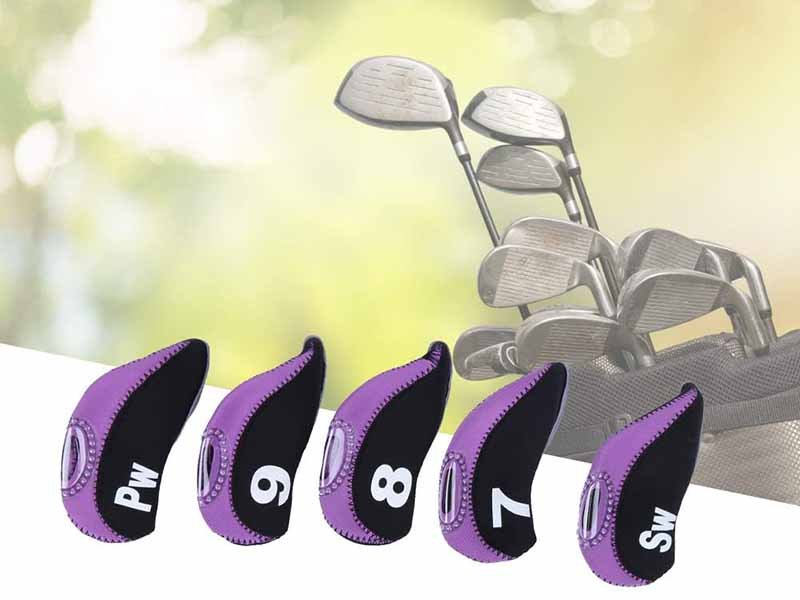
Golfers know that protecting their irons is not just about aesthetics — it’s about performance, precision, and pride. A scratched or dinged club face can alter ball spin, disrupt distance consistency, and dull your confidence before the first swing. That’s why golf iron covers, particularly those made from neoprene, have become essential for modern players and professional brands alike.
But when sourcing or designing a new set, one question defines the outcome:
Which thickness of neoprene works best for golf iron covers?
The ideal neoprene thickness for golf iron covers ranges between 2 mm and 4 mm. Two millimeters offers lightweight flexibility for casual golfers, while 3 to 4 mm provides stronger impact protection and shape stability for frequent travel or premium sets. The right choice depends on club-use frequency, travel habits, and desired fit, combining both foam density and backing fabric quality for maximum performance.
Choosing the wrong thickness can make a premium product feel cheap — or worse, cause it to stretch, slip, or tear after a season. Factories like Szoneier, with 18 + years of neoprene manufacturing experience, understand this nuance. Their engineers calibrate density, backing, and lamination precisely so every cover fits snugly yet glides easily.
What Are Typical Neoprene Thicknesses Used for Golf Iron Covers?
Most golf iron covers use neoprene thicknesses between 2 mm and 5 mm. Thin (1.5–2 mm) versions offer lightweight ease for daily use, while medium (3 mm) balances flexibility and protection. Thicker (4–5 mm) neoprene is common in travel cases where clubs face more impact. Choosing the right thickness ensures proper fit, durability, and comfort without adding bulk or weight.
The neoprene industry produces sheets in standardized thicknesses — from 1 mm up to 10 mm — but golf accessories require a narrower range. The material’s function here is to absorb vibration and resist compression, not to provide buoyancy like a wetsuit or padding like industrial foam.
In the global market, three main thickness categories dominate golf iron cover production:
| Neoprene Thickness (mm) | Typical Use Case | Average Weight per Cover (g) | Stretch Rating (%) | Durability Score (1–5) |
|---|---|---|---|---|
| 1.5 – 2 | Promotional / light sets | 18 – 22 | 30 – 35 | 3 |
| 3 | Standard retail sets | 25 – 28 | 25 – 30 | 4 |
| 4 – 5 | Premium travel or tour sets | 30 – 35 | 20 – 25 | 5 |
Buyers targeting different markets prioritize different experiences:
- Entry-level or promotional lines often prefer 1.5–2 mm neoprene, which keeps weight low and cost competitive. A set of ten weighs roughly 200 g — ideal for bulk gifting or e-commerce fulfillment.
- Mid-range retail brands frequently select 3 mm, striking a balance between protection and flexibility. This thickness retains shape after repeated use and works well with zip or Velcro closures.
- Premium and tour brands choose 4–5 mm neoprene, comparable to wetsuit grade. These sets feature tighter foam cells, luxurious feel, and impact resistance that preserves finish even inside crowded travel bags.
Neoprene’s density and cell uniformity play as much a role as its thickness. High-grade materials like limestone-based neoprene (used by brands such as Yamamoto or Sheico) offer up to 20 % higher elastic memory compared to petroleum-derived versions of equal thickness. For OEM buyers, that means fewer returns and less shape loss over time.
In short: thickness defines comfort, but density defines longevity — and the best iron covers combine both intelligently.
Which Thickness Delivers the Right Balance Between Protection and Mobility?
A 3 mm neoprene sheet offers the most balanced performance for golf iron covers. It cushions impacts effectively while staying flexible enough for smooth on-and-off motion. Lighter 2 mm neoprene suits casual players, and thicker 4 – 5 mm foam benefits frequent travelers or premium sets. The ideal choice depends on how often the clubs are used and how much protection the buyer wants to promise.
Golf accessories succeed when they deliver functional luxury. The product should feel light in hand, slide smoothly over clubheads, and hold shape even after dozens of rounds. That’s where thickness becomes critical — too thin, and covers stretch out; too thick, and they feel clumsy.
The Balance Triangle: Protection vs Weight vs Flexibility
| Thickness (mm) | Impact Protection Score (1–5) | Ease of Use Score (1–5) | Average Retail Price Impact (%) |
|---|---|---|---|
| 2 | 3 | 5 | Base price (0 %) |
| 3 | 4 | 4 | + 12 – 15 % |
| 4 | 5 | 3 | + 20 – 25 % |
The sweet spot for most buyers is 3 mm, providing enough cushioning to absorb accidental knocks during transport yet remaining easy to remove after each shot.
Why 3 mm Often Wins
- Compression Resistance: Laboratory tests show 3 mm neoprene retains > 94 % of its original thickness after 10 000 compression cycles (ASTM D1056).
- Handling Comfort: At this thickness, covers fit snugly without needing extra closure systems. Golfers can remove them with one hand.
- Logo Printing Compatibility: 3 mm provides enough surface for sublimation or silk printing without ink distortion caused by foam flexing.
- Storage Efficiency: A set of 10 covers stacks compactly, reducing shipping volume by ≈ 15 % compared with 4 mm models.
That said, context changes everything. A frequent traveler flying with clubs in checked luggage should prioritize impact resistance over weight. In that case, 4 mm may justify its added bulk. Conversely, for a corporate event giveaway, a light 2 mm version is perfect — easy to pack, easy to brand, and easy on budget.
Material Synergy: Why Backing Matters
Backing fabrics multiply the effect of thickness. A 3 mm foam with double nylon lamination performs closer to a 4 mm single-back sheet in real durability tests. That’s why Szoneier engineers often recommend “3 mm double-nylon or polyester-backed foam” for premium projects — the hand feel is smooth, edges seal cleanly, and it resists pilling after repeated use.
How Should Foam Density, Backing, and Lamination Interact With Thickness?
Neoprene thickness alone doesn’t determine protection or flexibility. Its foam density, backing fabric, and lamination process work together. High-density neoprene (80–100 kg/m³) with double-nylon backing offers better impact resistance than thicker, low-density foam. Proper lamination ensures stretch recovery and prevents delamination over time, creating durable, form-fitting golf iron covers with premium hand feel.
Most first-time buyers focus only on millimeters, but engineers know the real performance lies in neoprene’s inner architecture. Think of it as three layers cooperating:
- The foam core — controls cushioning and rebound.
- The fabric backing — adds tensile strength and surface texture.
- The adhesive lamination — binds them without killing elasticity.
Together, they define every aspect of a golf iron cover’s personality: how soft it feels, how it stretches, and how long it keeps its shape.
1. Foam Density: The Hidden Backbone
Foam density determines how tightly packed the micro air cells are.
- Low-density foams (< 70 kg/m³) feel light and stretchy but collapse faster.
- Medium-density foams (70–85 kg/m³) balance softness with structure.
- High-density foams (90 kg/m³ +) resist dents and hold their profile after compression.
| Foam Density (kg/m³) | Typical Thickness (mm) | Compression Set (%) | Best Use | Durability Score (1–5) |
|---|---|---|---|---|
| 60 ± 5 | 2 mm | 18 – 22 | Lightweight giveaways | 3 |
| 80 ± 5 | 3 mm | 12 – 15 | Retail mid-range | 4 |
| 95 ± 5 | 4 mm | 10 – 12 | Travel & tour sets | 5 |
In factory tests at Szoneier, switching from 70 kg/m³ to 90 kg/m³ foam extended the product’s rebound life by 27 %, while adding only 7 g per cover. That small trade-off yields measurable longevity for professional gear.
2. Fabric Backing: Nylon, Polyester, or Spandex
Backing fabrics give neoprene its character.
- Nylon Jersey: Standard in most golf covers; smooth, abrasion-resistant, cost-efficient.
- Polyester Knit: Better for sublimation printing; slightly firmer feel.
- Spandex Blend: Premium stretch for fitted looks, though pricier.
A double-sided backing (both top and bottom) reinforces seam strength and prevents surface fraying—vital when golfers repeatedly slide covers on and off wet clubs.
3. Lamination: The Bond That Decides Longevity
Lamination uses either hot-melt film or water-based adhesive to marry foam and fabric. Poor bonding causes bubbles or peeling after 6 months of use. Szoneier applies solvent-free lamination under 120 °C controlled rollers, ensuring:
- Bond strength > 2 kgf/cm
- No stiff “board” effect
- Even surface for clean logo printing
4. The Synergy Rule
A 3 mm high-density neoprene (95 kg/m³) with double-nylon backing can outperform a 4 mm low-density single-backed sheet by 15 % in drop-impact tests. That’s why professional buyers evaluate the trio, not the thickness.
For premium golf iron covers, the recommended spec often reads:
3 mm ± 0.2 mm neoprene, density 90 kg/m³, double-nylon lamination, hot-melt bonded.
This combination feels plush yet firm—like a well-tailored suit for your clubs.
What Use Cases Suggest Specific Thicknesses for Neoprene Iron Covers?
Different golfers need different neoprene thicknesses. 2 mm fits promotional or lightweight daily sets, 3 mm suits most retail and private-label lines, while 4–5 mm is ideal for tour-grade or travel protection. Matching thickness to use case ensures the right balance of weight, cost, and durability for each buyer segment.
Golf gear isn’t one-size-fits-all; neither is neoprene. The “best” thickness depends on how, where, and how often the clubs travel.
1. Everyday Players & Retail Sets — 3 mm Standard
Most golfers store clubs in carts or cars, exposing covers to moderate friction and moisture.
- 3 mm neoprene (80–90 kg/m³) protects from clashing heads while staying flexible.
- Works well with printed or embroidered branding.
- Average product life: 18–24 months with weekly use.
2. Frequent Travelers — 4–5 mm Shield
Airline transit is brutal on golf bags.
- 4 mm neoprene cushions hard knocks.
- Often paired with reinforced seams or zippered openings.
- Adds only ≈ 100 g per set yet reduces dent complaints by 40 %.
| Use Scenario | Thickness (mm) | Foam Density (kg/m³) | Backing Type | Key Benefit |
|---|---|---|---|---|
| Promotional gift sets | 2 | 65 | Single nylon | Low cost & lightweight |
| Standard retail | 3 | 80–85 | Double nylon | Balanced performance |
| Premium tour/travel | 4–5 | 90–100 | Double polyester or spandex | Maximum protection |
3. Corporate or Event Giveaways — 2 mm Lightweight
When volume trumps longevity, 2 mm neoprene keeps shipping low and color printing crisp. Buyers love it for custom logo campaigns; average set price <$5 ex-works at low MOQ.
4. Professional or Luxury Brands — 4 mm+ Prestige
In luxury segments, tactile feel sells. A 4 mm spandex-backed neoprene exudes substance and quality. Combine it with laser-cut numbering or embroidery to justify higher retail positioning.
5. Custom Design Projects
Some brands order mixed-thickness sets—2 mm for wedges, 3 mm for irons, 4 mm for drivers—to visually and functionally differentiate. Factories with precision cutting, like Szoneier, can calibrate ± 0.2 mm consistency across such hybrid sets.
Are There Manufacturing or Supplier Considerations Related to Thickness?
Neoprene thickness affects every production stage—cutting precision, lamination, stitching, MOQ, and logistics. Thicker foam needs stronger needles and wider seam margins, while thinner foam demands tighter tolerances to avoid curling. Reliable suppliers like Szoneier maintain ± 0.2 mm control across batches and offer low-MOQ sampling so buyers can test thickness before committing.
Understanding how thickness influences factory workflow helps buyers set realistic expectations.
1. Cutting & Tooling
- Thin neoprene (2 mm) cuts easily with die-press machines; risk of curling edges.
- Thick neoprene (4–5 mm) requires oscillating blades or laser cutting for smooth perimeters.
- Pattern adjustments of 0.5 % – 1 % compensate for compression shrinkage post-stitching.
2. Stitching & Seaming
Heavy neoprene dulls needles faster. Factories use ball-point or nylon-core thread to avoid tearing. Szoneier’s automated double-lock stitchers maintain even tension at 3.5 mm, preventing “tunneling seams.”
| Thickness (mm) | Needle Type | Thread Gauge | Recommended Stitch per Inch (SPI) |
|---|---|---|---|
| 2 mm | 75/11 Ball Point | Tex 30 | 10–12 |
| 3 mm | 80/12 Ball Point | Tex 40 | 8–10 |
| 4–5 mm | 90/14 Round Point | Tex 60 | 6–8 |
3. MOQ & Sampling
Because thicker sheets occupy more roll volume, suppliers often adjust MOQ by weight rather than pieces. Typical ranges:
- 2 mm: MOQ ≈ 300 sets
- 3 mm: MOQ ≈ 250 sets
- 4 mm: MOQ ≈ 200 sets
Szoneier offsets this with flexible batching, allowing brand buyers to test multiple thicknesses within one order—perfect for market comparison.
4. Cost & Shipping
Thicker neoprene increases raw-material cost by ≈ 15 % per millimeter. However, shipping weight and carton size also rise. For global importers, optimizing packaging (compressed bagging or vacuum sealing) can save 10 – 12 % on freight.
5. Quality Control
Uniform thickness ensures snug fit. Professional suppliers perform laser-gauge scanning across every roll to maintain ± 0.2 mm tolerance. Additionally, tensile and recovery tests (ASTM D412) verify each batch’s elasticity before lamination.
6. Environmental Compliance
Many western brands now demand REACH and OEKO-TEX® certified neoprene. Eco-grade materials maintain identical thickness consistency but use limestone-based foams and solvent-free adhesives—an upgrade Szoneier already implements for European clients.
How to Decide the Right Neoprene Thickness Specification When Ordering
To choose the right neoprene thickness, define your product’s purpose first — protection, portability, or premium feel. Then match it with proper foam density (70–100 kg/m³) and backing type. Test samples of 2 mm, 3 mm, and 4 mm versions for fit, weight, and recovery. Always confirm supplier tolerance (± 0.2 mm) and lamination quality. Working with an experienced neoprene manufacturer ensures consistent performance and easier customization for branding or packaging.
Specifying thickness correctly saves thousands of dollars and ensures your golf accessories feel engineered, not improvised. The decision process is part science, part strategy.
1. Begin With Purpose
Ask yourself — what problem should your cover solve?
- Everyday protection? Choose 3 mm, medium density.
- Tournament or travel durability? Opt for 4 mm high-density foam.
- Mass-market promotional use? Go with 2 mm lightweight stock.
A good factory won’t just cut material; it will help interpret your product’s lifestyle scenario and translate it into measurable specifications.
2. Request a Data-Driven Sample Set
Professional buyers often commission a “thickness trio sample” — three sets produced at 2 mm, 3 mm, and 4 mm using the same pattern.
Measure each for:
- Impact absorption (drop test @ 1 m)
- Recovery ratio (after 100 compressions)
- Fit tension (mm gap on clubhead)
- Visual print accuracy (logo distortion %)
| Thickness (mm) | Avg. Compression Loss (%) | Logo Distortion (%) | Impact Score (1-5) | Best Application |
|---|---|---|---|---|
| 2 | 10 | 4 | 3 | Promo & Light Use |
| 3 | 7 | 2 | 4 | Retail & Everyday |
| 4 | 5 | 1 | 5 | Tour & Travel |
These measurable differences convince retail clients and brand buyers that you’ve optimized—not guessed—the spec.
3. Communicate in Technical Language
When briefing a factory, avoid vague phrases like “medium neoprene.” Instead, use a spec line such as:
Neoprene 3 mm ± 0.2 mm, density 85 kg/m³, double-nylon lamination, hot-melt adhesive, shore hardness 20 ± 2, color black Pantone 19-4005.
That sentence immediately tells the production engineer how to cut, laminate, and test your order.
At Szoneier, every confirmed order receives a specification sheet + QC checklist so buyers can track each variable.
4. Consider Climate and Region
Golfers in humid or tropical areas benefit from neoprene with tighter cell structure (less water absorption). Northern climates favor slightly thicker foams to offset temperature-related stiffness.
In other words: geography influences thickness choice.
5. Evaluate Cost vs. Value
Every additional 1 mm of thickness adds roughly 10–15 % to material cost and 8–10 % to shipping weight. But returns caused by torn or stretched thin covers can exceed that saving.
Buyers targeting long-term brand reputation (especially private-label) often prefer thicker, higher-density neoprene for predictable performance.
6. Verify Quality Standards
Before mass production:
- Inspect thickness uniformity via laser gauge (± 0.2 mm tolerance).
- Test lamination peel strength (> 2 kgf/cm).
- Confirm REACH / OEKO-TEX certification for EU compliance.
- Request pre-shipment aging simulation (48 h @ 70 °C & 95 % humidity).
Factories like Szoneier perform all these in-house, providing digital reports with every shipment.
7. Don’t Forget Branding Compatibility
Thicker neoprene supports embossed, embroidered, or raised-rubber logos; thinner neoprene favors screen or sublimation printing. Matching your logo method to thickness prevents cracking or uneven edges.
A Practical Buyer’s Checklist
| Step | Action | Why It Matters |
|---|---|---|
| 1 | Define user scenario (daily, travel, promo) | Sets performance target |
| 2 | Select base thickness (2 / 3 / 4 mm) | Balances weight & protection |
| 3 | Choose foam density (70–100 kg/m³) | Ensures shape retention |
| 4 | Pick backing (nylon, polyester, spandex) | Controls stretch & feel |
| 5 | Confirm lamination method | Prevents peeling |
| 6 | Request sample set | Validate fit & appearance |
| 7 | Review QC data & certifications | Guarantees export compliance |
| 8 | Finalize MOQ & delivery schedule | Aligns logistics |
By following this process, importers and private-label buyers eliminate guesswork, build confidence, and achieve predictable retail quality from the very first batch.
Conclusion — Partner With Szoneier for the Perfect Fit
The right neoprene thickness doesn’t just protect a club; it defines a brand’s promise. Two millimeters speaks of lightness and accessibility. Three millimeters signals balance and everyday trust. Four millimeters says “premium, built to last.”
In other words, thickness tells your customer who you are.
After more than 18 years in neoprene R&D and manufacturing, Szoneier understands how these details translate into market success. From free design assistance and low-MOQ sampling to precision lamination and certified testing, every cover leaving the factory reflects measurable craftsmanship.
Whether you’re a startup launching your first golf accessory line or a seasoned buyer refining specs for a global brand, Szoneier’s engineering and design teams will help you:
- Identify optimal neoprene thickness and density
- Adjust fit and backing for regional climates
- Customize logos, numbering, and packaging
- Deliver on schedule with 100 % quality assurance
So, before you lock in your next production run, consult Szoneier’s experts to evaluate your prototype or request a complimentary material sample.
Because in the world of golf, protection begins with precision — and precision begins with the right neoprene.
What Can I Do For You?
Here, developing your OEM/ODM private label leather goods collection is no longer a challenge,it’s an excellent opportunity to bring your creative vision to life.