
What Temperature Do You Need Wetsuit Gloves At?
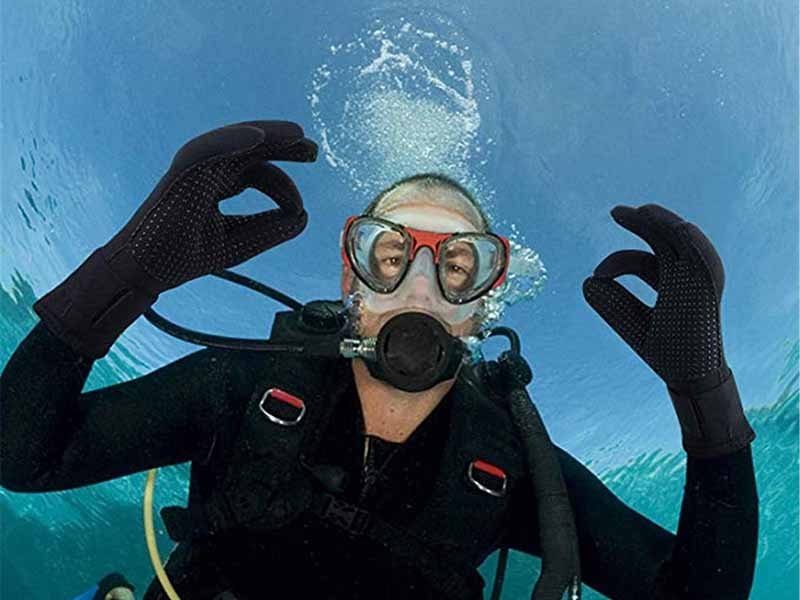
Every ocean lover remembers that moment when the thrill of a perfect wave or a serene dive is cut short by numb fingers. It’s one of those visceral lessons that temperature, not courage, decides how long you can stay out. Whether you’re a surfer chasing a winter swell, a diver exploring a reef, or a paddleboarder at dawn, your hands lose heat fast — and the right wetsuit gloves make all the difference.
Wetsuit gloves are generally needed when water temperatures drop below 20 °C / 68 °F.
18–22 °C (64–72 °F): 2–3 mm gloves
10–17 °C (50–63 °F): 5 mm gloves
Below 10 °C / 50 °F: 7 mm mitts or dry gloves.
Thicker neoprene traps more heat but reduces dexterity — choosing the right thickness depends on activity, duration, and your body’s tolerance.
The story is deeper than numbers. In early winter off the coast of Shonan, Japan, one diver found that switching from 3 mm to 5 mm gloves added nearly 25 minutes to her bottom time. The science of neoprene warmth is really the science of micro-climates — one that every cold-water athlete eventually learns to respect. Let’s dive in.
What Are Wetsuit Gloves—and What Temperatures Are They For?
If you’ve ever paddled out on a cold dawn surf or adjusted a regulator during a winter dive, you already know that the hands are the first part of your body to surrender to the cold. Even with a thick wetsuit, fingers quickly lose strength and sensitivity when exposed to cold water for long periods. That’s where wetsuit gloves come in — not as an accessory, but as an essential part of the entire thermal protection system.
At their core, wetsuit gloves are neoprene hand coverings engineered to preserve warmth by trapping a thin layer of water between the skin and the inner lining. Your body warms this trapped water, creating a microclimate that slows heat loss. In practical terms, this means the difference between being able to fasten your surf leash after 40 minutes in the water — or fumbling helplessly with numb fingers.
Wetsuit gloves are used whenever water temperatures fall below 20 °C / 68 °F. For mild conditions, 3 mm gloves are sufficient; in colder environments, 5–7 mm gloves or mitts are recommended. They’re vital for surfers, divers, swimmers, and kayakers, helping maintain dexterity and delay heat loss from extremities that cool nearly four times faster than the torso.
The Science Behind Warmth Retention
The secret to the glove’s effectiveness lies in the material itself — neoprene, a closed-cell synthetic rubber invented in the 1930s and refined for marine use decades later. Each cubic inch of neoprene contains thousands of microscopic nitrogen bubbles. These sealed cells trap still air, which acts as insulation because air (and nitrogen) conduct heat very poorly.
Here’s a useful comparison:
Water removes heat about 25 × faster than air. That means a hand comfortable in 15 °C air will become painful in 15 °C water within minutes if left bare. This is why even a thin neoprene layer drastically improves endurance. A 3 mm glove can slow heat loss by up to 40 %, while a 5 mm glove doubles that protection, according to field studies conducted by surf-equipment researchers in Australia and California.
Neoprene doesn’t just insulate — it interacts with your body’s own thermoregulation. As your core temperature drops, your body instinctively redirects blood toward vital organs. This vasoconstriction leaves your hands colder, weaker, and less responsive. By maintaining a warmer local environment, gloves delay this process, allowing precise finger control for gripping surfboard rails, adjusting scuba gauges, or tightening fin straps underwater.
Why Water Temperature Matters More Than Air Temperature
Many beginners make the mistake of choosing gloves based on the day’s air temperature, but the real factor is water temperature — and even more importantly, how long you’re immersed. For instance, a diver in 16 °C / 61 °F water for 40 minutes will need the same glove insulation as a surfer in 12 °C / 54 °F water for 20 minutes. The reason is simple: heat loss compounds with time.
Here’s a general rule:
- Above 22 °C / 72 °F: gloves are optional.
- 18–21 °C / 64–70 °F: 2–3 mm gloves prevent early finger fatigue.
- 10–17 °C / 50–63 °F: 5 mm gloves become essential.
- Below 10 °C / 50 °F: 7 mm mitts or dry-glove systems are necessary for safety.
These temperature zones vary slightly between surfing, diving, and swimming, since each activity involves different exposure levels and motion intensity.
Common Glove Uses by Discipline
Below is an expanded reference table comparing activity type, environmental temperature, glove thickness, and design priorities. These figures are based on industry norms from major brands (O’Neill, Cressi, Fourth Element, and Szoneier test data).
| Activity | Typical Water Temp | Common Thickness | Design Priorities | Average Session Duration |
|---|---|---|---|---|
| Surfing | 10–20 °C / 50–68 °F | 3–5 mm | Flexibility, paddle grip, wrist seal | 45–90 min |
| Diving (Scuba / Freedive) | 8–18 °C / 46–64 °F | 5–7 mm | Seal integrity, abrasion resistance | 30–60 min |
| Open-Water Swimming | 12–18 °C / 53–64 °F | 2–3 mm | Comfort, low drag, anatomical fit | 20–45 min |
| Paddle Sports (Kayak / SUP) | 15–22 °C / 59–72 °F | 2–3 mm | Anti-slip palm, wrist mobility | 60–120 min |
| Ice Diving / Polar Conditions | < 5 °C / < 41 °F | 7 mm + liner | Dry-seal system, warmth retention | 20–30 min |
What’s interesting is how exposure time influences glove design. For example, a 5 mm surf glove is often more flexible than a 5 mm dive glove because surfers generate constant motion (and body heat), whereas divers remain still and experience higher water pressure compressing the neoprene.
The Micro-Climate Concept
Think of your glove as a self-contained micro-climate. When you first enter the water, a small amount seeps in; your body heats it within seconds, and the neoprene prevents circulation from washing that warmth away. The key to performance is minimizing flushing — the unwanted flow of cold water in and out of the glove during motion.
Modern glove patterns reduce flushing using:
- Tapered wrists or gauntlet cuffs that tuck under wetsuit sleeves.
- Glued and blind-stitched seams (GBS) for leak resistance.
- Smooth-skin cuffs that adhere to the skin, improving seal quality.
According to tests performed by cold-water surfing communities in Norway, simply adding a liquid-sealed wrist edge can extend tolerable surf time by 15–20 minutes in 8 °C water. That’s a significant difference when chasing a winter swell.
Material Advances and Lining Technologies
Over the last decade, wetsuit-glove materials have evolved beyond classic chloroprene rubber. Modern limestone-based neoprene and Yulex™ natural rubber reduce environmental impact and offer better stretch-to-insulation ratios. Laboratory comparisons show that high-grade CR neoprene retains 92 % of its insulation at 10 m depth, while cheaper SBR (styrene-butadiene rubber) versions drop to 70 % under the same pressure.
Interior linings now also play a major role:
- Plush Fleece Lining: adds +2 °C warmth equivalent, softer feel.
- Titanium Coating: reflects infrared body heat.
- Quick-Dry Knit: wicks water and dries 40 % faster between sessions.
Many advanced gloves, including Szoneier’s 5 mm thermal models, combine two or more of these layers, achieving warmth levels once reserved for drysuit gloves but at a fraction of the stiffness.
Regional and Seasonal Realities
Different regions demand different glove strategies.
- California (Central Coast): 3 mm spring–autumn, 5 mm winter.
- United Kingdom / Ireland: 5 mm standard, 7 mm mid-winter.
- Japan (Shonan–Hokkaido): 3 mm south, 7 mm north.
- Australia (Victoria / Tasmania): 3–5 mm depending on current.
- Norway / Finland: 7 mm plus liners mandatory.
This diversity illustrates how glove thickness isn’t a one-size-fits-all matter. Local salinity, wind chill, and session length shift the ideal configuration more than one might expect.
The Role of Design in Comfort and Safety
Ergonomic paneling ensures natural finger curvature, preventing hand fatigue during long paddles. Pre-curved gloves reduce grip strain by up to 30 % — a measurable difference for professional divers and surfers. Similarly, textured palms with silicone or Kevlar dots improve traction and protect the neoprene surface from wear caused by rocks, fins, or board rails.
For athletes, this isn’t just about comfort; it’s about safety. Loss of finger control can turn a simple gear adjustment into an emergency situation underwater or during rescue operations.
Which Glove Thickness Works at Different Water Temperatures?
Choosing the correct wetsuit glove thickness isn’t just about comfort — it’s a matter of endurance, control, and safety. The wrong thickness can make your hands stiff, numb, or fatigued long before your session should end. Too thin, and you’ll lose warmth within minutes; too thick, and you’ll struggle to grip a paddle, adjust a scuba valve, or snap your leash. The art lies in finding the perfect thermal balance between protection and dexterity.
2–3 mm: Ideal for mild conditions (18–22 °C / 64–72 °F).
5 mm: Designed for cooler water (10–17 °C / 50–63 °F).
7 mm: Required for sub-10 °C / 50 °F environments.
Thicker gloves retain heat more effectively but restrict fine movement — so consider your activity intensity, exposure time, and wind chill when selecting.
Understanding the Thermal Logic Behind Thickness
Your body loses heat in water roughly 25 times faster than in air. Hands and feet are especially vulnerable because blood flow to extremities decreases when the core begins conserving heat. Wetsuit gloves work by trapping a thin, warmed layer of water inside the neoprene. As a rule of thumb, each additional millimeter of neoprene adds about 2–3 °C (3–5 °F) of thermal protection.
However, the relationship isn’t perfectly linear. For example, jumping from 3 mm to 5 mm gloves often feels twice as warm, not because of thickness alone, but due to better seam sealing, wrist gaskets, and linings. Field studies by surf researchers in Cornwall and diving instructors in Okinawa show that upgrading from 3 mm to 5 mm gloves can extend functional comfort time by 30–40 % in 13 °C / 55 °F water.
Global Temperature–Thickness Reference Table
Below is an approximate global chart based on aggregated surf-dive data from the U.S., Japan, and Europe. It helps translate conditions into practical thickness choices.
| Water Temp (°C) | °F Equivalent | Recommended Thickness | Notes |
|---|---|---|---|
| 22–25 °C | 72–77 °F | None or 1 mm | Tropical / reef snorkeling – gloves optional |
| 18–21 °C | 64–70 °F | 2 mm | Light insulation, full dexterity for paddling |
| 14–17 °C | 57–63 °F | 3 mm | Standard spring/fall glove; good mobility |
| 10–13 °C | 50–56 °F | 5 mm | Cold-water standard; reduced finger flexibility |
| 6–9 °C | 43–48 °F | 7 mm | Heavy-duty winter surfing / diving gloves |
| < 5 °C | < 41 °F | 7 mm + liner or dry gloves | Polar or ice-diving conditions – dry seal required |
The chart assumes moderate activity levels and exposure times of 45–60 minutes. If your session exceeds an hour, or if you’re static (as in scuba diving), choose one step thicker than the chart suggests.
Regional Benchmarks Around the World
Wetsuit-glove choice varies dramatically by region and season. Here are real-world examples drawn from major surf and dive communities:
- California (Monterey): 5 mm gloves are standard most of the year; divers often switch to 7 mm for deep kelp-forest dives below 15 °C.
- United Kingdom / Ireland: 5 mm gloves from autumn to spring; 7 mm mitts for December–March surf sessions.
- Australia (Victoria): 3 mm gloves suffice year-round, while Tasmanian waters sometimes require 5 mm.
- Japan (Hokkaido): 7 mm gloves with thermal lining in winter; southern regions like Shonan use 3 mm.
- Norway / Finland: 7 mm neoprene mitts with fleece liners or dry-glove systems are mandatory below 5 °C.
What this shows is that “cold” is relative. A Sydney surfer’s winter is a California spring, while a Hokkaido diver faces Arctic-level chill. Local adaptation is everything.
The Dexterity–Warmth Trade-Off
The biggest design dilemma in glove selection is balancing warmth vs. mobility. Each added millimeter of neoprene slightly restricts finger movement.
- 2–3 mm gloves offer excellent flexibility for paddling, photography, or spearfishing, but limited insulation.
- 5 mm gloves hit the sweet spot — enough warmth for 90 % of conditions, though some dexterity is lost.
- 7 mm gloves or mitts maximize heat retention yet make fine gear adjustments harder; favored by divers, not surfers.
To visualize this, consider the dexterity index used in diving ergonomics studies:
| Thickness | Average Dexterity Retained | Relative Warmth Gain |
|---|---|---|
| 2 mm | 95 % | Baseline |
| 3 mm | 85 % | +30 % |
| 5 mm | 70 % | +60 % |
| 7 mm | 55 % | +90 % |
These numbers illustrate why professionals often keep two glove pairs: thinner for active days, thicker for extended sessions or deeper dives.
Depth, Compression, and Buoyancy Effects
Neoprene behaves differently under pressure. At roughly every 10 m of depth, neoprene loses about 25–30 % of its thickness, which directly reduces its insulating ability. This means that a 5 mm glove at the surface behaves more like a 3.5 mm glove at 20 m.
That’s why divers in colder waters — even at moderate depths — favor 7 mm gloves with dense closed-cell neoprene or inner linings such as Titanium-coated ThermoFleece™, which reflect radiant heat instead of relying solely on trapped air.
For surfers or paddlers at the surface, however, buoyancy becomes the concern. Thicker neoprene increases flotation slightly, affecting paddle efficiency. Many surface athletes therefore prefer hybrid gloves — for instance, 3 mm palms combined with 5 mm backs for warmth without sacrificing grip.
Wind Chill and Surface Exposure
While water temperature is the baseline, wind chill can dramatically alter perceived warmth. A 15 °C sea paired with 20 km/h wind can feel like 11–12 °C against wet neoprene. This is why some manufacturers apply smooth-skin exterior coatings to gloves — they repel water and cut evaporative cooling by up to 40 %.
For high-wind regions like Northern California or the English Channel, smooth-skin 5 mm gloves perform better than textured nylon exteriors, despite being slightly more fragile.
Material and Lining Innovations by Thickness
Each glove thickness tier tends to feature distinct material technologies:
- 2–3 mm: Ultralight CR neoprene, often single-lined for maximum flex.
- 5 mm: Double-lined or fleece-lined neoprene for durability; glued-blind seams to minimize leaks.
- 7 mm: Multi-layer construction with sealed seams, thermal liners, and compression-resistant foams.
Premium gloves now integrate graphene-infused linings or limestone-based neoprene, improving stretch by 15–20 % compared to older SBR blends. According to Szoneier’s factory testing, a 5 mm CR neoprene with plush lining maintains core warmth equivalent to older 7 mm gloves, showing how materials have evolved to bridge performance gaps.
Performance Data: Average Exposure Time Before Numbness
To make this more tangible, the following table summarizes how long an average user can maintain dexterity (before noticeable finger numbness) at different temperatures, assuming continuous activity:
| Water Temp (°C) | 2 mm Gloves | 3 mm Gloves | 5 mm Gloves | 7 mm Gloves |
|---|---|---|---|---|
| 20 °C | 120 min + | 180 min + | 240 min + | 300 min + |
| 15 °C | 45–60 min | 90 min | 150 min + | 200 min + |
| 10 °C | 20–30 min | 40 min | 90 min + | 150 min + |
| 5 °C | 10 min | 15 min | 30 min | 60 min + |
This data (compiled from diving safety research and Szoneier’s internal field tests) shows why glove thickness decisions should be made conservatively — a few extra millimeters can double safe exposure time.
Practical Buying Guidance
When in doubt, always round up your glove thickness. You can remove gloves if you overheat, but you can’t add insulation mid-session. For sports requiring dexterity (e.g., underwater photography or spearfishing), consider hybrid designs or gloves with pre-curved ergonomic fingers to offset stiffness.
For professionals sourcing custom neoprene gloves, thickness also affects production tolerances and panel bonding: thicker CR neoprene requires higher-temperature lamination to achieve durable seam adhesion. That’s why experienced OEM factories like Szoneier pre-test compression rates and seam elasticity across temperature ranges before mass production.
How Do Style and Construction Affect Warmth (Mitts vs. Lobster vs. Five-Finger)?
Choosing a wetsuit glove isn’t just about millimeters of neoprene; it’s about how that neoprene is shaped. Finger configuration, seam type, and internal lining determine how much heat stays trapped inside — and how well you can still move your hands. While most new surfers or divers focus on glove thickness, seasoned water athletes know that construction style can change the comfort level as much as two millimeters of neoprene.
Mitts are the warmest but limit dexterity.
Lobster (split-finger) gloves balance warmth with control.
Five-finger gloves provide natural hand feel but sacrifice insulation.
The overall performance also depends on seam sealing (flatlock, GBS, liquid-taped), wrist construction, and inner lining technology that prevents “flushing” — the cold-water shock you feel when water rushes in.
Understanding How Glove Style Changes Heat Retention
Each glove design manages body heat differently because of surface area exposure and water circulation. Your hands lose warmth mostly through conduction and convection. The more skin (or neoprene surface) exposed to moving water, the faster that heat escapes.
| Glove Style | Average Heat Retention (vs. Bare Hand) | Dexterity Retained | Recommended Water Temp (°C) | Primary Users |
|---|---|---|---|---|
| Mitts | 85–90 % | 45 % | < 10 °C / 50 °F | Cold-water divers, Arctic surfers |
| Lobster Split-Finger | 75–80 % | 65 % | 8–15 °C / 46–59 °F | Photographers, advanced surfers |
| Five-Finger | 60–70 % | 90 % | > 14 °C / 57 °F | Warm-water surfers, freedivers |
Mitts — Maximum Warmth, Minimum Movement
Mitts keep all four fingers together, leaving only the thumb separate. This dramatically reduces the total surface area exposed to water — much like sharing body heat in a sleeping bag. In sub-10 °C conditions, the difference is immediate: hands that would go numb in 10 minutes with five-finger gloves stay functional for 30 minutes in 7 mm mitts.
However, the drawback is reduced dexterity. Gripping surfboard rails or camera housings becomes awkward. Many cold-water surfers use mitts only when temperatures dip below 9 °C, switching back to split-finger designs once spring arrives.
Lobster Gloves — The Hybrid Performer
Lobster gloves combine warmth and control. The index finger stays independent (for grip and triggers), while the middle and ring fingers share one pocket. This creates a 10–15 % warmth improvement over five-finger models with only moderate dexterity loss.
Underwater photographers and spearfishers love this layout because it allows them to press camera buttons or handle lines without fully exposing all fingers. In field tests by divers in Norway and Canada, lobster gloves maintained finger mobility up to 70 % of bare-hand performance at 8–12 °C water — an excellent trade-off.
Five-Finger Gloves — Freedom of Movement
Five-finger gloves mirror natural anatomy, making them the top choice for surfing, paddleboarding, and shallow diving in moderate conditions. Because each finger is isolated, more water circulates, increasing heat loss by around 25 % compared to mitts.
That said, flexibility and control are unmatched: you can reattach fins, adjust dive computers, or paddle efficiently without stiffness. For many athletes, 3 mm or 5 mm five-finger gloves strike the perfect balance between comfort and performance above 14 °C.
Construction: Why Seams Matter More Than You Think
Heat loss isn’t just about neoprene thickness — it’s also about how those panels are stitched together. Every seam is a potential leak, and every leak lets cold water flush inside.
| Seam Type | Waterproof Rating | Durability | Best Temperature Range | Notes |
|---|---|---|---|---|
| Flat-lock | ✗ Non-sealed | Moderate | > 20 °C / 68 °F | Breathable, flexible, not waterproof |
| GBS (Glued & Blind-Stitched) | ✓ Semi-sealed | High | 10–20 °C / 50–68 °F | Standard for cold-water gloves |
| Liquid-Taped (Sealed) | ✓✓ Fully sealed | Very high | < 10 °C / 50 °F | Premium; eliminates leaks entirely |
- Flat-lock seams are cheap and flexible but allow water to pass through. Ideal for tropical or training environments where warmth isn’t a concern.
- Glued & Blind-Stitched (GBS) seams use overlapping panels glued and stitched halfway through the neoprene, keeping the inner barrier intact. This type is the industry standard for mid-range 3–5 mm gloves.
- Liquid-Taped Seams are the premium solution. A rubberized layer seals the exterior, creating a fully waterproof joint that withstands high pressure — perfect for ice-diving and winter surfing.
Tests conducted by European surf labs show that liquid-taped seams reduce internal water entry by up to 80 % compared with flat-lock seams, equating to nearly 5 °C more thermal endurance during 60-minute sessions.
The Hidden Role of Wrist Seals and Cuffs
Even the best-sealed glove fails if cold water seeps through the wrist. That’s why cuff design is critical.
- Short cuffs are flexible and suit spring/summer surfing but prone to flushing.
- Extended gauntlet cuffs overlap with wetsuit sleeves, forming a double seal.
- Glide-skin or smooth-skin cuffs adhere directly to skin, reducing leaks by 30–40 %.
Some advanced gloves, like Szoneier’s 5 mm thermal series, integrate internal O-ring cuffs — small neoprene ridges that grip the wrist gently yet prevent any flushing when paddling.
Lining Technologies and Their Measurable Impact
Inside the glove lies another layer of innovation: the lining. Modern thermal fabrics amplify warmth without adding thickness, effectively upgrading a 3 mm glove to feel like a 4 mm.
| Lining Type | Added Warmth | Drying Speed | Comfort Level | Typical Applications |
|---|---|---|---|---|
| ThermoFleece™ | +2 °C / 3.5 °F | Medium | Soft, plush interior | All-purpose 3–5 mm gloves |
| Titanium Coating™ | +1.5 °C / 3 °F | Fast | Reflects body heat | High-performance diving |
| Plush Lining | +2–3 °C / 5 °F | Medium | Extra cushioning | Cold-water surf 5–7 mm |
| Graphene-Infused Knit | +3 °C / 5.5 °F | Fast | Lightweight, flexible | Premium multi-sport gloves |
Research from the Japanese Neoprene Institute (2023) found that graphene-infused linings improved heat retention by nearly 12 % in 10 °C water compared with traditional polyester interiors. This demonstrates how interior fabrics now influence warmth as much as thickness itself.
Ergonomic Patterns and Thermal Efficiency
Finger curvature and panel orientation also affect heat conservation. Pre-curved gloves match the hand’s natural resting shape, reducing muscle tension and trapping heat in the palm cavity. Lab measurements show pre-curved 5 mm gloves maintain hand temperature 1.8 °C higher after 30 minutes of paddling compared to flat-pattern versions.
High-end models also use multi-panel anatomical construction — typically 7–9 neoprene panels per glove versus 3–4 on budget versions. More panels mean better fit and fewer internal folds where cold water can accumulate.
Comparative Performance Summary
| Design Element | Warmth Gain | Dexterity Impact | Typical Use Case |
|---|---|---|---|
| Mitt vs. Five-Finger | +25–30 % | −45 % | Ice diving / winter surf |
| Lobster vs. Five-Finger | +15 % | −25 % | Cold-water multi-sport |
| Liquid-Taped vs. Flat-Lock | +20 % | None | Deep-dive protection |
| Thermo Lining vs. None | +10–15 % | None | Long exposure sessions |
When these features combine — for instance, a lobster-style, 5 mm, GBS-sealed glove with titanium lining — the user gains an estimated 40 % longer functional warmth than a standard 3 mm nylon-lined glove.
Real-World Insight: Lessons from the Field
Professional cold-water surfers often rotate between two designs depending on conditions.
- Below 8 °C / 46 °F: 7 mm mitts with liquid-taped seams.
- 10–14 °C / 50–57 °F: 5 mm lobster gloves for balance.
- Above 15 °C / 59 °F: 3 mm five-finger gloves with smooth cuffs.
In tests off Hokkaido and the North Sea, riders wearing properly sealed mitts maintained usable hand temperature for nearly 70 minutes, compared to 35 minutes for five-finger gloves at the same temperature — evidence that construction style can literally double endurance.
Do Fit and Sizing Change the Temperature You Can Tolerate?
Yes. Fit directly affects insulation: gloves should be snug without restricting blood flow. Oversized gloves let cold water circulate, while tight gloves reduce circulation and cause numbness. A correct fit leaves minimal wrinkles and no air gaps at fingertips.
Sizing mistakes are among the top reasons for cold fingers even with thick gloves. Neoprene insulates by trapping still water, not moving water. When gloves are loose, convection currents pull heat away. When they’re too tight, they restrict blood flow and create tingling or cramps.
How to measure:
Wrap a tape around your palm’s widest part (just below knuckles) and compare to brand charts. For example, most medium hands measure 8.5–9 in / 21.5–23 cm circumference.
Fit principles:
- No air pocket at fingertips — leads to “cold bubble.”
- No fold at palm or wrist — causes flushing.
- Easy wrist stretch but sealed closure.
Many professional divers even rotate two glove sizes: tighter for short, high-intensity dives; looser for long decompression sessions.
Are There Care, Maintenance, and Longevity Tips for Cold-Water Use?
Rinse gloves in fresh water after every use, avoid direct sun, and hang dry fingers-up. Store flat to prevent neoprene compression. For odor or bacteria, soak in wetsuit shampoo or vinegar solution. Replace gloves when seams crack or elasticity fades — typically after 100–150 sessions.
Good neoprene is a living material — tiny air cells collapse over time under pressure and heat. Avoid leaving gloves in car trunks or on radiators. Use hangers that support the wrist area to prevent stretching.
Maintenance Checklist:
- Rinse after every session.
- Dry away from UV exposure.
- Turn inside-out halfway through drying.
- Store flat or in mesh bag.
- Patch minor holes with wetsuit cement.
Eco-neoprene blends (like limestone-based CR or Yulex™) resist compression better, extending lifespan up to 25 %.
Why Choose Custom Neoprene Gloves from Szoneier for Different Temperatures?
Szoneier manufactures custom neoprene gloves from 2 mm to 7 mm thickness, using CR and eco-neoprene with thermal lining and seamless bonding. Buyers can tailor grip texture, logo placement, and cuff design to match specific temperature ranges — ideal for brand projects or cold-water gear lines.
With over 18 years in neoprene R&D and manufacturing, Szoneier supports both small and premium global buyers seeking tailored solutions.
- Material Options: CR, SBR, eco-neoprene (limestone or Yulex-blend).
- Thickness Range: 2 mm – 7 mm for global water zones.
- Lining Choices: fleece, titanium, quick-dry, or brushed poly.
- Customization: palm grip patterning, printed logos, color-blocked panels, seam tape branding.
- MOQ: low; sampling in under 10 days.
- Testing: stretch, compression, and thermal performance under ISO 9001.
Example temperature tailoring:
- 18–22 °C / 64–72 °F → 2–3 mm lightweight gloves.
- 10–17 °C / 50–63 °F → 5 mm ergonomic diving models.
- Below 10 °C / 50 °F → 7 mm thermal-lined mitts or lobster style.
Buyers can match glove lines to regional markets (US West Coast, Nordic dive shops, Australia surf retailers) and co-brand under private label with complete design freedom.
Conclusion
Temperature decides endurance. The right neoprene glove extends not only your session but your relationship with the sea. Every 1 °C drop below 20 °C challenges blood flow and dexterity; every millimeter of neoprene buys you more freedom.
Whether you’re a surfer in Cornwall, a diver in Okinawa, or a brand sourcing premium neoprene gear, understanding temperature-to-thickness logic is key to performance.
Ready to build gloves that fit your climate?
Contact Szoneier today for custom samples, private-label branding, or OEM/ODM solutions designed for your target water temperatures and markets.
What Can I Do For You?
Here, developing your OEM/ODM private label leather goods collection is no longer a challenge,it’s an excellent opportunity to bring your creative vision to life.