
Many products fail quietly at the material-selection stage. They may look good in a sample room, feel fine in hand, and even pass the first round of approval. But once they reach the market, problems start to show. A bag feels too soft and loses shape after light daily use. A can cooler does not hold temperature long enough. A sports brace feels bulky and uncomfortable. A wetsuit that looked fine on paper does not provide enough warmth in actual water conditions. In many of these cases, the real problem is not color, logo, or workmanship. It is thickness choice.
When people compare 2mm vs 3mm vs 5mm neoprene, they are really comparing three different performance levels. 2mm neoprene is lighter, softer, and easier to bend, making it suitable for flexible products and warm-condition use. 3mm neoprene offers a more balanced structure, giving better support, insulation, and everyday durability. 5mm neoprene is thicker, warmer, and more protective, which makes it more suitable for cold-water, heavy-duty, or high-protection applications. The right option depends on how the product will be used, how it should feel, and what level of protection or insulation it needs to deliver.
That sounds simple, but in real production it is rarely that simple. A difference of just 1mm can change stiffness, sewing difficulty, fit, user comfort, packing volume, shipping cost, and even reorder rates. Many importers and product developers only fully understand that after receiving goods from a supplier that focused only on price. A more experienced factory looks at thickness the way a product engineer would: not as a basic material spec, but as a performance decision that affects the whole product. That is exactly why this topic deserves a deeper look.
What Is 2mm vs 3mm vs 5mm Neoprene?
2mm, 3mm, and 5mm neoprene refer to the thickness of the neoprene foam layer used inside the laminated material. That thickness changes how the material behaves in real use. As thickness increases, neoprene usually becomes warmer, more cushioned, more supportive, and more durable under pressure. At the same time, it also becomes heavier, bulkier, and less flexible. That is why different products require different thickness levels.
What does neoprene thickness mean?
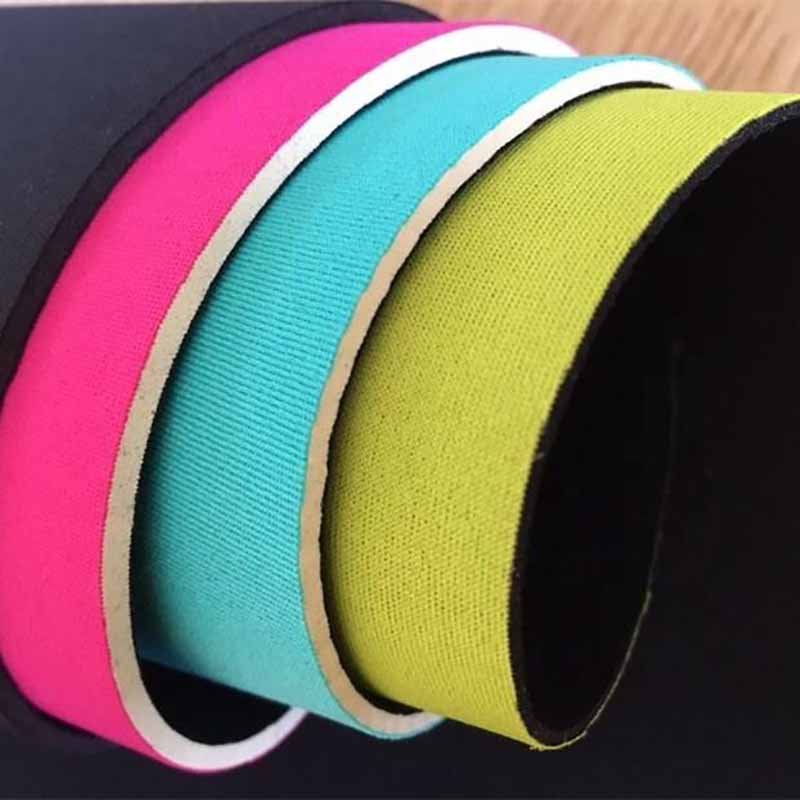
Neoprene is not just a single rubber sheet. In most product applications, it is a laminated structure made of a neoprene foam core with fabric bonded to one or both sides. The thickness number—such as 2mm, 3mm, or 5mm—normally refers to the total thickness of the neoprene material used in production.
That number matters because the foam core is where much of the cushioning, insulation, and compression performance comes from. A thicker foam layer traps more air, provides more padding, and improves heat retention. A thinner foam layer feels lighter and bends more easily, but gives less support and less insulation.
For customers developing neoprene products, thickness affects far more than touch and appearance. It affects:
- how easily the product can fold
- how much shape retention it has
- how heavy the finished item feels
- how warm or protective it is
- how much space it takes in packaging
- how difficult it is to sew, edge-bind, glue, or laminate
In actual factory production, thickness is also connected to material tolerance control. A well-managed supplier should keep thickness variation within a controlled range, because inconsistency can lead to visible size differences, unstable fit, poor stitching alignment, and customer complaints after bulk delivery.
The table below shows how thickness changes material behavior in a practical way:
| Thickness | Hand Feel | Flexibility | Cushioning | Insulation | Product Structure |
|---|---|---|---|---|---|
| 2mm | Soft and light | High | Light | Low | Soft |
| 3mm | Balanced | Medium-High | Medium | Medium | Stable |
| 5mm | Thick and firm | Lower | Strong | High | More rigid |
A lot of customers assume thicker is always better. In reality, that is not true. The best thickness is the one that matches the product’s actual use. A lightweight sleeve or fashion tote may perform better in 2mm, while a cold-water wetsuit or high-protection support item may need 5mm to do the job properly.
How does 2mm vs 3mm vs 5mm neoprene differ?
The real difference between 2mm, 3mm, and 5mm neoprene is not just one number on a spec sheet. Each thickness creates a different balance between comfort, performance, appearance, and manufacturing cost.
2mm neoprene is usually chosen for products that need to stay light, fold easily, and feel less bulky. It is commonly used when flexibility is more important than insulation or heavy protection.
3mm neoprene is often considered the middle-ground option. It is thick enough to add noticeable cushioning and structure, but not so thick that it becomes hard to handle or uncomfortable in regular use.
5mm neoprene moves into a more protective category. It offers stronger insulation, better impact absorption, and more body, but also adds weight and stiffness. In many products, 5mm requires more careful pattern development and more experienced sewing control.
A side-by-side comparison makes the difference clearer:
| Item | 2mm Neoprene | 3mm Neoprene | 5mm Neoprene |
|---|---|---|---|
| Weight | Lowest | Moderate | Highest |
| Flexibility | Best | Good | Reduced |
| Warmth retention | Basic | Good | Strong |
| Cushioning | Light | Moderate | High |
| Shape support | Limited | Better | Strong |
| Packing efficiency | Best | Good | Lower |
| Sewing difficulty | Easier | Moderate | Higher |
| Material cost | Lower | Medium | Higher |
From a commercial point of view, those differences matter a lot. For example:
- A 2mm bag may reduce shipping volume and material cost, making it attractive for promotional or large-volume programs.
- A 3mm sports brace may give the end user a better balance of comfort and support, reducing return risk.
- A 5mm wetsuit panel may improve performance in cold water, but it also increases product weight and may affect movement if used in the wrong areas.
That is why professional product development rarely chooses thickness based on price alone. Smart development starts with use conditions, target market, comfort requirements, expected retail positioning, and reorder consistency.
Why thickness matters in neoprene?
Thickness is one of the most important decisions in neoprene product development because it influences almost every stage of the product lifecycle—from material sourcing and sample approval to bulk production, end-user experience, and after-sales performance.
The first reason thickness matters is functional performance. If the neoprene is too thin, the product may not provide enough insulation, cushioning, compression, or structure. If it is too thick, it may feel uncomfortable, overly stiff, or unnecessarily expensive.
The second reason is user satisfaction. End users may not know whether a product is 2mm or 3mm, but they can immediately feel whether it is too heavy, too loose, too warm, too stiff, or too weak. Those reactions influence product reviews, repeat orders, and brand trust.
The third reason is manufacturing efficiency. Thicker materials are harder to handle in production. They may need:
- stronger sewing control
- wider seam allowance planning
- more careful edge finishing
- stronger adhesive performance
- different pattern compensation for fold and stretch behavior
The fourth reason is cost control. As thickness increases, raw material use rises, production handling becomes more difficult, and packing volume usually increases. That affects not only factory cost, but also freight cost and warehouse space.
Here is a practical view of what clients usually care about when evaluating thickness:
| Client Concern | 2mm | 3mm | 5mm |
|---|---|---|---|
| Lower material cost | Strong advantage | Moderate | Weak |
| Better structure | Limited | Good | Strong |
| Comfortable wear | Good | Good | Depends on use |
| Warmth protection | Limited | Better | Strong |
| Easy mass production | Easier | Good | More demanding |
| Freight efficiency | Better | Good | Lower |
In other words, thickness is not a small technical detail. It is one of the main levers that decides whether a neoprene product feels cheap, balanced, or premium in the hands of the end user.
2mm Neoprene Applications
2mm neoprene is best suited for products that need to stay light, flexible, and easy to carry or wear. It performs well in warm environments, short-duration use, and product categories where softness and ease of movement matter more than heavy insulation or rigid support. It is widely used in bags, can coolers, sleeves, light fitness accessories, and some fashion-related neoprene items.
What is 2mm neoprene used for?
2mm neoprene is commonly used in products where the goal is to create a soft, lightweight feel without adding too much bulk. It is one of the most practical choices for daily-use accessories, promotional items, and flexible consumer products.
Common 2mm neoprene applications include:
- laptop sleeves
- tablet sleeves
- zip pouches
- cosmetic bags
- tote bags
- can coolers and bottle sleeves
- lightweight sport pouches
- simple protective wraps
- small travel organizers
- lightweight support items for low-intensity use
The main reason 2mm is used so widely is that it is easier to turn into products that people want to carry every day. It folds better, weighs less, and takes up less storage space. For many retail or promotional items, these are strong advantages.
For example, in bag development, 2mm neoprene gives a soft body and a clean look without making the product feel overbuilt. In koozies, it helps keep drink containers insulated while still being easy to hold, fold, and pack in volume. In sleeves, it provides light scratch protection and impact buffering without making the item too thick for backpacks or handbags.
Here is where 2mm performs especially well:
| Product Type | Why 2mm Works Well |
|---|---|
| Koozies | Easy to hold, flexible, affordable for large quantities |
| Laptop sleeves | Light padding without too much bulk |
| Tote bags | Soft hand feel and easy portability |
| Cosmetic bags | Better folding and lower weight |
| Promotional accessories | Lower cost and easier shipping |
For clients developing high-volume products, 2mm often helps improve cost efficiency. Lower thickness usually means lower material usage per piece and better carton loading, which can make a visible difference when order quantities increase.
Is 2mm neoprene flexible enough?
Yes, 2mm neoprene is highly flexible, and that is one of its biggest strengths. In many product categories, flexibility is not just a comfort feature—it is a product requirement.
A flexible neoprene material can:
- bend without creating a bulky shape
- fit curved surfaces more naturally
- feel softer in the hand
- allow easier movement in wearable products
- reduce stiffness in folded or packed items
That is why 2mm neoprene is often preferred for accessories and products that are used repeatedly throughout the day. If a user opens, folds, carries, wears, or squeezes the product often, a thinner material usually creates a better user experience.
But flexibility also has limits. A very soft material may not provide enough support for products that need to stand up, protect heavy contents, or maintain a stable shape under pressure. For that reason, 2mm is not always the right choice for every application.
Below is a realistic view of where flexibility helps and where it may become a limitation:
| Use Situation | 2mm Flexibility Result |
|---|---|
| Foldable accessory | Very good |
| Daily carry pouch | Very good |
| Slim protective sleeve | Good |
| Structured bag wall | May feel too soft |
| Heavy-duty brace | Often insufficient |
| Cold-water wetsuit | Usually too thin |
This is where product planning becomes important. Some clients choose 2mm because they want the lowest cost or the lightest feel, but later find that the product lacks body, premium feel, or enough protection. A more experienced supplier will not look at flexibility alone. They will ask how the product is used, how long it is worn, what it carries, and what the target selling price is.
When to choose 2mm neoprene?
2mm neoprene should be chosen when the product needs to stay light, simple, and easy to use in everyday conditions. It is a strong option when the product does not rely on deep insulation, strong compression, or heavy structural support.
You should consider 2mm when the product has these needs:
- lightweight daily use
- warm-weather use
- low to moderate protection
- high flexibility
- easier packing and shipping
- better cost control for larger quantities
It is often the right choice for:
- promotional gift items
- entry-level retail products
- soft carry accessories
- lifestyle and fashion neoprene products
- light sleeves and wraps
- simple beverage insulation products
A practical decision chart is helpful here:
| Product Requirement | Is 2mm a Good Fit? |
|---|---|
| Must be lightweight | Yes |
| Must fold easily | Yes |
| Must be easy to ship in bulk | Yes |
| Must keep body shape strongly | Not always |
| Must handle cold environments | No |
| Must provide strong protection | Usually no |
From a sourcing point of view, 2mm neoprene is also attractive because it can help reduce overall landed cost. For many importers, the savings do not come only from material cost. They also come from:
- lower freight weight
- better container loading
- reduced carton size
- easier handling in warehouse distribution
That said, selecting 2mm only because it is cheaper is risky. If the end product needs more support or a more substantial feel, moving to 3mm can improve perceived value and user satisfaction enough to justify the difference. Good neoprene development is not about using the thinnest option. It is about using the thickness that makes the product perform correctly from the start.
3mm Neoprene Applications
3mm neoprene sits in the middle of the thickness range and is often the most widely used option across different industries. It offers a balance between flexibility and structure, making it suitable for products that need both comfort and performance. Compared to 2mm, it provides better insulation and support. Compared to 5mm, it remains more comfortable and easier to handle in everyday use.
What is 3mm neoprene best for?
3mm neoprene is commonly used in products that need moderate insulation, stable structure, and long-term usability. It is often selected when 2mm feels too soft and 5mm feels too heavy.
Typical applications include:
- wetsuits for mild to cool water conditions
- sports supports (knee braces, elbow supports, waist belts)
- laptop bags and structured neoprene backpacks
- fitness gear (lifting belts, protective sleeves)
- outdoor accessories requiring light insulation
- medical support products with compression needs
The reason 3mm is so widely used is that it performs well across multiple conditions without strong weaknesses. It provides enough thickness to improve durability and shape retention, while still allowing movement and comfort.
For example:
- In wetsuits, 3mm can maintain core warmth in water temperatures around 18–22°C (64–72°F)
- In sports braces, it provides compression and support without restricting movement too much
- In bags, it gives a more premium and structured feel compared to 2mm
A large percentage of mid-range neoprene products on the market use 3mm because it helps reduce complaints related to both “too thin” and “too bulky.”
How does 3mm neoprene balance performance?
The main advantage of 3mm neoprene is balance. It improves several performance areas without creating strong trade-offs.
Here is how 3mm compares in practical use:
| Performance Factor | 2mm | 3mm | 5mm |
|---|---|---|---|
| Flexibility | High | Medium-High | Lower |
| Insulation | Low | Medium | High |
| Structural support | Low | Medium | High |
| Comfort for daily use | High | High | Medium |
| Weight | Light | Moderate | Heavy |
In real product development, this balance solves many common issues:
- A bag made with 2mm may collapse or feel too soft → 3mm improves shape
- A brace made with 5mm may feel stiff → 3mm improves comfort
- A sleeve made with 2mm may lack protection → 3mm increases cushioning
From a production standpoint, 3mm also provides more stability during cutting and sewing. It is less prone to distortion than 2mm, and easier to manage than 5mm when forming curved or structured designs.
Another important factor is perceived product value. Many brands find that upgrading from 2mm to 3mm improves:
- product feel in hand
- perceived durability
- customer satisfaction after use
This often leads to better reviews and stronger repeat purchase rates, especially in retail environments.
Where is 3mm neoprene commonly used?
3mm neoprene is widely used across industries because it adapts well to different product requirements. It is especially common in applications where performance and comfort must exist together.
Below are the main usage categories:
1. Water Sports and Wetsuits
3mm neoprene is one of the most common thicknesses for wetsuits designed for mild conditions. It offers enough insulation for extended use while still allowing mobility.
2. Sports Protection Gear
Knee braces, elbow supports, and waist belts often use 3mm because it provides compression and warmth without excessive stiffness.
3. Bags and Carriers
Compared to 2mm, 3mm gives bags a more structured shape, better protection for contents, and a stronger visual presence.
4. Fitness and Training Equipment
Items like lifting belts, ankle supports, and protective wraps benefit from the added thickness and durability.
5. Medical and Rehabilitation Products
3mm neoprene is frequently used where moderate compression and support are required for recovery or injury prevention.
A quick overview:
| Industry | Why 3mm is used |
|---|---|
| Wetsuits | Balance of warmth and movement |
| Sports gear | Compression + flexibility |
| Bags | Structure + protection |
| Fitness | Durability + comfort |
| Medical | Support without stiffness |
For many OEM and ODM projects, 3mm is often the starting recommendation during sampling. It gives clients a reliable reference point before adjusting thickness based on testing and feedback.
5mm Neoprene Applications
5mm neoprene is designed for environments and products where insulation, protection, and durability are priorities. It is significantly thicker than 2mm and 3mm, which gives it stronger performance in demanding conditions, but also makes it heavier and less flexible.
What is 5mm neoprene used for?
5mm neoprene is mainly used in products that need maximum thermal insulation, impact resistance, or structural strength.
Common applications include:
- cold-water wetsuits
- diving suits and thermal gear
- heavy-duty sports supports
- protective padding equipment
- industrial or outdoor protective covers
- high-impact gear
The key advantage of 5mm neoprene is its ability to retain heat and absorb pressure. This makes it suitable for situations where the user is exposed to cold temperatures or repeated physical stress.
For example:
- In water temperatures below 15°C (59°F), 5mm neoprene helps maintain body heat for longer durations
- In protective gear, it reduces impact force and distributes pressure more effectively
- In heavy-duty supports, it increases stability and compression
Because of these properties, 5mm is often selected for performance-critical products rather than general consumer items.
Is 5mm neoprene good for cold conditions?
Yes, 5mm neoprene performs very well in cold environments because of its higher thermal retention capability.
The thicker foam layer traps more air, which acts as insulation. This helps slow down heat loss and maintain body temperature over longer periods.
A simplified comparison:
| Thickness | Suitable Temperature Range |
|---|---|
| 2mm | Warm conditions (above 22°C / 72°F) |
| 3mm | Mild conditions (18–22°C / 64–72°F) |
| 5mm | Cold conditions (below 15°C / 59°F) |
In real-world use:
- A wetsuit made with 2mm neoprene may feel comfortable at the surface but lose warmth quickly in water
- A 5mm wetsuit can significantly extend usable time in cold environments
However, insulation is not the only factor. Thicker neoprene also reduces water circulation inside wetsuits, which further improves thermal performance.
That said, using 5mm in the wrong conditions can create problems:
- overheating in warm environments
- reduced mobility
- increased fatigue during movement
This is why thickness must match the actual use environment, not just the idea of “more protection.”
When is 5mm neoprene necessary?
5mm neoprene becomes necessary when the product must handle cold temperatures, strong pressure, or high durability requirements.
You should consider 5mm when:
- the product is used in cold water or cold climates
- extended use time requires stable insulation
- strong impact protection is needed
- the product must maintain structure under load
- durability is more important than flexibility
Typical use cases include:
| Product Type | Why 5mm is chosen |
|---|---|
| Cold-water wetsuits | Strong insulation |
| Diving gear | Pressure resistance |
| Heavy-duty braces | Strong support |
| Protective padding | Impact absorption |
| Industrial covers | Durability |
From a manufacturing perspective, 5mm neoprene also introduces additional considerations:
- more complex sewing and bonding
- higher material consumption
- increased product weight
- larger packaging volume
These factors affect both production cost and logistics cost. That is why 5mm is usually reserved for products where its performance advantages are clearly needed.
In product development, one common mistake is over-specifying thickness. Some clients choose 5mm to create a “premium” feel, but end up with products that are too heavy or uncomfortable. A well-developed product uses 5mm only where its benefits are required, and avoids it where flexibility or portability is more important.
2mm vs 3mm vs 5mm Neoprene: How to Choose?
Choosing between 2mm, 3mm, and 5mm neoprene should always start from how the product will actually be used. There is no “best thickness” in general—only the most suitable thickness for a specific function, environment, and user expectation. A correct choice improves comfort, performance, and long-term satisfaction. A wrong choice often leads to returns, complaints, or redesign.
How to choose neoprene thickness by use?
The most reliable way to choose thickness is to match it directly with usage conditions instead of relying on assumptions.
Start by asking these key questions:
- What temperature or environment will the product be used in?
- Does the product need flexibility or structure?
- How long will the product be used each time?
- Does the product need insulation, protection, or compression?
- What is the expected price level and target market?
Based on these factors, thickness selection becomes clearer:
| Use Condition | Recommended Thickness | Reason |
|---|---|---|
| Warm environment, short use | 2mm | Light, flexible, breathable |
| Daily use with moderate protection | 3mm | Balanced performance |
| Cold environment, long exposure | 5mm | Strong insulation |
| Foldable or portable product | 2mm | Easy to carry and store |
| Structured or protective product | 3mm–5mm | Better support |
For example:
- A promotional tote bag used indoors → 2mm works well
- A sports knee brace used during workouts → 3mm is more suitable
- A wetsuit for cold water diving → 5mm is necessary
One important point many clients overlook is duration of use. A product worn for 5 minutes and a product worn for 2 hours require different thickness decisions. Thicker is not always better—comfort over time matters more.
Which neoprene thickness fits your product?
Each product category has its own performance expectations. Choosing thickness based on product type helps reduce trial-and-error during development.
Below is a practical matching guide:
| Product Category | 2mm | 3mm | 5mm |
|---|---|---|---|
| Koozies / can sleeves | Best choice | Acceptable | Not suitable |
| Laptop sleeves | Best for slim design | Better protection | Too bulky |
| Tote bags | Soft and light | Structured feel | Too heavy |
| Backpacks | Limited support | Good balance | Strong structure |
| Sports braces | Light support only | Best balance | Heavy-duty |
| Wetsuits | Warm water only | Mild conditions | Cold water |
| Medical supports | Light compression | Moderate support | Strong compression |
In real OEM development, many clients start with 2mm to control cost, then move to 3mm after testing because the product feels more stable and premium. Others start with 5mm expecting better performance, but later reduce thickness because the product becomes too stiff or uncomfortable.
This is why sampling is critical. A reliable factory will often suggest testing 2 thickness options side by side before finalizing production.
2mm vs 3mm vs 5mm neoprene comparison
A clear comparison across key performance factors helps simplify the decision.
| Factor | 2mm | 3mm | 5mm |
|---|---|---|---|
| Flexibility | Excellent | Good | Limited |
| Comfort (short-term) | Excellent | Good | Moderate |
| Comfort (long-term) | Good | Good | Depends on use |
| Insulation | Low | Medium | High |
| Protection | Light | Moderate | Strong |
| Durability | Moderate | Good | Strong |
| Weight | Light | Medium | Heavy |
| Cost | Lower | Medium | Higher |
| Production difficulty | Easier | Moderate | More complex |
From a commercial perspective:
- 2mm improves cost efficiency and shipping
- 3mm improves product quality perception and usability
- 5mm improves performance in demanding conditions
The best choice is usually the one that aligns with the product’s real use scenario, not just the lowest cost or highest specification.
Best Neoprene Thickness for Custom Products
Selecting thickness for custom products is not only about material—it is about aligning performance, cost, and user expectations. Different product categories require different priorities, and thickness plays a central role in achieving that balance.
Best neoprene thickness for bags
For neoprene bags, thickness determines how the product feels, how it holds shape, and how well it protects contents.
General recommendations:
- 2mm neoprene
- best for lightweight tote bags, sleeves, and promotional items
- advantages: soft, easy to carry, lower cost
- limitations: less structure, limited protection
- 3mm neoprene
- best for backpacks, structured totes, and premium bags
- advantages: better shape retention, improved durability
- often used for mid-to-high-end retail products
- 5mm neoprene
- used only in specific cases where extra protection or structure is required
- may feel too bulky for daily use
A practical comparison:
| Bag Type | Recommended Thickness |
|---|---|
| Promotional tote | 2mm |
| Laptop sleeve | 2mm–3mm |
| Daily carry bag | 3mm |
| Structured backpack | 3mm–5mm |
In production, many brands choose 3mm for bags because it creates a stronger visual presence and better perceived value without making the product too heavy.
Best neoprene thickness for wetsuits
For wetsuits, thickness selection is directly linked to water temperature and exposure time.
General guideline:
| Water Temperature | Recommended Thickness |
|---|---|
| Above 22°C / 72°F | 2mm |
| 18–22°C / 64–72°F | 3mm |
| Below 15°C / 59°F | 5mm |
Key considerations:
- thinner neoprene allows better movement but less warmth
- thicker neoprene increases warmth but reduces flexibility
- different body areas may use different thicknesses in advanced designs
For example:
- 3mm wetsuits are often used for surfing in mild climates
- 5mm wetsuits are used for diving or cold-water activities
In custom development, thickness can also be combined (for example, 3mm torso + 2mm arms) to improve both warmth and mobility.
Best neoprene thickness for protective gear
Protective gear requires a different approach because the focus is on support, compression, and durability.
Recommendations:
- 2mm neoprene
- suitable for light support and daily comfort
- used in basic wraps or low-intensity activities
- 3mm neoprene
- most common choice for sports braces
- provides balance between compression and flexibility
- suitable for long-term wear
- 5mm neoprene
- used for heavy-duty support or recovery
- offers stronger compression and protection
- may feel restrictive if used for long periods
Typical applications:
| Product | Recommended Thickness |
|---|---|
| Wrist support | 2mm–3mm |
| Knee brace | 3mm |
| Back support belt | 3mm–5mm |
| Heavy-duty support gear | 5mm |
The key is to match thickness with movement level and wearing duration. Overly thick materials can reduce usability, even if they provide more support.
Final Section: Start Your Custom Neoprene Project with Oneier
Choosing the right neoprene thickness is not just about material—it is about building a product that performs correctly in real use, feels right to the end user, and meets your cost and market positioning goals.
With over 18 years of experience in neoprene material development and product manufacturing, Oneier supports clients through every stage:
- product design and material selection
- thickness recommendation based on real use scenarios
- sampling with multiple thickness options
- performance testing and optimization
- stable bulk production with consistent quality
- support for custom logo, private label, OEM, and ODM projects
Many clients come with a general idea—such as “we want a neoprene bag” or “we need a sports support product.” The key step is turning that idea into a product with the right thickness, structure, and performance. That is where experience makes a difference.
If you are planning to develop or improve a neoprene product, the most efficient way forward is to test the right thickness early.
You can start by sharing:
- your product concept or reference images
- target market and price range
- expected use conditions
- estimated order quantity
The Oneier team can then recommend suitable thickness options, prepare samples, and help you move from idea to production with fewer delays and fewer risks.
Send your inquiry today and get a customized neoprene solution built for real performance.