
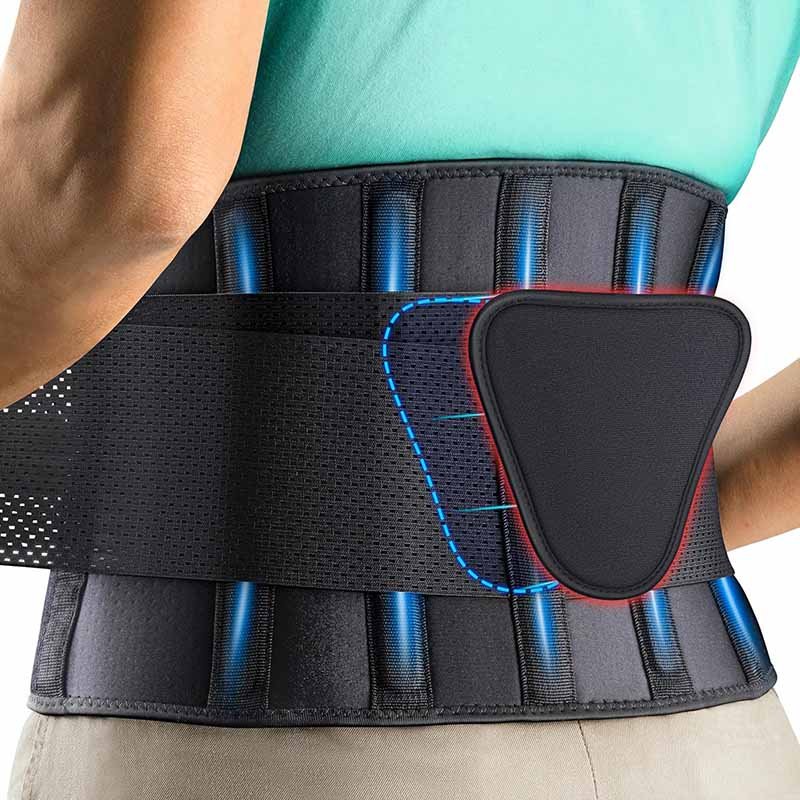
A back support brace is one of those products that looks simple until it is actually worn. On a product page, many braces look almost the same: black neoprene body, hook-and-loop closure, a few support strips, maybe a logo printed on the front. But once a customer puts it on for two hours at work, during a gym session, while lifting, driving, or recovering from lower back strain, the real difference becomes obvious very quickly. A good brace feels supportive without being restrictive. A poor one feels hot, bulky, unstable, or useless after a week.
A well-made neoprene back support brace is built by combining the right neoprene material, the right thickness, the right compression structure, and the right manufacturing process. Good brace manufacturing is not just about cutting and sewing neoprene. It is about controlling support, comfort, fit stability, skin feel, and long-term durability so the brace still performs after repeated wear, sweat exposure, stretching, and washing.
This is why serious clients do not evaluate a brace by appearance alone. They look at how well it supports the lumbar area, how long the compression lasts, whether the brace slides during movement, how the lining feels on the skin, and whether the closure and stitching still hold after months of use. In this category, customers do not only buy a product. They buy relief, stability, confidence, and daily usability.
Oneier has seen this difference many times in real projects. Two braces may look similar in photos, yet one generates repeat orders while the other creates complaints. Usually, the gap comes from hidden details: foam density, elastic recovery, pattern shape, stitching quality, edge finishing, and reinforcement layout. That is where real manufacturing value begins.
What Is Neoprene Back Support Brace Manufacturing?
Neoprene back support brace manufacturing is the process of designing and producing back braces that use neoprene-based laminated materials to deliver compression, warmth, support, and fit stability. A reliable brace must balance material performance, body fit, pressure control, and production consistency. It is not just a sewing job. It is a product development process built around real wear conditions.
What is a neoprene back support brace?
A neoprene back support brace is a wearable support product designed to wrap around the lower back and waist area to provide compression, warmth, and structural support. It is commonly used in sports training, workplace lifting, posture management, rehabilitation, and daily lower back support.
The reason neoprene is widely used in this category is straightforward. It offers a useful mix of:
- elasticity
- cushioning
- thermal insulation
- flexibility
- shape retention
In real use, a neoprene back brace usually aims to support several practical needs at the same time:
- reduce strain during movement
- help the lower back feel more stable
- support muscles during activity or recovery
- keep the core area warm
- create a tighter and more secure feeling around the waist
This is why the product cannot be treated like an ordinary textile belt. A back support brace interacts with the human body in motion. It bends, stretches, compresses, and rubs against the skin or clothing during use. That means the product must perform as a system, not just as a piece of material.
A simple way to understand it is this:
a neoprene back support brace is part support tool, part compression garment, and part comfort product.
If one of those three parts is weak, customers notice it quickly.
Here is how end users usually judge the product in actual use:
| User Concern | What They Really Mean |
|---|---|
| “It doesn’t feel supportive enough” | Compression or structure is too weak |
| “It gets too hot” | Material thickness or lining choice is wrong |
| “It slides when I move” | Pattern, grip, or strap system is poor |
| “It feels stiff” | Material balance or panel design is too aggressive |
| “It wore out too fast” | Foam, stitching, or closure quality is weak |
For clients developing private label or OEM brace products, this matters because a brace is not sold only by specifications. It is sold by the wearing experience.
What makes brace manufacturing different?
Brace manufacturing is different from making bags, pouches, sleeves, or general cut-and-sew products because the product must perform on the body, not just hold its own shape.
A bag can still function even if the material is slightly stiff, the fit is not exact, or the panels are not perfectly ergonomic. A brace does not have that luxury. If the fit is off, pressure becomes uneven. If the elastic recovery is weak, support fades fast. If the seams are poorly placed, the brace irritates the user during movement.
That is why brace manufacturing has a much higher requirement in four areas:
- body fit logic
- pressure distribution
- skin contact comfort
- elastic durability
A good way to compare the difference is below:
| Production Factor | General Sewn Product | Back Support Brace |
|---|---|---|
| Shape tolerance | Medium | Low |
| Fit accuracy | Medium | Very high |
| Comfort sensitivity | Medium | Very high |
| Material recovery | Often less critical | Critical |
| Function failure impact | Mostly cosmetic | Directly affects usability |
| Wear testing importance | Useful | Essential |
The challenge becomes even greater when the product targets different markets. A brace for fitness users is not the same as a brace for rehabilitation or industrial lifting support.
For example:
| Target Market | What They Usually Care About Most |
|---|---|
| Sports & fitness | Flexibility, sweat handling, stable compression |
| Workplace support | Long wear comfort, easy on/off, durability |
| Rehabilitation | Gentle support, fit consistency, skin comfort |
| Retail mass market | Price balance, simple sizing, easy wear |
This is why a factory that only knows basic neoprene cutting may struggle to make a truly good back brace. The factory needs to understand not just how to laminate neoprene, but how to turn that material into a wearable support product that stays useful after repeated daily use.
At Oneier, this difference is important because neoprene brace production draws on more than raw sewing skill. It involves material selection, pattern control, compression layout, panel balance, and repeated sample adjustment. The better the factory understands how people actually wear the brace, the better the final product performs in the market.
What functions should a back support brace have?
A back support brace should do more than just wrap around the waist tightly. If tightness alone solved the problem, any elastic belt would work. But that is not how real users evaluate the product.
A properly developed neoprene back support brace usually needs to deliver six core functions together:
- support
- compression
- warmth
- stability
- comfort
- durability
Each function matters for a different reason.
| Core Function | Why It Matters in Real Use |
|---|---|
| Lumbar support | Helps reduce the feeling of lower back strain |
| Compression | Creates firmness and controlled pressure |
| Heat retention | Keeps the target area warm during activity or recovery |
| Fit stability | Prevents rolling, shifting, or sliding |
| Wearing comfort | Makes longer use possible |
| Durability | Keeps performance stable after repeated use |
The balance between these functions is where many products fail.
A brace with strong compression but poor comfort may be worn only once or twice.
A brace with great softness but weak structure may feel good at first and then disappoint.
A brace that supports well but traps too much heat may get returned in warm-weather markets.
This is why product planning should start from the customer use scene, not only from the material catalog.
For example:
| Use Scenario | Product Priorities |
|---|---|
| Gym and training | Flexibility, support, sweat tolerance |
| Warehouse or lifting work | Stability, all-day comfort, quick adjustment |
| Daily posture support | Moderate compression, low bulk, soft lining |
| Recovery support | Gentle fit, warmth, skin-friendly contact |
Clients also need to think about product positioning. A low-cost retail product may focus on broad sizing and simple construction. A premium private label brace should usually deliver better fit logic, cleaner finishing, stronger recovery, and better skin feel.
In practical terms, a strong back support brace is not the one with the most material. It is the one that gives the user the right support in the right place without making the product hard to wear.
That is what creates reorder potential.
Which Neoprene Is Best for Back Support Brace?
The best neoprene for a back support brace usually depends on the use level, target market, and product price range. In most cases, SBR, SCR, or CR neoprene in the 3mm to 4mm range delivers the best balance of support, flexibility, and comfort. The ideal choice is not simply the thickest or the most expensive neoprene. It is the material combination that keeps compression stable while remaining wearable.
Which neoprene improves brace support?
Not all neoprene performs the same, even when the finished sheet looks very similar. For brace manufacturing, the base rubber formula, foam density, lamination method, and recovery behavior all influence how the brace feels and how long it stays functional.
The most common neoprene material options are:
| Neoprene Type | Main Characteristics | Best Fit for Product Direction |
|---|---|---|
| SBR | Cost-effective, good elasticity, broad availability | Commercial and volume programs |
| SCR | Balanced blend of SBR and CR, better overall performance | Mid-range and better retail lines |
| CR | Higher durability, better weather and aging resistance | Higher-end and more demanding applications |
From a cost and performance point of view, many commercial brace programs use SBR because it works well for price-sensitive projects. But the material must still be well controlled. Low-grade SBR with poor foam density can feel soft in the sample stage and then lose support quickly after repeated wear.
SCR is often a strong middle-ground choice. It tends to provide:
- more stable recovery
- better feel consistency
- improved overall performance
- better perceived quality for mid-range projects
CR neoprene is often selected for more premium positioning because of its durability and higher resistance to environmental wear. But it also comes with higher cost, so it should be used where the market can support that value.
A material comparison from a product planning angle looks like this:
| Material Option | Support Feel | Elastic Recovery | Durability | Cost Level |
|---|---|---|---|---|
| Low-density SBR | Softer | Lower | Lower | Low |
| Standard SBR | Balanced | Good | Good | Medium-low |
| SCR | Better balance | Better | Better | Medium |
| CR | Strong and stable | High | High | High |
For clients, one of the biggest mistakes is selecting neoprene based only on sample softness. Softness is not the full story. A brace must recover after stretching. It must keep pressure after repeated use. It must not collapse too quickly under body heat and motion.
That is why material choice should be based on more than appearance and first-touch feel. It should be based on:
- intended wear duration
- support level target
- climate or market region
- price level of the final product
- expected number of use cycles
Oneier supports this process by helping clients match neoprene options to product purpose, instead of offering one generic material for every project.
What thickness suits back support brace use?
Thickness is one of the first things clients ask about, and for good reason. It changes how the brace feels almost immediately. But thickness alone does not decide product quality. The right thickness depends on the support goal, wear duration, body movement level, and lining combination.
In most back support brace projects, 3mm and 4mm are the most practical working ranges.
Here is a simple comparison:
| Thickness | Product Feel | Support Level | Comfort Level | Best Use Direction |
|---|---|---|---|---|
| 2mm | Light, flexible | Lower | High | Light sports or low-support use |
| 3mm | Balanced | Medium | High | Most mainstream brace products |
| 4mm | Firmer | Medium-high | Medium | Stronger support products |
| 5mm+ | Heavy and bulky | High | Lower for long wear | Limited heavy-support use |
A lot of clients assume thicker means better. In reality, this often leads to product problems.
If the material is too thick:
- breathability drops
- sweating increases
- movement feels restricted
- customers may stop wearing it for long periods
If the material is too thin:
- support feels weak
- brace structure softens too quickly
- product loses value in the customer’s eyes
This is why many successful products use 3mm as the main body thickness and then improve support through other design elements such as:
- double pull straps
- shaped panels
- support stays
- reinforced lumbar zones
- better closure layout
That approach usually produces a better wearing experience than simply making the whole brace thicker.
A practical selection table for clients is below:
| Product Type | Suggested Thickness |
|---|---|
| Everyday support brace | 3mm |
| Sports training support brace | 3mm to 4mm |
| Strong lumbar support brace | 4mm |
| Recovery-focused soft support brace | 2mm to 3mm |
Thickness should also be evaluated together with climate. In warmer markets, a thick brace may create discomfort faster. In colder markets, warmth retention may be more appreciated.
So the better question is not “What is the thickest neoprene we can use?”
It is “What thickness gives the support level we need without hurting wear comfort?”
Does lining affect brace comfort and durability?
Yes, very directly. In many back support brace projects, the lining is one of the most overlooked product decisions, even though it affects both user comfort and long-term durability every single day.
The inner lining influences:
- skin feel
- moisture behavior
- friction level
- wear comfort
- cleaning response
- overall product lifespan
A brace may use good neoprene and still perform poorly if the lining traps too much heat, feels rough on the skin, or breaks down quickly after sweat exposure.
Common lining directions include:
| Lining Type | Main Advantage | Main Concern |
|---|---|---|
| Polyester jersey | Durable and cost-efficient | Can feel warmer |
| Nylon jersey | Smooth and comfortable | Higher material cost |
| Terry lining | Absorbs sweat better | Heavier feel |
| Brushed fabric | Softer skin feel | May wear faster if low quality |
| Anti-slip texture lining | Better position control | Can reduce softness |
For long-wear braces, comfort complaints often come from these hidden details:
- inside surface feels sticky after sweating
- fabric causes skin irritation
- lining pills or roughens after washing
- brace shifts because the inside grip is too low
- brace feels too hot because the fabric layer is too closed
A good lining should support the product’s use scene.
For example:
| Use Scenario | Better Lining Direction |
|---|---|
| Sports and training | Smoother, lower-friction, moderate moisture control |
| Daily workplace wear | Soft touch, stable comfort, good durability |
| Recovery and rehab | Skin-friendly, softer contact, less irritation risk |
The lining also affects how the brace ages. If the inner fabric delaminates or wears out quickly, the whole product loses value even if the foam is still intact.
That is why Oneier does not treat lining as a small accessory choice. In neoprene back support brace manufacturing, lining is part of the performance system. It shapes how the brace feels in the first week, the third month, and the repeat-order stage.
How to Design a Neoprene Back Support Brace
Design is where many brace projects succeed or fail. Two products can use the same neoprene, same thickness, and even similar hardware, but perform very differently because of structure and pattern decisions. A good design does not rely on material alone. It controls how pressure is applied, how the brace follows body movement, and how stable it feels after hours of use.
A well-designed neoprene back support brace should achieve three things at the same time:
- apply consistent compression to the lumbar area
- stay in position during movement
- remain comfortable over long wear periods
If one of these is missing, customers notice it quickly.
How does structure improve back support brace fit?
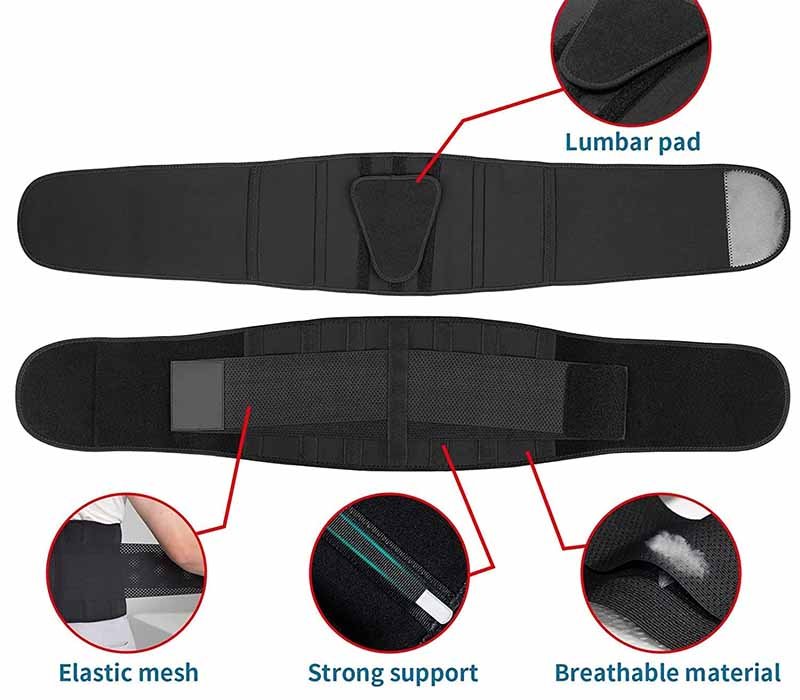
The structure of a back support brace defines how it wraps around the body and how evenly it distributes pressure. A flat, rectangular piece of neoprene can technically wrap around the waist, but it does not match the natural curve of the human body.
A better design follows the shape of the lower back and waist. This usually involves:
- curved panel cutting
- segmented zones for flexibility
- wider lumbar area and narrower front closure
- anatomical shaping around the waistline
Here is a comparison:
| Design Type | Fit Performance | User Experience |
|---|---|---|
| Flat panel design | Poor | Slips, uneven pressure |
| Basic shaped design | Moderate | Acceptable for short wear |
| Ergonomic panel design | Strong | Stable, comfortable, better support |
When the structure matches the body:
- pressure is distributed more evenly
- the brace feels more natural during movement
- less adjustment is needed during use
- customer satisfaction improves significantly
Another important design element is panel zoning. Instead of using one uniform piece, better braces divide the structure into functional areas:
- support zone (lumbar area)
- flexibility zone (side panels)
- closure zone (front)
This allows the brace to provide strong support where needed while still allowing movement where necessary.
Clients often focus on visible features, but internal panel shaping is one of the biggest differences between a basic brace and a high-performing one.
How do straps improve brace support strength?
Straps are one of the most critical parts of a back support brace. They control compression, adjustability, and stability.
A brace without a proper strap system may look complete, but it will struggle to deliver consistent support.
The most common strap systems include:
| Strap Type | Function | Performance Level |
|---|---|---|
| Single closure strap | Basic tightening | Entry-level products |
| Double pull straps | Adjustable compression | Most popular design |
| Elastic tension straps | Dynamic support | Higher-end products |
| Cross straps | Targeted support zones | Advanced designs |
Among these, double pull straps are widely used because they allow users to:
- adjust compression easily
- customize tightness based on activity
- maintain consistent support throughout the day
The positioning of straps also matters. Poor placement can lead to:
- uneven pressure
- brace shifting
- reduced effectiveness
A well-designed strap system usually:
- anchors near the lumbar support zone
- allows symmetrical tightening
- uses strong hook-and-loop materials
- maintains grip after repeated use
Another factor is elastic quality. Low-quality elastic loses tension quickly, which leads to:
- reduced support after short use
- customer complaints
- higher return rates
From a development perspective, strap performance is not just about design—it is about material selection, stitching strength, and durability under repeated stretching.
How does ergonomic design improve brace comfort?
Comfort is one of the biggest deciding factors in whether a customer continues using a brace. Even a strong brace becomes useless if it is uncomfortable to wear.
Ergonomic design focuses on how the product interacts with the body over time.
Key comfort-related design factors include:
| Factor | Impact on User Experience |
|---|---|
| Edge finishing | Prevents irritation and skin marks |
| Breathability zones | Reduces heat buildup |
| Flexible side panels | Allows movement without restriction |
| Proper width ratio | Balances support and comfort |
| Weight distribution | Prevents pressure points |
One common mistake is designing a brace that is too rigid. While rigidity may increase perceived support, it often reduces wear time because users feel restricted.
Another issue is poor edge treatment. Rough edges or hard seams can cause discomfort, especially when worn directly on the skin.
A good ergonomic design should:
- follow natural body movement
- avoid sharp pressure points
- maintain balance between support and flexibility
- allow extended wear without discomfort
In real use, comfort directly affects product success. If a brace feels good, customers wear it longer. If they wear it longer, they experience its benefits. That leads to better reviews and repeat orders.
How Is Neoprene Back Support Brace Manufactured?
Manufacturing is where design decisions become real products. Even a well-designed brace can fail if production quality is inconsistent.
A reliable manufacturing process ensures that every unit delivers the same level of performance.
How is neoprene cut in brace manufacturing?
Cutting is the first critical step in production. The accuracy of cutting directly affects fit, alignment, and final product consistency.
There are two main cutting methods:
| Cutting Method | Advantage | Limitation |
|---|---|---|
| Manual cutting | Flexible for small orders | Lower consistency |
| Die cutting (press cutting) | High precision, repeatable | Requires tooling |
For most professional production, die cutting is preferred because it ensures:
- consistent shape across batches
- clean edges
- accurate alignment for assembly
Neoprene is usually laminated with fabric on one or both sides. During cutting, it is important to:
- avoid edge damage
- maintain layer integrity
- ensure smooth curves for ergonomic panels
Poor cutting leads to:
- uneven fit
- assembly misalignment
- visible quality issues
For OEM clients, cutting precision is especially important because it directly affects how consistent the final product feels across large orders.
How do stitching and bonding affect brace quality?
After cutting, components are assembled using stitching, bonding, or a combination of both.
Each method has its own role:
| Method | Function | Performance Impact |
|---|---|---|
| Stitching | Structural connection | Determines durability |
| Gluing/bonding | Surface bonding | Improves finish and flexibility |
| Edge binding | Reinforces edges | Improves comfort and lifespan |
Stitching quality is one of the most important factors in long-term durability.
Key points include:
- stitch density (too low = weak, too high = stiff)
- thread strength (must match material stress level)
- stitch pattern (straight vs reinforced patterns)
Common stitching problems include:
- seam opening after repeated use
- thread breakage under tension
- uneven stitching causing weak spots
Bonding is often used to:
- reduce bulk
- improve flexibility
- create cleaner product appearance
However, poor bonding can lead to delamination, especially in high-temperature or high-moisture conditions.
A good manufacturing process balances both techniques to achieve strength and comfort.
How does QC ensure back support brace reliability?
Quality control is not just the final inspection step. It should be integrated throughout production.
Key QC stages include:
| Stage | What Is Checked |
|---|---|
| Material inspection | Thickness, density, surface quality |
| Cutting inspection | Shape accuracy, edge quality |
| Assembly inspection | Stitching, alignment, bonding |
| Final inspection | Fit, appearance, functionality |
| Packaging inspection | Labeling, branding accuracy |
For brace products, additional functional checks are important:
- stretch and recovery testing
- closure strength testing
- repeated fastening cycles
- visual wear simulation
A simple example:
- hook-and-loop closure tested for 500–1000 cycles
- strap tension checked under repeated pulling
- seams inspected after stress testing
Without proper QC, even small defects can lead to customer dissatisfaction.
From a client perspective, consistent quality is more important than perfect samples. A good factory ensures that what you approve in the sample stage is what you receive in mass production.
At Oneier, this is managed through:
- controlled production processes
- standardized inspection steps
- batch consistency checks
This helps reduce risk and ensures stable product performance across orders.
How to Customize Neoprene Back Support Brace
Customization is where a standard brace becomes your product. For brands, distributors, and wholesale buyers, the difference between a generic item and a successful product line often comes down to how well the brace is adapted to the target market.
A well-customized neoprene back support brace should align with:
- user needs
- price positioning
- branding requirements
- usage scenarios
How to customize sizes and logo for brace manufacturing?
Sizing and branding are the two most visible parts of customization, but they need to be done carefully to avoid performance issues.
Size customization
Back support braces are usually designed using:
- S / M / L / XL size ranges
- Adjustable universal sizing
- Extended sizes for specific markets
Here is a common reference:
| Size | Waist Range | Target Market |
|---|---|---|
| S | 65–80 cm | Slim users |
| M | 75–95 cm | Standard users |
| L | 90–110 cm | Larger users |
| XL | 105–125 cm | Plus-size users |
Some clients prefer a one-size adjustable model to simplify inventory. This works well for e-commerce and general retail, but requires stronger strap systems and wider adjustment range.
Logo customization
Logo application methods include:
| Method | Advantage | Application |
|---|---|---|
| Silk screen printing | Cost-effective | Large volume orders |
| Heat transfer | Clean appearance | Mid to high-end products |
| Embroidery | Premium feel | Branding-focused products |
| Woven label | Durable | Long-term use |
Placement also matters. Common logo positions include:
- front panel
- side strap
- inner label
Clients should avoid placing logos in high-stress or high-flex areas, as this may affect durability.
How does OEM neoprene back support brace work?
For many brands, working with an OEM manufacturer like Oneier is the most efficient way to develop products.
The process usually follows these steps:
| Step | Description |
|---|---|
| Concept discussion | Define product use, target market, price |
| Design confirmation | Size, structure, material selection |
| Sampling | Prototype development and adjustment |
| Testing | Fit, durability, and performance validation |
| Order confirmation | Final specs and production planning |
| Mass production | Bulk manufacturing |
| Inspection & shipment | Quality check and delivery |
A key point many clients overlook is the sampling stage. This is where most improvements happen.
During sampling, adjustments may include:
- strap positioning
- compression level
- panel shaping
- material thickness
- closure strength
Skipping detailed sampling often leads to issues in mass production.
Another important factor is communication. Clear specifications, reference samples, and target pricing help speed up development and reduce errors.
How does Oneier support brace manufacturing projects?
Oneier’s advantage comes from combining material expertise + product development experience + manufacturing control.
For neoprene back support brace projects, Oneier supports clients in several key areas:
1. Material sourcing and control
- In-house neoprene supply chain
- Consistent material quality
- Multiple neoprene options (SBR, SCR, CR)
- Fabric lamination customization
2. Product design support
- Structure suggestions based on use case
- Strap and compression system design
- Ergonomic adjustments for better fit
- Experience across sports, medical, and retail markets
3. Sampling capability
- Fast sample turnaround
- Multiple revisions based on feedback
- Real-use testing adjustments
4. Manufacturing capacity
- Stable production lines
- Skilled workers familiar with neoprene products
- Consistent quality across batches
5. Quality control system
- Multi-step inspection
- Material and performance checks
- Packaging and branding verification
6. Custom service flexibility
- Low MOQ for new projects
- OEM / private label support
- Packaging design assistance
For clients, this means fewer risks during development and more confidence when scaling production.
Final Thoughts: Build a Brace That Customers Actually Use
In the back support brace category, success is not defined by how the product looks on a shelf. It is defined by how often customers continue to use it after purchase.
A brace that feels uncomfortable, loses compression, or fails to stay in place will quickly be abandoned—even if it was priced competitively.
On the other hand, a brace that:
- fits well
- provides stable support
- feels comfortable over time
- maintains performance after repeated use
will naturally lead to:
- better reviews
- repeat orders
- stronger brand reputation
For brands and distributors, this is where long-term value is built.
A well-developed neoprene back support brace is not just a product—it becomes part of the user’s daily routine. That is what creates loyalty.
Work With Oneier to Develop Your Neoprene Back Support Brace
If you are planning to launch or upgrade a neoprene back support brace line, choosing the right manufacturing partner is one of the most important decisions you will make.
At Oneier, we support clients through every stage:
- material selection based on target market
- brace structure and compression design
- sample development and refinement
- stable mass production
- strict quality control
With over 18 years of experience in neoprene product manufacturing, we understand what works in real markets—not just in product drawings.
If you want to:
- improve product performance
- reduce return rates
- create a more competitive product line
- build your own branded neoprene brace
You can contact Oneier to discuss your project.
Send us your idea, target price, and usage scenario — we’ll help you turn it into a brace that performs in real use.