
Which Printing Method Works Best on Neoprene Koozies?
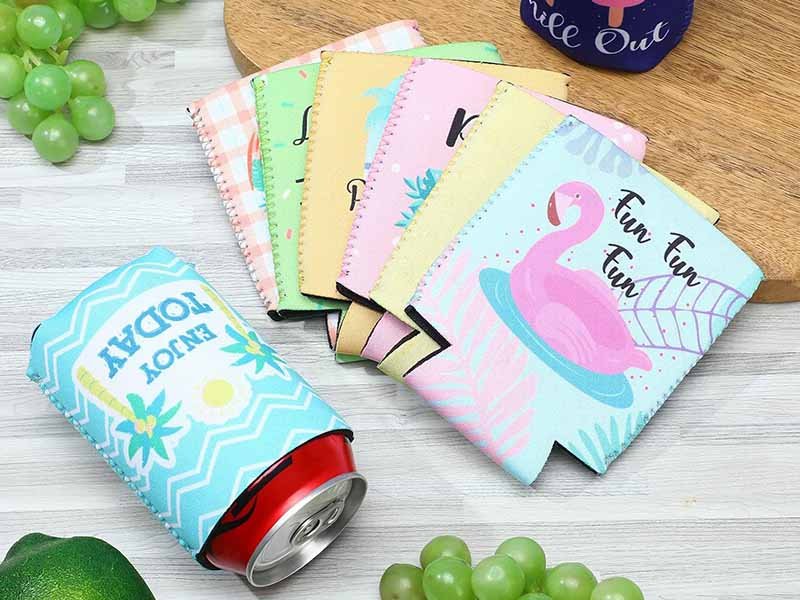
Koozies may look playful, but behind every colorful sleeve that keeps your drink cold lies a surprisingly technical question — how to print perfectly on neoprene. This flexible rubber-based fabric doesn’t behave like cotton or polyester. Its surface is smooth, elastic, and heat-sensitive, meaning the printing method must balance vivid color, adhesion, and softness without damaging the foam underneath.
The best printing methods for neoprene koozies are sublimation, screen printing, and heat transfer, depending on design and quantity. Sublimation delivers full-color photo prints on polyester-laminated neoprene, screen printing creates solid, durable logos, and heat transfer works well for short runs or multi-color graphics. Each offers unique strengths in clarity, durability, and texture.
At Szoneier, one of China’s most experienced neoprene manufacturers, engineers often compare printing to pairing wine with food — the right combination of ink and heat brings out the material’s best qualities. Choose wrong, and even the most beautiful design can fade, crack, or lose detail. But get it right, and the result feels almost sculpted into the fabric.
So what really separates one printing method from another — and which delivers the best performance for your neoprene koozies? Let’s unpack the science, surface behavior, and design outcomes that make each technique unique.
What Printing Methods Are Commonly Used on Neoprene Koozies?
The most common printing methods for neoprene koozies are screen printing, heat transfer, sublimation, and digital UV printing. Each interacts differently with neoprene’s laminated fabric surface. Screen printing excels with simple, bold logos; sublimation produces seamless full-color designs; heat transfer suits small batches; and UV printing offers modern, tactile effects.
Screen Printing — The Classic Workhorse
Screen printing is still the backbone of neoprene customization. A fine mesh pushes thick ink directly onto the laminated fabric surface (typically polyester jersey). After curing under moderate heat (≈ 150 °C), the ink fuses into a flexible film.
Pros: bold colors, tactile texture, excellent durability.
Cons: limited color range, slower for small orders.
| Feature | Screen Printing | Result |
|---|---|---|
| Best for | One- to three-color logos | Crisp, high-contrast finish |
| Durability | 4 – 5 years average | Minimal fading / peeling |
| Setup Cost | Medium (per screen per color) | Economical for large runs |
| Surface Compatibility | Excellent on polyester laminate | Not for raw foam |
Designers love its vintage charm: the ink slightly rises above the surface, giving a handcrafted, graphic feel ideal for branding and corporate giveaways.
Heat Transfer Printing — The Flexible Option
Heat transfer uses pre-printed vinyl or transfer paper applied with heat and pressure. The key is temperature control — neoprene begins to deform above 170 °C, so presses operate at 140–160 °C for 10–15 seconds.
Pros: fast, full-color capability, suitable for small runs.
Cons: can feel slightly plastic; moderate longevity.
| Feature | Heat Transfer | Result |
|---|---|---|
| Ideal for | Short runs, event branding | Precise graphic replication |
| Durability | 2 – 3 years average | May crack under frequent folding |
| Texture | Smooth film surface | Less breathable than ink print |
Because heat transfer is quick to set up, it’s favored for promotional batches or limited-edition designs. The challenge lies in striking a balance between adhesion and flexibility — the film must stretch with the neoprene instead of lifting when compressed.
Sublimation Printing — Photo-Real and Permanent
Sublimation isn’t applied to neoprene foam directly but to its polyester fabric laminate. At around 200 °C, sublimation ink vaporizes and bonds with polyester fibers, embedding color below the surface.
Pros: unlimited colors, permanent design, no surface texture.
Cons: only works on polyester-faced neoprene.
| Feature | Sublimation | Result |
|---|---|---|
| Best for | Full-color designs, gradients & photos | Edge-to-edge coverage |
| Durability | 5 + years / wash-proof | No cracking or peeling |
| Feel | Soft, seamless | Looks “part of” the fabric |
For high-quality retail koozies, sublimation reigns supreme. Colors appear as if printed within the fabric, giving a smooth, luxury-grade finish.
UV Digital Printing — The Modern Contender
UV printing uses direct-to-substrate ink cured instantly by ultraviolet light. It works on coated neoprene and can even produce raised textures.
Pros: detailed graphics, fast setup.
Cons: higher equipment costs, slightly stiffer surface.
| Feature | UV Printing | Result |
|---|---|---|
| Ideal for | Specialty finishes, short runs | Raised texture, fine lines |
| Durability | 3 – 4 years | Good UV resistance outdoors |
| Texture | Semi-gloss to matte | Slightly rigid feel |
Each of these four methods finds its niche. The “best” one depends on purpose — promotional speed, artistic depth, or premium retail presentation.
Which Method Delivers the Best Durability on Neoprene Material?
For long-lasting prints on neoprene koozies, sublimation and screen printing outperform other methods. Sublimation dyes bond chemically with polyester laminates, while screen printing inks form thick, flexible layers that resist abrasion. Heat transfer and UV printing offer quick, vibrant results but may show wear sooner under stretching or folding.
Understanding Durability on Elastic Surfaces
Neoprene’s charm — its stretch and bounce — is also what challenges printers. Each time a koozie expands around a can or bottle, its surface flexes by 15 – 25 %. Poorly bonded ink cracks under this stress. That’s why traditional rigid-ink systems fail where elastic inks and dye-fusion methods succeed.
Performance Comparison
| Printing Method | Adhesion Strength (%) | Wash / Fade Resistance | Stretch Performance | Overall Durability Score (1–5) |
|---|---|---|---|---|
| Sublimation | 95 + | Excellent | Excellent | 5 stars |
| Screen Printing | 90 | Very Good | Good | 4 stars |
| Heat Transfer | 80 | Moderate | Fair | 3 stars |
| UV Printing | 85 | Good (outdoor UV) | Fair | 3 stars |
Sublimation literally becomes part of the fabric — no layer to peel. Screen printing holds strong thanks to its thick ink deposit, though constant stretching can eventually create micro-cracks. Heat transfer films may separate after 2 – 3 years of repeated flexing; UV printing performs better outdoors but less so under compression.
Environmental Factors
Durability also depends on how koozies are used. Exposure to sunlight, chlorine, or oils (from hands) gradually breaks down unprotected inks. A polyester laminate with UV additives and proper curing extends print life significantly.
Maintenance and Lifespan
- Sublimated koozies: machine-washable up to 60 °C, fade-free for 5 years+.
- Screen-printed koozies: hand-wash recommended, color stable for 3 – 4 years.
- Heat-transfer prints: spot-clean only; films may harden over time.
- UV prints: water-resistant, suited for limited use promotions.
Practical Summary
For brands planning reusable or retail-quality koozies, sublimation provides unmatched longevity and design freedom. For bold, single-color logos, screen printing remains reliable and cost-efficient. Heat transfer and UV methods shine in event-based, short-term contexts where turnaround speed outweighs multi-year endurance.
How Does Design Complexity and Color Impact Choice of Printing Method?
Complex, multi-color, or photographic designs work best with sublimation and digital printing, which allow gradient and full-wrap effects. Screen printing suits bold, limited-color logos, while heat transfer bridges the gap for mid-range complexity. The more intricate the artwork, the more crucial color fidelity, fabric type, and heat tolerance become when choosing a printing process for neoprene koozies.
The Role of Surface and Fabric Lamination
Unlike paper or canvas, neoprene is a foam-core material laminated with polyester or nylon jersey. This top layer is where inks actually land. The finer and smoother the fabric weave, the more precisely it can capture gradients and details.
- Polyester-faced neoprene = best for sublimation (fine dye diffusion).
- Nylon-faced neoprene = excellent for screen or UV printing (stronger ink adhesion).
The same logo printed on two laminations can look surprisingly different — one crisp and photo-real, the other slightly textured and matte.
Color Depth and Vibrancy
| Printing Type | Color Capability | Finish | Best Use Case |
|---|---|---|---|
| Sublimation | Full CMYK / photo-real | Matte, embedded | Detailed artwork or gradients |
| Screen Printing | Spot colors (1–4 max) | Slightly raised, solid | Bold logos, text |
| Heat Transfer | Full color | Glossy / semi-matte | Short runs, multi-color graphics |
| UV Printing | Full color + texture | Gloss or satin | Unique surface effects |
Sublimation achieves the widest color range because it infuses dye into polyester molecules — the result is smooth, continuous tone transitions ideal for photographic artwork or branding gradients. Screen printing, in contrast, layers opaque inks that retain strong saturation but can’t replicate complex shading. Heat transfer offers photographic reproduction, yet its vinyl base may slightly distort hues due to reflective gloss.
Edge and Alignment Precision
Designers must also consider print placement accuracy.
- Sublimation supports full-wrap or 360° prints; alignment tolerance <2 mm.
- Screen printing aligns per color; tolerance 2–4 mm, depending on mesh tension.
- Heat transfer relies on film positioning; ±3 mm variation typical.
When you’re printing hundreds of sleeves, even small misalignments can matter, especially on patterns that wrap around the circumference. Sublimation leads in alignment consistency since it prints onto flat fabric before cutting and sewing — ensuring the artwork sits perfectly when the koozie is assembled.
Texture and Visual Personality
Every printing method carries a visual “feel.”
- Screen printing: tactile and slightly embossed — visually powerful for minimal graphics.
- Sublimation: soft, integrated finish that feels part of the fabric.
- Heat transfer: smooth and shiny, more “graphic” than textile.
- UV printing: three-dimensional, adding a modern tech look.
These subtle surface cues define the user experience. A brewery wanting a handmade aesthetic may prefer the texture of screen ink; a luxury resort might choose seamless sublimation for a premium impression.
Practical Insight: Matching Design Type to Printing Method
| Design Type | Recommended Printing | Reason |
|---|---|---|
| Simple logo / text | Screen printing | Sharp, economical |
| Multi-color logo | Heat transfer | Good color control |
| Photo / gradient | Sublimation | Unlimited tones |
| Metallic or embossed logo | UV printing | Texture and reflectivity |
| Full-surface pattern | Sublimation | Seamless edge-to-edge look |
The trick is not asking “which method is best,” but “which method best fits the story you want your koozie to tell.”
What Are the Cost, MOQ and Setup Implications of Each Printing Method?
Screen printing has low per-unit cost but higher setup fees; sublimation and UV printing require less setup but more expensive equipment. Heat transfer sits in the middle, ideal for small or seasonal batches. The cost-efficiency of each method depends on print complexity, order size, and color count — small runs favor digital methods; large runs favor screen printing.
Understanding Setup Costs
Printing cost is not just ink and labor — it’s the sum of preparation, color separation, and finishing.
| Method | Setup Cost | Per-Unit Cost (Large Run) | Minimum Order | Best For |
|---|---|---|---|---|
| Screen Printing | High (per color) | Low ($0.25–0.40) | 100+ units | Bulk orders, simple logos |
| Heat Transfer | Low | Medium ($0.50–0.70) | 30–100 units | Small batch, event branding |
| Sublimation | Medium | Low–Medium ($0.40–0.60) | 50+ units | Retail-grade, full-color prints |
| UV Printing | Low | High ($0.80–1.00) | 10–50 units | Specialty / premium projects |
Screen printing becomes economical after 100+ pieces due to reusable screens. For small-batch runs or testing designs, heat transfer or UV printing avoids expensive setup. Sublimation offers a balanced middle ground for brands needing color precision without massive quantities.
MOQ and Flexibility
Many small businesses prefer short runs for seasonal campaigns or wedding gifts. Digital processes (sublimation and UV) require no physical screens, meaning designs can change frequently without penalty. Traditional screen setups require retooling — ideal only if the artwork remains constant.
Production Speed
- Sublimation: fastest — continuous roll printing and cut-sew production possible.
- Screen printing: slower due to multi-layer drying.
- Heat transfer: moderate; manual alignment required.
- UV printing: instant curing but one-piece-at-a-time.
Hidden Cost Factors
Buyers often overlook secondary expenses:
- Color matching: Pantone inks for screen printing incur extra fees.
- Sample approval: Pre-production proofs add time and small cost.
- Material testing: Each neoprene batch may vary slightly in surface tension; adjustments ensure optimal ink adhesion.
Cost Optimization Tips
- Simplify designs (fewer colors = lower screen setup cost).
- Print before cutting and sewing for alignment efficiency.
- Group multiple artwork variants within one batch to share setup cost.
- Consider eco-inks; though pricier, they enhance export compliance and sustainability appeal.
The bottom line: screen printing wins in volume, sublimation wins in color, heat transfer wins in flexibility, and UV wins in uniqueness.
Are There Printing Methods That Work Especially Well with Neoprene’s Unique Surface?
Because neoprene is elastic, waterproof, and foam-based, sublimation and screen printing perform best on its laminated fabric surface. Heat transfer requires precise temperature control to avoid deformation, while UV printing suits coated neoprene for high-definition or embossed effects. The key is matching technique to surface finish and lamination type.
The Challenge of Elastic Surfaces
Neoprene stretches differently from woven fabrics. During printing, pressure or heat can temporarily compress the foam, distorting patterns once the surface rebounds. Professional printers pre-press sheets briefly to stabilize thickness before applying ink or heat.
This is why temperature discipline is critical. Excess heat can cause “orange peel” texture or bubbles as the foam cells expand. Keeping the range between 140–160 °C ensures clarity without structural damage.
Adhesion and Surface Behavior
Neoprene’s outer fabric determines how inks anchor:
- Polyester Laminate: bonds perfectly with sublimation dyes.
- Nylon Laminate: slightly hydrophobic, better suited for screen or UV inks.
- Bare Foam (rare): nonporous; best avoided for printing.
Some high-end manufacturers coat neoprene with a thin primer to increase ink hold — a technique borrowed from wetsuit production.
Methods Tailored to Texture
| Surface Type | Recommended Method | Why It Works |
|---|---|---|
| Smooth Polyester | Sublimation | Dye penetrates evenly |
| Matte Nylon | Screen Printing / UV | Ink grips fiber tops |
| Perforated / Embossed | Heat Transfer | Film molds to texture |
| Gloss-Coated Foam | UV Printing | Ink cures instantly on surface |
This table underscores the interplay between surface chemistry and visual outcome. The same neoprene foam can look entirely different depending on its laminate fabric and finish.
Specialized Enhancements
Beyond standard printing, innovative methods now allow embossed logos, laser etching, and metallic UV varnish.
- Embossing: creates a raised pattern without color, preserving minimalist design.
- Laser Etching: removes the surface dye to reveal lighter tones beneath — subtle yet elegant.
- UV Spot Gloss: adds reflective accents to matte neoprene, catching light dynamically.
These modern touches have turned neoprene koozies into brand storytelling tools — not just drink holders.
Printing and Longevity Balance
Surface treatment also affects long-term wear. Textured finishes resist scratches but make prints appear softer; smooth laminates yield sharper detail but may scuff more easily. Many brands now combine both: printing the main design on smooth neoprene, then adding textured reinforcement zones at high-contact areas for protection.
How Should Buyers Choose the Right Printing Method for Their Neoprene Koozie Project?
Choosing the best printing method for neoprene koozies depends on design complexity, order size, budget, and durability needs. Sublimation suits colorful, detailed designs; screen printing is ideal for simple logos in large runs; heat transfer works for short-term promotions; and UV printing adds tactile or luxury effects. Balancing cost, color, and feel ensures a print that fits both function and brand identity.
Think Beyond the Design — Start with the Purpose
Before picking a printing method, clarify how the koozie will be used.
- Promotional giveaways need cost-effective speed → screen printing or heat transfer.
- Retail merchandise demands premium feel → sublimation or UV printing.
- Event branding favors quick turnaround → heat transfer.
- Corporate gifts benefit from color fidelity and texture → sublimation or UV.
Every printing approach tells a slightly different brand story: screen printing feels bold and traditional, sublimation feels modern and immersive, and UV printing feels tactile and futuristic.
Evaluate Quantity vs. Customization Needs
The number of units dramatically changes cost logic.
| Order Size | Recommended Printing | Why It Works |
|---|---|---|
| < 50 pcs | Heat Transfer / UV | No screen setup; fast turnaround |
| 50–300 pcs | Sublimation | Balanced cost and visual impact |
| 300+ pcs | Screen Printing | Economical per-unit rate |
| Limited Editions | UV Printing | High-quality texture, premium appeal |
A small batch of wedding koozies may use heat transfer, while a brewery producing thousands for retail would save significantly with screen printing.
Match Surface Type to Method
Not all neoprene looks the same. Identify whether your koozie is:
- Polyester laminated → ideal for sublimation (vivid, embedded prints).
- Nylon laminated → screen or UV printing (better ink grip).
- Embossed or textured → heat transfer (film molds to contour).
Choosing the wrong process for the surface leads to fading or cracking within months — one of the most common beginner mistakes.
Consider Durability vs. Feel
In the world of neoprene, comfort and durability often trade places. Sublimation merges color into the fabric, leaving no raised ink film — soft and permanent. Screen printing builds a tactile layer that resists abrasion but feels slightly heavier. Heat transfer feels sleek and smooth but ages faster under repeated bending.
| Factor | Best Choice | Reason |
|---|---|---|
| Long-term durability | Sublimation | Dye-bonded color, no peel |
| High color saturation | Screen / UV | Thick opaque ink |
| Soft hand-feel | Sublimation | No ink texture |
| Surface texture effect | UV printing | Gloss or raised finishes |
A practical rule: If you can see people using the koozie for years, sublimation is your safest bet. If it’s for a one-time campaign, heat transfer offers agility without waste.
Budget Realism and Return on Value
Sometimes the cheapest print isn’t the most cost-effective. Low-cost heat transfer may look sharp initially but lose brightness after months of use, while sublimation maintains its appeal for years. Brands focusing on long-term impression (breweries, resorts, lifestyle labels) gain higher ROI from higher-grade prints.
For example, a sublimated koozie might cost 20% more upfront, yet last twice as long — delivering better brand exposure over time.
Ask the Right Questions Before Production
Before finalizing, buyers should confirm with their supplier:
- What lamination fabric is used on the neoprene?
- What’s the maximum print area and bleed size?
- Can the factory match Pantone colors?
- Are inks certified safe and low-VOC?
- Will samples be provided for color approval?
These questions prevent downstream issues — especially when exporting to regulated markets like the EU or North America.
The Complete Printing Comparison at a Glance
| Criteria | Screen Printing | Heat Transfer | Sublimation | UV Printing |
|---|---|---|---|---|
| Color Range | Limited (1–4 spot) | Full-color | Unlimited (photo-real) | Full-color + texture |
| Durability | High | Medium | Very High | High (surface only) |
| Setup Cost | High | Low | Medium | Low |
| Per-Unit Cost (100+ pcs) | Low | Medium | Medium | High |
| MOQ | 100+ | 30–100 | 50+ | 10–50 |
| Feel / Texture | Raised ink | Smooth film | Soft fabric | Slightly glossy / tactile |
| Surface Suitability | Nylon / Polyester | Smooth laminate | Polyester only | Coated surfaces |
| Best For | Bold logos | Event promos | Retail-grade, gradient prints | Premium limited editions |
Best Overall Balance: Sublimation printing offers the best mix of aesthetics, durability, and production efficiency for neoprene koozies with polyester lamination.
Most Economical Option: Screen printing for single-color, high-volume runs.
Most Flexible for Customization: Heat transfer for small batches or special events.
Most Distinctive Appearance: UV printing for high-end branding and raised textures.
Final Thoughts — Printing Is Design in Motion
Printing on neoprene is equal parts art and physics. The material’s smooth elasticity challenges conventional ink behavior but rewards precision. When done right, a neoprene koozie becomes more than a giveaway — it becomes a brand experience you can touch.
Each method has its unique rhythm:
- Screen printing, the classic — simple, solid, timeless.
- Heat transfer, the agile — quick and versatile.
- Sublimation, the visionary — immersive and permanent.
- UV printing, the experimental — textured and futuristic.
Choosing one is not about technology, but about intention. The print is the handshake between your design and your customer. It speaks of your brand’s creativity, quality standards, and attention to detail.
Conclusion — Bring Your Custom Neoprene Koozie to Life with Szoneier
Behind every flawless neoprene print lies precision manufacturing — and few understand that better than Szoneier, a trusted Chinese neoprene specialist with over 18 years of material innovation and production expertise.
From lamination research to custom cutting and sublimation, Szoneier’s team controls every stage of fabrication, ensuring your koozies look exactly as envisioned — vibrant, durable, and professionally finished.
Whether you’re designing for a global beverage label, a boutique gift line, or a seasonal campaign, Szoneier can help you:
- Choose the best material and printing combination for your project.
- Develop samples quickly and refine design fit.
- Produce with consistent color, quality, and lead time.
Ready to start?
Explore the full potential of custom neoprene printing — contact Szoneier today to discuss your design or request a sample pack. Because when printing meets craftsmanship, every sip feels like a signature.
What Can I Do For You?
Here, developing your OEM/ODM private label leather goods collection is no longer a challenge,it’s an excellent opportunity to bring your creative vision to life.