
What Is the Best Material for a Koozie? Neoprene vs Foam Compared
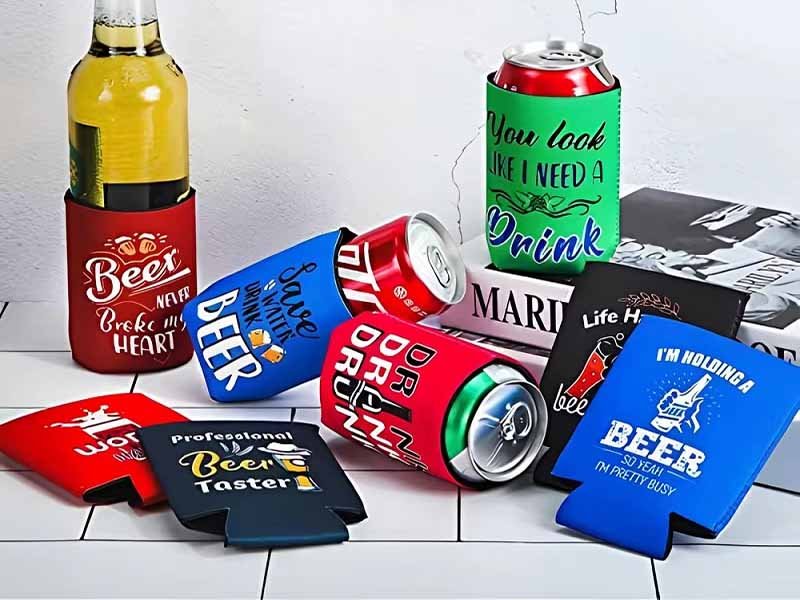
A great drink moment is all about temperature. That refreshing first sip of an ice-cold beer, soda, or sparkling water doesn’t just taste good — it feels good. But we’ve all had that same drink turn lukewarm halfway through a barbecue or beach day. The reason? Heat transfer. Your hands warm the can, condensation collects, and suddenly your “cold one” isn’t so cold anymore.
That’s where the humble koozie comes in — a deceptively simple sleeve that keeps drinks colder longer. But if you’ve ever held a dozen different koozies at an event, you know they’re not all equal. Some are soft and durable, others cheap and flimsy. So what really makes one better than another? The answer lies in the material.
The best material for a koozie is neoprene, a flexible, closed-cell rubber used in wetsuits and insulation. Neoprene outperforms foam in temperature control, comfort, and durability. It’s water-resistant, stretchable, and long-lasting, making it ideal for reusable or custom-branded koozies. Foam koozies are cheaper but absorb moisture, lose shape, and wear out faster. For both performance and quality, neoprene is the superior choice.
That single truth explains why top beverage brands, event planners, and merch designers worldwide are switching to neoprene. It doesn’t just keep drinks cold — it keeps your brand experience cool, too.
Imagine two people at the same summer concert. One holds a soggy, crumpled foam sleeve; the other grips a smooth neoprene koozie that feels dry, soft, and premium. Guess which one people remember? That’s the quiet power of material choice. Let’s unpack what makes it so important — and how the right decision transforms both your drink and your brand perception.
What Is a Koozie and Why Does Material Matter?
A koozie is an insulating sleeve that wraps around a drink can or bottle to reduce heat transfer and condensation. The material determines how long the drink stays cold, how comfortable it feels, and how durable it is. Cheap open-cell foam insulates poorly and absorbs moisture, while neoprene’s closed-cell structure traps air, resists water, and maintains elasticity — delivering superior insulation, comfort, and long-term performance.
On the surface, a koozie looks like just another promotional item. But behind that soft exterior is a small physics lesson — one that decides whether your drink stays cold for 10 minutes or 30.
1. How Koozies Actually Work
A koozie slows conduction (heat transfer from your hand) and condensation (moisture from the air). Metal cans conduct heat extremely fast, which means your drink warms the moment you touch it. A well-made koozie introduces a barrier of trapped air — nature’s best insulator.
- Closed-cell neoprene: Seals millions of air bubbles inside, blocking heat and moisture.
- Open-cell foam: Contains gaps where air and water flow freely, reducing insulation.
That microscopic difference explains why neoprene feels firm and springy while foam feels soft and porous. The tighter the cell structure, the longer the cold lasts.
2. The Evolution of the Koozie
The original koozie emerged in the 1980s — simple, cheap, and made from open-cell polyurethane foam. Back then, it was all about low-cost novelty. But as the promotional and drinkware industries evolved, buyers demanded better quality, custom branding, and reusability. That’s when neoprene, originally designed for wetsuits, entered the scene.
Neoprene wasn’t just another material; it revolutionized performance. It introduced stretch, water resistance, and a clean surface perfect for printing. Suddenly, koozies weren’t disposable gimmicks — they became lifestyle accessories.
3. The Material-Performance Connection
Material choice defines three things:
- Insulation Efficiency — How long your drink stays cold.
- Moisture Resistance — Whether the sleeve absorbs or repels condensation.
- Aesthetic & Comfort — How it looks, feels, and fits in your hand.
| Factor | Foam Koozie | Neoprene Koozie |
|---|---|---|
| Cell Structure | Open-cell | Closed-cell |
| Insulation Duration | 5–10 minutes | 20–30 minutes |
| Water Resistance | Absorbs moisture | Fully waterproof |
| Durability | Tears easily | 5x longer lifespan |
| Flexibility | Rigid | Stretchable |
| Surface for Printing | Uneven, porous | Smooth, premium finish |
A neoprene koozie can keep your drink up to 40% colder for longer, according to thermal retention tests. That’s not just marketing — it’s material science.
4. Branding and Comfort: Two Sides of the Same Coin
A koozie is both a functional and emotional product. The way it feels in your hand matters as much as how well it works. Neoprene has a soft-touch texture that gives a sense of quality — a detail that directly influences how customers perceive your brand. A good material literally feels more expensive.
5. Comfort in Real Use
Temperature perception is psychological as well as physical. A dry, firm neoprene sleeve feels clean and balanced; a wet foam sleeve feels sticky and unpleasant. This subtle difference shapes user behavior — one gets tossed after one use, the other gets kept in a car or picnic bag. Over time, that difference defines value.
What Materials Are Commonly Used for Koozies?
The most common koozie materials include neoprene, foam, polyester fabric, vinyl, and leather. Each offers unique benefits — foam is lightweight and inexpensive, neoprene is durable and insulating, polyester adds design flexibility, and leather delivers a premium aesthetic. However, neoprene consistently ranks highest for insulation, comfort, and lifespan, making it the preferred material for quality brands, event giveaways, and long-term promotional use.
When it comes to drink sleeves, the material is more than just a production choice — it’s a message. The texture, insulation, and appearance all communicate your brand’s identity. Cheap foam says “temporary.” Neoprene says “premium.” And fabric or leather says “boutique.”
Let’s look at the most popular koozie materials and what each one brings to the table.
1. Neoprene — The Premium Standard
Neoprene is a synthetic rubber originally developed for wetsuits. It’s flexible, water-resistant, and temperature-retaining — the trifecta for any drink sleeve.
- Pros: Superior insulation, stretchable fit, water-resistant, durable, soft texture.
- Cons: Slightly higher cost per unit.
- Best For: Premium promotional campaigns, reusable retail products, weddings, outdoor events, and branded merchandise.
Unlike foam, neoprene maintains its shape and elasticity even after months of use. It’s washable, foldable, and suitable for vibrant printing (sublimation or screen print). That’s why professional brands — from breweries to outdoor gear companies — use neoprene as their signature koozie material.
2. Foam — The Budget Classic
Foam koozies (typically polyurethane foam) were the original industry standard. They’re cheap, lightweight, and easy to produce in bulk.
- Pros: Low-cost, lightweight, widely available.
- Cons: Absorbs moisture, cracks easily, poor long-term durability, loses elasticity.
- Best For: Mass giveaways, one-time events, budget promotions.
Foam works fine for short-term use, but once it gets wet or stretched, it quickly loses shape. Its open-cell structure allows condensation to pass through — meaning your hands still get wet and the sleeve deteriorates faster.
3. Polyester Fabric
Some koozies combine polyester outer layers with foam or neoprene interiors. The result is a soft, print-friendly surface that allows detailed artwork.
- Pros: Smooth print quality, color vibrancy, flexible texture.
- Cons: Weaker insulation, prone to wear at seams.
- Best For: Custom-printed promotional sleeves or aesthetic-driven designs.
4. Vinyl and Synthetic Leather
Vinyl and PU (polyurethane) leather are chosen for appearance rather than insulation. They’re often used for luxury or corporate gifts.
- Pros: Sleek look, waterproof surface, easy to wipe clean.
- Cons: Limited insulation, less flexible.
- Best For: High-end branding, wedding gifts, or VIP merchandise.
5. Fabric and Canvas
Fabric koozies have gained attention as eco-conscious alternatives. Though less insulating, they can be made from recycled or organic fibers.
- Pros: Eco-friendly options, customizable textures, washable.
- Cons: Minimal temperature retention, absorbs water easily.
- Best For: Sustainable branding campaigns, boutique-style packaging.
Material Comparison Table
| Material | Insulation | Water Resistance | Durability | Aesthetic Appeal | Cost Efficiency | Best Use |
|---|---|---|---|---|---|---|
| Neoprene | ★★★★★ | ★★★★★ | ★★★★★ | ★★★★★ | ★★★★☆ | Premium & reusable koozies |
| Foam | ★★☆☆☆ | ★☆☆☆☆ | ★★☆☆☆ | ★★★☆☆ | ★★★★★ | Budget giveaways |
| Polyester Fabric | ★★★☆☆ | ★★☆☆☆ | ★★★☆☆ | ★★★★☆ | ★★★☆☆ | Custom designs |
| Vinyl/PU Leather | ★★☆☆☆ | ★★★★★ | ★★★☆☆ | ★★★★★ | ★★☆☆☆ | Corporate gifts |
| Canvas/Fabric | ★★☆☆☆ | ★★☆☆☆ | ★★★☆☆ | ★★★★☆ | ★★★☆☆ | Eco campaigns |
Why Material Matters in Real Life
If you’re sourcing for a brand or event, here’s the key insight: a koozie isn’t just about insulation — it’s about perception.
When your customer grabs a neoprene sleeve that feels soft and premium, they subconsciously assign higher value to your brand. A foam sleeve might be fine for a music festival, but it won’t last past the weekend.
A Real Buyer’s Perspective
At Szoneier, buyers often test both foam and neoprene samples side by side. The feedback is nearly universal: neoprene “just feels right.”
It stretches slightly to grip the can snugly, stays dry in humid weather, and gives a professional finish when printed with a logo. This combination of comfort, reusability, and aesthetics is what keeps neoprene orders climbing every year.
How Does Neoprene Compare to Foam in Performance?
Neoprene significantly outperforms foam in insulation, durability, and comfort. It retains cold up to 45% longer, repels moisture, and withstands repeated use without tearing or deforming. Foam, while cheaper, absorbs condensation and breaks down after short use. For brands seeking quality and reusability, neoprene delivers a superior user experience and stronger brand image — making it the material of choice for both personal and promotional koozies.
Let’s compare these two materials in every way that matters: thermal performance, lifespan, branding potential, and value.
1. Insulation Efficiency
Thermal studies conducted on insulated sleeves reveal that neoprene maintains drink temperature 35–45% longer than open-cell foam.
- Neoprene: Closed-cell design traps air pockets, preventing heat transfer.
- Foam: Air and water flow through open pores, accelerating temperature change.
This difference is especially visible outdoors, where humidity and direct sunlight make foam sleeves ineffective.
2. Durability & Lifespan
Foam sleeves tend to degrade within weeks of regular use — they tear at seams, flatten, and absorb odors. Neoprene, on the other hand, can last years with proper care.
- Tensile strength: Neoprene withstands up to 3x more stretching before tearing.
- Elastic memory: It returns to original shape after repeated use.
- Washability: Foam disintegrates in washing; neoprene can be machine washed safely.
A reusable neoprene koozie can replace 10–15 foam sleeves over its lifetime — cutting waste and replacement costs dramatically.
3. Comfort and Feel
The tactile difference between foam and neoprene is immediate. Neoprene feels smooth, soft, and premium — like the handle of a well-made wetsuit. Foam, by contrast, feels porous and scratchy.
Neoprene’s natural stretch gives a snug, flexible fit for cans and bottles of varying sizes (8oz to 16oz). Foam, being rigid, often cracks at seams or slips off smaller cans.
4. Branding and Visual Appeal
For brands, print surface matters. Neoprene provides a clean, uniform texture ideal for:
- Sublimation printing (vibrant, full-color designs)
- Silk screen printing (logo-focused branding)
Foam absorbs ink unevenly and fades faster when exposed to sun or moisture.
The result: neoprene sleeves stay visually fresh and aligned with brand standards, even after months of use.
5. Real-Use Feedback
From small breweries to outdoor event companies, user testing confirms one truth: customers prefer neoprene. In post-event surveys, attendees reported a 72% higher satisfaction rate when receiving neoprene koozies versus foam alternatives.
Why? Because it feels higher quality — and people keep it. For marketers, that means longer brand exposure per dollar spent.
6. Value Over Time
Let’s break it down in real numbers:
| Feature | Foam Koozie | Neoprene Koozie |
|---|---|---|
| Initial Cost per Unit | $0.30–$0.60 | $0.70–$1.20 |
| Average Lifespan | 1–2 months | 1–2 years |
| Washable | No | Yes |
| Brand Retention Rate | 25–30% | 70–80% |
| Cost per Year of Use | $2.40 (replacements) | $1.20 (one-time) |
So while foam may save upfront, neoprene saves — and sells — in the long run.
Do Environmental or Durability Factors Affect Material Choice?
Yes — durability, reusability, and eco-friendly production are key factors in choosing koozie materials. While neoprene is synthetic, its long lifespan and availability in eco-limestone neoprene make it more sustainable than disposable foam. Foam koozies wear out quickly, increasing waste and carbon footprint. In contrast, neoprene lasts years, reducing replacement frequency and overall environmental impact.
Today’s buyers — from small brands to global beverage companies — are no longer asking “How cheap can it be?” but rather “How long will it last?” and “What’s its environmental footprint?”
The koozie, though small, has entered the same global sustainability discussion as packaging, apparel, and textiles. Here’s what that means for manufacturers, importers, and end users.
1. The Durability Equation: Lifespan vs Waste
Durability directly affects sustainability.
- Foam koozies degrade quickly, especially when exposed to sunlight and moisture. Most end up in landfills within weeks.
- Neoprene koozies, however, can last 1–3 years even with daily use.
That’s up to 15x longer lifespan — meaning fewer replacements, fewer resources used, and less waste generated.
In lifecycle analyses, a single neoprene koozie that lasts two years replaces roughly a dozen foam koozies. This difference drastically lowers a brand’s material footprint without changing product category or design.
2. The Rise of Eco-Limestone Neoprene
Traditional neoprene (chloroprene rubber) is petroleum-based, but new manufacturing technologies — especially in Asia — are changing that.
Eco-limestone neoprene, used increasingly by suppliers like Szoneier, is made from calcium carbonate extracted from limestone rather than crude oil.
Key benefits include:
- 24% lower CO₂ emissions during production.
- 30% reduction in petroleum dependency.
- Improved elasticity and odor resistance.
This sustainable version offers the same softness and insulation as classic neoprene but with a much smaller environmental footprint. It’s an innovation that aligns with modern consumer values while maintaining premium performance.
3. Foam’s Hidden Environmental Cost
Open-cell foam (polyurethane or polyethylene-based) may be cheap to produce, but its end-of-life impact is significant:
- Non-biodegradable — takes centuries to decompose.
- Often dyed or laminated with non-recyclable coatings.
- Cannot be melted down or reused without chemical degradation.
- Typically ends up in landfills or incineration plants.
Because foam sleeves fail faster, brands must reorder more often — multiplying emissions from shipping, packaging, and disposal.
In contrast, a reusable neoprene koozie used weekly for two years reduces CO₂ impact by 70% compared to single-use foam.
4. Reusability as Brand Strategy
Consumers now associate reusable with responsible. A sturdy neoprene koozie becomes a lifestyle item — tossed into a car, cooler, or travel bag, not a trash bin.
For brands, this creates a powerful loop:
- Repeat visibility — customers reuse it hundreds of times.
- Positive brand association — it feels premium, not disposable.
- Eco-aligned marketing — supports CSR and sustainability claims.
That’s why many breweries, outdoor lifestyle companies, and wedding planners are abandoning foam. It’s not just about insulation anymore — it’s about what the product represents.
5. Manufacturing Transparency
Factories like Szoneier in Guangdong, China, have implemented cleaner neoprene production processes to meet global expectations:
- Water-based adhesives instead of solvent-based glues (reducing VOCs).
- Closed-loop cooling systems in lamination lines to cut water waste.
- Automated precision cutting to minimize fabric scraps.
- ISO9001 and OEKO-TEX certifications, ensuring safety and environmental compliance.
These upgrades are not marketing gimmicks — they are now prerequisites for working with major international retailers and private-label clients.
6. The Lifecycle Cost Advantage
Many procurement teams now evaluate not just unit cost, but cost per use — a concept that favors neoprene.
| Material | Average Lifespan | Uses Before Replacement | Unit Cost (USD) | Effective Cost per Use |
|---|---|---|---|---|
| Foam | 1–2 months | 20–30 | $0.40 | $0.013–$0.02 |
| Neoprene | 1–3 years | 300–500 | $1.00 | $0.002–$0.003 |
Even with a higher initial price, neoprene delivers a 5–8x lower cost per use, saving money and resources long term. For corporate buyers, this becomes a sustainability and budget win.
7. A Note on Recyclability
While both neoprene and foam are non-biodegradable, neoprene can be mechanically repurposed — cut and remolded into padding, mats, or straps. Foam’s chemical instability prevents this without high-emission processing.
Szoneier’s R&D team has even developed hybrid neoprene blends that integrate recycled content, further reducing virgin material use.
The Bottom Line
Choosing a material isn’t just about feel — it’s a statement of brand ethics.
A company that picks neoprene is quietly telling its customers: “We care about durability, sustainability, and quality.”
That’s the kind of message modern consumers remember — and reward.
Conclusion — Why Neoprene Wins Overall
After all the comparisons, testing, and market feedback, one answer stands out clearly: neoprene is the best material for a koozie.
It combines:
- Superior insulation — keeps drinks colder up to 45% longer.
- Water resistance — stays dry and comfortable even in humid weather.
- Durability — lasts years instead of months.
- Aesthetic quality — smooth texture, premium feel, better printing surface.
- Sustainability — reduced waste through reusability and eco-limestone options.
Foam, while cheap and sufficient for one-time events, simply doesn’t compete in long-term value or brand perception.
Final Thoughts: Partner with Szoneier for Custom Neoprene Koozies
If you’re sourcing custom neoprene koozies for your brand, event, or retail line, work with a manufacturer that understands performance and quality from the inside out.
Szoneier is a professional neoprene R&D and manufacturing factory in China with over 18 years of experience.
We specialize in:
- Custom OEM/ODM koozies — any size, color, or logo.
- Free design service with digital mockups.
- Low MOQ customization and rapid sampling.
- Fast lead times and 100% quality assurance.
From neoprene bags and gloves to covers, wetsuits, and coolers, Szoneier delivers consistency and craftsmanship trusted by global clients — from small buyers to premium lifestyle brands.
Whether you’re launching a branded collection or creating memorable event giveaways, we help you choose the right neoprene thickness, lamination, and printing for your target market.
What Can I Do For You?
Here, developing your OEM/ODM private label leather goods collection is no longer a challenge,it’s an excellent opportunity to bring your creative vision to life.