
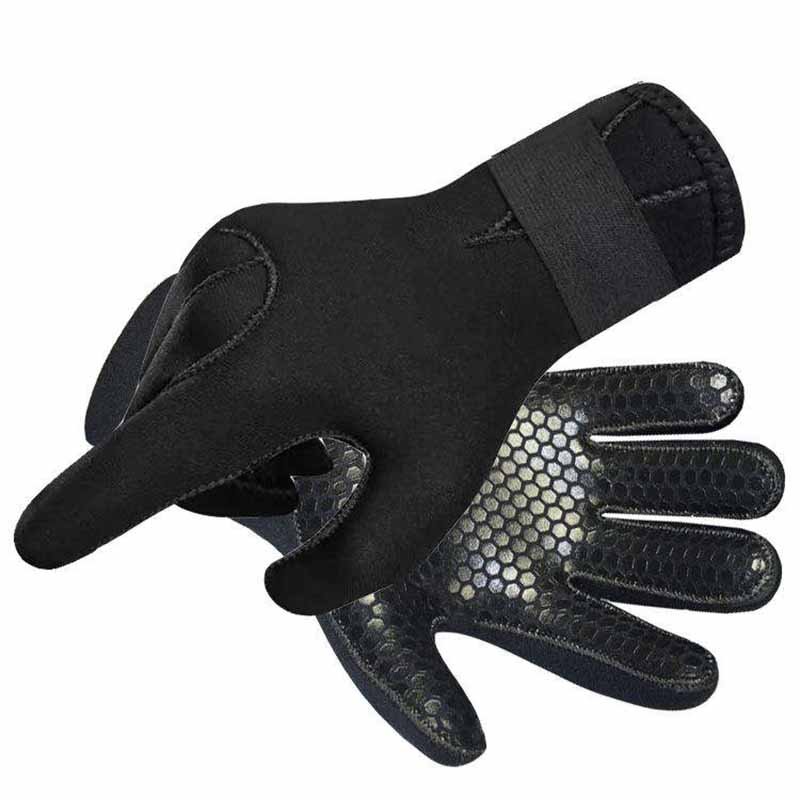
When customers buy neoprene gloves, they are not just buying a piece of foam stitched into a hand shape. They are buying warmth, grip, flexibility, comfort, and reliability in cold, wet, windy conditions. That is why the manufacturing details matter so much. Two gloves may look similar in photos, yet one feels warm and flexible in actual use while the other turns stiff, leaks cold water through the seams, or loses shape after repeated wear. The difference usually comes down to the neoprene grade, thickness choice, lamination quality, panel design, seam construction, and finishing control. In real markets like diving, fishing, paddlesports, winter sports, and industrial hand protection, customers care less about technical terms and more about practical results: whether the glove keeps hands warm, whether it still allows finger movement, and whether it lasts through repeated use. That is exactly where experienced manufacturing creates value.
Neoprene gloves with thermal insulation are made by bonding fabric to closed-cell neoprene foam, cutting the material into shaped glove panels, and joining those panels with stitching, gluing, blind stitching, or sealed seams. Warmth depends mainly on neoprene type, thickness, lining, fit, and seam construction, because these factors reduce heat loss and help the glove hold a stable layer of warmth around the hand.
A lot of glove problems start with the wrong decision at the beginning. A customer may ask for thicker gloves, thinking thicker always means warmer. But if the foam is low grade or the seams are poorly finished, that extra thickness may only make the glove bulkier, not better. At Oneier, after more than 18 years in neoprene material development and product manufacturing, this is where real product work begins: not with appearance, but with performance in actual cold and wet use.
What Are Neoprene Gloves?
Neoprene gloves are gloves made from synthetic rubber foam laminated with fabric. Their main function is to reduce heat loss, block wind and splashes, and keep hands more comfortable in cold or wet environments.
What Are Neoprene Gloves?
Neoprene gloves are built around one key material principle: closed-cell foam. Inside neoprene, there are many tiny enclosed cells that slow down heat transfer. That is why neoprene is widely used in wetsuits, water gloves, sports supports, and other products that need a mix of insulation, softness, stretch, and water resistance. Neoprene itself does not produce heat. What it does is help the hand keep more of its own warmth by reducing how quickly that warmth escapes to cold air or cold water.
For customers, the real value is practical. A good neoprene glove should help the user stay comfortable longer, not just feel warm for the first few minutes. In many use cases, gloves also need to balance several demands at once:
- Warmth in low temperatures
- Flexibility for gripping tools, paddles, rods, or gear
- Water resistance in wet working or sports conditions
- Surface durability against abrasion
- Stable fit that does not loosen too much in use
That is why neoprene gloves are used across more than one market. The same base material can be developed into diving gloves, surf gloves, fishing gloves, sailing gloves, winter outdoor gloves, medical support gloves, and industrial protective gloves. What changes is the thickness, the fabric lamination, the palm material, the cuff design, and the seam structure.
From a production standpoint, most neoprene gloves are not made from rubber alone. The neoprene foam is usually laminated with nylon, polyester, fleece, lycra, loop fabric, or other textile surfaces, depending on the target function. Nylon-laminated neoprene is widely used for gloves because it gives a smooth surface, solid durability, and good sewing behavior. Polyester is also used in some constructions. Different fabric pairings change the way the glove stretches, feels, prints, and performs.
What Are Neoprene Gloves Used For?
Customers often search for neoprene gloves with a clear use in mind. The product is not one fixed category. It serves very different environments, and each environment changes what the glove needs to do.
| Use Scenario | Common Thickness | What Customers Usually Care About Most |
|---|---|---|
| Diving | 3mm–7mm | Warmth in water, seam sealing, flexibility |
| Surfing | 2mm–5mm | Board feel, stretch, quick movement |
| Fishing | 2mm–5mm | Wind blocking, grip, finger control |
| Kayaking / paddling | 2mm–4mm | Palm comfort, wet grip, light warmth |
| Winter outdoor work | 2mm–5mm | Warmth, wear resistance, hand movement |
| Sports / training gloves | 1mm–3mm | Flexibility, light insulation, comfort |
These thickness ranges are widely used in market practice because colder water and colder wind usually require more insulation, while activities needing finer hand movement often require thinner material. Cold-water diving gloves, for example, are commonly offered in thicker constructions because users need longer thermal retention in water.
This matters to customers because a glove that works for one use may feel completely wrong in another. A 5mm glove can feel secure in cold water but too bulky for lure handling or camera operation. A 2mm glove may feel comfortable for paddling but not enough for long exposure in winter sea conditions. That is why glove development should always start from use scenario first, not thickness first.
At Oneier, this is especially important because many private label and OEM customers are not selling to one single audience. Some are targeting divers, some target anglers, some want a more general thermal sports glove, and some want multi-purpose neoprene gloves for brand catalogs. The material and construction need to match that sales direction from the beginning.
Do Neoprene Gloves Keep Hands Warm?
Yes, but warmth depends on more than thickness alone. The glove must slow down heat loss while still fitting well enough to work with the hand. If the fit is too loose, cold water can circulate more easily inside. If the seam construction is poor, heat escapes faster through stitched areas. If the foam quality is weak, insulation performance drops even when the glove looks thick enough.
In simple terms, neoprene gloves help warmth in four main ways:
- The foam structure slows heat transfer
- The laminated fabric helps stabilize the glove shape
- A close fit reduces unnecessary flushing or cold air entry
- Lining and seam choices improve overall thermal performance
This is why two gloves with the same stated thickness can perform very differently. A lower-grade glove may use cheaper SBR material, simpler seams, and thinner lamination control. A better glove may use higher-grade SCR or CR neoprene, stronger panel shaping, and more controlled seam finishing. The result is often a noticeable difference in warmth, stretch, and long-term durability. Neoprene materials used for gloves and wetsuit-related products are commonly offered in SBR, SCR, and CR grades, each with different performance and cost levels.
Customers also care about how long the warmth lasts, not just the first impression. A glove may feel warm when first worn but become uncomfortable after repeated bending if the panels are stiff or if the seam placement causes pressure points. This is where ergonomic panel design becomes part of insulation performance too. If the glove is tiring to wear, users remove it more often, and the product fails in the real world.
Are Neoprene Gloves Good for Cold Water?
Yes, neoprene gloves are one of the most practical solutions for cold water, but only when thickness and construction are matched to the environment. In cold water, the glove has to do more than block splash. It has to protect warmth while still allowing grip and hand control. That is why diving and water-sports gloves often use thicker neoprene than gloves intended for dry winter conditions. Cold-water glove selection in the market consistently prioritizes warmth over maximum dexterity when temperatures drop.
A useful way to think about it is this:
| Condition | More Important Priority |
|---|---|
| Cool air, light spray | Flexibility + light insulation |
| Cold wind, repeated wet contact | Balanced insulation + grip |
| Cold water immersion | Thermal retention + seam control |
| Long-duration cold exposure | Thickness + fit + sealing |
This is why customers often ask not only “Are neoprene gloves warm?” but also “What thickness should I choose?” and “Will they still let me move my fingers?” These are real purchase questions because the wrong glove feels uncomfortable fast.
For many brands, the better sales strategy is not to offer one glove and call it universal. It is to build a clear series. For example:
- 2mm gloves for mild cold and active movement
- 3mm gloves for balanced warmth and control
- 5mm gloves for colder water and longer exposure
- 7mm gloves for more demanding cold-water protection
That product logic is easier for end customers to understand and easier for sales teams to explain. Oneier often helps customers develop these kinds of structured glove lines because it improves both product clarity and reorder potential.
Which Neoprene Gloves Materials Work Best?
CR and SCR neoprene are the most commonly preferred materials for thermal neoprene gloves because they offer a better balance of insulation, softness, flexibility, and durability than lower-grade options.
Which Neoprene Gloves Materials Work Best?
Material choice is one of the biggest reasons why neoprene gloves in the market vary so much in price and performance. Customers often ask why one glove feels softer, warmer, or more elastic than another, even when the thickness looks similar. In most cases, the answer starts with the neoprene grade.
The three most common neoprene material categories used in glove production are:
SBR neoprene
Lower-cost synthetic rubber foam often used where price is the main priority.
SCR neoprene
A blend structure that offers a better balance between cost and performance.
CR neoprene
Higher-grade chloroprene rubber, often chosen for better elasticity, softness, and overall performance.
These material options are widely listed in neoprene sheet and glove-related product specifications, and they are commonly offered for applications such as sports gloves, diving products, and wetsuit accessories.
For customers, the difference shows up in several real-world ways:
| Material Type | Warmth Feel | Stretch Feel | Product Positioning |
|---|---|---|---|
| SBR | Basic | Basic | Entry level |
| SCR | Good | Good | Mid-range commercial |
| CR | Better | Better | Premium |
This does not mean SBR has no value. For certain light-duty products or aggressive price targets, it can still make sense. But for gloves where warmth, comfort, and repeat use matter more, SCR and CR usually provide a more dependable foundation.
At Oneier, material selection is usually tied to the customer’s intended market first. A glove sold into budget retail has different requirements from a glove sold to diving brands or technical outdoor distributors. The best material is not always the most expensive one. It is the one that fits the target use, price range, and product promise.
Which Neoprene Gloves Materials Work Best?
Beyond the rubber grade itself, customers should also pay attention to what fabric is laminated onto the neoprene. The outer and inner fabric layers influence comfort, stretch, abrasion resistance, and how the glove behaves in cutting and sewing.
Common lamination choices include:
- Nylon fabric for a clean surface and solid durability
- Polyester fabric for stable appearance and cost control
- Stretch fabric for improved hand movement
- Loop or brushed fabric for comfort-oriented inner surfaces
- Special coatings or palm overlays for grip and wear resistance
Neoprene sheets used for glove and sports applications are commonly offered with nylon, polyester, loop, and other laminated fabric options, which directly affect glove performance and finishing possibilities.
This matters because glove comfort is not only about thickness. Two 3mm gloves can feel very different if one uses a softer stretch lamination and the other uses a stiffer fabric. The softer glove may feel better during repeated finger movement. The stiffer one may offer better abrasion life in rough handling. Neither is automatically wrong. The better choice depends on how the glove will be used.
For customers developing private label gloves, this is also where product differentiation starts. A glove line can be positioned as lightweight and active, rugged and protective, or premium and comfortable simply by changing the neoprene grade and lamination combination.
How Does Thickness Affect Neoprene Gloves?
Thickness is one of the first things customers ask about because it is easy to understand. But in manufacturing, thickness is only useful when matched correctly with the use scenario.
A simple working guide looks like this:
| Thickness | Warmth Level | Finger Movement | Common Use Direction |
|---|---|---|---|
| 1mm–2mm | Light | High | Mild conditions, active movement |
| 2mm–3mm | Medium | Good | General outdoor and watersports |
| 3mm–5mm | Strong | Moderate | Colder water and longer exposure |
| 5mm–7mm | Higher | Lower | Demanding cold-water protection |
Neoprene sheets for glove and watersport applications are commonly available in thicknesses such as 2mm, 3mm, and 4mm, with custom thickness also offered in manufacturing supply channels.
The reason thickness matters is clear: more foam usually means more insulation. But there is always a trade-off. Thicker gloves reduce finger sensitivity and can make gripping smaller objects harder. That is why many customers who originally ask for the thickest glove later decide on a more balanced thickness after sampling.
From a product development angle, the smarter question is not “What is the thickest glove?” but:
- What temperature range is the glove for?
- Will the glove be used in water, wind, or both?
- Does the user need high dexterity?
- How long will the exposure last?
Oneier often helps customers solve this by building samples in more than one thickness, so the choice is made based on use and feel, not guesswork.
Do Linings Improve Neoprene Gloves Insulation?
Yes. Lining can make a very noticeable difference, especially when customers want more warmth without making the glove much thicker. A good lining can improve comfort against the skin, reduce cold touch feeling when first worn, and help the glove keep warmth more steadily during use.
Lining-related improvements often include:
- Softer hand feel inside the glove
- Better warmth retention
- More comfortable long wear
- Improved product positioning for premium lines
In many gloves, the “warmth experience” the user notices first is not just from the foam itself, but from the way the inside fabric feels and holds warmth. This is one reason why premium gloves often feel better immediately, even before the user reaches colder conditions.
Customers should also understand that lining needs to match the glove’s use. A glove designed for diving, paddling, or repeated wet immersion may need a different inner fabric choice than one designed mainly for cold-weather outdoor work. The goal is not to add every possible feature. The goal is to choose the right construction for the actual environment.
This is where Oneier’s neoprene material background becomes valuable. Because the company works from material development through finished-product manufacturing, it can recommend not just a glove shape, but the full material stack that best fits the customer’s price point, use case, and target market.
How Are Neoprene Gloves Made?
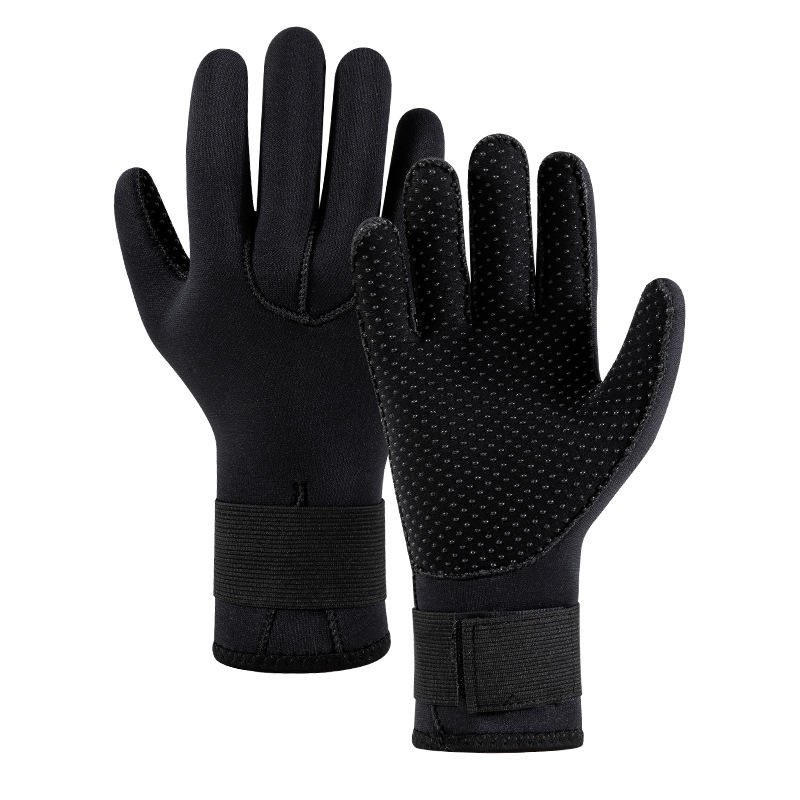
Neoprene gloves are made by laminating fabric to neoprene foam, cutting ergonomic panels, and assembling them using glued, stitched, or sealed seams. The final performance depends on how well each step is controlled—especially bonding, panel shaping, and seam construction—because these directly affect warmth, flexibility, and durability.
How Are Neoprene Gloves Made?
Manufacturing neoprene gloves is a step-by-step process where small details create big differences in real use. A glove that looks clean on the outside can still fail if the internal structure is not handled correctly. At Oneier, production is not only about assembling materials—it is about making sure each stage supports the final function: keeping hands warm while still allowing movement and grip.
A complete production flow usually includes:
- Neoprene foam preparation and lamination
- Pattern development and panel cutting
- Panel bonding and shaping
- Stitching or gluing assembly
- Seam sealing or finishing
- Final inspection and testing
Each stage has a direct impact on how the glove performs after long exposure to cold water, wind, or repeated use.
How Are Neoprene Gloves Laminated?
The process starts with neoprene sheet lamination, where fabric is bonded to one or both sides of the foam. This step determines how the glove feels, stretches, and holds shape.
There are several lamination types used in production:
| Lamination Type | Structure | Practical Effect |
|---|---|---|
| Single laminated | Fabric + neoprene | Basic durability, cost-effective |
| Double laminated | Fabric + neoprene + fabric | Balanced strength and comfort |
| Brushed inner lining | Fabric + neoprene + soft inner | Better warmth and comfort |
| Stretch laminated | Elastic fabric + neoprene | Higher flexibility |
The bonding quality is critical. Poor lamination can cause:
- Fabric peeling after repeated use
- Uneven stretching
- Reduced durability in high-stress areas
Oneier uses controlled lamination processes to ensure consistent bonding strength, especially for gloves used in water sports or heavy outdoor use.
How Are Neoprene Gloves Cut and Shaped?
After lamination, the material is cut into pre-designed glove panels. This step is more complex than it looks because gloves must follow the natural curve of the hand.
Key considerations include:
- Finger curvature (pre-shaped vs flat cut)
- Stretch direction of neoprene
- Thickness distribution across different parts
Panels are typically cut using:
- Manual cutting for small batches
- Die cutting for bulk production
- CNC cutting for high precision
A poorly shaped glove may:
- Feel stiff during use
- Cause hand fatigue
- Reduce grip efficiency
A well-designed pattern improves comfort by up to 20–30% in long-duration use, based on user feedback from repeated wear tests.
How Are Neoprene Gloves Assembled?
Assembly is where the glove structure is formed. Different methods are used depending on the required performance level.
Common assembly methods include:
| Method | Strength | Flexibility | Water Resistance |
|---|---|---|---|
| Flatlock stitching | Medium | High | Low |
| Glued + blind stitch | High | Medium | High |
| Fully glued seams | Medium–High | Medium | High |
| Liquid sealed seams | Very high | Medium | Very high |
- Flatlock stitching is often used for lighter gloves where flexibility is more important than water resistance.
- Glued and blind stitched seams are widely used in thermal gloves because they reduce water entry and improve insulation.
- Sealed seams are preferred for cold water gloves where keeping warmth is critical.
At Oneier, seam selection is always based on the intended use, not just cost. For example, diving gloves often require more advanced seam sealing compared to general outdoor gloves.
How Are Seams Sealed for Thermal Performance?
Seams are one of the biggest heat-loss points in neoprene gloves. Even high-quality foam cannot perform well if seams allow cold water or air to enter.
There are several ways to improve seam performance:
- Applying glue between panels before stitching
- Using blind stitching that does not fully penetrate the foam
- Adding liquid seam tape for sealing
- Using internal seam tape reinforcement
The effect of seam construction can be seen clearly:
| Seam Type | Heat Retention | Water Entry Risk |
|---|---|---|
| Basic stitched seam | Low | High |
| Glued seam | Medium | Medium |
| Blind stitched seam | High | Low |
| Sealed seam | Very high | Very low |
For customers targeting cold environments, seam construction is often more important than adding extra thickness.
How Are Neoprene Gloves Tested Before Delivery?
Quality testing is essential because gloves are exposed to stress, water, and repeated movement.
Key tests include:
| Test Item | Standard Check |
|---|---|
| Stretch test | No cracking after repeated stretching |
| Seam strength | No opening under load |
| Water resistance | Minimal leakage through seams |
| Thermal retention | Stable performance in cold conditions |
| Abrasion resistance | No surface damage after friction testing |
In real production, Oneier performs random sampling tests during and after production to ensure consistency across batches. This reduces the risk of defects reaching customers and helps maintain stable product quality.
What Makes Better Neoprene Gloves Insulation?
Better neoprene gloves insulation comes from the right combination of neoprene type, thickness, lining, seam construction, and fit, rather than relying on thickness alone.
What Makes Better Neoprene Gloves Insulation?
Many customers assume that thicker gloves automatically mean better warmth. In reality, insulation performance is a combination of several factors working together. A glove that is too thick but poorly constructed may feel bulky without providing stable warmth. A well-designed glove with balanced materials can perform better while remaining comfortable.
At Oneier, insulation performance is evaluated based on:
- Heat retention over time
- Comfort during movement
- Resistance to water or wind exposure
- Overall user experience after repeated use
What Thickness Is Best for Neoprene Gloves?
Choosing the right thickness depends on the environment and activity.
| Condition | Suggested Thickness |
|---|---|
| Mild cold (above 15°C) | 1–2mm |
| Cool water or wind | 2–3mm |
| Cold water (10–15°C) | 3–5mm |
| Very cold conditions | 5–7mm |
However, thicker gloves reduce flexibility. This creates a trade-off between:
- Warmth
- Dexterity
- Comfort
For example:
- Fishing gloves often stay in the 2–3mm range for better finger control
- Diving gloves may go up to 5mm or more for longer cold-water exposure
Oneier often recommends testing multiple thickness options before finalizing bulk orders.
How Do Seams Affect Neoprene Gloves Insulation?
Seams are one of the weakest points in thermal performance. Poor seams allow heat to escape and cold water to enter.
Key improvements include:
- Glued seams to reduce gaps
- Blind stitching to limit penetration
- Seam sealing to block water entry
In performance terms:
- Upgrading from basic stitching to blind stitching can improve warmth noticeably
- Adding seam sealing can further reduce heat loss
For cold-water gloves, seam construction often has a greater impact than increasing thickness by 1–2mm.
What Design Improves Neoprene Gloves Comfort?
Comfort directly affects how long users keep gloves on, which indirectly affects insulation performance.
Important design elements include:
- Pre-curved finger panels to reduce fatigue
- Soft inner lining for better skin contact
- Adjustable cuffs to reduce heat loss
- Anti-slip palm coating for grip
User feedback shows:
- Pre-shaped gloves reduce hand fatigue by 20–30%
- Better grip improves usability in wet conditions
A glove that is uncomfortable will be removed frequently, reducing its effectiveness no matter how good the insulation is.
How Does Fit Impact Neoprene Gloves Performance?
Fit is often overlooked but plays a major role in insulation.
A glove that is too loose:
- Allows water or air circulation
- Reduces heat retention
A glove that is too tight:
- Restricts movement
- Reduces comfort
Ideal fit characteristics:
- Snug but not restrictive
- Even pressure distribution
- No excessive gaps at wrist or fingers
Oneier develops size charts based on real user data to help brands achieve better fit consistency across different markets.
How to Customize Neoprene Gloves?
Customizing neoprene gloves means defining the right combination of material grade, thickness, structure, fit, and branding so the product matches your target market, price level, and real use conditions.
How to Customize Neoprene Gloves?
Customization is where a standard glove turns into a product that customers recognize and reorder. Many projects fail not because of production, but because the early decisions were too generic—same thickness, same shape, same logo placement as everyone else. In competitive markets like diving, fishing, and outdoor gear, small differences in design and feel can directly affect sell-through and repeat orders.
At Oneier, customization usually starts from three practical questions:
- Who will use the gloves and in what conditions?
- What price range will the product sell in?
- What problem should the glove solve better than competitors?
Once these are clear, the factory can define the correct structure instead of simply copying an existing sample.
How Are Logos Added to Neoprene Gloves?
Logo application on neoprene gloves must balance visibility, durability, and production cost. Because neoprene is flexible and often used in wet conditions, not all branding methods perform equally well.
Common logo methods include:
| Logo Method | Durability | Best Position | Practical Notes |
|---|---|---|---|
| Screen printing | Medium | Back of hand | Cost-effective for large runs |
| Heat transfer | Medium–High | Flat neoprene panels | Works well for complex designs |
| Embroidery | High | Reinforced areas | Premium feel, slightly higher cost |
| Rubber patch | Very high | Wrist or back panel | Strong branding, modern look |
| Deboss/emboss | High | Neoprene surface | Subtle, clean branding |
For most commercial gloves, screen printing + rubber patch combination offers a good balance between cost and visual impact.
Oneier often recommends placing logos on low-stretch zones, such as the back of the hand or wrist area, to reduce cracking or distortion during use.
What Custom Options Are Available for Neoprene Gloves?
Neoprene gloves can be customized in multiple dimensions. The goal is to align product features with customer expectations in the target market.
Material options
- SBR / SCR / CR neoprene selection
- Different thickness combinations (e.g., palm thinner, back thicker)
- Laminated fabric types (nylon, polyester, stretch fabric)
Structure options
- Full-finger or half-finger gloves
- Pre-curved ergonomic panels
- Reinforced palm areas
- Extended cuffs for better sealing
Functional options
- Anti-slip palm coating (silicone or PU)
- Waterproof or water-resistant seams
- Touchscreen-compatible fingertips
- Adjustable wrist straps
Color and style
- Pantone color matching
- Multi-color panel design
- Contrast stitching
Below is a simplified mapping of customization to market positioning:
| Market Type | Recommended Configuration |
|---|---|
| Entry-level retail | SBR/SCR, simple stitching, screen print logo |
| Mid-range outdoor | SCR, reinforced palm, better seam construction |
| Premium sports | CR neoprene, sealed seams, ergonomic design |
| Professional use | High-grade CR, advanced sealing, durability focus |
Oneier supports full customization, allowing clients to combine these elements into a product that fits both performance and pricing targets.
Why Choose OEM or ODM Neoprene Gloves Production?
OEM and ODM production allows brands to create gloves that are not easily replaced by competitors.
Key advantages include:
- Unique design that builds brand identity
- Better control over material and quality
- Higher perceived product value
- More flexibility in pricing strategy
For example:
- A standard glove may be sourced at $3–$6
- A customized glove with better materials and branding can retail at 2–4 times higher price
This margin difference is one of the main reasons brands invest in custom development instead of buying off-the-shelf products.
Oneier provides:
- Free design support based on customer ideas
- Low MOQ for testing new products
- Fast sampling (usually 5–10 days)
- Stable production for repeat orders
This makes it easier for both new and established brands to launch or upgrade their glove lines.
How to Choose Neoprene Gloves Manufacturer?
Choosing the right neoprene gloves manufacturer requires evaluating real production capability, material knowledge, quality control, and communication efficiency—not just price.
How to Choose Neoprene Gloves Manufacturer?
Many sourcing problems come from choosing a supplier based only on quotation. A lower price may lead to hidden issues such as weak seams, inconsistent material, or delayed delivery.
Instead, manufacturers should be evaluated based on:
- Experience with neoprene materials
- Ability to explain product structure clearly
- Sample quality and consistency
- Production capacity and delivery control
- Communication speed and clarity
A strong factory helps prevent problems before production starts.
What to Check in a Neoprene Gloves Factory?
Before placing an order, customers should verify the following points:
| Key Factor | What to Confirm |
|---|---|
| Experience | Years in neoprene products (10+ recommended) |
| Material expertise | Knowledge of SBR, SCR, CR differences |
| Sample quality | Clean stitching, good fit, strong seams |
| Production capacity | Ability to meet order quantity and timeline |
| Custom ability | OEM/ODM support |
| Quality control | Inspection process during production |
Factories with strong neoprene experience can often identify potential issues early, saving time and cost.
How to Ensure Neoprene Gloves Quality?
Quality control should be built into the process, not added at the end.
Recommended steps:
- Confirm material specifications (type, thickness, lamination)
- Approve pre-production samples
- Test seam strength and flexibility
- Check fit consistency across sizes
- Verify logo durability
Additional checks may include:
- Stretch and recovery testing
- Water resistance testing
- Abrasion testing on palm areas
Oneier follows a multi-stage inspection process, ensuring that each batch meets agreed standards before shipment.
Start Your Custom Neoprene Gloves Project with Oneier
If you are planning to develop neoprene gloves for your brand, the most important step is choosing the right structure and manufacturing partner from the beginning. A well-designed glove can become a long-term product with stable repeat orders. A poorly developed glove can lead to complaints, returns, and lost customers.
Oneier has worked with global clients across diving, fishing, outdoor sports, and industrial sectors, helping them turn product ideas into reliable, high-performing gloves.
If you already have a design, a target price, or even just an idea, you can send it to Oneier and receive a detailed quotation with practical suggestions.
Start your project now and build a neoprene glove product that performs where it matters—in real use.