
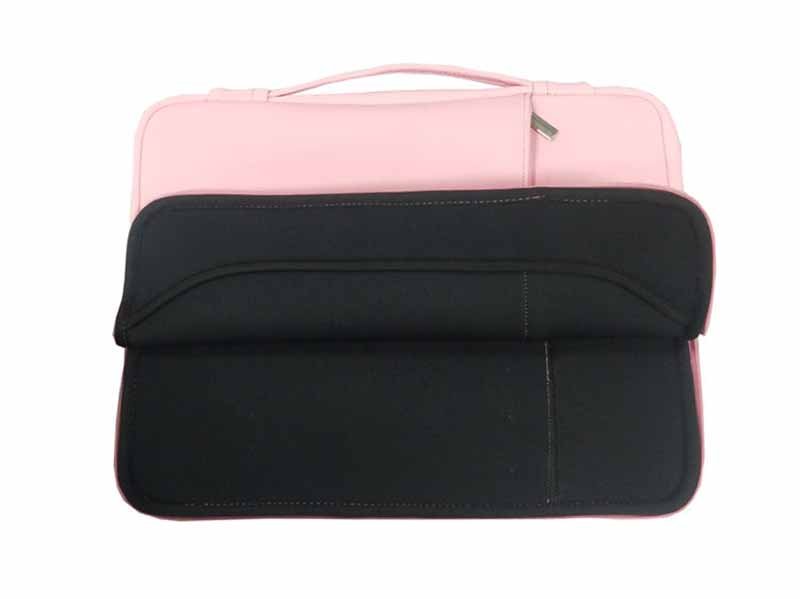
For many electronics brands, the product is only half of the customer experience. The other half begins the moment the device leaves the desk, goes into a backpack, gets carried through airports, tossed into cars, used in cafés, and exposed to dust, friction, moisture, and impact. A device may be beautifully designed, but if its protective case feels loose, thin, cheap, or unreliable, the overall impression drops fast. That is why more brands are paying closer attention to case manufacturing, not as an accessory decision, but as a product strategy decision. In categories like laptops, tablets, headphones, hard drives, cameras, gaming accessories, and charging kits, a case is no longer just packaging for storage. It is part of the daily use experience.
Neoprene case manufacturing for electronics brands is the process of developing protective cases made from neoprene material for specific electronic products. It includes material selection, thickness matching, structure planning, pattern development, lamination, cutting, stitching, printing, and quality control. The purpose is to create cases that protect devices from scratches, minor impact, moisture, and daily wear while also supporting portability, clean branding, and reliable mass production.
The real difference between an average neoprene case and a strong one often looks small at first. A zipper line sits flatter. A sleeve holds the device with less play. The foam rebounds better after pressure. The edges stay cleaner after months of use. These details may seem quiet, but they are exactly what customers notice over time. A good neoprene case does not beg for attention. It simply keeps performing, day after day, and that is what makes people trust both the product and the brand behind it.
What Is Neoprene Case Manufacturing for Electronics Brands?
Neoprene case manufacturing for electronics brands is the process of turning neoprene sheet material into protective, branded, device-matched cases. It combines product design, material engineering, production control, and finishing methods to create cases that feel light, fit correctly, protect reliably, and support custom branding at scale.
What Does Neoprene Case Manufacturing for Electronics Brands Really Include?
At a basic level, many people think neoprene case manufacturing simply means cutting foam and sewing it into a sleeve. In reality, serious production is far more structured. A well-made neoprene electronics case depends on a chain of decisions that all affect the final result. These decisions begin long before sewing starts.
A full neoprene case manufacturing process usually includes:
- choosing the right neoprene grade
- deciding the correct thickness and density
- selecting surface fabric lamination
- building patterns based on real device dimensions
- adjusting ease allowance for fit and insertion
- planning zipper type, opening direction, and puller style
- deciding whether edges should be stitched, bound, folded, or heat-finished
- adding logo treatment and packaging requirements
- checking dimensional consistency during production
For electronics brands, these details matter because the case is expected to do several things at once:
- protect the device
- feel easy to use
- look aligned with the brand image
- remain consistent across bulk orders
- stay within target cost
This is where factory experience becomes important. A supplier that only understands sewing may not understand device tolerance, foam recovery, or lamination stability. A stronger manufacturer looks at the case as a complete product system.
The table below shows what customers usually care about most when evaluating a neoprene case project:
| Customer Concern | What It Means in Production | Why It Matters |
|---|---|---|
| Device fit | Pattern accuracy and tolerance control | Prevents loose or over-tight cases |
| Protection level | Foam thickness, density, structure | Reduces damage risk |
| Appearance | Surface lamination, stitching, printing | Supports brand image |
| Durability | Seam strength, zipper quality, edge finishing | Improves product life |
| Cost control | Material efficiency, process selection | Protects margin |
| Lead time | Sampling speed and production planning | Supports launch schedule |
At Oneier, neoprene case development is not treated as a generic sewing order. It is handled as a material-and-structure project, because that is what electronics brands actually need when they want reliable products instead of simple commodities.
Why Does Neoprene Case Manufacturing for Electronics Brands Matter So Much?
The importance of neoprene case manufacturing becomes clearer when you look at how electronics are actually used. Portable devices move constantly. A laptop may be carried to work every day. A tablet may be packed by students, sales teams, or field staff. A camera or external hard drive may travel inside luggage. In each of these situations, the case is the first line of protection.
A poorly made case creates problems that customers feel immediately:
- the device shifts too much inside
- the zipper scratches the edge of the product
- the case feels bulky but still not protective
- the seams start opening after repeated use
- the material smells bad or loses shape
- the printed logo cracks or fades too early
These are not small issues. They directly affect customer reviews, return rates, and brand trust. Even when the device itself is not damaged, a weak case can make the entire product package feel cheap.
A strong neoprene case improves product perception in several ways:
- it gives the user a better first-touch experience
- it protects the device during transport and storage
- it reduces friction in daily use
- it makes the brand look more thoughtful and complete
- it increases the value of accessory bundles and gift sets
In real commercial terms, accessory quality can influence purchasing decisions more than many brands expect. For example, when two products in the same category compete closely, the one with the better protective case often feels like the more complete offer. That is especially true in premium electronics, education technology, travel electronics, and corporate gift programs.
Here is a practical comparison:
| Case Quality Level | Common User Reaction | Commercial Result |
|---|---|---|
| Low | “It works, but feels cheap” | Weak repeat purchase potential |
| Mid | “It looks fine and protects enough” | Acceptable market performance |
| High | “It fits perfectly and feels premium” | Stronger brand trust and retention |
When electronics brands invest in better neoprene case manufacturing, they are not only protecting hardware. They are protecting user confidence.
How Is Neoprene Case Manufacturing for Electronics Brands Different from General Bag Production?
This is an area many clients overlook in the early stage. A neoprene electronics case is not the same as a regular pouch, simple fabric bag, or fashion sleeve. It requires a different approach because the product inside is usually rigid, dimension-sensitive, and relatively valuable.
Compared with general bag production, neoprene case manufacturing for electronics brands involves tighter control in several areas:
- dimensional tolerance
- foam compression behavior
- internal friction against device surfaces
- zipper path and corner curve handling
- insertion and removal smoothness
- shape recovery after pressure or storage
A normal pouch can still work if it is slightly loose. A laptop or tablet case often cannot. If the fit is too loose, the device moves and loses protection. If the fit is too tight, the user struggles to insert it, and stress builds around the zipper or seams.
Another difference is how the material behaves. Neoprene is a foam-based material laminated with fabric, so it stretches, compresses, rebounds, and reacts differently from woven textiles or PU leather. That means production teams need experience with:
- cutting direction
- stitch spacing
- feed control during sewing
- foam compression around seams
- logo printing on laminated surfaces
The chart below shows key differences:
| Production Point | General Fabric Bag | Neoprene Electronics Case |
|---|---|---|
| Main focus | Carrying and storage | Protection and fit |
| Material behavior | Mostly flexible woven fabric | Elastic foam composite |
| Tolerance demand | Moderate | Higher |
| Shape retention | Lower priority | More important |
| Internal friction risk | Usually lower | More important for electronics |
| Device-specific sizing | Often optional | Usually essential |
This is why many electronics brands prefer to work with factories like Oneier that already understand neoprene as a technical product material, not just a decorative fabric. That background reduces development mistakes and shortens the path to a case that actually performs in the market.
Why Choose Neoprene Case Manufacturing for Electronics Brands?
Electronics brands choose neoprene case manufacturing because neoprene offers a rare combination of cushioning, flexibility, low weight, water resistance, and strong customization potential. It can protect devices in daily use without making the case heavy, rigid, or overly expensive, which makes it especially suitable for portable electronics.
What Makes Neoprene Case Manufacturing for Electronics Brands Effective?
The effectiveness of neoprene begins with the material itself. Neoprene is a synthetic rubber foam. That foam structure allows it to compress under force and recover afterward, which is exactly why it is valued in protective applications. For electronics, this material behavior is useful because many real-world risks are small but repeated: light impact, friction, pressure in a backpack, table-edge contact, moisture exposure, and accidental drops from short heights.
A well-developed neoprene case can deliver several practical benefits:
- absorbs minor shock better than thin woven fabric
- reduces surface scratches during transport
- adds a soft barrier between device and environment
- remains light enough for daily carry
- supports slim product designs better than hard shells in some use cases
The effectiveness of neoprene is also tied to thickness. Different thickness levels usually serve different needs:
| Thickness | Common Use | Product Feel | Protection Level |
|---|---|---|---|
| 2mm | Slim sleeves, lightweight pouches | Light and flexible | Basic |
| 3mm | Laptop sleeves, tablet cases, accessory cases | Balanced | Medium |
| 5mm | Heavier-duty cases, structured protection | Thicker and more substantial | Higher |
Many mid-range and premium electronics sleeve projects use 3mm neoprene because it balances protection and portability well. Thinner material may feel sleek but can underperform for heavier devices. Thicker material offers more cushioning but may increase volume and shipping size.
Another reason neoprene performs well is that it combines easily with other features:
- jersey or polyester surface for printing
- zipper closure for secure access
- webbing handles for portability
- extra front pocket for accessories
- soft inner lamination for delicate surfaces
Effectiveness is not only about the material being “good.” It is about matching the material and structure to the actual product and usage scenario. A smart case project does not ask only, “Can neoprene work?” It asks, “Which neoprene construction works best for this device, for this market, at this price level?”
Which Products Use Neoprene Case Manufacturing for Electronics Brands?
Neoprene is used across a wide range of electronics categories because it adapts well to different shapes, sizes, and portability needs. It is especially popular in products that move often, are handled frequently, or need lightweight protection without the stiffness of molded hard cases.
Common electronics applications include:
- laptop sleeves
- tablet sleeves
- e-reader covers
- headphone cases
- camera pouches
- gaming console sleeves
- portable hard drive cases
- charger and cable organizers
- drone accessory pouches
- compact projector cases
- speaker sleeves
- diagnostic device pouches
Each product type places slightly different demands on the case. For example, a laptop sleeve usually prioritizes:
- flat structure
- smooth zipper path
- anti-scratch interior
- clean branding appearance
A cable organizer or accessory pouch may prioritize:
- flexible capacity
- inner mesh or divider sections
- easy opening and sorting
- lower weight and lower cost
A camera or device tool case may require:
- thicker neoprene
- more reinforced seams
- a semi-structured body
- stronger zip closure and handles
Here is a useful application table:
| Electronics Product | Preferred Case Style | Main Priority |
|---|---|---|
| Laptop | Sleeve or zipper sleeve | Scratch and light impact protection |
| Tablet | Slim sleeve or pouch | Portability and fit |
| Headphones | Soft pouch or zipper case | Surface protection |
| Hard drive | Compact zipper case | Shock absorption |
| Camera | Padded pouch or carry case | Protection and carrying convenience |
| Chargers and cables | Organizer pouch | Sorting and portability |
| Gaming device | Sleeve or semi-structured case | Travel protection |
For brands, this versatility creates an advantage. Once a neoprene case program is developed successfully, the same material platform can often be extended into multiple SKUs. A laptop sleeve line may later expand into tablet cases, accessory pouches, or travel organizers using similar material and branding logic. That makes neoprene not only a protective solution, but also a scalable product development path.
Why Do Electronics Brands Prefer Neoprene Over Some Other Case Materials?
Electronics brands do not choose neoprene because it is the only case material available. They choose it because it solves a specific combination of problems better than many alternatives. Hard shell materials protect strongly against crushing, but they are heavier, bulkier, and less flexible in design. Thin fabric sleeves are lighter and cheaper, but they often lack cushioning. PU or leather-like materials can look premium, but may not provide the same soft-impact protection.
Neoprene often wins when brands want these qualities together:
- light weight
- soft cushioning
- flexible shaping
- broad color options
- print-friendly surface
- moderate cost
- easier MOQ handling
The comparison below helps explain the decision:
| Material | Main Strength | Main Limitation | Best Match |
|---|---|---|---|
| Neoprene | Cushioning + flexibility | Less crush resistance than hard case | Portable electronics |
| EVA molded shell | Stronger shape and impact resistance | Less flexible, higher mold cost | Travel and hard protection |
| PU leather | Premium appearance | Lower cushioning | Fashion-oriented accessories |
| Woven polyester | Light and economical | Lower protective feel | Budget accessories |
Another important reason brands choose neoprene is development speed. A rigid molded case may require longer tooling cycles and higher setup cost. A neoprene project often moves faster from concept to sample, especially when the factory already has experience in pattern development and material matching.
For smaller brands, growing brands, and premium accessory lines, that speed matters. It means they can test new products, respond to market demand faster, and build a more complete accessory line without large early investment. For established brands, it means faster replenishment and more flexibility across seasonal or promotional programs.
That is why neoprene remains such a practical choice in electronics accessories. It does not try to be everything. It simply performs very well in the space between protection, usability, appearance, and development efficiency.
Which Types in Neoprene Case Manufacturing for Electronics Brands?
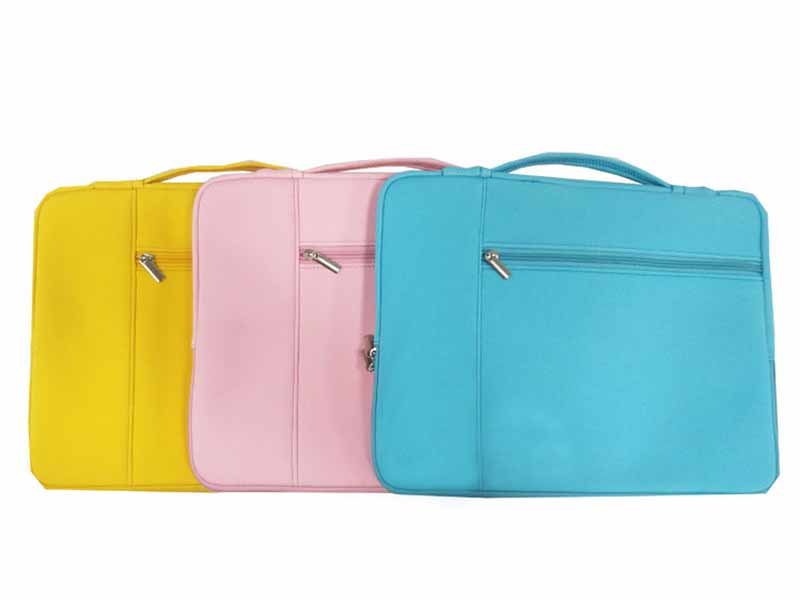
Neoprene case manufacturing for electronics brands includes several structural types and material configurations. The most effective design depends on the device size, usage scenario, and desired protection level. Common types include sleeves, zipper cases, pouches, and semi-structured designs, each offering different levels of flexibility, protection, and usability.
Which Case Styles Define Neoprene Case Manufacturing for Electronics Brands?
Choosing the right case style is one of the first and most important decisions in neoprene case development. Each structure serves a different purpose, and selecting the wrong type can lead to poor user experience even if the material itself is high quality.
The most widely used neoprene case styles include:
- sleeve (slip-in design)
- zipper case (fully enclosed)
- pouch (simple storage)
- semi-structured case (reinforced shape)
- handle case (carry-focused design)
Each style solves a different problem.
Sleeve design is the most minimal option. It usually has:
- a simple opening without a zipper
- a slim profile
- fast insertion and removal
It works well for users who prioritize speed and portability, such as laptop users moving between meetings.
Zipper cases offer more security. They include:
- full enclosure around the device
- controlled opening direction
- better protection during transport
This style is widely used for tablets, laptops, and accessories because it prevents items from slipping out.
Pouches are more flexible. They often:
- allow multiple small items
- expand slightly with content
- prioritize convenience over precise fit
Semi-structured cases combine neoprene with reinforcement layers. They:
- maintain shape better
- offer stronger protection
- feel more premium
Below is a comparison of structure types:
| Case Style | Protection Level | Flexibility | Best Use |
|---|---|---|---|
| Sleeve | Medium | High | Laptops, tablets |
| Zipper case | Medium-high | Medium | Electronics transport |
| Pouch | Low-medium | High | Accessories |
| Semi-structured | High | Low-medium | Travel and premium use |
| Handle case | Medium-high | Medium | Carry-focused products |
For electronics brands, the choice often depends on user behavior. If the product is used in controlled environments, a sleeve may be enough. If it is frequently transported, a zipper or semi-structured case is usually better.
Which Design Details Define Neoprene Case Manufacturing for Electronics Brands?
Beyond the overall structure, smaller design details have a strong impact on performance and usability. These details are often overlooked in early development stages but become critical after launch.
Key design elements include:
- zipper path (straight vs curved)
- opening width
- corner radius
- seam placement
- internal clearance (ease allowance)
- edge finishing method
For example, zipper path design directly affects how easy the case is to use. A straight zipper may look clean but can restrict access. A U-shaped or L-shaped zipper allows wider opening, making it easier to insert larger devices.
Corner radius is another important factor. Sharp corners may look precise but create stress points in neoprene, increasing the risk of deformation. Rounded corners improve durability and reduce material tension.
Internal clearance is also critical. A case should not match device dimensions exactly. Instead, it should include:
- 3–8 mm allowance for easy insertion
- extra tolerance for laminated layers
- slight expansion capacity for accessories
Below is a design comparison:
| Design Detail | Poor Approach | Optimized Approach |
|---|---|---|
| Zipper path | Narrow opening | Wide, accessible opening |
| Corner design | Sharp edges | Rounded corners |
| Fit tolerance | Exact size | Controlled clearance |
| Seam placement | High-stress areas | Reinforced zones |
| Edge finish | Raw cut | Bound or folded edges |
These adjustments may seem small, but they significantly improve user experience and product lifespan.
Which Material Specs Matter in Neoprene Case Manufacturing for Electronics Brands?
Material specification is one of the most technical aspects of neoprene case manufacturing. It directly affects protection, flexibility, weight, and cost.
The two most important factors are:
- thickness
- density
Thickness determines how much cushioning the case provides. Density determines how firm or soft the material feels.
Here is a practical breakdown:
| Thickness | Cushioning | Flexibility | Typical Use |
|---|---|---|---|
| 2mm | Low | High | Slim sleeves |
| 3mm | Medium | Medium | Standard electronics cases |
| 5mm | High | Low-medium | Heavy-duty protection |
Density is often categorized as:
- soft (more flexible, less structured)
- medium (balanced)
- high (firmer, more protective)
A higher density neoprene:
- compresses less under pressure
- holds shape better
- provides stronger impact resistance
However, it may:
- feel stiffer
- increase cost slightly
Another key material factor is lamination. Neoprene is usually combined with fabric layers such as:
- polyester
- nylon
- jersey fabric
Lamination affects:
- surface durability
- print quality
- color consistency
- overall feel
For example:
- polyester lamination is durable and cost-effective
- jersey lamination offers a softer touch
- nylon provides better abrasion resistance
Which Thickness and Density Should Be Used?
Choosing the correct thickness and density requires balancing protection, portability, and cost. There is no single “best” option—it depends on the product and market positioning.
Here is a practical decision guide:
| Product Type | Recommended Thickness | Recommended Density |
|---|---|---|
| Laptop sleeve | 3mm | Medium |
| Tablet case | 2–3mm | Medium |
| Accessory pouch | 2mm | Soft-medium |
| Camera case | 3–5mm | Medium-high |
| Travel case | 5mm | High |
For most electronics brands, 3mm medium-density neoprene is the most common choice because it offers:
- sufficient cushioning for daily use
- manageable weight
- reasonable cost
- good flexibility for different designs
However, premium or high-risk applications may require 5mm neoprene or additional reinforcement layers.
Another factor to consider is shipping and packaging efficiency. Thicker neoprene increases product volume, which affects shipping cost. This is especially important for large-scale e-commerce distribution.
At Oneier, thickness and density selection is usually tested during sampling. Clients can compare:
- feel in hand
- compression response
- fit with actual devices
This reduces the risk of choosing a specification that looks good on paper but performs poorly in real use.
Which Structure Balances Protection and Cost?
Balancing protection and cost is one of the most important decisions for electronics brands. Over-designing a case can increase cost without significantly improving performance, while under-designing can lead to poor user feedback.
A well-balanced structure typically includes:
- medium thickness neoprene (around 3mm)
- reinforced seams at key stress points
- zipper closure for security
- simple internal layout (no unnecessary layers)
Below is a cost-performance comparison:
| Design Level | Cost | Protection | Market Fit |
|---|---|---|---|
| Basic | Low | Low-medium | Budget products |
| Balanced | Medium | Medium-high | Mass market |
| Premium | High | High | High-end brands |
Most successful products fall into the balanced category, where cost and performance are optimized together.
Cost can also be controlled by:
- reducing unnecessary pockets
- simplifying structure
- optimizing material usage
- selecting efficient production methods
At the same time, critical features such as:
- zipper quality
- seam reinforcement
- material consistency
should not be compromised, as they directly affect product reliability.
For brands working with Oneier, the goal is to find the right level of engineering, not the most expensive one. A well-balanced neoprene case delivers strong protection, clean design, and reliable quality without unnecessary complexity.
How Does Neoprene Case Manufacturing for Electronics Brands Work?
Neoprene case manufacturing for electronics brands follows a structured process that transforms raw neoprene sheets into finished, branded protective products. It involves multiple stages including material preparation, pattern engineering, cutting, lamination, sewing, finishing, and quality inspection. Each step directly affects product consistency, durability, and overall performance.
How to Design Neoprene Case Manufacturing for Electronics Brands?
The design stage is where most product performance decisions are made. A well-designed neoprene case begins with accurate device data and a clear understanding of how the product will be used.
The design process typically includes:
- collecting device dimensions (length, width, thickness, corner radius)
- defining usage scenario (daily carry, travel, storage)
- selecting structure type (sleeve, zipper case, pouch)
- deciding material thickness and density
- calculating internal clearance (usually +3mm to +8mm)
- determining opening method (top entry, side zipper, U-zip)
One of the most critical steps is pattern development. This is not simply scaling up device dimensions. Engineers must consider:
- neoprene stretch behavior
- compression after stitching
- seam thickness
- zipper allowance
- long-term shape recovery
A poorly designed pattern can result in:
- cases that feel too tight or too loose
- uneven edges
- zipper distortion
- reduced product lifespan
Below is a simplified design checklist:
| Design Factor | Key Requirement | Risk if Ignored |
|---|---|---|
| Device fit | Accurate tolerance control | Poor user experience |
| Opening design | Easy insertion/removal | User frustration |
| Material match | Correct thickness/density | Weak protection |
| Structural balance | Even stress distribution | Early failure |
At Oneier, design is supported by rapid sampling, allowing clients to physically test prototypes before production. This reduces risk and ensures the final product performs as expected.
How to Produce Neoprene Case Manufacturing for Electronics Brands?
Once the design is confirmed, the production stage begins. This is where material and engineering decisions are executed in a controlled manufacturing environment.
The main production steps include:
- Material Preparation
- neoprene sheets are laminated with fabric layers
- materials are inspected for consistency
- Cutting
- precision die-cutting or CNC cutting
- ensures accurate shape and repeatability
- Lamination (if required)
- bonding additional layers
- improving structure or appearance
- Sewing and Assembly
- stitching panels together
- installing zippers, handles, and accessories
- Edge Finishing
- binding edges or folding seams
- improving durability and appearance
- Printing and Branding
- logo application (silk screen, heat transfer, embossing)
- Final Inspection and Packaging
- quality control checks
- packing according to client requirements
Here is a production overview:
| Production Step | Purpose | Key Control Point |
|---|---|---|
| Cutting | Shape accuracy | Clean edges |
| Sewing | Structural integrity | Stitch consistency |
| Zipper installation | Functionality | Smooth operation |
| Printing | Branding | Color accuracy |
| Inspection | Quality assurance | Defect detection |
A strong factory ensures consistency across all units, not just the first sample. This is especially important for large-scale orders.
What Features Improve Neoprene Case Manufacturing for Electronics Brands?
Product performance is not only determined by material and structure. Functional features and design details play a major role in improving usability and customer satisfaction.
What Functions Define Neoprene Case Manufacturing for Electronics Brands?
Functional features focus on protection and reliability. The most important functions include:
- shock absorption
- water resistance
- scratch prevention
- thermal insulation
- shape recovery
Neoprene’s foam structure allows it to absorb impact energy. When pressure is applied, the material compresses and then returns to its original shape. This reduces the force transferred to the device.
Performance comparison:
| Function | Neoprene Performance | Practical Benefit |
|---|---|---|
| Shock absorption | High | Reduces drop damage |
| Water resistance | Medium-high | Protects from spills |
| Scratch resistance | High | Preserves device surface |
| Flexibility | High | Easy to carry |
| Thermal insulation | Medium | Protects in temperature changes |
However, performance depends on correct manufacturing. Poor lamination or low-density material can reduce these benefits.
What Design Adds Value in Neoprene Case Manufacturing for Electronics Brands?
Design features enhance usability and brand value. These include:
- zipper types (nylon, waterproof, reversed)
- pullers (rubber, metal, custom logo)
- handles and straps
- accessory pockets
- internal lining upgrades
Branding options are also important:
- silk screen printing
- heat transfer printing
- sublimation printing
- embossed logos
Each method has different characteristics:
| Branding Method | Cost | Durability | Visual Effect |
|---|---|---|---|
| Silk screen | Low | Medium | Solid color |
| Heat transfer | Medium | High | Detailed graphics |
| Sublimation | Medium-high | High | Full-color design |
| Embossing | High | Very high | Premium texture |
For electronics brands, the case is often part of the brand identity system, not just an accessory. A well-designed case can reinforce brand positioning and improve customer perception.
How to Choose Neoprene Case Manufacturing for Electronics Brands?
Choosing the right manufacturing partner is critical. The factory must understand both neoprene materials and electronics product requirements.
What Factory Fits Neoprene Case Manufacturing for Electronics Brands?
A reliable factory should offer:
- strong material supply chain
- experience with neoprene products
- in-house sampling capability
- stable production capacity
- consistent quality control
Here is a comparison:
| Capability | Low-Level Supplier | Professional Factory |
|---|---|---|
| Material knowledge | Limited | Deep expertise |
| Sampling speed | Slow | Fast (3–7 days) |
| MOQ flexibility | Rigid | Flexible |
| Quality control | Basic | Systematic |
| Custom support | Limited | Full OEM/ODM |
Oneier stands out because it combines:
- 18+ years of neoprene experience
- in-house material R&D
- fast sampling and low MOQ
- full customization capability
How to Start Neoprene Case Manufacturing for Electronics Brands?
Starting a project is simpler when the process is clear. Most successful projects follow these steps:
- Define product requirements
- device type and size
- usage scenario
- target price
- Share design references or ideas
- Confirm material and structure
- Develop samples
- Test and refine
- Start mass production
To speed up development, clients should provide:
- device specifications
- target market positioning
- preferred materials
- branding requirements
Start Your Neoprene Case Project with Oneier
Neoprene case manufacturing is not just about producing a protective cover—it is about creating a product that enhances the user experience and strengthens your brand.
Whether you are launching a new electronics accessory line or upgrading an existing product, the right manufacturing partner makes the difference.
If you are ready to develop a custom neoprene case, you can start by sharing:
- product type and size
- target market
- design ideas or references
- expected order quantity
Contact Oneier today to get free design support, fast samples, and a reliable manufacturing solution for your next neoprene electronics case project.