
If you’ve ever tried to sublimate a design onto a black koozie, you’ve probably asked yourself the same question thousands of buyers, crafters, and brands ask every year: “Why doesn’t it work the way it does on white?”
At first glance, sublimation seems simple. You apply heat, the ink turns into gas, and the image becomes part of the material. That logic works beautifully on white polyester shirts, light mugs, and coated surfaces. But when black enters the picture—especially black neoprene koozies—the rules change completely.
This topic causes constant confusion because many online tutorials oversimplify sublimation. They show success on light colors and quietly avoid explaining why dark or black substrates behave differently. As a result, buyers waste time, money, and materials trying to force sublimation to work on products where physics is simply against them.
Sublimation does not work directly on black koozies because sublimation ink is transparent and requires a light-colored, polyester-based surface to appear visible. On black neoprene, sublimation ink cannot show color and effectively disappears. To decorate black koozies, alternative methods such as screen printing, heat transfer with white underlayers, or specialized films are required.
At Oneier, where we’ve spent over 18 years developing and manufacturing neoprene products—including koozies, bags, sports supports, and wetsuits—we’ve seen this mistake repeated countless times. Understanding why sublimation fails on black koozies is the first step toward choosing the right printing method and avoiding costly trial-and-error.
What is sublimation printing
Sublimation printing is a heat-based process where special dye inks are turned into a gas and permanently bonded to a polyester fabric or polymer-coated surface. Unlike traditional printing, sublimation dyes become part of the material itself, creating vibrant, durable, and long-lasting prints. It works best on light-colored or white polyester and cannot be used effectively on dark materials.
In-Depth Explanation: The Science Behind Sublimation Printing
Sublimation printing is one of the most advanced and popular methods for printing designs, logos, and artwork on fabric, apparel, promotional items, and custom products. It’s widely used for creating high-quality, full-color prints that are extremely durable. Let’s break down the process and explore why sublimation is so effective.
How does sublimation printing actually work?
Sublimation involves a few key steps:
- Printing the design: A special sublimation printer is used to print the design onto transfer paper using sublimation inks. The ink used in sublimation is unique because it turns into gas when heated, unlike traditional inks that stay liquid. The design printed on the transfer paper is usually reversed, so it appears as a mirror image.
- Transferring the design: The printed transfer paper is placed on the product (for example, a polyester fabric or a polymer-coated item). Heat and pressure are applied using a heat press machine, typically at temperatures between 190–205°C (375–400°F). This heat causes the sublimation ink to turn from solid to gas, bypassing the liquid stage.
- Bonding to the surface: The ink in gas form penetrates the fibers of the fabric or polymer surface. The heat and pressure cause the fibers to open up, and the gas becomes trapped inside the material as it cools and solidifies. This results in the ink becoming a permanent part of the material—not just sitting on top.
- The end result: The final product features a vibrant, durable print that won’t crack, peel, or fade over time. The print becomes a part of the fabric itself and can be washed without damaging the image.
Why is sublimation printing so popular?
Sublimation printing has become the go-to method for producing high-quality, durable prints for a wide variety of products, including:
- Apparel (T-shirts, hoodies, sportswear)
- Home décor (pillows, blankets)
- Promotional items (mugs, water bottles, koozies)
- Personalized gifts (phone cases, mouse pads, keychains)
- Sports team merchandise
The reasons for its popularity include:
- Vibrant colors: Sublimation produces brilliant, full-color prints that are resistant to fading over time.
- Durability: The print becomes a part of the fabric, so it won’t crack, peel, or fade like screen printing or vinyl transfers.
- Full coverage: Sublimation allows for full coverage printing, including edge-to-edge designs that don’t fade or disrupt the feel of the material.
- No feel to the print: Because the ink bonds with the material, the print feels smooth, not raised or “sticky,” making it perfect for garments that will be worn often.
What materials can be used with sublimation?
Sublimation works best on polyester fabrics and polymer-coated items. The key is that the material has to have polyester fibers or a polymer coating to allow the dye to bond.
Here are some materials sublimation works well on:
- Polyester fabrics (e.g., sportswear, T-shirts, jerseys)
- Polyester-coated items (e.g., mugs, mousepads, phone cases, koozies)
- Sublimation-ready fabrics (e.g., flags, banners, upholstery fabric)
- Polymer-coated metal (e.g., aluminum water bottles, signage)
Sublimation does not work on cotton or other natural fibers because they don’t hold the dye in the same way as polyester.
What about sublimation on dark fabrics or black items?
Sublimation prints work best on light-colored fabrics. The dye is transparent, so dark fabrics absorb the colors rather than reflecting them, making the design invisible.
To sublimate on dark materials like black koozies, the following solutions are often used:
- White underlays: A layer of white ink or fabric underneath the design.
- Heat transfer vinyl: For multi-layer applications that allow for vibrant colors on dark items.
Without these solutions, sublimation on dark fabrics simply won’t be visible.
Benefits of Sublimation Printing
| Benefit | Explanation |
|---|---|
| Durable prints | Prints are permanent and resist fading, cracking, or peeling. |
| High-quality color | Sublimation provides vibrant, full-color prints that last. |
| Comfortable feel | The ink becomes part of the fabric, so there is no texture to the print. |
| No limitations | Ideal for complex, full-color designs and edge-to-edge prints. |
Can you sublimate on black koozies
No, sublimation does not work effectively on black koozies made from neoprene or other dark materials. Sublimation ink requires a light-colored polyester base to show, and on black koozies, the dark background absorbs the ink, making the design invisible. To print on black koozies, alternative methods such as screen printing, heat transfer, or sublimation with a white patch or underlayer are necessary.
In-Depth Explanation: Why Sublimation Fails on Black Koozies
Sublimation is a fantastic printing method for vibrant, long-lasting designs, but it has limitations when it comes to black or dark-colored substrates like neoprene koozies. The issue lies in the transparent nature of sublimation ink, which requires a light base to reflect the colors effectively.
Does Sublimation Work on Black Neoprene Koozies?
The short answer is no. Sublimation ink does not show on black neoprene koozies, or any other dark-colored materials, because:
- Sublimation ink is transparent and relies on a light-colored surface to reflect back to the viewer.
- Black, dark colors absorb light rather than reflecting it, which makes the sublimated design invisible.
- Neoprene, the most common material for koozies, is not inherently suited for sublimation because the ink does not bond well with it unless there is a polyester layer.
For this reason, black koozies are not suitable for direct sublimation. If you try to sublimate on a black koozie, the design will not be visible.
Why Does Sublimation Fail on Black?
Sublimation is unique in that the ink doesn’t just sit on top of the material; instead, it becomes a part of it. This gas-to-solid process allows the design to become permanent and vibrant. However, it relies heavily on:
- Base color: The sublimation ink is transparent, so the base color must reflect light for the design to show up clearly. Black materials, on the other hand, absorb all visible light and do not provide the contrast needed.
- Polyester content: Sublimation works best with polyester fabrics or polymer-coated materials. When used on black items, the absence of light reflection causes the ink to fade into the background.
In essence, sublimation relies on light-colored materials to make the design visible. On black surfaces, there is no contrast, and therefore, no design appears.
Common Mistakes When Trying to Sublimate on Black Koozies
Many people make the mistake of assuming more heat or pressure will fix the issue with black koozies. Unfortunately, no amount of heat or pressure can make sublimation work on dark surfaces. It’s simply not the right process for this type of material.
Here are some common mistakes:
- Overestimating sublimation potential: Expecting vibrant prints on black without understanding the material limitations.
- Using the wrong koozies: Opting for black neoprene koozies without considering their printing limitations for sublimation.
- Choosing black without considering printing alternatives: Ignoring alternative methods like screen printing or heat transfer that work better on dark materials.
Alternative Methods for Printing on Black Koozies
Since sublimation doesn’t work on black koozies, you need to consider alternative printing methods that can achieve the desired result. Here are the best options:
- Screen Printing
Screen printing is one of the most popular and effective methods for printing on black koozies. This method uses opaque ink that doesn’t rely on the color of the material underneath. Key advantages of screen printing include:
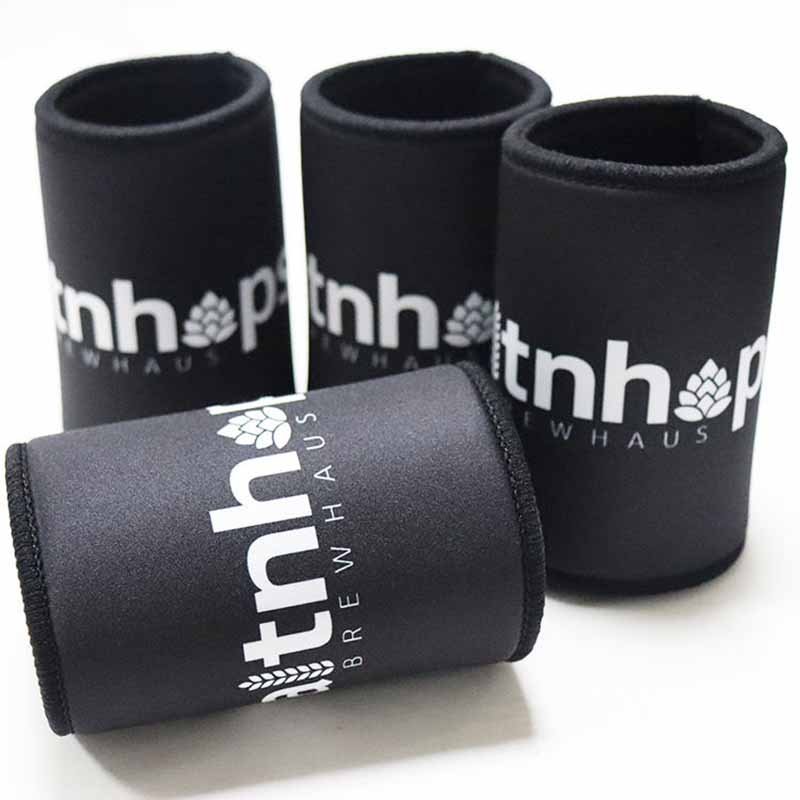
- Ability to use bright, vibrant inks, including white, which shows up clearly on black.
- High durability—screen prints resist cracking and fading over time.
- Ideal for larger runs due to its efficiency.
- Heat Transfer Printing (HTV)
Heat transfer vinyl (HTV) is another great alternative for printing on black koozies. With HTV, a polymer film is applied to the koozie using heat. The film can have white backgrounds or be fully colored to allow for vibrant designs. HTV offers:
- Flexibility in design and color.
- A smooth finish that doesn’t interfere with the feel of the material.
- Great for small runs and intricate designs.
- Sublimation with White Patches or Underlayers
One way to combine the benefits of sublimation and black koozies is to use a white polyester patch or underlayer. This allows sublimation to occur on the white patch, while the koozie itself can remain black. This method allows for:
- Full-color designs on light-colored sections.
- The ability to maintain the black aesthetic while still using sublimation for vibrant prints.
- Flexibility for custom designs without sacrificing color accuracy.
Which koozies can you sublimate on
You can sublimate on light-colored koozies that have polyester fabric or a polymer-coated surface. Sublimation works best on white neoprene koozies or koozies with polyester coatings because the dye bonds to polyester fibers, resulting in vibrant, durable prints. Black or dark-colored koozies are not suitable for sublimation unless they have a white underlayer or a polyester-coated area for sublimation printing.
In-Depth Explanation: Understanding Which Koozies Work for Sublimation
Sublimation printing is an excellent method for creating vibrant, high-quality designs that last. However, it has specific material requirements. For it to work effectively, the material needs to be polyester-based or have a polymer coating that can accept sublimation dye.
Here’s a breakdown of the koozie materials that work best for sublimation printing:
1. White Neoprene Koozies
White neoprene koozies are the most commonly used for sublimation, and for good reason:
- Polyester outer surface: White neoprene koozies have a polyester fabric layer that is ideal for sublimation. The ink bonds to this fabric layer, resulting in a smooth, durable print.
- Bright, clear designs: Because the fabric is light in color, the colors of the design are vibrant and true to the original artwork. This makes them perfect for promotional products, events, and custom gifts.
In fact, white neoprene koozies are one of the most reliable options for sublimation because they are specifically designed for this purpose. They also offer flexibility in terms of design, allowing for full-color prints that cover large areas of the koozie.
2. Light-Colored Polyester-Coated Koozies
Many polyester-coated koozies are also ideal for sublimation. These koozies have a polyester fabric layer coated with a polymer or coating, making them compatible with sublimation ink. Some key advantages include:
- Durability: Polyester-coated koozies allow for long-lasting prints that won’t fade, peel, or crack over time.
- Full-color prints: Sublimation on polyester-coated surfaces creates vibrant, high-quality designs that bond directly with the fabric.
While polyester-coated koozies are more common in products like mugs, phone cases, and blankets, they are also available in koozie form and are perfect for custom printing projects.
3. Sublimation-Ready Neoprene Koozies
While regular neoprene on its own is not ideal for sublimation (due to its color and lack of polyester content), some manufacturers produce sublimation-ready neoprene koozies. These koozies have a polyester coating on the exterior, which makes them suitable for sublimation printing. Benefits include:
- Strong ink adhesion: The polyester coating allows sublimation ink to bond properly to the koozie, producing long-lasting, high-quality prints.
- Custom branding: These koozies are great for promotional or corporate giveaways where a branded design is required.
These are less common than white neoprene koozies but are a great option if you’re looking for more durable, versatile custom designs.
4. Polyester-Coated Foam Koozies
Some koozies use foam-based materials with a polyester coating for sublimation. These koozies have the same sublimation-friendly qualities as polyester-coated koozies, but they offer a lightweight, insulating design:
- Insulation properties: Like neoprene, foam koozies provide excellent insulation for beverages.
- Sublimation compatibility: The polyester-coated outer surface ensures that sublimation ink can be absorbed, allowing for high-quality custom prints.
These koozies are ideal for branding, giveaways, or creating unique, vibrant designs for corporate events or promotions.
5. Which koozies are not suitable for sublimation?
Not all koozies can be sublimated on, and it’s important to know which ones won’t produce the desired results. Here are some koozies that don’t work well for sublimation:
- Black Koozies
- Why it doesn’t work: Sublimation ink requires a light-colored surface to show. On black or dark-colored koozies, the sublimation ink won’t be visible because black absorbs all light and doesn’t reflect the colors. To decorate black koozies, alternative methods such as screen printing or heat transfer vinyl are needed.
2. Cotton-Based Koozies
- Why it doesn’t work: Sublimation only bonds well with polyester or polymer-coated surfaces. Cotton koozies do not have the required synthetic material to bond with sublimation ink. Instead, heat transfer vinyl (HTV) or screen printing would be the best methods for cotton-based koozies.
3. Foam or Non-Polyester Koozies
- Why it doesn’t work: Koozies made entirely from foam or non-sublimation-friendly materials will not hold sublimation ink, as they lack the polyester or polymer coating required. These koozies are better suited for screen printing or direct-to-garment printing (DTG).
How to get bright designs on black koozies
To get bright designs on black koozies, you need to use printing methods that include an opaque white layer or coating. Screen printing, heat transfer vinyl (HTV), and sublimation with white patches or underlayers are the most effective alternatives. These methods provide the opacity needed for vibrant, visible prints on dark-colored koozies.
Why Black Koozies Need Special Handling for Printing
As we discussed in previous sections, sublimation printing does not work well on black koozies due to the transparent nature of sublimation inks and the dark background that absorbs light. However, there are several methods available to achieve bright, vibrant prints on black koozies.
Here are the most effective methods for creating high-quality, durable designs on black koozies:
1. Screen Printing: The Best Solution for Bright, Opaque Prints
Screen printing is a highly effective method for decorating black neoprene koozies. Unlike sublimation, screen printing uses opaque inks, including white, which stands out clearly on dark backgrounds.
Why it works:
- White ink as a base layer: For black koozies, white ink is printed first as a base layer, allowing subsequent colors to pop on top. The white ink provides the necessary contrast that sublimation lacks.
- Durability: Screen printing is highly durable, meaning the design will not crack or peel over time, even with frequent use or washing.
- Cost-effective at scale: Screen printing becomes very affordable when producing larger quantities, making it ideal for promotional events or bulk orders.
What to keep in mind:
- Design complexity: Screen printing is best for simple or medium-complex designs. Very intricate designs with a lot of color variation may require more advanced techniques like digital printing.
2. Heat Transfer Vinyl (HTV): Flexible, Colorful, and Versatile
Heat Transfer Vinyl (HTV) is another excellent option for printing on black koozies. This method uses a polymer film that is heat-pressed onto the koozie surface, and the film can be cut into any shape or design.
Why it works:
- Bright colors and flexibility: HTV comes in a wide range of vibrant colors, including opaque white and metallic finishes, which show up beautifully on black koozies.
- Customization: HTV allows for precise designs, from logos to full-color images. It works well for both simple text and intricate artwork.
- Durable and long-lasting: HTV prints are washable and resistant to cracking or fading.
What to keep in mind:
- Small-scale orders: HTV is more suitable for small batch or customized designs, as it requires individual application and pressing for each koozie.
3. Sublimation with White Patches or Underlayers
While sublimation doesn’t work directly on black koozies, one of the best workarounds is to use sublimation on a white patch or underlayer.
Why it works:
- White areas for full-color designs: A white polyester patch or fabric can be attached to a black koozie to create a “sublimation-friendly” area. This allows you to use sublimation inks for vibrant, high-quality designs.
- Customization: Sublimation allows for full-color, photo-realistic designs, which is not possible with traditional screen printing or HTV alone.
- Durability: Sublimated prints are highly durable because the ink bonds directly with the fabric fibers. These prints don’t peel, crack, or fade over time.
What to keep in mind:
- White patch or panel required: This method requires the addition of a polyester-coated patch or panel on the black koozie. While this increases the overall cost, it offers an excellent solution for custom or full-color designs.
4. Direct-to-Film (DTF) Printing: An Emerging Alternative
Direct-to-Film (DTF) printing is an emerging method for decorating dark-colored products, including black koozies. DTF printing transfers ink onto a film, which is then heat-pressed onto the product.
Why it works:
- Ability to print on dark colors: DTF printing uses white ink as a base layer, making it ideal for printing on dark-colored koozies.
- Bright colors and fine details: DTF printing can handle fine details and full-color designs, making it an excellent choice for intricate logos or images.
- Good durability: DTF prints are known for their long-lasting quality, even with regular use.
What to keep in mind:
- Newer method: While DTF printing is gaining popularity, it may not be as widely available or cost-effective for large-scale production as screen printing.
Key Takeaways for Printing on Black Koozies
To successfully get bright and visible designs on black koozies, the key factor is using opaque inks or materials. Here’s a quick summary of the best options:
| Method | Why It Works | Best For |
|---|---|---|
| Screen Printing | White ink base layer provides contrast | Bulk orders, logos, text |
| Heat Transfer Vinyl (HTV) | Colorful, durable prints | Small batches, intricate designs |
| Sublimation with White Patches | Full-color, photo-quality prints | High-quality custom designs |
| Direct-to-Film (DTF) Printing | White ink for dark substrates, vibrant designs | Custom, detailed logos and images |
Do sublimated and printed black koozies hold up in real use
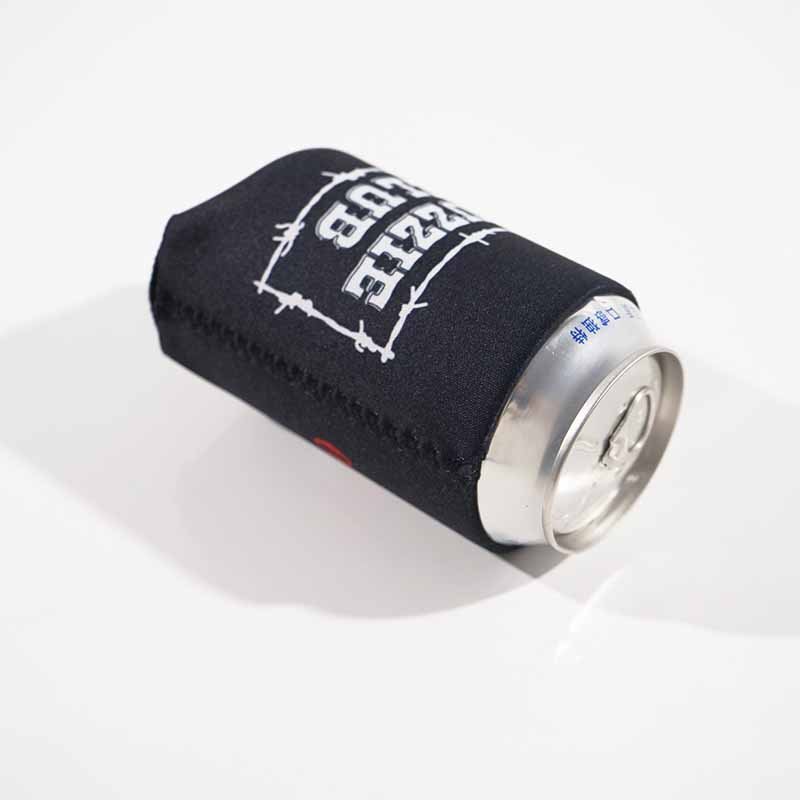
Yes, sublimated and printed black koozies can hold up well in real use if the correct printing method is used and proper materials are chosen. Screen printing and heat transfer vinyl (HTV) provide durable, long-lasting designs, even under frequent use, washing, and exposure to cold beverages. Sublimation on black koozies, however, is not effective unless a white base layer or polyester patch is used, as sublimation ink cannot show on dark materials.
In-Depth Explanation: Durability in Real-World Conditions
Koozies are not just decorative—they are functional products that are used daily for holding drinks. As a result, the durability of the design on a koozie is extremely important. Whether you’re using it at a barbecue, taking it to a sporting event, or gifting it as part of a promotional campaign, you want the design to last through wear and tear.
Here’s a detailed breakdown of how different printing methods on black koozies perform in real-world conditions.
1. Sublimation on Black Koozies
Will sublimated designs hold up on black koozies?
Sublimation, by itself, does not work well on black koozies, as the ink becomes invisible on dark substrates. As discussed earlier, the ink is transparent and relies on the base color for reflection. However, for black koozies with a white patch or underlayer, sublimated designs can hold up very well.
Once sublimation is done correctly on a white area of a black koozie, the print is:
- Highly durable: Sublimation bonds with the fabric fibers, so it won’t crack, peel, or fade over time.
- Washable: Sublimation prints are resistant to washing and wear, even under heavy use.
However, the print quality will depend on factors like the polyester content and adhesion of the polyester patch. Poor bonding or the use of low-quality materials can result in fading over time.
How long will sublimated designs last on black koozies?
If the koozie is made with high-quality materials and the white patch or underlayer is properly bonded, the sublimated designs can last for many years without significant fading or peeling. Sublimation offers one of the most durable printing methods for custom koozies when done right.
2. Screen Printing on Black Koozies
Does screen printing hold up on black koozies?
Yes, screen printing works exceptionally well on black koozies, especially when it comes to durability. Screen printing uses opaque inks, including white ink, which is ideal for dark-colored fabrics like black neoprene koozies. Screen printing offers a lot of benefits for black koozies:
- High durability: Screen printing is known for its longevity, even under heavy use. It won’t crack or peel as long as the proper inks and curing processes are used.
- Color retention: The design stays vibrant over time, even with exposure to sunlight, moisture, and repeated handling.
How well does screen printing hold up in real-world conditions?
Screen printing is one of the most reliable printing methods for koozies. It can withstand:
- Frequent washing: The ink is permanent once cured, and it doesn’t fade when exposed to water.
- Cold drinks: Koozies made with screen printing are designed to protect your hands from cold beverages, and the design won’t fade from condensation or cold exposure.
For promotional use or events, screen printing offers excellent cost-efficiency and long-lasting results, especially when producing large quantities.
3. Heat Transfer Vinyl (HTV) on Black Koozies
Does HTV last on black koozies?
Yes, HTV is an excellent choice for printing on black koozies. This method involves applying polymer vinyl onto the surface of the koozie with heat, making it a durable option for custom prints.
- Durability: Heat transfer vinyl (HTV) has high abrasion resistance. It can endure repeated handling, washing, and cold exposure, which is essential for products like koozies.
- Versatility: HTV can be used for both simple designs and detailed logos. It’s especially good for small batches or designs that require a custom finish.
Will HTV hold up over time on black koozies?
When applied properly, HTV lasts for many years. It resists fading, cracking, and peeling, even under frequent use. As long as the application process is done correctly—using the right temperature, pressure, and curing times—HTV will remain intact through wear and tear.
4. General Durability Considerations
What environmental factors affect print longevity on black koozies?
Regardless of the printing method, real-world use exposes koozies to several factors that can impact design longevity:
- Cold exposure: Koozies are designed to protect hands from cold drinks, and exposure to cold temperatures won’t harm the print if the right method is used.
- Frequent handling: The more often a koozie is used, the more pressure is applied to the print. Screen printing and HTV generally hold up the best in these conditions.
- Washing: Sublimated prints are highly resistant to washing, but heat transfer and screen prints can fade or crack if the proper care instructions aren’t followed. Always wash koozies in cold water and avoid high-heat drying.
How to maintain the longevity of printed black koozies?
- Hand wash instead of machine wash to preserve print quality.
- Avoid high heat when drying to prevent prints from cracking.
- Store koozies in a cool, dry place to prevent degradation from exposure to sunlight or extreme temperatures.
How does sublimation on black koozies compare to other products
Sublimation behaves very differently on black koozies compared to products like black mugs, phone cases, or metal items. Black koozies are fabric-based and lack a white sublimation layer, so sublimation ink becomes invisible. In contrast, many black hard goods (such as mugs) include a hidden white polymer coating, allowing sublimation to appear bright. The difference is structural, not procedural.
Why Sublimation Works on Some Black Products—but Not Koozies
At first glance, this question seems confusing. Many users ask:
- “If sublimation works on black mugs, why not black koozies?”
- “Why does sublimation fail on black neoprene but succeed on black phone cases?”
The answer lies in material structure, surface chemistry, and light reflection, not printing temperature or ink strength.
1. Sublimation on Black Koozies vs Black Mugs
Can you sublimate onto black mugs?
Yes—but with an important caveat.
Black sublimation mugs are not truly black at the print surface.
Why black mugs work:
- Black mugs are coated with a white polyester/polymer sublimation layer
- The black color is either:
- a top glaze, or
- part of the coating system above the white layer
- Sublimation ink bonds to the white layer, not the black appearance
This is why:
- Colors appear bright
- White areas show correctly
- Photos and gradients work well
Why black koozies don’t:
- Black koozies (neoprene or fabric) have no white layer
- The print surface itself is black
- Sublimation ink is transparent → absorbed visually
Key difference: Black mugs look black but print like white. Black koozies are black all the way through.
2. Sublimation on Black Koozies vs Polyester Apparel
Why sublimation works on white shirts but not black ones
The same rule applies to apparel:
| Product | Sublimation Result | Why |
|---|---|---|
| White polyester shirt | Excellent | Light reflects ink |
| Light-color polyester | Good | Partial reflection |
| Black polyester shirt | Fails | No reflection |
Even though black shirts contain polyester, color visibility is still impossible because sublimation dye has no opacity.
Black koozies behave exactly like black polyester shirts—not like coated mugs.
3. Sublimation on Black Koozies vs Phone Cases & Hard Goods
Many black hard goods are engineered specifically for sublimation.
Why phone cases, metal plates, and panels work:
- They include a white or translucent polymer coating
- The coating is heat-stable and dye-receptive
- Sublimation ink bonds to the coating, not the base color
Why koozies are different:
- Neoprene is rubber-based foam
- Outer fabric is dyed black, not coated white
- No engineered sublimation receptor layer exists
Even “polyester-laminated” neoprene is still color-dependent.
4. Sublimation on Black Koozies vs White-Patch Koozies
This comparison reveals the only real workaround.
Why white-patch black koozies work:
- White patch = light polyester surface
- Sublimation bonds normally
- Full-color designs are visible
- Black body remains untouched
This method is widely used for:
- promotional koozies
- sports teams
- photo-heavy artwork
- gradient logos
From a factory perspective, this is true sublimation, not a compromise.
5. Summary Comparison Table
| Product Type | Sublimation Works? | Reason |
|---|---|---|
| Black neoprene koozie | No | No white layer, fabric absorbs ink |
| Black mug | Yes | Hidden white polymer coating |
| Black phone case | Yes | White sublimation coating |
| Black polyester shirt | No | Dye transparency + dark base |
| Black koozie + white patch | Yes (on patch) | Light polyester surface |
| White neoprene koozie | Yes | Polyester + light color |
6. The Most Common Misconception
“If sublimation works on black mugs, it should work on black koozies.”
This is incorrect and leads to:
- wasted samples
- rejected artwork
- delayed launches
- unnecessary cost
The difference is material engineering, not printer capability.
7. What This Means for Custom Koozie Buyers
If your design requires:
- photo realism
- gradients
- bright colors
- long-term durability
Then your options are:
- White or light-color koozies
- Black koozies with white sublimation patches
- Non-sublimation methods (screen print / DTF / HTV)
Trying to force sublimation onto black neoprene will never succeed, regardless of ink, heat, or pressure.
How to choose a manufacturer for custom black koozies
Choose a manufacturer for custom black koozies that can prove neoprene expertise, offer multiple dark-surface printing methods (with white underbase capability), provide fast sampling, and run repeatable quality control. A reliable factory will guide you away from “sublimation on pure black” mistakes and instead recommend screen printing, DTF/HTV transfers, or black koozies with white sublimation patches—based on your artwork, budget, and usage requirements.
Why black koozies are different
Black koozies are usually neoprene (rubber foam) laminated with fabric, which makes them stretchy, insulating, and durable—but also harder to print correctly than white koozies. Many suppliers can sell a black koozie; far fewer can consistently deliver:
- bright logos that don’t fade or crack
- clean edges on prints
- stable sizing and seam alignment
- consistent black shade across batches
So the best manufacturer isn’t the one who says “yes” to everything—it’s the one who explains what will work and why.
1 What printing capabilities should a manufacturer have for black koozies?
For black koozies, printing method is the biggest success factor. A serious supplier should offer at least two of these options:
Screen printing (best for most logos)
- needs white underbase for bright colors
- ideal for 1–4 spot colors, clean text, bold logos
- strong durability when inks are cured correctly
DTF transfers / heat transfer (great for detailed artwork)
- uses white layer + full color
- good for small batches, gradients, complex logos
- requires correct adhesive + heat parameters for neoprene stretch
Black koozie + white sublimation patch/panel (best for full-color “sublimation look”)
- lets you sublimate on the patch, not the black base
- ideal for photo prints or designs with lots of color
- patch shape/placement must be well-finished (no lifting edges)
Red flag: A supplier promising “direct sublimation on black neoprene” with bright colors is usually overselling. Sublimation ink is transparent and can’t show on true black without a white base.
2 What materials should the manufacturer control (not outsource blindly)?
A good factory should clearly specify and control these components:
Neoprene grade and thickness
Common ranges include 2mm, 3mm, 4mm, 5mm, 6mm. Thickness affects:
- insulation performance
- stiffness/shape
- print stretch behavior
Outer fabric type (laminated layer)
For printing, the outer fabric matters:
- polyester surfaces = better for certain transfers and patches
- nylon surfaces = durable but different adhesion behavior
Lamination glue and bonding stability
Printing heat can stress lamination. The supplier should ensure:
- no delamination after pressing/curing
- stable bonding near seams and edges
3 What specs should you provide to avoid quote and sample mistakes?
To get a factory-accurate quote (and avoid endless revisions), give:
Product basics
- koozie style (can cooler sleeve, bottle sleeve, zippered, with handle, etc.)
- size (12oz can / 16oz can / slim can / bottle)
- thickness (3mm is common for can sleeves; higher for premium feel)
- quantity and target delivery date
Branding details
- artwork file type (AI / PDF / EPS preferred; high-res PNG okay for reference)
- number of colors (spot colors vs full-color)
- logo size + placement (front/back/bottom wrap)
- required print method (or ask the factory to recommend)
Performance expectations
- intended use (promotional giveaway vs retail brand product)
- wash expectations (hand wash only vs occasional machine wash)
- color standards (Pantone targets if needed)
If you provide only “black koozie + logo,” most suppliers will guess—and guessing causes delays.
4 What should sampling and prototyping look like?
A professional manufacturer should offer a clear sampling pathway:
- confirm material + thickness + style
- recommend printing method based on artwork
- make pre-production sample
- check print adhesion + stretch + condensation exposure
- finalize before mass production
What to check on the sample
- logo brightness on black background (especially small text)
- edge quality (no jagged borders, no glue marks)
- stretch test: gently pull—does ink crack or film lift?
- seam alignment and shape consistency
- smell/odor control (neoprene should not have harsh chemical odor)
5 What quality control should the factory run for black koozies?
A good factory will talk about QC in practical terms, such as:
Print durability controls
- adhesion check (tape test for transfers)
- rub/abrasion check (dry + slightly damp rub)
- stretch recovery check (neoprene flex cycle)
Product consistency controls
- thickness tolerance checks
- size tolerance (fit on target cans/bottles)
- seam strength
- color consistency for black fabric (shade matching)
If a supplier can’t explain how they ensure consistency, the risk is usually hidden in the shipment.
6 What packaging and compliance support should you expect?
Even koozies can trigger buyer requirements, especially for retail and branded projects:
- custom hangtags or sleeves
- barcode / FNSKU labels
- polybag warnings for certain markets
- carton drop-test and packing standards for e-commerce fulfillment
- material declarations if requested (for larger brands)
A capable supplier should support packaging design and assembly without slowing production.
7 What commercial terms matter most (MOQ, lead time, and pricing structure)?
A strong manufacturer should give clear guidance on:
- MOQ by printing method
- sampling time and revision cycles
- bulk lead time by quantity
- cost drivers (material thickness, printing complexity, patch types, packaging)
Common cost drivers for black koozies
| Cost Driver | Why It Increases Cost |
|---|---|
| thicker neoprene (4–6mm) | more material + heavier shipping |
| full-color transfers/DTF | more steps + consumables |
| white patch/panel construction | extra cutting + sewing/bonding |
| complex packaging | more labor and packing time |
Conclusion
If you’re asking “Can you sublimate on black koozies?”, you’re already on the right track. The smarter question is:
“What’s the best way to decorate black koozies for my design, budget, and timeline?”
That’s where Oneier comes in.
Whether you need:
- black neoprene koozies with durable logos
- sublimation-ready white koozies
- black koozies with white patches for full-color art
- private label or OEM/ODM production
Contact Oneier today to request samples, discuss printing options, or get a factory-accurate quote.
We’ll help you choose the method that works—not the one that wastes time and money.