Neoprene bags are everywhere—from beach totes and lunch bags to laptop sleeves, sports gear bags, and medical carriers. They look soft, flexible, and almost sponge-like, which leads many users to ask the same question: Can neoprene bags actually get wet? And if they do, will the material be damaged—or worse, will everything inside get soaked?
This confusion is understandable. Neoprene feels very different from traditional waterproof materials like PVC or TPU. Yet it is also the same material used in wetsuits, diving gear, and marine applications—products that spend their entire life in water. The gap between how neoprene looks and how neoprene actually performs is where most misunderstandings happen.
Yes, neoprene bags can get wet. Neoprene is a water-resistant material with a closed-cell structure that does not absorb water like fabric. However, neoprene is not 100% waterproof on its own. Water resistance depends on bag construction, seams, zippers, and lining. When designed correctly, neoprene bags perform very well in rain, beach, pool, and sports environments.
The real question is not whether neoprene bags can get wet, but how they behave when wet, what risks exist for items inside, and how design choices change performance. In this guide, we break down the science behind neoprene, real-world use scenarios, care and maintenance, and how brands work with Oneier to customize neoprene bags specifically for wet environments.
Can neoprene bags get wet
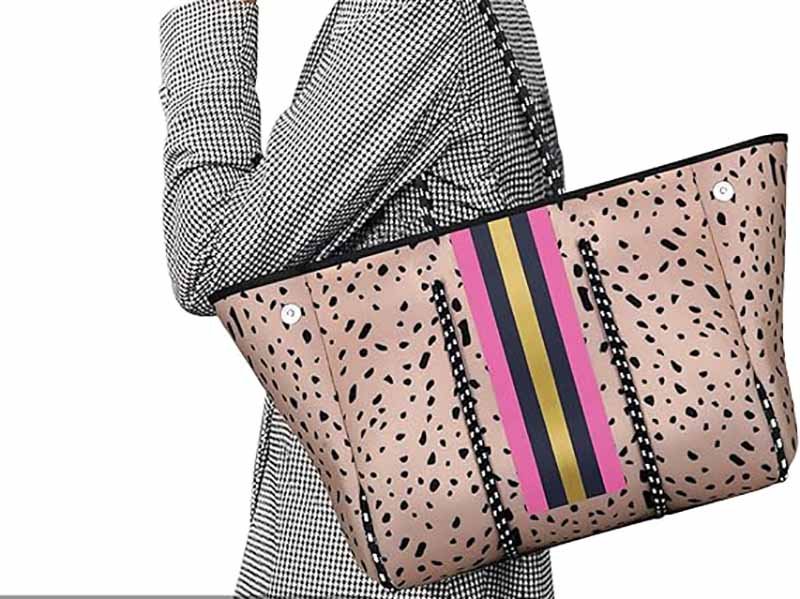
Yes, neoprene bags can get wet without damaging the material. Neoprene is water-resistant and designed to tolerate frequent exposure to water. However, most neoprene bags are not fully waterproof inside—water resistance depends on how the bag is constructed, especially seams, zippers, and linings.
Why neoprene bags can safely get wet
Neoprene is the same material used in wetsuits, diving boots, and marine gear, all of which are designed to function in constant contact with water. From a material standpoint, neoprene getting wet is normal—not a problem.
Key reasons neoprene handles water well:
- Closed-cell foam structure: water cannot soak through fibers like cotton or canvas
- Synthetic rubber base: does not rot, swell, or weaken when wet
- Elastic recovery: maintains shape and cushioning after drying
As a result, neoprene bags remain flexible, protective, and structurally stable even after repeated wet–dry cycles.
What actually happens when a neoprene bag gets wet
When a neoprene bag is exposed to water:
- The outer surface may feel damp, but the material does not absorb water internally
- The bag does not become heavy like fabric bags
- Drying is relatively fast because moisture stays on the surface
Any water found inside the bag almost always enters through:
- Open tops
- Stitch holes
- Zippers or closures
Not through the neoprene body itself.
Are neoprene bags waterproof or just water-resistant?
This is where most confusion comes from.
- Neoprene material → water-resistant
- Neoprene bag → water performance depends on construction
Most standard neoprene bags are designed to handle:
- Rain
- Splashes
- Poolside moisture
- Damp environments
But they are not designed for full submersion unless specifically engineered with:
- Waterproof linings (TPU / PVC)
- Sealed or taped seams
- Waterproof zippers or roll-top closures
So while neoprene itself tolerates water, the bag may allow water inside depending on design.
Is neoprene 100% waterproof in real-world use?
No. Neoprene is not 100% waterproof by itself.
Even wetsuits are not fully waterproof—they allow a thin layer of water inside, which is then insulated by the material. Neoprene bags follow the same principle.
In real-world use:
- Neoprene blocks water through the material body
- Water entry usually occurs at construction weak points
- Full waterproof performance requires additional design elements
Understanding this prevents unrealistic expectations and helps users choose the right bag for their needs.
Can neoprene bags be used in rain, pools, or at the beach?
Yes—this is one of their strongest advantages.
Neoprene bags are widely used for:
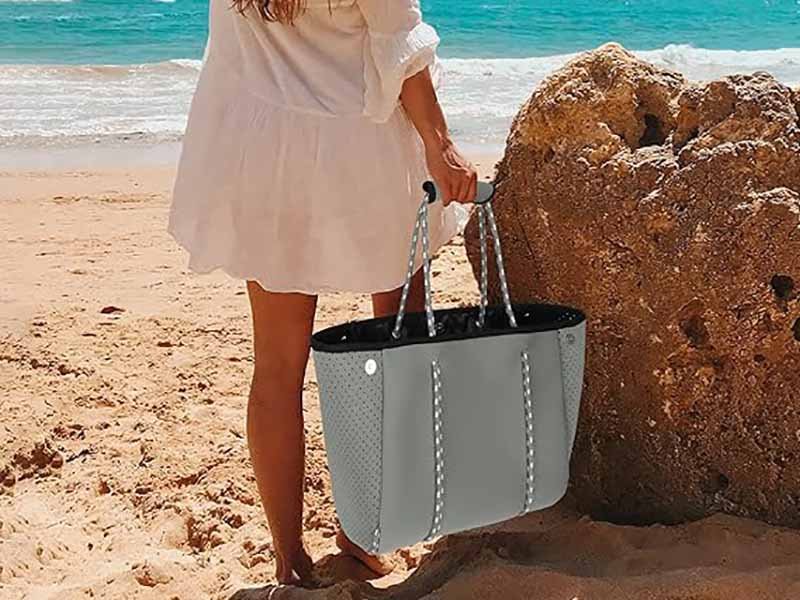
- Beach totes
- Swimming and pool bags
- Gym and sports bags
- Boat and marine accessory bags
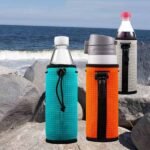
- Lunch bags and koozies
They perform especially well in environments with:
- Frequent splashing
- High humidity
- Sand and salt exposure
For valuables like electronics, brands often add waterproof linings or covered zippers—something professional manufacturers like Oneier routinely customize.
Are items inside safe when a neoprene bag gets wet?
It depends on the bag design and the item.
- Towels, clothes, shoes → generally safe
- Food containers → usually fine
- Electronics, documents → need extra protection
Neoprene provides cushioning and splash resistance, but sensitive items require:
- Inner waterproof lining
- Sealed or recessed zippers
- Secondary pouches
This is why many high-end neoprene bags use layered protection, not just raw neoprene.
Neoprene bags vs fabric bags when wet
| Feature | Neoprene Bag | Fabric Bag |
|---|---|---|
| Water absorption | Very low | High |
| Weight when wet | Minimal change | Becomes heavy |
| Drying speed | Fast | Slow |
| Odor risk | Low | High |
| Shape retention | Strong | Often deforms |
This comparison explains why neoprene bags are preferred for wet or active environments.
What is neoprene and why does it handle water well
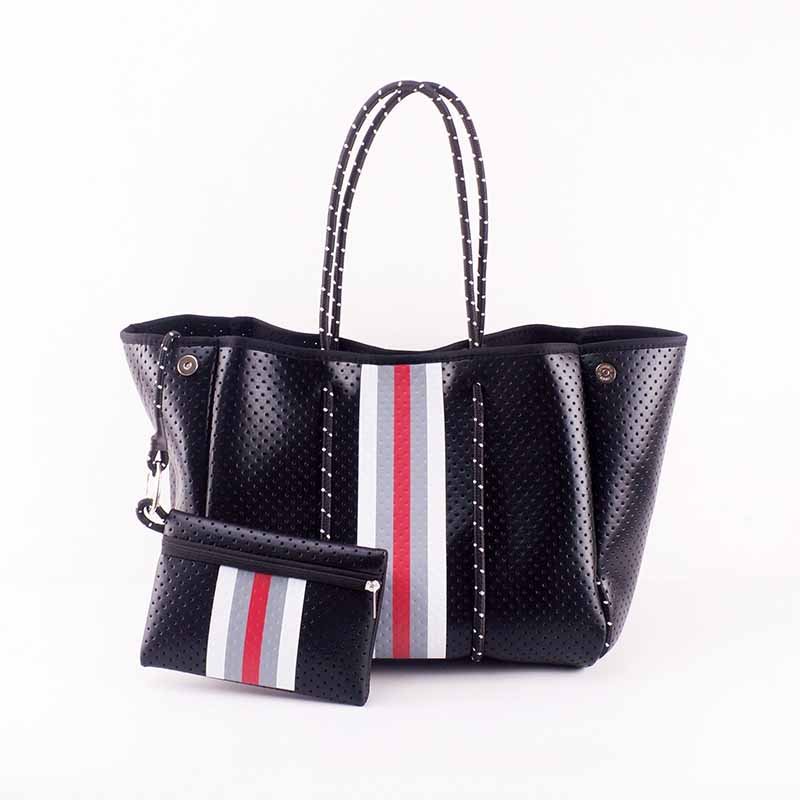
Neoprene is a synthetic rubber, chemically known as polychloroprene, engineered with a closed-cell foam structure that naturally resists water penetration. Unlike woven fabrics, neoprene does not absorb water into fibers, allowing it to maintain flexibility, insulation, and durability when wet. This structure is why neoprene is widely used in wetsuits, marine gear, and water-resistant bags.
What neoprene is made of
Neoprene was originally developed for water-exposed and chemically harsh environments. At the material level, it differs fundamentally from textiles.
Key material characteristics:
- Synthetic rubber base (polychloroprene)
- Gas-filled closed cells formed during foaming
- Elastic, resilient polymer chains
These closed cells are individual and sealed, meaning they do not connect like fabric fibers. This is the foundation of neoprene’s water performance.
In bag applications, neoprene behaves closer to rubber insulation than to fabric.
Why neoprene resists water absorption naturally
Closed-cell foam vs woven fibers
Traditional fabrics absorb water because:
- Fibers create capillary channels
- Water wicks along yarns
- Moisture becomes trapped between fibers
Neoprene has no capillary pathways.
What happens instead:
- Water remains on the surface
- Moisture cannot travel through the material body
- The foam structure blocks internal soaking
As a result, neoprene does not swell, soften, or weaken when wet.
How neoprene behaves when exposed to water
When neoprene gets wet:
- The surface may feel damp, but internal absorption is minimal
- Weight increases very slightly (mostly surface moisture)
- The material retains elasticity and cushioning
- Drying is fast because water does not penetrate deeply
This is why neoprene bags dry faster and feel lighter after rain or splashes compared to canvas or polyester bags.
Why neoprene maintains performance in wet conditions
Neoprene is not just water-resistant—it is water-stable.
Even after repeated wet-dry cycles:
- The foam structure remains intact
- Lamination layers stay bonded (when properly manufactured)
- Shape and thickness are preserved
This makes neoprene suitable for products that are expected to get wet regularly, such as:
- Wetsuits
- Dive accessories
- Marine gloves
- Beach and sports bags
Manufacturers like Oneier test neoprene for durability under repeated water exposure to ensure long-term performance.
Why neoprene insulates even when wet
One unique advantage of neoprene is thermal insulation in wet environments.
Closed-cell foam traps gas inside each cell, slowing heat transfer. Even when water contacts the surface:
- The internal structure still insulates
- Temperature changes are gradual
This property explains why neoprene is used in:
- Wetsuits
- Lunch bags
- Bottle holders (koozies)
For bags, this means neoprene can protect contents not only from moisture but also from temperature swings.
Is neoprene waterproof or water-resistant?
This distinction matters.
- Neoprene material: water-resistant by nature
- Neoprene products: water performance depends on construction
Neoprene alone blocks water through the material body, but:
- Stitch holes
- Zippers
- Open tops
can still allow water inside a bag.
To achieve waterproof performance, manufacturers add:
- Waterproof linings (TPU, PVC)
- Sealed or taped seams
- Waterproof or covered zippers
So neoprene provides the foundation—but design completes the system.
Does neoprene thickness affect water performance?
Thickness changes function, not basic water resistance.
| Thickness | Typical Use | Water Behavior |
|---|---|---|
| 2–3 mm | Lightweight bags, sleeves | Water-resistant |
| 4–5 mm | Sports, beach, lunch bags | Water-resistant + better insulation |
| 6 mm+ | Heavy protection, specialty gear | Water-resistant, high cushioning |
Water resistance remains similar across thicknesses because it comes from the closed-cell structure, not material bulk.
Neoprene vs common bag materials in wet environments
| Material | Water Absorption | Drying Speed | Wet Stability |
|---|---|---|---|
| Neoprene | Very low | Fast | Excellent |
| Canvas | High | Slow | Poor |
| Polyester | Moderate | Medium | Fair |
| Nylon | Moderate | Medium | Fair |
| PU leather | Low | Medium | Coating-dependent |
This comparison explains why neoprene is often chosen for water-exposed bags.
Do neoprene bags absorb water or moisture
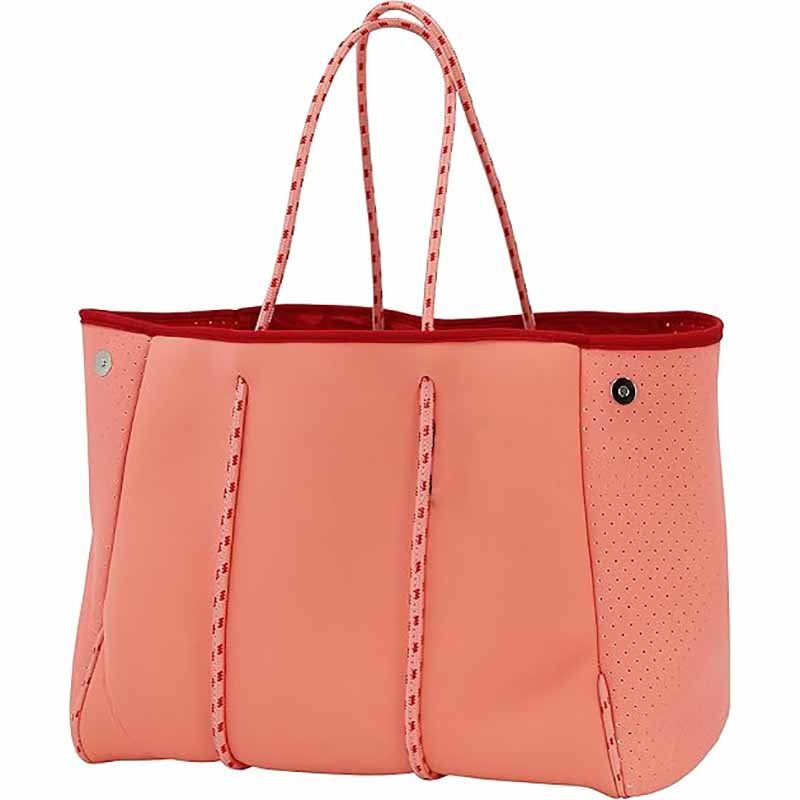
Neoprene bags do not absorb water like fabric bags. Neoprene has a closed-cell foam structure that prevents water from soaking into the material. Any moisture on a neoprene bag is usually surface water, not internal absorption. However, small amounts of water can enter a bag through seams, stitching, or zippers depending on construction.
Why neoprene does not absorb water like fabric
Closed-cell foam vs fiber-based materials
Neoprene is made from polychloroprene rubber formed into closed-cell foam. Each cell is sealed, meaning water cannot travel between cells or wick through fibers.
In contrast, fabric bags:
- Use woven yarns
- Create capillary pathways
- Pull water inward and hold it
Because neoprene has no fibers to wick moisture, water stays on the surface instead of being absorbed.
What happens when neoprene gets wet
When a neoprene bag is exposed to water:
- The surface becomes wet or damp
- The internal structure remains dry
- The bag does not become heavy
- The material does not swell, soften, or weaken
Once removed from water, neoprene dries quickly because moisture does not penetrate deep into the material.
This is why neoprene bags are preferred for wet environments like beaches, pools, gyms, and boats.
How much water can neoprene actually hold?
In material testing, neoprene typically absorbs less than 3–5% of its weight in water, and most of that is surface moisture.
For comparison:
- Cotton or canvas can absorb 20–50%+
- Polyester and nylon absorb more than neoprene due to fiber structure
- Neoprene remains stable even after repeated wet–dry cycles
This low absorption rate explains why neoprene bags feel light and manageable even after getting wet.
Does moisture get inside neoprene bags?
Yes—but not through the neoprene itself.
Water or moisture inside a neoprene bag usually enters through:
- Stitch holes
- Zippers (especially standard nylon zippers)
- Open tops or folded openings
This is a construction issue, not a material issue.
To reduce internal moisture, higher-performance neoprene bags use:
- Glued + stitched seams
- Seam binding or taping
- Waterproof linings (TPU or PVC)
- Covered or waterproof zippers
Manufacturers like Oneier customize these elements based on use case.
Does neoprene absorb moisture from humidity?
Neoprene resists moisture even in humid environments.
- It does not wick moisture from air
- It does not feel clammy like fabric
- It does not retain humidity internally
However, moisture can become trapped inside a bag if it is closed while wet. This can cause odor—not because neoprene absorbs water, but because water is physically trapped.
Does neoprene thickness affect water absorption?
Thickness affects insulation and cushioning, not water absorption.
| Thickness | Water Absorption | Typical Use |
|---|---|---|
| 2–3 mm | Very low | Lightweight bags |
| 4–5 mm | Very low | Sports, lunch, beach bags |
| 6 mm+ | Very low | Heavy protection |
Water resistance remains similar across thicknesses because it comes from the closed-cell structure.
Neoprene vs common bag materials
| Material | Water Absorption | Drying Speed | Weight Change |
|---|---|---|---|
| Neoprene | Very low | Fast | Minimal |
| Canvas | High | Slow | Heavy |
| Cotton | Very high | Very slow | Very heavy |
| Polyester | Moderate | Medium | Noticeable |
| Nylon | Moderate | Medium | Noticeable |
| PU leather | Low | Medium | Coating-dependent |
This comparison highlights why neoprene is favored in wet or active environments.
How do wet neoprene bags affect items inside
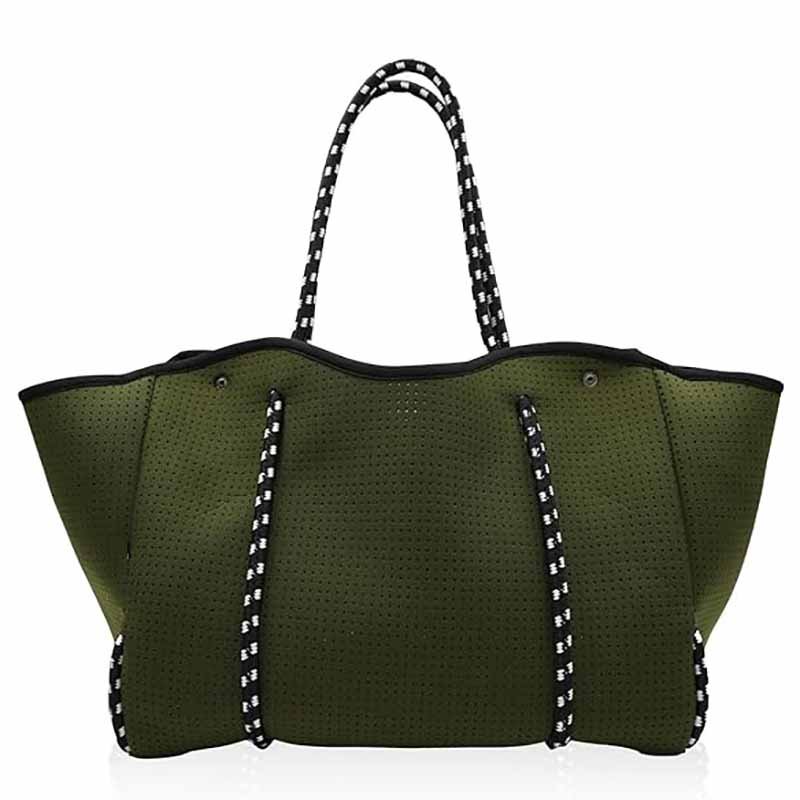
Wet neoprene bags generally protect contents better than fabric bags by resisting water absorption and providing cushioning. Items inside usually stay dry from light rain or splashes, but water can enter through seams, zippers, or openings. The impact on items depends on bag construction, water exposure level, and the sensitivity of what’s inside.
What happens inside a neoprene bag when it gets wet
When a neoprene bag is exposed to water, the material itself does not soak through. Instead:
- Moisture remains mostly on the outer surface
- The neoprene layer continues to cushion and insulate
- Internal humidity stays low unless water enters through openings
This means the bag’s body acts as a protective barrier, while construction details determine whether water reaches the contents.
Which items are usually safe inside wet neoprene bags
Low-risk items
- Towels and swimwear
- Gym clothes and shoes
- Food containers
- Water bottles
- Sports accessories
These items tolerate moisture well, and neoprene’s quick-drying nature helps prevent odor and mildew compared to fabric bags.
Which items are at risk when neoprene bags get wet
High-risk items
- Laptops, tablets, cameras
- Mobile phones and chargers
- Paper documents and books
- Leather goods
Even small amounts of water entering through seams or zippers can damage these items. Neoprene cushions impacts but does not automatically seal out water.
How water actually gets inside a neoprene bag
Water almost never passes through neoprene itself. Instead, it enters through:
- Zippers Standard nylon zippers allow water through the teeth.
- Stitch holes Needle holes create micro entry points.
- Open tops or folded openings Common in tote-style neoprene bags.
- Seams under pressure When the bag is compressed while wet.
This is why two neoprene bags made from the same material can perform very differently in wet conditions.
Are neoprene bags safe for electronics when wet?
Partially—but with conditions.
Neoprene provides:
- Shock absorption
- Light splash resistance
- Thermal insulation
However, electronics require dry internal conditions. Without added features, a neoprene bag alone is not sufficient.
Recommended protection for electronics
- Waterproof inner lining (TPU or PVC)
- Covered or waterproof zippers
- Fold-over or recessed openings
- Secondary inner pouch
Manufacturers like Oneier often integrate these features for laptop sleeves and tech bags.
How seams, stitching, and zippers change protection level
| Construction Element | Effect on Items Inside |
|---|---|
| Stitched-only seams | Moderate water entry risk |
| Glued + stitched seams | Lower risk |
| Standard zipper | High water entry risk |
| Covered zipper | Reduced risk |
| Waterproof zipper | Best protection |
This table explains why “same material” bags can behave very differently in rain or splashes.
Does moisture buildup cause odor or damage inside?
Neoprene itself resists mold, but trapped moisture can still cause problems.
- Closing a wet bag traps humid air
- Warm conditions encourage odor
- Items like clothes or paper can be affected
Best practice:
Open the bag fully after exposure and allow it to air dry before storage.
How to improve protection for items inside neoprene bags
For users
- Use zip pouches for electronics
- Avoid storing paper directly against seams
- Dry bags completely before long-term storage
For brands and product developers
- Add waterproof linings
- Reduce external seams
- Use sealed or taped stitching
- Upgrade zipper systems
These design choices significantly improve real-world performance.
Neoprene vs fabric bags
| Feature | Neoprene Bag | Fabric Bag |
|---|---|---|
| Splash resistance | High | Low |
| Cushioning | Excellent | Minimal |
| Water absorption | Very low | High |
| Drying speed | Fast | Slow |
| Odor risk | Low | High |
This comparison highlights why neoprene is widely used for active and wet environments.
Which neoprene bags are designed for wet environments
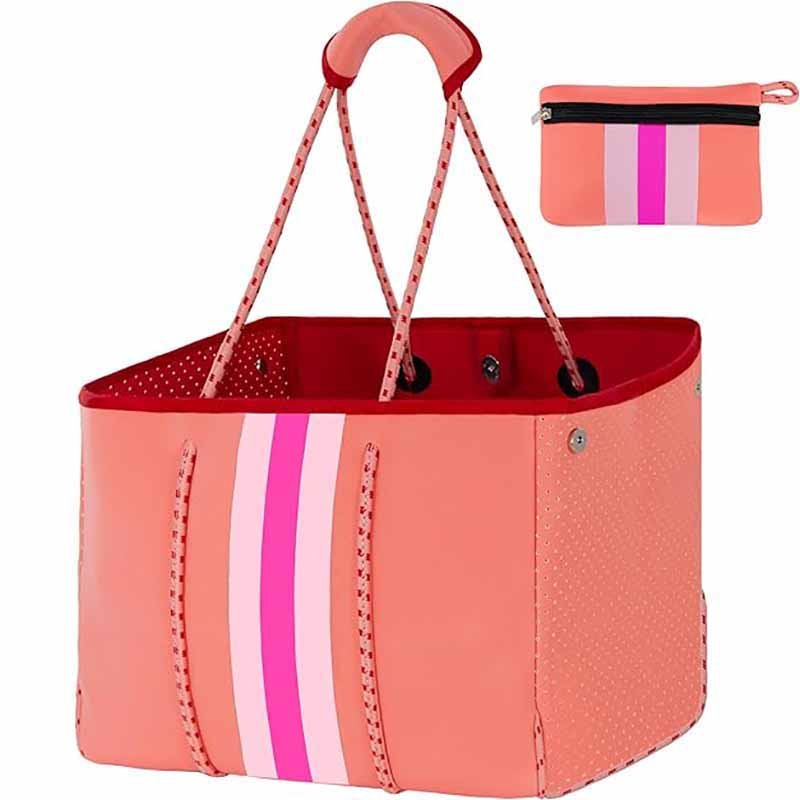
Neoprene bags designed for wet environments include beach totes, swim bags, poolside carry bags, gym/wet gear bags, waterproof-lined pouches, boat/marine accessory bags, and neoprene coolers/lunch bags. These styles focus on water resistance, quick drying, easy cleaning, and durable construction rather than full waterproof sealing—unless special linings, seams, and closures are added.
1 Neoprene beach tote bags
Why they work in wet environments
Beach totes are exposed to splashes, wet towels, sunscreen, sand, and salt. Neoprene handles this well because it doesn’t absorb water like fabric and is easy to rinse.
Typical design features
- Medium-thickness neoprene (commonly 3–5 mm) for structure + comfort
- Wide open top for fast access
- Reinforced handles and stress-point stitching
- Easy-to-clean surface for sand and salt
Best for: towels, swimwear, beach accessories, sunscreen, snacks
Not ideal for: electronics unless inner protection is added
2 Swimming / pool bags for wet gear separation
Why they’re a wet-environment staple
Swim bags often need to carry wet items without soaking everything else. Neoprene is commonly used to contain dampness and reduce odor compared to fabric bags.
Key features to look for
- Water-resistant inner lining or wipe-clean interior
- Drain holes or mesh panels (optional) to avoid water pooling
- Strong zipper closures to prevent wet items falling out
Best for: swimsuits, goggles, caps, towels
Pro tip: look for designs that include a separate wet compartment.
3 Wet/dry gym bags and sports duffels
Why neoprene suits sports and humidity
Locker rooms and gyms involve sweat, humidity, and frequent wiping/rinsing. Neoprene resists moisture and dries quickly, while also cushioning contents.
Wet-environment-friendly design signals
- Durable bottom panel (reduces abrasion damage)
- Ventilation panels to prevent odor buildup
- Multi-compartment layout (wet shoes vs clothing vs accessories)
Best for: gym clothes, shoes, sports gear
Design upgrade: add wipe-clean linings in shoe compartments.
4 Neoprene waterproof-lined pouches for valuables
Why these are “high protection” neoprene bags
If users carry phones, passports, cards, or keys near water, a standard neoprene pouch isn’t enough. The best option is neoprene + waterproof system design.
What makes them suitable for water exposure
- TPU/PVC waterproof inner lining
- Sealed or taped seams (or glued + stitched seams)
- Recessed zipper flap or waterproof zipper
- Compact size for easy carry
Best for: electronics, cash, IDs, car keys
Common use: beach, boat, kayaking, poolside travel
5 Neoprene cooler bags and lunch bags
Why they’re common in wet settings
Neoprene’s closed-cell foam structure provides insulation. In wet environments, these bags also resist moisture while keeping contents temperature-stable.
Key features
- 4–6 mm neoprene thickness for insulation
- Sealed inner lining for condensation control
- Strong zippers and easy-clean interior
Best for: beverages, lunch boxes, snacks, picnic items
Added benefit: handles condensation better than many fabric lunch bags.
6 Marine and boat accessory bags
Why neoprene is favored on watercraft
Boat life exposes gear to spray, humidity, and salt. Neoprene is durable, water-friendly, and comfortable to handle even when wet.
Common designs
- Small utility pouches for tools and electronics
- Rope or anchor accessory bags
- Storage sleeves for marine equipment
Best for: marine accessories, boat tools, fishing gear
Upgrade: corrosion-resistant hardware and reinforced seams.
7 Neoprene diaper bags and family carry bags for wet situations
Why families choose neoprene
Parents often deal with spills, wet wipes, bottles, and accidental leaks. Neoprene makes cleaning easy and resists odor.
Useful features
- Wipe-clean interior
- Spill-resistant pockets
- Reinforced base and easy-carry straps
Best for: baby items, wipes, bottles, emergency clothing
Design note: compartments matter more than “waterproof” claims.
How to choose the right neoprene bag for wet environments
Choose based on water exposure level
| Exposure Level | Best Neoprene Bag Type | Must-Have Features |
|---|---|---|
| Light (rain, splashes) | tote, gym bag | durable seams, decent zipper |
| Medium (poolside, wet towels) | swim bag, wet/dry bag | wipe-clean lining, compartments |
| High (boat, beach valuables) | waterproof-lined pouch | sealed seams, waterproof zipper |
| Condensation + cooling | lunch/cooler | insulated thickness, sealed interior |
How to dry, clean, and maintain neoprene bags after getting wet
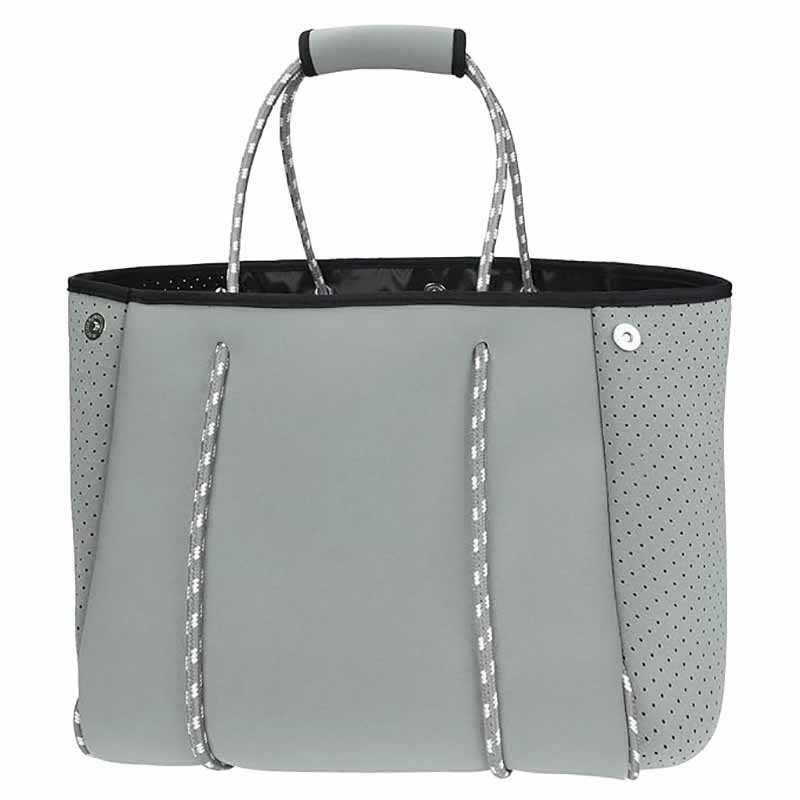
Neoprene bags should be air-dried after getting wet, cleaned gently with mild soap when needed, and stored only when completely dry. Proper drying and maintenance prevent odor, mold, and material degradation, helping neoprene bags maintain flexibility, shape, and performance over time.
Step 1: How to dry neoprene bags correctly after water exposure
Best drying method
- Empty the bag completely Remove all contents and open every pocket or compartment.
- Rinse if exposed to salt, chlorine, or sand Use clean, fresh water to prevent residue buildup.
- Pat dry with a towel This removes surface moisture and speeds up drying.
- Air dry in a shaded, well-ventilated area Hang or lay flat with openings fully open.
Why air drying matters
Neoprene dries best when moisture evaporates naturally from the surface. Heat forces can damage foam structure and laminations.
Step 2: What not to do when drying neoprene bags
Avoid these common mistakes:
- Do not use tumble dryers
- Do not place on radiators or heaters
- Do not leave in direct sunlight for long periods
- Do not wring or twist the bag
These actions can cause:
- Foam hardening
- Delamination
- Loss of elasticity
- Premature cracking
Step 3: Can neoprene bags be washed safely?
Yes—most neoprene bags can be washed safely if done correctly.
Hand washing
- Use cold or lukewarm water
- Add a small amount of mild detergent or gentle soap
- Gently scrub with a soft cloth or sponge
- Rinse thoroughly to remove soap residue
Machine washing
- Use gentle cycle only
- Cold water
- Place bag in a laundry mesh bag
- No spin or low spin
For bags with glued seams, laminated linings, or waterproof zippers, hand washing is strongly recommended.
Step 4: What cleaning agents are safe for neoprene?
Safe options
- Mild liquid detergent
- Baby shampoo
- Neoprene-specific cleaners (used for wetsuits)
Avoid completely
- Bleach
- Fabric softeners
- Strong solvents or alcohol
- Harsh stain removers
Harsh chemicals can break down rubber compounds and weaken lamination layers.
Step 5: How to remove odor from neoprene bags
Odor usually comes from trapped moisture, not from neoprene itself.
Odor prevention tips
- Always dry fully before storage
- Open zippers and compartments while drying
- Rinse after exposure to sweat, salt, or chlorine
Odor removal methods
- Soak briefly in cold water with a small amount of baking soda
- Use neoprene-safe deodorizing spray
- Air dry thoroughly afterward
Never mask odor with perfume sprays—they trap moisture inside.
Step 6: How to prevent mold and mildew
Neoprene resists mold better than fabric, but moisture trapped inside a closed bag can still cause issues.
Best practices
- Store only when completely dry
- Keep in a cool, ventilated area
- Avoid sealed plastic storage while damp
If light mildew appears:
- Clean immediately with mild soap
- Rinse well
- Dry in open air
Early action prevents permanent staining.
Step 7: How often should neoprene bags be cleaned?
Cleaning frequency depends on use:
| Use Type | Cleaning Recommendation |
|---|---|
| Beach / pool use | Rinse after each use |
| Gym / sports use | Wash weekly or bi-weekly |
| Daily casual use | Clean as needed |
| Long-term storage | Clean before storing |
Regular light cleaning is better than infrequent deep cleaning.
Step 8: How to store neoprene bags properly
Short-term storage
- Ensure bag is fully dry
- Store open or loosely closed
- Keep away from heat sources
Long-term storage
- Clean and dry completely
- Store flat or gently folded
- Avoid heavy compression
- Keep in breathable storage space
Proper storage preserves foam elasticity and shape.
Step 9: How maintenance affects lifespan and performance
With correct care:
- Neoprene bags keep flexibility for years
- Lamination remains stable
- Seams and stitching last longer
- Odor and discoloration are minimized
Poor maintenance—especially heat drying and chemical cleaning—is the main cause of premature neoprene bag failure.
Conclusion
Neoprene bags are completely waterproof. In fact, they are designed specifically for wet environments. The key is to understand the difference between these two points:
- Waterproof material
- Completely waterproof bag construction
With the right choice of application and proper seams, linings, and closures, neoprene bags outperform many traditional fabrics in wet conditions.
With over 18 years of experience in neoprene research and production, many brands choose Oneier for their custom neoprene bags.
Contact Oneier today to discuss your custom neoprene bag project—whether for beach, sports, travel, medical, or everyday use.