Choosing the best neoprene wetsuit is no longer as simple as picking the thickest suit or the most famous brand. Today’s buyers—whether surfers, divers, professional teams, or brand owners—are far more informed. They care about flexibility, thermal efficiency, durability, fit precision, and increasingly, how well a wetsuit matches their specific activity and environment.
At the same time, the wetsuit market has become crowded with marketing claims. Words like premium neoprene, high-stretch, or thermal lining are used everywhere, yet two wetsuits with similar thickness numbers can feel completely different in the water. Some feel warm but restrictive. Others feel flexible but lose insulation quickly. This gap between specifications and real-world performance is where many buyers feel confused.
What truly defines the “best” neoprene wetsuit is not one single factor, but a system: the quality of neoprene itself, how it is laminated and lined, how seams are constructed, how panels are cut, and how well the suit fits the human body in motion. The best wetsuits are designed, not just assembled. The best neoprene wetsuits combine high-quality neoprene, proper thickness for water temperature, advanced seam construction, and a precise ergonomic fit. Rather than relying on thickness alone, top wetsuits balance warmth, flexibility, durability, and comfort for specific activities such as surfing, diving, or professional use. Choosing the right wetsuit means matching materials and design to real-world conditions.
Once you understand how neoprene works and why certain designs outperform others, choosing—or even customizing—the right wetsuit becomes far more straightforward.
What Is a Neoprene Wetsuit
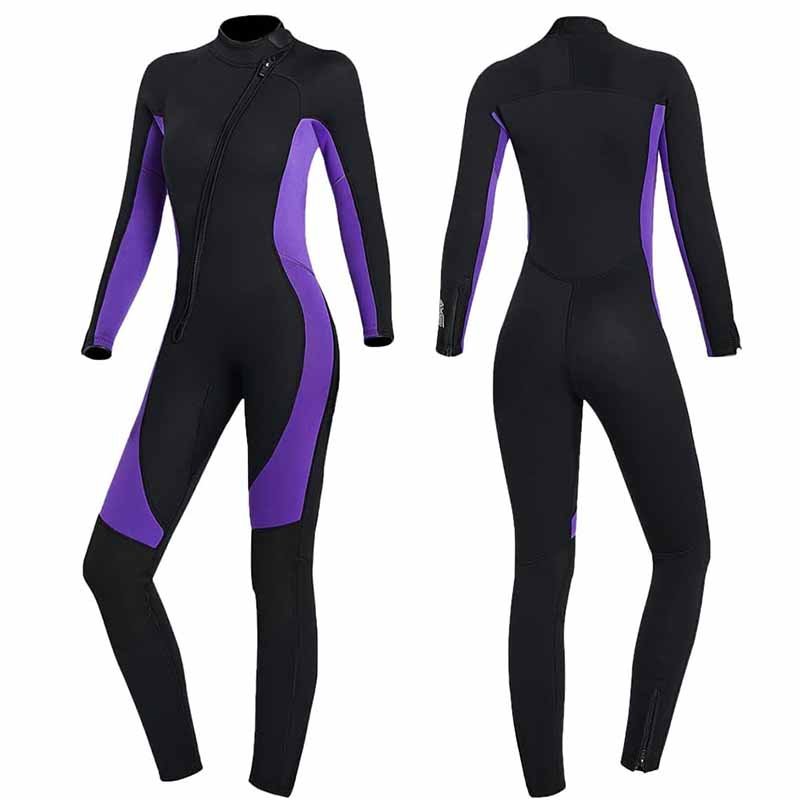
A neoprene wetsuit is a thermal garment made from closed-cell synthetic rubber designed to reduce heat loss in water. It works by trapping a thin layer of water between the suit and the skin, which is warmed by body heat and retained by neoprene insulation. Neoprene wetsuits provide warmth, flexibility, and buoyancy for activities such as surfing, diving, swimming, and professional water operations.
What Is Neoprene and Why Is It Used in Wetsuits?
Neoprene is a synthetic rubber foam with a closed-cell structure. Each microscopic cell contains gas, which acts as an insulator. This structure is the foundation of why neoprene works so well in water.
Compared with ordinary fabrics, neoprene offers three critical advantages:
- Thermal insulation: Gas-filled cells slow heat transfer
- Elasticity: Rubber structure allows stretch and recovery
- Water resistance: Does not absorb water like textiles
Modern wetsuit neoprene is engineered for specific performance goals, such as higher stretch, lighter weight, or better compression resistance. This is why not all neoprene wetsuits feel the same, even at identical thickness.
How Does a Neoprene Wetsuit Keep You Warm in Water?
A common misconception is that wetsuits keep you dry. In reality, neoprene wetsuits are designed to control water, not block it entirely.
Here’s how the thermal system works:
- A thin layer of water enters the suit
- Body heat warms this trapped water
- Neoprene insulation slows heat loss
- A snug fit minimizes water circulation
Because water conducts heat up to 25 times faster than air, controlling water movement is critical. The best wetsuits focus on fit accuracy and seam sealing to prevent constant flushing, which would otherwise strip heat away.
Are Neoprene Wetsuits Good for Warmth and Mobility at the Same Time?
Yes—when designed correctly.
A well-engineered neoprene wetsuit balances:
- Insulation (thickness and cell quality)
- Flexibility (stretch ratio and panel layout)
- Fit (reducing gaps and pressure points)
Poorly designed wetsuits often force a tradeoff: warm but stiff, or flexible but cold. High-quality wetsuits avoid this by using stretchier neoprene in high-movement zones (shoulders, hips) and more stable neoprene in the torso.
This is why panel design matters as much as material thickness.
What Is the Difference Between a Wetsuit and a Dry Suit?
Understanding this distinction helps buyers choose correctly.
| Feature | Neoprene Wetsuit | Dry Suit |
|---|---|---|
| Water entry | Controlled, minimal | Fully sealed |
| Insulation source | Neoprene foam | Undergarments |
| Flexibility | High | Moderate |
| Typical use | Surfing, diving, swimming | Extreme cold, long exposure |
| Cost & complexity | Lower | Higher |
Neoprene wetsuits are preferred for active water sports where mobility, comfort, and simplicity matter.
What Types of Activities Use Neoprene Wetsuits?
Neoprene wetsuits are widely used across recreational and professional fields:
- Surfing & kitesurfing: flexibility-focused designs
- Scuba & freediving: warmth and abrasion resistance
- Swimming & triathlon: hydrodynamics and stretch
- Rescue & military operations: reliability and thermal control
- Medical & sports protection: compression and insulation
Each use case prioritizes different features, which is why wetsuit design varies so widely.
Common Myths About Neoprene Wetsuits
Myth 1: Thicker wetsuits are always warmer → Not true. High-quality neoprene can outperform thicker low-grade material.
Myth 2: Wetsuits should keep you dry → False. Wetsuits manage water, not eliminate it.
Myth 3: All neoprene is the same → Incorrect. Cell structure, stretch, and durability vary significantly by grade and origin.
Understanding these myths helps buyers make better decisions.
What Features Define the Best Neoprene Wetsuits

The best neoprene wetsuits are defined by high-quality neoprene material, correct thickness zoning, advanced seam construction, ergonomic panel design, and precise fit. Top wetsuits balance warmth, flexibility, durability, and comfort by minimizing water flushing while allowing natural movement, rather than relying on thickness alone.
What Quality of Neoprene Makes a Wetsuit “Best”?
Neoprene quality is the foundation of every high-performance wetsuit.
Key characteristics of premium neoprene include:
- Uniform closed-cell structure for better insulation
- High stretch recovery, so the suit doesn’t loosen over time
- Low compression set, meaning it stays warm after repeated use
- Lightweight density, reducing fatigue during long sessions
Higher-grade neoprene can deliver the same warmth at less thickness, which directly improves mobility. This is why premium wetsuits often feel thinner, lighter, and more flexible than budget suits—yet keep the wearer warmer.
How Does Neoprene Thickness and Zoning Affect Performance?
Thickness alone does not define warmth; where thickness is placed matters more.
Best-in-class wetsuits use thickness zoning, for example:
- Thicker neoprene in the torso to protect core temperature
- Thinner neoprene in shoulders, arms, and hips to improve range of motion
This zoning strategy:
- Reduces shoulder fatigue (especially for surfers)
- Improves swimming efficiency
- Maintains warmth without over-restricting movement
A uniform-thickness wetsuit is easier to manufacture, but a zoned wetsuit performs significantly better in real use.
Which Seam Construction Types Separate Premium from Basic Wetsuits?
Seams are the most common failure point in wetsuits and a major factor in warmth.
High-quality wetsuits typically use:
- Glued & Blind-Stitched (GBS) seams to minimize water entry
- Internal seam taping for durability and thermal sealing
- Reinforced stress zones at shoulders, crotch, and knees
In contrast, basic flatlock seams are flexible but allow water flow, making them suitable only for warm water. For cold or professional use, seam quality often matters more than adding extra neoprene thickness.
Why Fit Accuracy Is More Important Than Brand or Thickness
A wetsuit that doesn’t fit correctly will never perform well, regardless of material quality.
Proper fit ensures:
- Minimal water flushing
- Even insulation coverage
- Reduced pressure points and chafing
The best wetsuits are designed using ergonomic pattern engineering, following how the human body moves in water. This includes pre-bent arms, articulated knees, and contoured torso panels.
Professional manufacturers invest heavily in pattern development and size grading—often more than in marketing claims.
How Do Panel Layout and Stretch Placement Improve Mobility?
Not all parts of a wetsuit need the same stretch level.
High-performance designs place:
- Ultra-stretch neoprene in high-mobility areas (shoulders, underarms)
- Stability-focused neoprene in the chest and back
This targeted stretch placement:
- Reduces energy loss during paddling or swimming
- Prevents deformation in high-stress zones
- Improves long-term shape retention
Without smart panel layout, even premium neoprene can feel restrictive.
What Role Do Linings and Inner Fabrics Play?
Modern wetsuits rely heavily on internal linings to enhance performance.
Advanced linings can:
- Increase warmth without extra thickness
- Speed up drying time
- Improve comfort against the skin
Examples include thermal fleece linings, infrared-reflective fabrics, and quick-dry jersey layers. However, over-engineering linings can reduce stretch, so balance is essential.
How Do Zippers and Entry Systems Affect Comfort and Warmth?
Entry design is often overlooked but critically important.
Common systems include:
- Back-zip: easy entry, slightly more water entry
- Chest-zip: better sealing and flexibility
- Zip-free systems: maximum flexibility, harder to put on
Premium wetsuits favor chest-zip or minimized-zip designs because they reduce water flushing and improve upper-body mobility.
What Durability Features Matter for Long-Term Use?
The best wetsuits are built to last, not just to feel good initially.
Durability features include:
- Abrasion-resistant knee and seat panels
- Reinforced tape at high-stress seams
- Stable neoprene that resists permanent compression
Professional and military-grade wetsuits often look simpler because unnecessary design elements increase failure risk.
Average vs Best Neoprene Wetsuits
| Feature | Average Wetsuit | Best Neoprene Wetsuit |
|---|---|---|
| Neoprene quality | Standard foam | High-grade, uniform foam |
| Thickness use | Uniform | Zoned by body area |
| Seam construction | Flatlock or basic GBS | GBS + taped |
| Fit & pattern | Generic | Ergonomic, body-mapped |
| Mobility | Moderate | High, low fatigue |
| Longevity | Shorter | Long-term performance |
How Do You Choose the Right Neoprene Wetsuit
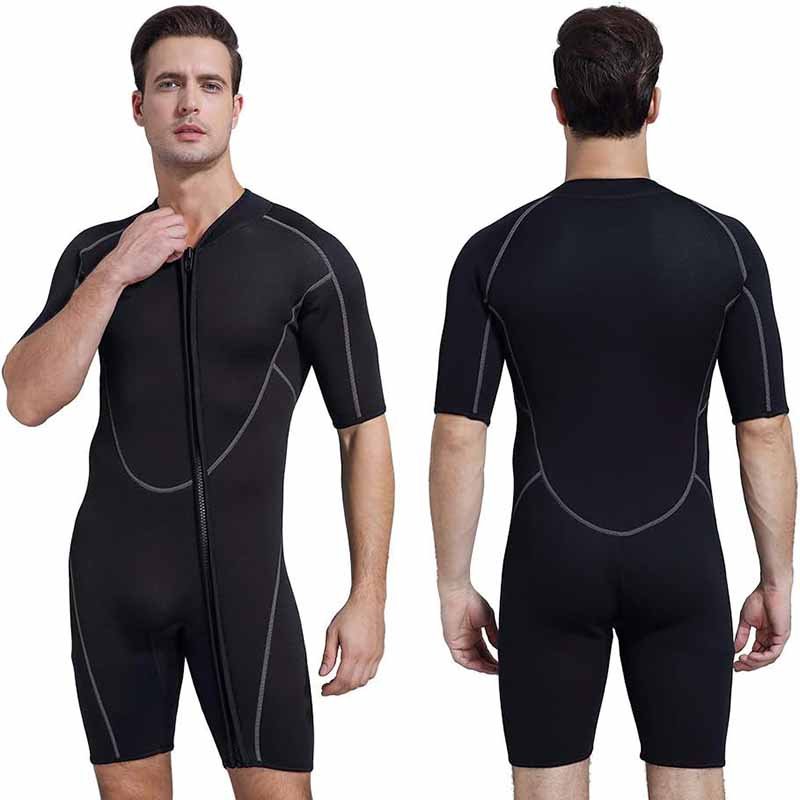
To choose the right neoprene wetsuit, start with water temperature and activity type, then select appropriate thickness, neoprene quality, seam construction, and fit. A well-chosen wetsuit balances warmth, flexibility, and durability while minimizing water flushing. Higher-grade neoprene and proper fit often matter more than extra thickness.
Step 1 – How Does Water Temperature Determine Wetsuit Thickness?
Water temperature is the primary decision factor, but thickness should be treated as a range, not a fixed rule.
Industry baseline:
| Water Temperature | Typical Thickness |
|---|---|
| 22–26°C (72–79°F) | 2/2 mm |
| 18–22°C (64–72°F) | 3/2 mm |
| 14–18°C (57–64°F) | 4/3 mm |
| 10–14°C (50–57°F) | 5/4 mm |
| Below 10°C | 6/5 mm or specialty cold-water suit |
Buyer insight: If the neoprene quality is high (e.g. limestone/Japanese origin), many users can safely choose one level thinner without losing warmth—gaining better mobility.
Step 2 – How Does Activity Type Change the “Right” Wetsuit?
Different activities stress the wetsuit in very different ways.
- Surfing:
- Priority: shoulder mobility, low fatigue
- Best features: stretch zoning, chest-zip, lightweight neoprene
- Scuba diving:
- Priority: warmth, durability, abrasion resistance
- Best features: thicker torso, reinforced knees, durable outer jersey
- Freediving / spearfishing:
- Priority: thermal efficiency, compression resistance
- Best features: smooth-skin exterior, high-density neoprene
- Swimming / triathlon:
- Priority: hydrodynamics, light weight
- Best features: thin, high-stretch neoprene, minimal seams
- Professional / rescue / military:
- Priority: reliability, repeatability, safety margin
- Best features: reinforced seams, conservative thickness, consistent sizing
Choosing by activity first prevents most performance complaints.
Step 3 – How Do Thickness Zoning and Panel Design Improve Results?
Modern high-performance wetsuits are not uniform.
Common zoning strategy:
- Torso: thicker neoprene for core warmth
- Arms & shoulders: thinner, stretch-focused neoprene
- Legs: balanced thickness for warmth + kick efficiency
Panel design matters just as much:
- Pre-bent arms reduce paddle fatigue
- Contoured torso improves seal
- Fewer seams in high-movement areas reduce failure points
This is why two “4/3 mm” suits can feel completely different in use.
Step 4 – How Do You Evaluate Neoprene Material Quality?
When comparing wetsuits, look beyond thickness labels.
High-quality neoprene shows:
- High stretch recovery (snaps back after pulling)
- Low compression set (doesn’t stay flattened over time)
- Uniform foam feel (no stiff or dead zones)
Important: A thinner suit made with better neoprene often performs better than a thicker suit made with lower-grade foam—especially over long-term use.
Step 5 – Why Seam Construction Matters as Much as Thickness
Seams are where heat escapes first.
- Flatlock seams: flexible but allow water flow (warm water only)
- GBS (Glued & Blind-Stitched): reduced water entry
- GBS + internal taping: best for cold water and durability
For cold or professional use, upgrading seam construction often delivers more warmth than adding thickness.
Step 6 – How Important Is Fit Compared to Brand or Specs?
Fit is often the deciding factor between “warm” and “cold”.
A proper fit:
- Reduces water flushing
- Keeps insulation evenly distributed
- Prevents neck, shoulder, and knee fatigue
Key fit checkpoints:
- Snug neck seal (no choking)
- No air pockets in lower back or chest
- Full arm extension without pulling at shoulders
A perfectly fitting 3/2 mm suit can outperform a poorly fitting 4/3 mm suit.
Step 7 – How Do Entry Systems Affect Comfort and Use?
Entry design influences warmth and ease of use.
- Back-zip: easy entry, more water entry
- Chest-zip: better sealing, improved mobility
- Zip-free: maximum flexibility, slower entry
Cold-water and performance users usually prefer chest-zip or minimized-zip designs.
Step 8 – When Should You Consider Custom or OEM Wetsuits?
Custom wetsuits make sense when:
- Standard sizes don’t fit your users well
- You need consistent specs across reorders
- Branding, colors, or panel layout matter
- You’re building a private-label line or team program
OEM/ODM manufacturers can adjust:
- Neoprene grade
- Thickness zoning
- Seam type and reinforcement
- Fit blocks and size grading
For brands and teams, custom often delivers better performance consistency than modifying retail suits.
12 Best Neoprene Wetsuit Brands
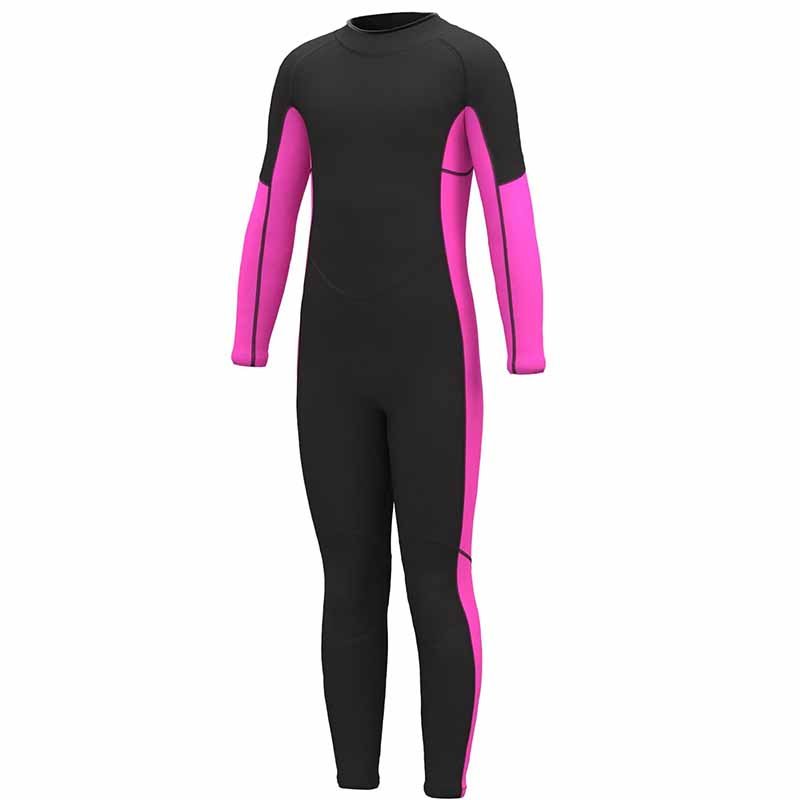
The best neoprene wetsuit brands are those that consistently deliver the right mix of neoprene quality, seam engineering, fit accuracy, and durability for specific use cases. Some brands focus on maximum stretch for surfing, while others prioritize insulation and abrasion resistance for diving or professional operations. The “best” brand depends on your water temperature, activity, fit needs, and how hard you’ll use the suit.
Comparison Table
| Brand | Best Known For | Best For | Watch-Out |
|---|---|---|---|
| O’Neill | Stretch + comfort classics | Surf all-round | Model line varies a lot |
| Rip Curl | Warmth-focused surf tech | Cold-water surf | Fit feel can be “snug” |
| Xcel | Warmth/value + tactical line | Cold surf + pro use | Availability varies by region |
| Patagonia | Eco direction + premium build | Cold water + sustainability | Often pricier |
| Billabong | Comfortable value lines | Entry-mid surf | Model availability shifts (Cleanline Surf) |
| Quiksilver | Balanced mainstream surf | General surf | Fit varies by line |
| Roxy | Women’s surf fit blocks | Women’s surf | Choose by warmth need |
| Cressi | Dive-oriented durability | Recreational diving | Less surf-stretch emphasis |
| Scubapro | Pro diving construction | Frequent divers | Heavier feel in some models |
| Aqualung | Dive heritage | Dive & training | Fit differs by series |
| Bare | Cold-water dive specialists | Cold dives | More “technical” feel |
| Mystic | Watersports (kite/wake/surf) | Active sports | Fit preference matters |
1 O’Neill — The “easy-to-love” performance baseline
O’Neill is widely regarded as one of the original wetsuit innovators and remains a reliable pick because their lines typically balance comfort, stretch, and practical warmth. Many surfers like O’Neill because the suits feel “natural” in paddling and don’t fight your shoulders.
Best for: surfers who want an all-round suit that feels comfortable quickly.
Buy smarter: O’Neill has many series—don’t judge the brand by one entry-level model. Compare seam type (GBS vs flatlock) and lining level against your water temperature.
2 Rip Curl — Cold-water surf warmth and “session-first” design
Rip Curl is often associated with surf wetsuits designed for long, cold sessions, where warmth retention matters as much as flexibility. Their higher-end cold-water lines are frequently discussed in surf media because they push thermal lining and winter-oriented construction. (The Inertia)
Best for: cold-water surfers, winter surf travel.
Buy smarter: if you run hot or surf in mild water, you may prefer a lighter lining or thinner zoning to avoid overheating.
3 Xcel — Warmth/value ratio + tactical/pro supply capability
Xcel stands out for two reasons: strong reputation in cold-water surf value, and a clearly defined “tactical” product line marketed for military/federal and tactical teams. (Xcel Wetsuits)
Best for: cold-water surf buyers who want warmth without paying purely for hype; professional users who prefer low-profile black builds.
Buy smarter: confirm availability of the exact model and sizing in your region; Xcel lines change seasonally.
4 Patagonia — Premium build with sustainability direction
Patagonia is frequently mentioned by reviewers because of durable construction and strong environmental positioning. In recent sustainability discussions, Patagonia is also referenced for pushing neoprene-free alternatives in some lines, which matters for eco-driven buyers comparing materials and brand values. (卫报)
Best for: buyers who want premium construction and sustainability leadership.
Buy smarter: Patagonia can be pricier—make sure you’re paying for the features you actually need (lining, seam sealing, fit block), not just the logo.
5 Billabong — Comfort-forward mainstream surfing value
Billabong remains a well-known surf wetsuit name, typically appreciated for comfort and accessible pricing tiers. Some retail reports note supply/availability can change by season and ownership shifts, which can affect restock and model continuity. (Cleanline Surf)
Best for: entry-to-mid surf buyers who want comfort at a reasonable spend.
Buy smarter: if you want long-term reorders for teams/shops, double-check model continuity.
6 Quiksilver — Balanced, widely available surf line-up
Quiksilver tends to play the “balanced” role: a broad range that aims to cover warm-water to colder seasons without going extreme in any single direction. Many “best wetsuit” lists include Quiksilver as a dependable mainstream option. (Surf Atlas)
Best for: general surf use, first upgrade from a basic suit.
Buy smarter: confirm seam type—flatlock is fine for warm water, but cold-water needs GBS/taping.
7 Roxy — Women’s performance and fit blocks
Roxy is commonly referenced alongside core surf brands as a major women’s-focused wetsuit label. (Surfertoday)
Best for: women who struggle with “unisex” sizing and want better chest/waist/hip pattern balance.
Buy smarter: prioritize fit first, then select warmth level by temperature—good fit beats extra thickness.
8 Cressi — Dive-first durability and practicality
Cressi is a long-established diving equipment brand. Their suits often emphasize abrasion resistance and practical construction more than ultra-stretch surf freedom.
Best for: recreational divers, training programs, warm-to-cool water diving.
Buy smarter: if you surf more than you dive, you may find dive-oriented suits less “free” in shoulders.
9 Scubapro — Professional dive standards and robust builds
Scubapro is frequently considered a professional-grade dive brand. Their wetsuits usually prioritize durability, warmth retention, and repeat-use reliability—important for divers who log lots of hours.
Best for: frequent divers, instructors, colder dives where durability matters.
Buy smarter: some models can feel “heavier” than surf suits—great for warmth, less ideal for high-mobility paddling.
10 Aqualung — Dive heritage and training-friendly design
Aqualung is another major dive heritage brand with suits designed for divers who want dependable warmth and practical durability. It’s a common name in dive equipment ecosystems and training contexts. Best for: divers building a consistent gear system (mask/fins/BCDs + wetsuit).
Buy smarter: confirm fit across series—some are cut for layering and may feel roomy if you’re between sizes.
11 Bare — Cold-water diving specialists
Bare is often chosen by cold-water divers because of technical focus on warmth and fit integrity. These suits tend to lean into thermal performance and sealing over maximum surf-like stretch.
Best for: colder regions, divers who prioritize staying warm over ultra-soft feel.
Buy smarter: pay attention to seam sealing and lining type—these drive warmth as much as thickness.
12 Mystic — Watersports crossover (kite/wake/surf)
Mystic is well-known in watersports communities, especially where mobility, durability, and sport-specific cuts matter (kite/wake/surf crossover).
Best for: active watersports users who want mobility and durable panels.
Buy smarter: fit feel is personal—try on or compare size charts carefully, especially if you have broad shoulders or long torso.
How Do Neoprene Wetsuit Materials Impact Performance
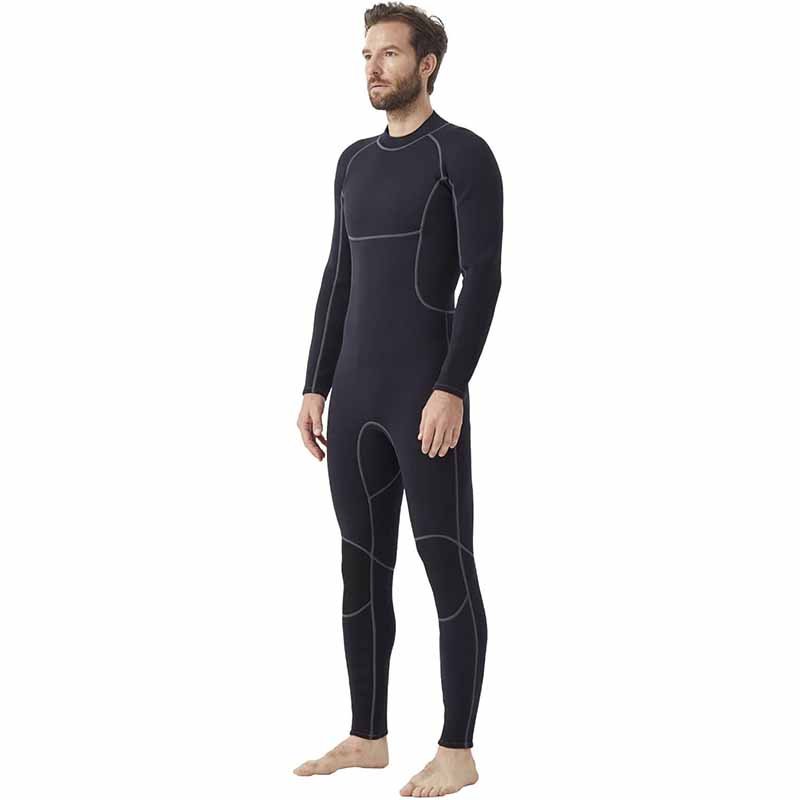
Neoprene wetsuit materials directly affect warmth, flexibility, buoyancy, durability, and long-term performance. High-quality neoprene with uniform closed-cell structure provides better insulation at lower thickness, while advanced linings, coatings, and lamination methods improve stretch, reduce water absorption, and slow material fatigue. Material choice often matters more than thickness alone.
How Does Neoprene Cell Structure Affect Warmth and Buoyancy?
At the core of every wetsuit is closed-cell neoprene foam. Each microscopic cell traps gas, which slows heat transfer and provides buoyancy.
Material quality differences show up in:
- Cell uniformity: more consistent cells = better insulation
- Gas retention: higher gas content improves warmth per mm
- Compression resistance: better foam stays warm after repeated dives/surf sessions
Lower-grade neoprene compresses over time, losing thickness and insulation. This is why older wetsuits often feel “cold” even if seams are intact—the foam itself has degraded.
Is Japanese Neoprene Better Than Other Types?
In many cases, yes.
Japanese neoprene—often limestone-based—is widely regarded as premium because of:
- More uniform cell structure
- Higher stretch recovery
- Lower density (lighter feel)
- Better thermal efficiency at reduced thickness
Brands frequently reference suppliers like Yamamoto, known for precision foam engineering. That said, “Japanese neoprene” is not automatically superior in every application—durability coatings and lamination quality still matter.
What Is the Difference Between Limestone-Based and Petroleum-Based Neoprene?
Traditional neoprene is petroleum-based. Limestone-based neoprene replaces oil-derived inputs with calcium carbonate.
Key differences:
| Factor | Limestone-Based | Petroleum-Based |
|---|---|---|
| Stretch & recovery | Higher | Moderate |
| Weight | Lighter | Heavier |
| Thermal efficiency | Higher per mm | Lower per mm |
| Environmental impact | Reduced oil use | Higher oil dependence |
For high-performance or premium wetsuits, limestone-based neoprene is often preferred, especially when flexibility and warmth must coexist.
How Do Inner Linings Affect Warmth, Comfort, and Dry Time?
The inner lining plays a major role in perceived performance.
Advanced linings can:
- Trap air for added warmth
- Reflect body heat (infrared or metallic yarns)
- Wick moisture to dry faster between sessions
- Reduce skin irritation
However, heavy linings can reduce stretch. The best wetsuits balance lining warmth vs flexibility, often using warmer linings in the torso and lighter linings in arms and shoulders.
How Do Outer Fabrics and Coatings Impact Durability?
The outer layer protects neoprene from abrasion, UV, and tearing.
Common options include:
- Nylon jerseys: durable and balanced for most users
- Super-stretch jerseys: improved mobility, slightly less abrasion resistance
- Smooth-skin coatings: reduced drag and water entry, lower abrasion resistance
Professional and military-style wetsuits often favor durability-focused outer fabrics, while surf performance suits prioritize stretch.
How Does Lamination Quality Affect Stretch and Lifespan?
Neoprene is laminated to inner and outer fabrics using adhesives and heat processes. Poor lamination leads to:
- Delamination bubbles
- Reduced stretch
- Early failure at seams
High-quality lamination ensures:
- Consistent stretch across panels
- Strong bond under repeated flexing
- Longer service life in saltwater environments
This is an invisible factor—but one of the biggest differences between premium and budget wetsuits.
Why Material Thickness Alone Is a Poor Performance Indicator
Thickness is easy to market but incomplete.
A 4/3 mm suit made with high-grade neoprene can outperform a 5/4 mm suit made with lower-grade foam in both warmth and mobility. This is why experienced users often choose better materials at slightly lower thickness.
Material efficiency, not just material quantity, defines performance.
How Do Materials Influence Long-Term Performance Degradation?
Over time, wetsuit performance declines due to:
- Foam compression
- UV exposure
- Salt crystallization
- Repeated stretch cycles
Higher-grade neoprene:
- Retains thickness longer
- Recovers shape after compression
- Maintains warmth across seasons
For brands and teams, this translates to fewer replacements and better cost-per-use, even if initial unit cost is higher.
Material Choices and Performance Impact
| Material Element | Performance Impact |
|---|---|
| Uniform cell neoprene | Warmer, lighter |
| Limestone-based foam | Better stretch & insulation |
| Thermal lining | Increased warmth |
| Super-stretch jersey | Improved mobility |
| Durable outer fabric | Longer lifespan |
| High-quality lamination | Consistent performance |
Are There Custom Neoprene Wetsuit Options
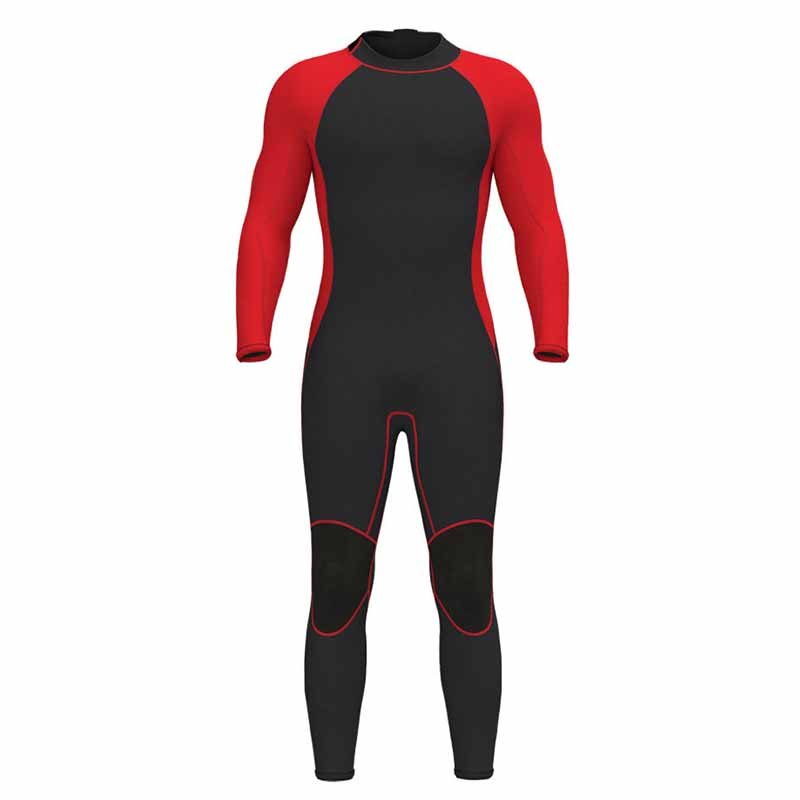
Yes — custom neoprene wetsuit options are available through OEM/ODM manufacturers. These custom programs let you define neoprene type, thickness zoning, seam style, panel layout, fit blocks, and branding. Custom wetsuit manufacturing is especially beneficial for brands seeking private-label products, team or group uniforms, professional-grade suits, or performance-tuned designs that standard retail lines cannot provide.
What Does “Custom Neoprene Wetsuit” Really Mean?
When we talk about custom neoprene wetsuits, we’re not simply talking about printing a logo on a retail suit. Customization can include:
- Neoprene material selection (grade, origin, cell structure)
- Thickness zoning (e.g., 3/2 mm core + 2/2 mm shoulders)
- Seam construction (flatlock, GBS, taped seams)
- Cut and panel engineering (ergonomic patterning)
- Fit blocks (gender/age-specific size grading)
- Branding elements (logo, colorway, custom panels)
- Entry systems (back-zip, chest-zip, zip-free)
- Internal lining options (thermal fleece, infrared reflective, quick dry)
Custom neoprene wetsuit programs allow function and performance to be engineered from the ground up, rather than retrofitting a retail product.
When Should You Consider a Custom Wetsuit vs Retail?
Custom neoprene wetsuits aren’t for everyone—but they’re powerful for the right needs.
Good reasons to customize:
- Your brand needs full visual control (colorways + logo + packaging)
- Standard sizes don’t fit your audience well
- You need performance tuning (e.g., thicker torso + stretch shoulders)
- You want repeatable specs across production runs
- You’re developing team or corporate gear with consistent quality
- You require specialized features (seam reinforcements, tactical cuts)
When retail may suffice:
- You need a one-off suit for personal use
- Budget is limited and you don’t need brand control
- Speed matters more than performance tuning
Custom is about l ong-term performance and branding, not short-term convenience.
How Do Custom Wetsuit Programs Work (OEM/ODM)?
1. Requirement Definition You articulate your priorities: water temperature range neoprene thickness zones seam type & reinforcement performance goals fit profile & target users logo / artwork / packaging
2. Material Selection Manufacturers present choices for:
- Neoprene grade (cell structure, origin)
- Outer fabric (nylon, stretch jersey, smoothskin)
- Inner lining (thermal, fleece, quick-dry)
3. Tech Pack Creation This is the document that guides the supplier. It includes:
- Panel maps
- Thickness zoning
- Seam types
- Label/branding specs
- Size chart
4. Sampling / Iteration Prototypes are made and tested. You review:
- Fit
- Thermal performance
- Flexibility
- Seam sealing
5. Production & Quality Control Once samples are approved, bulk production starts with predefined QC checkpoints.
This structured process ensures predictable outcomes—unlike modifying retail suits ad hoc.
What Are the Key Technical Decisions in Custom Wetsuit Development?
a. Neoprene Selection
- High-grade neoprene (better stretch and insulation) vs
- Standard neoprene (cost-effective but lower performance)
b. Thickness Zoning
Example:
| Zone | Thickness |
|---|---|
| Torso / Core | 4–5 mm |
| Shoulders / Arms | 3–4 mm |
| Legs / Thighs | 4 mm |
| Crotch | 3 mm |
This kind of zoning ensures warmth where needed and mobility where it matters.
c. Seam Engineering
- Flatlock: flexible for warm water
- GBS: reduced water flushing
- GBS + internal tape: best for cold conditions
Choosing seams affects warmth, durability, and service life more than thickness alone.
d. Fit Blocks
Standard suits can’t fit every body type. Custom fit blocks:
- Adjust curves for shoulders, chest, hips
- Improve range of motion
- Reduce fatigue
Especially useful for teams or brand collections.
What Are Typical Custom Wetsuit Minimums and Timelines?
Custom neoprene wetsuit programs vary widely by supplier, but typical patterns include:
| Custom Stage | Typical Range |
|---|---|
| MOQ (per style/color) | 50–200 pcs |
| Sampling lead time | 7–21 days |
| Bulk production | 30–60 days |
| Total from sample to delivery | 6–12 weeks |
These numbers can be lower or higher depending on supplier capabilities, material sourcing, and delivery urgency.
How to Evaluate a Custom Wetsuit Manufacturer?
Here are core criteria:
Material expertise — neoprene sourcing and behavior Pattern & panel engineering — ergonomic design Seam technology mastery — GBS, taping, reinforcement Sampling support — rapid, iterative prototyping QC process — measurable checkpoints Branding integration — patches, labels, packaging
Many suppliers can produce a suit—few can engineer one that performs and retains warmth with comfort.
How Does Customization Affect Costs and Performance?
Customization adds value, not just cost.
Performance gains include:
- Better thermal retention for your environment
- Improved mobility and reduced fatigue
- More accurate sizing and user satisfaction
- Brand-specific colorways + logo identity
Cost drivers include:
- Neoprene grade selection
- Complexity of panel layout
- Advanced seam construction
- Quantity and sampling iterations
Unlike one-off modifications on retail suits, custom programs deliver spec-driven performance outcomes, not luck.
How to Care for Your Neoprene Wetsuit
To care for a neoprene wetsuit, rinse it with fresh water after every use, dry it in the shade, avoid heat and UV exposure, and store it properly to prevent creasing. Regular cleaning, correct drying, and gentle handling preserve neoprene elasticity, seam integrity, and thermal performance, significantly extending the wetsuit’s lifespan.
How Should You Rinse a Neoprene Wetsuit After Use?
Rinsing is the single most important maintenance step—and also the most commonly skipped.
After every session:
- Rinse inside and outside with cool, fresh water
- Focus on neck, armpits, knees, and seams, where salt and sweat accumulate
- Gently squeeze water out—do not wring or twist
Why this matters: Salt crystals, sand, and body oils slowly break down neoprene foam and adhesives. Even one or two unrinsed sessions can accelerate material fatigue over time.
Should You Use Soap or Wetsuit Cleaner—and How Often?
Fresh water is enough for daily care, but periodic cleaning is essential.
Recommended:
- Use neoprene-safe wetsuit shampoo every 5–10 uses
- Use cold water only
- Lightly agitate by hand; avoid scrubbing
Avoid:
- Laundry detergent
- Bleach or disinfectants
- Fabric softeners
These chemicals damage neoprene cell structure and weaken seam adhesives, reducing elasticity and warmth.
What Is the Correct Way to Dry a Neoprene Wetsuit?
Drying mistakes cause more damage than wear.
Best practice:
- Hang the wetsuit inside-out first
- Use a wide hanger or fold over a thick bar at the waist
- Dry in shade with airflow
- Once the inside is dry, turn it right-side-out
Never:
- Dry in direct sunlight
- Use dryers, heaters, or hot air
- Leave a wet suit crumpled in a bag
Heat and UV permanently damage neoprene elasticity and cause early cracking.
How Should You Store a Neoprene Wetsuit Long-Term?
Proper storage preserves shape and insulation.
Short-term (between sessions):
- Hang on a wide hanger
- Keep in a cool, shaded area
Long-term (off-season):
- Store flat or gently folded
- Avoid tight creases at shoulders or hips
- Keep away from heat sources and ozone (motors, compressors)
Avoid thin wire hangers—they stretch shoulders and deform the suit over time.
How Do You Prevent Odor and Bacteria Buildup?
Odor is caused by bacteria thriving in warm, damp neoprene.
Prevention steps:
- Rinse immediately after use
- Fully dry before storage
- Periodically soak in neoprene cleaner with antibacterial properties
If odor persists:
- Soak for 10–15 minutes in wetsuit cleaner
- Rinse thoroughly
- Air dry completely
Never mask odor with sprays—they trap moisture and worsen the problem.
How Do You Put On and Take Off a Wetsuit Without Damaging It?
Small habits make a big difference.
Do:
- Use fingertips, not nails
- Pull fabric gradually, section by section
- Sit down when pulling over feet and calves
Avoid:
- Grabbing and yanking panels
- Standing on the suit
- Pulling aggressively at seams
Many early tears occur during donning—not in the water.
Can You Repair Small Cuts or Seam Leaks?
Yes—early repairs save the suit.
For minor damage:
- Use neoprene cement for small cuts
- Apply thin layers and allow full cure
- Seal fraying seams early before leaks expand
For major seam failures or large tears, professional repair is recommended. Ignoring small damage often leads to rapid heat loss.
How Do You Know When a Neoprene Wetsuit Is Worn Out?
A wetsuit doesn’t fail all at once—it slowly loses performance.
Signs it’s time to replace:
- Feels colder at the same thickness
- Neoprene stays compressed after use
- Water flushes even with good fit
- Cracking or delamination at seams
At this stage, cleaning won’t restore insulation—the foam itself has degraded.
Conclusion
The best neoprene wetsuit is the one engineered for your conditions. Whether you need surf flexibility, dive durability, or professional reliability, material choice, construction, and fit matter more than labels.
Oneier brings 18+ years of neoprene R&D and manufacturing—from material development to rapid sampling and scalable OEM/ODM production. If you’re planning a custom, private-label, or team wetsuit program, contact Oneier to turn performance requirements into a reliable product—fast.
Start your project with Oneier today.