
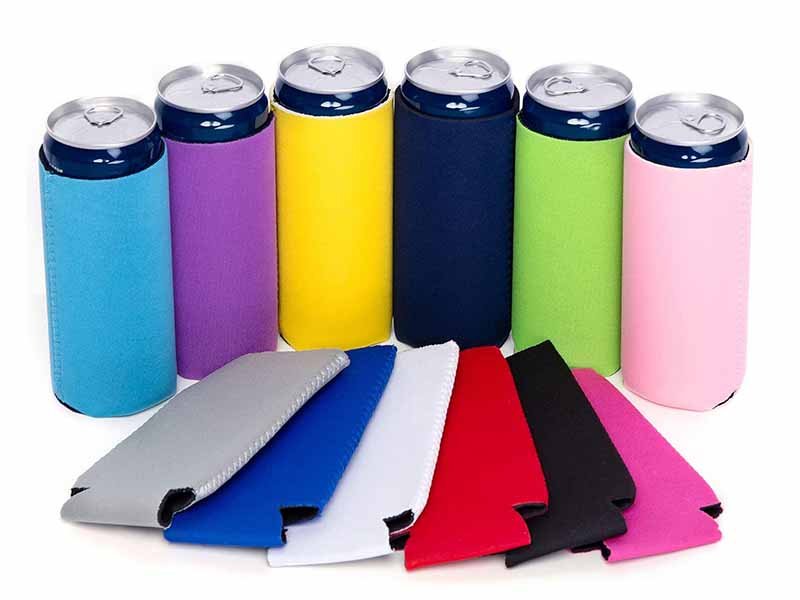
A foldable neoprene koozie looks like a very simple product, but for customers developing branded drinkware accessories, it is one of those items where “simple” can be misleading. A koozie has to insulate, fold flat, recover its shape, carry a clear logo, feel good in the hand, and still look presentable after repeated use. If it fails in any of these areas, customers notice it quickly. A poor foldable koozie may crack at the fold line, lose its body after a few uses, show fuzzy edges, or print poorly. That turns a low-cost promotional product into a weak brand impression.
Neoprene koozie manufacturing with foldable design is the process of producing a soft, insulated can cooler that can flatten for packing and storage, then spring back into usable shape without losing structure, print quality, or edge stability. It depends on the right neoprene thickness, suitable lamination, accurate pattern cutting, controlled stitching or gluing, and repeated folding performance.
For importers, promotional product companies, beverage brands, and private label sellers, the real question is not whether a factory can make a koozie. Many can. The real question is whether the factory can make one that folds cleanly, holds color well, feels premium, and stays reliable across thousands of units. That is where manufacturing experience matters. Oneier has more than 18 years of experience in neoprene material development and related product manufacturing, so this topic is not just about product appearance. It is about how to turn a small accessory into a practical, reusable, brand-carrying product that customers actually keep using instead of throwing away after one event.
What Is Foldable Neoprene Koozie Manufacturing?
Foldable neoprene koozie manufacturing is the process of producing a soft can cooler that combines insulation, flexibility, shape recovery, and printability in one compact product. It focuses on selecting the right neoprene structure, designing a foldable body, and controlling production details so the koozie can flatten easily, reopen smoothly, and remain durable during repeated use.
What Defines Foldable Neoprene Koozie Manufacturing?
Foldable neoprene koozie manufacturing is defined by one core challenge: the product must be soft enough to collapse, but strong enough to recover. That balance is what separates a usable foldable koozie from a cheap sleeve that quickly becomes wrinkled, stretched, or unstable. Many customers initially think a koozie is just a piece of neoprene wrapped around a can. In reality, once foldability is added, the requirements become much stricter.
A foldable koozie is expected to do several things at once:
- Insulate a cold beverage
- Prevent condensation from reaching the user’s hand
- Fold flat for shipping, storage, or carrying
- Recover shape after being folded
- Keep edges neat after repeated opening and closing
- Hold printed logos without visible cracking or distortion
- Maintain a comfortable grip in daily use
That means the factory is not simply producing a sleeve. It is producing a flexible structure with performance expectations.
The main elements that define this type of product include:
| Production Element | Why It Matters | What Customers Should Check |
|---|---|---|
| Neoprene density | Affects softness, rebound, and durability | Does the koozie feel too loose or too stiff? |
| Material thickness | Changes insulation, foldability, and hand feel | Is the thickness matched to the target market? |
| Lamination fabric | Influences print clarity and abrasion resistance | Is the outer layer suitable for the chosen logo method? |
| Pattern shape | Controls body fit and folding behavior | Does the koozie open evenly around the can? |
| Edge finish | Affects appearance and long-term wear | Are the edges smooth, clean, and stable? |
| Seam method | Impacts durability and cost | Is stitching or bonding more suitable for the design? |
For customers sourcing foldable koozies, the product is often judged in seconds. End users do not analyze technical details. They simply notice whether it feels good, looks clean, and works smoothly. That is why the manufacturing definition should always include function, appearance, and repeat-use performance together.
Another important point is that foldable koozies are not all the same. Some are made for budget promotions where low cost is the main priority. Others are made for retail, licensed merchandise, brewery programs, sports promotions, or gift packs where appearance and finish matter much more. The manufacturing standard should change accordingly.
For example, here is how product expectations often differ by market level:
| Market Position | Main Concern | Material Direction | Finish Expectation |
|---|---|---|---|
| Budget promotion | Low cost | Standard neoprene | Basic print and simple stitching |
| Mid-range event use | Balance of cost and quality | Stable 3mm neoprene | Cleaner edges and better shape |
| Retail or premium branding | Appearance and durability | Higher-grade neoprene with quality lamination | Strong print clarity and consistent rebound |
This is why customers should never judge foldable neoprene koozie manufacturing only by price per piece. The product may be small, but the details affect whether it becomes a throwaway item or a product that continues carrying the customer’s logo for months or even years.
Why Choose Foldable Neoprene Koozie Manufacturing?
The short answer is practical value. Foldable neoprene koozies are easier to store, easier to distribute, easier to ship, and often more likely to be reused. For many customers, especially in promotional products, beverage marketing, and custom branded merchandise, these advantages directly affect product performance in the market.
A foldable design creates value in several areas:
- Lower packing volume
- Better portability for end users
- Easier event distribution
- More convenient retail stacking
- Better repeat-use potential
- Lower freight cost per bulk order
This matters more than many customers expect. In bulk custom production, shipping and storage can change the real total cost in a big way. A koozie that folds flat takes up much less space than a rigid or non-collapsible alternative. That space saving becomes especially important for large campaigns.
Here is a simple working comparison:
| Product Style | Packing Efficiency | Freight Advantage | User Convenience | Logo Exposure Over Time |
|---|---|---|---|---|
| Foldable neoprene koozie | High | Strong | High | High |
| Rigid foam holder | Low | Weak | Medium | Medium |
| Cheap thin sleeve | High | Strong | Medium | Low |
For customers running giveaways, foldable koozies also perform well because they are easy to hand out. End users can place them in a pocket, small bag, glove compartment, or kitchen drawer without taking up much room. That increases the chance the product will be kept and reused.
And reuse matters. A promotional product only creates value when the user keeps interacting with it. A koozie used once at an event and discarded has limited return. A foldable neoprene koozie used at home, outdoors, on the beach, or during social gatherings continues to carry the brand message far beyond the first impression.
Customers usually choose foldable neoprene koozie manufacturing for these business reasons:
- Beverage launches and seasonal promotions
- Brewery and beverage brand merchandise
- Corporate giveaways
- Festival and event branding
- Sports team and fan merchandise
- Tourism and souvenir programs
- Retail add-on products
- Subscription box inserts
At Oneier, many customers also value foldable design because it helps them balance cost and perceived quality. Compared with more rigid drink accessories, a well-made foldable neoprene koozie gives a softer, more premium feel while still staying cost-efficient in volume production.
This is an important point for customers who want better brand presentation without moving into a much higher unit cost category. The foldable koozie sits in a very attractive position: affordable enough for volume programs, but useful enough to be kept. That combination is exactly why it remains one of the most durable product categories in custom promotional manufacturing.
How Foldable Design Changes Product Value
Many customers first look at foldable design as a packaging benefit. That is true, but it is only part of the picture. A foldable structure changes the value of the product in three larger ways: logistics, usability, and branding life.
From a logistics perspective, foldable products make bulk operations easier. For distributors and importers, this can improve pallet efficiency, storage density, and freight utilization. Even a modest reduction in carton volume can matter when the order quantity reaches 10,000, 50,000, or 100,000 pieces.
From a usability perspective, end users prefer products that are easy to carry and easy to store. A foldable koozie has a very low “storage penalty.” That means people are more willing to keep it around. Products that are easy to keep are more likely to be reused.
From a branding perspective, repeated use gives better long-term exposure. A logo on a foldable koozie may be seen many times across casual occasions, rather than just once during an event. That repeated exposure makes the product more cost-effective as a marketing tool.
The table below shows why this matters:
| Value Factor | Why Customers Care | Why Foldable Design Helps |
|---|---|---|
| Freight control | Shipping cost affects total landed cost | Flat packing reduces shipping volume |
| Storage efficiency | Warehousing matters for larger programs | More units fit in less space |
| Event handling | Fast distribution saves time | Easier to carry and hand out |
| User retention | Reuse increases marketing value | Portable products are kept longer |
| Brand repeat exposure | More visibility improves promotional return | Reusable koozies keep the logo in circulation |
This is why experienced customers do not treat foldability as a small extra feature. They treat it as part of the commercial value of the product.
What Customers Should Ask Before Starting Production
Before confirming a foldable neoprene koozie project, customers should ask clear development questions. These questions help prevent common issues such as incorrect thickness, unstable structure, poor print results, or a fold line that becomes weak after use.
Useful questions include:
- What neoprene thickness is recommended for this design?
- Will the koozie be stitched, glued, or both?
- Which lamination works best for the chosen print method?
- How will the koozie perform after repeated folding?
- Is the design intended for standard cans, slim cans, bottles, or mixed sizes?
- Can the factory provide sampling adjustments based on end-use needs?
- What is the expected packing method for bulk shipment?
- How will edge quality be controlled in mass production?
Customers should also be clear about their market target. A low-cost event koozie and a premium retail koozie should not be developed in the same way. Price pressure often causes customers to reduce thickness, simplify finishing, or lower print requirements, but these changes can strongly affect the final feel of the product.
The strongest development approach is to define the product around actual use:
- Where will it be used?
- How often will it be reused?
- What kind of logo presentation is expected?
- Is the product disposable, short-term, or intended to stay in use for a long period?
These answers guide better factory recommendations. At Oneier, where free design support, low MOQ customization, fast sampling, and neoprene product development are part of the service model, this early communication helps customers avoid expensive corrections later.
A foldable koozie may be a small product, but it can say a lot about a brand. If it feels sloppy, the brand feels sloppy. If it feels useful and well made, the brand feels more reliable. That is why the earliest manufacturing decisions matter so much.
Which Materials Suit Foldable Neoprene Koozie Manufacturing?
The best materials for foldable neoprene koozie manufacturing are the ones that keep a stable balance between insulation, softness, rebound, print quality, and edge durability. In most projects, this means selecting the right neoprene thickness, choosing a suitable lamination fabric, and matching both to the intended use, logo method, and price level of the final product.
What Thickness Works in Neoprene Koozie Manufacturing?
Thickness is one of the first decisions that affects nearly everything else in the product. It affects how the koozie feels, how well it insulates, how easily it folds, how well it recovers its shape, and how premium it appears in the hand. Many customer complaints about foldable koozies can be traced back to thickness mismatch.
In most commercial production, common neoprene thickness options are:
- 2mm
- 3mm
- 4mm
- 5mm
Each thickness creates a different product experience.
| Thickness | Foldability | Insulation | Shape Support | Cost Level | Best Use Direction |
|---|---|---|---|---|---|
| 2mm | Very high | Basic | Low | Lower | Budget promotions, short-term events |
| 3mm | High | Good | Balanced | Medium | Most custom foldable koozies |
| 4mm | Medium | Better | Stronger | Medium-high | More structured premium styles |
| 5mm | Lower | Strong | Strong | Higher | Less suitable for frequent flat folding |
For most foldable designs, 3mm is often the most practical starting point because it gives a balanced result. It is flexible enough to flatten, thick enough to feel substantial, and strong enough to provide useful insulation for standard beverage use.
But “best” is not universal. The right thickness depends on the customer’s goal.
A thinner 2mm koozie may work well when:
- The product is meant for large-volume event distribution
- Lowest shipping volume is important
- The price target is tight
- Premium insulation is not the main selling point
A thicker 4mm or 5mm material may work when:
- The product is sold at retail
- The customer wants a heavier hand feel
- A more structured body is preferred
- Insulation is part of the value message
Still, for foldable products, thickness must be chosen carefully. If it is too thick, the koozie becomes harder to flatten and may show more resistance or stress at the fold area. If it is too thin, it may look cheap, recover poorly, or feel too soft after repeated use.
Customers should also understand that thickness affects shipping economics. The difference between 2mm and 3mm may look small in one sample, but across tens of thousands of units, that extra material changes carton density, freight volume, and final landed cost.
Which Laminations Improve Neoprene Koozie Manufacturing?
Lamination is the fabric layer bonded to the neoprene foam. This layer is not a minor detail. It has a direct effect on print quality, abrasion resistance, surface texture, and product appearance. Even when two koozies use the same foam thickness, a different lamination can make them feel and perform very differently.
The two most common lamination directions are:
- Polyester lamination
- Nylon lamination
Each serves different needs.
| Lamination Type | Main Strength | Print Result | Surface Feel | Best Match |
|---|---|---|---|---|
| Polyester | Better for full-color graphics | Bright and sharp | Smooth | Sublimation and vivid branding |
| Nylon | Better abrasion resistance | More limited graphic sharpness | Slightly firmer | Durable, simpler logo styles |
Polyester lamination is often chosen for promotional products with strong visual branding because it supports sublimation printing very well. It helps produce cleaner gradients, brighter color, and sharper detailed artwork. This is especially useful for beverage campaigns, event products, sports branding, and lifestyle graphics.
Nylon lamination is more about surface toughness and durability. It may not deliver the same color brightness as polyester in complex full-color work, but it can provide a stable surface for simpler designs and longer wear in some use environments.
Customers should also care about lamination bonding quality. Poor bonding between the fabric and neoprene can lead to several visible problems:
- Surface bubbling
- Wrinkling after folding
- Delamination at edges
- Distortion during printing
- Uneven product feel
That is why lamination should not be discussed only as a print surface. It is also part of structural quality.
For customers building private label koozie programs, the outer surface often becomes the first quality signal. If the print looks dull, the fabric feels rough, or the surface starts separating after use, the product immediately feels cheap. A stronger lamination choice protects both the performance and the perceived value of the koozie.
How Do Materials Affect Neoprene Koozie Manufacturing?
Material choice affects far more than one or two product features. It influences the entire production path, from how the pattern is cut to how the koozie folds, how it is printed, and how it performs after repeated handling.
The material system shapes these core outcomes:
- Insulation level
- Foldability
- Shape recovery
- Surface print quality
- Edge appearance
- Resistance to wear
- Perceived product value
- Production cost
A useful way to understand this is to look at the material as a performance package rather than a single component. Foam density, thickness, and lamination quality work together. If one of them is poorly chosen, the whole product feels less stable.
Here is a practical view:
| Material Decision | Positive Result | Risk if Poorly Chosen |
|---|---|---|
| Correct foam density | Good rebound and shape stability | Collapse, softness, weak support |
| Balanced thickness | Better fold and better feel | Too stiff or too flimsy |
| Suitable lamination | Cleaner printing and stronger surface | Fading, wrinkling, weak surface quality |
| Stable bonding | Longer service life | Delamination and bubbling |
For customers, the most important lesson is this: a foldable koozie should not be developed by looking only at the sample’s first appearance. It should be judged by how the material behaves after actual use. A sample may look good on day one, but if the foam is too soft, the lamination is weak, or the thickness is off, the problems will appear later.
At Oneier, material selection is one of the most important parts of product development because the company works deeply with neoprene-based products across categories such as bags, can coolers, sports supports, medical supports, and wetsuit-related items. That broader material experience is useful for customers because foldable koozies may look simple, but they rely on the same kind of material judgment that larger neoprene products require.
Material Planning by Product Goal
Customers often get better results when they start material planning from the commercial goal instead of from the lowest price target. Different goals need different material combinations, and this decision should be made early.
Below is a practical material planning guide:
| Product Goal | Recommended Material Direction | Why It Works |
|---|---|---|
| Low-cost event giveaway | 2mm–3mm neoprene with simple outer fabric | Controls price and packing volume |
| Standard promotional program | 3mm neoprene with polyester lamination | Good balance of print quality and foldability |
| Retail or gift-ready koozie | 3mm–4mm higher-quality neoprene with clean finish | Better hand feel and stronger shelf appeal |
| High-graphic branding project | 3mm neoprene with print-focused polyester surface | Supports sharper artwork |
| Longer-term reusable koozie | Stable density neoprene with stronger surface bonding | Better durability over repeated use |
This planning step helps customers avoid a common mistake: developing a premium-looking design on an underperforming material base. The design may win approval in photos, but once it reaches users, the weak material choice starts to show.
For that reason, customers should always treat material discussion as a sales and product positioning decision, not only a factory technical choice. The right material supports better use experience, better branding, and better reorder potential.
How Does Foldable Neoprene Koozie Manufacturing Work?
Foldable neoprene koozie manufacturing is a structured production process that combines material cutting, foldable structure design, seam construction, and surface printing. Each step must be controlled carefully to ensure the koozie folds easily, maintains shape, and delivers consistent appearance across bulk production.
How Is Cutting Done in Neoprene Koozie Manufacturing?
Cutting is the first physical step where raw neoprene sheets are shaped into panels that will later form the koozie body. Even though this step looks simple, it has a direct impact on product consistency, edge quality, and folding performance.
In most factories, neoprene cutting is done using one of three methods:
- Die cutting (steel mold cutting)
- Laser cutting
- Manual cutting (rare in large-scale production)
Among these, die cutting is the most widely used for bulk orders because it ensures stable dimensions and fast output. A custom steel mold is created based on the koozie pattern, allowing thousands of identical pieces to be cut with minimal variation.
Key points customers should care about during cutting:
- Dimensional accuracy (affects fit around cans or bottles)
- Edge smoothness (affects product appearance and comfort)
- Pattern consistency (important for large orders)
- Material waste control (affects cost)
Here is a comparison of cutting methods:
| Cutting Method | Accuracy | Speed | Cost Efficiency | Best Use |
|---|---|---|---|---|
| Die cutting | High | High | Strong | Bulk production |
| Laser cutting | Very high | Medium | Medium | Complex designs, small runs |
| Manual cutting | Low | Low | Weak | Sampling only |
For foldable koozies, pattern shape is particularly important. The panel must be designed so that when folded flat, it aligns neatly, and when opened, it forms a smooth cylinder around the can. If the pattern is slightly off, the koozie may twist, bulge, or feel uneven in use.
Another detail often overlooked is edge compression during cutting. Poor cutting pressure can leave rough edges or compressed foam, which later affects both appearance and durability. Clean edges improve both visual quality and customer perception.
How Are Fold Lines Made in Neoprene Koozie Manufacturing?
Fold lines are one of the most critical parts of foldable koozie design. A well-made fold line allows the product to flatten naturally and reopen without visible damage. A poorly designed fold line can cause cracking, permanent creasing, or uneven shape recovery.
Unlike rigid materials, neoprene does not require a physical hinge. Instead, fold behavior is controlled through pattern design, material thickness, and seam placement.
There are three main approaches to managing fold behavior:
- Natural fold (no pre-crease, relies on material flexibility)
- Guided fold (pattern and seam placement encourage folding direction)
- Reinforced fold zones (extra material support around fold areas)
Key design considerations include:
- Position of side seam relative to fold axis
- Thickness balance across the panel
- Uniform tension distribution when folded
- Avoiding sharp stress points
In most standard koozie designs, the fold happens naturally along the side seam. This is why seam construction must be strong but also flexible enough to handle repeated bending.
Common fold-related issues include:
| Issue | Cause | Result |
|---|---|---|
| Cracking at fold line | Material too thick or low-quality foam | Visible damage after use |
| Permanent creasing | Poor material rebound | Koozie looks worn quickly |
| Uneven folding | Poor pattern alignment | Product looks twisted |
| Surface wrinkling | Weak lamination bonding | Reduced visual quality |
For customers developing foldable koozies, it is important to test how the product behaves after repeated folding, not just how it looks when new. A good koozie should remain visually clean after being folded and unfolded many times.
At Oneier, fold behavior is usually checked during sampling by performing repeated manual folding cycles. If issues appear, adjustments are made to thickness, pattern, or seam position before moving into production.
How Is Stitching Used in Neoprene Koozie Manufacturing?
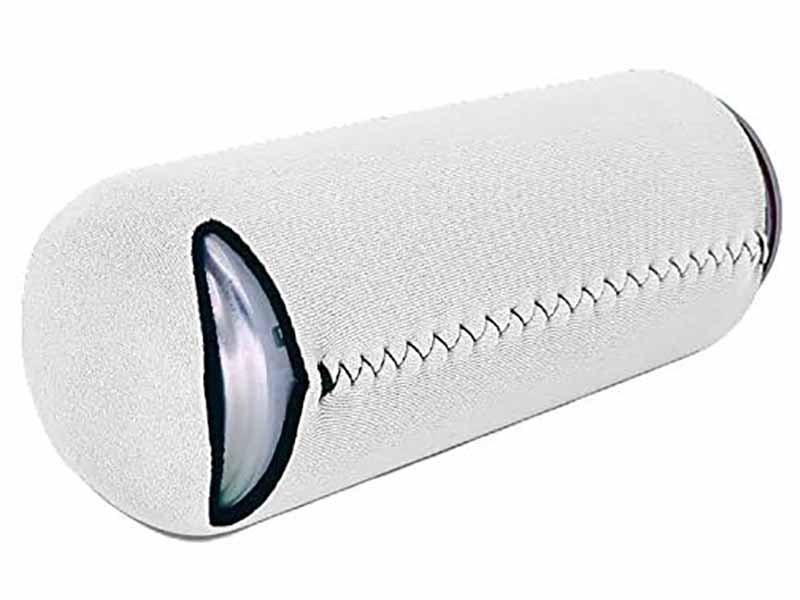
Stitching is the most common method used to assemble neoprene koozies. It connects panels, defines the product shape, and contributes to overall durability. For foldable designs, stitching must be strong enough to hold structure while still allowing flexibility at the fold points.
The most commonly used stitching types include:
- Flatlock stitching
- Overlock stitching
- Blind stitching (less common for koozies)
Flatlock stitching is widely used because it creates a flat seam that does not add bulk. This is important for foldable koozies, as bulky seams can interfere with smooth folding.
Key factors in stitching quality include:
- Thread strength and thickness
- Stitch density (stitches per inch)
- Seam alignment
- Reinforcement at stress points
Here is a practical comparison:
| Stitch Type | Appearance | Flexibility | Durability | Best Use |
|---|---|---|---|---|
| Flatlock | Flat and clean | High | Strong | Foldable koozies |
| Overlock | Slightly raised | Medium | Strong | Budget products |
| Blind stitch | Hidden | Medium | Very strong | Premium applications |
Stitching also affects how the koozie feels in hand. Rough seams can reduce comfort, especially when holding cold drinks for extended periods.
For high-volume orders, consistency is critical. Uneven stitching can lead to:
- Misaligned panels
- Weak seam areas
- Inconsistent product shape
Customers should ask whether the factory uses standardized stitching settings and quality checks during production. Even small differences in stitching can become noticeable when producing tens of thousands of units.
How Is Printing Applied in Neoprene Koozie Manufacturing?
Printing is one of the most visible parts of the product, and for many customers, it is the main reason they choose custom koozies. The printing method must match both the design complexity and the material surface.
The most common printing methods include:
- Sublimation printing
- Screen printing
- Heat transfer printing
Sublimation printing is widely used for neoprene koozies because it allows full-color, high-resolution designs. The ink becomes part of the fabric layer, which helps prevent peeling or cracking.
Screen printing is suitable for simple logos with limited colors. It is often used for cost-sensitive projects.
Heat transfer printing is used for specific designs but is less common for large-scale koozie production.
Comparison of printing methods:
| Printing Method | Color Range | Durability | Cost | Best Use |
|---|---|---|---|---|
| Sublimation | Full color | High | Medium | Complex designs |
| Screen printing | Limited colors | Medium | Low | Simple logos |
| Heat transfer | Medium | Medium | Medium | Small runs |
For foldable koozies, printing must also handle repeated bending. Poor-quality printing may crack or fade along fold lines.
Customers should pay attention to:
- Color consistency across batches
- Alignment of artwork on panels
- Ink durability after folding
- Resistance to moisture and abrasion
Another important detail is print positioning. Because the koozie is folded during storage, the design should be placed in a way that remains visible and balanced when the product is both folded and opened.
Production Workflow Overview
To help customers understand how everything connects, here is a simplified production workflow:
| Step | Process | Key Focus |
|---|---|---|
| Material selection | Choose neoprene and lamination | Balance cost and performance |
| Cutting | Shape panels | Accuracy and consistency |
| Printing | Apply design | Clarity and durability |
| Stitching | Assemble product | Strength and flexibility |
| Folding test | Check performance | Shape recovery |
| Inspection | Final quality check | Consistency and finish |
Each step influences the next. A mistake in material selection cannot be fully corrected by better stitching. Poor cutting cannot be hidden by good printing. This is why experienced manufacturers manage the entire process as one system rather than separate steps.
For customers working with Oneier, the advantage comes from having all these steps controlled within one integrated production environment. With over 18 years of experience in neoprene material and product development, Oneier is able to adjust each stage based on the final use of the koozie, ensuring better consistency from sampling to bulk production.
How Is Quality Checked in Neoprene Koozie Manufacturing?
Quality control in foldable neoprene koozie manufacturing focuses on ensuring consistent shape, clean edges, strong seams, stable printing, and reliable folding performance across every unit. It combines material inspection, in-line production checks, and final testing to reduce defects and ensure that the product performs well during real use.
What Tests Are Used in Neoprene Koozie Manufacturing?
Quality testing in neoprene koozie production is not a single step at the end of production. It is a series of checks performed at different stages to control consistency and reduce variation. For customers placing bulk orders, especially in the range of 10,000–100,000 units, even a small defect rate can create noticeable problems in the market.
The most common tests used in foldable neoprene koozie manufacturing include:
- Material thickness and density inspection
- Lamination bonding strength test
- Seam strength and stitching consistency check
- Printing adhesion and color consistency test
- Folding and recovery test
- Dimensional accuracy check
Each of these tests focuses on a different risk area.
Here is a structured overview:
| Test Item | What It Checks | Why It Matters |
|---|---|---|
| Thickness check | Uniform neoprene thickness | Ensures consistent feel and insulation |
| Density test | Foam structure stability | Affects durability and rebound |
| Lamination bonding | Fabric-to-foam adhesion | Prevents peeling or bubbling |
| Seam strength | Stitch holding power | Avoids seam opening during use |
| Print adhesion | Ink bonding to surface | Prevents fading or cracking |
| Size tolerance | Product dimensions | Ensures proper fit on cans |
For customers, it is important to understand that a koozie may pass visual inspection but still fail performance tests. For example, a koozie can look perfect when new but start showing lamination bubbles or seam stress after several uses.
That is why professional manufacturers like Oneier apply both visual and functional checks. Visual checks ensure the product looks good. Functional checks ensure it stays good during use.
Another important factor is sampling consistency. The approved sample should not only represent the design but also the actual production standard. Customers should confirm whether the sample they receive is made under the same conditions as bulk production.
How Is Folding Tested in Neoprene Koozie Manufacturing?
Folding performance is one of the most important aspects of a foldable koozie. It directly affects user experience and product lifespan. A koozie that folds easily but does not recover shape properly will quickly look worn. A koozie that is too stiff may not fold conveniently at all.
Folding tests are designed to simulate repeated use. The goal is to check whether the product maintains structure, surface quality, and print integrity after multiple folding cycles.
Common folding test methods include:
- Manual repeated folding (basic method)
- Mechanical cycle testing (for large production programs)
- Compression and recovery testing
Typical folding test benchmarks:
| Test Type | Cycle Count | Expected Result |
|---|---|---|
| Basic folding test | 200–500 cycles | No visible cracks or severe wrinkles |
| Standard durability test | 500–1000 cycles | Maintains shape and print quality |
| High-end product test | 1000–2000 cycles | Minimal deformation, strong rebound |
During testing, manufacturers observe:
- Surface wrinkling or cracking
- Edge deformation
- Seam stress near fold points
- Print damage along fold areas
- Shape recovery after reopening
A high-quality foldable koozie should return close to its original shape after being folded flat. Minor soft creases are acceptable, but structural collapse or visible cracks are not.
For customers, it is important to request folding performance feedback during sampling. A product that looks perfect in a flat sample may behave differently after repeated use. Early testing helps avoid large-scale quality issues.
At Oneier, folding performance is often evaluated during the sampling stage, and adjustments are made to thickness, lamination, or seam construction if needed. This reduces the risk of problems during bulk production.
What Problems Occur in Neoprene Koozie Manufacturing?
Even with a well-planned process, certain issues can appear during production. Understanding these common problems helps customers identify risks early and communicate better with manufacturers.
Some of the most frequent issues include:
- Uneven thickness across batches
- Poor lamination bonding causing surface bubbles
- Inconsistent stitching leading to weak seams
- Print misalignment or color variation
- Edge fraying or rough finishing
- Shape distortion after folding
Here is a more detailed breakdown:
| Problem | Root Cause | Impact on Product |
|---|---|---|
| Surface bubbling | Weak lamination bonding | Poor appearance, reduced durability |
| Seam opening | Low stitch density or weak thread | Product failure during use |
| Color inconsistency | Uncontrolled printing process | Brand image inconsistency |
| Edge roughness | Poor cutting or finishing | Lower perceived quality |
| Shape collapse | Low-density neoprene | Weak structure and poor user experience |
For customers, the key is not just to identify these issues but to prevent them. This requires clear communication with the factory about quality expectations, acceptable tolerances, and inspection methods.
Another important point is that not all defects are equally visible. Some issues, such as slight color variation, may be acceptable in lower-cost promotional products. Others, such as seam failure, are critical and must be avoided.
Experienced manufacturers adjust quality standards based on the product’s market position. For example:
- Budget promotional koozies may allow minor visual variation
- Retail products require tighter control on appearance and consistency
- Premium branding products require strict control across all aspects
This flexibility helps customers balance cost and quality.
Do Custom Options Affect Neoprene Koozie Manufacturing?
Customization plays a major role in neoprene koozie manufacturing. It affects material selection, production methods, cost, and final product performance. For most customers, customization is not just about adding a logo. It is about creating a product that fits their brand identity and market positioning.
Which Logos Work in Neoprene Koozie Manufacturing?
Logo application is one of the most visible aspects of a custom koozie. The choice of logo method affects appearance, durability, and cost.
Common logo methods include:
- Sublimation printing (full-color designs)
- Screen printing (simple logos)
- Embroidery (less common for koozies)
- Heat transfer printing
Each method has different characteristics:
| Logo Method | Appearance | Durability | Cost | Best Use |
|---|---|---|---|---|
| Sublimation | High detail, full color | High | Medium | Complex graphics |
| Screen printing | Simple, bold | Medium | Low | Basic logos |
| Embroidery | Textured look | High | High | Premium branding |
| Heat transfer | Flexible design | Medium | Medium | Small runs |
For foldable koozies, sublimation is often preferred because it integrates the design into the fabric layer. This reduces the risk of cracking when the product is folded.
Customers should also consider how the logo behaves during folding. Designs placed directly on fold lines may experience more stress, so positioning should be planned carefully.
How Does Design Impact Neoprene Koozie Manufacturing?
Design decisions influence more than appearance. They affect production complexity, material usage, and overall cost.
Key design factors include:
- Shape (standard can, slim can, bottle holder)
- Panel structure (single-piece vs multi-panel)
- Edge finishing style
- Foldability requirements
- Logo placement and size
For example:
| Design Choice | Production Impact |
|---|---|
| Complex shape | Higher cutting and assembly cost |
| Multiple panels | More stitching, higher labor cost |
| Large full-color print | Requires sublimation, higher cost |
| Simple sleeve design | Lower cost, faster production |
Customers should balance design creativity with production efficiency. Overly complex designs can increase cost without significantly improving user experience.
What Custom Needs Drive Neoprene Koozie Manufacturing?
Different customers have different priorities, and these priorities drive customization decisions.
Common customer needs include:
- Low MOQ for small business or testing orders
- Fast sampling for quick market launch
- Consistent quality for large-scale campaigns
- Unique design for brand differentiation
- Cost control for high-volume orders
Here is how these needs translate into production decisions:
| Customer Need | Manufacturing Adjustment |
|---|---|
| Low MOQ | Flexible production setup |
| Fast delivery | Streamlined sampling process |
| High consistency | Strict quality control |
| Unique branding | Custom molds and printing methods |
| Cost efficiency | Optimized material and process selection |
At Oneier, customization is supported by integrated capabilities, including material development, design assistance, sampling, and production. This allows customers to move from idea to finished product more efficiently.
Start Your Custom Foldable Neoprene Koozie Project with Oneier
A well-made foldable neoprene koozie is more than a simple accessory. It is a practical product that combines usability, branding, and long-term value. The difference between a product that gets used repeatedly and one that gets discarded often comes down to material choice, manufacturing precision, and quality control.
Oneier brings over 18 years of experience in neoprene material development and product manufacturing, supporting customers.
If you are planning to develop foldable neoprene koozies for promotions, retail, or private label programs, now is the right time to start. Share your design ideas, target market, and performance expectations. Oneier will help you create a product that not only looks good, but performs consistently in real use, helping your brand stand out in a competitive market.