
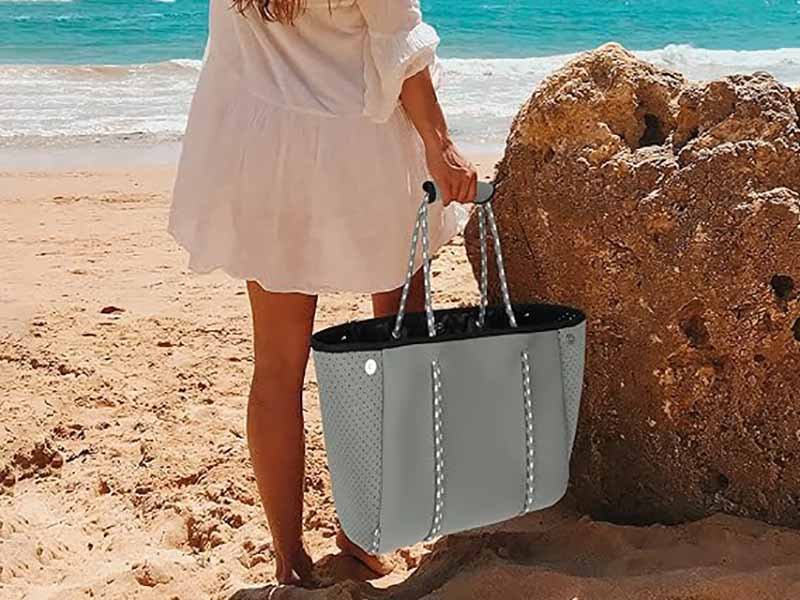
A neoprene beach bag may look like a simple soft-goods product, but once it enters the EU or US market, it becomes a compliance product as much as a design product. A bag can have the right shape, color, zipper, and price, yet still create major trouble if the material contains restricted substances, if labeling is incomplete, or if the documentation cannot support customs, platform checks, or retailer audits. That is why more importers, private label sellers, and retail suppliers now ask compliance questions at the beginning of development rather than after production is finished.
Neoprene beach bag manufacturing compliance requirements are the legal and market-access rules that apply to the bag’s materials, chemical content, labeling, traceability, and overall safety. In practice, this usually means checking EU rules such as REACH and the General Product Safety Regulation, and checking US rules such as CPSIA when the product is intended for children or marketed in a way that brings it into that category. It also means preparing test reports, supplier records, and product information before shipment, not after a problem appears.
This matters because compliance failures are expensive in ways many companies underestimate. A failed chemical test can delay a launch by weeks. Missing traceability information can block a retail order. In the EU, the GPSR has strengthened obligations for consumer products since December 2024, including traceability and safety responsibilities for economic operators. For importers and brand owners, that means compliance is now tied more directly to sell-through, reputation, and reorder stability.
What Laws Affect Neoprene Beach Bag Manufacturing Compliance Requirements?
The main laws affecting neoprene beach bag compliance are EU REACH, the EU General Product Safety Regulation, and US consumer product safety rules such as CPSIA when the bag is a children’s product. These rules affect chemical restrictions, safety expectations, traceability, and documentation. The exact compliance path depends on where the bag will be sold and whether it is marketed to adults or children.
A lot of sourcing teams treat “compliance” as one box to tick, but in reality it has layers. There are legal rules, platform rules, retailer rules, and internal brand standards. A beach bag sold on a website may face one level of review. The same bag sold into an EU retailer or a US chain may need stricter documentation, clearer traceability, and broader test coverage. That is why the first real compliance question is not “Do you have a test report?” It is “Which market are we selling into, and how will this bag be described to the end customer?”
For neoprene beach bags, legal exposure usually comes from five areas:
- chemical restrictions in the material, print, glue, zipper, and trims
- general product safety expectations for consumer products
- age grading and children’s product rules if the product is intended for kids
- labeling and traceability requirements
- importer and retailer documentation checks
The table below shows the most important legal directions customers usually need to think about first:
| Market | Main Rule Set | What It Affects Most | Why It Matters |
|---|---|---|---|
| EU | REACH | Restricted chemicals in materials and components | A failed substance test can block sale in the EU |
| EU | GPSR | Product safety, traceability, operator information | Important for general consumer products and online sales |
| US | CPSIA | Lead, phthalates, tracking label rules for children’s products | Critical if the bag is designed or marketed for children |
| US | General consumer safety expectations | Product safety and hazard risk | Important even when CPSIA does not apply |
| Retail / platform | Internal compliance standards | Test scope, documentation, packaging, records | Often stricter than the minimum legal baseline |
One common mistake is assuming neoprene itself is the only risk. In reality, compliance problems often come from supporting parts such as zipper pulls, printed logos, dyed webbing, plastic trims, coated surfaces, adhesives, and packaging inks. A bag can pass based on the main fabric but still fail because one accessory contains a restricted substance or because supplier traceability is weak.
Another practical issue is market positioning. A beach bag sold as an adult travel bag does not necessarily follow the same compliance route as a beach bag sold in child-themed colors with child-focused marketing language. The design may look similar, but the compliance consequences may be very different in the US. That is why the commercial description of the product matters almost as much as the product itself.
For Oneier customers, the safest approach is to define three things before bulk production:
- final sales market
- intended user group
- target sales channel
Once those are clear, the factory and customer can build a more accurate compliance plan instead of treating every order as if it needs the same documents.
What Is REACH in Neoprene Beach Bag Manufacturing Compliance Requirements?
REACH is the EU’s chemicals regulation, and for beach bags it matters because it controls whether substances used in the bag are restricted above permitted levels. This does not only apply to the neoprene body. It can also affect inks, coatings, plastic parts, dyed materials, adhesives, and accessories. The current consolidated REACH text remains the reference point for these restrictions in the EU.
For customers, the practical meaning of REACH is simple: if your bag contains a restricted substance above the legal limit, the product may be blocked, withdrawn, or challenged in the EU market. This is why many EU-facing orders request chemical testing before shipment rather than relying only on supplier declarations.
The risk areas most often checked in bag projects include:
- phthalates in soft plastic or coated parts
- lead and cadmium in pigments, coatings, or accessories
- azo-related dye risks in colored textile components
- SVHC-related concerns depending on the material set and use of chemicals
A useful way to think about REACH is that it is not one single test. It is a compliance framework. The exact test scope should match the actual bag structure and materials.
The table below shows where REACH risk often appears in neoprene beach bag projects:
| Bag Part | Compliance Risk Area | Why Customers Should Check It |
|---|---|---|
| Neoprene sheet | Chemical additives, SVHC-related concerns | Main material body can trigger broad chemical review |
| Surface print | Lead, restricted colorants, other chemical residues | Printed logos and graphics add extra chemical exposure points |
| Zipper pull / plastic trim | Phthalates or heavy metals depending on material | Small parts are easy to overlook |
| Webbing / handles | Dyestuff and finishing chemistry | Frequently touched and often highly colored |
| Adhesive areas | Residual chemical concerns | Bonded parts can widen the test scope |
For EU projects, it is often smarter to ask not only for a “REACH report,” but for a clear explanation of what materials were tested and which components were covered. A vague report with no component detail is much less useful during retailer review or customs questioning than a report that matches the actual product bill of materials.
What Is CPSIA in Neoprene Beach Bag Manufacturing Compliance Requirements?
CPSIA is a US product safety law that becomes especially important when a neoprene beach bag is considered a children’s product. The law is strongly associated with lead limits, phthalate restrictions, and product traceability expectations. The CPSC also publishes annual reporting and business guidance tied to implementation and oversight of these rules.
The point customers need to understand is this: CPSIA is not automatically triggered just because a bag is small or colorful. The bigger issue is whether the product is designed or marketed primarily for children 12 and under. If yes, the compliance path becomes much stricter.
This changes the sourcing process in real ways:
- material screening usually becomes more careful
- component-level testing becomes more important
- tracking label details matter more
- documentation and supplier records need better control
A children’s neoprene beach bag project may need much more discipline than an adult beach tote project, even if the sewing work looks nearly identical.
The most practical CPSIA-related checkpoints are:
| Area | Why It Matters in US Sales |
|---|---|
| Lead content | The legal threshold is strict for children’s products |
| Phthalates | Relevant for certain plastics and flexible components |
| Tracking information | Helps trace production batch and source |
| Product classification | Determines whether the children’s product rules apply |
For importers and brands, one of the biggest mistakes is waiting until packaging or marketing is finished to think about CPSIA. If the design language, printing theme, and product positioning clearly point to children, the compliance planning should start at the same time as sampling.
What Global Rules Apply?
Beyond REACH and CPSIA, neoprene beach bags also sit under broader product safety expectations. In the EU, the General Product Safety Regulation applies to consumer products and brought stronger rules into effect from December 2024, including obligations around product safety and traceability. It applies to non-food consumer products sold offline or online.
This matters because a beach bag is not only judged by chemistry. It is also judged by whether it is safe as a consumer product. That includes things such as:
- obvious injury risks from sharp or poorly finished parts
- unsafe strap or component construction
- misleading product information
- missing operator or traceability information in markets that require it
Retailers may add another layer on top of the law. Many larger customers ask for test plans and documents that go beyond the minimum legal threshold because they want to reduce recall and reputation risk.
A practical comparison looks like this:
| Rule Direction | Main Focus | What Brands Usually Need to Prepare |
|---|---|---|
| EU GPSR | General consumer safety and traceability | Product info, operator info, safety records |
| EU REACH | Restricted chemicals | Chemical testing and material declarations |
| US CPSIA when applicable | Children’s product safety | Test reports, lead/phthalate checks, tracking details |
| Retailer standard | Brand and risk control | Wider test matrix, factory records, packaging compliance |
The real lesson for customers is that “legal minimum” and “commercially acceptable” are not always the same thing. A product might technically be sellable, but still fail a retailer’s onboarding process if the documentation is weak.
Are Chemical Limits Important?
Yes, chemical limits are one of the most important parts of compliance because a beach bag that fails chemical limits may never get a chance to compete on quality, design, or price. For EU and US-facing projects, chemical compliance often becomes the first real gate to market access. REACH in the EU and CPSIA-related restrictions in the US are both central here.
From a customer point of view, chemical limits matter for four practical reasons:
- customs and market access
- retailer approval
- marketplace risk control
- end-user safety and brand reputation
If one order fails, the cost is usually much bigger than the test fee that could have prevented the problem. Delays, relabeling, rework, warehousing, destroyed inventory, and lost season timing can push the real cost far beyond the factory price difference between a compliant and a poorly controlled product.
Here is a simple risk table customers can use early in development:
| Compliance Choice | Short-Term Cost | Long-Term Risk |
|---|---|---|
| No pre-shipment chemical testing | Lower | High |
| Limited material-only testing | Medium | Medium |
| Component-matched testing and records | Higher | Lower |
For most serious export projects, the third route is safer. It costs more at the beginning, but it usually protects the order better. That is especially true when the bag includes multiple materials, strong colors, coatings, or custom accessories.
For Oneier projects, the commercial value of compliance is straightforward: fewer delays, more stable retail acceptance, better platform readiness, and a lower chance that a strong product turns into a costly shipment problem before it even reaches the shelf.
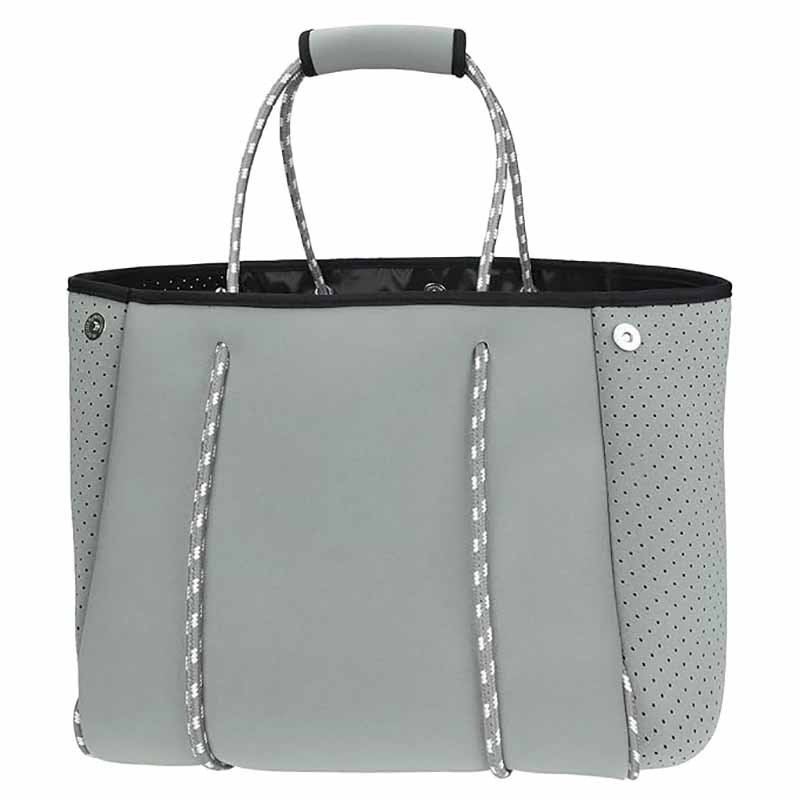
Which Tests Meet Neoprene Beach Bag Manufacturing Compliance Requirements?
To meet neoprene beach bag manufacturing compliance requirements, testing must cover both chemical safety and physical performance. Chemical tests confirm that materials meet legal limits, while physical tests confirm the bag can withstand real use without creating safety risks or product failure.
From a practical sourcing point of view, testing is not just a formality. It is the step that turns a sample into a product that can actually be sold in regulated markets. Without proper testing, even a well-made bag may face delays, rejection, or customer complaints.
A clear testing plan usually includes four parts:
| Test Category | Purpose | When Needed |
|---|---|---|
| Chemical testing | Check restricted substances | EU, US, retail |
| Physical testing | Check strength and durability | All markets |
| Functional testing | Check usability (zipper, load) | All markets |
| Special testing | Waterproof, colorfastness, etc. | Based on design |
The exact combination depends on product structure, materials, and target market.
What Physical Tests Are Needed?
Physical testing focuses on whether the bag can handle daily use without breaking, deforming, or creating safety issues.
Key physical tests include:
Seam strength test
Measures how much force seams can handle before breaking
Handle/strap pull test
Ensures handles can support weight without tearing
Tear resistance test
Checks how easily the material tears under stress
Example test benchmarks:
| Test Item | Typical Standard |
|---|---|
| Seam strength | 100–200 N |
| Handle pull force | 150–300 N |
| Tear resistance | Based on material type |
Why this matters:
- Weak seams → bag breaks under load
- Weak handles → safety risk
- Low tear resistance → short lifespan
For beach bags, these tests are especially important because the bag may carry wet items, towels, bottles, and personal belongings.
What Zipper Tests Matter?
Zipper testing is one of the most important parts of compliance and quality control.
Key zipper tests:
Cycle test
Open/close zipper repeatedly (usually 5,000–10,000 cycles)
Slider strength test
Checks whether slider breaks under force
Smoothness test
Ensures no sticking or misalignment
Zipper performance comparison:
| Zipper Quality | Cycle Life |
|---|---|
| Low-grade | 1,000–3,000 cycles |
| Standard | 5,000 cycles |
| High-quality | 10,000+ cycles |
Common failure points:
- Teeth separation
- Slider breakage
- Misalignment
For neoprene beach bags, zipper performance is critical because thicker materials create more tension around the opening.
Are Load Tests Required?
Yes, load testing is essential for beach bags because they are often used to carry heavier items.
Load test includes:
- Filling the bag with weight
- Lifting repeatedly
- Checking deformation and damage
Typical load test values:
| Bag Type | Load Test Weight |
|---|---|
| Small cosmetic bag | 2–5 kg |
| Beach bag | 8–15 kg |
What load testing reveals:
- Handle strength
- Seam durability
- Base stability
Without load testing, a bag may pass visual inspection but fail during real use.
How Are Chemical Tests Done?
Chemical testing checks whether the product meets legal limits for restricted substances.
Process:
- Identify materials (fabric, zipper, print, etc.)
- Select test scope based on regulations
- Send samples to certified lab
- Receive test report
Common chemical test items:
| Substance | Why It Is Tested |
|---|---|
| Lead | Toxicity risk |
| Phthalates | Plastic safety |
| AZO dyes | Restricted dyes |
| Formaldehyde | Skin safety |
Testing is usually done per component, not just the final product.
How Does Labeling Meet Neoprene Beach Bag Manufacturing Compliance Requirements?
Labeling is required to provide product information, ensure traceability, and support customs clearance. Missing or incorrect labels can lead to shipment delays or rejection.
What Labels Are Required?
Basic label requirements include:
- Product name
- Material composition
- Manufacturer or importer information
- Country of origin
Example:
| Label Item | Purpose |
|---|---|
| Product name | Identification |
| Material info | Transparency |
| Company info | Traceability |
| Origin label | Customs requirement |
How to Show Materials?
Material composition should be clear and accurate.
Example:
- “Neoprene + Polyester”
- “Outer: Neoprene / Inner: Polyester lining”
Incorrect or vague labeling can create compliance issues.
Are Origin Labels Needed?
Yes, country of origin labeling is required in most markets.
Example:
- “Made in China”
Without this, products may be held at customs.
How Do Labels Affect Import?
Labels affect:
- Customs clearance
- Retail acceptance
- Consumer trust
Incorrect labels can lead to:
- Shipment delays
- Re-labeling costs
- Fines or rejection
How to Follow Neoprene Beach Bag Manufacturing Compliance Requirements?
Meeting neoprene beach bag manufacturing compliance requirements is not a single step. It is a process that starts from material selection and continues through production, testing, labeling, and documentation. The earlier compliance is built into the process, the lower the risk of delays, rework, or rejected shipments.
A clear workflow helps reduce mistakes:
| Stage | What to Do | Risk if Skipped |
|---|---|---|
| Market definition | Confirm EU, US, or other markets | Wrong compliance path |
| Material selection | Choose compliant materials | Failed chemical tests |
| Sample stage | Test structure and materials | Bulk defects |
| Testing stage | Conduct lab tests | Shipment rejection |
| Label confirmation | Check all required info | Customs delay |
| Final inspection | Verify consistency | Quality complaints |
The goal is to prevent problems early, not fix them later.
How to Choose Safe Materials?
Material selection is the starting point of compliance. If materials are not compliant, testing will fail no matter how good the production is.
Key material considerations:
- Use certified or pre-tested neoprene
- Avoid unknown dyes or coatings
- Check all accessories (zippers, pullers, trims)
- Confirm supplier material records
Material risk control:
| Material Part | Risk Level | Control Method |
|---|---|---|
| Neoprene sheet | Medium | Supplier certification |
| Zipper | Medium | Test report |
| Print/logo | High | Chemical testing |
| Plastic parts | High | Restricted substance check |
Choosing safer materials early reduces testing risk and cost.
How to Work with Certified Factories?
Factory capability directly affects compliance success.
A qualified factory should provide:
- Material traceability
- Testing support
- Consistent production quality
- Clear documentation
Factory comparison:
| Capability | Basic Factory | Experienced Factory |
|---|---|---|
| Material control | Limited | Strong |
| Compliance knowledge | Low | High |
| Testing support | Weak | Complete |
| Documentation | Basic | Detailed |
Working with an experienced neoprene manufacturer like Oneier helps ensure compliance is handled correctly from the beginning.
How to Prepare Testing Reports?
Testing reports must match the actual product.
Important points:
- Test all relevant materials
- Use certified laboratories
- Keep reports consistent with production
- Ensure report validity (not expired)
Testing documentation checklist:
| Document | Purpose |
|---|---|
| Chemical test report | Proves compliance |
| Physical test report | Confirms durability |
| Material declaration | Supports traceability |
Incomplete or incorrect reports can cause shipment delays.
How to Reduce Compliance Risk?
Reducing risk is about planning and control.
Key strategies:
- Confirm requirements before production
- Use approved materials only
- Test samples before bulk production
- Double-check labeling
- Maintain clear records
Risk comparison:
| Approach | Risk Level |
|---|---|
| No planning | High |
| Partial compliance | Medium |
| Full compliance process | Low |
The cost of prevention is always lower than the cost of fixing problems later.
What Trends in Neoprene Beach Bag Manufacturing Compliance Requirements?
Compliance is becoming stricter, and expectations from buyers and regulators are increasing. What was acceptable a few years ago may no longer be sufficient today.
Are Eco Rules Growing?
Yes, environmental regulations are becoming more important.
Trends include:
- Restrictions on harmful chemicals
- Demand for safer materials
- Pressure to reduce environmental impact
Even when not required by law, many buyers prefer eco-friendly options.
How Does Sustainability Affect Compliance?
Sustainability is now linked with compliance.
Customers are asking for:
- Safer material sourcing
- Reduced chemical usage
- Longer product lifespan
A durable product is often considered more sustainable than a low-quality one.
What Do Buyers Expect?
Buyers today expect more than basic compliance.
Common expectations:
- Verified test reports
- Clear documentation
- Stable quality across orders
- Quick response from suppliers
Retailers and platforms may require stricter standards than regulations.
Is Full Certification the Future?
Yes, full compliance documentation is becoming standard.
This includes:
- Chemical testing
- Material traceability
- Product labeling
- Production records
Suppliers who can provide complete compliance support are more competitive.
How Can Oneier Support Your Compliance Needs?
Oneier has over 18 years of experience in neoprene product manufacturing, including beach bags, koozies, sports supports, medical braces, and wetsuits.
We help customers meet compliance requirements by:
- Providing compliant material options
- Supporting chemical and physical testing
- Offering clear labeling solutions
- Maintaining stable production quality
- Delivering fast sampling and short lead times
Our goal is to help you produce products that are not only well-made but also ready for global markets.
Final Call to Action
If you are planning to develop neoprene beach bags for EU or US markets, compliance should be part of your strategy from the beginning.
Send Oneier your project details:
- Product design
- Target market
- Material preference
- Quantity
We will help you build a compliant product, prepare the required documentation, and move your project forward with confidence.
A compliant product is not just safer—it is easier to sell, easier to scale, and more reliable for long-term business.
Contact Oneier today to start your custom neoprene beach bag project.