
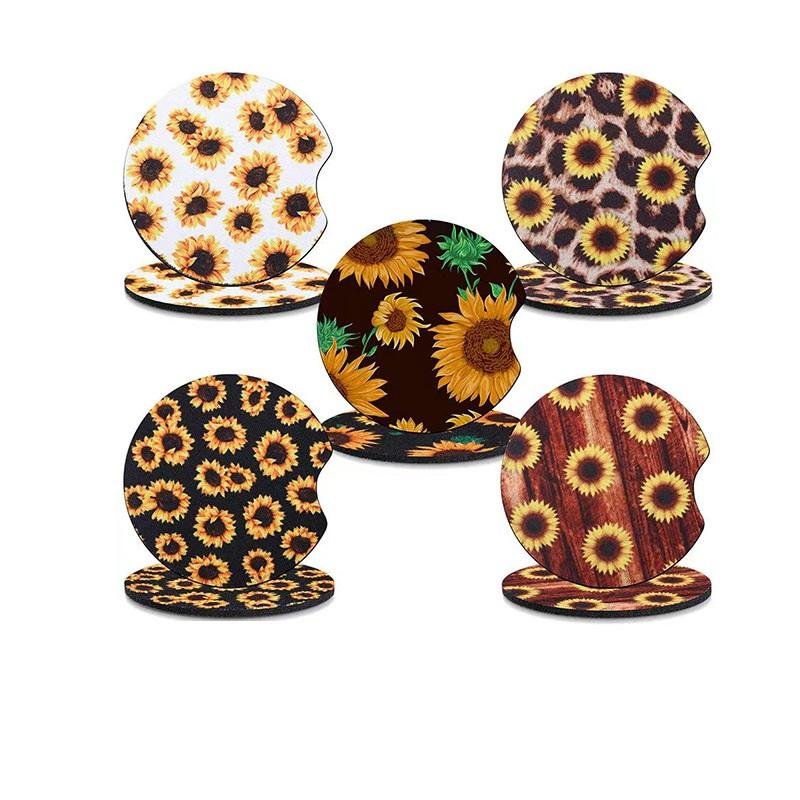
A neoprene coaster may look like a small and simple product, but in real business, simple products often create the biggest quality problems. A coaster is handled every day, placed on smooth tables, exposed to water drops, squeezed into packaging, and judged closely by end users. If the bottom slides too easily, customers notice. If the print looks dull, customers notice. If the edge starts lifting after a short period of use, customers notice even faster. That is why a good neoprene coaster is not just a piece of foam with a printed top. It is a carefully built product that combines the right neoprene density, suitable fabric, stable lamination, clean cutting, and a bottom structure that adds friction without making the coaster feel too stiff or cheap.
A neoprene coaster with anti slip bottom is usually made by laminating a printed fabric layer to neoprene foam and combining it with a grip-enhancing base. Its real performance depends on material density, surface texture, bonding quality, thickness control, and finishing details such as edge quality and print clarity. A strong coaster does not only look good in photos. It stays flat, grips the table well, and keeps its shape after repeated daily use.
That difference matters more than many customers expect. In one project, a client changed only the bottom texture and edge finishing of their coaster set, and the complaint rate from end users dropped noticeably because the coasters stopped sliding on polished tabletops. Small changes in structure often create much bigger changes in user experience. If you are planning to develop custom neoprene coasters for retail, promotions, bars, restaurants, gifts, or branded merchandise, understanding these details early can save a lot of cost, revisions, and lost time later.
What Is a Neoprene Coaster Anti Slip Bottom?
A neoprene coaster with anti slip bottom is a layered coaster product designed to hold cups or glasses while reducing sliding on smooth surfaces. It combines cushioning, moisture handling, printed appearance, and bottom grip in one compact structure.
What defines a neoprene coaster anti slip bottom?
A neoprene coaster anti slip bottom is defined by more than just its shape or printed logo. A good product is usually judged by four practical standards:
- It should sit flat on the table
- It should reduce unwanted movement
- It should support clean and durable printing
- It should keep its shape after repeated use
The basic structure usually includes three parts:
- Top layer for printing and appearance
- Neoprene core for softness, cushioning, and water resistance
- Bottom layer or bottom texture for grip and table contact
Many low-cost products only copy the appearance of neoprene coasters, but they miss the real functional details. They may use foam that is too soft, bottoms that are too smooth, or poor bonding that leads to separation. On first look, two coasters may appear similar. After a few weeks of real use, the difference becomes obvious.
A reliable neoprene coaster usually performs better in these areas:
| Item | Low-Grade Coaster | Better-Quality Coaster |
|---|---|---|
| Bottom grip | Slides easily | Stays more stable |
| Shape retention | May curl or deform | Keeps flatter shape |
| Print clarity | Lower color sharpness | Cleaner image result |
| Edge condition | Rough or uneven | Clean and consistent |
| Reuse performance | Wears faster | Lasts longer |
For commercial customers, these details matter because coaster products are often used in settings where appearance and function are both visible at the same time. A coaster in a hotel, bar, office, or gift box is a small product, but it still reflects the overall quality of the brand.
How does a neoprene coaster anti slip bottom work?
The anti slip effect comes from increasing friction between the coaster and the table surface. In simple terms, the coaster bottom needs to “hold” the surface better so it does not move too easily when a cup is placed down, lifted up, or slightly pushed.
This effect depends on several things working together:
- Bottom material softness
- Surface texture
- Thickness balance
- Contact area
- Weight distribution from the cup or glass
If the bottom is too smooth, it slides.
If the material is too hard, it may not adapt well to the table surface.
If the coaster is too thin, it may not feel stable.
If the coaster is too thick but poorly cut, the edges may lift.
A practical way to understand it is through performance factors:
| Factor | Effect on Anti Slip Performance |
|---|---|
| Textured bottom | Improves grip on smooth tables |
| Moderate softness | Helps surface contact |
| Flat cutting | Keeps full contact area |
| Consistent thickness | Improves balance |
| Clean bonding | Prevents curling and lifting |
The anti slip function should not feel overly sticky. A coaster still needs to be easy to lift and move when cleaning the table or rearranging items. The best result is controlled grip, not excessive tackiness.
In real use, coasters are often tested on different surfaces such as:
- Wood tables
- Glass coffee tables
- Stone countertops
- Painted bar tops
- Office desks
A bottom that performs well across multiple surfaces usually creates a better overall product.
Why choose a neoprene coaster anti slip bottom?
Customers do not choose this product only because it looks soft or feels thicker than paperboard. They choose it because it solves several daily-use problems at the same time.
Main reasons include:
- It protects table surfaces better
- It reduces slipping on smooth furniture
- It gives a more premium hand feel
- It supports custom printing well
- It is reusable and more durable than paper coasters
- It creates stronger perceived value for branding
For promotional projects, this matters because people are more likely to keep and reuse a coaster that feels useful and well made. For retail products, it matters because customers are less forgiving when a product moves too easily or feels unstable. For hospitality businesses, it matters because the coaster is in constant contact with customers and becomes part of the overall presentation.
From a commercial perspective, a neoprene coaster with anti slip bottom usually offers better product value than a plain neoprene coaster because the user can notice the difference immediately. Even a small upgrade in the bottom finish can improve the experience enough to support a higher selling price or better client satisfaction.
Who uses a neoprene coaster anti slip bottom?
This product is used across a wide range of industries because it combines practical function with strong logo presentation.
Common customer groups include:
- Beverage brands
- Beer and bar accessory brands
- Coffee shops and cafés
- Hotels and restaurants
- Corporate gift companies
- Event organizers
- E-commerce sellers
- Promotional product importers
Each group pays attention to slightly different priorities.
| Customer Type | Main Concern |
|---|---|
| Promotional clients | Cost control and logo visibility |
| Bars and restaurants | Grip, durability, and easy reuse |
| Retail brands | Print quality and premium feel |
| Gift companies | Packaging appearance and consistency |
| Importers | Stable bulk quality and lead time |
For example, a café chain may care most about repeated daily use and table grip, while an online gift brand may focus more on print sharpness, edge quality, and set packaging. That is why the same product category can still require different material decisions depending on the final market.
Which Materials Build a Neoprene Coaster Anti Slip Bottom?
A neoprene coaster with anti slip bottom is usually built from neoprene foam, a printable top fabric, and a grip-enhancing bottom finish or backing. The exact material combination affects print quality, grip, softness, thickness, durability, and final cost.
What neoprene is used in a neoprene coaster anti slip bottom?
Neoprene is the functional core of the coaster. It gives the product softness, rebound, structure, and a degree of water resistance. But not all neoprene performs the same way. Density, thickness, surface finish, and lamination compatibility all change the final result.
In coaster manufacturing, common neoprene options include:
- Standard neoprene foam
- Higher-density neoprene
- Softer neoprene for lighter feel
- Laminated neoprene for printing applications
The most common thickness range is:
| Thickness | Common Effect | Suitable Use |
|---|---|---|
| 2 mm | Lower cost, lighter feel | Promotional orders |
| 3 mm | Balanced hand feel and stability | Most custom coaster projects |
| 4 mm | Thicker, more premium look | Retail and gift sets |
| 5 mm | Heavier, more cushioned | Premium positioning or specialty uses |
A lot of customers assume thicker is always better. In reality, 3 mm is often the best balance for large-volume coaster production because it gives enough body without adding unnecessary material cost or shipping weight. A 4 mm coaster can feel more premium, but it also increases material use and may not always improve grip if the bottom treatment is weak.
Neoprene density matters just as much as thickness. Lower-density material may feel soft at first but can lose shape more quickly. Better neoprene usually holds its form longer and supports cleaner die cutting. For custom projects, factories like Oneier often help select neoprene based on target market, unit price goal, and expected usage frequency.
Which top fabric fits a neoprene coaster anti slip bottom?
The top layer is where the branding lives. It controls how the design looks, how bright the colors appear, and how clean the printed details remain after production.
Common top fabrics include:
- Polyester fabric for sublimation printing
- Microfiber-like fabric for softer premium touch
- Smooth stretch fabric for sharp surface graphics
For most coaster projects, polyester is the preferred option because it works well with sublimation printing and allows:
- Bright full-color graphics
- Better detail reproduction
- Strong repeat consistency
- Efficient production for bulk orders
The top fabric should be selected based on:
- Printing method
- Design complexity
- Color expectation
- Surface feel
- Budget target
Here is a simple comparison:
| Top Fabric Type | Print Quality | Hand Feel | Cost Level | Common Use |
|---|---|---|---|---|
| Polyester | Very good | Standard | Low to mid | Most custom coasters |
| Microfiber | Good | Softer | Mid | Gift and premium products |
| Smooth stretch fabric | Good | Smooth and modern | Mid | Fashionable or branded styles |
For clients selling online or supplying gift markets, print clarity is often the first thing customers notice. That is why top fabric should never be treated as a small detail. A clean, bright design on the coaster surface can change the perceived value of the whole product.
What base creates a neoprene coaster anti slip bottom grip?
The bottom area is where the real functional upgrade happens. A neoprene coaster anti slip bottom is expected to perform better than a standard smooth-backed coaster, especially on polished or slippery tabletops.
Common bottom approaches include:
- Natural textured neoprene backing
- Embossed or patterned backing
- Rubber-like anti slip coating
- Silicone dot or grip pattern treatment
- Composite grip layer bonded to the base
Each approach offers a different balance between cost, grip, and production complexity.
| Bottom Type | Grip Level | Cost | Surface Feel | Best For |
|---|---|---|---|---|
| Smooth backing | Low | Low | Simple | Basic promotional use |
| Textured backing | Medium | Low to mid | Practical | Standard custom orders |
| Rubber-coated bottom | Medium to high | Mid | More stable | Retail and hospitality |
| Silicone grip pattern | High | Mid to high | Strong contact | Premium coaster sets |
The best option is not always the one with the highest friction. A bottom that grips too aggressively may attract dust, feel less clean, or be harder to move. In most commercial coaster projects, the goal is better stability without making the product awkward to handle.
For many customers, a textured or coated bottom gives the best value because it improves grip clearly while keeping production cost under control.
Are layers needed in a neoprene coaster anti slip bottom?
Yes, the layered structure is essential. A coaster is not just one material. It is a bonded product where each layer does a different job.
The common layered structure is:
- Top fabric for graphics
- Neoprene foam for body and cushioning
- Bottom layer or finish for friction and stability
If the bonding between these layers is poor, several problems can appear:
- Bubbling on the surface
- Edge lifting
- Layer separation
- Uneven thickness
- Shape distortion over time
Layer stability becomes more important when the coaster is used in:
- Bars with repeated cleaning
- Gift sets packed tightly
- Bulk shipments over long distances
- Warm or humid storage conditions
Factories with real neoprene lamination experience usually perform better because they understand how foam, fabric, and base finish behave together during production. At Oneier, this kind of layered control matters because the company has long-term experience working with neoprene-based products across many categories, from bags and koozies to sports supports and wetsuit-related items. That background helps reduce common material mismatch problems in coaster development too.
How Is a Neoprene Coaster Anti Slip Bottom Made?
A neoprene coaster with anti slip bottom is made through material preparation, lamination, printing, cutting, and finishing. The final quality depends on bonding strength, cutting accuracy, print consistency, bottom texture control, and clean edge handling.
How is neoprene bonded in a neoprene coaster anti slip bottom?
The first key production step is lamination. This is where the top fabric, neoprene core, and bottom surface treatment are combined into one workable sheet before cutting.
The main goal is simple: the layers must behave like one stable material body. If they shift, separate, or wrinkle, the product will not remain reliable in actual use.
Main bonding methods include:
- Heat lamination
- Glue lamination
- Pressure bonding
- Composite lamination based on material type
Each method has different advantages depending on:
- Foam thickness
- Fabric type
- Bottom material
- Production volume
- Print requirements
Poor lamination often causes the most common defects in coaster production:
| Problem | Likely Cause |
|---|---|
| Bubbling | Weak or uneven bonding |
| Surface wrinkles | Fabric tension mismatch |
| Layer separation | Incompatible adhesive or poor lamination |
| Edge lifting | Unstable bond near cutting line |
| Uneven feel | Inconsistent pressure during lamination |
This is why experienced manufacturers do not rush this step. A coaster may be small, but once the laminated sheet is unstable, the defect repeats across the full production batch. Good bonding improves not only durability, but also cutting quality, print appearance, and long-term flatness.
How is printing prepared for a neoprene coaster anti slip bottom?
Printing quality is one of the biggest factors in whether a coaster looks cheap or premium. Most customers make their first judgment from the print, even before they test the grip.
For neoprene coaster production, the most common printing method is sublimation printing because it works especially well on polyester top fabric. It offers:
- Bright color output
- Strong detail clarity
- Better image consistency
- Good efficiency for larger orders
Before printing starts, the factory usually checks:
- Artwork size and bleed
- Color mode accuracy
- Fabric compatibility
- Print layout efficiency
- Heat transfer conditions
A strong print result depends on more than just the artwork itself. It also depends on:
- Surface smoothness of the top fabric
- Stable bonding under the fabric
- Controlled heat and pressure
- Clean cutting after printing
If the laminate under the print is uneven, even a good design file may produce a lower-quality result. That is why print preparation and material preparation are closely linked in coaster manufacturing.
How is cutting done for a neoprene coaster anti slip bottom?
Once the laminated and printed sheet is ready, the next important step is cutting. This stage affects appearance, edge quality, size consistency, and bottom contact area.
Factories commonly use:
- Die cutting
- CNC cutting
- Laser cutting in some special cases
For bulk coaster production, die cutting is often preferred because it gives:
- Faster output
- Better cost efficiency
- More consistent repeat shape
Cutting accuracy matters because even small errors can cause visible problems:
- Uneven roundness
- Distorted square corners
- Inconsistent set sizes
- Edge roughness
- Reduced grip due to poor bottom contact
A coaster with a clean, even cut not only looks better, but also performs better because it sits flatter on the table. In larger production runs, cutting tolerance should be controlled carefully to keep the full batch consistent.
How is finishing controlled for a neoprene coaster anti slip bottom?
After cutting, the coaster still needs proper finishing control before packing. This final stage often decides whether the product feels retail-ready or only acceptable for low-end promotion.
Key finishing checks usually include:
- Edge cleanliness
- Surface print inspection
- Bottom texture consistency
- Thickness check
- Flatness check
- Dust and debris removal
- Packing appearance
A practical inspection table may look like this:
| Inspection Point | Why It Matters |
|---|---|
| Edge quality | Affects appearance and user impression |
| Print alignment | Important for logo-centered products |
| Bottom consistency | Ensures stable anti slip function |
| Thickness uniformity | Keeps the set visually consistent |
| Surface cleanliness | Improves final presentation |
This step is especially important for coaster sets sold in gift packaging or retail channels. End users often compare multiple coasters side by side. Even a small inconsistency becomes easier to notice when products are packed as a set.
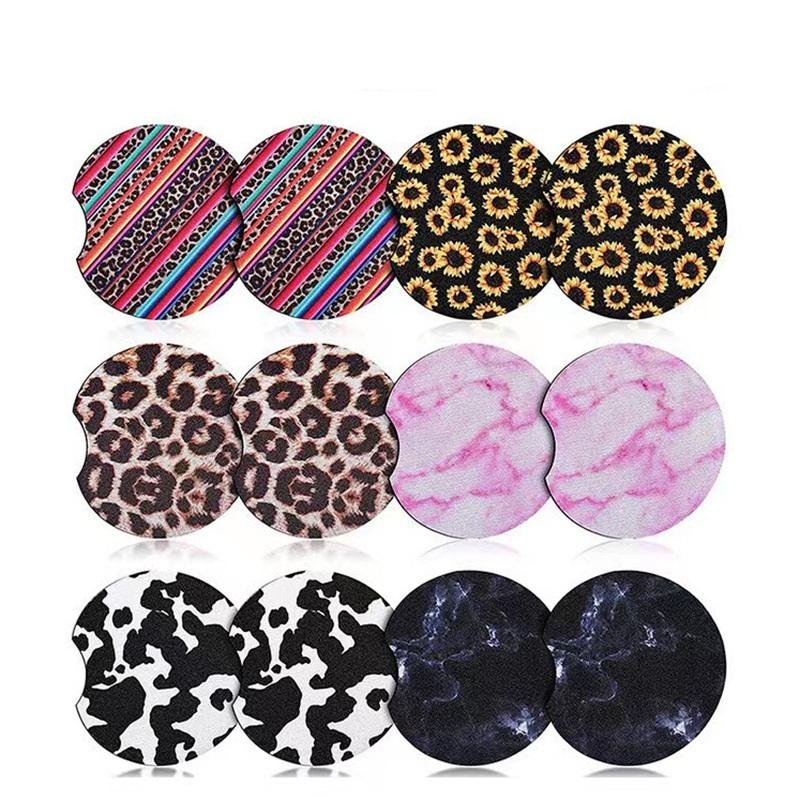
Which Design Improves a Neoprene Coaster Anti Slip Bottom?
A neoprene coaster anti slip bottom performs well only when its design is balanced. Material alone is not enough. Thickness, edge structure, bottom texture, and shape all influence how the coaster behaves in real use. Small design changes often create noticeable differences in stability, durability, and perceived quality.
A well-designed coaster should feel stable, stay flat, and look clean after repeated use. Poor design usually leads to sliding, curling edges, uneven printing, or fast wear.
What thickness suits a neoprene coaster anti slip bottom?
Thickness is one of the first decisions in product development, and it directly affects cost, feel, and performance.
Most neoprene coasters are produced in the range of 2 mm to 5 mm. Each level serves a different purpose:
| Thickness | Feel | Performance | Cost Impact | Recommended Use |
|---|---|---|---|---|
| 2 mm | Thin, flexible | Lower stability | Lowest | Large promotional orders |
| 3 mm | Balanced | Good stability | Moderate | Most standard orders |
| 4 mm | Thicker, premium | Stronger grip feel | Higher | Retail and gift sets |
| 5 mm | Heavy, cushioned | Maximum body | Highest | Premium positioning |
From a production point of view, 3 mm is often the most efficient choice. It gives enough structure for stability while keeping material cost and shipping weight under control.
However, thickness alone does not guarantee better performance. A 4 mm coaster with poor bottom texture may still slide more than a well-designed 3 mm coaster. That is why thickness should always be considered together with bottom design and material density.
Another point to consider is packaging. Thicker coasters take more space and increase shipping volume, which can affect total cost for large orders.
How do edges affect a neoprene coaster anti slip bottom?
Edge quality is one of the most visible details, and it also affects durability.
There are two main edge finishing methods:
- Die-cut edge (raw edge)
- Stitched or wrapped edge
Each has advantages depending on product positioning.
| Edge Type | Appearance | Durability | Cost | Common Use |
|---|---|---|---|---|
| Die-cut edge | Clean, modern | Good if cut well | Lower | Most coasters |
| Stitched edge | More structured | Higher durability | Higher | Premium products |
For most neoprene coaster projects, die-cut edges are preferred because they offer:
- Cleaner look
- Lower cost
- Faster production
However, edge quality depends heavily on cutting precision. Poor die cutting can result in:
- Rough edges
- Uneven shapes
- Slight tearing of fabric layer
These issues affect both appearance and long-term use.
For premium coaster sets, stitched edges may be used to improve durability, especially when the product is expected to last longer or be reused frequently. However, stitching increases production time and cost, so it is usually chosen only when necessary.
Which grip pattern helps a neoprene coaster anti slip bottom?
The bottom pattern is one of the most important upgrades for anti slip performance.
Instead of using a completely smooth backing, many coasters use textured or patterned surfaces to increase friction.
Common grip designs include:
- Fine textured surface
- Dot pattern grip
- Cross pattern or grid pattern
- Rubberized coating with micro texture
Here is how different patterns perform:
| Pattern Type | Grip Performance | Surface Compatibility | Cost |
|---|---|---|---|
| Smooth | Low | Limited | Low |
| Light texture | Medium | Works on most surfaces | Low to mid |
| Dot pattern | Medium to high | Good for smooth tables | Mid |
| Grid pattern | High | Strong grip on flat surfaces | Mid |
| Rubber coating | High | Very stable | Mid to high |
The goal is to increase friction without making the product feel too sticky.
In real use, the coaster must perform on different surfaces:
- Wood tables
- Glass surfaces
- Stone or marble
- Metal café tables
A well-designed pattern should work across all these surfaces.
Another important factor is pattern consistency. If the bottom texture is uneven, some coasters may grip well while others slide more. This becomes especially noticeable in packaged sets.
Do shapes change a neoprene coaster anti slip bottom?
Shape affects both appearance and performance more than many customers expect.
The most common shapes are:
- Round
- Square
- Rounded square
- Custom die-cut shapes
Each shape behaves differently:
| Shape | Stability | Visual Impact | Cutting Difficulty |
|---|---|---|---|
| Round | Very stable | Classic | Easy |
| Square | Good | Clean and modern | Easy |
| Rounded square | Balanced | Soft modern look | Medium |
| Custom shape | Varies | High branding value | Higher |
Round coasters usually provide the most even contact with the table, which helps with anti slip performance. Square or custom shapes may have more edge contact points, which can affect how the coaster sits if cutting is not precise.
Custom shapes are often used for branding, but they require more careful production control to avoid:
- Uneven edges
- Distorted shapes
- Reduced contact area
For large-volume production, simple shapes often provide better consistency and lower cost.
How to Choose a Neoprene Coaster Anti Slip Bottom Factory?
Choosing the right factory is not only about getting a sample quickly or receiving a low price. It is about ensuring that your product can be produced consistently, with stable quality, and delivered on time across multiple orders.
A strong factory should understand both material behavior and production details.
Which factory makes a stable neoprene coaster anti slip bottom?
A stable factory is one that can maintain consistent quality from sample to bulk production.
Key points to evaluate include:
- Experience with neoprene materials
- Control over lamination process
- Precision in cutting and finishing
- Ability to manage large orders without quality drop
- Clear communication during development
Factories with real experience in neoprene products usually perform better because they understand:
- How foam reacts under heat and pressure
- How fabric behaves during lamination
- How to avoid edge and bonding issues
Oneier, for example, has more than 18 years of experience working with neoprene across multiple product categories. This experience helps reduce common issues such as:
- Layer separation
- Uneven thickness
- Shape inconsistency
- Weak bonding
This kind of background becomes important when scaling production.
How does MOQ affect a neoprene coaster anti slip bottom?
MOQ depends on several factors:
- Material preparation
- Printing setup
- Cutting tooling
- Packaging requirements
Typical MOQ ranges:
| Product Type | MOQ Range |
|---|---|
| Simple coaster | 200–500 pcs |
| Printed custom coaster | 300–800 pcs |
| Complex or premium coaster | 500–1000 pcs |
Lower MOQ is useful for:
- Testing new designs
- Launching new products
- Small brand orders
However, lower MOQ usually means higher unit cost.
At Oneier, flexible MOQ options are available to support smaller clients while still maintaining production efficiency.
What tests check a neoprene coaster anti slip bottom?
Quality testing ensures the product performs as expected.
Common checks include:
| Test Item | Purpose |
|---|---|
| Grip test | Checks anti slip performance |
| Water exposure test | Ensures material stability |
| Thickness check | Maintains consistency |
| Print inspection | Ensures color accuracy |
| Edge inspection | Confirms clean cutting |
| Repeated use test | Checks durability over time |
In many cases, simple real-use testing is just as important as formal testing. Placing a coaster on different surfaces and using it repeatedly gives a clear idea of performance.
How to customize a neoprene coaster anti slip bottom design?
Customization is where brands create differentiation.
Oneier supports a wide range of options:
| Custom Area | Options |
|---|---|
| Shape | Round, square, custom |
| Thickness | 2–5 mm |
| Fabric | Polyester, microfiber |
| Bottom | Smooth, textured, rubberized |
| Printing | Sublimation, logo printing |
| Packaging | Individual, sets, gift boxes |
Additional services include:
- Free design support
- Fast sampling (5–7 days)
- Free sample evaluation
- Short production lead time
Customization allows brands to create products that match their market positioning instead of competing only on price.
How Do You Build a Neoprene Coaster Anti Slip Bottom That Sells Well?
A neoprene coaster is a small product, but it behaves like a high-frequency item. It is used daily, touched constantly, and placed in visible environments such as dining tables, bars, offices, and gift sets. Because of this, small defects are quickly noticed, and small improvements are also quickly appreciated.
A successful product is not the one with the most features. It is the one that balances cost, function, durability, and appearance in a way that fits its target market.
How do you define the right product level?
Before starting production, it is important to define the product level clearly. This helps avoid overdesign or underperformance.
Most coaster projects fall into three levels:
| Level | Focus | Recommended Setup |
|---|---|---|
| Entry level | Cost control | 2–3 mm neoprene, smooth or light texture bottom |
| Mid-range | Balanced performance | 3 mm neoprene, textured bottom, good print |
| Premium | Experience and branding | 4–5 mm neoprene, enhanced grip base, refined finishing |
If positioning is unclear, problems often appear later. For example:
- A premium design with low-cost materials → poor user experience
- A basic product with too many upgrades → unnecessary cost
Clear positioning helps the factory recommend the right structure from the beginning.
How do you evaluate samples before bulk production?
Many customers focus only on appearance when reviewing samples. In reality, function and consistency are more important.
When checking samples, pay attention to:
- Flatness when placed on a table
- Grip performance on different surfaces
- Edge quality and shape consistency
- Print clarity and color accuracy
- Thickness uniformity
Simple practical tests can reveal a lot:
- Place the coaster on a smooth surface and gently push it
- Add a glass with condensation and observe stability
- Bend the coaster slightly and check if it returns to shape
- Compare multiple samples side by side
A useful approach is to request 2–3 variations during sampling, such as:
- Different bottom textures
- Different thickness levels
- Slightly different fabric types
This comparison makes it easier to choose the best version instead of relying on a single sample.
What mistakes should be avoided in coaster development?
Many problems in coaster products come from small oversights during development.
Common mistakes include:
1. Ignoring the bottom design
Some projects focus only on printing and forget that the bottom affects daily use the most.
2. Choosing thickness without considering balance
A thicker coaster is not always better if the material or bonding is weak.
3. Overlooking lamination quality
Poor bonding leads to bubbling, separation, and reduced lifespan.
4. Using low-quality cutting methods
Uneven edges reduce product appearance and consistency.
5. Not testing real use conditions
A product that looks good in the office may perform poorly on actual tables.
Avoiding these issues early can reduce rework, improve product stability, and protect brand reputation.
How do you control cost while keeping quality stable?
Cost control is important, especially for bulk orders, but reducing cost incorrectly can damage product performance.
Here are practical ways to manage cost effectively:
| Strategy | Result |
|---|---|
| Use 3 mm instead of 4 mm when possible | Saves material without large performance loss |
| Choose textured backing instead of full rubber coating | Keeps grip while reducing cost |
| Optimize shape for cutting efficiency | Reduces material waste |
| Use standard fabric with strong printing process | Maintains visual quality |
| Simplify packaging for bulk orders | Lowers total cost |
The goal is not to make the cheapest product. The goal is to create a product that delivers reliable performance at a competitive cost.
A factory with real experience will suggest these adjustments instead of only offering a lower price.
Why Work With Oneier for Neoprene Coaster Anti Slip Bottom Manufacturing?
Choosing the right manufacturer is one of the most important decisions in product development. It affects product quality, consistency, lead time, and long-term business growth.
What experience does Oneier offer?
Oneier has over 18 years of experience in neoprene material development and production.
This experience covers:
- Neoprene lamination
- Custom bag manufacturing
- Koozies and drink accessories
- Sports and medical support products
- Multi-layer material construction
This background is directly relevant to coaster production because:
- Neoprene behavior is well understood
- Lamination stability is controlled
- Material compatibility issues are minimized
- Production processes are optimized for consistency
Instead of treating coasters as simple items, Oneier treats them as structured products that require careful material and process control.
What customization options are available?
Oneier provides flexible customization to match different market needs.
| Custom Element | Options |
|---|---|
| Shape | Round, square, custom die-cut |
| Thickness | 2 mm to 5 mm |
| Top fabric | Polyester, microfiber |
| Bottom | Smooth, textured, coated |
| Printing | Sublimation, logo printing |
| Packaging | Bulk, sets, retail boxes |
Additional services include:
- Free design support
- Fast sampling (around 5–7 days)
- Free sample evaluation
- Stable production lead times
This flexibility helps both small and large customers develop products that match their target market.
How does Oneier ensure product consistency?
Consistency is critical, especially for repeat orders.
Oneier controls quality through:
- Stable raw material sourcing
- Controlled lamination process
- Precision cutting systems
- Strict inspection at multiple stages
- Final product verification before shipment
Key consistency points include:
| Area | Importance |
|---|---|
| Thickness consistency | Ensures uniform feel across sets |
| Color accuracy | Important for branded products |
| Edge quality | Affects overall appearance |
| Bottom texture | Maintains grip performance |
| Packaging consistency | Supports retail presentation |
Many long-term clients value not just the first order, but the ability to reorder the same product with the same quality.
What type of clients work with Oneier?
Oneier works with a wide range of customers:
- Small and medium-sized brands
- Established retail brands
- Promotional product suppliers
- Importers and distributors
- E-commerce sellers
Services include:
- Custom design development
- OEM production
- Private label manufacturing
This allows customers at different stages of growth to find suitable solutions.
Start Your Custom Neoprene Coaster Project
If you are planning to develop neoprene coasters with anti slip bottom, the most important step is to make the right decisions early in the process.
A well-designed coaster can:
- Improve user experience
- Increase product value
- Strengthen brand image
- Reduce complaints and returns
- Support long-term sales growth
A poorly designed coaster may lead to:
- Sliding problems
- Shape deformation
- Weak printing results
- Customer dissatisfaction
Working with an experienced manufacturer helps avoid these risks.
Oneier can support your project from concept to production, including:
- Material selection based on your market
- Structure recommendations for performance and cost
- Sample development and testing
- Bulk production with stable quality
- Ongoing improvements for future orders
Send Your Inquiry Today
If you have a product idea, design file, or sample reference, you can start by sharing:
- Target market
- Expected price range
- Quantity
- Size and shape requirements
- Any special features needed
Oneier’s team will respond quickly with:
- Practical material suggestions
- Structure recommendations
- Sample options
- Production timeline
Send your inquiry now and start building a neoprene coaster product that not only looks good, but performs well and sells consistently.