
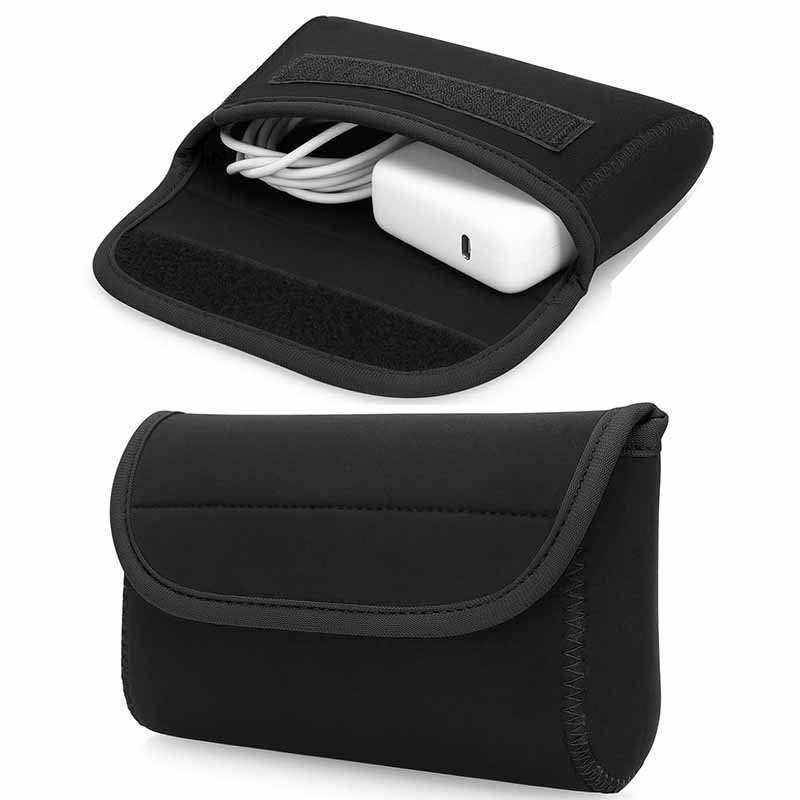
In the electronics industry, protection is no longer just a practical add-on. It has become part of the product experience, part of the brand image, and in many cases, part of the reason a customer decides to buy. A cover that feels cheap, fits poorly, smells unpleasant, or fails after a few months can damage more than the device itself. It can weaken trust in the brand behind it. On the other hand, a well-made neoprene cover can improve the perceived value of the product, reduce after-sales complaints, and give customers something they use every day with real satisfaction.
Neoprene cover manufacturing for electronics brands is the process of designing and producing custom protective covers made from neoprene material for products such as laptops, tablets, cameras, gaming devices, chargers, and other portable electronics. These covers are made to protect against scratches, light impact, dust, and splashes while also supporting logo branding, size customization, and private label packaging.
That sounds simple at first, but good manufacturing is where the real difference appears. The right factory does much more than cut foam and sew fabric. It helps control material thickness, fit accuracy, printing quality, zipper durability, edge finishing, odor control, packaging consistency, and delivery reliability. For electronics brands, these details matter because customers notice them immediately. A cover is often the first thing they touch after unboxing a device, and that first contact can either feel average or feel premium. That is exactly why more electronics brands are paying closer attention to how neoprene covers are developed, not just how they look in a product photo.
What Is Neoprene Cover Manufacturing?
Neoprene cover manufacturing is the process of turning neoprene sheet material into finished protective covers for electronics through material selection, lamination, pattern making, cutting, printing, sewing, inspection, and packaging. For electronics brands, it is not only about making a cover that fits. It is about making a cover that protects the device well, reflects the brand image clearly, and can be produced consistently at the right cost and lead time.
What is neoprene material?
Neoprene is a synthetic rubber foam, also known as polychloroprene. It is widely used in products that require flexibility, cushioning, light water resistance, insulation, and a soft-touch surface. In electronics covers, neoprene is usually not used alone. It is commonly laminated with fabric on one or both sides, such as polyester, nylon, or jersey fabric, so the final product is stronger, easier to print, and more attractive in appearance.
From a product development point of view, neoprene works well because it sits between soft fabric and hard shell materials. It is softer and more flexible than molded EVA, but offers much better cushioning than ordinary woven fabric. That balance is one of the main reasons it is so popular for electronics accessories.
The material structure usually includes three layers. The outer fabric provides appearance and printability. The middle neoprene foam provides cushioning and elasticity. The inner fabric provides surface protection and improves the hand feel. A factory can adjust each layer depending on product positioning. For example, a lower-cost project may use standard polyester lamination, while a higher-end project may use smoother nylon, brushed interior lining, cleaner zipper tape, and tighter stitching.
The thickness of neoprene used in electronics covers is often between 2 mm and 6 mm. The selection depends on device type, retail price target, and desired protection level.
| Neoprene Thickness | Common Use | Protection Level | Feel |
|---|---|---|---|
| 2 mm | Slim tablet sleeves, charger pouches | Light | Soft and thin |
| 3 mm | Laptop sleeves, keyboard sleeves | Medium | Balanced |
| 4 mm | Camera covers, gaming accessories | Medium to high | More padded |
| 5 mm | Heavy-duty device sleeves | High | Thick and substantial |
| 6 mm | Extra protective specialty covers | High | Bulkier but safer |
For many electronics brands, 3 mm to 4 mm is the most practical range because it gives good daily protection without making the product too bulky.
What products use neoprene covers?
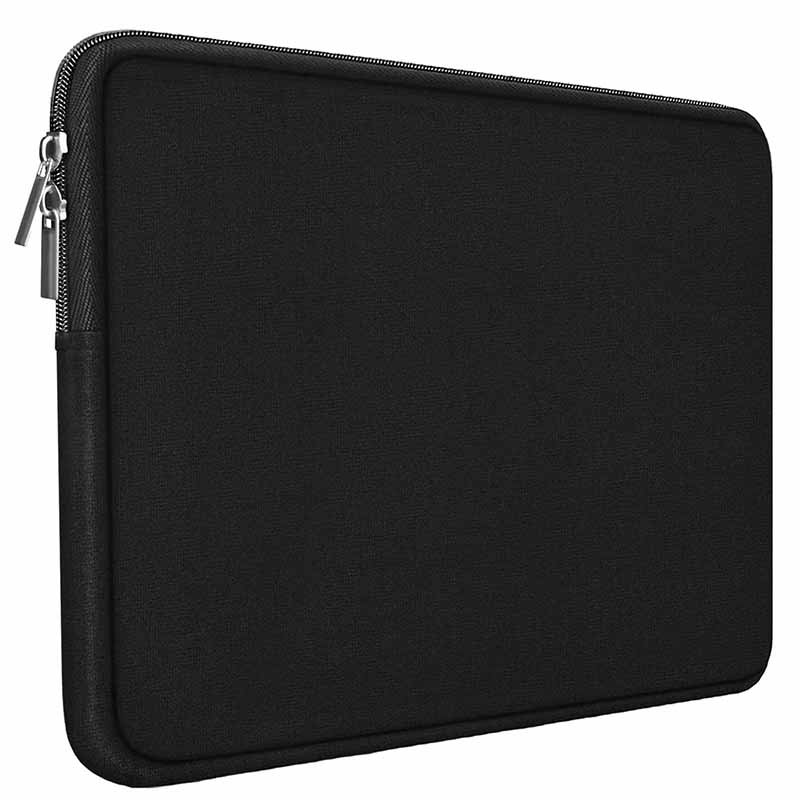
Neoprene covers are used in a much wider range of electronics products than many people expect. Most brands first think of laptop sleeves, but the actual application range is much broader. Neoprene can be made into sleeves, pouches, wraps, cases, organizer covers, lens covers, protective bands, and fitted device covers.
The most common applications include laptop sleeves, tablet covers, e-reader sleeves, camera body covers, lens pouches, gaming console sleeves, controller pouches, power bank covers, hard drive sleeves, headphone cases, charging accessory pouches, drone accessory bags, portable monitor sleeves, and medical electronics covers. Some brands also use neoprene covers as part of bundled accessory kits, especially when selling higher-value electronics or limited edition devices.
Each product type has different design priorities. Laptop sleeves usually focus on slim structure, zipper smoothness, internal scratch protection, and corner cushioning. Camera covers focus more on thicker padding, shape accuracy, anti-slip performance, and faster opening and closing. Gaming accessory covers often require brighter colors, more expressive printing, and more attention to brand aesthetics because the end customer is more style-conscious.
Below is a practical overview of how neoprene is commonly used in electronics-related products.
| Product Category | Main Protection Need | Common Thickness | Common Closure |
|---|---|---|---|
| Laptop sleeve | Scratch and light impact | 3–5 mm | Zipper |
| Tablet sleeve | Scratch and portability | 2–4 mm | Zipper or flap |
| Camera cover | Shock buffering | 4–6 mm | Zipper or hook-and-loop |
| Hard drive pouch | Surface protection | 2–3 mm | Zipper |
| Gaming console sleeve | Daily transport | 3–4 mm | Zipper |
| Accessory pouch | Dust and organization | 2–3 mm | Zipper |
| Portable monitor case | Panel protection | 3–5 mm | Zipper |
| Medical device cover | Clean storage and portability | 3–5 mm | Zipper |
This broad application range is valuable for electronics brands because it allows one material family to support multiple product lines. That means more consistent visual identity, more stable material sourcing, and easier product expansion.
Is neoprene suitable for electronics?
Yes, neoprene is highly suitable for many electronics products, especially portable devices that need protection during daily handling, shipping, storage, commuting, or travel. The reason is simple: most electronics damage does not come from extreme accidents. It comes from repeated small impacts, rubbing, dust, pressure inside bags, accidental spills, and friction against hard surfaces. Neoprene performs well in exactly these situations.
It cushions light impact because of its foam structure. It helps reduce surface scratches because the laminated fabric is softer than many hard plastics. It resists light moisture better than ordinary cloth because neoprene itself has a closed-cell structure. It also has enough flexibility to fit snugly around products without feeling stiff or difficult to use.
Still, suitability depends on expectations. Neoprene is excellent for daily-use protection, but it is not the same as a rigid military-grade shell. If a brand wants strong drop resistance from a height of 1.5 to 2 meters onto concrete, a hard-shell or hybrid case may be more appropriate. But if the goal is to protect devices during everyday use, reduce scratches, add soft cushioning, improve appearance, and support custom branding, neoprene is a very strong option.
A realistic comparison helps.
| Material | Flexibility | Scratch Protection | Light Impact Protection | Water Resistance | Branding Flexibility | Cost Level |
|---|---|---|---|---|---|---|
| Neoprene | High | High | High | Medium to high | High | Medium |
| EVA | Medium | Medium | Medium to high | Medium | Medium | Medium |
| PU Leather | Medium | Medium | Low to medium | Low to medium | High | Medium to high |
| Polyester Fabric | High | Medium | Low | Low | High | Low |
| Hard PC Shell | Low | Low inside without lining | High | Medium | Medium | Medium |
For electronics brands selling products in the mid-range and premium segments, neoprene is often a smart middle path. It gives a stronger feel than plain fabric while avoiding the high tooling cost and rigidity of hard molded structures.
Why Choose Neoprene Cover Manufacturing?
Electronics brands choose neoprene cover manufacturing because neoprene gives a strong balance of protection, comfort, appearance, and production flexibility. It protects daily-use devices well, works across many product categories, supports multiple logo methods, and is easier to customize than many rigid materials. It also helps brands create private label accessories without extremely high tooling cost or excessive minimum order quantities.
How does neoprene protect devices?
Neoprene protects devices mainly through compression cushioning. When a device inside a neoprene cover is pressed, bumped, or lightly dropped, the foam layer absorbs and spreads part of that external force. Instead of allowing a hard point of pressure to hit one small area directly, the material helps distribute the pressure more evenly.
This matters in real life because electronics are often damaged in ways that seem small at first. A laptop may not fall off a desk, but it may be pressed against books inside a backpack every day. A camera may not suffer a major drop, but it may repeatedly hit zippers, buckles, and table corners during transport. Over time, these repeated small impacts can create surface wear, dent corners, or weaken sensitive parts. Neoprene helps reduce that daily damage load.
It also protects corners especially well when the pattern design includes edge allowance and enough material tension. Good factories do not only think about front and back panels. They think about how the cover behaves at seams, along the zipper line, and around high-pressure points. These small details often separate a cover that feels ordinary from one that feels carefully made.
In many factory projects, protection performance improves significantly when the cover includes these elements:
| Design Element | Function |
|---|---|
| 3–5 mm neoprene body | Core cushioning |
| Soft inner lining | Reduces friction and scratches |
| Reverse zipper or covered zipper | Reduces surface contact damage |
| Rounded corners | Improves fit and disperses stress |
| Reinforced seam area | Helps maintain structure over time |
| Tighter pattern fit | Reduces internal movement |
A cover is not simply “protective” because the material is soft. It becomes protective when material, pattern, stitching, and closure work together properly.
Is neoprene water resistant?
Neoprene is naturally resistant to light moisture because of its foam structure, and that makes it a practical material for daily electronics protection. If a user is walking in light rain, places a cover on a slightly wet desk, or accidentally spills water nearby, neoprene can help reduce immediate contact between moisture and the device. This is especially useful for people who travel often, commute daily, or carry electronics in changing environments.
However, water resistance should be explained honestly. Neoprene is not the same as a sealed waterproof dry bag. Water resistance depends not only on the neoprene itself, but also on the fabric lamination, stitching method, zipper type, and whether openings are exposed. A standard sewn neoprene sleeve with a normal zipper can resist splashes and brief light exposure to moisture, but it is not designed for submersion or heavy, prolonged rain.
This distinction is important for brands because product claims must match real performance. Overpromising can lead to complaints, returns, and negative reviews. A more reliable message is that neoprene covers help protect against splashes, humidity, and daily environmental exposure, but do not replace fully waterproof protection systems.
Here is a simple way to view it:
| Condition | Standard Neoprene Cover Performance |
|---|---|
| Light rain during short walk | Good |
| Coffee spill on table | Good |
| Humid environment in bag | Good |
| Heavy rain for long exposure | Limited |
| Full submersion in water | Not suitable |
| Waterproof outdoor sports use | Needs upgraded structure |
If a brand needs stronger moisture protection, the factory can improve the design with water-resistant zippers, glued seams, folded construction, or extra flap coverage. That raises cost, but it can create a stronger product for outdoor or active-use electronics.
Does neoprene prevent scratches?
Yes, one of neoprene’s strongest advantages is scratch prevention. In fact, for many electronics products, scratch protection is the most visible reason customers appreciate the cover. A device can survive years mechanically, but if it looks worn after just a few months, the user experience drops sharply. Surface marks on screens, polished plastic, painted metal, and anodized aluminum are all common sources of dissatisfaction.
Neoprene helps because it is softer than the device surface and usually includes a laminated textile layer that reduces friction. When the inside of the cover is made with a smooth or brushed lining, the device can slide in and out more gently. This reduces the chance of fine abrasion marks that often happen with rough woven fabric or poorly finished seams.
The actual scratch-prevention result depends heavily on factory execution. If the cover has exposed seam allowance inside, rough zipper edges, or excess glue residue, even good material can lead to poor product performance. That is why serious electronics brands usually ask suppliers to check the inside finish as carefully as the outside look.
Several details strongly improve scratch protection:
| Internal Feature | Effect on Device Surface |
|---|---|
| Smooth inner lamination | Less rubbing |
| Covered zipper edge | Prevents zipper scratching |
| Clean seam finishing | Reduces friction points |
| Brushed or soft-touch lining | Better surface care |
| Close-fitting pattern | Reduces internal movement |
This is also where premium positioning becomes easier. When customers open a cover and feel a smooth inner lining with no hard seam contact, the product feels noticeably better. That feeling supports higher retail pricing much more than many brands realize.
Why do electronics brands prefer neoprene over some other materials?
Electronics brands often prefer neoprene because it solves several business and product problems at the same time. It is protective enough for daily use, visually adaptable, comfortable in hand, easy to customize, and generally more affordable to develop than hard-shell molded alternatives. It also works well for both mass-market and mid-premium positioning, depending on how the product is finished.
Compared with rigid cases, neoprene usually needs less tooling investment. Compared with plain polyester sleeves, it feels more padded and more valuable. Compared with leather-style covers, it is often lighter, more sporty, and more practical for portable electronics. That gives brands a lot of flexibility in product planning.
For factory-side development, neoprene is also efficient because it can be cut, stitched, printed, and assembled with proven processes. This makes sample development faster, which matters when brands are trying to test new accessory lines or launch quickly with a new device release.
A practical business comparison looks like this:
| Factor | Neoprene | Hard Molded Case | Plain Fabric Sleeve |
|---|---|---|---|
| Development speed | Fast | Slower | Fast |
| Tooling cost | Low | High | Low |
| Comfort in hand | High | Medium | Medium |
| Daily scratch protection | High | Medium | Medium |
| Light impact buffering | High | High | Low |
| Design flexibility | High | Medium | High |
| MOQ accessibility | Better | Often higher | Better |
For brands that want to launch accessories with moderate investment, strong customization, and clear daily-use value, neoprene is often one of the most commercially practical choices.
A Closer Look at Why Neoprene Covers Matter in Real Projects
Neoprene covers matter because they sit at the intersection of product protection, user experience, and brand presentation. In real projects, they are not judged only by material specs. They are judged by how they fit, how they feel, how they print, how they age, and whether they arrive consistently from batch to batch. That is why serious brands look beyond the word “neoprene” and focus on how the whole product is built.
Material performance in daily use
A lot of covers look fine in a catalog photo. The real test starts after customers use them for three to six months. Daily commuting, repeated zipping, pressure inside backpacks, desk friction, and climate changes all begin to reveal whether the product was built well. Neoprene performs strongly in these everyday conditions because it keeps a soft structure while still giving meaningful cushioning.
For example, a laptop sleeve used five days a week may be opened and closed more than 250 times in a year. A gaming console pouch may be carried in a backpack, car, office, and home environment repeatedly. A camera cover may be exposed to dust, heat, and frequent handling during travel. In each case, material stability matters more than marketing words.
What brands usually care about most in daily use is not extreme lab performance. They care about these questions. Will the material deform badly after months of use? Will the seams pull open? Will the zipper fail? Will the inside rub against the product? Will the printed logo crack or fade? Neoprene can answer these concerns well, but only when the factory controls lamination quality, cutting precision, and assembly consistency.
Cost and product value
From a business point of view, neoprene is attractive because it delivers a strong perceived value without forcing the brand into very high production cost. Customers often interpret softness, thickness, smooth zipper action, and clean printing as quality. Neoprene can deliver all of these if the product is built correctly.
This matters because many electronics accessories operate in a highly competitive pricing environment. A brand may want to add a protective sleeve to increase average order value, bundle it with a device, or sell it separately as a branded accessory. In all of these situations, the margin depends on managing material cost, labor cost, packaging cost, and freight cost while still making the product feel good enough to justify the retail price.
A simplified cost-performance view is below.
| Material Option | Relative Unit Cost | Perceived Value | Customization Ease | Common Use Position |
|---|---|---|---|---|
| Neoprene | Medium | High | High | Mainstream to premium |
| Polyester sleeve | Low | Medium | High | Budget |
| EVA molded case | Medium to high | Medium to high | Medium | Protective structured case |
| PU leather cover | Medium to high | High | Medium | Premium appearance |
For many electronics brands, neoprene becomes a very workable middle option. It does not look cheap, but it also does not push the project into heavy tooling or complex molding investment.
Brand image and customization potential
A cover is a branding surface. That is one reason neoprene performs so well in electronics accessories. The material can support screen printing, heat transfer, embroidery, debossed patches, woven labels, rubber logos, sublimation in some structures, and custom zipper pullers. That gives brands room to create accessories that fit different product personalities.
A minimalist tech brand may choose black neoprene with a matte zipper and a small tonal logo. A gaming brand may choose bold contrast stitching, bright zipper tape, and full-color graphics. A camera accessory brand may prefer thicker black neoprene with woven labels and rugged reinforced edge construction. The same material family can support very different visual strategies.
For private label and OEM projects, this flexibility is valuable because it allows the brand to grow from a simple first product into a more complete accessory line without changing the core material direction.
What customers notice first
Customers may not know material terminology, but they notice product quality immediately. They notice whether the sleeve smells strong when opened. They notice whether the zipper catches. They notice whether the fit is too loose or too tight. They notice whether the stitching is straight. They notice whether the cover feels soft and secure or thin and generic.
These first impressions shape product reviews, repeat purchases, and brand trust. In other words, the cover is not a small accessory detail. It is part of the customer’s direct experience with the brand.
That is why brands that care about long-term reputation usually ask more from their supplier than just a low price. They want stable lamination, accurate dimensions, smoother edge finishing, durable print quality, and packaging consistency. Those details are exactly where an experienced manufacturer like Oneier can add real value for electronics brands that want custom neoprene covers with dependable quality.
How Does Neoprene Cover Manufacturing Work?
Neoprene cover manufacturing is a step-by-step production process that starts from raw material selection and ends with finished, packed products ready for shipment. For electronics brands, understanding this process helps reduce risk, control quality, and avoid costly mistakes during mass production.
What is the neoprene cover production process?
The production process for neoprene covers typically includes material preparation, lamination, pattern development, cutting, printing, sewing, inspection, and packaging. Each step directly affects product consistency, appearance, and durability.
In a well-managed factory like Oneier, the process is structured and repeatable, not improvised. Below is a simplified but realistic workflow:
| Step | Process | Key Control Point |
|---|---|---|
| 1 | Raw neoprene sourcing | Density, elasticity, smell control |
| 2 | Fabric lamination | Bond strength, surface smoothness |
| 3 | Pattern development | Fit accuracy (±1–2 mm tolerance) |
| 4 | Material cutting | Edge cleanliness, shape consistency |
| 5 | Logo printing | Color accuracy, adhesion |
| 6 | Sewing & assembly | Stitch strength, alignment |
| 7 | Trimming & finishing | Clean edges, no glue marks |
| 8 | Quality inspection | Function, appearance, durability |
| 9 | Packaging | Protection, branding consistency |
From a buyer’s perspective, the most critical stages are lamination, cutting, and sewing, because these define how the product looks and performs in real use.
Factories with weak lamination often produce covers that delaminate (layers separate) after several months. Poor cutting leads to inconsistent sizing. Weak sewing causes seam breakage, especially around zipper areas.
How is thickness customized?
Thickness customization is one of the most important decisions in neoprene cover manufacturing. It directly affects protection level, product weight, shipping cost, and retail positioning.
Most factories offer standard thickness options such as 2 mm, 3 mm, 4 mm, and 5 mm. However, experienced manufacturers can also adjust density and layering combinations to fine-tune performance.
When choosing thickness, brands usually consider:
- Device weight
- Risk of impact during use
- Target retail price
- Desired product feel (slim vs padded)
- Packaging and shipping volume
A practical selection guide:
| Device Type | Recommended Thickness | Reason |
|---|---|---|
| Ultrabook laptop | 3 mm | Slim profile + daily protection |
| Gaming laptop | 4–5 mm | Heavier device needs more cushioning |
| Tablet / iPad | 2–3 mm | Lightweight, portability focused |
| Camera body | 4–6 mm | Fragile components need extra padding |
| Accessories (charger, HDD) | 2–3 mm | Basic scratch protection |
Thickness also impacts shipping cost. Increasing thickness from 3 mm to 5 mm can increase volume by 30–50%, which directly affects freight cost, especially for air shipments.
How are logos applied?
Logo application is a key part of turning a basic neoprene cover into a branded product. Different logo methods create very different visual results, durability levels, and cost structures.
Common logo methods used in neoprene cover manufacturing include:
| Logo Method | Appearance | Durability | Cost Level | Best Use |
|---|---|---|---|---|
| Screen printing | Flat color | Medium | Low | Simple logos |
| Heat transfer | Detailed graphics | High | Medium | Multi-color designs |
| Embroidery | Textured, premium | High | Medium–High | Brand upgrade |
| Sublimation (if applicable) | Full coverage print | High | Medium | Fashion / gaming |
| Rubber patch | 3D effect | High | Medium | Outdoor / tech brands |
Each method has trade-offs. For example:
- Screen printing is cost-effective but may fade faster over time
- Embroidery looks premium but increases production time and cost
- Heat transfer offers strong color accuracy but requires proper temperature control
Experienced factories help brands choose based on target market and price positioning, rather than just visual preference.
What quality standards are required?
Quality standards in neoprene cover manufacturing are not only about appearance. They must cover structure, durability, safety, and consistency across batches.
A reliable factory will implement checks such as:
- Dimensional tolerance control (usually within ±2 mm)
- Zipper durability test (3,000–5,000 cycles)
- Seam strength test (pull resistance)
- Color consistency check (Pantone matching within tolerance)
- Odor control (especially for enclosed packaging)
- Material safety compliance (REACH, RoHS if required)
Below is a typical quality checklist used in production:
| Category | Inspection Item |
|---|---|
| Appearance | No stains, no scratches, clean stitching |
| Structure | Correct size, symmetrical shape |
| Function | Smooth zipper operation |
| Material | No strong odor, consistent thickness |
| Printing | No fading, no peeling |
| Packaging | Correct labeling, no damage |
For electronics brands, consistent quality is more important than perfect samples. Many problems happen not in the first sample, but in bulk production if the factory lacks process control.
Which Options in Neoprene Cover Manufacturing Matter?
In neoprene cover manufacturing, customization is where brands create differentiation. The material itself is only the starting point. What really matters is how size, structure, branding, color, and functional details are combined to match the target market.
Which sizes can be customized?
Size customization is one of the most basic but most critical factors. A poorly fitted cover immediately reduces user satisfaction, even if the material quality is good.
Factories typically develop sizes based on:
- Exact device dimensions
- Tolerance for easy insertion (usually +5–10 mm)
- Stretch behavior of neoprene
- Closure type (zipper vs sleeve vs flap)
There are two common approaches:
| Approach | Description |
|---|---|
| Standard size | Fits multiple similar devices |
| Custom-fit size | Designed for specific model |
Custom-fit covers usually provide a better user experience but require more development time and precise pattern control.
For brands selling accessories together with devices, custom-fit is strongly preferred because it improves perceived quality and reduces return rates.
What branding methods are used?
Branding is not only about adding a logo. It is about creating a consistent visual identity across all accessories.
Besides logo printing, branding elements include:
- Zipper pull design (metal, rubber, custom shape)
- Label type (woven label, heat transfer label)
- Color blocking design
- Stitching color contrast
- Edge finishing style
For example:
- A minimalist brand may use matte black neoprene, hidden zipper, and tonal logo
- A sports brand may use bright color contrast, large logo print, and visible stitching
- A premium brand may use embroidery, metal zipper pull, and clean internal finishing
These decisions directly influence how customers perceive the product.
How do colors and Pantone matching work?
Color consistency is often underestimated, but it is one of the most common sources of complaints in custom production.
Neoprene covers involve multiple materials (fabric layer, zipper, thread, logo ink), and each component must match the target color.
Factories typically follow this process:
- Confirm Pantone color reference
- Develop lab dip for fabric
- Adjust printing color
- Match zipper and thread color
- Approve sample before bulk production
Even with this process, slight variation can occur between batches. Professional factories control this within acceptable tolerance.
A practical guideline:
| Element | Matching Difficulty |
|---|---|
| Fabric color | Medium |
| Printed logo color | Medium–High |
| Zipper color | Medium |
| Thread color | Low |
Brands targeting high-end markets usually require stricter color control.
What extra features can be added?
Additional features can significantly increase product value and usability. These features often make the difference between a basic product and a premium one.
Common add-ons include:
| Feature | Benefit |
|---|---|
| Extra front pocket | Storage for accessories |
| Carry handle | Easier transport |
| Shoulder strap | Travel convenience |
| Reinforced corners | Better durability |
| Waterproof zipper | Improved moisture protection |
| Internal divider | Better organization |
| Anti-slip texture | Better grip |
| Custom packaging | Stronger brand presentation |
Each feature adds cost, so brands must balance between functionality and price target.
A Closer Look at Manufacturing Decisions That Affect Product Success
The success of a neoprene cover project is rarely decided by one big factor. It is usually the result of many small decisions made correctly during development and production.
Why sampling stage is critical
Many problems can be avoided if the sampling stage is taken seriously. A good sample should not only look correct but also simulate real use conditions.
Brands should test:
- Fit accuracy with actual device
- Zipper smoothness after repeated use
- Internal surface contact
- Smell after packaging
- Print durability (scratch test)
Skipping these checks often leads to bulk production issues.
How MOQ affects decision making
Minimum order quantity (MOQ) influences material sourcing, production efficiency, and pricing.
Typical MOQ structure:
| Product Type | MOQ Range |
|---|---|
| Simple sleeve | 100–300 pcs |
| Printed custom design | 300–500 pcs |
| Complex structure | 500–1000 pcs |
Lower MOQ allows flexibility but increases unit cost. Higher MOQ reduces cost but increases risk.
Factories like Oneier support low MOQ with stable quality, which is important for small and mid-sized brands testing new products.
How lead time impacts product launch
Lead time is critical for electronics brands, especially when launching alongside new devices.
Typical timeline:
| Stage | Time |
|---|---|
| Sampling | 5–7 days |
| Sample revision | 3–5 days |
| Production | 20–30 days |
| Shipping | 7–35 days |
Delays often come from unclear specifications, late approvals, or material changes.
Why factory experience matters
Not all factories understand electronics accessories. Experience matters in:
- Pattern accuracy
- Material selection
- Zipper quality
- Internal finishing
- Packaging standards
Factories with more than 10–15 years of experience usually have more stable processes and fewer production errors.
How to Choose Neoprene Cover Manufacturing Supplier?
Choosing the right neoprene cover manufacturer is not just about price. It is about finding a supplier that can deliver consistent quality, accurate customization, stable lead times, and long-term cooperation. For electronics brands, the wrong supplier often leads to delayed launches, inconsistent product quality, and increased after-sales issues.
What certifications are required?
Certifications are often used as a basic filter when selecting a supplier, especially for brands selling in the US, EU, or other regulated markets. While neoprene covers themselves are not highly regulated products, the materials and production processes still need to meet certain compliance requirements.
Common certifications and standards include:
| Certification | Purpose |
|---|---|
| REACH | Controls harmful chemical substances (EU market) |
| RoHS | Restricts hazardous materials |
| ISO 9001 | Quality management system |
| BSCI / Sedex | Social compliance and factory audit |
| CPSIA (for US) | Safety compliance for consumer products |
For electronics accessories, REACH and RoHS are often the most relevant because they relate to material safety.
However, certification alone does not guarantee quality. Some factories hold certificates but still lack strong production control. Certifications should be combined with actual sample evaluation and production capability checks.
How do MOQ and lead time work?
MOQ (Minimum Order Quantity) and lead time directly affect your business flexibility and cash flow.
A typical structure in neoprene cover manufacturing looks like this:
| Stage | Standard Range |
|---|---|
| MOQ (simple design) | 100–300 pcs |
| MOQ (custom print) | 300–500 pcs |
| Sampling time | 5–7 days |
| Production time | 20–30 days |
For small and medium-sized brands, lower MOQ is important for testing new products without large upfront investment.
Factories like Oneier support low MOQ customization, which allows brands to:
- Test new designs quickly
- Reduce inventory risk
- Adjust products based on market feedback
Lead time is equally important. A delay of even one week can affect product launches, especially if tied to seasonal sales or device releases.
Reliable factories provide clear timelines and update progress regularly during production.
What quality control is needed?
Quality control should be built into the production process, not only checked at the end. A good supplier uses multiple checkpoints to ensure consistency.
A standard quality control system includes:
| Stage | Control Method |
|---|---|
| Incoming material | Thickness, smell, color check |
| Cutting stage | Size accuracy inspection |
| Printing stage | Color and adhesion test |
| Sewing stage | Stitch strength check |
| Final inspection | Function + appearance check |
| Packaging | Quantity and labeling check |
For neoprene covers, the most common quality issues include:
- Size inconsistency
- Weak stitching near zipper
- Logo fading or misalignment
- Strong material odor
- Poor zipper performance
A professional factory reduces these risks by maintaining stable processes and trained workers.
How to evaluate OEM vs ODM capability?
Understanding whether a factory offers OEM or ODM services is important for product development.
| Type | Meaning | Best For |
|---|---|---|
| OEM | Manufacture based on your design | Brands with clear product specs |
| ODM | Factory provides design solutions | Brands needing development support |
Most electronics brands prefer OEM because they want full control over product design and branding. However, ODM can be useful for faster product launches or when internal design resources are limited.
A strong manufacturer like Oneier can support both:
- OEM: exact customization based on your drawings or samples
- ODM: assistance with structure, material, and feature design
A Practical Framework for Selecting the Right Manufacturer
Choosing a supplier becomes much easier when you evaluate them based on practical criteria instead of only price.
Step 1: Evaluate sample quality, not just photos
Product photos can be misleading. Always request samples and check:
- Fit accuracy
- Material feel
- Internal finishing
- Zipper smoothness
- Logo clarity
A good sample usually reflects a factory’s real capability.
Step 2: Check communication efficiency
Clear communication reduces errors. A reliable supplier should:
- Respond quickly
- Understand technical requirements
- Provide clear answers
- Offer suggestions based on experience
Poor communication often leads to production mistakes.
Step 3: Compare pricing structure, not just unit price
The lowest unit price does not always mean the lowest total cost.
Consider:
| Cost Factor | Impact |
|---|---|
| Unit price | Direct cost |
| Packaging cost | Branding value |
| Shipping cost | Depends on volume |
| Defect rate | Hidden cost |
| Lead time delay | Opportunity cost |
A slightly higher price with better quality and reliability often results in lower total cost.
Step 4: Review production capacity
Production capacity affects whether the factory can handle your growth.
Ask about:
- Monthly output
- Number of production lines
- Worker experience
- Peak season capacity
Factories with stable capacity can support long-term scaling.
Step 5: Test long-term cooperation potential
A good supplier is not just for one order. It should support:
- New product development
- Design improvement
- Cost optimization
- Consistent quality across orders
Long-term cooperation reduces risk and improves efficiency.
Why Work With Oneier for Neoprene Cover Manufacturing?
For electronics brands looking for a reliable manufacturing partner, experience and flexibility matter. Oneier brings over 18 years of experience in neoprene material development and product manufacturing, supporting brands from concept to mass production.
Strong customization capability
Oneier supports a wide range of neoprene products, including:
- Laptop sleeves
- Camera covers
- Electronic accessory pouches
- Medical and sports-related neoprene products
Customization includes size, thickness, structure, logo, and packaging.
Low MOQ with stable quality
Many brands struggle with high MOQ requirements. Oneier offers:
- Low MOQ starting from 100 pcs
- Flexible production planning
- Consistent quality control across small and large orders
This is especially useful for startups and growing brands.
Fast sampling and short lead time
Speed matters in product development.
| Process | Time |
|---|---|
| Sampling | 5–7 days |
| Production | 20–30 days |
Fast turnaround helps brands respond quickly to market demand.
Full-service OEM and private label support
Oneier supports:
- Logo customization
- Packaging design
- Material selection
- Product structure optimization
This allows brands to build complete product lines with consistent quality.
Reliable quality control system
With 100% inspection before shipment, Oneier ensures:
- Consistent product quality
- Reduced defect rate
- Better customer satisfaction
Final Thoughts: Turn Your Ideas Into Market-Ready Products
Neoprene cover manufacturing is not just about making a protective product. It is about creating an accessory that customers use every day, that represents your brand, and that adds value to your core electronics products.
If you are planning to develop custom neoprene covers, the key is to work with a manufacturer that understands both product performance and market expectations.
Oneier can help you:
- Turn your concept into a finished product
- Optimize material and structure for your target market
- Reduce cost while maintaining quality
- Deliver on time with stable production
Start Your Custom Project Today
If you are looking for a reliable neoprene cover manufacturer for your electronics brand, now is the right time to start.
Send your product requirements, drawings, or ideas to Oneier.
Contact Oneier today and turn your custom neoprene cover idea into a real product that your customers will use and trust.