
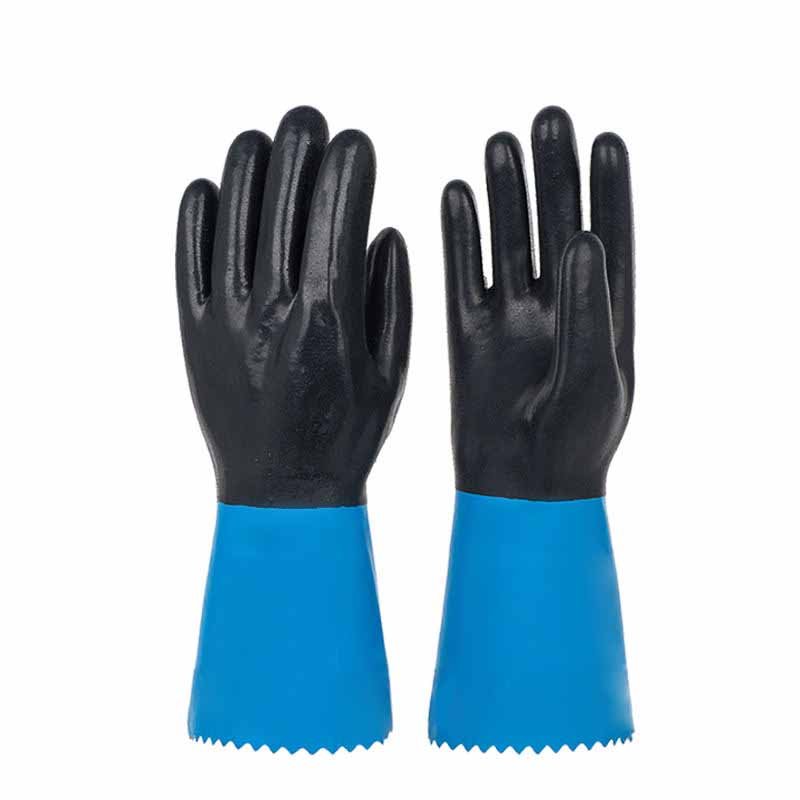
A lot of customers assume neoprene gloves are naturally waterproof just because they are made from neoprene. That is only partly true. Neoprene itself has a closed-cell structure, so it performs much better around water than many standard fabrics. But once neoprene is cut, stitched, glued, laminated, printed, and shaped into gloves, the real question changes. The issue is no longer whether neoprene resists water in theory. The issue becomes whether the finished glove can still block water at the seams, finger joints, palm curves, and stress points during actual use. That is where waterproof testing becomes critical.
Neoprene gloves waterproof testing usually includes submersion checks, bubble leak inspection, water absorption measurement, and pressure-based testing. These methods are used to evaluate whether water enters through the material, seam line, glue area, or structural weak points. In most cases, the neoprene sheet itself is not the main problem. The bigger risk comes from how the glove is made, how the seams are sealed, how evenly the material is processed, and whether production quality stays consistent from sample stage to bulk order.
This is why two gloves made from similar neoprene can still perform very differently in the field. One may stay dry during fishing, diving, or cold-water handling, while another may begin leaking at the fingertips or seam curves after a short period of use. In many product complaints, the problem is not the material name printed on the spec sheet. It is the gap between material promise and finished-glove performance. And that gap is exactly what proper waterproof testing is supposed to catch before the product reaches the customer.
What Is Neoprene Gloves Waterproof Testing?
Neoprene gloves waterproof testing is the process of checking whether finished neoprene gloves can keep water out during actual use conditions. It focuses on more than the neoprene sheet itself. It checks the full glove structure, especially seams, glued areas, finger joints, palm curves, and other high-risk points where leakage is more likely to happen under movement, pressure, and long contact with water.
What Makes Neoprene Gloves Waterproof Testing Reliable?
A reliable waterproof test does not stop at checking whether the neoprene material repels water. That is only the starting point. For customers developing custom neoprene gloves, the real concern is whether the finished glove can still perform after it has gone through cutting, sewing, gluing, shaping, and repeated handling.
In practical production, good waterproof testing needs to answer several direct questions:
- does water pass through the neoprene body
- do the seams leak under use
- do the finger curves stay sealed after stretching
- does the glue hold after exposure to water
- will performance stay consistent from sample to bulk production
These questions matter because glove leakage often begins in the construction details, not in the raw material itself.
A reliable testing system usually checks four major areas:
| Test Area | What It Examines | Why Customers Should Care |
|---|---|---|
| Material body | Whether the neoprene sheet resists water entry | Confirms basic material quality |
| Seam line | Whether stitched or glued seams allow leakage | Most common leakage zone |
| Pressure behavior | Whether the glove leaks when squeezed or stressed | Closer to real use conditions |
| Repeated flexing | Whether movement weakens waterproof areas | Important for sports and work gloves |
Customers often see a sample glove that looks clean and well finished, but appearance alone does not prove waterproof performance. A glove can look smooth, thick, and premium, yet still fail around:
- thumb joints
- finger root curves
- palm seam turns
- wrist binding points
This is especially true when gloves are made fast, with weak adhesive control or unstable seam handling.
From a commercial perspective, reliable testing protects more than product quality. It protects:
- end-user trust
- product reviews
- reorder rates
- return rates
- private label reputation
For example, if a fishing glove starts leaking after 10 to 15 minutes of wet handling, customers usually do not blame the seam construction. They blame the brand. That is why serious waterproof testing should be treated as part of product development, not as a last-minute factory formality.
For OEM and private label projects, reliable testing should also be repeatable. A factory should be able to test the first sample, the pre-production version, and the bulk product using the same logic. If the test method changes from batch to batch, the result becomes much less useful. Consistency in testing is just as important as consistency in manufacturing.
Are Neoprene Gloves Fully Waterproof in Testing?
Not always. This is one of the most important points customers need to understand before choosing a product direction.
Neoprene itself is highly water-resistant because of its closed-cell foam structure. But a finished glove is not just a sheet of neoprene. It has:
- cut panels
- seam connections
- glued layers
- wrist openings
- stress points where the hand bends and stretches
As a result, not every neoprene glove can be called fully waterproof. In actual production, gloves usually fall into three performance levels:
| Performance Level | What It Means | Common Product Type |
|---|---|---|
| Splash resistant | Handles brief water contact | casual sports and light outdoor gloves |
| Water resistant | Resists moisture for a period of time | fishing, paddling, cycling, light cold-weather use |
| Near waterproof or fully sealed | Built to block water more effectively under longer exposure | diving gloves, professional marine gloves, special industrial gloves |
The performance difference usually comes from seam construction more than from neoprene thickness alone.
For example:
- stitched-only seams often allow water to enter more easily
- glued seams improve resistance
- glued and blind-stitched seams perform better
- sealed seams with liquid tape or outer seam treatment offer stronger protection
A simple comparison helps explain this:
| Seam Type | Waterproof Performance | Common Use |
|---|---|---|
| Flat stitching only | Lower | light-use gloves |
| Glued seam | Medium | standard water-related gloves |
| Glued + blind stitched | High | diving and higher-performance gloves |
| Glued + sealed seam | Very high | premium waterproof products |
Customers should also avoid one common misunderstanding: a glove does not need to be fully waterproof to be a good product. The real question is whether the waterproof level matches the intended use.
For example:
- a cycling glove used in rain may not need diving-level sealing
- a kayak glove may need stronger seam protection
- a wetsuit glove or cold-water glove needs much more serious leak control
This is why testing should always be matched to the product’s end use. Overpromising “100% waterproof” on a glove that is only suitable for splash resistance can create immediate market problems. On the other hand, clearly defining the right protection level helps customers choose the right construction and avoid unnecessary cost.
Do Neoprene Gloves Waterproof Testing Results Vary?
Yes, sometimes a lot. Two gloves that look almost identical can still produce very different waterproof results. This is one of the biggest reasons customers face unexpected quality problems after mass production.
The most common causes of result variation include:
- different neoprene density
- different thickness tolerance
- unstable adhesive quality
- uneven glue application
- poor seam finishing
- inconsistent curing time
- operator skill variation during glove assembly
A table makes this easier to understand:
| Production Factor | How It Affects Waterproof Results |
|---|---|
| Neoprene thickness variation | Changes water resistance and seam behavior |
| Weak glue bonding | Leads to early seam leakage |
| Uneven stitching tension | Creates inconsistent seam gaps |
| Poor edge trimming | Increases risk at seam corners |
| Incomplete curing | Reduces bond stability after water exposure |
| Batch inconsistency | Makes bulk performance less predictable |
In real production, one glove may pass a short test because the seam happens to be cleaner, while another glove from the same order may fail because the glue line was slightly off or the seam corner was overstretched during sewing.
This is why customers should not rely only on a single “passed test” statement. What matters more is whether the factory has a stable process behind that result.
A strong manufacturing system usually includes:
- raw material inspection before cutting
- in-line seam checking during sewing or gluing
- random leak inspection during production
- final batch waterproof checks before packing
For private label and OEM customers, result variation is especially risky because the first approved sample may not match the later production lot. That can damage product trust quickly, especially in online sales where customer reviews are immediate and public.
At Oneier, neoprene gloves are not only developed from the material side. The testing focus also includes finished-glove structure, seam quality, and consistency from sampling to production. That is important for brands and small-to-medium buyers who need custom products to perform the same way in the first order and in the repeat order.
Which Methods Are Used in Neoprene Gloves Waterproof Testing?
The main methods used in neoprene gloves waterproof testing include submersion testing, bubble leak testing, water absorption checks, and pressure-based testing. Each method checks a different part of glove performance. Some are better for finding visible leaks. Some are better for checking material behavior. Some are more useful for simulating actual stress during use. The best testing approach usually combines more than one method.
How Is Submersion Used in Neoprene Gloves Waterproof Testing?
Submersion testing is one of the most direct and widely used ways to check whether a neoprene glove leaks. The logic is simple: if the glove is meant to keep water out, it should remain sealed when placed in water for a defined period.
In factory practice, submersion testing is often done in one of these ways:
- the glove is placed on a hand mold and submerged
- the glove is filled with air and pressed below water
- the glove interior is lined with absorbent paper and exposed to water contact
- the glove is submerged for a set time, then checked for internal moisture
This method helps detect:
- obvious seam leakage
- poorly bonded panel joints
- small structural holes
- weak points around fingers and thumb curves
A simple reference table:
| Test Element | Common Range |
|---|---|
| Water depth | 10–50 cm |
| Test duration | 3–30 minutes |
| Check method | visual inspection or internal dryness check |
| Main use | basic waterproof screening |
Submersion testing is popular because it is:
- fast
- low cost
- easy to repeat
- useful during sampling
For customers, this test is valuable because it gives a very practical first answer: does the glove leak under basic water exposure or not?
Still, submersion testing has limits. It may not fully simulate:
- underwater pressure
- repeated hand movement
- strong gripping stress
- long exposure in cold conditions
That is why this method is often treated as an entry-level waterproof check rather than a complete performance judgment. It is useful, but not enough on its own for high-performance neoprene gloves.
For sample development, though, it is one of the fastest ways to compare different seam constructions before moving to more demanding tests.
Do Bubble Tests Find Leaks in Neoprene Gloves Waterproof Testing?
Yes. Bubble testing is one of the clearest ways to find small leaks, and it is especially useful for pinpointing exactly where the problem is.
The method works by introducing air into the glove, then placing the glove under water. If air escapes, it forms bubbles, and those bubbles reveal the leak point directly.
This method is useful because some leaks are too small to see through normal submersion testing. A glove may not show obvious water entry at first, but under air pressure, a weak seam or glue gap will often reveal itself quickly.
Bubble testing is particularly effective for checking:
- fingertip seams
- thumb panels
- seam turns
- wrist joint areas
- glued overlap sections
Its value becomes even clearer in custom neoprene gloves where:
- panel shapes are more complex
- logo printing may affect flexibility
- decorative seams can introduce risk
- multiple thickness zones are used
A clear comparison:
| Bubble Test Advantage | Why It Matters |
|---|---|
| Finds micro leaks | Detects problems not visible in simple soak tests |
| Shows exact leak location | Makes correction faster during development |
| Good for seam checking | Helps optimize glove construction |
| Useful before shipment | Supports final QC inspection |
For higher-value products such as:
- diving gloves
- marine gloves
- cold-water sports gloves
- industrial protective gloves
bubble testing is often one of the most meaningful QC steps because it gives direct feedback on seam integrity.
From a customer point of view, this method is important because it helps separate a glove that “looks waterproof” from a glove that has actually been checked in a more precise way. A supplier that can identify leakage points and improve construction based on them is usually much more reliable than one that only gives a general waterproof claim.
How Is Absorption Checked in Neoprene Gloves Waterproof Testing?
Absorption testing focuses on how much water the glove material or finished glove retains after exposure. This is a different question from leak detection. A glove may not leak badly, but it may still absorb and hold moisture in a way that affects warmth, comfort, drying speed, and overall product feel.
This is especially important for neoprene gloves used in:
- diving
- fishing
- surfing
- paddling
- cold-weather work
The usual process is straightforward:
- weigh the glove when dry
- expose the glove or material sample to water for a defined time
- remove surface water
- weigh it again
- compare the weight difference
This helps evaluate:
- neoprene consistency
- lamination stability
- outer fabric water pickup
- overall moisture retention tendency
A practical table:
| Check Item | What It Tells You |
|---|---|
| Dry weight vs wet weight | How much water the glove retains |
| Retention level | How heavy and wet the glove feels in use |
| Drying behavior | How quickly the glove returns to usable condition |
| Surface fabric effect | Whether outer lamination holds excess moisture |
For customers, this matters because waterproof performance is not only about keeping water out. It is also about how the glove feels after exposure.
A glove with lower moisture retention can offer:
- lighter use feel
- better comfort
- improved warmth retention
- faster drying after use
This is important in retail markets where end users judge products by comfort just as much as by technical claims. Two gloves can have similar leak resistance but very different wear experience because one holds much more water after use.
That is why absorption testing adds useful value during product development, especially for mid-to-high-end custom neoprene glove projects.
Are Pressure Tests Used in Neoprene Gloves Waterproof Testing?
Yes, and for many serious applications, pressure testing is one of the most meaningful methods available.
Pressure testing is designed to simulate what happens when gloves are exposed to stronger water force, hand squeezing, underwater use, or continuous stress at seam lines. A glove that survives a simple water soak may still fail when pressure is added.
Pressure testing may involve:
- applying internal air pressure while the glove is submerged
- applying external water pressure to the glove surface
- maintaining pressure for a fixed time and checking for leakage
- testing under bent or shaped hand conditions
This is especially relevant for gloves used in:
- diving
- water sports
- marine work
- rescue applications
- industrial wet handling
Pressure-based testing helps reveal problems such as:
- weak seam sealing
- poor adhesive stability
- bond separation under stress
- leak paths that only appear under force
A useful comparison:
| Test Type | What It Best Reveals |
|---|---|
| Simple submersion | basic leak presence |
| Bubble test | exact leak location |
| Absorption test | moisture retention behavior |
| Pressure test | real-use stress leakage |
Customers planning higher-performance gloves should pay close attention to whether pressure testing is part of the factory QC logic. Without it, a glove may pass early checks but still fail in demanding environments.
For OEM and private label programs, pressure testing is also valuable because it helps validate whether the glove design is suitable for the product claim. If a glove is positioned for cold-water fishing, diving, or heavy wet work, pressure testing gives stronger confidence that the final product can support that positioning in the market.
How Accurate Is Neoprene Gloves Waterproof Testing?
Neoprene gloves waterproof testing can give useful results, but accuracy depends on how closely the test conditions match real use. A glove may pass a controlled test but still leak during actual work or outdoor activities. The goal of accurate testing is not just to confirm performance in a lab—it is to predict how the glove behaves when worn, stretched, and exposed to water over time.
Do Neoprene Gloves Waterproof Testing Match Real Use?
In many cases, basic testing does not fully match real use conditions.
Standard tests are usually done:
- in still water
- at controlled temperature
- without continuous movement
- without repeated stress on seams
But in real use, gloves experience:
- constant hand movement
- stretching at finger joints
- gripping tools or equipment
- pressure from water or objects
- temperature changes
This difference explains why some gloves pass testing but still receive complaints in the market.
A comparison helps clarify the gap:
| Condition | Lab Testing | Real Use |
|---|---|---|
| Water movement | Static | Dynamic |
| Pressure | Low to moderate | Varies, often higher |
| Hand movement | Minimal | Continuous |
| Stress points | Limited | Frequent |
| Duration | Short | Extended |
For example:
- A glove tested for 10 minutes in still water may pass easily
- The same glove used for 30–60 minutes in fishing or diving may begin leaking at seams
This is why experienced manufacturers adjust testing methods based on product type.
For customers, the key takeaway is simple: testing results are only meaningful when they reflect how the glove will actually be used. If the product is designed for heavy or long exposure to water, testing should simulate that environment as closely as possible.
Which Factors Affect Neoprene Gloves Waterproof Testing Results?
Several production and design factors directly influence testing results. Even small variations can change performance significantly.
The most important factors include:
| Factor | Impact on Waterproof Testing |
|---|---|
| Neoprene thickness | Thicker material improves resistance |
| Foam density | Affects structure and water behavior |
| Lamination quality | Influences surface sealing |
| Glue strength | Critical for seam durability |
| Seam construction | Main leakage risk area |
| Cutting accuracy | Affects panel alignment |
| Curing process | Determines bond stability |
A few practical examples:
- A 3mm neoprene glove usually performs better than a 2mm glove in water resistance, but only if seams are well constructed
- Poor glue curing can cause seams to open slightly after water exposure
- Uneven cutting leads to tension at seams, increasing leakage risk
Another often overlooked factor is operator consistency during production:
- uneven glue application
- inconsistent seam pressure
- slight misalignment of panels
These small differences may not be visible at first but can affect waterproof performance under testing.
For customers, this means:
- testing results should represent batch consistency, not just one sample
- production quality control is as important as material choice
A factory with stable processes will produce gloves that perform consistently across different orders, not just in the initial sample stage.
How Do Seams Affect Neoprene Gloves Waterproof Testing?
Seams are the most critical factor in waterproof performance. In most cases, leakage does not come from the neoprene itself—it comes from the seams.
When neoprene is stitched, needle holes create potential paths for water entry. Even very small gaps can allow leakage under pressure or prolonged exposure.
Different seam constructions offer different levels of performance:
| Seam Type | Construction Method | Waterproof Performance |
|---|---|---|
| Flatlock stitching | Panels stitched edge to edge | Low |
| Standard stitching | Overlapping panels stitched | Medium |
| Glued seam | Panels bonded with adhesive | Medium–high |
| Glued + blind stitched | Stitching does not fully penetrate | High |
| Sealed seam (tape/liquid) | Additional sealing layer applied | Very high |
Each method has a different cost and application:
- Flatlock seams are common in low-cost gloves but not suitable for waterproof use
- Glued and blind-stitched seams are widely used in diving gloves
- Sealed seams are used in higher-end or performance-focused products
Another key point is seam location:
- finger joints and thumb areas are high-stress zones
- palm curves experience repeated bending
- wrist openings are common leakage points
If these areas are not properly reinforced, even a well-designed glove can fail in testing.
For customers, seam construction should be one of the first things to evaluate when comparing suppliers. A glove with better seam design often performs better than a thicker glove with weaker construction.
How Does Thickness Affect Neoprene Gloves Waterproof Testing?
Thickness is one of the most visible specifications in neoprene gloves, but it does not work alone. It must be considered together with seam quality and construction.
Typical thickness levels:
| Thickness | Common Use | Waterproof Effect |
|---|---|---|
| 2mm | Light sports, cycling | Basic resistance |
| 3mm | Fishing, general water use | Moderate protection |
| 5mm | Diving, cold water | Strong protection |
Thicker neoprene offers:
- better water resistance
- improved insulation
- stronger structure
However, thicker is not always better for every application.
Trade-offs include:
- reduced flexibility
- higher material cost
- heavier weight
More importantly, thickness cannot compensate for poor seams. A 5mm glove with weak seam construction may still leak faster than a 3mm glove with properly sealed seams.
For customers, the right approach is:
- match thickness to use environment
- ensure seam quality supports the material
- avoid relying on thickness alone as a performance indicator
In product development, many successful designs balance thickness with flexibility and seam strength rather than simply increasing material thickness.
How Are Standards Set for Neoprene Gloves Waterproof Testing?
Waterproof testing standards for neoprene gloves are not always defined by a single universal rule. Instead, they are based on a combination of industry practices, regional regulations, and product-specific requirements. Understanding these standards helps customers choose products that meet their market expectations.
Are There Standards for Neoprene Gloves Waterproof Testing?
There is no single global standard that applies to all neoprene gloves, but several testing frameworks are commonly used depending on the application.
These may include:
- water penetration tests
- leak detection methods
- material performance checks
- durability and flex testing
For general waterproof evaluation, factories often use:
- internal testing protocols
- customer-specific requirements
- industry reference methods
In many cases, customers define their own testing criteria based on product use.
For example:
| Application | Testing Focus |
|---|---|
| Fishing gloves | Splash resistance + short immersion |
| Diving gloves | Pressure resistance + seam sealing |
| Industrial gloves | Chemical + water resistance |
| Sports gloves | Comfort + moderate water protection |
This flexibility allows testing to be tailored to real product needs rather than forcing all products into the same standard.
How Do EN Tests Apply to Neoprene Gloves Waterproof Testing?
For gloves sold in Europe, EN standards are often relevant, especially for protective or industrial products.
Some commonly referenced areas include:
- water penetration resistance
- chemical resistance
- mechanical protection
For example:
- EN standards may require gloves to resist liquid penetration under certain conditions
- chemical resistance testing may overlap with waterproof requirements
However, not all neoprene gloves need to meet full EN certification. It depends on the product category.
For customers, EN testing becomes important when:
- selling in regulated markets
- targeting industrial or protective applications
- requiring compliance documentation
Do Chemical Tests Affect Neoprene Gloves Waterproof Testing?
Yes, especially for industrial applications.
Neoprene is often used in environments where gloves are exposed to:
- oils
- chemicals
- solvents
- contaminated water
In these cases, waterproof testing alone is not enough. The material must also resist chemical penetration and degradation.
Combined testing may include:
| Test Type | Purpose |
|---|---|
| Water resistance | Prevent liquid entry |
| Chemical resistance | Protect against harmful substances |
| Material stability | Maintain performance over time |
For customers in industrial sectors, this combination is critical. A glove that blocks water but breaks down under chemical exposure is not suitable for real use.
How to Choose Neoprene Gloves Waterproof Testing Results?
Choosing the right neoprene gloves is not about reading one test result or checking a single “waterproof” label. It is about understanding how different testing results relate to real usage, and how those results reflect material quality, seam construction, and manufacturing consistency. A glove that performs well in the right test environment will reduce complaints, improve user satisfaction, and support long-term product success.
Which Neoprene Gloves Waterproof Testing Results Matter Most?
Not all testing results carry the same value. Some tests show basic performance, while others give deeper insight into how the glove behaves under real conditions.
For most customers, the following results are the most useful:
| Test Type | What It Tells You | Why It Matters |
|---|---|---|
| Submersion test | Whether the glove leaks in water | Basic waterproof check |
| Bubble leak test | Where leakage occurs | Helps identify seam problems |
| Pressure test | How the glove performs under stress | Closer to real use conditions |
| Absorption test | How much water the glove retains | Affects comfort and weight |
A practical approach is to look at combined performance, not a single test.
For example:
- A glove that passes submersion but fails pressure testing may not be suitable for diving or heavy water use
- A glove with low absorption but weak seams may feel comfortable but still leak
- A glove with strong seam sealing but high water retention may feel heavy after use
Customers should focus on the test results that match their product application:
- fishing and outdoor use → submersion + moderate pressure testing
- diving and marine use → pressure + seam sealing performance
- sports use → balance between water resistance and comfort
The key is to connect testing data with real user experience, not just technical numbers.
How to Pick Neoprene Gloves After Waterproof Testing?
Once testing results are available, the next step is to translate them into product decisions.
A practical selection process usually includes:
- Define the use scenario clearly
- light water contact
- continuous exposure
- underwater or high-pressure use
- Match testing results to that scenario
- short submersion → light use
- extended pressure test → heavy-duty use
- Evaluate seam construction quality
- look for glued + blind-stitched seams
- check if additional sealing is applied
- Check consistency across samples
- test more than one sample
- confirm batch stability
- Balance performance with cost
A simplified decision table:
| Use Case | Recommended Testing Focus | Suggested Construction |
|---|---|---|
| Cycling / light rain | Basic submersion | Standard glued seams |
| Fishing / paddling | Submersion + moderate pressure | Glued + blind stitched |
| Diving / cold water | Pressure + seam sealing | Fully sealed seams |
| Industrial wet work | Pressure + chemical testing | Reinforced seams + durable coating |
Customers should also consider user comfort:
- flexibility
- grip
- thermal insulation
- weight after water exposure
A glove that is technically waterproof but uncomfortable to use may still fail in the market.
Are Custom Neoprene Gloves Waterproof Testing Options Available?
Yes, and customization is often where products gain a real advantage.
Standard gloves follow general testing methods, but custom projects can be designed and tested based on specific needs.
Custom testing options may include:
- longer submersion durations
- higher pressure levels
- repeated flex testing
- temperature variation testing
- combined water and chemical exposure
For example:
| Custom Requirement | Testing Adjustment |
|---|---|
| Cold-water fishing gloves | Extended submersion + flex testing |
| Diving gloves | High-pressure testing |
| Industrial gloves | Chemical + water resistance testing |
| Sports gloves | Flex + comfort-focused testing |
Customization also applies to construction:
- seam type selection
- thickness variation
- palm reinforcement
- surface coating
At Oneier, custom neoprene glove projects are developed based on:
- product application
- target market
- price positioning
- performance expectations
Because Oneier focuses on neoprene material R&D and manufacturing, it can adjust both material and construction together, rather than treating them as separate processes. This helps achieve better alignment between testing results and actual product performance.
How Do Factories Improve Neoprene Gloves Waterproof Testing?
Testing alone does not improve a product. What matters is how the factory uses testing results to refine production.
A strong factory process usually includes:
1. Material control
- stable neoprene sourcing
- consistent thickness and density
- controlled lamination quality
2. Seam process optimization
- precise glue application
- controlled stitching tension
- proper curing time
3. In-line inspection
- checking seams during production
- identifying defects early
- reducing batch variation
4. Final quality control
- random sampling
- leak testing before shipment
- verifying consistency
A simplified workflow:
| Stage | Key Control Point |
|---|---|
| Material incoming | Thickness and density check |
| Cutting stage | Panel accuracy |
| Sewing / gluing | Seam quality |
| Assembly | Structural integrity |
| Final QC | Waterproof testing |
Factories that follow this type of system are more likely to produce gloves that perform consistently across large orders.
For customers, this means:
- fewer surprises after bulk production
- more stable product quality
- easier scaling from small orders to larger volumes
Final Section: Start Your Custom Neoprene Gloves Project with Oneier
Neoprene gloves waterproof testing is not just a technical process—it is the bridge between product design and real-world performance. A glove that passes the right tests will perform better in the market, build stronger customer trust, and support long-term business growth.
For brands, distributors, and small-to-medium buyers, the key challenges are:
- choosing the right material and thickness
- selecting the correct seam construction
- matching testing methods to real use
- ensuring consistency from sample to bulk production
This is where working with an experienced manufacturer makes a clear difference.
Oneier brings over 18 years of experience in neoprene material development and product manufacturing, offering a complete solution from raw material to finished product.
More importantly, Oneier understands that every product is different. Instead of applying one standard solution, the team works with you to:
- define your product use scenario
- recommend the right testing methods
- optimize material and construction
- ensure your gloves perform as expected in real use
Whether you are:
- launching a new glove line
- improving an existing product
- building a private label brand
- or looking for a reliable OEM partner
Oneier can help you turn your idea into a product that performs consistently and meets market expectations.
Send your inquiry today and get a customized neoprene gloves solution with reliable waterproof testing support.