

A neoprene koozie looks like one of the simplest products you can sell. It is small, lightweight, and easy to ship. But once you start sourcing, you quickly realize the price gap between suppliers can be huge—even for what seems like the same product. One factory quotes $0.25, another quotes $0.80. The difference is not random. It comes from how the cost is built.
Neoprene koozie manufacturing cost is the total cost to produce one unit, including neoprene material, fabric lamination, printing, cutting, stitching, labor, packaging, and factory overhead. In bulk production, most projects fall between $0.20 and $1.20 per unit depending on quantity, thickness, printing method, and customization level.
For anyone selling promotional products, running an Amazon store, or building a private label brand, this cost directly controls profit. A $0.10 difference on a 10,000-piece order means $1,000 gained or lost. That is why experienced clients do not just ask for the lowest price—they ask how the price is built.
A common situation we see: a client chooses full-color printing, thicker neoprene, and custom packaging without realizing these three choices can double the cost. After adjusting just one or two elements, the same product becomes much more competitive. That is where understanding cost structure makes a real difference.
What Is Neoprene Koozie Manufacturing Cost?
Neoprene koozie manufacturing cost is the real cost to produce one finished koozie, not just the factory quote you receive. It includes raw neoprene material, fabric lamination, printing, cutting, stitching, labor, packaging, and factory overhead. For most bulk orders, the cost typically falls between $0.20 and $1.20 per unit, depending on quantity, thickness, printing method, and customization level.
For anyone selling promotional products, running an Amazon store, or building a private label brand, this number directly controls your margin. A difference of $0.10 per piece on a 10,000-unit order equals $1,000 in cost difference, which is why understanding how this cost is built is more important than simply asking for a lower quote.
What Does Neoprene Koozie Manufacturing Cost Mean?
Neoprene koozie manufacturing cost is made up of several layers working together. It is not just “material + labor.” Each layer contributes differently depending on your design.
A clear structure looks like this:
| Cost Component | What It Covers | Typical Share |
|---|---|---|
| Material | neoprene foam + outer fabric | 30–50% |
| Printing | logo or full design | 20–40% |
| Labor | cutting, stitching, finishing | 15–25% |
| Packaging | polybag, card, retail box | 5–20% |
In real projects:
- material + printing = 60–80% of total cost
- labor is relatively stable
- packaging varies based on your sales channel
This means most cost decisions are made at the material and printing stage, not during final negotiation.
How Much Is Neoprene Koozie Manufacturing Cost?
The most realistic way to look at cost is by quantity and configuration.
| Quantity | Basic Koozie (1 color) | Full Color Koozie | Premium (thick + packaging) |
|---|---|---|---|
| 100 pcs | $0.80 – $1.20 | $1.00 – $1.50 | $1.20 – $1.80 |
| 300 pcs | $0.60 – $0.90 | $0.80 – $1.20 | $1.00 – $1.50 |
| 500 pcs | $0.50 – $0.80 | $0.70 – $1.00 | $0.90 – $1.30 |
| 1000 pcs | $0.30 – $0.60 | $0.50 – $0.80 | $0.70 – $1.10 |
| 5000+ pcs | $0.20 – $0.45 | $0.40 – $0.70 | $0.60 – $0.90 |
What this shows clearly:
- quantity reduces cost faster than anything else
- printing method creates large price gaps
- premium features push cost upward
A simple one-color koozie at 1000 pcs may cost around $0.35, while a full-color premium version may reach $0.90+.
Is Neoprene Koozie Manufacturing Cost Stable?
No, the cost changes based on real production conditions.
Main factors that shift pricing:
| Factor | Impact on Cost |
|---|---|
| Material thickness | +10–30% |
| Printing complexity | +10–40% |
| Custom shape | +10–20% |
| Accessories (zipper, base) | +10–30% |
| Packaging type | +10–40% |
Example comparison:
| Product Setup | Estimated Cost Change |
|---|---|
| 3mm + 1 color print | baseline |
| 5mm + full print | +30–50% |
| zipper + custom packaging | +40–80% |
Even small design changes can quickly increase cost.
Where Does Most of the Cost Come From?
In real factory production, two parts dominate cost:
- material
- printing
A typical cost structure:
| Component | Example Cost (1000 pcs) |
|---|---|
| Material | $0.15 |
| Printing | $0.12 |
| Labor | $0.08 |
| Packaging | $0.05 |
| Total | $0.40 |
Key insight:
Printing can cost almost as much as material
This is why switching from screen printing to sublimation can significantly increase total cost.
How Material Choice Changes Cost
Neoprene is not a single material—it varies in thickness and quality.
| Thickness | Cost Impact | Usage |
|---|---|---|
| 2mm | lowest | budget promotions |
| 3mm | standard | most common |
| 5mm | highest | premium insulation |
Real difference:
- 2mm → saves cost but weaker insulation
- 3mm → best balance
- 5mm → stronger but heavier and more expensive
Most bulk orders use 3mm neoprene because it fits both cost and performance.
How Printing Choice Changes Cost
Printing method is often the biggest cost variable.
| Method | Cost | Visual Effect |
|---|---|---|
| Screen printing | low | simple logo |
| Heat transfer | medium | multi-color |
| Sublimation | high | full coverage |
Cost differences:
- screen print → lowest
- sublimation → +20–40%
Other cost drivers:
- number of colors
- print area size
- design complexity
For promotional use, simple printing keeps cost low.
For branding, full-color printing improves appearance but increases cost.
How Packaging Changes Final Cost
Packaging is often overlooked but has real impact.
| Packaging Type | Cost Increase |
|---|---|
| bulk packing | lowest |
| polybag | +$0.02–$0.05 |
| paper card | +$0.05–$0.15 |
| retail box | +$0.15–$0.40 |
For large promotional orders:
- simple packaging is enough
For retail or Amazon:
- better packaging increases perceived value
- allows higher selling price
What Clients Usually Get Wrong About Cost
From real factory experience, most cost misunderstandings come from these assumptions:
- thinking all koozies cost the same
- ignoring printing impact
- underestimating packaging cost
- expecting low MOQ with low price
- changing design after quotation
A common situation:
- client requests low price
- later adds full-color print + custom packaging
- final cost increases by 40–60%
The issue is not pricing—it is expectation mismatch.
What Really Controls Your Final Cost
If you look at all factors together, three things control most of the cost:
- Quantity → biggest impact
- Printing method → second biggest
- Material thickness → third biggest
Everything else (labor, packaging, accessories) adds smaller adjustments.
A simple rule:
If you want lower cost, adjust these three first
Neoprene koozie manufacturing cost is not a fixed price—it is a result of multiple decisions.
- quantity determines efficiency
- printing determines appearance and cost
- material determines base price
The most competitive products are not the cheapest ones.
They are the ones where cost structure matches the target market.
Working with an experienced manufacturer like Oneier allows you to adjust these factors early, so you reach your target price without sacrificing product quality.
Which Costs Build Neoprene Koozie Manufacturing Cost?
Neoprene koozie manufacturing cost is mainly built from material, printing, labor, and packaging. Among these, material and printing usually take the largest share, while labor and packaging complete the total cost structure.
How Much Is Neoprene Koozie Manufacturing Cost for Material?
Material is the foundation of the cost.
Neoprene structure:
- foam rubber core
- fabric laminated on both sides
Common thickness options:
| Thickness | Market Usage | Cost Level |
|---|---|---|
| 2mm | lightweight promo | lowest |
| 3mm | standard koozie | medium |
| 5mm | premium insulation | highest |
Material cost impact:
- 2mm → saves 10–20% cost
- 5mm → increases 15–30% cost
Most clients choose 3mm neoprene because:
- good insulation
- balanced cost
- widely available
Material usually accounts for 30–50% of total cost.
How Much Is Neoprene Koozie Manufacturing Cost for Printing?
Printing is the second biggest cost driver.
Common methods:
| Method | Cost Level | Best For |
|---|---|---|
| Screen printing | low | simple logos |
| Heat transfer | medium | multi-color logos |
| Sublimation | higher | full color designs |
Cost impact:
- simple logo → low cost
- full coverage print → +20–40% cost
Important details:
- number of colors affects cost
- print area size affects cost
- design complexity affects speed
For promotional products, screen printing is usually the most cost-effective.
For branded products, sublimation is more attractive but costs more.
How Much Is Neoprene Koozie Manufacturing Cost for Labor?
Labor cost is stable but still important.
Main labor steps:
- cutting neoprene sheets
- stitching panels
- trimming edges
- quality inspection
Labor cost share:
- 15–25% of total cost
Factors affecting labor cost:
- design complexity
- number of stitching steps
- additional features (zippers, handles)
Simple sleeve koozies are faster and cheaper to produce.
More complex designs increase labor time.
Do Packaging Costs Change Neoprene Koozie Manufacturing Cost?
Yes, packaging can significantly change the final cost.
| Packaging Type | Cost Impact |
|---|---|
| bulk packing | lowest |
| polybag | +$0.02–$0.05 |
| paper card | +$0.05–$0.15 |
| retail box | +$0.15–$0.40 |
Packaging decisions should match your sales channel:
- promotional giveaways → simple packaging
- retail / Amazon → branded packaging
Packaging can increase total cost by 10–30%, but it can also increase perceived value.
Each cost component plays a different role.
Material defines the base cost. Printing defines how the product looks. Labor defines how efficiently it can be produced. Packaging defines how it is presented to the customer.
The biggest mistake many clients make is focusing only on unit price without understanding these components. For example:
- choosing thick neoprene + full-color printing + retail packaging
- then expecting a low price
That combination naturally creates a higher-cost product.
A better approach is to adjust one variable at a time:
- reduce thickness
- simplify printing
- optimize packaging
This way, the product stays competitive without sacrificing quality.
From a factory perspective, the most successful projects are the ones where cost is designed early—not negotiated later.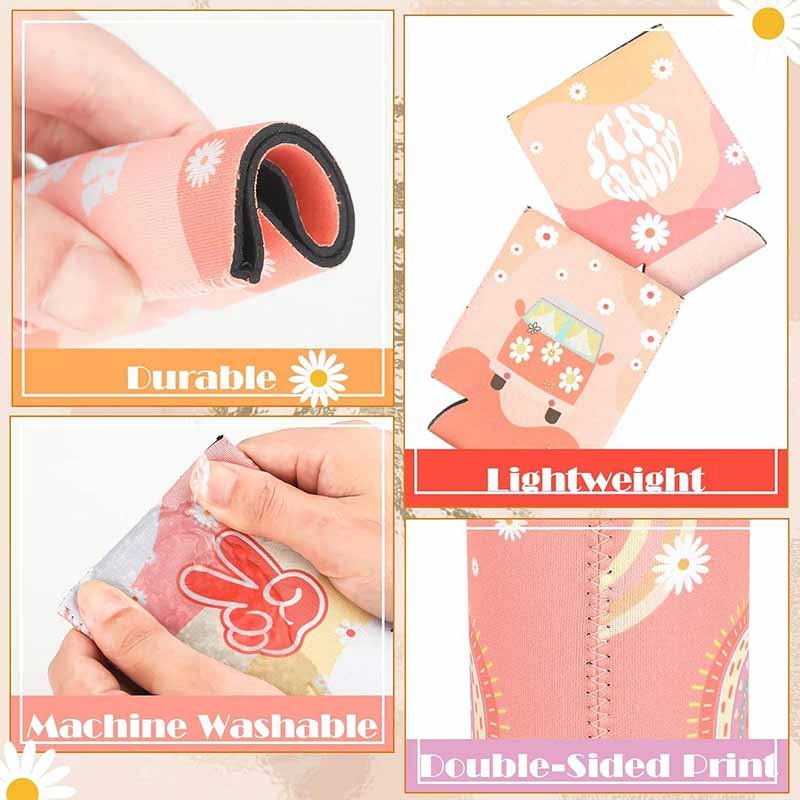
How Quantity Changes Neoprene Koozie Manufacturing Cost?
Neoprene koozie manufacturing cost decreases as quantity increases because fixed costs are spread across more units and production efficiency improves. In most cases, moving from 100 pcs to 1000 pcs can reduce unit cost by 40–60%, making quantity one of the most important pricing factors.
Why Does Neoprene Koozie Manufacturing Cost Drop in Bulk?
Bulk production reduces cost because factories operate more efficiently at scale.
There are three main reasons:
- Fixed costs are shared
- printing setup
- machine preparation
- cutting layout setup
- Production efficiency improves
- workers repeat the same process
- less time lost between steps
- fewer interruptions
- Material cost decreases
- bulk purchasing discounts
- reduced waste per unit
A practical example:
| Cost Type | 100 pcs | 1000 pcs |
|---|---|---|
| Printing setup | $50 total → $0.50/unit | $50 total → $0.05/unit |
| Material waste | higher | lower |
| Labor efficiency | low | high |
This is why small orders always have higher unit cost.
What MOQ Fits Neoprene Koozie Manufacturing Cost?
MOQ (Minimum Order Quantity) is directly linked to cost efficiency.
| MOQ Level | Cost Efficiency | Recommendation |
|---|---|---|
| 50–100 pcs | low | testing only |
| 200–300 pcs | medium | small projects |
| 500–1000 pcs | good | best balance |
| 2000+ pcs | very high | cost optimized |
Most factories, including Oneier, recommend 300–1000 pcs as the most practical range for balancing cost and flexibility.
Why this range works:
- material purchasing becomes efficient
- production lines can be arranged properly
- unit cost drops significantly
Below this range, cost per unit increases quickly. Above this range, savings continue but at a slower rate.
How Much Can Neoprene Koozie Manufacturing Cost Be Reduced?
Cost reduction from quantity is not linear—it follows a curve.
| Quantity Increase | Cost Reduction |
|---|---|
| 100 → 300 pcs | 15–25% lower |
| 300 → 1000 pcs | 20–35% lower |
| 1000 → 5000 pcs | 10–20% lower |
| 5000+ pcs | limited additional savings |
Key insight:
The biggest cost drop happens between 300 and 1000 pcs
After that, savings still exist but are smaller.
For example:
- 100 pcs → $0.90/unit
- 1000 pcs → $0.45/unit
- 5000 pcs → $0.30/unit
That is why many brands start with mid-level MOQ and scale later.
Quantity is the strongest lever in cost control.
In small orders, factories spend almost the same setup time as large orders, but they cannot distribute that cost across many units. This makes each piece more expensive.
In larger orders:
- machines run continuously
- workers become faster
- error rates decrease
- material usage becomes more efficient
Another important factor is cutting efficiency. Neoprene sheets are cut in layouts. Larger orders allow better layout planning, reducing waste.
However, increasing quantity also introduces risk:
- higher upfront investment
- more inventory pressure
- longer production time
That is why smart clients balance quantity with market demand.
A common strategy:
- start with 300–500 pcs
- test market response
- scale to 1000+ pcs in next order
This approach reduces risk while still achieving reasonable cost.
Which Factors Raise Neoprene Koozie Manufacturing Cost?
Neoprene koozie manufacturing cost increases when design complexity, material thickness, printing method, and quality requirements go up. In many cases, small design decisions can increase total cost by 20–50% without being obvious at first.
Do Designs Raise Neoprene Koozie Manufacturing Cost?
Yes, design complexity directly affects cost.
Simple vs complex design:
| Design Type | Cost Impact |
|---|---|
| standard sleeve | lowest |
| shaped koozie | +10–20% |
| zipper koozie | +15–30% |
| handle or strap | +10–20% |
| multi-panel design | +20–40% |
Why cost increases:
- more cutting steps
- more stitching
- more labor time
- higher error rate
Even small details like curved edges or extra panels increase production time.
Does Thickness Raise Neoprene Koozie Manufacturing Cost?
Yes, thickness directly affects material cost.
| Thickness | Cost Impact |
|---|---|
| 2mm | lowest |
| 3mm | standard |
| 5mm | +15–30% |
Thicker neoprene means:
- more raw material
- higher weight
- slightly slower processing
However, thicker material also improves insulation and durability.
Most clients choose 3mm neoprene because it offers the best balance between cost and performance.
Do Printing Methods Raise Neoprene Koozie Manufacturing Cost?
Yes, printing method is one of the biggest cost drivers.
| Printing Method | Cost Level | Notes |
|---|---|---|
| Screen printing | low | simple designs |
| Heat transfer | medium | multi-color |
| Sublimation | high | full coverage |
Cost differences:
- 1-color screen print → lowest
- multi-color → +10–30%
- full sublimation → +20–40%
Other factors:
- print size
- number of colors
- design complexity
For cost-sensitive projects, simple printing is more efficient.
Does Quality Raise Neoprene Koozie Manufacturing Cost?
Yes, higher quality always increases cost.
Quality factors include:
| Quality Element | Cost Impact |
|---|---|
| stitching quality | +5–10% |
| material grade | +10–20% |
| color consistency | +5–10% |
| defect control | +5–15% |
Higher quality requires:
- stricter inspection
- better materials
- more skilled labor
However, higher quality also reduces returns and improves brand value.
Cost increases usually come from multiple small upgrades, not one big change.
Example:
- thicker neoprene → +20%
- sublimation printing → +30%
- custom packaging → +20%
Combined effect:
total cost increase = 50%+
This is why product design must match target price.
A common mistake:
- designing a premium product
- expecting a low-cost price
Instead, successful brands:
- define target price first
- design product around that price
At Oneier, we often help clients adjust:
- material thickness
- printing method
- packaging
to match their cost target without sacrificing core product value.
How to Control Neoprene Koozie Manufacturing Cost?
Neoprene koozie manufacturing cost can be controlled by adjusting materials, simplifying design, choosing the right printing method, and optimizing order quantity. The goal is not to make the cheapest product, but to reach the best balance between cost, quality, and market price.
How to Lower Neoprene Koozie Manufacturing Cost?
Lowering cost starts with making smarter design decisions, not just negotiating price.
Practical ways to reduce cost:
| Strategy | Cost Saving | Notes |
|---|---|---|
| Use 3mm instead of 5mm neoprene | 10–20% | most common choice |
| Choose screen printing | 10–30% | cheaper than sublimation |
| Simplify shape | 5–15% | reduce labor time |
| Use bulk packaging | 5–20% | avoid retail packaging cost |
| Increase quantity | 20–50% | biggest impact |
Key principle:
Remove unnecessary features, not essential quality
For example:
- keep good stitching
- keep durable material
- reduce decorative elements
This maintains product performance while lowering cost.
How to Choose Neoprene Koozie Manufacturing Cost Supplier?
Choosing the right factory is more important than choosing the lowest price.
What to evaluate:
| Factor | Why It Matters |
|---|---|
| experience | fewer mistakes, faster production |
| material sourcing | stable cost and quality |
| sampling speed | faster product development |
| communication | fewer delays |
| MOQ flexibility | better for testing |
A low price from an inexperienced supplier often leads to:
- inconsistent quality
- delayed production
- higher defect rates
Which can increase total cost in the long run.
A reliable factory like Oneier provides:
- stable pricing
- consistent quality
- faster sampling (5–7 days)
- low MOQ support (50–100 pcs)
This reduces overall risk.
How to Balance Neoprene Koozie Manufacturing Cost and Profit?
Cost is only one side of the business. Profit depends on how the product is positioned and sold.
Basic profit structure:
| Cost | Selling Price | Profit Margin |
|---|---|---|
| $0.30 | $1.00 | 70% |
| $0.50 | $1.50 | 67% |
| $0.80 | $2.50 | 68% |
Key insight:
Higher cost does not always mean lower profit
A better-designed product can sell at a higher price.
Examples:
- basic koozie → low cost, low price
- branded koozie → higher cost, higher price
- premium design → highest margin
The goal is to match:
- cost
- market price
- customer expectation
What Is the Best Cost Strategy for New Koozie Products?
For new products, speed and flexibility are more important than perfect cost optimization.
Recommended approach:
Step 1: Launch quickly
- use standard material
- keep design simple
- test market demand
Step 2: Collect feedback
- customer reviews
- sales performance
- design improvements
Step 3: Optimize cost
- adjust materials
- improve production efficiency
- increase order quantity
This reduces risk and improves long-term profitability.
How Experienced Sellers Control Cost Long-Term
Experienced sellers focus on long-term cost control, not one-time savings.
They usually:
- build stable supplier relationships
- place repeat orders to reduce cost
- standardize designs
- optimize packaging over time
- adjust pricing based on market demand
They also track:
- cost per unit
- profit per order
- return rate
- defect rate
Because hidden costs (returns, defects, delays) can reduce profit more than production cost itself.
The biggest mistake in cost management is focusing only on the factory price.
Real cost includes:
- production cost
- shipping cost
- storage cost
- marketing cost
- return cost
Example:
- cheap product → higher defect rate → more returns
- slightly higher cost product → better quality → fewer returns
Result:
higher overall profit
That is why cost should be viewed as part of the entire business model, not just manufacturing.
Work With Oneier to Optimize Your Koozie Cost
If you are planning to develop custom neoprene koozies, controlling cost starts with choosing the right manufacturing partner.
Oneier has over 18 years of experience in neoprene material development and product manufacturing, helping clients balance cost, quality, and production efficiency.
We support:
- custom neoprene koozies (different thickness, styles, printing)
- low MOQ starting from 50–100 pcs
- fast sampling in 5–7 days
- stable bulk production
- OEM and private label services
More importantly, we help you:
- choose the right material for your budget
- optimize design to reduce cost
- plan production for better pricing
- avoid common mistakes that increase cost
Whether you are launching a new product or scaling your business, we can help you build a competitive product with the right cost structure.
Contact Oneier today to get your custom neoprene koozie quotation and start your project.