
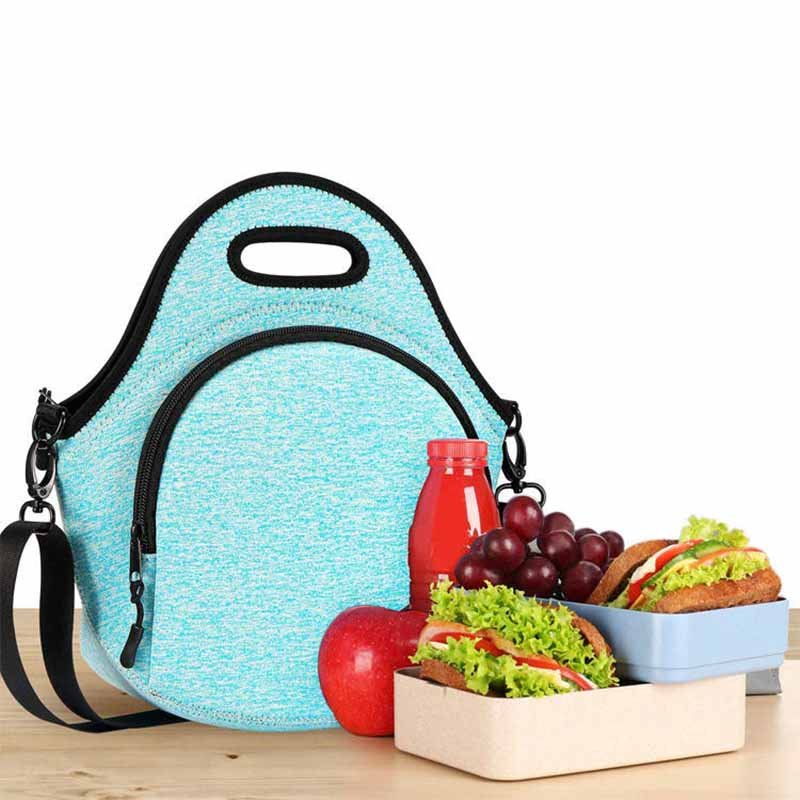
Many lunch bag projects fail for a surprisingly small reason: the neoprene thickness was chosen by guesswork instead of product logic. On a screen, a 2mm lunch bag and a 4mm lunch bag may look almost the same. In real use, they feel completely different. One may feel light and easy to carry but struggle to hold temperature for long. The other may feel more premium, keep food cooler longer, and hold its shape better, but also cost more and add noticeable weight. That is why thickness is not a small factory detail. It directly influences insulation, appearance, comfort, shipping cost, and whether the final product feels cheap or well made.
For most lunch bags, the best neoprene thickness is usually 3mm or 4mm. A 3mm neoprene thickness is often the best choice for daily-use lunch bags because it balances insulation, flexibility, weight, and cost. A 4mm neoprene thickness is better for premium lunch bags, outdoor use, and products that need a fuller shape and stronger thermal performance. 2mm works for light, price-sensitive designs, while 5mm is better suited to niche products that prioritize insulation and structure over portability.
At Oneier, we have seen this decision change the whole result of a project. A lunch bag that looks acceptable in a first sample can feel very different after customers carry it for two weeks, fill it with containers, or leave it in a warm car. Thickness is often the reason. It is one of the few material choices that customers may not describe in technical words, but they notice it immediately when they touch, carry, and use the product.
What Is Neoprene Thickness?
Neoprene thickness is the measured thickness of the neoprene foam layer inside the material, usually shown in millimeters. For lunch bags, neoprene thickness affects temperature retention, softness, shape, weight, and cost. Thinner neoprene makes the bag lighter and more flexible. Thicker neoprene improves insulation and structure, but adds weight and bulk.
Neoprene Thickness Basics
Neoprene is not a simple woven fabric. It is a foam-based material, usually made with a rubber foam core laminated between fabric surfaces. This construction gives neoprene its soft hand feel, slight stretch, cushioning effect, and thermal insulation. When factories talk about neoprene thickness, they are usually referring to the total foam thickness of the material used in the body panels of the lunch bag.
For lunch bag manufacturing, the most common neoprene thickness options are:
| Neoprene Thickness | Product Feel | Carry Experience | Common Positioning |
|---|---|---|---|
| 2mm | Light, soft, thin | Easy to carry | Budget or lightweight lunch bags |
| 3mm | Balanced, flexible | Comfortable daily use | Mainstream lunch bags |
| 4mm | Fuller, more structured | Slightly heavier | Premium lunch bags |
| 5mm | Thick, padded, solid | Heavier and bulkier | Outdoor or insulated niche products |
Customers often assume thicker always means better. In practice, that is not always true. A lunch bag is not a wetsuit and not a hard cooler. The right thickness depends on how the bag will be used, how long food needs to stay cool, and what kind of feel the end customer expects. A child’s lunch bag, an office lunch tote, and a picnic-use lunch bag may all need different thickness logic even if the visual design is similar.
This is why thickness should be decided together with product size, shape, handle design, lining, and intended market level. A thickness that works well in one bag style can feel wrong in another.
How Neoprene Thickness Works
Neoprene helps insulate because its foam structure contains many tiny closed cells filled with gas. These trapped air spaces slow down heat transfer. In simple terms, the foam acts as a barrier between the temperature inside the bag and the outside environment. As neoprene thickness increases, the barrier becomes stronger, so thermal performance usually improves.
But better insulation comes with trade-offs. As thickness goes up:
- The bag becomes heavier
- The body becomes stiffer
- Material consumption cost increases
- Sewing and panel turning become slightly more difficult
- The product may take up more space when empty
A useful performance view looks like this:
| Thickness | Relative Insulation | Flexibility | Relative Weight | Relative Cost |
|---|---|---|---|---|
| 2mm | Basic | High | Low | Low |
| 3mm | Good | High | Low-medium | Medium |
| 4mm | Better | Medium | Medium | Medium-high |
| 5mm | Strong | Lower | High | High |
In real lunch bag use, neoprene alone does not do all the work. Thickness is important, but actual temperature retention also depends on other factors:
- Whether the bag has a thermal lining
- Whether seams are tightly sewn and finished well
- The size of the opening and zipper closure
- The outside weather or room temperature
- Whether cold packs are used inside
This is important because some sellers overstate thickness as if it is the only measure of insulation. It is not. A poorly made 5mm lunch bag can still perform badly if the pattern is loose, the lining is weak, or the closure lets heat move too easily. Thickness matters, but it works as part of the full bag construction.
Common Neoprene Thickness
In commercial lunch bag production, 3mm and 4mm neoprene thickness are the most common options. They sit in the most practical range for both brands and users. They are thick enough to create a clear insulation benefit and a quality feel, but not so thick that the bag becomes awkward to carry or too expensive to produce.
The general market pattern looks like this:
| Thickness | Market Use Frequency | Main Advantage | Main Limitation |
|---|---|---|---|
| 2mm | Lower | Low weight and lower cost | Weaker insulation and shape |
| 3mm | Very high | Best all-around balance | Less premium feel than 4mm |
| 4mm | High | Better structure and insulation | Higher cost and weight |
| 5mm | Lower | Strong insulation and padding | Bulkier product |
Why are 3mm and 4mm used so often? Because they solve most real product needs:
- 3mm is easy for daily commuters, school users, and e-commerce lunch bags
- 4mm works well for upgraded lunch totes, outdoor lunch use, and stronger retail positioning
2mm neoprene is usually chosen when the project is very price-sensitive or when the product needs to stay especially light and soft. 5mm neoprene is less common because many lunch bag customers do not want the added bulk unless the brand is clearly positioning the product as more insulated or outdoor-oriented.
For factories, 3mm and 4mm are also easier to standardize in sampling and bulk production, which helps consistency in appearance and sewing quality.
Why Neoprene Thickness Matters
Neoprene thickness matters because it changes how customers judge the product before and after purchase. Before purchase, thickness influences hand feel, body shape, and perceived quality. After purchase, it influences comfort, insulation, and how the bag holds up in daily use.
From a product development point of view, thickness affects at least five key areas:
Insulation performance
Thicker neoprene generally slows temperature change more effectively.
Bag shape and body
Thicker neoprene helps the lunch bag stand better and feel more structured.
Portability
Thinner neoprene makes the bag easier to carry, fold, and store.
Cost control
Thicker neoprene increases material cost and often raises shipping weight.
Market positioning
A 4mm or 5mm lunch bag often feels more premium than a 2mm one, even before the customer uses it.
This is where many product teams make mistakes. They either choose the thinnest option to lower cost, which can make the bag feel weak, or they choose the thickest option to sound more impressive, which can make the bag too heavy for casual use.
A more useful way to think about thickness is this:
| Product Goal | Better Thickness Direction |
|---|---|
| Lower cost and lighter carry | 2mm–3mm |
| Balanced everyday performance | 3mm |
| Better insulation and stronger body | 4mm |
| Niche, outdoor, or padded premium feel | 5mm |
At Oneier, thickness selection usually becomes much easier once the customer defines three things clearly: who the bag is for, how long the food needs to stay insulated, and what retail level the product is aiming for. Once those are clear, thickness becomes a strategic choice instead of a guess.
Which Neoprene Thickness Is Better?
The better neoprene thickness depends on the product goal. A 2mm thickness works for lightweight and price-sensitive lunch bags. A 3mm thickness is often the best all-around choice for daily use. A 4mm thickness is better for stronger insulation and a more premium feel. A 5mm thickness fits niche products that value padding and structure more than portability.
2mm Neoprene Thickness
A 2mm neoprene thickness is the lightest and most flexible option commonly used in lunch bag production. It is usually selected for projects where portability, compactness, and lower cost matter more than strong insulation. This thickness can work well for simple lunch totes, casual everyday use, and promotional products, especially when the target selling price is aggressive.
Its main strengths are clear:
- Lower material cost
- Lower total bag weight
- Easier folding and storage
- Softer hand feel
- Simpler to carry for children or light users
But 2mm neoprene also has important limitations. Because the foam layer is thinner, it traps less insulating air and provides less body. That usually means:
- Shorter temperature retention time
- Less premium feel in hand
- Weaker shape retention when the bag is full
- Lower protection against impact or pressure from containers
A practical 2mm use case might be a compact lunch tote for office snacks, fruit, and a drink, where the customer mainly wants a soft, washable bag rather than a stronger insulated product. It can also work for marketing programs where the goal is visual appeal and light convenience rather than high performance.
The mistake is using 2mm neoprene in products that are advertised like higher-insulation lunch bags. That creates a mismatch between customer expectation and real performance. When used honestly and in the right price segment, 2mm can still be a smart option.
3mm Neoprene Thickness
A 3mm neoprene thickness is often the most commercially balanced choice for lunch bags. It gives enough foam depth to create noticeable insulation and softness, but it still remains light and flexible enough for daily carry. For many brands, 3mm is the safest place to start because it fits the broadest range of lunch bag uses.
Its main advantages include:
- Good all-around insulation for daily routines
- Comfortable weight for work, school, and commuting
- Better body and shape than 2mm
- More reliable perceived quality in retail
- Strong balance between cost and function
A 3mm lunch bag usually works well for:
- School lunch totes
- Office lunch bags
- E-commerce lunch bag collections
- Branded daily-use products
- Private label lunch bag lines with mid-range pricing
The reason 3mm works so well is that most lunch bag users are not carrying meals for extreme outdoor conditions. They are carrying lunch from home to school, office, gym, or short local trips. In these settings, a 3mm neoprene thickness usually gives enough thermal support while keeping the bag easy to handle.
From a manufacturing point of view, 3mm also tends to sew well, shape well, and maintain a good balance between flexibility and structure. For many customers, it is the thickness that causes the fewest arguments between design, cost, and performance teams.
4mm Neoprene Thickness
A 4mm neoprene thickness is often chosen when the brand wants to move the lunch bag up one level in structure, insulation, and perceived quality. Compared with 3mm, it usually feels more substantial in hand and gives the product a fuller body. That makes it attractive for brands aiming at stronger retail presentation or a more premium product image.
Its main benefits include:
- Better thermal buffering than 3mm
- Stronger body and shape retention
- More padded, more protective feel
- Higher-end visual and tactile impression
- Better support for larger lunch bag sizes
A 4mm neoprene thickness is often a good match for:
- Premium lunch totes
- Larger lunch bags carrying full meal containers
- Outdoor lunch bags for parks, commuting, or day trips
- Products positioned above mass-market lunch totes
Still, 4mm is not always the automatic winner. It adds material weight and cost. For very small lunch bags or children’s lunch products, the extra body may feel unnecessary. For some users, especially those who care about packing light, a 4mm lunch bag can start to feel slightly bulky compared with a 3mm design.
The better way to judge 4mm is not to ask whether it is “better” in general. It is to ask whether the product needs stronger structure and stronger thermal feel badly enough to justify the added weight and cost. In many premium lunch bag projects, the answer is yes.
5mm Neoprene Thickness
A 5mm neoprene thickness is the thickest option commonly considered for lunch bags, and it moves the product closer to a padded cooler-bag feel than a simple lunch tote feel. It offers strong insulation support and a very noticeable cushioned hand feel, but it also pushes the product into a heavier, bulkier category.
Its strongest points are:
- Higher thermal barrier potential
- Strong padding and product body
- More protective feel around containers and bottles
- Strong premium or outdoor positioning
But the trade-offs are also clear:
- Heavier carry weight
- Larger empty-bag volume
- Higher material and freight cost
- Less flexibility during everyday handling
- Not ideal for simple city lunch routines
A 5mm neoprene thickness can work well in niche products such as:
- Outdoor-use lunch bags
- Travel meal bags
- Premium insulated meal totes
- Larger-format lunch carriers needing more body
The common mistake is choosing 5mm simply to sound more advanced. In many mainstream lunch bag categories, the added thickness does not create enough extra value to justify the added bulk. Customers may describe the product as “nice quality,” but still use it less because it feels less convenient. That is why 5mm should be selected for a clear reason, not just because it seems more impressive on paper.
Best Neoprene Thickness
For most lunch bag projects, the best neoprene thickness is usually 3mm or 4mm. These two options cover the majority of real-world product needs and represent the most commercially practical balance.
A useful decision guide looks like this:
| Product Position | Recommended Thickness | Reason |
|---|---|---|
| Budget / lightweight lunch bag | 2mm | Lower cost, softer, lighter |
| Everyday lunch bag | 3mm | Best overall balance |
| Premium lunch bag | 4mm | Better insulation and stronger shape |
| Outdoor / niche insulated lunch bag | 5mm | More padding and stronger thermal barrier |
If the goal is broad market appeal, daily convenience, and stable pricing, 3mm neoprene thickness is usually the smartest starting point. If the goal is a more premium feel, stronger body, and improved thermal performance, 4mm neoprene thickness is often the better choice.
At Oneier, this is usually where customer projects become clearer. Once the target market, selling price, and product size are fixed, the “best” neoprene thickness is no longer a vague question. It becomes a straightforward product decision based on real use.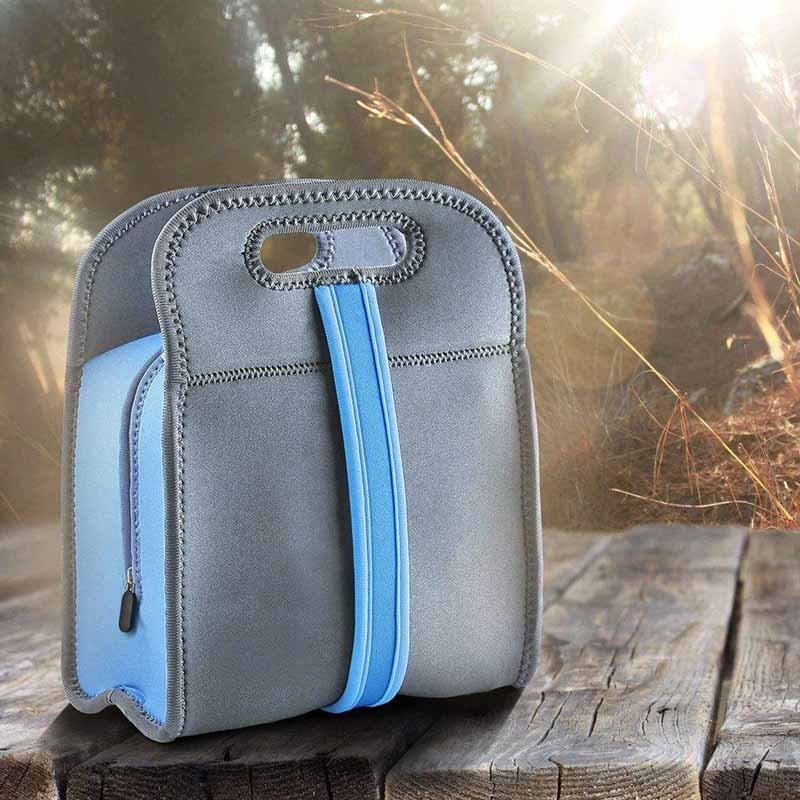
How Neoprene Thickness Affects Use?
Neoprene thickness directly affects how a lunch bag performs in daily life. It influences how long food stays fresh, how easy the bag is to carry, how it looks when filled, and how customers judge its quality. The same design can feel like a budget product or a premium product simply by changing thickness.
Neoprene Thickness and Insulation
Neoprene thickness plays a direct role in temperature retention because it controls how much air is trapped inside the foam structure. The more air inside, the slower heat moves in or out.
In real use, insulation is not just about thickness—it is about how thickness works together with the whole bag structure:
- Outer neoprene thickness
- Inner lining (PEVA, aluminum foil, or fabric)
- Bag volume and shape
- Closure system (zipper tightness)
Here is a practical insulation comparison based on typical lunch use:
| Thickness | Cold Retention (with ice pack) | Use Scenario |
|---|---|---|
| 2mm | 1–2 hours | Short commute, snacks |
| 3mm | 2–4 hours | Office, school lunch |
| 4mm | 4–6 hours | Longer days, travel |
| 5mm | 6+ hours | Outdoor, warm environments |
Important detail:
A 3mm neoprene bag with good lining can outperform a poorly designed 5mm bag. This is why thickness must be evaluated together with internal construction.
From a customer point of view:
- Office users care about “lunch stays fresh until noon”
- Parents care about “food still safe after school”
- Outdoor users care about “cooling lasts several hours”
Thickness should match these expectations, not exceed them unnecessarily.
Neoprene Thickness and Flexibility
Flexibility determines how comfortable the bag feels during daily use. It affects how easily the bag stretches, how it fits into tight spaces, and how natural it feels when carried.
As thickness increases:
- Flexibility decreases
- Resistance to bending increases
- Folding becomes more difficult
Here is a realistic flexibility comparison:
| Thickness | Flexibility Level | User Experience |
|---|---|---|
| 2mm | Very high | Soft, easy to compress |
| 3mm | High | Comfortable and adaptable |
| 4mm | Medium | Slightly structured feel |
| 5mm | Lower | Firm, less flexible |
Why this matters:
- A flexible bag adapts better to different food container shapes
- It is easier to store in backpacks or lockers
- It feels more comfortable for daily commuting
But too much flexibility also has drawbacks:
- The bag may collapse when empty
- It may look less structured on shelves
- It may feel less “premium” to some customers
This is why 3mm thickness is often preferred—it gives flexibility without making the bag feel weak.
Neoprene Thickness and Weight
Weight is one of the most underestimated factors in lunch bag design. Customers rarely ask about weight before purchase, but they notice it immediately after using the product.
As neoprene thickness increases, weight increases almost proportionally because more foam material is used.
Here is a practical weight comparison for a standard lunch bag size:
| Thickness | Approx. Weight Range | Carry Feel |
|---|---|---|
| 2mm | 150–250g | Very light |
| 3mm | 250–350g | Light and comfortable |
| 4mm | 350–500g | Noticeable but manageable |
| 5mm | 500g+ | Heavy for daily use |
Why weight matters:
- Daily users carry lunch bags every day
- Parents often carry multiple items (kids’ bags, bottles, etc.)
- Heavier bags increase fatigue over time
A common issue in product reviews is not “this bag is too heavy,” but comments like:
- “Feels bulky”
- “Not easy to carry every day”
- “Takes too much space”
These are often caused by thickness decisions, not design mistakes.
Neoprene Thickness and Cost
Neoprene thickness has a direct impact on production cost because it affects material consumption, processing difficulty, and shipping weight.
Key cost factors include:
- Raw neoprene material cost increases with thickness
- Thicker material requires more cutting and handling precision
- Sewing thicker panels can increase labor time
- Heavier products increase shipping costs
A simplified cost comparison:
| Thickness | Material Cost Level | Production Complexity | Total Cost Impact |
|---|---|---|---|
| 2mm | Low | Easy | Lowest |
| 3mm | Medium | Standard | Balanced |
| 4mm | Medium-high | Moderate | Higher |
| 5mm | High | More complex | Highest |
From a business perspective:
- 2mm helps achieve aggressive pricing
- 3mm supports mass-market products
- 4mm supports higher-margin products
- 5mm requires premium positioning to justify cost
The key is alignment. If thickness increases but retail price does not, margins shrink. If thickness is too low for the price level, customers feel the product is not worth it.
How to Choose Neoprene Thickness?
Choosing neoprene thickness is not about picking the “best number.” It is about matching the material to how the product will actually be used. The same thickness can feel perfect in one scenario and wrong in another.
Neoprene Thickness for Daily Use
Daily-use lunch bags need balance. They are carried frequently, used in moderate environments, and expected to be convenient.
Recommended thickness:
- 3mm neoprene thickness
Why:
- Light enough for daily carry
- Flexible enough for easy storage
- Good insulation for normal lunch duration
Typical users:
- Office workers
- Students
- Commuters
For most brands, this is the safest starting point.
Neoprene Thickness for Kids
Kids’ lunch bags require different priorities. Weight, softness, and ease of use are more important than maximum insulation.
Recommended thickness:
- 2mm–3mm neoprene thickness
Why:
- Lightweight for children
- Easier to handle
- Softer and more comfortable
Important consideration:
- Avoid overly thick material that makes the bag bulky
- Ensure handles and seams are reinforced, even if thickness is lower
Neoprene Thickness for Outdoor Use
Outdoor use requires stronger insulation and durability because conditions are less controlled.
Recommended thickness:
- 4mm–5mm neoprene thickness
Why:
- Better temperature retention
- More resistant to environmental changes
- Stronger structure for heavier loads
Typical use:
- Picnics
- Travel
- Outdoor activities
Neoprene Thickness for Premium Products
Premium lunch bags focus on both performance and perceived quality. Customers expect a product that feels solid, structured, and reliable.
Recommended thickness:
- 4mm neoprene thickness
Why:
- Better hand feel
- Stronger shape
- Higher perceived value
Premium products often combine:
- 4mm neoprene
- High-quality lining
- Reinforced stitching
- Branded design elements
Do Factories Customize Neoprene Thickness?
Yes, factories can customize neoprene thickness, and this is one of the most important advantages when developing a competitive lunch bag. Standard thickness options like 3mm and 4mm cover most needs, but custom thickness allows brands to fine-tune insulation, weight, structure, and cost to match specific product goals.
Custom Neoprene Thickness
Custom neoprene thickness is often used when standard options cannot fully meet product requirements. Instead of choosing only 2mm, 3mm, 4mm, or 5mm, manufacturers can adjust thickness within a range to create a more precise balance.
Common custom thickness options include:
- 2.5mm for lightweight but slightly improved insulation
- 3.5mm for better structure without full 4mm weight
- 4.5mm for premium feel with less bulk than 5mm
Here is a practical comparison:
| Custom Thickness | Positioning | Advantage |
|---|---|---|
| 2.5mm | Budget upgrade | Better than 2mm without major cost increase |
| 3.5mm | Balanced premium | Improved structure with good flexibility |
| 4.5mm | High-end | Strong insulation without excessive bulk |
Custom thickness is especially useful when:
- The product sits between two price levels
- The bag size is larger than standard
- The brand wants differentiation from competitors
- Specific performance targets must be met
However, custom thickness requires stable material sourcing and careful production control. Not all factories can handle this consistently.
Neoprene Thickness MOQ
Minimum order quantity (MOQ) depends heavily on whether standard or custom neoprene thickness is used.
Typical MOQ ranges:
| Thickness Type | MOQ Range | Notes |
|---|---|---|
| Standard (2mm–4mm) | 100–300 pcs | Easier sourcing |
| Custom thickness | 300–1000 pcs | Depends on material production |
| Specialized neoprene | 500+ pcs | Higher complexity |
Why MOQ increases with customization:
- Neoprene foam production has minimum batch requirements
- Color and lamination processes require setup costs
- Factories need to control material consistency
For new brands, a practical strategy is:
- Start with standard thickness for initial testing
- Move to custom thickness after validating the product
This reduces risk while still allowing future product differentiation.
Neoprene Thickness Sampling
Sampling is critical because thickness cannot be fully evaluated on paper or screen. The real difference is felt when the product is held, filled, and used.
Typical sampling process:
- Confirm design and target thickness
- Produce first sample (5–7 days)
- Test for:
- Insulation performance
- Weight and comfort
- Folding and storage
- Shape and appearance
- Adjust thickness or structure if needed
- Final sample confirmation
Sampling timelines:
| Stage | Time |
|---|---|
| Standard sample | 5–7 days |
| Custom thickness sample | 7–12 days |
Common sampling mistakes:
- Choosing thickness based only on price
- Skipping real-use testing (carrying, storage, daily use)
- Ignoring feedback from actual users
A good sample should be tested in real conditions, not just inspected visually.
Neoprene Thickness Support
A strong manufacturer does more than produce what is requested. They guide customers toward better decisions based on real production and usage experience.
At Oneier, neoprene thickness selection is supported through:
- Material recommendations based on product use
- Thickness comparison samples
- Performance testing (weight, flexibility, insulation)
- Structure optimization based on thickness
- Cost analysis for different thickness options
A typical support process:
| Step | Action |
|---|---|
| Step 1 | Understand product positioning |
| Step 2 | Recommend 2–3 thickness options |
| Step 3 | Develop samples |
| Step 4 | Adjust based on feedback |
| Step 5 | Finalize for production |
This process helps avoid common problems such as:
- Over-specifying thickness (too heavy, too costly)
- Under-specifying thickness (poor performance)
- Mismatch between thickness and bag size
Work With Oneier to Build Your Neoprene Lunch Bags
Choosing the right neoprene thickness is one of the most important decisions in lunch bag development. It affects not only insulation, but also weight, comfort, cost, and how customers perceive the product.
At Oneier, we specialize in neoprene material development and product manufacturing with over 18 years of experience. We help brands turn ideas into reliable products by focusing on what matters most: choosing the right material for real use.
We support a wide range of neoprene products, including:
- Neoprene lunch bags
- Neoprene koozies
- Sports and medical supports
- Wetsuits and protective gear
Whether you are developing:
- A lightweight everyday lunch bag
- A premium insulated lunch tote
- A kids-friendly soft lunch bag
- Or a performance-focused outdoor product
We can help you select the right thickness, optimize the structure, and deliver consistent production.
If you are planning your next neoprene lunch bag project, now is the best time to start with the right material decision.
Contact Oneier today to:
- Get professional thickness recommendations
- Request custom samples
- Compare different neoprene options
- Start your private label production
Build a lunch bag that not only looks good—but performs the way your customers expect, every day.