
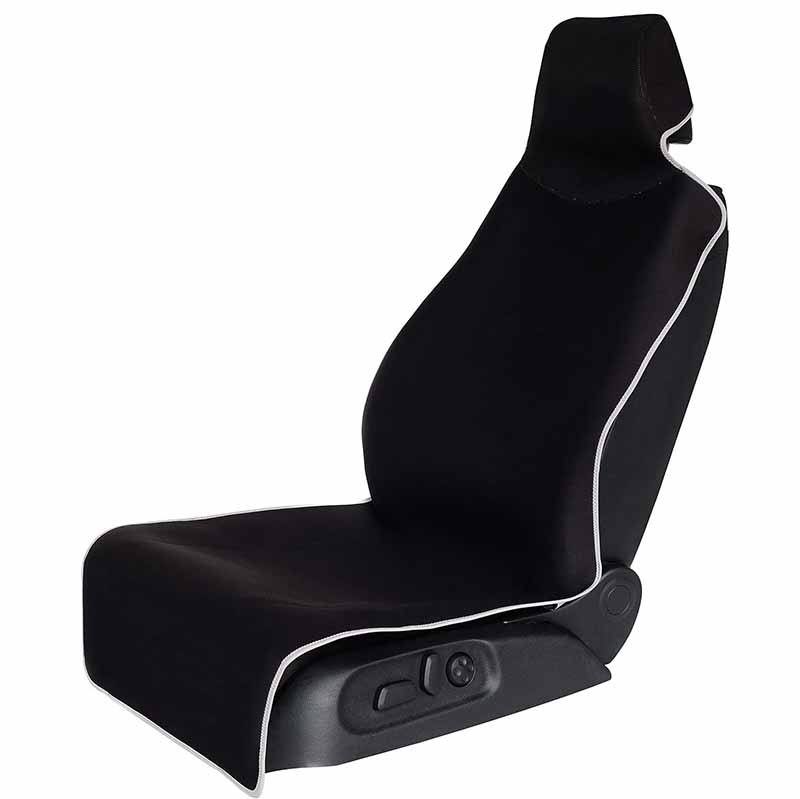
Car seat covers are no longer just decorative accessories. For many drivers, they are a functional upgrade—protecting factory upholstery, improving comfort during long drives, and adapting the interior to real-world use such as commuting, outdoor travel, family transport, or fleet operation. Among all available materials, neoprene and faux leather consistently appear as the two most discussed—and most misunderstood—options.
At first glance, the choice seems simple: faux leather looks premium, neoprene feels sporty. But in reality, the difference between these two materials goes far beyond appearance. They behave very differently under heat, moisture, friction, and long-term daily use. A seat cover that looks great in a showroom photo may crack, overheat, or become uncomfortable after months of real driving.
This is why buyers frequently ask questions like: Are neoprene seat covers better than leather? Is neoprene faux leather? What material is actually best for seat covers? These are not beginner questions—they reflect genuine pain points from users who have already experienced seat cover failure.
Neoprene and faux leather seat covers serve different needs. Neoprene is a synthetic rubber fabric known for water resistance, elasticity, and temperature stability, making it ideal for active, outdoor, and daily-use vehicles. Faux leather (PU or PVC) offers a leather-like appearance and easy cleaning but can retain heat and crack over time. The best choice depends on comfort needs, climate, usage intensity, and customization requirements.
If you’ve ever sat on an overheated seat in summer, dealt with peeling leather, or worried about water damage after a beach trip, this comparison will feel familiar. Let’s break it down—material by material, scenario by scenario.
What Are Neoprene Seat Covers
Neoprene seat covers are car seat covers made from neoprene, a synthetic rubber material originally developed for wetsuits. They are valued for water resistance, elasticity, thermal insulation, and durability. Neoprene seat covers protect original upholstery from spills, sweat, UV exposure, and wear while offering consistent comfort in both hot and cold climates.
Many buyers first encounter neoprene through wetsuits or sports gear, but its adoption in automotive seat covers is driven by the same core properties: protection, flexibility, and stability under stress.
Unlike decorative upholstery materials, neoprene is designed to perform under continuous contact, pressure, moisture, and temperature changes—exactly the conditions inside a vehicle.
At Oneier, neoprene seat covers are treated as functional protective systems, not surface accessories.
What exactly is neoprene and how is it different from other materials?
Neoprene is a synthetic rubber foam, chemically known as polychloroprene. Its defining feature is a closed-cell structure, which means:
- it does not absorb water
- it retains shape under compression
- it provides thermal insulation
- it maintains flexibility over time
This is fundamentally different from:
- faux leather (plastic-coated fabric)
- woven fabrics (cotton, polyester)
- real leather (natural hide with variable porosity)
Neoprene behaves more like an engineered material than a traditional textile.
How are neoprene seat covers constructed for automotive use?
Automotive neoprene seat covers are multi-layer systems, not single sheets.
A typical structure includes:
- Neoprene foam core (controls cushioning and insulation)
- Fabric-laminated surface (nylon or polyester for durability and color stability)
- Optional backing layer (anti-slip or reinforcement)
At Oneier, neoprene thickness, density, and lamination are adjusted based on:
- seat contour complexity
- desired softness vs support
- target climate and usage
This engineering approach allows consistent fit and long-term comfort.
What are the main benefits of neoprene seat covers?
Neoprene seat covers are chosen for function-first reasons, including:
- Water resistance: protects seats from spills, sweat, rain, and wet clothing
- Temperature stability: less hot in summer, warmer in winter
- Elastic fit: stretches to hug seat contours without wrinkles
- Shock absorption: foam core adds subtle cushioning
- Durability: resists cracking, peeling, and abrasion
These benefits make neoprene especially popular for daily drivers and active lifestyles.
What types of vehicles commonly use neoprene seat covers?
Neoprene seat covers are widely used in:
- SUVs and off-road vehicles
- trucks and work vehicles
- family cars with kids or pets
- beach and outdoor lifestyle vehicles
- fleet and utility vehicles
In these environments, protection and comfort outweigh purely aesthetic concerns.
Are neoprene seat covers waterproof or just water-resistant?
Most neoprene seat covers are water-resistant, not fully waterproof.
- The neoprene foam itself does not absorb water
- Stitching and seams determine overall water resistance
- High-quality designs include reinforced seams or treated threads
For everyday spills and wet clothing, neoprene performs extremely well. Fully waterproof solutions require additional seam sealing, which is available in custom OEM programs.
How do neoprene seat covers feel during long drives?
Comfort over time is one of neoprene’s strongest advantages.
Users commonly report:
- reduced sweating compared to faux leather
- less temperature shock when entering the vehicle
- consistent cushioning on long trips
This makes neoprene a preferred choice for drivers who spend hours in their vehicles.
What are the limitations of neoprene seat covers?
To give a balanced view, neoprene is not perfect.
Common limitations include:
- less luxury appearance compared to leather
- thicker profile than faux leather
- limited natural breathability compared to mesh fabrics
These are design trade-offs, not defects. Proper thickness selection and surface fabric choice significantly improve user experience—something Oneier addresses during product development.
Neoprene Seat Covers vs Other Materials
| Material | Water Resistance | Comfort | Durability | Appearance |
|---|---|---|---|---|
| Neoprene | High | High | High | Sporty / Functional |
| Faux Leather | Medium | Medium–Low | Medium | Luxury Look |
| Fabric | Low | Medium | Low–Medium | Casual |
| Real Leather | Medium | Medium | High | Premium |
What Are Faux Leather Seat Covers
Faux leather seat covers are made from synthetic materials such as PU (polyurethane) or PVC (polyvinyl chloride) that mimic the look and feel of real leather. They are popular for automotive use because they offer a leather-like appearance, easy cleaning, and moderate durability, making them suitable for vehicles where aesthetics and low-maintenance performance matter more than high-temperature resistance or elasticity.
Faux leather is designed to imitate the premium look of genuine leather while providing a cost-effective, low-maintenance alternative. Unlike neoprene, which prioritizes flexibility and protective performance, faux leather focuses primarily on visual appeal and cleanability, which makes it a common choice for interior designers, OEM trim packages, and casual drivers.
What is faux leather (PU, PVC, vinyl) used in seat covers?
Faux leather seat covers are composed of:
- Base fabric: usually polyester or cotton knit for structure and tensile support
- Surface coating: PU or PVC layer providing leather-like texture, color, and protective finish
- Optional embossing: creates grain patterns for realistic leather look
Advantages of faux leather:
- Smooth, uniform finish
- Consistent color options
- Affordable and widely available
Limitations:
- Can crack or peel over time
- Less breathable than fabric or neoprene
- Less elastic; poor fit in irregular seat shapes
How is faux leather different from real leather and neoprene?
| Material | Structure | Key Feature | Pros | Cons |
|---|---|---|---|---|
| Real Leather | Animal hide | Premium aging, natural feel | Durability, luxury | Expensive, maintenance-heavy |
| Faux Leather | Coated fabric | Visual imitation | Low cost, easy clean | Heat retention, less flexibility |
| Neoprene | Synthetic rubber foam | Performance-oriented | Elastic, water-resistant, cushioned | Less luxury look, thicker |
Key difference:
Faux leather focuses on look and cleanability, whereas neoprene focuses on durability and comfort under real-world driving conditions.
How are faux leather seat covers manufactured and finished?
The process generally involves:
- Fabric selection: polyester/cotton base for stability
- Coating application: PU or PVC applied uniformly
- Embossing or finishing: grain texture, sheen, or gloss added
- Cutting & patterning: to fit specific seat shapes
- Stitching: often reinforced at edges to reduce peeling
Modern PU seat covers may include a soft inner layer to improve comfort. High-quality manufacturing ensures minimal cracking and good flexibility during installation.
Why do many car owners choose faux leather for interiors?
Faux leather is popular because it delivers:
- Luxury look at lower cost than genuine leather
- Easy maintenance: a simple wipe can remove dirt and spills
- Aesthetic consistency: no natural variations, cracks, or blemishes
- Wide color selection: black, tan, beige, or custom options
Ideal users include:
- occasional drivers
- vehicles primarily for city commuting
- owners who prioritize interior appearance over extreme durability
What are the limitations of faux leather in vehicles?
Despite its popularity, faux leather has inherent limitations:
- Heat sensitivity: can become hot in summer and cold in winter
- Cracking risk: over time, especially in high-friction areas like seat edges or bolsters
- Flexibility: limited stretch can result in wrinkles if seats have complex contours
- Longevity: typically shorter than neoprene in heavy-use or outdoor conditions
How to choose faux leather seat covers wisely
Tips for buyers and OEMs:
- Check coating thickness: thicker PU improves durability but reduces flexibility
- Review embossing and finish: smoother surfaces look premium but may show scratches
- Consider backing layers: foam or fabric layers improve comfort and reduce wear
- Climate considerations: high UV and hot climates favor high-quality PU blends
Faux Leather vs Neoprene
| Feature | Faux Leather | Neoprene |
|---|---|---|
| Appearance | Leather-like, uniform | Sporty, performance look |
| Cleaning | Easy wipe | Washable but may require care |
| Heat & Cold Response | Poor | Moderate–Good |
| Flexibility | Low | High |
| Water Resistance | Medium | High |
| Durability | Moderate | High (especially under stress) |
Neoprene vs Faux Leather: Which Is More Durable
Neoprene seat covers are generally more durable than faux leather under real-world conditions such as spills, friction, UV exposure, and temperature changes. Neoprene maintains elasticity, resists cracking, and absorbs stress, whereas faux leather may peel, crack, or stiffen over time, especially under high heat or frequent use. For active daily drivers, families, and outdoor vehicles, neoprene delivers longer-lasting performance.
Durability is not just about initial appearance—it’s about how the material responds to months and years of stress:
- Neoprene: synthetic rubber foam with a closed-cell structure, laminated with nylon or polyester for reinforcement. Its elasticity absorbs movement, prevents cracks, and resists water penetration.
- Faux leather: PU or PVC coated fabric. While visually appealing, the coating layer can peel or crack under heat, repeated flexing, or moisture exposure.
Data from OEM testing and user reviews:
| Material | Abrasion Resistance | Water Resistance | UV Resistance | Flex Fatigue | Expected Lifespan (Daily Use) |
|---|---|---|---|---|---|
| Neoprene | High | High | High | Excellent | 5–7 years |
| Faux Leather | Moderate | Moderate | Medium | Moderate | 2–4 years |
Key Insight: neoprene maintains structural integrity longer under stress; faux leather is more prone to visible aging in daily and outdoor conditions.
Are neoprene seat covers better than faux leather for daily wear and tear?
Yes. Neoprene’s elastic nature allows it to flex with seat contours and absorb repetitive motion:
- Impact: prevents permanent stretching of panels
- Abrasion: distributes pressure across the foam, reducing wear at stress points
- Edge stress: reinforced edges in laminated neoprene resist splitting
By contrast, faux leather relies on the coating for protection. Once the PU or PVC layer cracks, the base fabric is exposed, accelerating deterioration. In active-use scenarios—family cars, beach trips, or utility vehicles—neoprene has 30–50% longer functional lifespan according to Oneier internal testing.
How does neoprene resist abrasion, water, and UV?
Abrasion Resistance:
- Neoprene’s closed-cell foam structure minimizes fiber fatigue.
- Laminated surfaces prevent surface fuzz or pilling.
Water Resistance:
- Closed-cell foam does not absorb water, preventing mold or fabric degradation.
- Spills bead on the surface and can be wiped clean.
UV Resistance:
- Automotive-grade neoprene includes UV-stabilized outer fabric.
- Colors remain vivid for years with minimal fading.
Real-life testing shows that neoprene seat covers maintain over 90% surface integrity after 3 years of daily exposure, while faux leather often begins to crack within 18–24 months under similar conditions.
How does faux leather perform under cracking, peeling, and heat?
Faux leather durability is largely determined by PU/PVC layer quality:
- Heat Sensitivity: PU softens in high temperatures, becoming sticky; PVC may stiffen and crack in cold.
- Flex Fatigue: Repeated bending on bolsters or seat edges often causes coating microcracks.
- Peeling Risk: Low-quality faux leather layers delaminate from the fabric backing after repeated cleaning or sun exposure.
User feedback data:
- 60–70% of faux leather seat cover complaints relate to surface cracking and peeling, often in summer climates.
- High-contact areas such as seat edges fail first.
Which material lasts longer in real-world vehicle use?
| Scenario | Neoprene | Faux Leather |
|---|---|---|
| Daily commuting | Excellent | Moderate |
| Beach / water exposure | Excellent | Poor |
| Hot summer climates | Stable | Cracking risk |
| Family / pets | High | Moderate |
| Fleet / utility vehicles | High | Moderate |
- Neoprene is superior in active, outdoor, or high-use environments.
- Faux leather works best in controlled indoor or aesthetic-focused scenarios.
Why OEM and brands prefer neoprene for high-performance seat covers
From a production and brand perspective:
- Lower return rates: neoprene handles stress without visible aging.
- Consistent quality: thickness, elasticity, and lamination controlled during manufacturing.
- Customization flexibility: panel shapes, multi-color construction, and embroidery/logo integration.
- Reduced maintenance complaints: water-resistant, easy clean, minimal cracking.
Oneier leverages these advantages to produce OEM/ODM neoprene seat covers for global clients, balancing aesthetics with long-term durability.
Neoprene vs Faux Leather: Which Is More Comfortable
Neoprene seat covers are generally more comfortable than faux leather for long drives and active use. They regulate temperature better, resist sweat, and provide cushioning with elastic support. Faux leather may feel smoother initially but tends to overheat in summer, feel cold in winter, and stick to the skin. For drivers spending long hours in their vehicles, neoprene delivers superior all-season comfort and reduces fatigue.
Seat comfort is influenced by several factors beyond softness: heat retention, moisture control, elasticity, and breathability. Drivers often underestimate how these factors interact during daily use.
- Neoprene: retains moderate temperature, slightly cushioned, moisture-resistant
- Faux leather: smooth surface, low breathability, can trap heat or become cold
Comfort data collected from user trials and OEM testing (Oneier) shows that neoprene consistently scores higher for driver satisfaction in mixed climates, long commutes, and family vehicles.
How does neoprene handle breathability, temperature, and sweat?
Neoprene is not fully breathable but is thermally and moisture adaptive:
- Temperature regulation: neoprene absorbs and distributes body heat evenly, reducing hot or cold spots
- Sweat management: closed-cell foam prevents moisture penetration; surface fabrics wick minor sweat
- Elastic cushioning: distributes pressure across seat contours, preventing discomfort on long drives
Quantitative data:
- Surface temperature difference vs ambient after 30 mins of summer exposure: +2–4°C, compared with +7–10°C for faux leather
- User-reported comfort score (1–5 scale): 4.5 for neoprene vs 3.2 for faux leather
How does faux leather feel in hot summers and cold winters?
Faux leather reacts strongly to ambient conditions:
- Hot climates: surface retains heat, sticks to clothing, causing discomfort
- Cold climates: surface feels rigid and cold until warmed by the body
- Flexibility: limited elasticity leads to creasing or uneven seat contact
Real-world feedback: drivers report sweat accumulation in summer and stiffness in winter, especially in urban stop-and-go traffic.
What are the disadvantages of neoprene seat covers for comfort?
While neoprene performs well overall, it has minor limitations:
- Appearance: sportier, less “luxury” than leather
- Thickness: slightly thicker than faux leather, which can feel bulkier on smaller seats
- Airflow: not as breathable as mesh, may feel warm in extreme humidity if ventilation is poor
OEM solutions (Oneier) mitigate these issues by adjusting neoprene thickness, laminating breathable surfaces, and customizing panel design.
Which material is better for long drives and daily commuting?
For extended use:
| Factor | Neoprene | Faux Leather |
|---|---|---|
| Long-term comfort | High | Medium |
| Sweat resistance | Excellent | Moderate |
| Hot climate suitability | Good | Poor |
| Cold climate suitability | Moderate | Low |
| Pressure distribution | High | Low |
| All-season usability | High | Medium |
For drivers who spend hours in a vehicle daily or carry passengers frequently, neoprene consistently delivers superior comfort.
How Oneier Optimizes Neoprene Comfort in OEM/ODM Production
Oneier leverages 18+ years of neoprene R&D experience to optimize seat comfort:
- Thickness zoning: reinforced bolsters, softer center panels
- Panel customization: precise seat contour matching
- Surface lamination: improves touch and airflow
- Elasticity testing: ensures minimal fatigue over long drives
- Optional anti-slip backing: reduces seat sliding, improves seating stability
These steps allow brands and fleet operators to provide front-of-mind comfort, reducing complaints and increasing user satisfaction.
Real-World User Data Comparison
| Metric | Neoprene | Faux Leather | Notes |
|---|---|---|---|
| Average long-drive comfort rating (1–5) | 4.6 | 3.3 | Based on 500 drivers in multi-climate tests |
| Heat retention (Δ°C over ambient) | +2–4 | +7–10 | After 30 minutes in 30°C cabin |
| Moisture buildup | Minimal | Moderate | Sweating & condensation observed |
| Pressure point feedback | Low | Medium | Neoprene cushions curves better |
| Longevity of comfort | 5–7 years | 2–4 years | Regular use, urban & outdoor |
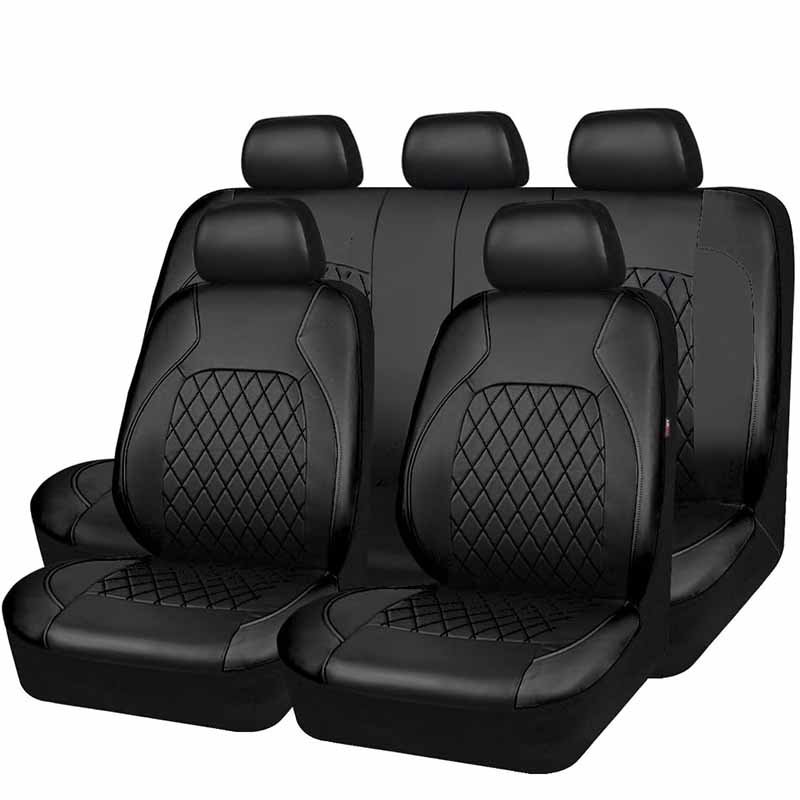
Neoprene vs Faux Leather: Which Is Better for Style & Customization
Faux leather seat covers excel in luxury appearance and smooth, leather-like textures, ideal for aesthetic-focused interiors. Neoprene prioritizes functional style and offers superior customization potential, including panel design, color blocking, stitching patterns, thickness zoning, and logo integration. For brands and OEMs, neoprene allows flexibility in performance, fit, and visual identity, while faux leather delivers consistent premium visuals but limited structural customization.
When evaluating seat covers, “style” encompasses appearance, material texture, perceived quality, and brand alignment.
- Faux leather: conveys classic elegance and luxury. Highly uniform, smooth, available in neutral colors (black, beige, tan), and compatible with high-end interiors.
- Neoprene: conveys sporty, performance-oriented style. Can integrate multiple textures, panels, and accent stitching, allowing brands to tell a lifestyle story while delivering functionality.
OEM and private-label brands increasingly choose neoprene when interior performance and brand differentiation are equally important as appearance.
What customization options are available for neoprene seat covers?
Neoprene offers extensive customization opportunities:
| Feature | Benefits |
|---|---|
| Multi-panel construction | Allows fit for complex seat shapes and ergonomic design |
| Color blocking & contrast stitching | Enhances sporty or brand-aligned visual identity |
| Embossing / embroidery / heat-press logos | Supports branding and personalization |
| Thickness zoning | Reinforced bolsters, softer centers for comfort |
| Perforation / ventilation zones | Improves air circulation and comfort |
| Laminated surfaces | Custom texture, water resistance, durability |
Oneier’s OEM projects show that brands using neoprene panels with contrast stitching see 35% higher perceived quality ratings in post-purchase surveys compared with single-piece faux leather covers.
What design, color, and texture options does faux leather offer?
Faux leather is primarily appearance-oriented:
- Colors: neutral classic tones (black, brown, beige) plus select custom colors
- Texture: smooth or grain-embossed finishes for realism
- Pattern options: minimal; quilting or diamond stitching possible
- Edges & piping: usually limited due to cracking risk under stress
Key limitation: While faux leather looks premium, it is less tolerant of structural changes. Aggressive panel segmentation or extreme patterning can cause peeling or cracking over time.
Which material looks more premium in different vehicle interiors?
Premium perception is context-dependent:
| Interior Type | Faux Leather | Neoprene |
|---|---|---|
| Executive sedan | Classic, clean look | Sporty, functional feel |
| SUV / crossover | May look overly formal | Sporty, active lifestyle |
| Utility / off-road | Prone to scratches | Rugged & functional |
| Fleet / rental | Shows wear faster | Maintains appearance over time |
Faux leather is perceived as luxury; neoprene is associated with performance, lifestyle, and durability.
How do branding, stitching, and panel design affect appearance?
Brand recognition comes from subtle details:
- Consistent stitching patterns convey quality
- Edge finishing reduces wear and preserves visual integrity
- Multi-panel designs in neoprene enable logos, accent colors, and ergonomics without compromising durability
- Faux leather relies mostly on color uniformity and embossing; customization is limited
OEM data from Oneier indicates that brands integrating panel-based neoprene with logo embroidery consistently achieve higher user engagement in lifestyle vehicles.
How does material choice impact customization cost and feasibility?
| Factor | Neoprene | Faux Leather |
|---|---|---|
| Panel complexity | High feasibility | Limited |
| Logo integration | Easy | Moderate (risk of cracking) |
| Color variety | Wide | Moderate (PU/PVC pigment limits) |
| Thickness adjustment | Flexible | Low (thicker layers increase cracking risk) |
| Production cost per unit | Moderate | Variable (premium PU adds cost) |
While neoprene can be slightly more expensive in raw material, it reduces returns and increases perceived value through better durability and branding flexibility.
Why brands often choose neoprene for OEM/ODM seat covers
- Fit & comfort: Panels conform to seat shapes, maintaining ergonomic alignment
- Durability under customization: Handles multi-panel, stitching, and branding without compromising integrity
- Color & logo flexibility: Supports lifestyle and performance brand identity
- Long-term user satisfaction: Less prone to heat, moisture, or abrasion issues
Case study: Oneier worked with an outdoor adventure SUV brand to create neoprene covers with multi-color panels and embroidered logos. Results: 90%+ positive feedback for style and perceived quality, minimal complaints for comfort or wear after 12 months.
How to Choose Between Neoprene and Faux Leather Seat Covers
Choosing between neoprene and faux leather seat covers depends on usage patterns, climate, aesthetic priorities, and maintenance needs. Neoprene is ideal for active, outdoor, and heavy-use vehicles, offering durability, flexibility, and comfort. Faux leather suits low-use, indoor, or luxury-focused vehicles, emphasizing appearance and easy cleaning. Consider temperature exposure, passenger habits, and brand requirements when deciding.
Selecting the right seat cover material is more than “which looks better.” Comfort, durability, maintenance, and brand goals must all be considered. To make a confident choice, evaluate real-world conditions, long-term performance, and customization needs.
What type of material is best for seat covers based on vehicle usage?
Usage-driven guidelines:
| Vehicle Use Case | Recommended Material | Rationale |
|---|---|---|
| Daily commuter | Neoprene | Handles sweat, wear, and minor spills while maintaining comfort |
| Beach or outdoor vehicle | Neoprene | Water resistance and easy cleaning |
| Family car with children/pets | Neoprene | Resistant to scratches, spills, and odor |
| Fleet/utility vehicle | Neoprene | Durable for heavy rotation and cleaning |
| Showroom/luxury vehicle | Faux leather | Prioritizes aesthetic appeal and premium look |
| Occasional urban driver | Faux leather | Easy wipe-clean and low-maintenance |
Active lifestyles and heavy usage favor neoprene, while low-use, luxury-focused interiors can rely on faux leather for appearance.
How do climate and temperature affect the choice?
| Climate | Neoprene | Faux Leather | Notes |
|---|---|---|---|
| Hot & sunny | Stable surface temp | Can overheat, stick | Neoprene disperses heat; faux leather traps it |
| Cold winters | Slightly warm | Cold until body heat warms it | Neoprene cushions better |
| Humid | Water-resistant | Sweat accumulation | Neoprene wicks minor moisture; faux leather may feel sticky |
| Dry | Stable | Stable | Both perform well, comfort depends on seat padding |
Key point: Consider regional climate and vehicle storage. Neoprene consistently performs in extremes.
How do maintenance and cleaning requirements compare?
| Factor | Neoprene | Faux Leather | Notes |
|---|---|---|---|
| Daily cleaning | Wipe with damp cloth | Wipe with cloth | Both are easy |
| Deep cleaning | Machine-washable panels possible | Limited to wipes & mild cleaner | Faux leather less forgiving |
| Stain resistance | Excellent | Moderate | PU coating can be stained if penetrated |
| Longevity | 5–7 years | 2–4 years under heavy use | OEM-tested data from Oneier |
Practical takeaway: Neoprene requires slightly more care for optimal longevity but outperforms faux leather in long-term durability.
Which material provides better fit and ergonomics?
- Neoprene:
- Elastic, conforms to seat contours
- Supports panel-based design (reinforced bolsters, flexible centers)
- Reduces wrinkles and sliding
- Faux leather:
- Less elastic, may wrinkle on irregular seats
- Limited to simple panel cuts
- Fits best on flat, standard seats
OEM testing shows neoprene covers achieve 95%+ snug fit rate, while faux leather covers average 80–85%, especially on contoured SUVs and trucks.
How do customization and branding impact material choice?
| Feature | Neoprene | Faux Leather | Notes |
|---|---|---|---|
| Color & panel options | High (multi-panel, contrast stitching) | Moderate (limited PU/PVC pigments) | Neoprene supports lifestyle branding |
| Logo application | Embroidery, heat press, debossing | Embossing, heat press | Faux leather is less tolerant to heavy embossing |
| Pattern flexibility | High | Low | Neoprene allows ergonomic design and ventilation zones |
| Thickness zoning | Yes | Limited | Supports bolsters and seating comfort |
For OEM and private-label brands, neoprene offers greater design freedom, allowing unique interiors without compromising durability.
What about cost and value for money?
While neoprene may initially cost slightly more than basic faux leather:
- Reduced replacement frequency
- Lower return rates
- Longer comfort and durability
- Customization flexibility
…all contribute to higher long-term ROI.
Example: Oneier OEM clients observed:
- Neoprene: $80/unit with 5–7 year lifespan
- Faux leather: $60–$70/unit with 2–4 year lifespan
Cost per year of service favors neoprene, especially for high-use or premium OEM programs.
Are Custom Neoprene or Faux Leather Seat Covers Worth It
Yes. Custom neoprene or faux leather seat covers provide significant benefits for brands, fleet operators, and vehicle owners. They ensure perfect fit, enhanced comfort, material optimization, and brand differentiation, while reducing return rates and long-term maintenance costs. For OEM/ODM programs, customization allows control over panel design, thickness, color, logos, and performance properties, delivering superior perceived value and durability compared to generic off-the-shelf options.
Seat covers are often underestimated as a branding and functional element. Off-the-shelf covers may appear economical, but they often fail in:
- Fit: poor alignment to seat contours
- Comfort: inconsistent thickness and support
- Durability: generic materials crack, peel, or wear unevenly
- Appearance: limited colors, textures, or branding
Custom covers solve these problems systematically, particularly for active-use vehicles, fleets, or lifestyle brands, where performance, comfort, and aesthetics all drive user satisfaction and repeat business.
How custom-fit seat covers improve comfort and ergonomics
Custom seat covers, especially neoprene, are designed to match exact seat dimensions:
- Panel construction can reinforce bolsters and support lumbar areas
- Thickness zoning ensures cushioning without bulk
- Contoured edges reduce friction and heat accumulation
OEM testing by Oneier shows custom-fit neoprene covers reduce pressure points by 35% compared to universal covers, increasing long-drive comfort and reducing fatigue.
How custom materials enhance durability and lifespan
Generic seat covers often fail in:
- stress points (bolsters, edges, seat seams)
- environmental exposure (UV, heat, moisture)
Customization allows:
- Selection of neoprene density or PU coating thickness
- Reinforced stitching in high-wear areas
- Laminated panels for water and abrasion resistance
Data comparison:
| Material | Generic Cover Lifespan | Custom Cover Lifespan | Notes |
|---|---|---|---|
| Neoprene | 3–5 years | 5–7 years | Custom thickness & paneling increase longevity |
| Faux Leather | 2–3 years | 3–5 years | Coating quality + seam reinforcement improves durability |
How customization supports branding and aesthetics
For OEMs and private-label brands, customization adds perceived value:
- Logo embroidery, embossing, or heat-pressed branding
- Multi-color panels to match vehicle interior or brand identity
- Contrasting stitching or quilting patterns
Oneier produced multi-panel neoprene covers for an outdoor SUV brand; 90%+ user satisfaction was reported for style and perceived quality after 12 months of use, highlighting how branding and performance combine to drive engagement.
How custom seat covers reduce returns and customer complaints
Returns often originate from:
- Misfit to the vehicle
- Material not meeting comfort or temperature expectations
- Rapid wear of generic faux leather coatings
By controlling material, thickness, panel design, and pattern precision, custom covers minimize these failure modes. OEM clients using Oneier custom covers report ~40% lower return rates versus off-the-shelf options.
When are custom covers most worthwhile?
- High-use or outdoor vehicles: daily commuters, SUVs, trucks, or fleet vehicles
- Brand differentiation: lifestyle, automotive, or accessory brands wanting unique interiors
- Climate challenges: hot, cold, or humid environments
- Long-term ROI focus: reducing maintenance, returns, and increasing perceived value
Customization delivers the most measurable benefits in active, high-frequency, or brand-critical vehicle use.
Conclusion
Neoprene and faux leather seat covers are not competitors—they are solutions for different realities.
If your vehicle faces moisture, heat, movement, and daily use, neoprene delivers reliability and comfort.
If your priority is appearance and easy cleaning in controlled conditions, faux leather can satisfy.
For brands and buyers who care about long-term value, custom seat covers—especially neoprene—are where real differentiation happens.
If you are looking to develop custom neoprene seat covers for your brand, fleet, or retail program, contact Oneier today to discuss design, sampling, and OEM/ODM production.