
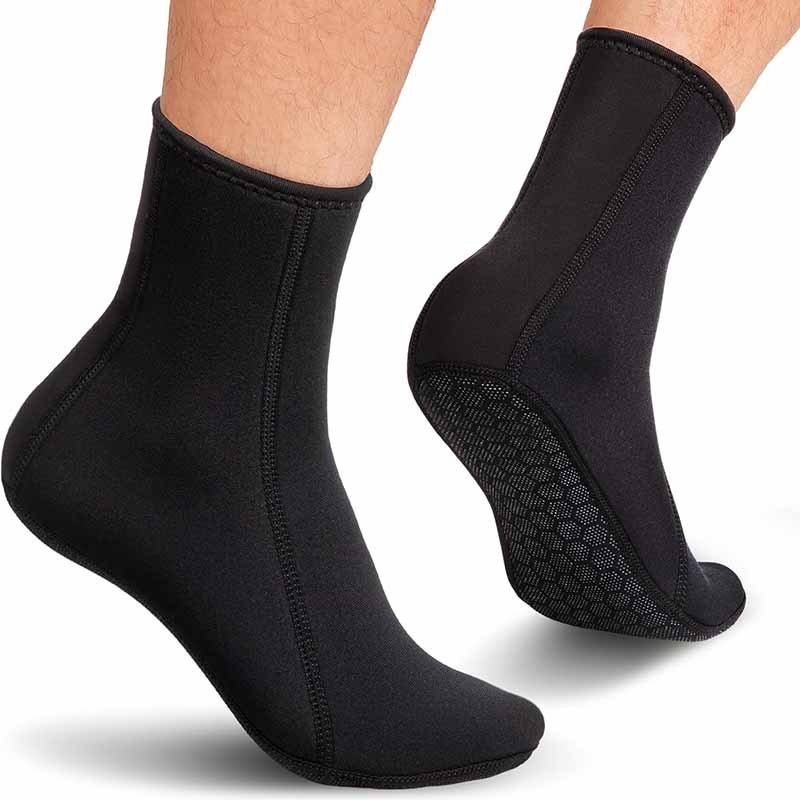
At first glance, neoprene socks often confuse people. They look thicker than regular socks, feel different on the skin, and are commonly seen paired with sandals, water shoes, or wetsuits. This leads to a common question: what is the point of neoprene socks, and why do people actually wear them?
The answer goes far beyond fashion or niche sports. Neoprene socks are designed to solve very specific problems related to cold, water, friction, and protection—problems that ordinary socks simply cannot handle. Whether you’re walking across wet rocks, standing in cold water, commuting in rainy conditions, or seeking waterproof solutions for daily or religious needs, neoprene socks play a practical role.
Unlike cotton or wool socks, neoprene socks are engineered using the same material found in wetsuits. This gives them unique thermal and protective properties, even when fully wet. That’s why they’re widely used in water sports, outdoor work, fishing, diving, and increasingly in everyday urban environments.
Neoprene socks are not meant to keep your feet dry at all times—they are designed to keep your feet warm, protected, and comfortable even when wet.
In this article, we break down exactly what neoprene socks are, why people wear them, how they work in wet conditions, which activities they are best suited for, how to choose the right thickness, and what limitations they have. Whether you’re a consumer exploring functionality or a brand considering custom neoprene socks, this guide offers clear, experience-based answers.
Neoprene socks are designed to keep feet warm, protected, and comfortable in wet or cold conditions. Made from neoprene—the same material used in wetsuits—they trap a thin layer of water that warms up with body heat, providing insulation even when soaked. People wear neoprene socks for water sports, outdoor activities, cold environments, and waterproof daily needs where regular socks fail.
What Are Neoprene Socks
Neoprene socks are socks made from neoprene, a synthetic rubber material commonly used in wetsuits. They are designed to keep feet warm, protected, and comfortable in wet or cold environments. Unlike regular socks, neoprene socks insulate even when wet, making them ideal for water sports, outdoor activities, and situations where feet are frequently exposed to moisture.
What Is Neoprene Material and Why Is It Used in Socks?
Neoprene is a closed-cell synthetic rubber originally developed for marine and industrial use. It contains millions of tiny gas bubbles that slow heat transfer, which is why it is widely used in wetsuits, diving gear, and thermal protection products.
When used in socks, neoprene does not behave like textile fibers. It does not absorb water or rely on dryness to provide warmth. Instead, it creates an insulating barrier that works even when fully wet. This makes neoprene ideal for environments where water exposure is unavoidable, such as shallow water, rain, wet ground, or cold surfaces.
In short, neoprene is used in socks because it solves problems that fabric socks cannot—cold, water, friction, and prolonged exposure to moisture.
How Are Neoprene Socks Constructed?
Neoprene socks are not just “rubber socks.” Their performance comes from layered construction.
Typical neoprene socks include:
- Neoprene foam core for insulation and cushioning
- Nylon or polyester lining for comfort and durability
- Flatlock or glued seams to reduce water flow and friction
- Anatomical shaping to improve fit and reduce water flushing
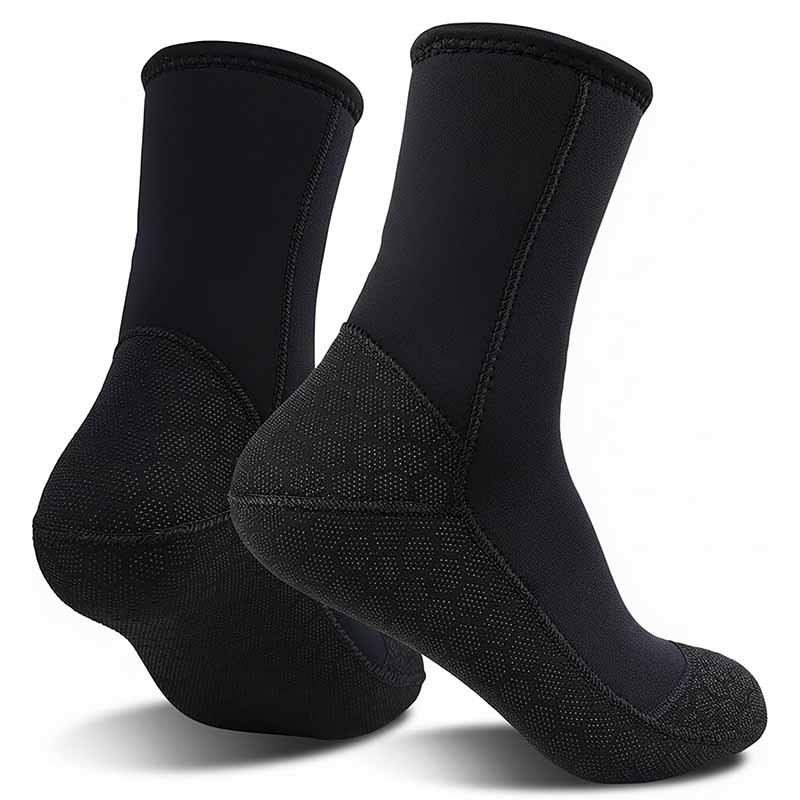
Some designs also include reinforced soles, anti-slip prints, or adjustable cuffs depending on the intended use. Each structural choice affects warmth, flexibility, and comfort.
How Are Neoprene Socks Different from Regular Socks?
The difference between neoprene socks and regular socks is functional, not cosmetic.
| Feature | Regular Socks | Neoprene Socks |
|---|---|---|
| Primary purpose | Comfort & moisture absorption | Insulation & protection |
| Performance when wet | Poor | Excellent |
| Insulation method | Dry air | Trapped warm water |
| Abrasion protection | Minimal | High |
| Typical use | Dry, indoor | Wet, cold, outdoor |
Regular socks are designed to stay dry. Neoprene socks are designed to work because they get wet. This is the key distinction most users miss.
Are Neoprene Socks Waterproof or Water-Resistant?
Neoprene socks are water-resistant, not fully waterproof.
They allow water to enter but limit water circulation. Their goal is not to keep feet dry, but to keep them warm and protected once wet. This design makes them more reliable than “waterproof” socks in environments where water will inevitably enter, such as wading, rain, or splashing.
Understanding this prevents unrealistic expectations and helps users choose the correct product.
Who Typically Uses Neoprene Socks?
Neoprene socks are used by a wide range of people, including:
- Surfers, divers, and paddlers
- Fishermen and outdoor workers
- Travelers and commuters in wet climates
- People standing on cold or wet surfaces for long periods
In recent years, neoprene socks have also entered everyday wear—paired with sandals or water shoes—because of their warmth, cushioning, and water resistance.
What Neoprene Socks Are NOT Designed For
Neoprene socks are not intended to replace everyday socks.
They are not ideal for:
- All-day dry indoor wear
- Hot climates with no water exposure
- Long-distance dry hiking
They shine in specific conditions, not universal use. When used correctly, they outperform regular socks. When misused, they can feel heavy, warm, or slow to dry.
What Is the Purpose of Neoprene Socks
The primary purpose of neoprene socks is to keep feet warm, protected, and comfortable in wet or cold conditions. Made from insulating neoprene material, they retain heat even when soaked, reduce friction, and shield feet from cold surfaces, abrasion, and minor impacts. Neoprene socks are designed for environments where regular socks lose effectiveness.
Why Wear Neoprene Socks Instead of Regular Socks?
People wear neoprene socks because regular socks stop working once they get wet.
Cotton, wool, and synthetic fabric socks rely on trapped dry air to insulate. When soaked, they lose warmth rapidly and can even increase heat loss. Neoprene socks are engineered to solve this exact problem.
Instead of trying to stay dry, neoprene socks accept water and use it as part of the insulation system. A thin layer of water warms up from body heat and stays warm because neoprene slows heat transfer. This makes neoprene socks far more reliable in wet, cold, or unpredictable environments.
How Do Neoprene Socks Help Keep Feet Warm in Wet Conditions?
Neoprene socks keep feet warm through thermal insulation, not dryness.
Neoprene is a closed-cell foam filled with microscopic gas bubbles. These bubbles reduce heat loss, even when the material is wet. Once water enters the sock, body heat warms it, and the neoprene layer traps that warmth.
This is the same principle used in wetsuits. As long as water movement is limited and the sock fits properly, heat retention remains stable, even in cold water or wet weather.
How Do Neoprene Socks Protect Feet Beyond Warmth?
Warmth is only part of the purpose.
Neoprene socks also:
- Reduce friction between the foot and footwear
- Protect against sharp rocks, shells, and rough surfaces
- Cushion feet on cold or hard ground
- Minimize blister formation during repetitive movement
This protective function is why neoprene socks are widely used in water sports, fishing, outdoor work, and activities involving prolonged foot exposure to wet or abrasive environments.
Why Are Neoprene Socks Used in Water Sports and Outdoor Activities?
In water sports and outdoor environments, wet feet are unavoidable.
Surfers, kayakers, divers, and anglers rely on neoprene socks because they continue to perform even when submerged. Unlike regular socks, neoprene socks don’t collapse thermally when soaked.
Outdoor workers and cold-weather users also benefit from neoprene socks because they maintain warmth during long periods of standing or slow movement in wet conditions.
Are Neoprene Socks Used Only for Sports?
No. While sports use is common, neoprene socks are increasingly worn for everyday practical reasons.
People in rainy climates, cold coastal regions, or wet urban environments wear neoprene socks with boots, sandals, or water shoes for warmth and moisture resistance. Some users choose them for daily routines where water exposure is frequent or unavoidable.
This shift reflects a broader trend: function-first footwear choices based on real conditions, not just tradition.
When Do Neoprene Socks Make the Most Sense—and When Do They Not?
Neoprene socks make the most sense when:
- Feet are frequently wet
- Cold temperatures are involved
- Abrasion or surface protection is needed
They are less suitable for:
- Hot, dry environments
- All-day indoor wear
- Situations requiring high breathability
Understanding these boundaries ensures users choose neoprene socks for the right reasons—and get the performance they expect.
Which Activities Are Neoprene Socks Used For
Neoprene socks are used in activities where feet are exposed to water, cold, or rough surfaces. Common uses include water sports, fishing, diving, outdoor work, cold-weather activities, and everyday wear in wet environments. They are designed to provide warmth, protection, and comfort when regular socks fail.
Are Neoprene Socks Commonly Used for Water Sports?
Yes—water sports are the most common and original use case for neoprene socks.
Surfers, kayakers, paddleboarders, divers, and swimmers wear neoprene socks to keep their feet warm in cold water and protect them from rocks, reefs, shells, and equipment. In these sports, feet are constantly wet, so insulation that works while wet is essential.
Neoprene socks are often worn:
- Inside fins
- Under wetsuit booties
- With water shoes
Thickness is chosen based on water temperature, with colder conditions requiring thicker neoprene. This is why neoprene socks are considered standard gear in many water-based activities.
Why Are Neoprene Socks Used for Fishing and Wading?
Fishing and wading involve long periods of standing in cold, wet environments.
Anglers wear neoprene socks inside rubber boots or waders to maintain warmth and reduce fatigue. Unlike fabric socks, neoprene socks do not collapse thermally when soaked, making them ideal for rivers, lakes, and coastal fishing.
They also reduce friction inside boots, helping prevent blisters during long sessions. For professional fishermen and outdoor workers, neoprene socks are a practical solution rather than a comfort accessory.
Are Neoprene Socks Used for Diving and Snorkeling?
Yes. Neoprene socks are widely used in diving and snorkeling.
Divers wear neoprene socks inside fins or dive boots to:
- Improve fit
- Reduce rubbing
- Add thermal protection
In colder water, thicker neoprene socks help prevent heat loss through the feet, which can significantly affect overall body comfort. Proper fit is critical here, as excessive water movement reduces insulation.
Can Neoprene Socks Be Used for Hiking or Outdoor Work?
Neoprene socks are used in specific outdoor conditions, not all hiking scenarios.
They are suitable for:
- Wet trails
- Snowy or icy ground
- Cold, muddy environments
- Outdoor work involving water exposure
However, they are less ideal for long-distance dry hiking due to lower breathability. In cold or wet outdoor jobs—construction, marine work, farming—neoprene socks help maintain warmth and foot protection throughout the day.
Why Do Some People Wear Neoprene Socks with Sandals or Water Shoes?
This use has become increasingly visible in recent years.
Neoprene socks worn with sandals or water shoes provide warmth, cushioning, and water resistance in rainy or cool environments. Unlike cotton socks, neoprene socks do not stay cold and soggy when wet.
This practice is especially common among Gen Z, where functionality meets casual style. The choice is often practical rather than purely aesthetic—comfort, warmth, and convenience matter more than traditional fashion rules.
Are Neoprene Socks Used for Everyday or Urban Activities?
Yes. Neoprene socks are increasingly used in everyday situations where water exposure is common.
Examples include:
- Commuting in rainy climates
- Walking near beaches or rivers
- Cold urban environments with slush or puddles
Paired with waterproof shoes, boots, or sandals, neoprene socks offer an extra layer of insulation and moisture resistance that regular socks cannot provide.
What Activities Are Neoprene Socks NOT Suitable For?
Understanding limits is just as important.
Neoprene socks are not ideal for:
- Hot, dry climates
- All-day indoor wear
- High-intensity dry sports requiring breathability
In these cases, traditional athletic or moisture-wicking socks perform better.
Quick Activity Guide
| Activity | Neoprene Socks Fit |
|---|---|
| Water sports | Excellent |
| Fishing & wading | Excellent |
| Diving & snorkeling | Excellent |
| Cold outdoor work | Very good |
| Wet hiking | Good |
| Urban rainy use | Good |
| Hot dry sports | Poor |
How Do Neoprene Socks Work in Wet Conditions
Neoprene socks work in wet conditions by trapping a thin layer of water between the foot and the neoprene material. Body heat warms this water, and the neoprene slows heat loss, keeping feet warm even when soaked. The insulation comes from heat retention rather than staying dry.
How Does Neoprene Trap Heat Even When Wet?
Neoprene is a closed-cell foam rubber filled with microscopic gas bubbles. These bubbles dramatically slow heat transfer, which is why neoprene is widely used in wetsuits and thermal protection gear.
When water enters neoprene socks, it does not continuously flow in and out. Instead, a thin layer becomes trapped between the skin and the neoprene. Body heat quickly warms this water layer, and the neoprene material acts as an insulating barrier that prevents that heat from escaping.
This means neoprene socks do not rely on dryness to keep feet warm. They rely on controlled heat retention, even in cold, wet environments.
Is There Water Inside Neoprene Socks—and Why Is That Important?
Yes, there is almost always water inside neoprene socks, and that is by design.
Neoprene socks are not waterproof in the traditional sense. They allow water to enter but limit how much water moves around. Excessive water circulation would constantly replace warm water with cold water, causing heat loss.
A snug fit is essential. Properly fitted neoprene socks minimize water flushing, allowing the trapped water to stabilize at body temperature. This balance between water entry and retention is what makes neoprene socks effective in wet conditions.
Why Do Neoprene Socks Feel Warmer Than Regular Socks When Wet?
Regular socks are made from fibers that absorb water and collapse thermally when soaked. Once wet, they lose insulating air pockets and quickly transfer heat away from the body.
Neoprene socks behave differently. They do not absorb water into fibers. Instead, they maintain their structure and insulating properties regardless of moisture.
As a result, neoprene socks feel warm and comfortable in situations where regular socks feel cold, heavy, and uncomfortable.
Does Fit Affect How Neoprene Socks Work in Water?
Yes—fit is one of the most critical factors.
If neoprene socks are too loose, water will flush in and out continuously, reducing warmth. If they are too tight, they can restrict circulation and reduce comfort.
An ideal fit is snug without compression. This allows the water layer to remain stable and the neoprene to do its insulating job efficiently.
For this reason, sizing accuracy and pattern design are essential in high-quality neoprene socks.
Do You Wear Socks Underneath Neoprene Socks in Wet Conditions?
In most cases, no.
Neoprene socks are designed to be worn directly against the skin. Wearing regular socks underneath can:
- Interfere with heat retention
- Increase bulk and friction
- Cause slipping or discomfort
Some users wear thin liner socks for hygiene or blister prevention during extended use, but this is optional rather than standard practice.
How Long Do Neoprene Socks Stay Warm in Wet Environments?
The warmth duration depends on:
- Neoprene thickness
- Water temperature
- Activity level
- Fit and water circulation
In moderate cold conditions, neoprene socks can keep feet warm for hours. In very cold water, thicker neoprene or additional booties may be needed.
How Neoprene Socks Work When Wet
| Factor | Role |
|---|---|
| Trapped water | Warms to body temperature |
| Neoprene foam | Slows heat loss |
| Fit | Controls water movement |
| Thickness | Determines insulation level |
Which Neoprene Thickness Is Best for Different Uses
The best neoprene thickness depends on water temperature, activity level, and exposure time. Thinner neoprene (2–3mm) offers flexibility for active or mild conditions, while thicker neoprene (4–5mm) provides better insulation for cold environments and low-movement activities. There is no single best thickness—only the right thickness for each use.
What Does Neoprene Thickness Actually Mean?
Neoprene thickness refers to the physical thickness of the neoprene foam layer, measured in millimeters. Thicker neoprene traps more air and reduces heat loss, providing better insulation. Thinner neoprene allows greater flexibility and comfort but sacrifices warmth.
Thickness does not change waterproofness—neoprene socks are water-resistant regardless of thickness. What changes is how long warmth is retained and how easily the foot can move.
This is why thickness selection is always a balance between warmth and mobility.
What Are Common Neoprene Thickness Options (2mm, 3mm, 5mm)?
Different thicknesses serve different needs.
| Thickness | Warmth Level | Flexibility | Typical Use |
|---|---|---|---|
| 2mm | Light | High | Mild conditions, active movement |
| 3mm | Moderate | Medium | Cool water, general outdoor use |
| 5mm | High | Lower | Cold water, low activity |
- 2mm neoprene is ideal for warm to mild conditions or highly active users who generate body heat.
- 3mm neoprene is the most versatile option, balancing warmth and flexibility.
- 5mm neoprene is designed for cold water or extended exposure where warmth is critical.
How Should You Choose Thickness Based on Water or Air Temperature?
Temperature is the primary factor.
General guidance:
- Warm water / mild weather → 2mm
- Cool water / chilly air → 3mm
- Cold water / winter conditions → 5mm
However, temperature alone is not enough. Wind, immersion time, and water movement also affect heat loss. Cold air combined with wet ground can feel colder than water alone.
How Does Activity Level Affect Thickness Choice?
Activity level is often overlooked.
Highly active users—such as surfers or paddlers—generate body heat and can stay warm in thinner neoprene. Low-movement activities—like fishing, standing, or working—require thicker insulation.
| Activity Type | Recommended Thickness |
|---|---|
| High activity (surfing, paddling) | 2–3mm |
| Moderate activity (walking, wading) | 3mm |
| Low activity (fishing, standing) | 4–5mm |
Choosing thickness without considering movement often leads to overheating or cold discomfort.
Does Thickness Affect Comfort and Fit?
Yes, significantly.
Thicker neoprene feels stiffer and bulkier. It may reduce sensitivity and make shoes feel tighter. Thinner neoprene offers a more natural feel and better dexterity.
Fit becomes more critical as thickness increases. Poorly fitted thick neoprene can restrict circulation, which actually reduces warmth.
This is why custom sizing and pattern optimization matter for thicker neoprene socks.
Can Thickness Be Customized for Different Markets or Brands?
Absolutely.
Manufacturers like Oneier often customize neoprene thickness based on:
- Target climate
- User activity profile
- Footwear compatibility
- Cost and weight constraints
Some products even combine different thickness zones—for example, thicker soles with thinner uppers—to balance warmth and flexibility.
Quick Thickness Selection Guide
| Use Case | Recommended Thickness |
|---|---|
| Surfing & water sports | 2–3mm |
| Fishing & wading | 3–5mm |
| Diving & snorkeling | 3–5mm |
| Cold outdoor work | 4–5mm |
| Urban wet weather | 2–3mm |
Are There Limitations or Disadvantages
Yes, neoprene socks have limitations. They are not fully waterproof, have lower breathability than regular socks, dry slowly, and can feel warm or bulky in hot, dry conditions. Neoprene socks are designed for wet or cold environments and may be uncomfortable if used outside their intended scenarios.
Are Neoprene Socks Fully Waterproof or Just Water-Resistant?
Neoprene socks are water-resistant, not completely waterproof.
They allow water to enter but restrict water movement. Their purpose is insulation, not dryness. This design works well in environments where water exposure is unavoidable, such as shallow water, rain, wet sand, or splashing.
If a user expects feet to remain completely dry, neoprene socks will feel disappointing. In those cases, membrane-based waterproof socks are more appropriate, though they often sacrifice insulation when wet.
Understanding this distinction prevents misuse and negative experiences.
Do Neoprene Socks Breathe Well?
Breathability is one of neoprene socks’ main limitations.
Neoprene is a closed-cell material that traps heat and moisture. While this is ideal in cold or wet environments, it can feel warm or sweaty in dry or hot conditions.
For long periods of dry indoor wear or high-intensity activity without water exposure, neoprene socks may feel uncomfortable compared to moisture-wicking fabric socks.
This is why neoprene socks perform best when water or cold is present, not in all-day dry use.
Do Neoprene Socks Dry Slowly and Retain Odor?
Yes, neoprene socks typically dry more slowly than fabric socks.
Neoprene does not absorb water like fibers, but moisture remains on its surface and inside seams. Without proper rinsing and drying, bacteria and odor can develop over time.
Best practices include:
- Rinsing with clean water after use
- Turning socks inside out to dry
- Air-drying away from direct heat
With proper care, neoprene socks remain hygienic and durable, but they do require more maintenance than regular socks.
Can Neoprene Socks Feel Bulky or Restrictive?
Depending on thickness, neoprene socks can feel bulkier than regular socks.
Thicker neoprene (4–5mm) offers excellent insulation but reduces flexibility and foot sensitivity. This can affect fit inside tight shoes or fins.
Improper sizing can also restrict circulation, which reduces warmth rather than improving it. A snug but not tight fit is essential.
This is why accurate sizing and pattern design matter—especially for thicker neoprene socks.
Are Neoprene Socks Suitable for Hot or Dry Climates?
Generally, no.
In hot, dry environments, neoprene socks often feel too warm and uncomfortable. Without water or cold to offset heat retention, the insulating properties become a disadvantage.
For these conditions, breathable athletic socks or lightweight moisture-wicking socks are better choices.
Neoprene socks excel in specific environments, not universal use.
Why Do Some Users Choose Waterproof Socks Instead of Neoprene Socks?
Some users prefer waterproof socks when their priority is staying dry rather than staying warm.
For example, certain daily or religious needs require minimal moisture contact. Waterproof socks provide a barrier but may feel colder once wet internally or lose insulation if compromised.
Neoprene socks take a different approach—accepting moisture and focusing on warmth and protection. Neither option is universally better; the choice depends on the situation.
Neoprene Socks vs Regular Socks
| Factor | Neoprene Socks | Regular Socks |
|---|---|---|
| Warmth when wet | Excellent | Poor |
| Breathability | Low | High |
| Drying speed | Slow | Fast |
| Best environment | Wet & cold | Dry |
| Maintenance | Moderate | Easy |
Conclusion
Neoprene socks perform best when they are designed for specific use cases, not generic assumptions.
Oneier is a China-based factory with over 18 years of experience in neoprene material R&D and manufacturing. From neoprene socks and wetsuits to bags, koozies, sports protection, and medical supports, Oneier supports custom, private label, and OEM/ODM neoprene products for global brands and professional buyers.
With in-house material development, fast sampling, low MOQ options, and strict quality control, Oneier helps clients turn real-world needs into reliable neoprene solutions.
Contact Oneier to discuss your custom neoprene socks project, request samples, or explore OEM options.
The right thickness, fit, and material start with the right manufacturing partner.