
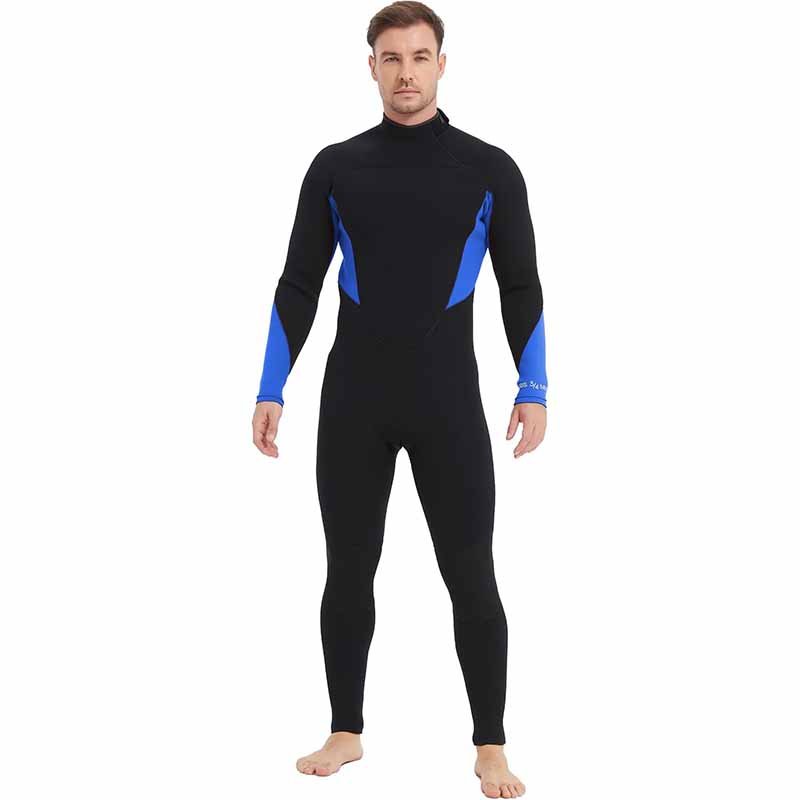
Many people assume wetsuits “block cold water.” Others believe they somehow generate heat. Both ideas are common—and both are incomplete.
If you’ve ever worn a wetsuit in cold water, you probably noticed something counter-intuitive: you still get wet, yet you don’t feel as cold as expected. This often leads to confusion, especially among first-time swimmers, surfers, or brand buyers developing neoprene products. So what’s really happening inside a wetsuit? And why do some wetsuits feel dramatically warmer than others, even when they look similar?
The answer lies in material science, fit engineering, and thermal physics—not magic. Modern wetsuits are carefully designed systems that manage heat loss, water movement, and body energy. Small changes in neoprene structure, thickness, seam construction, or fit can mean the difference between comfort and early hypothermia. Wetsuits keep you warm by slowing heat loss, not by creating heat. Neoprene traps a thin layer of water between your body and the suit, which is warmed by body heat. The closed-cell structure of neoprene reduces heat transfer, while proper thickness, fit, and seam construction prevent cold water flushing. Warmth depends on water temperature, activity level, exposure time, and wetsuit design.
Behind every reliable wetsuit is a manufacturer that understands neoprene behavior at a material level. With over 18 years of experience in neoprene R&D and production, Oneier works daily with global brands to engineer wetsuits and neoprene products that perform consistently across real-world conditions.
Before discussing thickness, temperature limits, or layering, let’s start at the foundation: what a wetsuit actually is—and how it’s made.
What is a wetsuit and how is it made
A wetsuit is a water-immersion garment made primarily from neoprene, a closed-cell synthetic rubber that insulates the body by slowing heat loss in water. It works by trapping a thin layer of water warmed by body heat while neoprene’s gas-filled cells reduce thermal transfer. Wetsuits are made through a controlled process of neoprene foaming, fabric lamination, precision cutting, seam bonding, stitching, sealing, and final quality inspection.
What exactly is a wetsuit, and how is it different from other waterwear?
A wetsuit is not designed to keep you dry—that is the role of a drysuit. Instead, a wetsuit is designed to control heat loss while allowing water contact.
Key differences:
- Wetsuit: allows limited water entry, insulates through neoprene
- Drysuit: seals out all water, relies on air layers and undergarments
Wetsuits are favored for swimming, surfing, diving, and watersports because they:
- Are flexible and close-fitting
- Allow natural movement
- Provide thermal protection without bulky air layers
This balance of mobility + insulation is why wetsuits remain the dominant solution for active water sports.
What materials are used to make a wetsuit?
At the core of every wetsuit is neoprene foam (polychloroprene).
Neoprene is chosen because it provides:
- Thermal insulation
- Elastic recovery
- Water resistance
- Buoyancy
However, a modern wetsuit is a composite system, not just foam.
Typical material layers include:
- Neoprene foam core – insulation and stretch
- Outer fabric (nylon, polyester, performance knit) – abrasion resistance
- Inner lining (smooth-skin, fleece, thermal lining) – comfort and warmth
- Adhesives & laminates – bond layers without blocking stretch
From a manufacturing perspective, controlling foam density, cell size, and lamination strength is critical to consistent warmth and durability—this is a core competency of neoprene-focused factories like Oneier.
How does neoprene actually provide insulation in water?
Neoprene insulation does not depend on dryness.
Inside neoprene foam are millions of sealed micro-cells filled with gas (often nitrogen). These gas pockets:
- Conduct heat very poorly
- Remain stable even when submerged
- Reduce heat transfer from the body to surrounding water
This is fundamentally different from fabrics, which rely on trapped air between fibers—an approach that fails once soaked.
Higher-quality neoprene:
- Resists compression
- Maintains cell integrity under pressure
- Recovers shape after repeated use
Lower-quality neoprene collapses over time, losing warmth even if the suit still “looks fine.”
How is neoprene prepared before wetsuit assembly?
Before cutting and sewing, neoprene goes through several controlled steps:
- Foaming – raw neoprene rubber is expanded into closed-cell foam
- Curing – stabilizes elasticity and cell structure
- Lamination – fabrics are bonded to one or both sides
- Thickness calibration – foam is split to precise mm tolerances
Professional factories test:
- Thickness consistency
- Stretch ratio
- Compression resistance
- Adhesion strength
This stage largely determines how warm and durable the final wetsuit will be.
How are wetsuits cut and assembled?
Once neoprene sheets are prepared, wetsuit manufacturing moves into precision assembly.
Core steps include:
- Pattern grading (size accuracy across ranges)
- Panel cutting (manual or CNC-controlled)
- Edge gluing (to seal before stitching)
- Blind stitching or taping (to reduce water entry)
Panels are designed to:
- Minimize seams in high-movement zones
- Reduce stress at shoulders, crotch, and knees
- Improve fit and flexibility
From Oneier’s OEM experience, panel layout is as important as material choice for warmth and comfort.
Which seam types are used, and why do they matter?
Seams are the weakest thermal points in any wetsuit.
Common seam constructions:
- Flatlock seams – flexible, best for warm water
- Glued & blind-stitched (GBS) – reduced water penetration
- Fully taped seams – maximum warmth, minimal flushing
Better seam construction:
- Slows water circulation
- Improves durability
- Increases warmth without extra thickness
High-end wetsuits often combine multiple seam techniques depending on zone requirements.
What quality checks are done before a wetsuit is finished?
A professional wetsuit is inspected far beyond appearance.
Typical QC checks include:
- Thickness verification
- Seam strength testing
- Stretch recovery tests
- Visual alignment and symmetry
- Fit sampling on mannequins or testers
This is where manufacturing experience makes a real difference. Factories like Oneier, with long-term neoprene R&D and production lines, focus on process stability, not just final inspection.
How do wetsuits keep you warm in cold water
Wetsuits keep you warm in cold water by slowing heat loss rather than blocking water completely. A thin layer of water enters the suit, warms up from body heat, and remains mostly trapped. Neoprene’s closed-cell structure reduces heat transfer, while proper fit, thickness, and sealed seams prevent cold water flushing. Warmth depends on water temperature, activity level, exposure time, and wetsuit design.
To understand how wetsuits work, you need to separate three different mechanisms that often get mixed up:
- heat generation
- heat loss
- heat retention
A wetsuit only controls one of these—but it does it very effectively when designed correctly.
Do wetsuits actually keep you warm, or do they just slow heat loss?
This distinction is critical—and often misunderstood.
Wetsuits do not create heat. Your body is the only heat source.
What a wetsuit does is slow the rate at which your body loses heat to surrounding water. This matters because water removes heat extremely fast—about 20–25 times faster than air at the same temperature.
Without a wetsuit:
- Body heat is rapidly conducted away
- Skin temperature drops within minutes
- Muscle efficiency declines
- Risk of hypothermia increases quickly
With a wetsuit:
- Heat loss is reduced
- Body heat production can keep up longer
- Core temperature remains stable for extended periods
So yes—wetsuits do keep you warm, but only by buying your body time.
What role does trapped water play inside a wetsuit?
One of the most counterintuitive facts about wetsuits is this:
A wetsuit is designed to let some water in.
That initial water layer:
- Enters through the neck, cuffs, or zipper
- Warms quickly from body heat
- Becomes a thin, mostly stationary layer
Once warmed, this water acts as a thermal buffer between your skin and the cold environment.
The real problem is not water entry—it’s water movement.
If cold water continuously replaces that warm layer, heat is stripped away repeatedly. This process, known as water flushing, is the biggest enemy of warmth in a wetsuit.
How does neoprene insulation actually work underwater?
Neoprene insulation does not rely on dryness.
Neoprene foam contains millions of closed cells filled with gas (often nitrogen). These gas pockets:
- Transfer heat very poorly
- Remain sealed even underwater
- Slow conductive heat loss dramatically
Key points:
- Gas insulates better than water
- Closed cells prevent water circulation through the foam
- Thicker foam = longer heat path = slower heat loss
High-quality neoprene maintains cell structure under pressure and repeated use. Low-quality foam collapses, reducing insulation over time—even if the suit looks intact.
This is why neoprene quality matters as much as thickness.
Why does cold water feel colder than air—and why wetsuits matter more in water?
Cold water stress is fundamentally different from cold air exposure.
In water:
- Heat is conducted away faster
- Blood vessels constrict more aggressively
- Shivering begins earlier
- Muscle fatigue increases rapidly
A wetsuit reduces these effects by:
- Limiting direct water contact
- Slowing convective heat loss
- Stabilizing skin temperature
Even a thin wetsuit can make a dramatic difference compared to bare skin, especially during prolonged exposure.
Why does fit matter more than people think for warmth?
Two wetsuits made of the same neoprene can feel completely different in cold water.
The reason is fit.
A well-fitted wetsuit:
- Holds the warm water layer in place
- Minimizes gaps at neck, wrists, and ankles
- Prevents pumping of cold water during movement
A loose wetsuit:
- Allows continuous flushing
- Resets the warm layer repeatedly
- Feels cold even at higher thickness
From a manufacturing perspective, this is why pattern accuracy and size grading are thermal issues—not just comfort issues.
Why thickness helps—but cannot fix poor design
Neoprene thickness increases insulation, but it has limits.
Thickness works only when:
- The suit fits correctly
- Seams are sealed
- Neoprene quality is stable
A poorly designed 5mm wetsuit can feel colder than a well-designed 3mm suit.
Professional wetsuits use thickness zoning:
- Thicker panels on the torso
- Thinner panels on arms and legs
This keeps the core warm while allowing movement to generate heat.
How long can a wetsuit realistically keep you warm?
There is no universal answer.
Warmth duration depends on:
- Water temperature
- Wetsuit thickness and quality
- Fit and seam construction
- Activity level
- Wind and post-exit exposure
A wetsuit delays heat loss—it does not stop it. Over time, body heat production may still fall behind heat loss, especially in very cold water or during inactivity.
This is why wetsuit selection should always be based on worst-case conditions, not just average temperature.
What factors affect wetsuit warmth
Wetsuit warmth is affected by neoprene thickness and quality, suit fit, seam construction, water temperature, user activity level, exposure time, and accessories such as hoods or boots. Thickness alone does not guarantee warmth—poor fit or water flushing can cause rapid heat loss even in thick wetsuits. The warmest wetsuits balance insulation, sealing, flexibility, and real-world usage conditions.
Many people assume wetsuit warmth is decided by one factor—usually thickness. In reality, warmth is the result of multiple interacting variables. Professional wetsuit design treats warmth as a system, not a spec.
Below are the most important factors, explained from both a user and manufacturing perspective.
How does neoprene thickness influence warmth?
Thickness is the most visible factor—and the easiest to misunderstand.
In simple terms:
- Thicker neoprene = more insulation
- Thinner neoprene = more flexibility, less insulation
However, warmth does not increase linearly with thickness.
Why?
- Thicker neoprene can restrict movement, reducing heat generation
- Thick foam compresses under pressure, reducing insulation
- Heat still escapes through seams, neck, wrists, and ankles
Typical thickness ranges and use cases:
| Neoprene Thickness | Common Use Scenario |
|---|---|
| 2–3mm | Mild water, high activity |
| 3–4mm | Cool water, moderate sessions |
| 4/3mm | Cold water, active sports |
| 5mm+ | Very cold water, longer exposure |
From a factory standpoint, strategic thickness zoning (thicker core, thinner limbs) is far more effective than uniform thickness.
How does neoprene quality and structure affect insulation?
Not all neoprene insulates the same—even at the same thickness.
Key neoprene properties that affect warmth:
- Closed-cell density and size
- Foam resilience and recovery
- Compression resistance
- Aging behavior over time
High-quality neoprene maintains its gas-filled cell structure under:
- Body pressure
- Repeated stretching
- Cold-water compression
Low-quality neoprene collapses faster, losing insulation even if the wetsuit still looks intact.
This is why manufacturers like Oneier, with in-house neoprene material R&D, focus on foam performance, not just surface feel.
Why does fit matter more than most people expect?
Fit directly controls water movement, which is the main cause of heat loss.
A properly fitted wetsuit:
- Holds a thin layer of warmed water in place
- Minimizes gaps at neck, wrists, and ankles
- Prevents cold water pumping during movement
A loose wetsuit:
- Allows constant flushing
- Replaces warm water repeatedly
- Feels cold regardless of thickness
From a design perspective, pattern accuracy and size grading are thermal features—not just comfort features.
How do seams and construction methods affect warmth?
Seams are the weakest points for heat retention.
Common seam types:
- Flatlock seams – flexible, but allow water entry
- Glued & blind-stitched (GBS) – significantly reduce water flow
- Fully taped seams – maximum warmth, minimal flushing
Better seam construction:
- Reduces convective heat loss
- Improves durability
- Allows thinner neoprene to perform warmer
Factories often combine seam types in different zones to balance warmth and flexibility.
How does water temperature influence perceived warmth?
Water temperature sets the baseline challenge.
Cold water:
- Pulls heat from the body faster
- Causes stronger vasoconstriction
- Accelerates fatigue
Even small temperature differences matter. A 2–3°C drop can dramatically shorten comfortable exposure time.
This is why wetsuit selection should be based on lowest expected temperature, not average conditions.
How does activity level change how warm a wetsuit feels?
Your body is part of the insulation system.
- Active movement generates heat
- Inactivity allows heat loss to dominate
This explains why:
- Surfers paddling feel warmer
- Divers stationary feel colder faster
- Beginners chill sooner than experienced users
Wetsuits designed for low-activity sports require:
- Thicker core panels
- Better seals
- Optional accessories (hoods, gloves)
How long you stay in the water matters as much as how cold it is
Exposure time is often overlooked.
A wetsuit that feels fine for 20 minutes may fail after 60 minutes.
Heat loss is cumulative:
- Core temperature drops gradually
- Extremities cool first
- Fatigue reduces heat production
Professional wetsuit planning always considers session length, not just temperature.
Do accessories really make a difference?
Yes—often more than increasing thickness.
Critical heat-loss areas:
- Head (up to 30–40% heat loss)
- Hands and feet (high surface-to-volume ratio)
Neoprene accessories that significantly improve warmth:
- Hoods
- Gloves
- Boots
In very cold water, adding a hood can be more effective than upgrading from a 4mm to a 5mm suit.
How does wetsuit condition and maintenance affect warmth?
Aging wetsuits lose warmth even without visible damage.
Causes include:
- Foam cell collapse
- UV exposure
- Salt and chlorine degradation
Poor maintenance reduces insulation long before seams fail.
Proper care:
- Rinse with fresh water
- Avoid heat and sunlight
- Dry in shade
- Store uncompressed
Key Warmth Factors
| Factor | Impact on Warmth |
|---|---|
| Neoprene thickness | High |
| Neoprene quality | Very high |
| Fit & sealing | Very high |
| Seam construction | High |
| Water temperature | High |
| Activity level | High |
| Exposure time | Medium–High |
| Accessories | Medium–High |
| Maintenance | Medium |
Why does fit matter for heat retention
Wetsuit fit matters for heat retention because a loose suit allows cold water to continuously flush in and replace the warmed water layer next to the skin. Proper fit minimizes water movement, stabilizes body temperature, and allows neoprene insulation to work effectively. Even thick wetsuits lose warmth quickly if the fit is poor, while a well-fitted thinner suit can feel significantly warmer.
Most people think wetsuit fit is about comfort. In reality, fit is about thermal control.
From a thermal-engineering perspective, neoprene insulation only works when the environment inside the suit is stable. Fit determines whether that environment exists at all.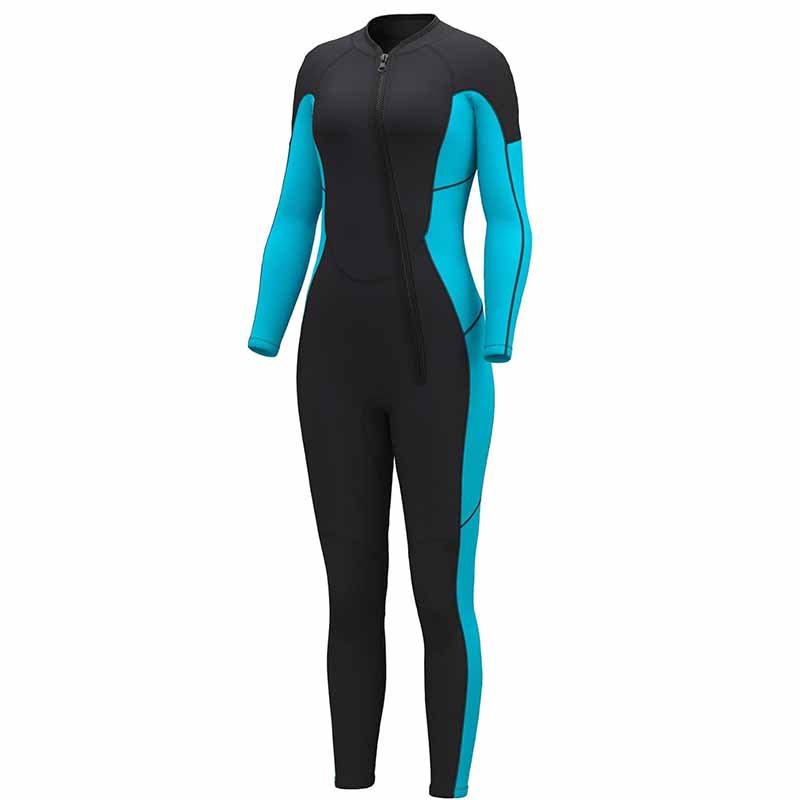
How does fit control water movement inside a wetsuit?
A wetsuit is designed to trap a thin, mostly stationary layer of water between your body and the neoprene. This layer warms quickly from body heat and becomes part of the insulation system.
A properly fitted wetsuit:
- Holds the water layer in place
- Prevents large water pockets
- Reduces circulation during movement
A poorly fitted wetsuit:
- Creates gaps where water can flow
- Pumps cold water in and out with every arm or leg movement
- Constantly replaces warm water with cold water
This process—called water flushing—is the single biggest cause of heat loss in wetsuits.
What happens when a wetsuit is too loose?
A loose wetsuit fails thermally, even if it feels comfortable on land.
Thermal consequences of a loose fit include:
- Continuous cold water entry at the neck, cuffs, or zipper
- Rapid cooling of the skin layer
- Increased heat loss during swimming or paddling
- The feeling that the suit is “cold” immediately
From a manufacturing standpoint, many warmth complaints are traced back to incorrect sizing or poor pattern grading, not neoprene thickness.
This is why premium wetsuits prioritize anatomical panel shaping, not just stretchy foam.
What happens when a wetsuit is too tight?
Over-tight suits create a different set of problems.
A wetsuit that is too tight can:
- Restrict blood circulation, especially in arms and legs
- Reduce muscle movement and heat generation
- Cause faster fatigue
- Make breathing feel constrained
While it may reduce water flushing, excessive compression can actually make users feel colder over time due to reduced blood flow to extremities.
Professional wetsuit design targets a snug, body-hugging fit—not compression wear.
Which body zones are most critical for fit and warmth?
Not all areas of a wetsuit affect warmth equally.
The most critical sealing zones are:
- Neck – the largest entry point for cold water
- Wrists and ankles – frequent movement causes pumping
- Lower back and waist – common gap zones when bending
- Underarms and shoulders – high-motion flushing areas
From Oneier’s OEM experience, even small gaps in these zones can reduce warmth more than dropping 1–2mm of neoprene thickness.
How does poor fit reduce the effectiveness of thick neoprene?
Thickness cannot compensate for flushing.
A poorly fitted 5mm wetsuit may feel colder than:
- A well-fitted 3mm or 4/3mm wetsuit
- A thinner suit with better neck and cuff seals
Why?
- Thick neoprene insulates, but moving water removes heat faster than insulation can slow it
- Flushing resets the thermal buffer repeatedly
This is why fit quality often matters more than thickness for real-world warmth.
How do professional manufacturers design for proper fit?
Factories like Oneier treat fit as a technical system, not guesswork.
Professional fit engineering includes:
- Anatomical pattern design (curved panels, pre-bent limbs)
- Accurate size grading between sizes
- Stretch-direction control of neoprene panels
- Reduced seam count in high-movement zones
Custom and OEM wetsuits often perform better thermally because patterns are adjusted to the user or target market, not averaged across extremes.
How can users tell if a wetsuit fits correctly for warmth?
A wetsuit fits correctly when:
- There are no large air or water pockets
- The suit lies flat against the lower back
- The neck seal is snug without choking
- Wrists and ankles seal without cutting circulation
- Movement feels natural, not restricted
A simple test: If you feel sudden cold surges when you move, flushing is happening—and fit is the problem.
Fit vs Warmth
| Fit Condition | Thermal Result |
|---|---|
| Snug, anatomical fit | Maximum heat retention |
| Slightly loose | Moderate flushing, reduced warmth |
| Very loose | Rapid heat loss |
| Over-tight | Reduced circulation, fatigue |
How does user activity level affect how warm a wetsuit feels
User activity level strongly affects how warm a wetsuit feels because body movement generates heat. Active users produce more metabolic heat that a wetsuit can retain, while inactive users lose heat faster than it can be replaced. Wetsuits feel warmest when activity, neoprene thickness, and fit are matched to water temperature and exposure time.
A common mistake is to think of a wetsuit as a stand-alone insulation layer. In reality, a wetsuit is only one part of a human–material system.
The other part is you.
How much heat your body produces—and how consistently—plays a major role in how warm a wetsuit actually feels in cold water.
Why does active movement make a wetsuit feel warmer?
When you move, your muscles generate heat. This heat:
- Warms your core
- Warms the thin water layer inside the wetsuit
- Helps maintain stable skin temperature
Activities like swimming, surfing, paddling, or kayaking create continuous heat input, allowing the wetsuit to do its job: slowing heat loss faster than your body produces heat.
This is why:
- Surfers often feel warmer than divers in the same water
- Swimmers can tolerate thinner wetsuits than stationary users
- High-movement sports rely more on flexibility than extreme thickness
From an engineering standpoint, wetsuits are most effective when heat generation and insulation are balanced.
Why do low-activity users feel cold faster in the same wetsuit?
When activity drops, heat production drops with it.
Low-activity scenarios include:
- Floating or resting
- Waiting between surf sets
- Scuba diving at depth
- Standing in water
In these cases:
- Metabolic heat generation decreases
- Heat loss to water continues at the same rate
- Core temperature gradually falls
This is why divers, instructors, and rescue personnel typically require:
- Thicker neoprene
- Better seals
- Hoods and accessories
For these users, wetsuit warmth must compensate for inactivity, not enhance activity.
How does activity type change wetsuit warmth requirements?
Different water sports demand different thermal strategies.
| Activity Type | Movement Level | Typical Warmth Strategy |
|---|---|---|
| Surfing | High (paddling) | Medium thickness, high stretch |
| Swimming | High (continuous) | Thinner suit, snug fit |
| Kayaking | Moderate | Balanced thickness |
| Scuba diving | Low | Thicker suit, sealed seams |
| Lifeguard / rescue | Variable | Core-focused insulation |
From Oneier’s OEM experience, mis-matching wetsuit design to activity type is one of the most common reasons users feel cold despite wearing “thick enough” suits.
How does fatigue reduce warmth over time?
Even active users cool down eventually.
As fatigue sets in:
- Muscle output decreases
- Heat production drops
- Movements become less efficient
- Blood flow to extremities reduces
This explains why a wetsuit that feels warm for the first 30 minutes may feel cold after an hour.
Professional wetsuit planning always considers:
- Peak activity vs end-of-session activity
- Worst-case conditions, not best-case performance
This is especially important for long sessions or training.
Why does shivering start sooner in inactive users?
Shivering is the body’s emergency heat response.
In low-activity users:
- Heat loss exceeds heat production
- Skin temperature drops quickly
- Shivering begins earlier
A wetsuit delays shivering—but cannot stop it indefinitely.
Once shivering starts:
- Energy is diverted from movement
- Fatigue accelerates
- Cold tolerance decreases rapidly
This is a sign that activity level and wetsuit insulation are not well matched.
How should wetsuit design adapt to different activity levels?
Professional wetsuit engineering adjusts warmth strategy based on activity:
For high-activity users:
- Thinner neoprene in limbs
- High stretch materials
- Minimal bulk to reduce fatigue
For low-activity users:
- Thicker core panels
- Improved neck, wrist, and ankle seals
- Optional thermal linings
Oneier frequently helps brands customize neoprene thickness zoning and lining options based on how the wetsuit will actually be used—not just water temperature.
How can users choose the right wetsuit based on activity level?
A simple decision rule:
- If you move constantly → prioritize fit and flexibility
- If you stay still often → prioritize insulation and sealing
Always choose a wetsuit for:
- The least active moments of your session
- The coldest expected conditions
This approach reduces risk and improves comfort across real-world use.
Activity Level vs Warmth
| Activity Level | Heat Generation | Wetsuit Warmth Needs |
|---|---|---|
| High | High | Moderate thickness, high stretch |
| Moderate | Medium | Balanced thickness |
| Low | Low | Thicker neoprene, sealed seams |
| Fatigued | Low | Extra insulation & accessories |
Are wetsuit layering and accessories effective for staying warm
Yes, wetsuit layering and accessories are highly effective for staying warm when used correctly. Neoprene vests, thermal liners, hoods, gloves, and boots reduce heat loss at critical areas and often provide more warmth than increasing wetsuit thickness alone. However, wearing regular clothes under a wetsuit usually reduces warmth by causing water pooling and poor fit. Effective layering must preserve seal, fit, and water stability.
Layering for warmth in water is not the same as layering on land. In water, the goal is thermal stability, not just adding material.
Professional wetsuit design treats accessories and layers as part of the insulation system, not optional add-ons.
Why layering works differently in water than on land
On land, clothing layers trap dry air. In water, air-based insulation fails immediately once submerged.
Effective wetsuit layering works because:
- It reduces water movement
- It adds controlled insulation without disrupting fit
- It targets high heat-loss zones
Poor layering fails because:
- It traps excess water
- It breaks seals at neck and cuffs
- It creates flushing pathways
This is why purpose-built neoprene layers work—and everyday clothing does not.
Is it warmer to wear clothes under a wetsuit?
In most real-world cases, no.
Regular clothes (T-shirts, rash cotton layers, underwear):
- Absorb and hold cold water
- Create folds and gaps
- Prevent neoprene from sitting flush against the body
- Increase water flushing
As a result, they often make a wetsuit feel colder, not warmer.
This is one of the most common beginner mistakes—and one of the fastest ways to lose heat in cold water.
What should you wear under a wetsuit instead of regular clothes?
Only water-specific thermal layers should be used under wetsuits.
Effective options include:
- Thermal rash guards (hydrophobic, low-bulk)
- Neoprene vests (1–2mm, sleeveless or hooded)
- Smooth-skin liners designed to reduce water flow
These layers:
- Add insulation without bulk
- Maintain proper fit
- Reduce flushing
- Improve comfort in cold conditions
From a manufacturing perspective, Oneier often helps brands integrate internal thermal layers directly into wetsuit designs to avoid user error.
Why are hoods so effective for warmth?
The head is a major heat-loss zone.
Scientific estimates show:
- 30–40% of body heat can be lost through the head in cold water
A neoprene hood:
- Reduces direct heat loss
- Minimizes water flow around the neck
- Stabilizes core temperature
In many cases, adding a hood provides more warmth than increasing wetsuit thickness by 1mm.
This is why cold-water wetsuits almost always include integrated or compatible hood systems.
Do gloves and boots really make a difference?
Yes—especially for comfort and endurance.
Hands and feet:
- Have high surface-to-volume ratios
- Lose heat quickly
- Affect overall comfort disproportionately
Neoprene gloves and boots:
- Reduce localized heat loss
- Improve dexterity and balance
- Delay fatigue
While they don’t warm the core directly, they prevent peripheral cooling, which helps maintain overall thermal comfort longer.
How do accessories reduce water flushing?
Accessories improve warmth by sealing weak points.
Critical flushing zones:
- Neck
- Wrists
- Ankles
Well-designed accessories:
- Overlap wetsuit seals
- Reduce pumping during movement
- Stabilize the warm water layer
This sealing effect is often more important than the insulation value of the accessory itself.
When are accessories more effective than a thicker wetsuit?
Accessories often outperform added thickness when:
- Water is cold but mobility is required
- Users are moderately active
- Heat loss is localized (head, hands, feet)
Instead of upgrading from a 4mm to a 5mm suit, many professionals choose:
- A hooded vest
- Gloves and boots
- Improved seals
This approach maintains flexibility while increasing real-world warmth.
How do manufacturers design layering systems into wetsuits?
Professional manufacturers treat layering as system design, not afterthought.
Design strategies include:
- Integrated thermal linings
- Removable neoprene vests
- Zipper-compatible hood systems
- Overlapping seal geometry
At Oneier, layering compatibility is often planned during pattern and material development, ensuring warmth upgrades don’t compromise fit or performance.
Layering & Accessories Effectiveness
| Item | Warmth Impact | Best Use Case |
|---|---|---|
| Neoprene vest | High | Core insulation |
| Hood | Very high | Cold water, long sessions |
| Gloves | Medium | Dexterity & comfort |
| Boots | Medium | Balance & endurance |
| Thermal rash guard | Low–Medium | Mild cold, added comfort |
| Regular clothes | Negative | Should be avoided |
How can you maintain and maximize a wetsuit’s heat performance
You can maintain and maximize a wetsuit’s heat performance by rinsing it with fresh water after every use, drying it properly away from heat and sunlight, storing it uncompressed, and avoiding harsh chemicals. Neoprene insulation degrades mainly through compression, UV exposure, salt, and chlorine. Proper care preserves the neoprene’s closed-cell structure, which is essential for long-term warmth.
Many wetsuits don’t suddenly “fail.” They slowly lose insulation, and users only realize it when they start feeling cold sooner than before.
From a material-engineering perspective, maintaining warmth is about protecting neoprene’s internal cell structure and preventing unnecessary stress.
Why does neoprene lose heat performance over time?
Neoprene insulates because of its gas-filled closed-cell structure. Over time, several factors damage those cells:
- Compression – repeated squeezing collapses foam cells
- UV exposure – sunlight breaks down rubber polymers
- Salt and chlorine – chemical degradation of foam and laminates
- Heat – accelerates material aging
Once foam cells collapse, they cannot trap gas effectively—even if the wetsuit still looks intact. This is why an “old but undamaged” wetsuit often feels colder than a newer one.
How should you rinse a wetsuit after use to protect warmth?
Rinsing is the single most important daily habit.
Best practice:
- Rinse immediately after use with cool fresh water
- Gently flush neck, cuffs, and zipper areas
- Remove salt, sand, and chlorine
Salt crystals and chlorine residues:
- Stiffen neoprene
- Weaken lamination
- Accelerate foam breakdown
Avoid high-pressure sprays, which can stress seams and foam.
How should you wash a wetsuit without damaging insulation?
Occasional deeper cleaning is necessary—especially after heavy use.
Safe cleaning guidelines:
- Use wetsuit-specific cleaners
- Wash by hand in cool water
- Avoid detergents, bleach, fabric softeners
Household detergents strip oils from neoprene, reducing elasticity and warmth. A cleaner wetsuit also dries faster and maintains flexibility, indirectly helping thermal performance.
What is the correct way to dry a wetsuit?
Drying mistakes are one of the fastest ways to destroy warmth.
Correct drying method:
- Turn wetsuit inside-out first
- Hang in shade, not direct sun
- Use a wide hanger or fold over a thick bar
- Once inner side is dry, turn right-side out
Avoid:
- Direct sunlight
- Heaters, dryers, or hot cars
- Thin wire hangers (cause shoulder compression)
Heat and UV permanently damage neoprene’s insulating cells.
How should a wetsuit be stored to preserve insulation?
Storage determines long-term warmth more than most users realize.
Best storage practices:
- Store flat or on a wide hanger
- Keep in a cool, dry place
- Avoid folding tightly or compressing
Poor storage (cramped bags, heavy stacking) causes permanent foam compression, reducing insulation even without visible damage.
Professional manufacturers store neoprene sheets and finished wetsuits uncompressed for this exact reason.
How do zippers, seams, and linings affect long-term warmth?
Thermal performance is not only about foam.
Maintenance tips:
- Rinse zippers thoroughly; lubricate occasionally
- Check seam tape for peeling or cracking
- Repair small seam failures early
Minor seam leaks cause localized flushing, which feels like sudden cold spots—even in thick suits.
Early repair preserves warmth far longer than replacing a suit after major damage.
When does a wetsuit need to be replaced for warmth reasons?
A wetsuit should be replaced when:
- You feel cold much sooner in the same conditions
- Neoprene feels thin or “dead” when squeezed
- The suit no longer rebounds after compression
- Seam repairs no longer hold
This often happens before obvious tears or holes appear.
From a factory perspective, insulation loss—not appearance—is the true end-of-life indicator.
How can accessories help extend usable warmth?
When insulation begins to decline, accessories can help extend comfort:
- Hoods reduce head heat loss
- Gloves and boots protect extremities
- Neoprene vests add core insulation
These solutions are often more cost-effective than immediately replacing a suit—and are widely used by professionals.
Maximizing Wetsuit Warmth
| Action | Effect on Warmth |
|---|---|
| Fresh-water rinse | Very high |
| Shade drying | Very high |
| Proper storage | High |
| Wetsuit-safe cleaning | Medium |
| Seam maintenance | Medium |
| Avoid heat & UV | Very high |
Conclusion
Understanding how wetsuits keep you warm is only half the equation. Engineering them correctly is the other half.
With over 18 years of experience in neoprene material R&D and manufacturing, Oneier supports global brands and buyers with:
- Custom wetsuit development
- Neoprene bags, koozies, sports & medical supports
- Low-MOQ OEM/ODM and private-label solutions
- Free design support, rapid sampling, and strict quality control
If you’re developing a wetsuit or neoprene product and want reliable warmth, consistent quality, and scalable production, Contact Oneier today to discuss your project and request samples.