
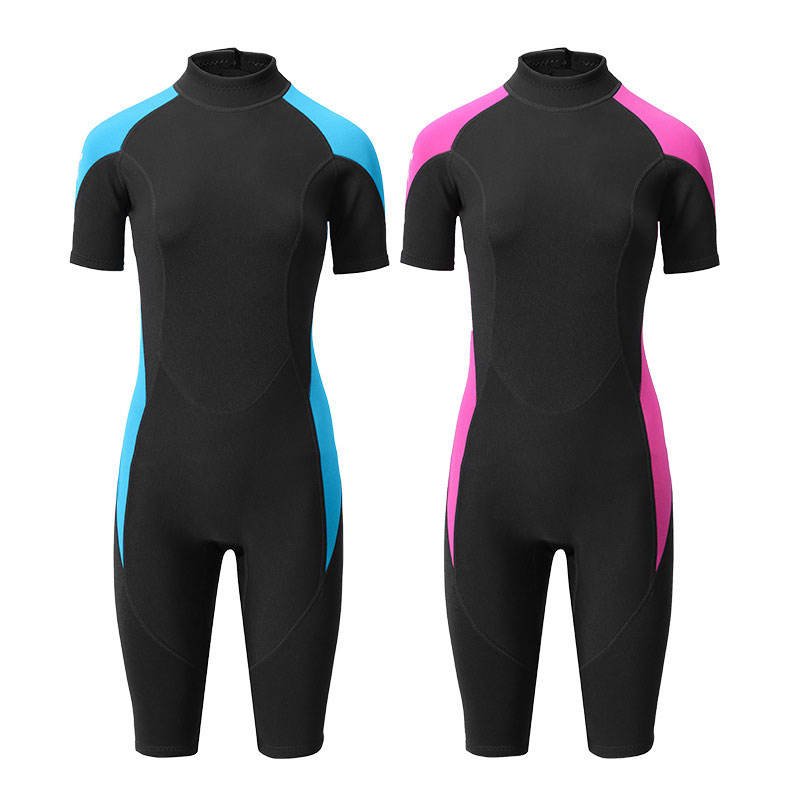
Wetsuits look simple from the outside—smooth black panels, snug fit, flexible stretch—but what they are made out of determines everything: how warm you stay, how freely you move, how long the suit lasts, and even whether it feels comfortable after hours in the water.
Many people assume wetsuits are just “rubber suits” or that thicker always means warmer. In reality, modern wetsuits are engineered systems made from specialized neoprene foams, textile linings, adhesives, and reinforcement materials, all working together. Two wetsuits with the same thickness can perform very differently depending on the quality of the neoprene, the gas content inside the foam, the fabric lamination, and the construction method.
Understanding what wetsuits are made out of matters not only for surfers and divers, but also for brands, retailers, and athletes choosing or developing products for specific water conditions. Material choices affect insulation, flexibility, buoyancy, durability, skin comfort, and environmental impact. This is why professional wetsuit manufacturers treat material selection as a core engineering decision, not a cosmetic one.
Wetsuits are primarily made from neoprene, a closed-cell synthetic rubber foam filled with insulating gas bubbles. This material traps heat, provides buoyancy, and resists water penetration while remaining flexible. Modern wetsuits also include textile linings, seam adhesives, zippers, and reinforced panels, all chosen to balance warmth, mobility, durability, and comfort for different water activities.
If you have ever wondered why some wetsuits feel warm but stiff, while others feel light and flexible but less insulating, the answer lies in the materials hidden beneath the surface. Let’s start by understanding what a wetsuit actually is—and what it is designed to do.
What Is a Wetsuit
A wetsuit is a close-fitting garment made primarily from neoprene foam, designed to keep the wearer warm in cold or cool water. It works by allowing a thin layer of water to enter, which is then warmed by body heat and insulated by the neoprene material. Wetsuits are commonly used in surfing, diving, swimming, triathlons, and other water-based activities.
What Is the Basic Purpose of a Wetsuit?
The primary purpose of a wetsuit is thermal insulation in water, not dryness.
Water conducts heat away from the human body about 25 times faster than air. Without protection, body temperature drops rapidly—even in water that does not feel extremely cold. A wetsuit slows this heat loss by creating an insulating barrier between the body and the surrounding water.
In addition to warmth, a wetsuit also:
- Provides buoyancy, reducing fatigue
- Protects the skin from abrasion, UV exposure, and marine life
- Helps maintain muscle efficiency in cold conditions
This combination makes wetsuits essential for extended time in water below comfortable temperatures.
How Does a Wetsuit Work If It Lets Water In?
A common misunderstanding is that wetsuits are supposed to keep you dry. In reality, a wetsuit is designed to get wet.
Here’s how it works:
- A small amount of water enters the suit
- That water warms quickly from body heat
- Neoprene foam traps the warm water and slows heat loss
- A snug fit and sealed seams reduce continuous water flushing
As long as water movement inside the suit is minimal, the body stays warm. Excessive water flow—caused by poor fit or loose seals—leads to rapid heat loss.
How Is a Wetsuit Different from a Drysuit?
Understanding the difference between a wetsuit and a drysuit helps clarify what wetsuits are designed to do.
| Feature | Wetsuit | Drysuit |
|---|---|---|
| Water entry | Allows limited water | Keeps wearer dry |
| Insulation source | Neoprene foam | Air + thermal layers |
| Flexibility | High | Lower |
| Typical use | Surfing, swimming, freediving | Cold-water diving, industrial work |
Wetsuits prioritize mobility, simplicity, and comfort, while drysuits focus on complete water isolation in extreme cold.
What Activities Commonly Use Wetsuits?
Wetsuits are used across a wide range of water activities, each with different performance priorities:
- Surfing: flexibility, stretch, paddle comfort
- Scuba diving: insulation at depth, durability
- Freediving: close skin contact, minimal water movement
- Swimming & triathlon: buoyancy, hydrodynamics
- Water sports: impact protection and warmth
Although they share the same basic concept, wetsuits are materially and structurally optimized for these different uses.
Why Fit Matters as Much as Material
Even the best neoprene cannot compensate for poor fit.
A properly fitted wetsuit:
- Minimizes water circulation
- Maintains consistent insulation
- Reduces energy loss
A loose wetsuit allows cold water to flush in and out, defeating its purpose. This is why professional wetsuit development focuses heavily on pattern design and sizing, not just material thickness.
Common Myths About Wetsuits
Several misconceptions often confuse first-time buyers:
- **“**Wetsuits are waterproof” → No, they are water-resistant by design
- “Thicker is always warmer” → Material quality and fit matter just as much
- “One wetsuit works for all activities” → Different sports require different material systems
Understanding what a wetsuit is—and what it is not—helps users choose the right product and avoid disappointment.
What Materials Are Wetsuits Made Of
Wetsuits are primarily made from neoprene, a closed-cell synthetic rubber foam that provides insulation, buoyancy, and flexibility. In addition to neoprene, wetsuits also use textile linings (such as nylon or polyester), lamination adhesives, seam tapes, zippers, and reinforcement materials. Together, these materials form a composite system that balances warmth, stretch, durability, and comfort in water.
What Is Neoprene and Why Is It the Core Wetsuit Material?
Neoprene is the foundation of almost all modern wetsuits because no other material combines thermal insulation, elasticity, and water resistance as effectively.
Structurally, neoprene is a closed-cell foam rubber. Inside the foam are millions of tiny gas-filled cells. These cells slow heat transfer, making neoprene an excellent insulator in water, where heat loss is otherwise very rapid.
From a user’s perspective, neoprene delivers three critical functions at once:
- Warmth: trapped gas reduces heat loss
- Flexibility: rubber structure stretches and recovers
- Buoyancy: gas cells help the body float
This multifunctional performance is why neoprene remains irreplaceable in wetsuit manufacturing.
What Is Neoprene Actually Made Of at a Material Level?
At a chemical and engineering level, traditional neoprene is based on polychloroprene, a synthetic rubber polymer. During production, the rubber is expanded using blowing agents to create the closed-cell foam structure.
Modern wetsuit neoprene is rarely “pure.” It often includes:
- Elastic modifiers to improve stretch and rebound
- Stabilizers to resist UV, saltwater, and aging
- Fillers to control density and compression resistance
Higher-grade neoprene features more uniform cell size and stronger cell walls, which directly improves warmth retention and long-term performance.
Are Wetsuits Made from Only Neoprene Foam?
No. A wetsuit is not just foam—it is a laminated composite material.
Neoprene alone is soft and fragile. To make it usable, manufacturers laminate fabric layers to one or both sides of the foam.
Common lining fabrics include:
- Nylon jersey: strong, abrasion-resistant, widely used
- Polyester knit: softer feel, better color stability
- Spandex blends: improved stretch and comfort
- Thermal linings: brushed or hollow fibers for added warmth
These linings dramatically affect how a wetsuit feels, stretches, dries, and ages over time.
How Do Linings Change Comfort and Performance?
The same neoprene foam can behave very differently depending on its lining.
For example:
- Single-lined neoprene feels lighter and more flexible but is less durable
- Double-lined neoprene offers better durability and shape stability
- Thermal-lined neoprene improves heat retention without increasing thickness
For users, this explains why two wetsuits with the same thickness can feel completely different in the water.
From a manufacturing standpoint, lining selection is a performance decision, not just a cosmetic one.
What Role Do Adhesives and Lamination Play?
Lamination is the process of bonding fabric to neoprene foam. This step is critical but often overlooked by consumers.
High-quality lamination:
- Prevents fabric delamination over time
- Maintains stretch consistency
- Improves seam strength
Modern wetsuits increasingly use water-based adhesives, which are safer and more environmentally friendly than traditional solvent-based glues, while still providing strong bonding.
Poor lamination is one of the most common causes of early wetsuit failure.
What Other Materials Are Used in Wetsuit Construction?
Beyond neoprene and linings, wetsuits rely on several additional materials:
| Component | Material Purpose |
|---|---|
| Seam tape | Seals seams, reduces water entry |
| Stitching thread | Holds panels together |
| Zippers | Entry system, controls water flushing |
| Smooth-skin neoprene | Used in seals to reduce water flow |
| Reinforcement fabrics | Protect high-wear zones (knees, elbows) |
Each of these materials plays a role in the overall performance of the suit. A weakness in any one area can compromise the entire system.
Are There Alternative or Eco-Friendly Materials Used in Wetsuits?
Yes, though with trade-offs.
Some modern wetsuits use:
- Limestone-based neoprene instead of petroleum-based
- Recycled rubber content
- Recycled polyester linings
- Low-VOC or water-based adhesives
While these materials reduce environmental impact, they must still meet strict requirements for insulation, flexibility, and durability. Performance ultimately depends on how well the materials are engineered together, not just on their sustainability label.
How Does Neoprene Work to Keep You Warm
Neoprene keeps you warm by trapping body heat inside gas-filled closed cells within the foam and by reducing water circulation between your skin and the surrounding water. A thin layer of water enters the wetsuit, warms up quickly from body heat, and stays insulated by neoprene, which slows heat loss much more effectively than water alone.
Why Does the Human Body Lose Heat So Fast in Water?
To understand why neoprene works, it helps to understand the problem it solves.
Water removes heat from the human body about 25 times faster than air. Even water that feels “cool” rather than cold can rapidly lower body temperature during prolonged exposure. This happens because water:
- Has high thermal conductivity
- Constantly moves heat away from the skin
- Replaces warm water with colder water
Without insulation, the body must burn energy continuously just to maintain core temperature, leading to fatigue and hypothermia risk.
Neoprene’s job is to slow this heat transfer, not to eliminate water contact entirely.
How Do Closed-Cell Gas Bubbles Trap Heat?
The key to neoprene’s insulating ability lies in its closed-cell foam structure.
Inside neoprene are millions of tiny, sealed gas bubbles. Gas is a poor conductor of heat, meaning it slows the movement of heat energy. When neoprene sits between your body and cold water, these gas cells act like a thermal buffer.
Important details that affect warmth:
- Cell size uniformity → more consistent insulation
- Cell wall strength → better resistance to compression
- Gas retention → longer-lasting warmth
Higher-quality neoprene uses finer, more evenly distributed cells, which is why premium wetsuits often feel warmer at the same thickness.
Why Does a Wetsuit Let Water In Instead of Blocking It?
A wetsuit is not designed to be waterproof—and this is intentional.
When you first enter the water:
- A small amount of water enters the suit
- That water warms quickly from body heat
- Neoprene prevents that water from flushing out
- Heat loss slows dramatically
If no water entered at all, the suit would need rigid seals like a drysuit, severely limiting movement. Neoprene balances warmth and flexibility by allowing controlled water entry.
The real enemy of warmth is not water itself, but continuous water circulation.
How Does Wetsuit Thickness Affect Warmth?
Thickness matters, but it is not the whole story.
| Neoprene Thickness | Typical Water Use |
|---|---|
| 2–3 mm | Warm water, summer use |
| 3–4 mm | Cool water |
| 5–6 mm | Cold water |
| 6–7 mm+ | Very cold conditions |
Thicker neoprene contains more gas volume, which increases insulation. However, material quality can outperform thickness. A well-engineered 4 mm neoprene can feel warmer than a poorly made 5 mm neoprene due to better foam structure and seam design.
How Do Seams and Fit Affect Heat Retention?
Even perfect neoprene cannot keep you warm if the suit fits poorly.
Loose areas allow cold water to flush in and out, constantly removing heat. This is why:
- Proper sizing is critical
- Sealed seams reduce water exchange
- Neck, wrist, and ankle seals matter
From a thermal perspective, a wetsuit works best when it fits like a second skin—snug, but not restrictive.
Does Neoprene Lose Warmth Over Time?
Yes, and this is a critical but often overlooked factor.
Over time, neoprene:
- Compresses under repeated use
- Loses some gas volume
- Becomes thinner and less insulating
Lower-quality neoprene compresses faster, which is why older wetsuits often feel colder even if they look intact.
High-quality neoprene is engineered to resist compression set, maintaining insulation for more seasons.
Why Some Wetsuits Feel Warmer Than Others at the Same Thickness
When users say “this suit feels warmer,” they are usually responding to:
- Better foam cell structure
- More effective seam sealing
- Improved fit and panel layout
- Reduced water flushing
Warmth is the result of the entire material and construction system, not just neoprene thickness alone.
Common Misconceptions About Neoprene Warmth
- “Neoprene is waterproof” → It is water-resistant, not waterproof
- “Thicker is always warmer” → Quality and fit matter just as much
- “Water inside the suit makes you cold” → Only moving water causes heat loss
Understanding these points helps users choose wetsuits based on physics, not marketing claims.
Are There Different Types of Neoprene
Yes. Neoprene used in wetsuits comes in several types based on cell structure, density, lining configuration, and raw material source. Common variations include closed-cell vs open-cell neoprene, single-lined vs double-lined neoprene, petroleum-based vs limestone-based neoprene, and newer eco or recycled alternatives. Each type affects warmth, flexibility, durability, comfort, and cost.
What Is the Difference Between Closed-Cell and Open-Cell Neoprene?
This is the most fundamental classification.
Closed-cell neoprene
- Gas bubbles are fully sealed inside the foam
- Very low water absorption
- Good insulation and buoyancy
- Stronger structural integrity
This is the standard choice for most wetsuits, including surfing, diving, swimming, and triathlon.
Open-cell neoprene
- Cell walls are exposed on one side
- Creates direct suction contact with skin
- Extremely warm when fitted correctly
- More fragile and harder to put on
Open-cell neoprene is mainly used in freediving and spearfishing suits, where maximum warmth and minimal water movement are prioritized over durability.
Are All Closed-Cell Neoprenes the Same Quality?
No. Closed-cell neoprene varies greatly in performance.
Key quality differences include:
- Cell size consistency (smaller and more uniform = better insulation)
- Cell wall thickness (affects compression resistance)
- Foam density (balance between warmth and flexibility)
Lower-quality neoprene may feel soft at first but compress quickly, losing insulation. Higher-grade neoprene maintains its structure and warmth over many seasons.
This explains why two wetsuits with the same thickness can feel completely different in real use.
What Is Single-Lined vs Double-Lined Neoprene?
Neoprene foam is almost always laminated with fabric to make it usable.
- Single-lined neoprene
- Fabric on one side only
- Softer, stretchier, lighter
- Less abrasion resistance
- Double-lined neoprene
- Fabric laminated on both sides
- More durable and stable
- Slightly reduced stretch
High-performance wetsuits often use hybrid construction, combining single-lined panels in high-mobility areas (shoulders, arms) and double-lined panels in high-wear zones.
What Is Limestone Neoprene and How Is It Different?
Limestone neoprene uses calcium carbonate (limestone) as a primary raw material instead of petroleum.
Common claims and realities:
- Often finer cell structure
- Good elasticity and lighter feel
- Reduced reliance on crude oil
- Performance still depends on foam engineering
Limestone neoprene is not automatically better. Poorly made limestone neoprene can underperform high-quality petroleum-based neoprene. Manufacturing process matters more than the raw source alone.
Are There Eco-Friendly or Recycled Neoprene Options?
Yes, but they involve trade-offs.
Current approaches include:
- Recycled rubber content in neoprene foam
- Recycled polyester or nylon linings
- Water-based adhesives instead of solvent-based
These materials reduce environmental impact but may differ in:
- Compression resistance
- Long-term durability
- Cost
For demanding water sports, manufacturers often balance eco goals with performance requirements, rather than sacrificing functionality.
How Does Neoprene Density Affect Performance?
Neoprene density controls how the material behaves.
- Lower density
- Softer feel
- Higher flexibility
- Lower compression resistance
- Higher density
- Better insulation retention
- Improved durability
- Slightly reduced stretch
Advanced wetsuits use density zoning, placing different neoprene densities in different body areas to optimize both warmth and movement.
Which Types of Neoprene Are Used for Different Activities?
| Activity | Typical Neoprene Type |
|---|---|
| Surfing | High-stretch closed-cell, mixed linings |
| Scuba diving | Higher-density closed-cell, durable linings |
| Freediving | Open-cell interior, smooth-skin exterior |
| Triathlon | Lightweight, hydrophobic coated neoprene |
| Medical supports | Stable-density neoprene, skin-friendly linings |
This shows that “best neoprene” depends entirely on how the wetsuit is used.
Common Myths About Neoprene Types
- “All neoprene is the same” → Quality and structure vary widely
- “Eco neoprene is always better” → Performance depends on engineering
- “Softer neoprene lasts longer” → Softness often trades off durability
Understanding neoprene types helps users avoid paying for the wrong features—or expecting performance a material was never designed to deliver.
Which Parts of a Wetsuit Use Special Materials
Key parts of a wetsuit—such as seams, zippers, neck/wrist/ankle seals, and high-wear zones—use specialized materials different from the main neoprene panels. These materials control water entry, flexibility, durability, and comfort. Even with high-quality neoprene, poor material choices in these areas can significantly reduce warmth, mobility, and lifespan.
What Materials Are Used in Wetsuit Seams and Why They Matter Most
Seams are the most vulnerable points for heat loss and water flushing.
Common seam constructions include:
- Flatlock stitching (warm water): flexible but allows water flow
- Glued and blind-stitched (GBS): reduces needle holes and water entry
- Seam tape / liquid seam seal: adds a waterproof barrier and durability
Specialized flexible adhesives bond neoprene panels before stitching. These adhesives must resist saltwater, UV, and temperature changes while staying elastic. Poor seam materials often fail long before the neoprene itself wears out.
How Zippers Use Specialized Materials to Reduce Water Entry
Zippers are both an entry system and a thermal weak point.
Modern wetsuits use:
- Molded plastic zippers (lightweight, corrosion-resistant)
- Coated metal zippers (durable but heavier)
- Water-resistant or dry-style zippers (laminated, minimal water flow)
Backing materials—such as neoprene dams or internal flaps—slow water flushing. The zipper tape and bonding adhesive are just as important as the zipper teeth themselves.
Why Neck, Wrist, and Ankle Seals Use Smooth-Skin Materials
Seals are designed to slow water movement, not to create a watertight closure.
Common seal materials include:
- Smooth-skin neoprene (rubberized surface that grips skin)
- Silicone-treated finishes (improved sealing with comfort)
These materials conform closely to the body, reducing cold water entry during movement. Poor seal materials lead to rapid flushing and heat loss, especially in cold water.
Which Materials Reinforce Knees, Shoulders, and High-Wear Zones
High-stress areas need protection without sacrificing flexibility.
Typical reinforcement materials:
- Abrasion-resistant fabrics (e.g., nylon armor weaves)
- Rubberized overlays for grip and durability
- Kevlar-blend or high-tenacity fibers in extreme-use suits
These materials extend suit lifespan in kneeling, paddling, or equipment-contact areas. Over-reinforcement, however, can reduce mobility—so placement and thickness are carefully engineered.
How Panel Layout and Zoning Use Different Materials Together
Advanced wetsuits are not made from a single neoprene type.
Manufacturers use material zoning, combining:
- Softer, high-stretch neoprene in shoulders and arms
- Denser neoprene in the core for warmth
- Reinforced panels in wear-prone areas
This approach balances warmth, movement, and durability. It also explains why higher-end wetsuits feel more comfortable without being thicker.
What Materials Improve Comfort Inside the Wetsuit
Interior comfort affects how long a wetsuit can be worn.
Special interior materials include:
- Brushed or thermal linings to trap heat
- Low-friction jersey fabrics for easier entry
- Skin-friendly coatings for sensitive users
These materials do not directly affect waterproofing, but they significantly influence comfort, dryness perception, and user satisfaction.
How Special Materials Affect Weight, Flexibility, and Longevity
Each specialized material adds trade-offs:
- More seam tape = better warmth, more weight
- Heavier reinforcements = durability, less stretch
- Advanced zippers = less water entry, higher cost
High-quality wetsuits carefully balance these trade-offs instead of maximizing any single feature.
Special Materials by Wetsuit Part
| Wetsuit Part | Special Materials Used | Primary Function |
|---|---|---|
| Seams | Adhesives, seam tape | Reduce water entry |
| Zippers | Coated plastics, laminates | Entry & thermal control |
| Seals | Smooth-skin neoprene | Limit flushing |
| Knees/Elbows | Abrasion fabrics | Durability |
| Interior lining | Thermal or jersey fabrics | Comfort & warmth |
How Do Wetsuit Materials Affect Performance
Wetsuit materials directly affect warmth, flexibility, buoyancy, durability, and water resistance. Neoprene foam quality determines insulation and buoyancy, while lining fabrics, seam construction, and special materials control stretch, comfort, water flushing, and lifespan. Overall performance depends on how these materials are engineered together—not on thickness alone.
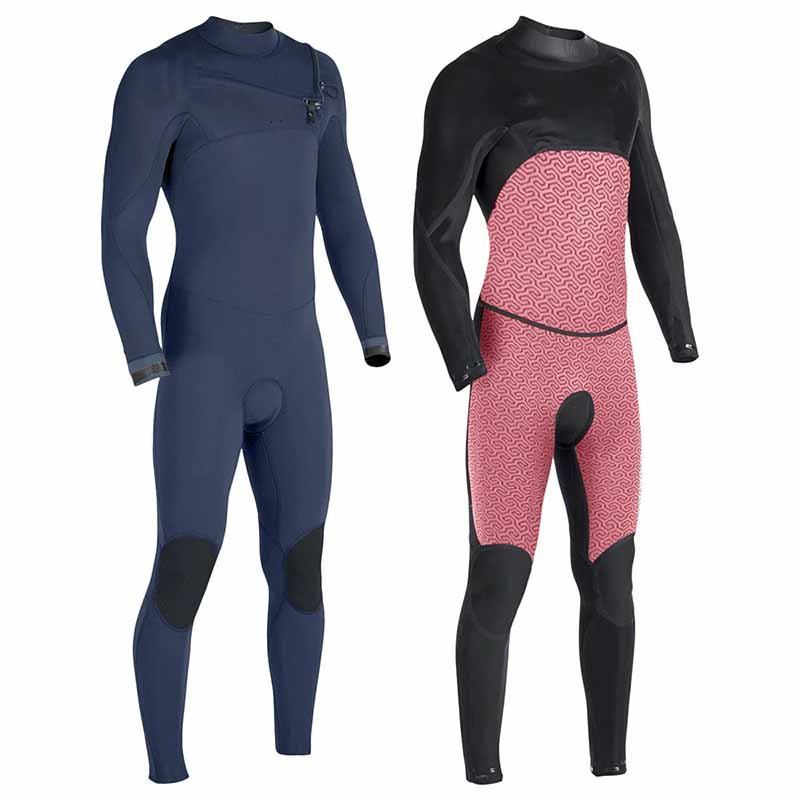
How Do Wetsuit Materials Affect Warmth and Heat Retention?
Warmth is the first performance metric most users notice—and the most misunderstood.
Neoprene keeps you warm by:
- Trapping gas inside closed-cell foam
- Slowing heat transfer from the body to water
- Reducing water circulation inside the suit
However, material quality matters as much as thickness. Two wetsuits with the same 4 mm thickness can feel very different because of:
- Gas cell uniformity
- Foam density and compression resistance
- Seam sealing effectiveness
Lower-quality neoprene compresses quickly, losing gas volume and insulation. Higher-grade neoprene maintains warmth across seasons. This is why experienced users often report that a “thinner but better” wetsuit feels warmer than a thicker low-quality one.
Is Neoprene 100% Waterproof?
No—neoprene is not 100% waterproof, and it is not designed to be.
Neoprene is water-resistant, not impermeable. A wetsuit intentionally allows a small amount of water to enter. That water warms from body heat and stays trapped if the suit fits well and seams are sealed.
Key point for users:
- Static water = insulation
- Moving water = heat loss
This is why seam design, seals, and fit are just as important as neoprene itself. If materials allow constant flushing, even thick neoprene will feel cold.
How Do Materials Affect Flexibility and Freedom of Movement?
Flexibility directly impacts comfort, fatigue, and performance—especially for surfing, swimming, and paddling sports.
Material factors that control flexibility include:
- Neoprene density (lower density = more stretch)
- Cell wall elasticity
- Fabric lining stretch direction
- Panel layout and zoning
High-stretch neoprene improves movement but can reduce durability if not engineered properly. Advanced wetsuits use material zoning, placing ultra-stretch neoprene in shoulders and arms, and denser neoprene in the torso.
This is why premium wetsuits feel easier to move in—even when they are warm.
How Do Wetsuit Materials Influence Buoyancy?
Buoyancy comes from the gas trapped inside neoprene foam.
Higher-quality neoprene:
- Contains more stable gas cells
- Maintains buoyancy longer
- Compresses less under pressure
Buoyancy affects:
- Swimming efficiency
- Body position in the water
- Energy expenditure
For triathlon wetsuits, buoyancy is often optimized using different neoprene densities across body zones. For diving suits, compression resistance is prioritized to retain insulation at depth.
How Do Materials Affect Durability and Lifespan?
Durability is where many wetsuits quietly fail.
Material-related durability factors include:
- Foam resistance to compression set
- Fabric lining abrasion resistance
- Adhesive and seam material quality
- UV and saltwater resistance
Lower-grade materials may look fine but lose warmth within months. Higher-quality materials maintain structure, stretch recovery, and insulation for years.
This is why professional wetsuit manufacturers evaluate material aging, not just initial softness.
How Do Special Materials Reduce Water Flushing?
Even with good neoprene, poor secondary materials can ruin performance.
Materials that reduce flushing include:
- Seam tape and liquid seam seal
- Smooth-skin neoprene at seals
- Internal zipper dams and flaps
These materials slow water movement, which is critical for warmth. A wetsuit that feels “leaky” usually suffers from material or construction choices, not thickness issues.
Do Materials Affect Drying Time and Comfort After Use?
Yes—this is often overlooked.
Material choices influence:
- Water absorption in linings
- Drying speed
- Skin comfort between sessions
For example:
- Polyester linings often dry faster than nylon
- Thermal linings feel warmer but hold more water
- Smooth-skin surfaces shed water quickly
These differences matter for travelers, multi-session athletes, and rental or commercial use.
Why Thickness Alone Is a Poor Performance Indicator
Many buyers fixate on thickness (e.g., 5 mm vs 4 mm), but performance depends on the entire material system.
Thickness ignores:
- Foam quality
- Seam construction
- Lining type
- Fit and panel design
A well-designed wetsuit balances all these factors. Thickness is only one variable—and often not the most important one.
How Materials Affect Key Performance Areas
| Performance Area | Primary Material Factors |
|---|---|
| Warmth | Foam cell quality, seam sealing |
| Flexibility | Neoprene density, lining stretch |
| Buoyancy | Gas retention, compression resistance |
| Durability | Foam aging, fabric abrasion |
| Water control | Seals, seam materials |
| Comfort | Linings, surface finishes |
How to Choose the Right Wetsuit Material for Your Activity
Choosing the right wetsuit material depends on water temperature, activity intensity, movement range, and usage duration. Surfing and swimming prioritize flexibility and stretch, diving emphasizes insulation and compression resistance, while triathlon suits focus on buoyancy and hydrodynamics. The best wetsuit material balances neoprene quality, lining type, thickness zoning, and seam construction for the specific activity.
What Wetsuit Materials Are Best for Surfing?
Surfing demands high mobility and repeated upper-body movement. Paddling efficiency and shoulder freedom matter more than maximum insulation.
Recommended material characteristics:
- High-stretch closed-cell neoprene with low density
- Spandex-blended linings in shoulders and arms
- Moderate thickness (e.g., 3/2 mm, 4/3 mm depending on water temperature)
- Reinforced knee panels without over-stiffening
For surfers, overly dense neoprene or heavy thermal linings can increase fatigue. Material zoning—stretchy panels in motion-heavy areas and warmer foam in the core—offers the best balance.
Which Neoprene Types Are Suitable for Scuba Diving and Cold Water?
Diving introduces two unique challenges: depth pressure and long exposure times.
Material priorities for diving:
- Higher-density closed-cell neoprene
- Strong compression resistance to retain insulation at depth
- Double-lined neoprene for durability
- Extensive seam sealing to reduce flushing
At depth, neoprene compresses and loses gas volume. Low-quality foams lose insulation quickly, while premium diving neoprene maintains warmth longer. Flexibility is still important—but durability and thermal stability take priority.
How Do Triathlon Wetsuits Differ in Material Selection?
Triathlon wetsuits are performance-driven and highly specialized.
Key material features:
- Lightweight neoprene with optimized buoyancy
- Smooth-skin or hydrophobic surface coatings to reduce drag
- Strategic thickness zoning (thicker in legs/hips, thinner in arms)
- Minimal internal lining to reduce water absorption
Unlike surf or dive suits, triathlon wetsuits are designed for speed and efficiency, not abrasion resistance. The materials chosen often sacrifice durability for performance gains.
What Materials Are Best for Swimming and Training Wetsuits?
Open-water swimmers need a balance of comfort, flexibility, and moderate warmth.
Recommended features:
- Medium-density neoprene for flexibility
- Soft interior linings for skin comfort
- Simple seam construction to reduce chafing
- Moderate buoyancy without excessive lift
Training suits are often worn frequently, so material durability and recovery matter as much as insulation.
How Should Material Choice Change for Freediving or Spearfishing?
Freediving focuses on minimal water movement and maximum insulation.
Typical material choices:
- Open-cell neoprene interior for skin suction
- Smooth-skin exterior to reduce drag
- Higher thickness for warmth without constant movement
These suits are extremely warm but fragile. They require careful handling and are not ideal for high-abrasion activities.
How Does Water Temperature Influence Material Selection?
Water temperature is the starting point, but not the final answer.
| Water Temperature | Material Focus |
|---|---|
| Warm (20°C / 68°F+) | Thin, flexible neoprene |
| Cool (15–20°C) | Balanced insulation + stretch |
| Cold (10–15°C) | Higher-density neoprene |
| Very Cold (<10°C) | Maximum insulation, sealed seams |
However, activity intensity matters just as much. High-movement sports generate body heat, while passive activities require better insulation.
Why Usage Frequency and Duration Matter
Occasional recreational use and daily professional use require different material priorities.
- Frequent use: durability, compression resistance, seam longevity
- Long sessions: insulation stability and comfort
- Short sessions: flexibility and ease of movement
A wetsuit worn daily must withstand repeated compression, UV exposure, and saltwater—material quality becomes critical over time.
How Custom OEM/ODM Development Improves Material Matching
Off-the-shelf wetsuits are compromises. Custom development allows materials to be matched precisely to the intended use.
OEM/ODM customization enables:
- Thickness zoning by body area
- Different neoprene grades in one suit
- Custom lining selection
- Activity-specific reinforcement
For brands and serious users, this approach results in better performance, fewer complaints, and longer product life.
Activity vs Material Focus
| Activity | Material Priority |
|---|---|
| Surfing | Stretch, flexibility |
| Scuba diving | Insulation, compression resistance |
| Triathlon | Buoyancy, low drag |
| Swimming | Comfort, moderate warmth |
| Freediving | Maximum insulation |
| Rental/commercial | Durability, easy care |
Final Section
Understanding what wetsuits are made out of is the first step. Turning that knowledge into products that perform consistently in real water conditions requires manufacturing experience, material control, and engineering discipline.
Oneier is a China-based neoprene material and product manufacturer with over 18 years of experience in:
- Neoprene material R&D
- Wetsuit manufacturing
- Neoprene bags, koozies, sports and medical supports
We support custom, private label, and OEM/ODM projects for overseas small-to-mid buyers and high-end brands.
If you are planning to develop custom wetsuits or neoprene-based products, share your project requirements with Oneier. Our team will help you select the right materials, structures, and processes—based on performance, not assumptions.
Contact Oneier today to start your custom wetsuit project.